量子计算

Search documents
隔离器:光模块“卡脖子”环节
GOLDEN SUN SECURITIES· 2025-12-07 08:18
Investment Rating - The report maintains a "Buy" rating for key companies in the optical communication sector, particularly focusing on the isolation component in optical modules [4][10]. Core Insights - The global optical module industry is rapidly upgrading to 800G/1.6T due to AI computing demand, with optical isolators becoming a critical bottleneck due to a global shortage of Faraday rotators [1][19]. - The production of Faraday rotators is highly concentrated and faces significant technical barriers, leading to supply constraints that impact the expansion of optical module capacity [21][24]. - The demand for optical isolators is expected to surge as the usage of optical modules increases, particularly in high-speed applications, which will drive both the quantity and value of isolators [6][22]. Summary by Sections Section: Optical Isolators as Key Components - Optical isolators function as essential passive components in optical communication systems, allowing light to transmit in one direction while blocking reverse reflections, thus protecting laser sources and enhancing system reliability [2][20]. - The core technology of optical isolators relies on the Faraday effect, with the Faraday rotator being a critical component that is currently in short supply globally [21][23]. Section: Supply Chain Challenges - The production of Faraday rotators is dominated by a few companies in the US and Japan, creating a monopolistic supply chain that poses risks for the optical isolator market [23][24]. - Domestic companies are striving to achieve self-sufficiency in the production of Faraday rotators, but the overall localization rate remains low, indicating a significant opportunity for growth in this area [23][24]. Section: Market Demand and Growth Potential - The transition of optical modules to higher capacities (800G/1.6T) is expected to increase the demand for optical isolators significantly, with each module requiring multiple isolators depending on the number of channels [6][22]. - The report highlights that the mismatch between the rapid increase in demand for isolators and the slow expansion of production capacity will lead to price increases and heightened value for isolators in the market [6][22]. Section: Recommended Companies - The report recommends focusing on leading companies in the optical communication sector, such as Zhongji Xuchuang, Xinyi Sheng, and Tianfu Communication, which are well-positioned to benefit from the growing demand for optical isolators [7][8][24].


重大转向!美国发布最新《国家安全战略》:放弃全球霸权,将调整与中国经济关系,“以互惠平等为原则”,承认中美“近乎对等”!欧洲炸锅
Mei Ri Jing Ji Xin Wen· 2025-12-06 15:27
Group 1 - The core viewpoint of the new U.S. National Security Strategy is a shift from pursuing global hegemony to strengthening U.S. dominance in Latin America, marking a significant departure from the previous focus on Asia [1][5][6] - The document emphasizes that the era of the U.S. acting as the global order's Atlas is over, and it will not engage in costly efforts to curb the influence of all major and medium powers [5][6] - The strategy highlights the need to address immigration and drug trafficking as central national defense tasks, reflecting a change in perceived threats to the U.S. [8][12] Group 2 - The strategy criticizes European allies, warning of a "civilizational extinction" risk and suggesting that European nations must change their approach to remain reliable partners [10][12][13] - It notes a decline in Europe's share of global GDP from 25% in 1990 to 14% today, indicating a shift in geopolitical dynamics [12] - The document calls for increased U.S. intervention in European domestic affairs to counteract current trends, reflecting a more confrontational stance towards Europe [13][14] Group 3 - The strategy outlines a reallocation of military resources to the Western Hemisphere, emphasizing the restoration of U.S. hegemony in the region [6][8] - It states that the U.S. will adjust its economic relationship with China to one based on mutual benefit, indicating a shift towards a more balanced approach [17] - The Middle East is no longer a priority in U.S. foreign policy, as the U.S. has become an energy net exporter, marking a significant change in focus [17][18]

重大转向!美国发布最新《国家安全战略》:放弃全球霸权 将调整与中国经济关系 “以互惠平等为原则” 承认中美“近乎对等”!
Mei Ri Jing Ji Xin Wen· 2025-12-06 15:26
Core Viewpoint - The new National Security Strategy from the Trump administration marks a significant shift in U.S. foreign policy, prioritizing Latin America over previous focuses on Asia and criticizing European allies for their declining global influence and internal challenges [1][5][10]. Summary by Sections U.S. Foreign Policy Shift - The document emphasizes a departure from the pursuit of global hegemony, labeling it as a "failed" approach, and asserts that the era of the U.S. supporting the global order is over [5][6]. - The strategy outlines a pragmatic yet principled approach to foreign policy, focusing on U.S. interests without extensive military engagement [5][6]. Focus on Latin America - The strategy aims to restore U.S. dominance in the Western Hemisphere, addressing issues like immigration and drug trafficking, and reasserting the Monroe Doctrine [6][8]. - It includes plans to adjust military presence globally, enhancing the Coast Guard and Navy in the region to secure borders and combat crime [6][8]. Critique of Europe - The document presents a stark critique of Europe, warning of a potential "civilizational collapse" and highlighting the decline of Europe's share of global GDP from 25% in 1990 to 14% today [10][11]. - It suggests that some NATO countries may soon have non-European majorities, questioning their commitment to the U.S. alliance [10][11]. - The strategy criticizes European governments for their handling of the Ukraine conflict and calls for increased U.S. intervention in European domestic affairs to counteract perceived threats [11][12]. Relations with China and the Middle East - The strategy indicates a shift towards a more reciprocal economic relationship with China, moving away from the previous asymmetrical dynamics [14]. - It states that the Middle East is no longer a priority for U.S. foreign policy, as the U.S. has become an energy net exporter and is shifting focus to great power competition [14][15]. Comparison with Previous Administration - The new strategy represents a significant change from the Biden administration's focus on strategic competition with China and Russia, domestic industrial policy, and climate change as a national security issue [15].
热点问答|如何解读新版美国国家安全战略报告
Xin Hua She· 2025-12-06 14:23
Core Viewpoint - The newly released U.S. National Security Strategy report emphasizes prioritizing the Western Hemisphere, critiques Europe, downplays the threat of terrorism, and aims to rebalance external commitments with internal capabilities [1]. Group 1: U.S. Intervention in Latin America - The report introduces the "Trump Doctrine" as a modern version of the Monroe Doctrine, asserting U.S. dominance in the Western Hemisphere [1]. - The goals of the "Trump Doctrine" include preventing large-scale immigration, using lethal force against drug cartels if necessary, and ensuring U.S. access to strategic locations in Latin America [1][2]. - Analysts suggest this will lead to increased U.S. investment in intelligence, military, law enforcement, and economic strategies in Latin America, indicating a more interventionist stance [2]. Group 2: Global Military Presence Adjustment - The report calls for a reallocation of U.S. military resources, reducing presence in regions deemed less critical to national security, such as Europe, the Middle East, and Africa [3][4]. - The strategy aims to alleviate the global security burden by encouraging allies to take on more defense responsibilities and avoiding costly "forever wars" [4]. Group 3: Economic and Industrial Focus - The report emphasizes the need for U.S. economic security as a foundation for national security, advocating for dominance in key technological fields and a robust defense industrial base [4]. - It highlights the importance of securing access to critical minerals and maintaining U.S. leadership in energy and finance [4]. Group 4: Anti-Immigration and Anti-Globalization Stance - The report reflects a vision of global order based on "America First," characterized by anti-immigration and anti-globalization sentiments, blaming immigration for various global challenges [6]. - It warns Europe about the consequences of its immigration policies and economic stagnation, suggesting that the U.S. should help correct Europe's trajectory [6]. Group 5: Power Dynamics and Global Influence - The report indicates a more inward-looking and narrow view of U.S. security, while simultaneously asserting that the U.S. must prevent any nation from becoming too powerful [7]. - It reiterates the belief that power dynamics are a constant in international relations, emphasizing the importance of strength in maintaining peace [7].
最新发声:任正非如何看待人工智能发展?
虎嗅APP· 2025-12-06 13:36
Core Viewpoint - The discussion led by Ren Zhengfei emphasizes the importance of focusing on the practical applications of artificial intelligence (AI) in various industries over the next three to five years, while also highlighting the role of education in fostering innovation and collaboration among youth [2][8]. Group 1: AI Applications - AI should concentrate on real-world applications in industries such as manufacturing and healthcare, aiming for tangible improvements [2][8]. - Examples include optimizing iron production efficiency by 1% through AI-driven temperature control in blast furnaces and enhancing coal mining safety with remote operation technologies [8][9]. - AI models are being utilized in medical diagnostics, such as pathology analysis and remote eye examinations, to improve healthcare outcomes [9]. Group 2: Education and Youth Development - Education is viewed as a separate entity from business, with a focus on nurturing talent and innovation rather than solely commercial outcomes [12][15]. - The shift from traditional education models to more decentralized, online learning platforms is seen as beneficial for students in remote areas [10][11]. - The importance of teaching practical skills and fostering self-sufficiency in education is emphasized, particularly in underdeveloped regions [10][12]. Group 3: Collaboration Between Academia and Industry - The need for closer collaboration between educational institutions and industries is highlighted, with a focus on practical training and real-world problem-solving [16][19]. - Companies are encouraged to support educational initiatives that help develop local talent and improve programming skills in various regions [9][12]. - The role of competitions like ICPC in bridging the gap between academic knowledge and industry needs is acknowledged [2][19]. Group 4: Future of Work and AI - The impact of AI on job markets is discussed, with a focus on the need for re-education and adaptation as automation increases [26][27]. - The potential for AI to enhance productivity and create new job opportunities is recognized, despite concerns about job displacement [27][29]. - The importance of preparing the workforce for a future where AI plays a significant role in various sectors is emphasized [26][27].

“十五五”新机遇前瞻 财米油盐|别被“伪量子”骗了!一口气说清量子科技大未来
Ren Min Wang· 2025-12-06 09:23
Core Insights - The article discusses the rapid development of quantum technology in China, highlighting its applications in quantum computing, quantum communication, and quantum precision measurement [1][2][3][4] Quantum Technology Overview - Quantum technology is based on quantum mechanics and focuses on areas such as quantum computing, quantum communication, and quantum precision measurement [1] - Quantum computing can perform complex calculations significantly faster than traditional computers, exemplified by China's "Zuchongzhi 3" prototype completing tasks in 10 minutes that would take supercomputers 16,000 years [1] - Quantum communication enhances information security, with applications like "quantum SIM cards" and "quantum seals" already being piloted in various regions [1] Market Potential - The global quantum technology market is projected to reach approximately $8 billion in 2024, with China accounting for nearly a quarter of this market; by 2035, the global market is expected to exceed $900 billion, with China's industry potentially reaching $260 billion [2] Policy and Innovation Support - The rapid advancement of quantum technology in China is supported by strong collaboration among government, industry, academia, and research institutions, as outlined in the "14th Five-Year Plan" [3] - Recent breakthroughs in high-temperature superconductors and quantum artificial intelligence have been achieved by leading research teams, indicating significant progress in the field [3] - Various regions, such as Anhui and Hubei, are establishing supportive policies and funding to foster the growth of the quantum industry [3] Future Outlook - The article anticipates that quantum technology will achieve breakthroughs in key areas during the "14th Five-Year Plan" period, potentially reshaping industry dynamics and becoming a significant economic growth driver [4]
祝贺潘建伟院士!
Ke Ji Ri Bao· 2025-12-06 07:55
Core Points - The "Tengchong Science Prize" was awarded to Professor Pan Jianwei for his pioneering experimental work in multi-particle interference metrology and free-space quantum transmission, making global secure quantum communication and the superiority of quantum computing a realistic possibility [1] Group 1 - Professor Pan Jianwei is a member of the Chinese Academy of Sciences and a professor at the University of Science and Technology of China [1] - His research focuses on quantum optics, quantum information, and the foundational issues of quantum mechanics [1] - Pan's achievements have been recognized multiple times, including selections in the "Top Ten Scientific Advances in China" and significant physics advancements by major scientific journals [1]
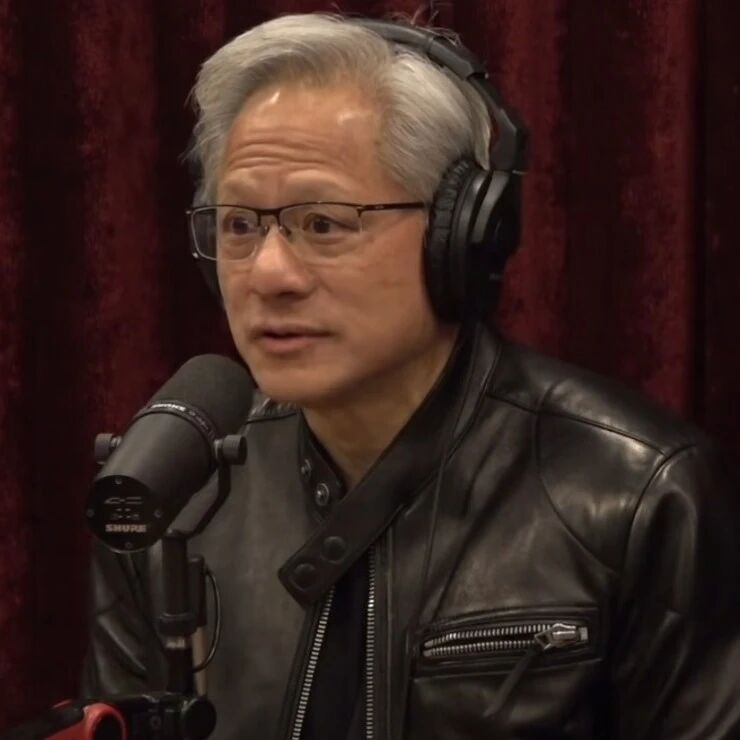
黄仁勋最新采访:依然害怕倒闭,非常焦虑
半导体行业观察· 2025-12-06 03:06
Core Insights - The discussion highlights the transformative impact of artificial intelligence (AI) and the role of NVIDIA in driving this technological revolution, emphasizing the importance of GPUs in various applications from gaming to modern data centers [1] - Huang Renxun discusses the risks and rewards associated with AI, the global AI race, and the significance of energy and manufacturing for future innovations [1] Group 1: AI and Technological Competition - The ongoing technological competition has been a constant since the Industrial Revolution, with the current AI race being one of the most critical [10][11] - Huang Renxun emphasizes that technological leadership is essential for national security and economic prosperity, linking energy growth to industrial growth and job creation [7][8] - The conversation touches on the historical context of technological races, including the Manhattan Project and the Cold War, underscoring the continuous nature of these competitions [11] Group 2: AI Development and Safety - Huang Renxun expresses optimism about the gradual development of AI, suggesting that advancements will be incremental rather than sudden [13] - The discussion addresses concerns about AI's potential risks, including the ethical implications of military applications and the need for robust cybersecurity measures [16][20] - Huang Renxun believes that AI's capabilities will increasingly focus on safety and reliability, reducing the occurrence of errors or "hallucinations" in AI outputs [14] Group 3: Future of Work and AI's Impact - The conversation explores the potential for AI to create a future where traditional jobs may become obsolete, leading to a society where individuals receive universal basic income [37] - Huang Renxun acknowledges the challenges of identity and purpose as AI takes over tasks traditionally performed by humans, emphasizing the need for society to adapt to these changes [38] - The discussion highlights the importance of maintaining human engagement and problem-solving in a future dominated by AI technologies [38] Group 4: Quantum Computing and Security - Huang Renxun discusses the implications of quantum computing on encryption and cybersecurity, suggesting that while current encryption methods may become outdated, the industry is actively developing post-quantum encryption technologies [22][23] - The conversation emphasizes the collaborative nature of cybersecurity efforts, where companies share information to enhance collective defenses against threats [20][21] - Huang Renxun asserts that AI will play a crucial role in future cybersecurity measures, leveraging its capabilities to protect against evolving threats [21]

“国产GPU第一股”摩尔线程上市;任正非最新万字讲话公布;华为Mate X7开售...
Sou Hu Cai Jing· 2025-12-05 12:59
Group 1: Company Developments - "Mole Thread," the first domestic GPU stock, debuted on the Sci-Tech Innovation Board with a price increase of 468.78%, reaching a market value close to 300 billion yuan [1] - Huawei's Ren Zhengfei emphasized the importance of the younger generation in AI development and shared practical application cases in areas like autonomous driving [2] - Ford's CEO praised Xiaomi's SU7, comparing it to Apple and Porsche, indicating strong market positioning [4] Group 2: Market Performance - SellCell reported that the iPhone Air 1TB depreciated by 47.7% in ten weeks, marking the fastest decline in three years, while the iPhone 15 series remains the champion in value retention [3] - The animated film "Zootopia 2" achieved a global box office of 660 million USD, with China being the largest market, contributing 338 million USD [6] Group 3: Industry Insights - China's COMAC C909 aircraft has delivered 174 units, capturing over 60% of the domestic regional aircraft market and operating in 12 countries [11] - Li Auto announced cumulative deliveries exceeding 1.5 million vehicles, with a total driving distance of 54.5 billion kilometers [12]
AIE上的“首发经济”:从同台竞技到抢占全球话语权
2 1 Shi Ji Jing Ji Bao Dao· 2025-12-05 12:13
Core Viewpoint - The AIE (Global Intelligent Machinery and Electronic Products Expo) showcases the rapid development and innovation of companies in the Greater Bay Area, highlighting their confidence in leading the global market with new technologies and products [1][4]. Group 1: Product Launches - The Yingling A1, the world's first panoramic drone, was launched at an altitude of 1500 meters, priced from 6499 yuan after national subsidies [1]. - The AIE event featured the global debut of several products, including GAC Aion's i60 smart connected vehicle and Vivo's new generation 5G/6G terminal [1][2]. - The Dolphin 3 water rescue robot from Zhuhai Yunzhou Intelligent Technology was also showcased, attracting interest from international buyers [2]. Group 2: Industry Trends - The AIE aims to facilitate international orders and showcase the rise of technology companies in the Greater Bay Area, driven by market demand and a robust industrial ecosystem [3][4]. - The event attracted over 70,000 international and domestic buyers, emphasizing the importance of the intelligent machinery and electronics industry as a competitive field globally [5]. Group 3: Economic Impact - The Greater Bay Area is becoming a hub for smart manufacturing, producing 40% of the world's smartphones and 70% of consumer drones, with significant contributions from Guangdong's industrial clusters [5][7]. - Guangdong's R&D expenditure reached approximately 510 billion yuan last year, surpassing that of major manufacturing countries like Japan and Germany [7]. Group 4: Future Goals - AIE aims to establish itself as a leading international electronics exhibition, comparable to CES in the USA and IFA in Germany, enhancing China's influence in global industry standards [7].