AI大模型

Search documents
量化爆发+AI重塑!2025私募行业八大关键词全景复盘
券商中国· 2026-01-01 23:32
Core Viewpoint - The private equity industry in 2025 experienced a recovery and restructuring phase, marked by a significant rebound in fund management scale, regulatory tightening, and a shift in investment strategies towards quantitative and AI-driven approaches [1]. Group 1: Fund Management Scale - The private equity fund management scale surpassed 22 trillion yuan, reaching 22.09 trillion yuan by the end of November 2025, marking a net increase of over 2 trillion yuan within the year [2][3]. - The private securities investment funds emerged as the core driver of this growth, with their scale increasing from 5.21 trillion yuan at the beginning of the year to 7.04 trillion yuan by November, a total increase of 1.83 trillion yuan [2]. Group 2: Market Dynamics - The recovery in private equity scale was driven by a rebound in the stock market and a shift in investor risk preferences from defensive to selective active allocation, making private equity products a key option for asset allocation [3]. - The number of private equity firms with over 10 billion yuan in assets reached 113 by the end of October, indicating a return to the "double hundred" era, with 18 new firms joining in a single month [4]. Group 3: Fundraising Trends - Fundraising activities showed a significant recovery in the second half of 2025, with new private fund registrations reaching 1,689 and a total scale of 1,074.27 billion yuan in July, the highest monthly figure in nearly four years [6]. - The head effect in fundraising became more pronounced, with top quantitative firms significantly outperforming mid-tier and lower-tier managers in both product registration and new fundraising [6]. Group 4: Quantitative Strategies - Quantitative strategies, particularly index enhancement strategies, gained prominence in 2025, with products linked to small-cap indices like the CSI 1000 and CSI 2000 showing annual returns exceeding 50% [7][8]. - The favorable market conditions and increased volatility provided opportunities for quantitative models to capture mispricing and generate alpha [7]. Group 5: Regulatory Developments - 2025 saw the implementation of new regulations for algorithmic trading, which aimed to enhance market fairness and transparency, shifting the focus from speed competition to strategy depth [9][10]. - The regulatory environment is expected to foster a more compliant and sustainable development of the quantitative investment sector, with clearer boundaries for operations [11]. Group 6: AI Integration - The introduction of AI technologies in quantitative investment processes marked a significant shift, with AI moving from a supportive role to a foundational one, enhancing data processing, feature extraction, and risk management [12]. - The competition in the quantitative sector is increasingly driven by the speed of model and algorithm iteration, with AI becoming a central element in strategy development [12][13]. Group 7: Global Expansion - The number of mainland private equity firms obtaining licenses in Hong Kong surpassed 100 in 2025, indicating a significant step towards global expansion and cross-border operations [14]. - The motivations for this international push include risk diversification, broadening investment opportunities, and enhancing client service capabilities [14]. Group 8: Industry Cleanup - The regulatory environment led to the cancellation of 1,118 private equity managers by November 2025, with a notable increase in voluntary cancellations, indicating a trend towards industry consolidation and compliance [15][16]. - The focus on compliance and long-term viability is expected to enhance the overall competitiveness of the private equity sector, shifting the emphasis from quantity to quality [16].

券商行业2025年十大事件:行业首例“三合一” 券商纷纷“换帅”
Nan Fang Du Shi Bao· 2026-01-01 23:10
Core Viewpoint - In 2025, the Chinese securities industry underwent profound changes under the strategy of "cultivating first-class investment banks," marked by resource integration, technological empowerment, and ecological restructuring, signaling a new chapter for the industry. Group 1: Major Events - The merger of Guotai Junan and Haitong Securities in 2025 established a new "dual leader" pattern in the industry, with the combined entity "Guotai Haitong" reporting a net profit of 22.074 billion yuan, closely following CITIC Securities' 23.159 billion yuan, both surpassing the 20 billion yuan mark [4] - The first "three-in-one" integration in the industry is being planned by CICC, Dongxing Securities, and Xinda Securities, which, if completed, will create a new model for industry integration with total assets exceeding 1 trillion yuan [5] - The margin trading balance reached a historical high of 2.551734 trillion yuan by December 29, 2025, accounting for 2.59% of the A-share market's circulating market value, with a 288% year-on-year increase in new accounts opened in September 2025 [6] Group 2: Regulatory and Structural Changes - The China Securities Regulatory Commission revised and renamed the "Securities Company Classification Evaluation Regulations" in 2025, focusing on guiding the industry to serve national strategies and enhancing professional capabilities [7] - AI applications in securities firms accelerated, with leading institutions showcasing advancements at the 2025 World Artificial Intelligence Conference, enhancing capabilities in investment research and risk control [8] Group 3: Leadership and Talent Dynamics - Over 10 chief economists in the securities industry changed positions in 2025, primarily due to the merger wave, indicating a significant reshuffling of talent [9] - More than 50 securities firms experienced changes in leadership roles, with approximately one-third of firms undergoing a "leadership change," driven by factors such as retirement and shareholder changes due to mergers [10] Group 4: Market Competition and Trends - Despite the rising trend of "anti-involution," a price war among securities firms intensified, with commission rates dropping to as low as 0.01% and financing rates falling below 4%, highlighting the need for the industry to return to its core financial services [11] - Securities firms were first included as issuers of Sci-Tech Innovation Bonds in May 2025, with total issuance exceeding 80 billion yuan since then, enhancing their competitive edge [12] - The wave of public fund business that began in 2022 receded in 2025, with several institutions withdrawing their applications for public fund qualifications, indicating a shift in business models [14]



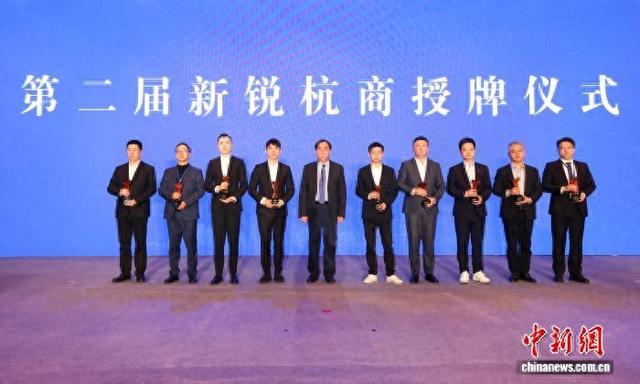
岁启新程 杭州以创新为笔擘画民营经济新蓝图
Xin Lang Cai Jing· 2026-01-01 13:37
Core Insights - The robotics industry in China experienced significant growth in 2025, with an estimated average increase of 50% to 100% across companies [3] - Hangzhou continues to lead in the private economy, with 38 companies listed among the "Top 500 Private Enterprises in China," marking 23 consecutive years at the forefront [1][2] - The city is focusing on innovation and transformation in traditional industries, supported by various government policies aimed at enhancing manufacturing quality and fostering technology-driven enterprises [6][7] Group 1: Industry Growth - The robotics sector has ignited national enthusiasm, with companies rapidly advancing in the field of embodied intelligence [3] - AI technology applications are maturing quickly, transforming traditional products into interactive smart companions, showcasing the potential for widespread industry upgrades [3] Group 2: Government Support and Policies - Hangzhou's government has introduced new policies to promote high-quality manufacturing, emphasizing the integration of technology and industry innovation [6] - The "Ruiniao Plan" aims to cultivate 50,000 tech SMEs and 300 globally influential innovative enterprises by 2027, creating a robust ecosystem for tech startups [6] - The "Spring Sunshine Plan" includes 43 measures to reduce operational and regulatory costs for businesses, enhancing the overall business environment [6]
1.73亿吨!2025年三峡枢纽年通过量创新高
Xin Lang Cai Jing· 2026-01-01 11:33
Core Insights - The Three Gorges Hub is expected to operate 14,415 lock (chamber) times in 2025, with an annual throughput of 173 million tons, representing an 8.66% year-on-year increase [1] - The Three Gorges ship lock will handle 170 million tons, while the Three Gorges ship lift will accommodate 632,000 passengers, both achieving historical highs [1] - The hub has ensured the safe and convenient passage of 46.1448 million tons of livelihood materials, providing efficient, economical, and green logistics channels for industries along the Yangtze River [1] Industry Developments - The Three Gorges Bureau has focused on enhancing responsibility and modernizing navigation, launching integrated command trials at the Gezhouba Hub and improving resource management [1] - The completion of the fifth planned maintenance of the Three Gorges ship lift has strengthened the application of new equipment and processes [1] - The introduction of advanced technologies such as AI models, digital twins, and IoT for safety supervision and equipment maintenance has improved the hub's operational safety and efficiency [1] Environmental Impact - By the end of 2025, the cumulative shore power usage in the Three Gorges shore power experimental zone is expected to exceed 50 million kilowatt-hours, with an annual usage of 11.3 million kilowatt-hours [2] - The 50 million kilowatt-hours of clean electricity is equivalent to replacing approximately 12,000 tons of fuel oil and reducing various pollutant emissions by about 37,000 tons [2] - The shutdown of diesel generators and the adoption of shore power have become standard practice for vessels waiting to pass through the locks at the Three Gorges [2]

又一家国产GPU厂商完成IPO辅导,估值超105亿元
Sou Hu Cai Jing· 2026-01-01 10:56
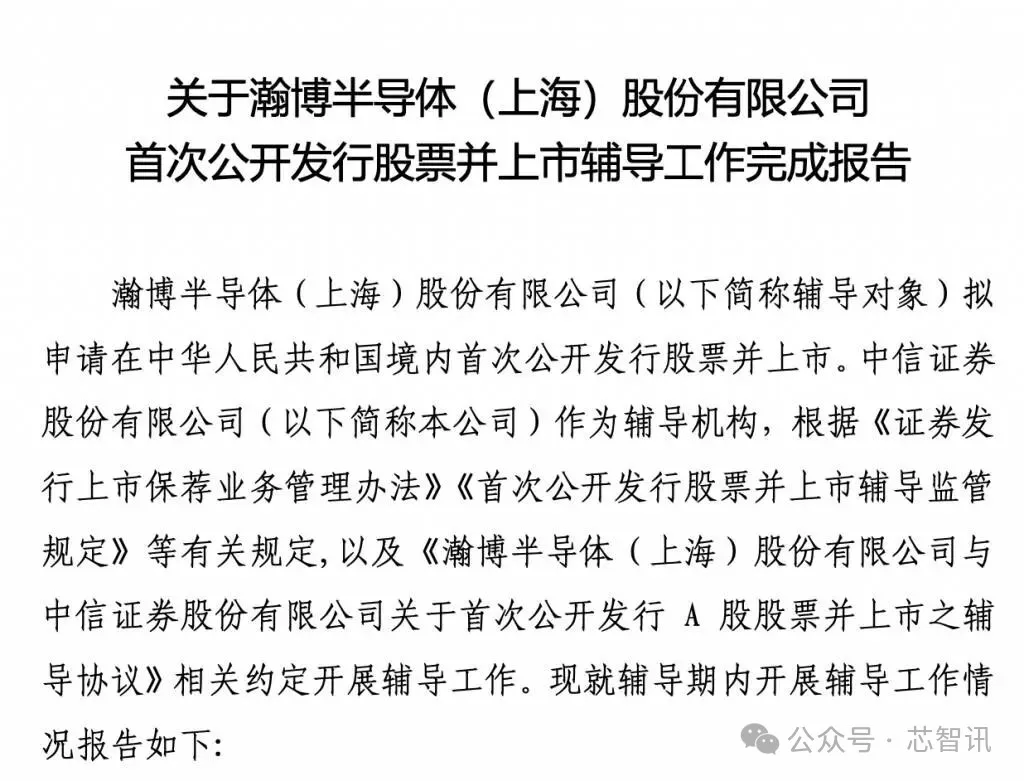
近日,瀚博半导体(上海)股份有限公司披露IPO辅导工作完成报告,辅导机构为中信证券股份有限公司。 △瀚博半导体第二代全功能GPU芯片 SG100 据介绍,瀚博SG100芯片采用7nm先进制程,具备业界领先的渲染性能,同时兼具低延时高吞吐的AI算力和强大的视频处理能力。搭载瀚博自研GPU软件 栈,业界一流的SR-IOV硬件虚拟化技术,支持Windows/Linux下的DirectX 11、OpenGL、Vulkan等API接口,支持H.264、H.265、AV1等多种视频编解码格 式,可广泛支持数字孪生、数字人、云桌面、云手机、云游戏、云渲染、工业软件等多领域应用,助力打造元宇宙产业算力底座。 此次辅导报告中指出,辅导期开始时,辅导对象募集资金投向方案尚未最终确定。辅导工作小组会同辅导对象管理层结合行业发展趋势、自身竞争优势、 未来发展规划,协助辅导对象研究确定并完善了募集资金投资项目计划,确保投资项目符合辅导对象未来发展所需。 另外,辅导对象的股东结构中机构股东较多,因此股东穿透后的间接股东数量较多、穿透核查工作量较大。辅导机构会同律师,根据相关法律法规的要 求,推进股东穿透核查。当前,辅导对象已落实相关监管 ...
国信证券二〇二六年新年致辞:聚势谋远 再攀高峰 踔厉奋发迈向一流投行
Xin Lang Cai Jing· 2026-01-01 03:24
Core Viewpoint - The company emphasizes its commitment to high-quality development and innovation, aligning with national goals for modernization and financial strength, while achieving significant milestones in various sectors [2][5]. Group 1: Achievements and Developments - The company has maintained the highest international credit rating among domestic brokerages (Fitch "BBB+") and has received multiple awards for its governance and sustainable development practices [2][3]. - In the past year, the company has implemented 56 reform measures to enhance its comprehensive financial service capabilities and has successfully completed the acquisition of Wanhe Securities, promoting growth in the Guangdong-Hong Kong-Macao Greater Bay Area and Hainan Free Trade Port [3][10]. - The company has expanded its brand influence and received recognition for its governance, including being awarded the "Best Practice Case of the Board of Directors" for three consecutive years [2][11]. Group 2: Strategic Focus Areas - The company is committed to strengthening technology finance, providing a full range of financial services to technology enterprises, and has facilitated the launch of the first private equity science and technology bonds in the country [4][11]. - It has initiated carbon emission trading business to support the "dual carbon" goals and has issued the first green technology innovation bonds in the market [4][11]. - The company is enhancing its digital finance capabilities by embracing emerging technologies like AI, aiming to drive the construction of a "smart" financial platform [4][11]. Group 3: Future Vision - The company aims to become a world-class comprehensive investment bank with a global perspective and local advantages, focusing on serving the real economy and promoting new productive forces [5][12]. - The company plans to deepen its understanding of the Party's economic work and strengthen its leadership in financial services, aligning with the national strategy for building a financial powerhouse [5][12].

</2025><2026> Hello New Year
程序员的那些事· 2026-01-01 02:57
Group 1 - The article expresses well-wishes for the new year, emphasizing the importance of overcoming challenges and celebrating achievements in coding and life [1][2][4] - It highlights the significance of maintaining connections with family and friends, suggesting that they are the most valuable dependencies in life [5] - The message encourages a positive outlook for 2026, with aspirations for success in both personal and professional endeavors, using coding metaphors to illustrate resilience and creativity [6]
字节跳动大采购英伟达H200 英业达沾光
Jing Ji Ri Bao· 2025-12-31 23:47
Core Viewpoint - ByteDance plans to invest RMB 100 billion (approximately NT$ 44.82 billion) to purchase NVIDIA H200 chips by 2026, pending approval from the U.S. Department of Commerce, which could lead to significant business opportunities for Inventec in AI server manufacturing, potentially exceeding market expectations [1] Group 1: Investment Plans - ByteDance is set to invest RMB 100 billion in NVIDIA H200 chips by 2026 [1] - The investment is contingent upon receiving approval from the U.S. Department of Commerce [1] Group 2: AI Development - ByteDance is actively developing its own AI model, aiming for its chatbot "Doubao" to process over 50 trillion tokens daily by December 2025, a significant increase from 4 trillion tokens by December 2024 [1] - The president of ByteDance's cloud service division, Volcano Engine, revealed that over 100 enterprise clients are currently using more than 1 trillion tokens, indicating a high demand for computing power [1] Group 3: Market Expectations - The industry anticipates that Inventec may secure a substantial AI server manufacturing order this year, which could lead to better-than-expected performance [1]

科创板第二大,芯片巨头冲IPO
DT新材料· 2025-12-31 22:06
Core Viewpoint - The article highlights the significant progress of Changxin Technology in the DRAM market, focusing on its upcoming IPO and the company's growth potential amid industry challenges and opportunities [1][5]. Group 1: IPO and Funding - Changxin Technology's IPO has been accepted, aiming to raise 29.5 billion yuan, making it the second-largest IPO on the Sci-Tech Innovation Board since its inception [1][2]. - The funds will be allocated to various projects, including 13 billion yuan for the second phase of wafer manufacturing and 9 billion yuan for next-generation DRAM technology research [1][5]. Group 2: Company Overview - Established in June 2016, Changxin Technology operates under an IDM model, integrating chip design, manufacturing, packaging, testing, and sales [2]. - The company has a diverse shareholder structure, with no single entity holding more than 50% of shares, including significant investments from state-owned funds and tech giants like Alibaba and Tencent [2][5]. Group 3: Product Development and Market Position - Changxin Technology has successfully developed four generations of DRAM technology, with products like LPDDR5X achieving speeds of 10,667 Mbps, a 66% increase from previous generations [3][4]. - As of 2024, the company is projected to be the largest DRAM manufacturer in China and the fourth globally, with a market share of 3.97% [3][4]. Group 4: Financial Performance - The company's revenue has shown explosive growth, with projected revenues of 241.78 billion yuan in 2024, reflecting a compound annual growth rate of 70.81% from 2022 to 2024 [4]. - Despite significant losses in previous years, Changxin Technology anticipates turning a profit in 2025, with expected revenues between 55 billion and 58 billion yuan and a net profit of 2 billion to 3.5 billion yuan [5][6]. Group 5: Industry Context and Future Outlook - The global DRAM market is transitioning from DDR4 to DDR5 and HBM, with Changxin Technology focusing on upgrading its production capabilities to remain competitive [6][7]. - The company is positioned to benefit from the increasing demand for domestic semiconductor production amid geopolitical tensions and supply chain challenges [5][7].
2025盘点:DeepSeek引领AI进化 国补激发消费活力 行业重塑带来更多可能
Xin Lang Cai Jing· 2025-12-31 16:07
Core Insights - The year 2025 has been pivotal for the digital 3C industry, marked by significant advancements in AI technology, policy support, and market dynamics, setting the stage for future developments in 2026 [1][15] Group 1: AI Developments - The launch of DeepSeek-R1 on January 20, 2025, showcased its competitive capabilities against top closed-source models with a training cost of approximately $6 million, challenging Silicon Valley's computational dominance [1][16] - DeepSeek's V3.2-Exp, released in September, introduced a sparse attention mechanism that halved API prices, while the December V3.2 version integrated logical reasoning with agent tool usage, achieving gold medal performances in international competitions [2][16] - DeepSeek's contributions to the 3C industry include promoting "open-source equity," enabling low-cost smart experiences on budget devices through cloud APIs, and leading a global shift towards efficiency in AI [2][16] Group 2: Policy Impact on Market - 2025 is defined as the "Year of National Subsidies" for the 3C market, with the introduction of a policy on January 8 that included subsidies of up to 500 yuan for mobile phones, tablets, and smartwatches, significantly boosting daily active users on e-commerce platforms [3][18] - The subsidy policy expanded in the second half of the year, with 14 provinces increasing the maximum subsidy to 700 yuan, resulting in a total retail sales increase of over 120 billion yuan [3][18] - The continuation of the subsidy policy into 2026 is expected to further include emerging categories like smart glasses, enhancing consumer access to mid-to-high-end products and shifting competition from parameter-based pricing to value-for-money battles [5][18] Group 3: Industry Challenges - The "Romashi incident" in June 2025 involved the recall of nearly 500,000 defective power banks due to safety concerns, leading to significant regulatory responses and the introduction of stricter safety standards in the power bank industry [19][21] - Following the incident, new regulations mandated that all power banks must carry a 3C certification, marking a shift away from low-cost models and ensuring consumer safety [21][22] Group 4: Growth of AI Glasses - 2025 marked a breakthrough year for the AI glasses industry, driven by policy support and market demand, with global shipments expected to reach 12.05 million units and the Chinese market alone surpassing 2.75 million units, reflecting a 107% year-on-year increase [8][22] - The emergence of numerous brands, including major players like Huawei and Xiaomi, indicates a competitive landscape with nearly 70 companies entering the market [10][24] Group 5: AI Assistant Developments - The launch of the "Doubao Phone" by ByteDance and ZTE on December 1, 2025, introduced an AI assistant capable of executing complex tasks across applications, marking a significant advancement in mobile technology [10][24] - The introduction of the AI assistant sparked a debate over app permissions and user data security, highlighting the tension between innovation and established app ecosystems [12][27]