
双碳目标

Search documents
四川绿色低碳产业发展态势良好 2025年水力发电量居全国第一
Zheng Quan Ri Bao Wang· 2026-01-22 05:17
Core Insights - In 2025, Sichuan's green low-carbon advantage industries are expected to show strong growth, significantly supporting the province's industrial recovery and becoming a highlight of its economic development [1][2]. Group 1: Economic Performance - The added value of Sichuan's green low-carbon advantage industries is projected to increase by 7.8% year-on-year in 2025, with specific sectors like power batteries and vanadium-titanium industries seeing growth rates of 28.4% and 16% respectively [1]. - The total installed capacity of hydropower in Sichuan has historically surpassed 100 million kilowatts, with significant increases in the production of related products such as new energy vehicles and lithium-ion batteries [1]. Group 2: Energy Production - By 2025, Sichuan's industrial-scale clean energy generation is expected to reach 4,113.3 billion kilowatt-hours, accounting for 80.8% of the province's industrial power generation, maintaining the top position nationally [2]. - Hydropower generation remains the highest in the country, with solar power generation reaching 13.05 billion kilowatt-hours, a 52% increase from the previous year, and gas power generation increasing by 72.1% to 13.13 billion kilowatt-hours [2]. Group 3: Strategic Development - Sichuan is focusing on building a clean, low-carbon, safe, and efficient energy system, emphasizing the construction of a new energy system and promoting a multi-energy complementary energy structure [1][3]. - The province aims to balance resource utilization, ecological protection, and economic development, advocating for a development mechanism that combines government guidance, enterprise leadership, market operations, and ecological industry integration [3].
超级电力帝国崛起,从一块光伏板开始
3 6 Ke· 2026-01-22 05:05
Group 1 - The core point of the article highlights that China's electricity consumption is projected to exceed 10 trillion kilowatt-hours by 2025, marking a significant milestone in energy consumption and positioning China as a potential energy empire [1][3] - This electricity consumption is equivalent to more than double that of the United States and surpasses the total consumption of the EU, Russia, Japan, and India combined [1][3] - The rapid expansion of China's energy infrastructure is evidenced by the National Grid's announcement of a 40% increase in fixed asset investment during the 14th Five-Year Plan period, reaching 4 trillion yuan [1] Group 2 - The article emphasizes the strategic importance of electricity in the 21st century, suggesting that control over electricity and its pricing will determine global dominance [3][6] - Historical context is provided, detailing significant developments in China's electricity infrastructure, including the construction of high-voltage power lines, large hydropower stations, and nuclear power plants [5][6] - The article notes that while solar power currently accounts for only 5.95% of China's electricity generation, it is viewed as a sector with immense growth potential due to its adaptability and lower entry barriers compared to other energy sources [8][9] Group 3 - The solar power industry has seen rapid growth, with major companies like Longi Green Energy and Tongwei experiencing significant stock price increases following the end of European anti-dumping investigations [12][13] - However, the industry faces challenges, including overproduction and significant financial losses, with major companies forecasting losses in the billions due to aggressive market competition and capacity expansion [15][16] - The article suggests that despite these challenges, companies are reluctant to cut production, aiming to achieve economies of scale and maintain competitive advantages in the long term [18]



守护藏北万家灯火,西藏最大的“充电宝”如何迎峰度冬?
Zhong Guo Fa Zhan Wang· 2026-01-22 04:29
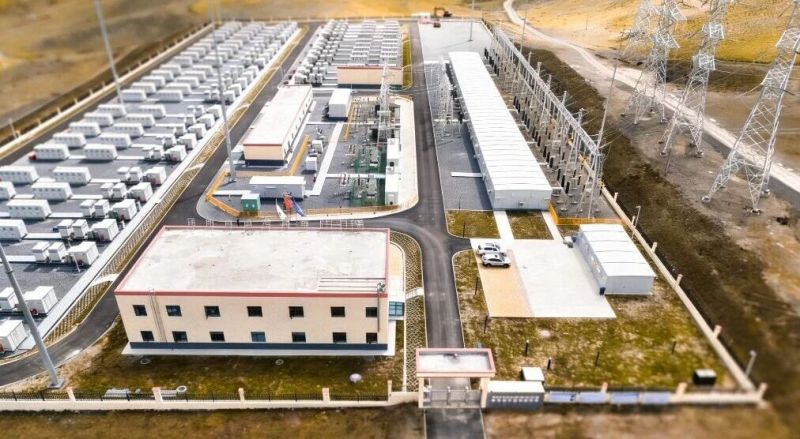
"大家一定要细致,每台主要设备都要巡检到!尤其是现在温差特别大,在巡检过程中如果发现有异常情况,一定 要第一时间报告。还有要对站内各种充油设备的油位和充气设备气压进行重点检查,半点不能马虎!"早上的班前 会上,电站运维班组班长张伸手拿设备巡检记录细致地做着工作安排。张伸今年38岁,带领的班组一共5人,都是 才参加工作没几年的大学生,队伍虽然年轻,但在"师带徒"模式培养下,每个人都可以独当一面。 西藏开投色尼达嘎普独立构网型储能电站 一阵叮咛后,按照任务分工,组员顿珠杰布和拉珍为一组开始了一天的设备巡检工作。为抵御零下20℃的低温寒 风,顿珠杰布和拉珍将脸部捂上了厚厚的面罩,拿上测温仪和记录本等工具便出发了。室外的冷风无孔不入,顺 着衣服和面罩的缝隙就钻了进来,两人的耳朵和整张脸都冻得通红,每一次呼吸都会让鼻腔生疼。虽然巡检的路 线和项目如往常一样,但每次发现的问题却是不尽相同。这次的巡检中,顿珠杰布和拉珍发现了18号箱变熔断器 室处有滴油情况,汇报、办票、操作、仔细查找漏油点位、临时处理、再汇报、再操作……上午十点巡检时发现 问题,一直到下午六点才完成了消缺工作,站内沥青路面反射的夕阳光记录下了他们一天忙碌的 ...
300辆氢能重卡投运,氢通能源构建高度可复制性 “富源模式”
势银能链· 2026-01-22 04:12
Core Viewpoint - The article highlights the launch of the "Southwest Hydrogen Corridor" and the operational commencement of 300 hydrogen-powered heavy trucks in Yunnan, marking a significant step in the strategic collaboration between Hydrogen Energy Group and Fuyuan County, aimed at creating a comprehensive hydrogen energy application project integrating renewable energy and traditional industries [2][4][18]. Group 1: Project Overview - The "Southwest Hydrogen Corridor" project aims to integrate green energy, traditional industries, and green transportation, creating a closed-loop system from renewable energy to end-use applications [2][4]. - The project represents a total investment of 3.5 billion yuan, with 1 billion yuan allocated for hydrogen production facilities and 2.5 billion yuan for wind power construction [5]. - Upon completion, the project is expected to reduce diesel consumption by approximately 9,000 tons annually and provide 500 million kWh of clean electricity to the grid, saving about 160,000 tons of standard coal and reducing CO2 emissions by over 44,000 tons each year [5]. Group 2: Technological and Economic Aspects - The hydrogen-powered trucks, equipped with a 130 kW fuel cell system and a 262 kWh lithium battery, can achieve a range of over 600 kilometers under full load conditions, with a hydrogen consumption of approximately 8.5-9 kg per 100 kilometers [11][12]. - The operational cost of the hydrogen trucks is significantly lower than that of electric trucks, with savings of up to 13% at an electricity price of 0.7 yuan per kWh, and up to 22% when the price rises to 1 yuan per kWh [12]. - The project is expected to create around 200 new jobs in the local area, contributing to employment stability and economic development [5]. Group 3: Strategic Partnerships and Future Plans - Hydrogen Energy Group has established strategic partnerships with various organizations, including Shanghai University of Technology and China Coal Energy Group, to enhance research and development in hydrogen energy [6][8][10]. - The company plans to expand its fleet to 1,000-2,000 hydrogen-powered trucks in Fuyuan and aims to deliver 3,000 hydrogen vehicles by 2026, focusing on eight core regions in China [15][16]. - The successful implementation of the Fuyuan model is seen as a replicable framework for other coal-producing regions and logistics-intensive areas, promoting a green transition in transportation [15][18].

圣思科技:从氢能极板到钙钛矿组件,以PVD为核心提供跨行业涂层方案 | 势银走访
势银能链· 2026-01-22 04:12
Core Viewpoint - Shengsi Technology is positioned as a "one-stop solution provider" in the new energy equipment and high-end vacuum coating sectors, showcasing strong technological innovation and industry development capabilities since its establishment in 2021 [4][8]. Group 1: Company Overview - Shengsi Technology focuses on the entire industrial chain of new energy (wind, solar, hydrogen) and high-end vacuum coating technology, having been recognized as a national high-tech enterprise in December 2024 and a municipal R&D platform in October 2025 [4]. - The core team has over 20 years of industry experience and has applied for more than 30 patents, with 15 already granted [4]. Group 2: Hydrogen Energy Business - The company provides complete production line solutions for hydrogen energy, covering fuel cells (PEMFC) and water electrolysis (ALK/PEM/AEM) [5]. - The metal plate stamping production line can achieve a production rate of 30-60 sets per minute and saves over 50% in space compared to similar industry lines [5]. - The seventh-generation metal plate coating production line boasts a single system annual capacity of over 5 million pieces, with excellent performance in key indicators such as contact resistance and corrosion resistance [5]. Group 3: Coating Business - Shengsi Technology's coating business is centered around Physical Vapor Deposition (PVD) technology and extends to Atomic Layer Deposition (ALD) [6]. - The company offers high-performance coating solutions for various industries, including tools, medical devices, and electronics, and has developed specialized coating processes for emerging fields like hydrogen energy and perovskite solar cells [6]. - The "turnkey" solution model significantly reduces the technical entry barriers and operational costs for clients [6]. Group 4: Perovskite Solar and Wind Power Business - In the perovskite solar sector, Shengsi Technology provides key equipment such as automatic spin-coating devices and vacuum deposition equipment [7]. - The wind power segment focuses on the R&D and manufacturing of small to medium-sized wind turbines, with products ranging from 500W to 100kW [7]. - The vertical axis wind turbines are designed for distributed energy applications, featuring low starting wind speeds and strong wind resistance [7]. Group 5: Future Outlook - Shengsi Technology's unique business model combines core process equipment, integrated solutions, and differentiated products, positioning it well in the rapidly growing new energy market [8]. - The company's emphasis on technological iteration and industry-academia collaboration is expected to enhance its role in the domestic high-end equipment localization process [8][9].

A股市场或仍处于震荡整固中,年报预增主线确定性较强
British Securities· 2026-01-22 02:03
Market Overview - The A-share market is currently experiencing a phase of oscillation and consolidation, with a strong certainty in the main line of annual report pre-increases [1][2] - Recent escalations in US-EU trade frictions have led to a general decline in global risk appetite, prompting funds to flow into safe-haven assets like gold [1][2] - Despite the market's oscillation, A-shares have shown resilience, with major indices recovering from initial lows to close in positive territory [1][4] Short-term Market Outlook - The market is expected to continue its oscillation and consolidation in the short term due to shrinking trading volume, with total trading volume around 2.6 trillion yuan [2][10] - The upcoming peak of annual report forecasts in January is creating a battleground between performance expectations and fundamental validations, particularly for certain technology sectors where earnings visibility is in question [2][10] - However, the medium-term positive trend remains intact, supported by a global interest rate cut cycle and a favorable macro liquidity environment [2][10] Sector Analysis Precious Metals - The precious metals sector has shown strong performance, driven by factors such as the onset of a US Federal Reserve rate cut cycle, increased geopolitical tensions, and robust demand from global central banks [6][9] - The report suggests caution against chasing prices after significant increases, recommending short-term trading strategies with stop-loss measures [6] New Energy Metals - The new energy sector, particularly lithium batteries and related technologies, remains active, supported by ongoing global efforts to achieve carbon neutrality [7][9] - The report highlights the importance of upcoming policy reforms in the photovoltaic sector and the potential for continued investment in new energy technologies [7] Semiconductor Industry - The semiconductor sector has been identified as a key area for investment, with a notable increase in stock prices and a projected long-term positive outlook due to digital transformation and geopolitical factors [8][9] - The report emphasizes the importance of focusing on companies with strong earnings and growth expectations while avoiding speculative stocks lacking fundamental support [9]
北京这五年:从“用上电”到“用好电”“用绿电”
Zhong Guo Neng Yuan Wang· 2026-01-22 01:38
京华大地,文脉绵延;电力动脉,脉动强劲。 "十四五"时期,北京锚定"四个中心"战略定位、向着国际一流和谐宜居之都阔步前行。国网北京市电力 公司作为国家电网有限公司服务首都窗口单位和首都最大的公用事业企业,胸怀"国之大者",践行央企 担当,深入贯彻"四个革命、一个合作"能源安全新战略,以构建新型电力系统为核心,在电力保供、绿 色转型、为民服务等领域攻坚克难、砥砺前行,用澎湃电能为首都高质量发展注入不竭动力。 强网夯基筑牢首都能源安全屏障 能源安全是"国之大者",坚强电网是城市发展的"压舱石"。作为典型受端电网,北京七成用电依赖外 送。"十四五"期间,国网北京电力秉持"宁让电等发展,不让发展等电"理念,以"外强动脉、内优网 架"为核心,推动电网实现质的飞跃。 2025年12月,冬日的电网建设现场机械轰鸣、人影攒动。不久前,亦庄500千伏变电站工程竣工投产, 不仅有效增强了北京东南部地区供电可靠性和稳定性,而且标志着北京市"十四五"时期的电网建设任务 圆满收官。 五年间,国网北京电力32项220千伏及以上电网工程顺利投运,新增变电容量1698万千伏安。其中,以 京津冀特高压环网为支点,构建500千伏扩大双环网,13 ...
从“奢侈品”到“必需品” 抽水蓄能这五年发生了什么?
Zhong Guo Dian Li Bao· 2026-01-22 01:09
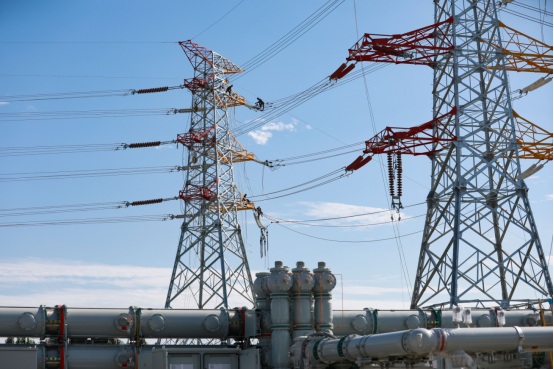
Core Viewpoint - The development of pumped storage hydropower in China has transitioned from being viewed as a luxury to an essential component of the energy system, with significant advancements in capacity and technology during the 14th Five-Year Plan period [2][3][11]. Group 1: Capacity Growth - By the end of 2025, the first unit of the Zhejiang Tiantai pumped storage power station will be operational, featuring a single unit capacity of 425,000 kilowatts and a rated water head of 724 meters, setting new domestic and global records [1]. - The installed capacity of pumped storage in China increased from 31 million kilowatts at the beginning of the 14th Five-Year Plan to 66 million kilowatts by its conclusion, effectively doubling the capacity [1][3]. - In 2021, the National Energy Administration set a target for a total installed capacity of 120 million kilowatts by 2030, with a focus on 340 key projects [3][11]. Group 2: Technological Advancements - The industry has seen a significant technological revolution, with the development of a new type of variable-speed pumped storage unit that can adjust power output efficiently, marking a shift from following to leading in technology [7][8]. - The successful launch of the first domestic large-scale variable-speed pumped storage unit's excitation system in July 2025 represents a breakthrough in overcoming previous technological barriers [7][8]. - The Zhejiang Tiantai pumped storage power station's unit, with the highest rated water head globally, signifies China's leading position in high-head pumped storage technology [8]. Group 3: Market Dynamics - The policy framework for pumped storage has been enhanced, with the introduction of a two-part electricity pricing mechanism that stabilizes revenue expectations and attracts diverse investment [11][12]. - Non-traditional power investors, including local energy groups and social capital, have increasingly entered the pumped storage sector, reflecting a significant market reform [12][13]. - The implementation of the Energy Law and management guidelines for pumped storage projects aims to ensure a balanced national approach while accommodating local differences [12][13]. Group 4: Future Outlook - The pumped storage sector is expected to continue its rapid growth, with projections indicating a total installed capacity of around 120 million kilowatts by 2030, aligning with the development of renewable energy [13]. - The integration of smart construction technologies, such as IoT and AI, is transforming traditional hydropower projects into modernized benchmarks of efficiency and effectiveness [9].
如何推动碳普惠从激励工具向制度化机制转型?
Zhong Guo Huan Jing Bao· 2026-01-22 00:27
Core Insights - The article discusses the importance of integrating public and small-scale carbon reduction behaviors into the national carbon reduction system under the ongoing "dual carbon" goals, highlighting the carbon-inclusive mechanism as a significant institutional innovation that has shown positive results in engaging social participation but lacks a stable, sustainable market value realization mechanism [1][2] Group 1: Current Practices and Developments - The carbon-inclusive mechanism aims to quantify and visualize low-carbon behaviors of individuals, families, and small entities through digital accounting and incentives, thus creating a real incentive mechanism for climate governance [2][3] - Multiple provinces and cities have made progress in establishing carbon-inclusive systems, incorporating scenarios such as green travel, energy-saving behaviors, and low-carbon consumption into the accounting system, significantly enhancing public participation in carbon reduction [2][3] - The mechanism has raised public awareness of ecological protection and reinforced social recognition of green lifestyles, laying the groundwork for future integration with other systems and market development [3] Group 2: Challenges Faced - There are institutional issues that need to be addressed, such as the unclear boundaries between carbon-inclusive mechanisms and existing carbon emission trading markets, which could hinder the formation of market value [4][5] - The current design focuses on incentivizing participation without incorporating the carbon reduction achievements of the public and small enterprises into a tradable voluntary reduction system, leading to a lack of stable market signals and long-term participation expectations [4] - The connection between carbon-inclusive mechanisms and carbon finance remains insufficient, as most outcomes have not been integrated into financial product designs or green finance tools [5] Group 3: Policy Recommendations - It is suggested to clarify the usage boundaries of carbon-inclusive outcomes at the institutional level, ensuring that public and small enterprise carbon reduction results are recognized in broader voluntary reduction and carbon neutrality applications [6][7] - Establishing a trading mechanism for carbon-inclusive outcomes that allows quantified low-carbon behaviors to be realized in broader trading scenarios is recommended, requiring work on accounting standards and data traceability [6] - Accelerating the integration of carbon-inclusive outcomes into the green finance system is crucial for enabling financial institutions to recognize, assess, and price their value, thus supporting the sustainable development of the mechanism [7]
中经评论:10万亿千瓦时的信心与动力
Jing Ji Ri Bao· 2026-01-22 00:10
Group 1 - The core point of the article highlights that in 2025, China's total electricity consumption will exceed 10 trillion kilowatt-hours for the first time, reaching 10.4 trillion kilowatt-hours, marking a 5% year-on-year increase, and solidifying China's position as the world's largest electricity consumer [1][2][3] - This electricity consumption level is approximately double that of China's total consumption in 2015 and more than double that of the United States, surpassing the combined annual consumption of the EU, Russia, India, and Japan [1][2] - The growth in electricity demand reflects the robust vitality and quality of China's economy, driven by industrial activities and residential needs, with a significant contribution from high-end manufacturing and emerging technologies [2][3] Group 2 - The increase in electricity consumption is achieved alongside a continuous decline in energy consumption per unit of GDP, indicating more efficient production and higher quality development outcomes [2] - The optimization of industrial structure is evident, with high-end manufacturing sectors such as new energy vehicles and wind power equipment experiencing growth rates exceeding 20% and 30%, respectively [2] - The rapid development of the digital economy and new technologies has led to a surge in electricity demand, particularly in sectors like internet services and charging infrastructure, with year-on-year growth rates exceeding 30% and nearly 50% respectively [2][3] Group 3 - The article emphasizes that the growth in electricity demand does not exacerbate reliance on fossil fuels, as non-fossil energy sources account for over 60% of installed capacity, with wind and solar power leading globally [3] - The trend of decoupling electricity consumption growth from carbon emissions is becoming apparent, with one-third of electricity consumption being green energy [3] - The construction of a new power system is addressing challenges related to the integration of renewable energy sources, supporting China's commitment to carbon neutrality [3] Group 4 - The substantial electricity demand poses challenges for the planning, construction, scheduling, and supply capabilities of the power system, necessitating a robust national energy production and transmission network [4] - Despite the progress, disparities in per capita electricity consumption and regional differences remain, indicating ongoing challenges in achieving balanced development [4] - The article stresses the importance of technological empowerment in addressing these challenges, including advancements in clean energy technologies, energy storage, and smart grid innovations [4]