大语言模型

Search documents
理想VLA到底是不是真的VLA?
理想TOP2· 2025-08-20 15:38
Core Viewpoint - The article discusses the capabilities and performance of the VLA (Vehicle Language Architecture) in autonomous driving, particularly in comparison to E2E (End-to-End) models combined with VLM (Vision Language Model) [1][2]. Group 1: Performance Comparison - VLA demonstrates superior defensive driving capabilities, particularly in scenarios with obstructed views, showing smooth deceleration based on remaining distance, unlike E2E models which struggle with such nuanced control [2][3]. - In congested traffic situations, VLA exhibits advanced decision-making by choosing to change lanes after assessing the environment, whereas E2E models typically resort to rerouting logic [2][3]. - VLA's trajectory generation is more stable and less prone to deviations, as it understands non-standard lane widths and adjusts driving strategies accordingly, significantly reducing the "snake-like" driving behavior seen in E2E models [3][4]. Group 2: Technical Insights - The VLA system integrates a large language model (LLM) for enhanced scene understanding, which allows for better decision-making in complex driving environments [2][4]. - The system is not fully autonomous but serves as an advanced driver assistance system, requiring human intervention when necessary [5][6]. - VLA's architecture allows for faster iterations and optimizations across different driving scenarios, improving overall performance compared to traditional E2E models [5][6]. Group 3: Limitations and Considerations - There are still scenarios where VLA may misinterpret traffic signals, indicating areas for improvement in its decision-making algorithms [5][6]. - The system's capabilities differ significantly from E2E models, necessitating driver readiness to take control when required [5][6].


斑马智行递表港交所 为中国最大的以软件为核心的智能座舱解决方案供应商
Zhi Tong Cai Jing· 2025-08-20 13:49
Core Viewpoint - Zebra Network Technology Co., Ltd. (Zebra Smart Travel) has submitted a listing application to the Hong Kong Stock Exchange, with Deutsche Bank, CICC, and Guotai Junan International as joint sponsors [1] Company Overview - Zebra Smart Travel is a global pioneer and leader in smart cockpit solutions, focusing on transforming vehicles from cold hardware into intelligent partners that can perceive and interact [3] - The company is the largest software-centric smart cockpit solution provider in China based on projected 2024 revenue and ranks first in solution deployment volume [3] - It is one of only two third-party suppliers in China with a fully self-developed automotive operating system and uniquely integrates three core pillars of smart automotive experience: system-level operating system solutions, AI end-to-end solutions, and automotive platform services [3] Market Insights - The global smart vehicle sales are expected to grow from 58 million units in 2024 to 86.5 million units by 2030, with a compound annual growth rate (CAGR) of 6.9% [4] - The penetration rate of large language models in China's smart vehicles is projected to increase from 10% to 40% during the same period [4] - The market size for smart cockpit solutions is anticipated to grow from RMB 129 billion in 2024 to RMB 327 billion by 2030, with a CAGR of 16.8% [5] - The software-based cockpit solutions market is expected to grow even faster, from RMB 40.1 billion in 2024 to RMB 114.9 billion by 2030, reflecting a CAGR of 19.2% [5] Financial Performance - Zebra Smart Travel reported revenues of approximately RMB 805 million, RMB 872 million, and RMB 824 million for the fiscal years 2022, 2023, and 2024, respectively [5][6] - The company incurred total annual losses of approximately RMB 878 million, RMB 876 million, and RMB 847 million for the same fiscal years [5][6] - For the three months ending March 31, 2024, and 2025, the revenues were RMB 168 million and RMB 136 million, respectively, with corresponding losses of RMB 2.04 billion and RMB 15.82 billion [5][6]
新股消息 | 斑马智行递表港交所 为中国最大的以软件为核心的智能座舱解决方案供应商
智通财经网· 2025-08-20 13:49
Core Viewpoint - Zebra Network Technology Co., Ltd. (Zebra Smart Travel) has submitted a listing application to the Hong Kong Stock Exchange, with Deutsche Bank, CICC, and Guotai Junan International as joint sponsors [1] Company Overview - Zebra Smart Travel is a global pioneer and leader in smart cockpit solutions, focusing on transforming vehicles from cold hardware into intelligent partners that can perceive and interact [3] - The company is the largest software-centric smart cockpit solution provider in China based on projected 2024 revenue and ranks first in terms of solution deployment volume [3] - It is one of only two third-party suppliers in China with a fully self-developed automotive operating system and the only one to seamlessly integrate the three core pillars of smart automotive experience: system-level operating system solutions, AI end-to-end solutions, and automotive platform services [3] Market Insights - The global smart vehicle sales are expected to grow from 58 million units in 2024 to 86.5 million units by 2030, with a compound annual growth rate (CAGR) of 6.9% [4] - The penetration rate of large language models in China's smart vehicles is projected to increase from 10% to 40% during the same period [4] - The market size for smart cockpit solutions is anticipated to grow from RMB 129 billion in 2024 to RMB 327 billion by 2030, with a CAGR of 16.8% [5] - The software-based cockpit solutions market is expected to grow even faster, from RMB 40.1 billion in 2024 to RMB 114.9 billion by 2030, reflecting a CAGR of 19.2% [5] Financial Performance - For the fiscal years 2022, 2023, and 2024, Zebra Smart Travel reported revenues of approximately RMB 805 million, RMB 872 million, and RMB 824 million, respectively [5][6] - The company incurred losses and total comprehensive expenses of approximately RMB 878 million, RMB 876 million, and RMB 847 million for the same periods [5][6] - The financial data for the three months ending March 31, 2024, and 2025, showed revenues of RMB 168 million and RMB 136 million, with losses of RMB 203 million and RMB 1.58 billion, respectively [5][6]
突破Agent长程推理效率瓶颈!MIT&新加坡国立联合推出强化学习新训练方法
量子位· 2025-08-20 10:21
Core Viewpoint - The MEM1 framework, developed by MIT and the National University of Singapore, addresses the challenges faced by AI agents in managing complex tasks and memory efficiently, achieving significant improvements in inference speed and memory usage compared to traditional models [2][22]. Group 1: Framework Overview - MEM1 framework allows AI agents to autonomously manage their working memory and reasoning processes, akin to how humans organize thoughts after a period of work [4][10]. - The framework introduces a near constant memory usage model, significantly reducing the computational cost associated with increasing dialogue rounds [6][12]. Group 2: Performance Metrics - The MEM1-7B model demonstrates a 3.5 times faster inference speed compared to a traditional 14B model, while maintaining a peak token count that is approximately one-fourth of the latter [2][3]. - In a complex 16-target task, MEM1 outperformed larger models and those with external memory modules across accuracy, context length, and inference speed [17][18]. Group 3: Training Methodology - MEM1 employs an end-to-end reinforcement learning approach, utilizing an attention masking mechanism that allows the agent to focus on relevant historical information while compressing it efficiently [12][22]. - The training process involves three key operations: extracting key information, integrating it with internal memory, and pruning redundant content [14][20]. Group 4: Practical Applications - The MEM1 framework has been tested in various environments, including document retrieval QA, open-domain web QA, and multi-round online shopping scenarios, showcasing its adaptability and effectiveness in real-world applications [19][20]. Group 5: Industry Implications - The traditional approach in the industry has been to integrate external memory modules, which can be cumbersome and less effective; MEM1's approach suggests a shift towards self-managed memory systems through reinforcement learning [22].

网宿科技2025上半年净利润同比增长25.33% 海外市场开拓进展显著
Quan Jing Wang· 2025-08-20 03:17
Core Insights - The company reported a revenue of 2.351 billion yuan for the first half of 2025, representing a year-on-year growth of 2.19% [1] - The net profit attributable to shareholders reached 373 million yuan, showing a significant increase of 25.33% year-on-year [1] - Operating cash flow net amount was 376 million yuan, reflecting a robust growth of 52.41% compared to the previous year [1] Business Development - The company achieved notable progress in overseas market expansion, security business development, and technological innovation [1] - It actively expanded into Southeast Asia and the Middle East, establishing a subsidiary in Dubai to enhance overseas service capabilities [1] - The company focused on its core businesses of CDN and edge computing, optimizing its business structure by divesting from MSP operations and selling shares in Cloudsway Pte. Ltd. [1] Security Business - The security business segment generated revenue of 646.71 million yuan in the first half of 2025, marking a year-on-year increase of 13.96% [1] - The company launched a deep assessment service for large model security, providing a comprehensive security solution for large language models and AI applications [2] - The company was positioned as a leader in the IDC MarketScape for Chinese intelligent security access service edge vendors in 2025 [2] Technological Innovation - The company upgraded its next-generation edge AI platform, focusing on a four-layer capability matrix of "resources-model-services-applications" [2] - It developed core products such as edge AI gateways, edge model inference, and edge AI applications, enhancing its technical strength and market competitiveness in edge computing [2] - The company introduced a restricted stock incentive plan in 2025, with share-based payment costs amounting to 65.58 million yuan, an increase of 19.10 million yuan year-on-year [2] Company Overview - Founded in January 2000, the company aims to become a global leader in IT infrastructure services [2] - It leverages core technologies and service capabilities in computing, storage, networking, and security to provide efficient, stable, and secure IT infrastructure and services for internet, government, and enterprise clients [2]

英伟达发布小语言模型Nemotron-Nano-9B-v2;印度研发400纳米机器人,“钢铁防线”实现牙齿脱敏丨AIGC日报
创业邦· 2025-08-20 00:08
Group 1 - Alibaba's Tongyi Qianwen launched Qwen-Image-Edit, an image editing model based on the 20 billion parameter Qwen-Image, enhancing text rendering capabilities for precise image editing [2] - Nvidia introduced the Nemotron-Nano-9B-V2, an open-source small language model that achieved best-in-class performance in specified benchmark tests and can run on a single Nvidia A10 GPU [2] - Taotian Group's future life lab developed CombatVLA, a 3D action game-specific model that outperformed both GPT-4o and human players in combat tasks, addressing real-time decision-making challenges in complex 3D environments [2][3] Group 2 - The CombatVLA model provides detailed action execution and frame sequences for games like "Black Myth: Wukong" and "Sekiro: Shadows Die Twice," showcasing its ability to interpret game scenarios and execute actions effectively [3][4] - India's research team developed CalBot, a 400-nanometer robot aimed at treating tooth sensitivity by creating a protective layer within dentinal tubules, potentially offering a solution similar to enamel protection [4]
GPT-5落地,Kimi掉队,大模型“腰部危机”或将提前
Xi Niu Cai Jing· 2025-08-19 08:34
2024年春节,Kimi在B站投放广告超1亿元,单用户获客成本(CPA)30元,带动MAU短时飙升。然而,随着豆包、通义、元宝等厂商把长文本上限卷到"百 万tokens"标配,Kimi的先发优势被快速抹平。更致命的是,垂直场景工具(Wind、知网)通过绑定专业数据库,以更高精度切走金融、学术等高价值客 群,通用长文本需求被"降维打击"。 此外, Kimi还受到数据、算力、资本的三重制约。在数据上,阿里、字节、腾讯可借助电商、短视频、社交生态闭环持续训练,Kimi只能依赖公开语料与 有限合作方,数据飞轮难以启动。 算力上,美国高端GPU禁售后,国产替代性能折损30%—50%;Kimi需外采云资源,训练成本较自建云大厂高20%以上。 在资本上,2023年8月后,月之暗面未再获得新融资;2024年底创始人与投资人股权纠纷发酵,潜在出资方观望情绪浓厚。 近日,OpenAI正式推出GPT-5,将大语言模型与推理模型深度耦合,官方宣称事实错误率较GPT-4o下降47%,多轮复杂任务一次性通过率刷新SOTA(State- of-the-Art)。资本市场迅速投票:当日英伟达涨6.4%、微软涨3.1%,而A股算力租赁板块整体 ...

“数”看期货:大模型解读近一周卖方策略一致观点-20250819
SINOLINK SECURITIES· 2025-08-19 07:33
Group 1: Stock Index Futures Market Overview - The four major index futures contracts experienced an overall increase last week, with the CSI 1000 index futures rising the most by 5.21%, while the SSE 50 index futures had the smallest increase of 2.19% [3][11] - The average trading volume for the current, next, and quarterly contracts of IF, IC, IH, and IM increased compared to the previous week, with IH showing the largest increase of 65.56% and IM the smallest at 30.52% [3][11] - As of last Friday's close, the annualized basis rates for the current contracts of IF, IC, IM, and IH were -1.00%, -7.95%, -8.22%, and 1.71% respectively, indicating a narrowing of the basis for IF, IC, and IM, while IH shifted from a discount to a premium [3][11] Group 2: Cross-Period Price Differences - As of last Friday's close, the cross-period price difference rates for the current contracts of IF, IC, IM, and IH were at the 18.10%, 32.40%, 14.20%, and 9.00% percentiles since 2019 [4][12] - Currently, there are no arbitrage opportunities for the IF main contract based on the closing prices, as the required basis rates for both long and short arbitrage strategies do not meet the necessary thresholds [4][12] Group 3: Dividend Forecasts - After August, the strength of dividends is expected to weaken, but it will still impact the four major index futures. The estimated impact of dividends on the September main contracts for the CSI 300, CSI 500, SSE 50, and CSI 1000 indices is 3.62, 1.40, 1.39, and 0.89 respectively [5][11] - The correlation between basis changes and dividend impacts, as well as investor trading sentiment, is expected to remain high under unchanged trading rules for index futures [5][13] Group 4: Market Expectations - The shift to a premium structure for the IH and IF main contracts, along with the continued narrowing of the discount for IC and IM, indicates a sustained positive sentiment towards the A-share market [5][13] - Recent developments, such as the US-China tariff agreement and supportive monetary policy from the central bank, are expected to maintain a stable or narrowing basis in the upcoming week [5][13] Group 5: Recent Sell-Side Strategy Insights - A consensus among 10 brokerage firms indicates that incremental capital is continuously entering the market, with increased activity from foreign and insurance capital, while 8 firms noted a high market sentiment and active trading [6][37] - There is a general positive outlook on technology growth, dividend stocks, and upstream resource sectors among the brokerage firms surveyed [6][37]
端到端VLA的起点:聊聊大语言模型和CLIP~
自动驾驶之心· 2025-08-19 07:20
Core Viewpoint - The article discusses the development and significance of end-to-end (E2E) algorithms in autonomous driving, emphasizing the integration of various advanced technologies such as large language models (LLMs), diffusion models, and reinforcement learning (RL) in enhancing the capabilities of autonomous systems [21][31]. Summary by Sections Section 1: Overview of End-to-End Autonomous Driving - The first chapter provides a comprehensive overview of the evolution of end-to-end algorithms, explaining the transition from modular approaches to end-to-end solutions, and discussing the advantages and challenges of different paradigms [40]. Section 2: Background Knowledge - The second chapter focuses on the technical stack associated with end-to-end systems, detailing the importance of LLMs, diffusion models, and reinforcement learning, which are crucial for understanding the future job market in this field [41][42]. Section 3: Two-Stage End-to-End Systems - The third chapter delves into two-stage end-to-end systems, exploring their emergence, advantages, and disadvantages, while also reviewing notable works in the field such as PLUTO and CarPlanner [42][43]. Section 4: One-Stage End-to-End and VLA - The fourth chapter highlights one-stage end-to-end systems, discussing various subfields including perception-based methods and the latest advancements in VLA (Vision-Language Alignment), which are pivotal for achieving the ultimate goals of autonomous driving [44][50]. Section 5: Practical Application and RLHF Fine-Tuning - The fifth chapter includes a major project focused on RLHF (Reinforcement Learning from Human Feedback) fine-tuning, providing practical insights into building pre-training and reinforcement learning modules, which are applicable to VLA-related algorithms [52]. Course Structure and Learning Outcomes - The course aims to equip participants with a solid understanding of end-to-end autonomous driving technologies, covering essential frameworks and methodologies, and preparing them for roles in the industry [56][57].

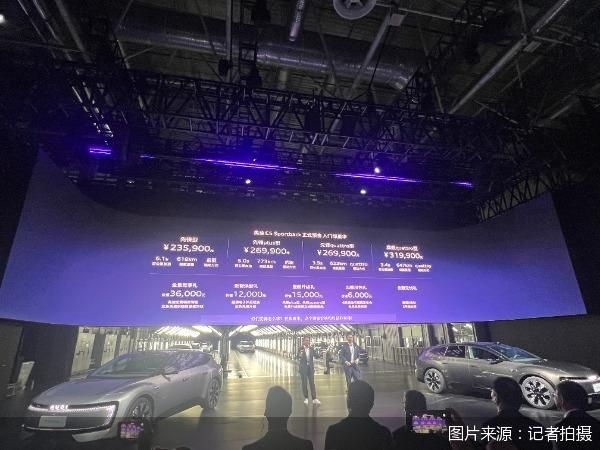
限时价23.59万元起 奥迪 E5 Sportback开启预售
Bei Jing Shang Bao· 2025-08-18 14:27
Core Points - AUDI has launched its first mass-produced model, the E5 Sportback, with a starting price of 235,900 yuan [1] - The E5 Sportback features a closed grille design, integrated lighting modules, electronic side mirrors, and a continuous spoiler to reduce drag [3] - The vehicle is powered by front and rear permanent magnet synchronous motors, achieving a maximum speed of 21,000 rpm and accelerating from 0 to 100 km/h in 3.4 seconds [3] - The E5 Sportback is equipped with a CATL CTP battery, offering a maximum range of 773 km and enabling a quick charge of 370 km in just 10 minutes [3] - The car incorporates the new AUDI OS operating system and Qualcomm Snapdragon 8295 digital cockpit chip, creating an interactive smart cockpit [3] - The vehicle features an advanced voice assistant powered by a customized language model, enabling semantic understanding and multi-turn dialogue [3] - AUDI has partnered with Momenta to develop an advanced driver assistance system, integrating 27 perception hardware components for various driving scenarios [4] - The E5 Sportback includes laser radar, long-range millimeter-wave radars, ultrasonic radars, cameras, and NVIDIA Orin-X chip for enhanced computational power [4]