创新驱动

Search documents
新质生产力驱动中国经济转型升级
Zhong Guo Xin Wen Wang· 2025-10-15 09:06
Group 1 - The core viewpoint of the article highlights China's significant transformation towards a technology-driven economy, emphasizing the rise of "artificial intelligence+" and its pervasive impact across various sectors [1][3] - The economic transition in China is characterized by a shift from high-speed growth to high-quality development, moving from factor-driven to innovation-driven growth, and transforming from a global manufacturing hub to a center for global innovation [3][4] - China's total factor productivity has significantly improved, with an average annual growth rate of 3.6% from 2000 to 2021, and this growth is expected to accelerate with advancements in artificial intelligence and other new productive forces [4][5] Group 2 - The role of innovation as the "first driving force" is increasingly prominent, with China ranking 11th in the 2024 Global Innovation Index, being the only middle-income economy in the top 30 [5][6] - China's R&D investment is projected to exceed 3.6 trillion yuan in 2024, a 48% increase from 2020, with R&D intensity reaching 2.68%, surpassing the average level of EU countries [5][6] - The expansion of the middle-income group, now exceeding 400 million people, is creating a robust domestic market that provides intrinsic motivation for high-quality development [6][7] Group 3 - China's development model is not a mere replication of Western models but is a new exploration based on national conditions and in line with contemporary trends, with innovation driving a vibrant economy [7][8] - Since the 14th Five-Year Plan, China's GDP has consistently surpassed significant milestones, with projections indicating it may exceed 140 trillion yuan by 2025, contributing positively to global economic growth [7][8]

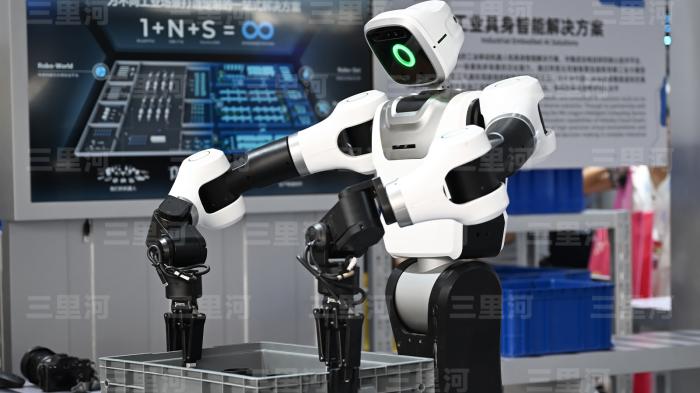
创新驱动,如何成为引领性发展战略
Sou Hu Cai Jing· 2025-10-15 08:51
Core Insights - Technological innovation is identified as the core driving force for economic development during the "14th Five-Year Plan" period, leading to significant achievements in key technology breakthroughs, industrial upgrades, and green transformation [1] - The transition from factor-driven to innovation-driven economic growth is emphasized, with the upcoming economic Kondratiev wave cycle indicating a shift towards artificial intelligence and new energy [1][4] - The increase in R&D investment from 2.4 trillion yuan at the end of the "13th Five-Year Plan" to 3.6 trillion yuan in 2024, a nearly 50% growth, highlights the strengthening of China's innovation capabilities [1][2] R&D and Technological Advancements - The R&D expenditure intensity is projected to reach 2.69% of GDP in 2024, nearing the OECD average, with basic research funding accounting for 6.88% [1] - Significant changes in research paradigms and resource allocation are noted, including the breaking of traditional disciplinary boundaries and the establishment of demand-driven basic research mechanisms [2] - The high-tech manufacturing sector has seen an average annual growth of 8.7% from 2020 to 2024, with notable advancements in artificial intelligence, cloud computing, and bio-economy [2] Digital Economy and Green Technology - The value added by core digital economy industries is expected to rise from 7.8% of GDP in 2020 to 10.4% in 2024, surpassing the "14th Five-Year Plan" target of 10% [3] - The share of wind and solar power in total electricity consumption is projected to increase from 9.7% in 2020 to 18.6% in 2024, indicating a strong lead in green technology [3] - The integration of digital technology with the real economy has led to the emergence of over 400 national-level specialized "little giant" enterprises in the AI sector [3] Future Outlook and Strategic Directions - The upcoming "15th Five-Year Plan" period will see a multi-technology approach driving the sixth Kondratiev wave, emphasizing the importance of collaborative effects among technologies [4] - Key areas for China include achieving breakthroughs in quantum technology, brain-computer interface commercialization, and low-carbon transformation in high-energy industries [4] - A strategic shift is needed from following to leading in technology, focusing on system reconstruction and global competitiveness in new energy and digital economy sectors [4]
城市24小时 | 浙江这场重磅会议,为何选在“第三城”?
Mei Ri Jing Ji Xin Wen· 2025-10-15 02:45
Group 1 - The core focus of the recent urban work meetings in provinces like Shandong, Yunnan, and Zhejiang is to plan new urban development strategies, with Zhejiang specifically choosing Wenzhou as the meeting location to emphasize its role as a third economic pole in the province [1][2] - Wenzhou aims to achieve a GDP target of 1 trillion yuan and is tasked with becoming a significant commercial city and regional center, enhancing its urban appeal and functionality through initiatives like the "Strong City Action" [2][3] - The Zhejiang provincial government emphasizes the importance of quality urban development, innovation-driven growth, and the integration of industry, city, and people in its urban renewal efforts [2][3] Group 2 - The establishment of the first cross-provincial fiscal and tax sharing fund in the Yangtze River Delta aims to promote green and technological innovation, with an initial scale of 500 million yuan [5] - The launch of a national standard for livable cities aims to enhance urban planning and management, focusing on environmental, social, economic, cultural, governance, and infrastructure dimensions [9][10] - The release of the first comprehensive urban development index report highlights the strong performance of cities like Beijing, Shenzhen, and Shanghai in sustainable development, with a focus on innovation and livability [13][14][15]
富邦集团护航三载 亚太药业迈向协同发展新阶段
Zheng Quan Shi Bao Wang· 2025-10-14 11:40
Core Insights - Zhejiang Yatai Pharmaceutical Co., Ltd. has undergone a significant transformation under the guidance of its controlling shareholder, Ningbo Fubon Group, and is now entering a new development phase with the leadership of industry veteran Qiu Zhongxun [1][2][3] Group 1: Historical Context and Restructuring - Upon Fubon Group's initial entry, Yatai Pharmaceutical faced multiple historical issues, including convertible bond repayments and collective lawsuits from investors, which hindered its growth [2] - Fubon Group implemented a systematic approach to resolve risks, optimize assets, and reshape the business, focusing on risk management, asset divestiture, and business realignment [2] - The company has successfully completed the transfer of 100% equity in Shanghai New Peak Biopharmaceutical Co., Ltd. and has improved its operational quality and profitability [2] Group 2: New Leadership and Strategic Direction - Qiu Zhongxun, founder and chairman of Yaodou Technology, is set to become the new actual controller of Yatai Pharmaceutical, bringing over 20 years of experience in the pharmaceutical industry [3] - Yaodou Technology has established a comprehensive industrial ecosystem covering research, distribution, and end-user services, with significant revenue and transaction scale [3] - The new leadership is expected to enhance Yatai Pharmaceutical's market reach for generic drugs and support the commercialization of innovative drugs through established sales channels [3] Group 3: Financial Developments and Future Plans - Fubon Group and its affiliates are transferring 14.61% of their shares to Qiu Zhongxun's team for approximately 900 million yuan, reflecting a 45.68% premium over the pre-suspension closing price, indicating improved asset quality and financial stability [4] - Yatai Pharmaceutical plans to initiate a targeted fundraising of about 700 million yuan to support the development of oncolytic virus drugs and innovative biopharmaceutical projects [4][5] - The company aims to significantly increase its R&D investment ratio to industry-leading levels over the next three years, enhancing its innovation pipeline and conversion capabilities [4][5] Group 4: Industry Context and Strategic Alignment - The pharmaceutical industry is undergoing deep integration and structural reshaping, with Yatai Pharmaceutical's changes aligning with national strategies to build an "innovative drug powerhouse" [5] - The introduction of industrial capital and the change in control are seen as proactive measures to respond to industry challenges and rebuild core competitiveness [5]

首批镍返料成功炼制高端铜镍合金 “金兰合作”开启绿色冶金新纪元
Jing Ji Wang· 2025-10-14 09:25
Core Viewpoint - The collaboration between Lanshi Zhongke and Jinchuan Group Copper Co., Ltd. has achieved a significant breakthrough in the production line for high-end nickel-based alloy advanced materials, marking a substantial progress in resource recycling and new material development [1][2]. Group 1: Project Overview - The project integrates Lanshi Zhongke's unique nano-material modification technology with Jinchuan's abundant copper smelting solid waste resources, creating a comprehensive solution that includes "electric arc furnace smelting—nano material performance improvement—AOD furnace refining" [2]. - The first furnace smelting successfully produced high-performance copper-nickel alloy, overcoming traditional technical bottlenecks such as segregation and poor formability [2]. Group 2: Economic and Environmental Impact - The project is expected to process 100,000 tons of solid waste annually, generating economic benefits exceeding 500 million yuan by replacing imported high-temperature alloys [3]. - This initiative not only alleviates the challenges of Kaldo furnace slag storage but also promotes a fundamental shift in the non-ferrous metal industry from resource consumption to technology-driven development [3]. Group 3: Future Prospects - Lanshi Zhongke and Jinchuan Group plan to deepen their strategic collaboration, focusing on high-temperature alloys, energy chemicals, and aerospace new material sectors, aiming to establish a nationally influential new material innovation hub in Northwest China [4]. - The success of the first furnace smelting serves as a testament to the project team's resilience and the strategic foresight of both companies, paving the way for further advancements in the high-quality development of China's new material industry [4].
区域经济研究报告:重庆丰都:三峡门户、库区明珠
China Post Securities· 2025-10-14 05:12
Economic Overview - Fengdu County's GDP structure shows that the primary industry accounts for less than 15%, while the secondary industry decreased from 45.57% in 2019 to 38.87% in 2023, and the tertiary industry is approaching 50% and increasing annually[20] - In 2023, Fengdu County's total industrial output value was 136.42 billion yuan, a year-on-year decrease of 13.06%[27] - The county's permanent population was 544,200 at the end of 2023, a decrease of 8,800 from the previous year, with an urbanization rate of 51.89%, up by 0.86 percentage points[29] Fiscal Situation - Fengdu County achieved a general budget revenue of 2.765 billion yuan in 2023, with tax revenue of 1.05 billion yuan, showing a gradual increase in fiscal self-sufficiency[31] - The fiscal self-sufficiency rate reached 39.37% in 2023, placing Fengdu County among the top in Chongqing[32] - Government fund income surged by 95.25% in 2023, totaling 1.535 billion yuan, alleviating previous revenue pressures[37] Debt Pressure - As of the end of 2023, Fengdu County's government debt balance was 16.3 billion yuan, with a limited refinancing space of 163.7 billion yuan[40] - The debt-to-GDP ratio was 40.14%, indicating moderate debt pressure compared to other counties in Chongqing[45] - The county's comprehensive debt ratio was 255%, showing a decrease of 28 percentage points from the previous year, indicating manageable overall debt risk[46] Industry Analysis - Fengdu County has over 20 identified mineral resources, with significant reserves of bauxite, shale gas, and limestone, supporting industrial development[49] - The county has established a clean energy industry centered on wind, hydro, and solar power, with a total installed capacity of 710,000 kilowatts and an annual power generation of approximately 1.8 billion kilowatt-hours[52] - Fengdu's agricultural sector is robust, with a focus on six leading industries, including grain, beef cattle, and citrus, ensuring food security and economic stability[51]
亚太药业:公司控股股东将由富邦集团变更为星浩控股
Zhong Zheng Wang· 2025-10-14 03:25
Core Viewpoint - Asia-Pacific Pharmaceutical (亚太药业) announced a share transfer agreement involving its controlling shareholder, Ningbo Fubon Group (富邦集团), which will transfer 14.61% of its shares to Zhejiang Xinghao Holdings (星浩控股) for a total of 900 million yuan at a price of 8.26 yuan per share, changing the controlling shareholder and actual controller to Qiu Zhongxun [1][2] Group 1 - The share transfer involves a total of 108,945,566 shares, which represents 14.61% of Asia-Pacific Pharmaceutical's total shares [1] - The transaction will be executed in five installments, with performance commitments from the transferor to ensure that the company's main business revenue in 2025 will not be less than 360 million yuan, and the net profit loss will not exceed 70 million yuan [1] - If the performance commitments are not met, the transferor will compensate the acquirer as per the agreement [1] Group 2 - Xinghao Holdings will directly acquire 60,525,314 shares (8.12% of total shares), while its action-in-concert party, Xingchen Investment (星宸投资), will acquire 48,420,252 shares (6.49% of total shares) [2] - To ensure stable control, Xingchen Investment will delegate all voting rights of its shares to Xinghao Holdings [2] - Asia-Pacific Pharmaceutical also plans to raise up to 700 million yuan through a private placement to Xinghao Holdings for new drug research and development, with a share price of 5.11 yuan and a maximum issuance of 136,986,301 shares [2] Group 3 - The company currently focuses on chemical generic drugs and faces performance pressure due to national centralized procurement and consistency evaluation policies, indicating a pressing need for business transformation [2] - The fundraising project is a key step in implementing the company's "combination of imitation and innovation, innovation-driven" development strategy, aimed at optimizing product structure and enhancing core competitiveness and profitability [2] - Xinghao Holdings was established on July 3, 2025, and its actual controller, Qiu Zhongxun, also controls the domestic pharmaceutical e-commerce platform "Yao Dou Technology" (药兜科技), which collaborates with over 4,000 upstream pharmaceutical companies and approximately 650,000 downstream commercial and terminal customers [2]
“加减乘除”中的发展密码
Zhong Guo Zheng Quan Bao· 2025-10-13 20:55
Economic Growth and Contributions - China's economy is projected to exceed 35 trillion yuan in growth over five years, equivalent to recreating the Yangtze River Delta and surpassing the economic output of the world's third-largest economy [2] - The average annual growth rate is 5.5%, contributing approximately 30% to global economic growth [2] - By 2024, China's total grain production is expected to surpass 1.4 trillion jin, an increase of 74 billion jin compared to 2020, indicating a robust agricultural sector [2] Structural Reforms and Tax Policies - A cumulative reduction in taxes and fees is expected to reach 10.5 trillion yuan during the "14th Five-Year Plan" period, with over 36.7% of these reductions benefiting technology innovation and advanced manufacturing [2][3] - The number of enterprises benefiting from R&D expense deductions reached 615,000, with a total deduction amounting to 3.32 trillion yuan in 2024, reflecting a 25.5% increase from 2021 [3] Innovation and R&D Investment - R&D expenditure in large manufacturing enterprises accounted for over 1.6% of their operating income, with total R&D investment expected to grow nearly 50% by 2024 compared to the end of the "13th Five-Year Plan" [5] - The added value of high-tech manufacturing is projected to increase by 42% by 2024 compared to the end of the "13th Five-Year Plan" [5] Domestic Demand and Market Dynamics - Domestic demand contributed an average of 86.4% to economic growth over the past four years, with final consumption contributing 56.2%, an increase of 8.6 percentage points from the "13th Five-Year Plan" period [6] - The market for AI smart glasses saw a sevenfold increase in sales during the "618" shopping festival, showcasing the explosive potential of emerging product categories [6] Infrastructure and Connectivity - The Hubei Ezhou Huahu International Airport has opened 45 international cargo routes, contributing to a 6.1 percentage point increase in Hubei's foreign trade growth since 2025 [7] - The reduction of regulatory barriers has led to a significant increase in market efficiency, with over 4,000 regulations hindering fair competition and a unified market being eliminated [7][8] Green Development and Sustainability - During the "14th Five-Year Plan" period, energy consumption per unit of GDP decreased by 11.6%, and renewable energy generation capacity increased to approximately 60% [6] - The focus on green transformation is expected to empower traditional industries and contribute to global sustainability efforts [6]
【安康】加快推进9条市级重点产业链建设
Shan Xi Ri Bao· 2025-10-12 22:55
Core Insights - Ankang City is focusing on six major battles to accelerate innovation-driven development, collaborative growth, green cycles, and strengthening industrial chains, achieving a comprehensive output value of 948 billion yuan from nine key industrial chains in the first eight months, representing a year-on-year growth of 15.3% [1] Group 1: Industrial Development - The city has implemented a "one chain, one policy" approach, leveraging project-driven and technology-enabled strategies to address challenges in industrial development [1] - Ankang's selenium-rich tea has ranked among the top 20 regional public brand values in China for six consecutive years, with domestic tourist visits and spending increasing by 18.1% and 16.3% respectively from January to August [1] - The plush toy industry has developed a complete value chain from creative design to trade sales, while new materials and Qinba medicine industries have maintained an annual growth rate exceeding 15% [1] Group 2: Project Planning and Execution - Ankang City has planned and reserved a number of forward-looking and leading major projects based on local resource endowments and industrial needs, achieving a 99.3% startup rate for 298 key industrial projects from January to August [2] - The Ankang Intelligent Computing Industrial Park and 236 other key projects are under accelerated construction, with 30 key projects, including single crystal silicon target materials in Hanyin County, completed and put into production [2] Group 3: Selenium Industry Development - The selenium industry is identified as a highly promising sector for Ankang City, with over 300 selenium-rich products developed and 212 large-scale enterprises cultivated [2] - The city is leveraging opportunities from the Qin Chuang Yuan selenium industry innovation cluster, providing support for research and key project construction related to selenium products [2] - Key projects include the establishment of a selenium product operation center and a selenium science education base, aimed at stabilizing selenium supply and enhancing processing capabilities [2]
变天了!中国最大支柱产业曝光,发展进入加速度,马上取代房地产
Xin Lang Cai Jing· 2025-10-10 14:26
Core Insights - The article highlights the rapid growth of the AI industry in China, which is emerging as a new economic pillar, potentially replacing the real estate sector [1][3][21] Industry Growth - China's AI industry surpassed 700 billion yuan last year, maintaining over 20% annual growth for several years, equivalent to adding a medium-sized industry each year [3][8] - There are over 5,300 AI companies in China, accounting for one in every seven AI firms globally, with Chinese open-source models ranking among the top ten in international lists [3][8] Technological Advancements - AI is increasingly integrated into various sectors, with significant improvements in efficiency, such as a 50% reduction in error rates in factories and a 30% increase in efficiency with autonomous trucks at ports [6][12] - China's computing power ranks second globally, with initiatives like "East Data West Computing" reducing computing costs in the west by 50% [6][12] Economic Transition - The shift from a resource-driven economy to an innovation-driven one is underscored by the AI industry's potential to create sustainable growth, contrasting with the limitations of the real estate sector [14][21] - AI's ability to generate value from data, as opposed to the finite resources of real estate, positions it as a more sustainable economic driver [12][14] Employment Dynamics - While AI may eliminate some jobs, it also creates new roles, such as algorithm engineers and AI trainers, reflecting a transformation in the job market [10][17] - The government is promoting AI integration across six major sectors, anticipating that over 90% of smart devices will be adopted in the next five years, leading to the emergence of numerous "AI + industry" hybrid roles [18][21] Future Outlook - The article emphasizes the inevitability of AI's proliferation and the importance of recognizing subtle changes in daily life that signal new opportunities [19][21] - The transition from real estate to AI as a growth driver is framed as a new beginning for the Chinese economy, focusing on high-quality development and global competitiveness [21]