即时零售

Search documents
阿里加码对即时零售长期投入新信号:饿了么App正式焕新为淘宝闪购
Xin Lang Cai Jing· 2025-12-05 01:05
【阿里加码对即时零售长期投入新信号:饿了么App正式焕新为淘宝闪购】智通财经12月5日电,经过 过去半年快速增长后,站在全新市场格局下的淘宝闪购,迈出新阶段的重要步伐。12月5日上午,其官 方正式宣布:即日起"饿了么"App在更新至最新版本后将全面焕新为 "淘宝闪购"。 "更新是为了更好, 更好也激励我们常新。"淘宝闪购表示,"这是饿了么多年沉淀的服务和履约能力、产品技术、用户信任 与组织韧性的全面检验和焕新升级,由此将更深度融入阿里集团'大消费平台'战略,释放更大价值,在 服务用户、商家、骑士的道路上迈出更关键的一步。" 在近期财报电话会上,阿里巴巴管理层强调:淘 宝闪购在第一阶段完成了规模的快速扩张,第二阶段的经济效益优化符合预期,这为外卖业务长期可持 续发展奠定了基础,也增加了在即时零售长期投入的决心。 转自:智通财经 ...

董宇辉出走后,俞敏洪要去线下「捡钢镚」
3 6 Ke· 2025-12-04 23:30
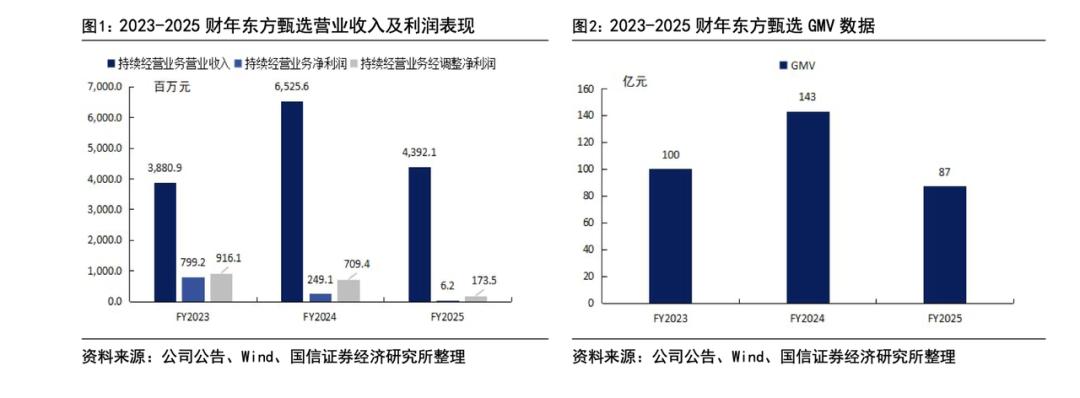
Core Insights - Dongfang Zhenxuan is expanding beyond being an "online Sam's Club" and is opening its first flagship store in Beijing, indicating a strategic shift towards offline retail [1][3][4] Group 1: Store Opening and Strategy - The flagship store is located in Zhongguancun, Beijing, covering approximately 400 square meters and will offer fresh produce, snacks, daily necessities, as well as a casual dining and coffee area [2] - This store marks the first step in a plan to establish a hundred stores nationwide, as mentioned by Yu Minhong [3][4] - The move to offline retail is seen as a necessary strategic adjustment due to declining online traffic and the need to diversify revenue streams [5][6] Group 2: Online Performance and Challenges - Dongfang Zhenxuan's order volume from Douyin is declining, with 50.1 million orders in the first half of FY2025 and 41.5 million in the second half, the latter being the lowest in three years [6] - The company launched a paid membership system in October 2023, with an annual fee of 199 yuan, but membership growth has slowed significantly, adding only 65,700 members in FY2025 compared to 74,800 in the second half of FY2024 [7][8] - The company's GMV for FY2025 is projected at 8.7 billion yuan, a 39.2% decrease year-on-year, indicating significant revenue pressure [9] Group 3: Financial Performance - For FY2025, Dongfang Zhenxuan's net revenue from ongoing operations is 4.39 billion yuan, down 32.7% year-on-year, with sales expenses rising to 900 million yuan due to increased advertising costs [11] - The net profit for FY2025 is reported at 6.2 million yuan, which is significantly low given the company's market valuation of over 18 billion yuan, resulting in a TTM P/E ratio exceeding 3200 times [12] Group 4: Future Outlook and User Engagement - The company aims to enhance user engagement through its app, which includes live streaming, community forums, and offline member events, to build trust and loyalty [19] - The offline stores are expected to serve as physical anchors for the brand, potentially improving customer trust and engagement, especially for high-frequency purchase categories like fresh food [19] - Dongfang Zhenxuan's transition to a retail model will require mastering complex operations such as site selection, inventory management, and cost control, which are critical for profitability in the retail sector [19]

【电商月报】11月:跨境电商告别“免税红利” 海上鲜递交招股书
Sou Hu Cai Jing· 2025-12-04 20:13
Core Insights - The e-commerce landscape in November 2025 saw significant developments across various sectors, including digital retail, cross-border e-commerce, and logistics technology, as highlighted by the NetEase Research Center [1][4]. E-commerce Developments - The "Double 11" shopping festival showcased a shift towards rational consumption, with major platforms like Taobao, Meituan, and JD.com focusing on physical convenience stores as new battlegrounds [27]. - JD.com reported a 24.7% year-on-year increase in active users during the "Double 11" period, indicating strong consumer engagement [4]. - The total sales during the "Double 11" event reached 1.695 trillion yuan, with nearly 600 brands achieving over 100 million yuan in sales [4]. Cross-border E-commerce - Douyin's e-commerce GMV is projected to exceed 4 trillion yuan for the year, surpassing JD.com and closely approaching Pinduoduo and Meituan [14][15]. - A global tightening of cross-border tax policies is reshaping the industry, as many countries are eliminating or significantly reducing tax exemptions for small packages [20]. Logistics and Technology - The logistics sector processed approximately 139.38 billion packages during the "Double 11" period, setting a new record for daily processing volume [37]. - JD Logistics has enhanced its logistics capabilities in preparation for the Black Friday sales, with a significant increase in goods stored in overseas warehouses [38]. Regulatory Changes - New regulations targeting "ghost stores" and trademark infringement are being implemented to improve the online shopping environment and protect consumer rights [12]. - The Chinese government has initiated a one-year suspension of trade sanctions between the U.S. and China, which may impact e-commerce dynamics [19]. Company Performance - JD Industrial reported a revenue of 14.1 billion yuan over eight months, reflecting an 18.9% year-on-year growth [33]. - Alibaba Cloud's revenue grew by 34% year-on-year to 39.824 billion yuan, driven by strong demand for AI-related products [35].


阿里巴巴-W(09988):重启新篇章:聚焦、增长、重估
SINOLINK SECURITIES· 2025-12-04 09:19
Investment Rating - The report assigns a "Buy" rating for Alibaba Group, with a target market value of 3.36 trillion RMB and a target price of 192.48 HKD for FY2026 [5]. Core Insights - Alibaba has restructured its organization to focus on "e-commerce, cloud + AI," enhancing resource allocation and competitive response [2][25]. - The company is actively participating in the instant retail market, which is expected to exceed 2 trillion RMB by 2030, thus defending its market share [16]. - Alibaba Cloud is positioned as a top-tier player in AI and cloud computing, with significant investments in self-developed capabilities [4]. Summary by Sections Company Overview - Alibaba Group is a leading global e-commerce and internet technology group that has recently restructured its business into four main segments: China E-commerce Group, International Digital Commerce Group, Cloud Intelligence Group, and Others [2]. Investment Logic - Instant retail is crucial for maintaining e-commerce traffic advantages, with a notable increase in daily active users (DAU) and order volumes since May [3]. - The company has seen a significant rise in order volume, with peak orders reaching 120 million in July, and a substantial increase in market share in the food delivery sector [3][19]. - Alibaba's investment in user experience (UE) is expected to improve as scale and efficiency increase, with current losses narrowing significantly [3]. Financial Forecasts, Valuation, and Rating - The adjusted net profit forecasts for FY2026-2028 are 107.9 billion, 149.4 billion, and 175.8 billion RMB, respectively, with corresponding adjusted P/E ratios of 24.8, 17.9, and 15.2 [5]. - The e-commerce business (excluding instant retail) is valued at 11 times earnings, while the cloud business is valued at 7 times sales [5]. - The report anticipates stable market share for Alibaba's traditional e-commerce business and significant growth potential for its cloud services driven by AI [5]. Additional Insights - The report highlights the competitive landscape in the instant retail market, with Alibaba's aggressive strategies to boost user engagement and order fulfillment capabilities [19][39]. - Alibaba's cash reserves are the highest among competitors, providing a strong foundation for sustaining long-term investments in the instant retail sector [51][52]. - The introduction of the "High De" street ranking by Amap aims to synergize online and offline services, indicating potential growth in the in-store business [58].
361°官宣合作淘宝闪购,线上新零售战略布局再提速
Zhong Jin Zai Xian· 2025-12-04 07:40
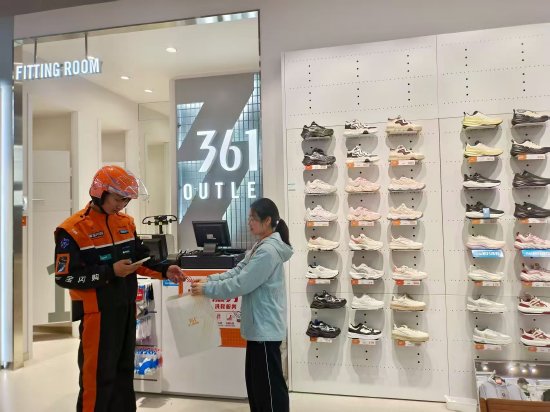
Core Insights - The rise of instant retail is becoming a key avenue for sports brands to enhance their omnichannel strategies, driven by changing consumer shopping demands and the acceleration of digitalization [1][6] - 361° has launched its Taobao Flash Purchase service, completing the onboarding of a thousand stores, with the first operations in Chongqing, aiming to provide consumers with a new shopping experience of "order online, fast delivery" [1][3] Group 1 - The first phase in Chongqing includes 66 stores, offering exclusive December promotions with discounts as low as 50%, enhancing the value proposition for sports equipment [3] - The instant delivery network allows consumers in Chongqing to receive orders in as fast as 30 minutes, transforming shopping from a planned wait to an immediate fulfillment experience [3][6] Group 2 - The initiative is part of 361°'s broader strategy to integrate online and offline channels, aiming for nationwide coverage and further strengthening its e-commerce growth [6] - The company plans to deepen collaboration with platforms and accelerate the rollout in major cities, enhancing the overall shopping experience by integrating product, inventory, and membership systems [6][8]

瑞银:投资者情绪好转推动中国互联网行业估值提升 但股价仍相对便宜
智通财经网· 2025-12-04 07:32
与此同时,国产算力持续发展。AI芯片层面,虽然仍存在性能差距,但在中国互联网公司持续的自研 投入,以及内地GPU厂商的发展推动下,性能正快速提升。系统层面,也看到积极进展,尤其是通 过"超节点"技术的采用,"超节点"技术通过扩大单机柜的GPU数量,在一定程度上弥补国产单颗GPU的 差距,实现机柜级上更好的算力表现。大模型算法层面,内地大模型开发者正在针对国产GPU进行算法 优化。 智通财经APP获悉,瑞银投资银行中国互联网行业研究主管方锦聪表示,今年中国互联网行业整体较为 有利的市场情绪推动了估值倍数提升;DeepSeek横空出世,让投资者对此板块的情绪转好;中国股票 今年开始追落后;从估值方面来看,主要互联网公司估值倍数仍然扩大约58%,至约17倍的调整后市盈 率,对应2024至2026年约10%的调整后每股盈利预测(EPS)复合增速,相较之下,美国"科技七巨头"估 值约31倍,对应18%的EPS复合增速。不难看出,中国互联网股价相对便宜。 方锦聪指,中国互联网行业展现出两大趋势。第一大趋势是,中国的互联网大厂正积极提升资本开支, 加大人工智能(AI)领域的投入。地缘不确定性让投资者担心芯片供给是否会影响中 ...
361°全国1500家门店接入淘宝闪购
Xin Lang Cai Jing· 2025-12-04 07:13
Core Insights - Sports brand 361° has officially integrated with Taobao Flash Purchase, launching in Chongqing and expanding to 160 cities including Beijing, Shanghai, Guangzhou, and Jinan with 1,500 stores set to go live [2][5] - The product range available through Taobao Flash Purchase includes popular items such as the annual flagship running shoe "Feiran 4.5" and the "Rain Shield Series" shoes designed for autumn and winter, along with basic footwear, apparel, accessories, and children's products [2][5] - The integration is expected to leverage Taobao's vast e-commerce traffic, enhancing conversion rates for instant consumer demand during browsing, promotional events, or live streaming, which could lead to significant retail growth [2][5] - Alibaba's Q3 financial report indicates that approximately 3,500 Tmall brands have connected their offline stores to Taobao Flash Purchase, resulting in a double-digit year-on-year growth in consumer engagement on the Taobao app during the Double 11 shopping festival, with daily orders for Tmall brands' instant retail increasing by 198% compared to September [2][5]
外卖大战还会继续吗?至少不会是价格战了
Sou Hu Cai Jing· 2025-12-04 06:39
Core Viewpoint - The takeaway from the recent market results indicates that the price war in the food delivery industry has not created sustainable value and is unsustainable in the long run [2][4] Group 1: Market Competition - Meituan's CEO Wang Xing emphasized that while the price war is meaningless, competition itself is essential for the industry [2] - Meituan's response to the low-level price competition involved increasing restaurant subsidies, resulting in an operating loss of 14.1 billion RMB and an adjusted net loss of 16 billion RMB in Q3 [4][6] - Despite the losses, Meituan's performance was better than expected, indicating a relatively favorable "battle damage ratio" compared to industry peers [4] Group 2: Long-term Value Creation - Wang Xing stated that Meituan will focus on doing the right things to serve consumers, merchants, and delivery personnel, with confidence in creating genuine long-term value [7][8] - The long-term value strategy is not solely reliant on food delivery but aims to build a diversified growth ecosystem centered around instant retail [8][9] Group 3: Ecosystem Development - Meituan aims to serve consumers, merchants, and delivery personnel, which forms the core of its platform ecosystem [10][12] - The company has implemented a multi-layered welfare system for delivery personnel, including health insurance and housing support, to ensure their rights and benefits [10][12] - For small and medium-sized merchants, Meituan focuses on reducing costs and increasing efficiency through optimized subsidy rules and AI tools [14] Group 4: Operational Precision - The food delivery industry is characterized by thin margins, requiring precise operations to avoid losses [16][18] - Meituan's operational strategy includes user-segmented subsidies and efficiency improvements for merchants, which have helped maintain operational efficiency despite price competition [18][19] - The company believes that the current irrational competition is temporary and that platforms with deep industry knowledge and operational efficiency will lead the market [19]

盒马,来到拐点时刻
雷峰网· 2025-12-04 06:02
Group 1 - The core viewpoint of the article emphasizes the competitive landscape of the food delivery and instant retail sectors, particularly focusing on Hema's strategic shifts and challenges in the context of Alibaba's broader market strategies [1][4][34] - Hema's GMV target of 100 billion yuan by 2025 may be achieved sooner than expected due to aggressive market strategies and integration within Alibaba's ecosystem [5][39] - Hema's recent performance includes a GMV exceeding 75 billion yuan and a positive adjusted EBITA for the first time, indicating a significant turnaround under new leadership [6][39] Group 2 - Hema faces intense competition from various players, including offline discount stores and established rivals like Sam's Club, while also needing to adapt to the integration with Taobao Flash Sale [7][10] - The rapid growth of Taobao Flash Sale has led to a significant increase in Hema's daily order volume, which reached 2 million orders in June, a 70% year-on-year increase [10][35] - Despite the increase in order volume, Hema's average transaction value has decreased from 90-100 yuan to 50-60 yuan after integrating with Taobao Flash Sale, raising questions about profitability [11][12] Group 3 - Hema's strategy includes a renewed focus on front warehouses, with plans to open 200-300 new locations by the end of the year, reversing a previous decision to halt this initiative [9][14] - The front warehouse model is seen as a way to enhance delivery efficiency and meet the growing demand for instant retail, with Hema's core offering being a 30-minute delivery service [13][15] - Competitors like Xiaoxiang Supermarket have a significantly higher number of front warehouses, which poses a challenge for Hema in terms of market penetration and delivery efficiency [15][18] Group 4 - Hema's other core business, Super Box NB, is expanding rapidly, with an average of 20 new stores opened per month since its brand upgrade in August [21][22] - The Super Box NB model focuses on high efficiency and profitability through a smaller store footprint and a streamlined product offering, which has proven to be successful in urban markets [24][27] - The shift towards discount retailing is driven by changing consumer preferences and a need for cost-effective shopping options, particularly in lower-tier cities [29][30] Group 5 - Hema's integration into Alibaba's ecosystem allows it to leverage resources and support, enhancing its competitive position in the instant retail market [34][35] - The collaboration with Taobao Flash Sale has resulted in a significant increase in user engagement and order volume, indicating a successful strategy shift [35][38] - Hema's future growth is expected to be supported by a focus on user experience and high-value customer engagement, which could lead to a revaluation of the company [39][40]

烧掉300亿后,阿里又新开战场
首席商业评论· 2025-12-04 04:16
外卖大战没有绝对赢家 | | | 截至9月30日止三個月 | | | 截至9月30日止六個月 | | | --- | --- | --- | --- | --- | --- | --- | | | 2024 | 2025 | | 2024 | 2025 | | | | 人民幣 | 人民幣 | 美元 | 人民幣 | 人民幣 | 美元 | | | | (以百萬計) | | | (以百萬計) | | | 經營活動產生的現金流量淨額 | 31.438 | 10.099 | 1.419 | 65.074 | 30.771 | 4.322 | | 投資活動產生(所用)的現金流量淨 | | | | | | | | 額 | 964 | (69,652) | (9.784) | (34.865) | (51.324) | (7,209) | | 融資活動(所用)產生的現金流量淨 | | | | | | | | 額 | (66,782) | 10.902 | 1.531 | (86,364) | 8.171 | 1.148 | | 匯率參動對現金及現金等價物、受限 | | | | | | | | 制現金及應收託管資金的影響 | ...