绿色转型

Search documents
特稿丨人文交流与“智造出海”助力中国与海湾国家合作
Xin Hua She· 2026-01-07 06:44
Group 1: Cultural Exchange and Human Connection - The "China-Saudi Cultural Year" has led to over 60 cultural exchange activities, enhancing mutual understanding and strengthening the strategic partnership between China and Saudi Arabia [2] - Events included exhibitions of Chinese minority heritage and tea culture, performances of operas, and immersive experiences in Saudi Arabia, fostering deeper cultural interactions [2] - Similar cultural activities have been organized in other Gulf countries, such as Qatar and Kuwait, increasing local interest in Chinese culture [2] Group 2: Technological Collaboration and Market Expansion - Chinese companies are entering the Gulf market with innovative technologies, such as autonomous driving services launched by WeRide in Saudi Arabia [4] - Approximately 300 Chinese tech firms showcased advancements in AI, IoT, and digital governance at the Gulf Information Technology Exhibition in Dubai, indicating strong regional interest in Chinese technology [4] - Partnerships in renewable energy are emerging, with companies like BYD signing contracts for energy storage projects in Saudi Arabia, highlighting the growth of the "new energy + storage + manufacturing" model [4][5] Group 3: Future Cooperation and Strategic Partnerships - The ASEAN-China-GCC summit in May 2025 emphasized enhanced cooperation in trade, investment, and energy transition, signaling a commitment to future collaboration [5] - The Gulf Cooperation Council (GCC) Secretary-General expressed a desire for a free trade agreement with China and anticipation for upcoming summits, indicating a high level of diplomatic engagement [6] - The ongoing collaboration between China and Gulf countries is expected to evolve into more concrete and sustainable partnerships, driven by mutual learning and shared development goals [6]
长江经济带绿色转型实现新突破 :以三分之一能耗、碳排放贡献近一半GDP
Zhong Guo Dian Li Bao· 2026-01-07 05:44
Core Insights - The Yangtze River Economic Belt contributes nearly half of China's GDP while accounting for about one-third of the country's energy consumption and carbon emissions [1] Industry Developments - Traditional industries such as steel and petrochemicals in the Yangtze River Economic Belt are actively pursuing green transformation, establishing 24 national carbon peak pilot cities and parks, along with 14 zero-carbon parks [1] - Approximately 10,000 old operating vessels have been scrapped and updated as part of the push for clean energy and new energy ship development [1] Innovation and Industrial Upgrading - The region has cultivated 41 national-level advanced manufacturing clusters and 30 strategic emerging industry clusters, representing 51% and 45% of the national totals, respectively [1] - A regional innovation system is being enhanced, with three technology innovation centers and eight national laboratories established along the river, leading to breakthroughs in key technologies in fields such as artificial intelligence and quantum information [1] Future Directions - The Yangtze River Economic Belt will continue to focus on green, high-end, and intelligent development, fostering green low-carbon industries tailored to local conditions to achieve development while protecting the environment [1]
支撑网上零售额超14万亿元 一组数据看我国邮政快递业运行情况
Yang Shi Xin Wen· 2026-01-07 04:05
Group 1 - The core viewpoint of the article highlights the proactive adaptation of the postal and express delivery industry to new consumption models such as live commerce and social e-commerce, aiming to support online retail sales of physical goods exceeding 14 trillion yuan in 2025 [1] - The volume of parcel business in international and Hong Kong, Macao, and Taiwan regions is expected to reach 4.2 billion pieces in 2025, with an average annual growth rate of over 18% [1] - The industry is advancing digital and intelligent development, with over 450 drones in operation and nearly 4 million items transported by drones annually [1] Group 2 - The postal and express delivery sector is accelerating its green transformation by promoting original direct delivery of e-commerce parcels, smart packaging technology, and green certification for packaging [1] - A total of 25 cities are conducting comprehensive electrification trials for postal and express delivery vehicles, while 13 cities are exploring the use of rail transport for mail and parcels [1] - The industry is expected to maintain a steady upward trend in 2026, with an estimated delivery volume of 230 billion pieces, a year-on-year growth of around 6%, and express delivery volume reaching 214 billion pieces, with an approximate growth of 8% [1]
2025年中国冶金专用设备制造行业政策、产量、市场规模、重点企业及趋势研判:下游需求带动冶金专用设备规模扩张,行业呈现大型化、智能化趋势[图]
Chan Ye Xin Xi Wang· 2026-01-07 01:19
Industry Overview - The rapid development of key sectors in China's economy, such as automotive, shipbuilding, construction, petrochemicals, nuclear energy, and oil and gas transportation, has significantly boosted the demand for the upstream metallurgy industry, thereby driving the growth of the metallurgy equipment manufacturing industry [1][8] - The market size of China's metallurgy equipment manufacturing industry is projected to grow from 103.085 billion yuan in 2018 to 143.675 billion yuan in 2024, with a compound annual growth rate (CAGR) of 5.69% [9] Policy Support - The Chinese government has introduced numerous policies to support the metallurgy equipment manufacturing industry, focusing on large-scale, intelligent, and green transformation of equipment, as well as enhancing digital technology applications [2] - Specific initiatives include the "Copper Industry High-Quality Development Implementation Plan (2025-2027)" and the "Aluminum Industry High-Quality Development Implementation Plan (2025-2027)," which aim to promote innovation and the modernization of equipment [2] Industry Chain - The upstream of the metallurgy equipment manufacturing industry consists of raw materials and components, including steel, non-ferrous metals, castings, and forgings, which are essential for manufacturing [4] - The midstream involves the production and manufacturing of metallurgy equipment, while the downstream includes industries such as iron and steel, steel processing, and non-ferrous metal smelting [4] Production and Growth Trends - China's steel production is a critical raw material for metallurgy equipment manufacturing, with production expected to grow from 1.05 billion tons in 2017 to 1.4 billion tons in 2024, reflecting a CAGR of 4.2% [6] - The production of metallurgy equipment experienced a recovery in 2022, with output reaching 6.8849 million tons in 2024, a year-on-year increase of 0.63% [7] Competitive Landscape - The industry features a dual structure of international giants and domestic leading enterprises, with companies like CITIC Heavy Industries and China First Heavy Industries emerging as key players in the domestic market [9][10] - Domestic companies are increasingly capturing market share by leveraging local demand, cost-effectiveness, and rapid service response, challenging the dominance of foreign firms in certain segments [9] Future Development Trends - The industry is expected to focus on large-scale and extreme manufacturing capabilities, with advancements in equipment aimed at higher efficiency and lower energy consumption [12] - There will be a significant shift towards integrating smart technologies and digital twin systems throughout the equipment lifecycle, enhancing predictive maintenance and operational efficiency [13] - The trend towards green and low-carbon processes will become a core innovation direction, emphasizing the importance of carbon reduction technologies in equipment design and manufacturing [14]


胜利油田连续三年实现油气产量增长
Da Zhong Ri Bao· 2026-01-07 01:00
Core Insights - The company has achieved continuous growth in oil and gas production for three consecutive years, with a projected output of 23.71 million tons of crude oil and 909 million cubic meters of natural gas by 2025, alongside the discovery of over 100 million tons of new reserves [2][3] - Shale oil has emerged as a key growth area, with a production target of 700,000 tons by 2025, marking a significant advancement in China's shale oil exploration technology [2] - The company is also advancing low-carbon technologies, having injected 2.3 million tons of CO2 into its carbon capture, utilization, and storage projects, which have doubled the daily crude oil output to 460 tons [2] - The company's renewable energy investments have reached a total of 572 megawatts of solar power capacity, generating 740 million kilowatt-hours of green electricity, which meets approximately 25% of its oil and gas production electricity needs [3] - The production growth and shale oil breakthroughs reflect China's policy direction towards maintaining energy self-sufficiency, with the company's stable output being crucial for national energy security [3]

他们将剧毒化合物“变废为宝”
Xin Lang Cai Jing· 2026-01-07 00:40
Core Viewpoint - The "Off-site Electrocatalytic Full Decomposition of Hydrogen Sulfide to Hydrogen and Sulfur Technology" has been recognized as an internationally leading industrial technology, capable of converting toxic hydrogen sulfide into valuable resources, thus addressing environmental pollution and providing a green transition solution for industries such as natural gas and petrochemicals [1][6]. Group 1: Technology Development - The technology was developed by a team led by Academician Li Can from the Dalian Institute of Chemical Physics, Chinese Academy of Sciences, and has been in development since 2003 [1][3]. - The technology features a unique "spatial decoupling" design that separates the chemical reactions into specialized reactors, allowing for the efficient production of high-purity sulfur and clean hydrogen [3][4]. - The team has filed 26 patents related to this technology, with 12 already granted, forming a comprehensive patent portfolio [3]. Group 2: Industrial Application - An industrial demonstration project has been established in the coal chemical industry, integrating four key technological innovations, including high-efficiency electrochemical cells and a high-conversion sulfur oxidation system [4]. - The first pilot plant with a capacity of 100,000 cubic meters per year has been built, utilizing a modular design to produce sulfur and hydrogen [4][5]. - The pilot plant has demonstrated the ability to operate continuously for over 1,000 hours, achieving complete conversion of hydrogen sulfide with sulfur purity exceeding 99.95% and hydrogen purity exceeding 99.999% [5]. Group 3: Environmental and Economic Impact - The technology provides a new pathway for the complete elimination and resource utilization of hydrogen sulfide, significantly benefiting both environmental protection and economic efficiency [6][7]. - By processing approximately 8 billion cubic meters of hydrogen sulfide annually in China, the technology could recover about 730,000 tons of clean low-carbon hydrogen, which is equivalent to 40% of the planned green hydrogen production capacity by 2030 [7]. - This technology supports the green transformation of industrial systems and contributes to achieving carbon neutrality goals in related industries [7].
“含绿量”也是“含金量”
Jing Ji Ri Bao· 2026-01-07 00:02
Core Insights - The national electricity consumption is expected to exceed 10 trillion kilowatt-hours by 2025, with a significant increase in the share of green electricity [1] - The scale of green electricity and green certificates is expanding, reflecting the concentrated demand for corporate green transformation and the continuous expansion of green electricity application scenarios [1] - The transition to green electricity is becoming essential for many enterprises, with government policies supporting the development of green electricity direct connection models [2] Group 1 - The total installed capacity of new energy storage in China has surpassed 100 million kilowatts, with an expected addition of approximately 370 million kilowatts of wind and solar power in 2025 [1] - Wind and solar power generation is projected to account for about 22% of the total electricity consumption in the country [1] - The issuance of green certificates is expected to reach approximately 2.9 billion, with transaction volumes exceeding the total of previous years [1] Group 2 - There are challenges in the electricity grid construction and peak regulation capabilities, leading to issues like "abandoned wind and solar" in some regions [2] - A notable example includes 8.335 million kilowatt-hours of green electricity being traded from Inner Mongolia to Hainan during the National Day peak [2] - The National Development and Reform Commission and the National Energy Administration have established a framework for the direct connection of green electricity, enhancing resource utilization efficiency [2] Group 3 - Initiatives like Shenzhen's "Green Car Charging Green Electricity" incentive program are promoting the use of green electricity in daily life [3] - The concept of zero-carbon communities is emerging, featuring innovative solutions like solar-powered charging stations and smart waste sorting robots [3] - The green transition is characterized by a mutual influence between supply and demand, with green electricity playing a crucial role in industrial upgrading and economic growth [3]
长源电力加速绿色转型 拟5.72亿投建100MW风电项目
Chang Jiang Shang Bao· 2026-01-06 23:49
Core Viewpoint - Changyuan Power is accelerating its green transformation by investing in renewable energy projects, specifically a new 100MW wind power project in Hubei Province, which aligns with national policies for high-quality development of renewable energy [1][2]. Group 1: Project Details - Changyuan Power plans to establish a new project company in Songzi City to invest 572 million yuan in the construction of the 100MW wind power project [1]. - The project will install 16 wind turbines, each with a capacity of 6.25MW, and will include an 80MW/160MWh electrochemical energy storage station [1]. - The project is expected to have a static total investment of 562 million yuan and a dynamic total investment of 572 million yuan, with an expected internal rate of return on capital of 7.33% [1]. Group 2: Strategic Importance - The investment is part of a broader strategy to enhance the proportion of clean energy in the company's energy mix, optimize its power generation structure, and increase revenue and profit post-commissioning [2]. - The project aligns with national strategies for carbon neutrality and energy security, emphasizing the need for a new energy system and power structure [2]. Group 3: Performance Metrics - In 2025, Changyuan Power reported a total electricity generation of 23.80 billion kWh, a decrease of 40.54% year-on-year, with a 43.39% drop in thermal power generation and a 25.79% increase in hydropower generation [2]. - The cumulative electricity generation for the year was 344.40 billion kWh, reflecting a 14.12% year-on-year decline, with thermal power down 16.60% and hydropower up 19.18% [2]. - The company has been actively investing in renewable projects, with approximately 2.9 billion yuan raised for 10 solar projects, most of which are on track for completion by the end of 2025 [2].

基于碳账户改革的衢州“双碳”实践
Xin Lang Cai Jing· 2026-01-06 19:29
Core Viewpoint - Quzhou, a city in Zhejiang Province, faces the dual pressure of industrial development and ecological protection, necessitating a green transformation driven by digitalization and a carbon account system to facilitate systemic change towards carbon neutrality [1][3]. Group 1: Financial Institutions' Role - In 2020, Quzhou was designated as a national green finance reform and innovation pilot zone, but faced challenges in accurately supporting carbon reduction due to a heavy reliance on high-energy-consuming industries [3][4]. - A digital revolution initiated the establishment of a carbon account system that collects energy consumption data from enterprises, allowing for precise carbon emission and reduction metrics [4]. - The first national "carbon credit" reporting mechanism was created, integrating carbon performance into the credit assessment process of 27 financial institutions, enabling better financing conditions for low-carbon enterprises [4][5]. Group 2: Industrial Enterprises' Transformation - The establishment of the carbon account system in late 2021 allowed companies like Mingwang Dairy to identify their energy efficiency and carbon reduction potential, leading to proactive transformation strategies [6][7]. - Through third-party energy management contracts, enterprises can achieve significant cost savings and improved carbon performance, with over 50 similar cases resulting in a total reduction of 1.6 billion yuan in costs [7]. Group 3: Citizens' Engagement - Quzhou's personal carbon account system incentivizes low-carbon behaviors among citizens, allowing them to earn carbon credits for actions like using shared bikes and recycling, which can be redeemed for financial benefits [8]. - The city has issued green loans based on personal carbon accounts totaling 34.9 billion yuan, benefiting over 1.6 million residents [8]. Group 4: Service Institutions' Evolution - Service providers in Quzhou are transitioning from traditional energy-saving roles to comprehensive carbon solution providers, implementing integrated services that include real-time carbon monitoring [9]. - Successful projects in public institutions have led to the replication of energy-saving models across multiple facilities, enhancing the overall carbon reduction efforts in the region [9]. Group 5: Government's Strategic Shift - The local government is evolving its approach from strict regulatory measures to facilitating a market-oriented carbon management system, aiming to transform carbon emissions into a productive factor [10][11]. - The launch of the carbon account 2.0 upgrade focuses on creating a reliable data space, enhancing governance capabilities, and promoting market accessibility for low-carbon initiatives [11].
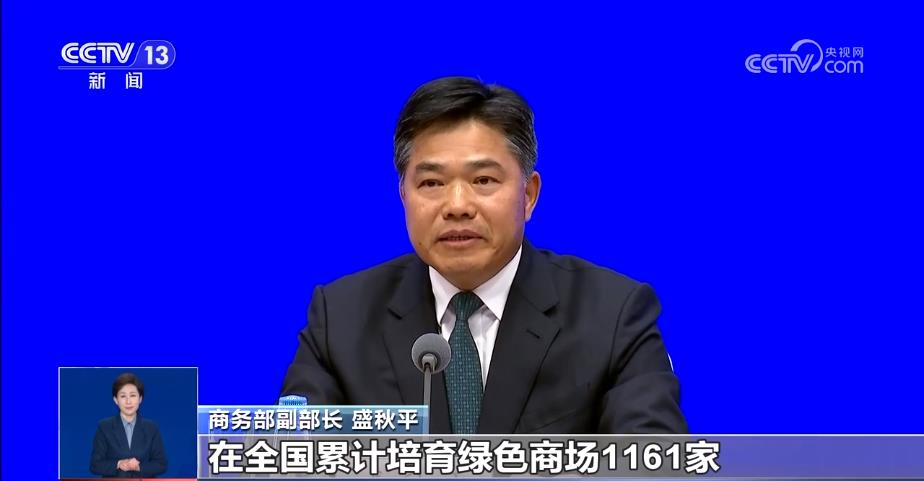
商务部:已培育绿色商场1161家 绿色饭店3500家
Yang Shi Wang· 2026-01-06 18:31
Group 1 - The core viewpoint of the articles emphasizes the Chinese government's commitment to promoting green consumption through various initiatives and policies aimed at enhancing sustainable practices in the retail and service sectors [1][3] Group 2 - The Ministry of Commerce plans to focus on key areas and links of green consumption, particularly through the implementation of a trade-in program for consumer goods, which includes subsidies for high-efficiency green appliances, green home products, green building materials, and new energy vehicles [1] - As of now, the Ministry of Commerce has guided the establishment of 1,161 green malls and 3,500 green hotels across the country, indicating significant progress in fostering green businesses [3] - Multiple e-commerce platforms are collaborating with upstream and downstream merchants to form green cooperation alliances and establish low-carbon operational standards, encouraging small and medium-sized enterprises to participate in the green transition [3]