两山理念

Search documents
合辑 | 向总书记汇报 实干者说
Guang Xi Ri Bao· 2025-12-15 10:00
编者按 2023年12月14日至15日,习近平总书记视察广西时,提出殷殷嘱托:解放思想、创新求变,向海图强、开放发展,奋力谱写中国式现代化广西篇章。这 一重要指示为广西发展指明了前进方向。 征途漫漫,惟有奋斗。加快推进广西高质量发展,"干是不二选择"。千千万万扎根一线的实干者,既是广西发展的建设者,更是时代变迁的见证者。 在"十四五"规划即将收官之际,我们选取10位平凡却不凡的基层各界代表,请他们讲述亲身实干故事。读者朋友可从中领略到八桂儿女牢记嘱托、感恩奋进 的生动实践。他们岗位不同、职责各异,却都以实干为笔、创新为墨,在八桂大地上书写各自的精彩,共同绘就广西蓬勃发展的壮美画卷。 汗水化基石 蓝图变现实 讲述人:喻如安(南A中心展示中心建设项目部项目经理) 我们一切的努力,都为了践行"共享AI,未来已来"的愿景。 习近平总书记在视察广西时强调,广西要主动作为、发挥支点作用,加强信息化建设和应用,为推进高水平对外开放、促进同东盟合作不断注入新动 力。作为中国—东盟国家人工智能应用合作中心(简称南A中心)展示中心建设项目部的一员,我亲眼见证了南A中心从蓝图变为现实。当南A中心顺利投 入试运营时,我内心充满了自豪 ...


穿透时空的光芒——作家李忠春散文《“国光”照亮五莲山》赏析
Ren Min Wang· 2025-12-13 05:00
20世纪初年,国光苹果(以下简称国光)从美国传入中国,在辽宁盖州、河北承德、北京延庆等地 扎了根。但大部分都藉藉无名,或声名不显,唯独在鲁东南的五莲山,即今天的山东省五莲县,国光却 独占花魁,大放光彩。 "国光"与五莲有着特殊的关系,在山区历史上有着特殊的记载,在五莲人的味蕾中有着特别的情 感。"烟台苹果莱阳梨,五莲国光不用提"的顺口溜曾传遍齐鲁,闻名全国。五莲国光北上京城,南去上 海,中进南京武汉,走进了千家万户。 作为五莲人,我清楚的记得,因为方言发音原因,家乡人曾把吃"苹果"说成吃"贫国"。"国光"虽然 没有红富士和香蕉苹果那样壮硕的体格,华丽的外表,诱人的色泽,但个头适中,酸甜深度,口感纯 正,如同当地人忠厚质朴的"山里人"特性。吃掉这个"贫"字,尽快摆脱落后,也饱含着家乡人民发展经 济,富裕生活的强烈愿望! 近日,山东五莲籍散文作家李忠春推出万字长篇散文《"国光"照亮五莲山》。作品简笔勾勒,用近 乎全景式呈现,用散文诗般的语言,描写了国光从20世纪初年,初进五莲山,到新中国成立,及至改革 开放新时期,从最初那微弱的光芒,到星星之火,再到势若燎原,光照群山,这一跌宕起伏的壮阔历程 和发展概貌。 这是一 ...
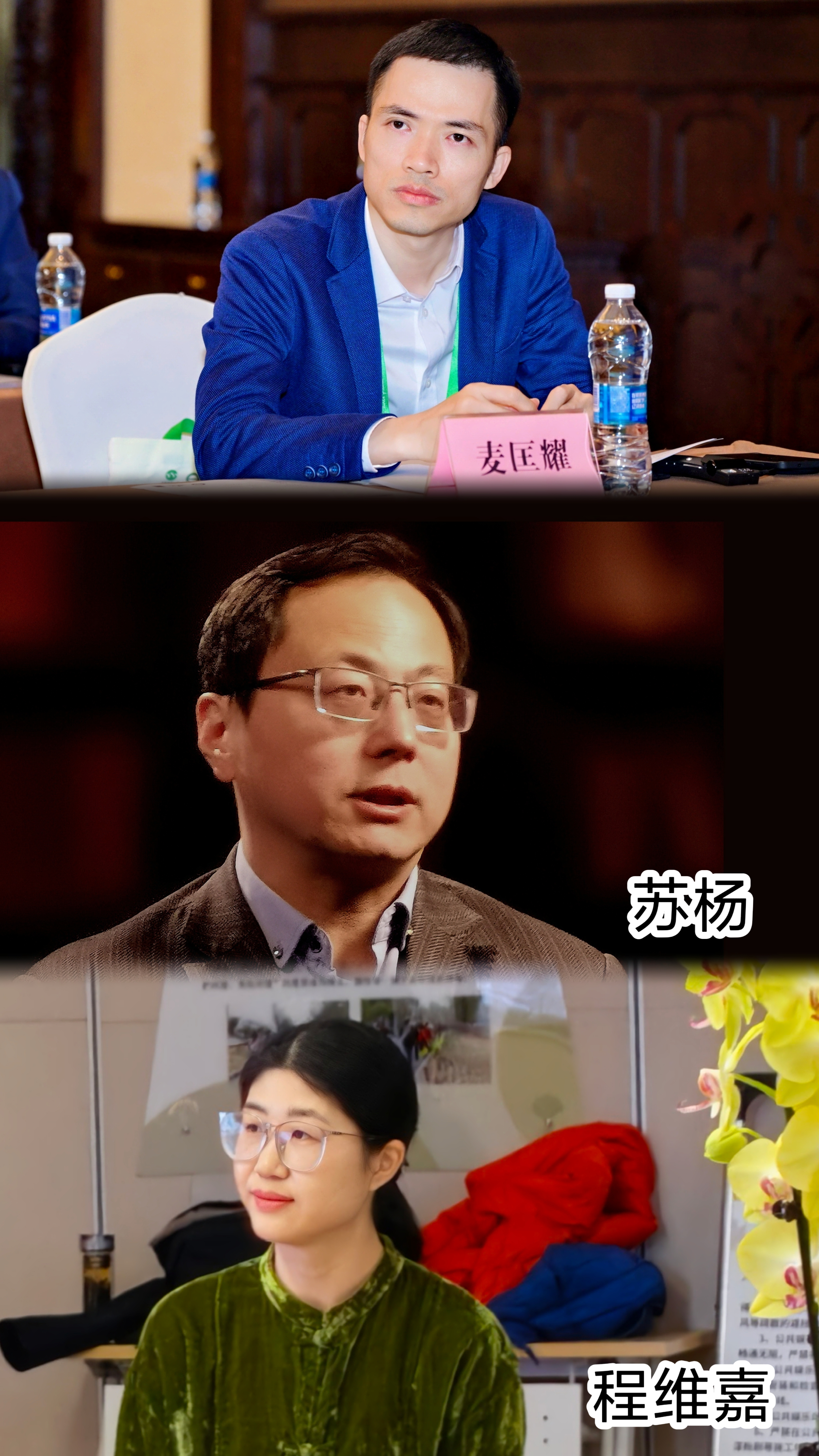
专访麦匡耀、周建宏、苏杨:实施《国家公园法》,推动高水平保护与高质量发展同域共存
Zhong Guo Huan Jing Bao· 2025-12-12 09:40
Core Viewpoint - The article discusses the 20th anniversary of the "Two Mountains" concept, emphasizing the need for high-level protection and high-quality development in the context of national parks, highlighting the ongoing discussions among experts on how to achieve this balance [1]. Group 1: Implementation of the National Park Law - The National Park Law, effective from January 1, 2026, provides strong support for the transformation of the "Two Mountains" concept into practice, although challenges remain [5][6]. - The law introduces a significant shift in management style from a restrictive "blacklist" approach to a more flexible "whitelist" management, allowing certain human activities while ensuring ecological protection [7][8]. Group 2: Community Involvement and Economic Benefits - In the Hainan Tropical Rainforest National Park, a "whitelist" management approach allows local residents to maintain necessary facilities while ensuring ecological integrity, leading to a win-win situation for both protection and livelihood [8][10]. - The South Mountain National Park candidate area has implemented measures that allow for scientific research and non-damaging production activities, enhancing community support for conservation efforts [10][19]. Group 3: Ecological Product Value Realization - The ecological environment's high-quality protection is essential for developing green industries, with the GEP (Gross Ecosystem Product) accounting for 446.78 billion yuan, providing a scientific basis for ecological product pricing [10][16]. - Initiatives like the "Zhu Huan Rice" and the establishment of an ecological product brand system have led to increased sales and community benefits, demonstrating the successful integration of ecological protection and economic development [16][20]. Group 4: Challenges and Future Directions - The article highlights the need for clearer guidelines on how specific ecological elements can serve as production factors in various industries, avoiding superficial approaches like mere tourism or agricultural sales [20][21]. - Both national parks are exploring innovative methods to concentrate production factors towards green industries, including land use reforms and financial incentives for ecological projects [21][22].
提升产业服务能力 激发林下经济活力
Zhong Guo Zi Ran Zi Yuan Bao· 2025-12-12 06:53
Core Viewpoint - The issuance of the "Measures for Promoting the Development of Under-forest Economy" by the National Forestry and Grassland Administration aims to implement Xi Jinping's important directives on utilizing forest and grassland resources effectively, promoting the under-forest economy, and achieving high-quality development while ensuring ecological protection [2][3]. Background of the Measures - The "Measures" were developed to reinforce the collective forest rights system reform, promote the under-forest economy, and broaden the path for converting ecological resources into economic benefits. Currently, over 6 million acres of under-forest land are utilized, generating more than 1 trillion yuan in value, benefiting a large number of farmers [2]. - The need to implement the Central Committee's decisions and enhance the confidence of operating entities in the under-forest economy is emphasized, as it plays a crucial role in stimulating development [2]. Ecological Protection and Economic Development - The "Measures" emphasize the principle of ecological priority, stating that sustainable and high-quality development of the under-forest economy is contingent upon maintaining a healthy ecological foundation. It proposes two principles: compatibility of functions and spatial composite utilization [4]. - The document outlines that development activities must align with forest ecosystem functions and can utilize under-forest spaces for various activities, enhancing the overall efficiency of forest resource utilization [4][5]. Support for Operating Entities - The "Measures" encourage innovative models such as "State-owned Forest Farm +", promoting collaboration between state-owned forest farms and local communities to enhance efficiency and support the development of under-forest economies [7]. - It also advocates for the "Forestry Standard Land" model to address issues of fragmented land use and attract social capital, thereby creating a conducive environment for operating entities [7]. - Financial mechanisms are proposed to support under-forest economic development, including differentiated financial services and the establishment of rights transfer mechanisms to alleviate financing challenges [7]. Service and Organizational Support - The "Measures" focus on strengthening service support for the under-forest economy, including technology application, training, and market integration to ensure that under-forest products reach consumers effectively [8]. - It calls for enhanced organizational support from forestry authorities to guide and facilitate the development of the under-forest economy, ensuring that various stakeholders are actively involved [8].
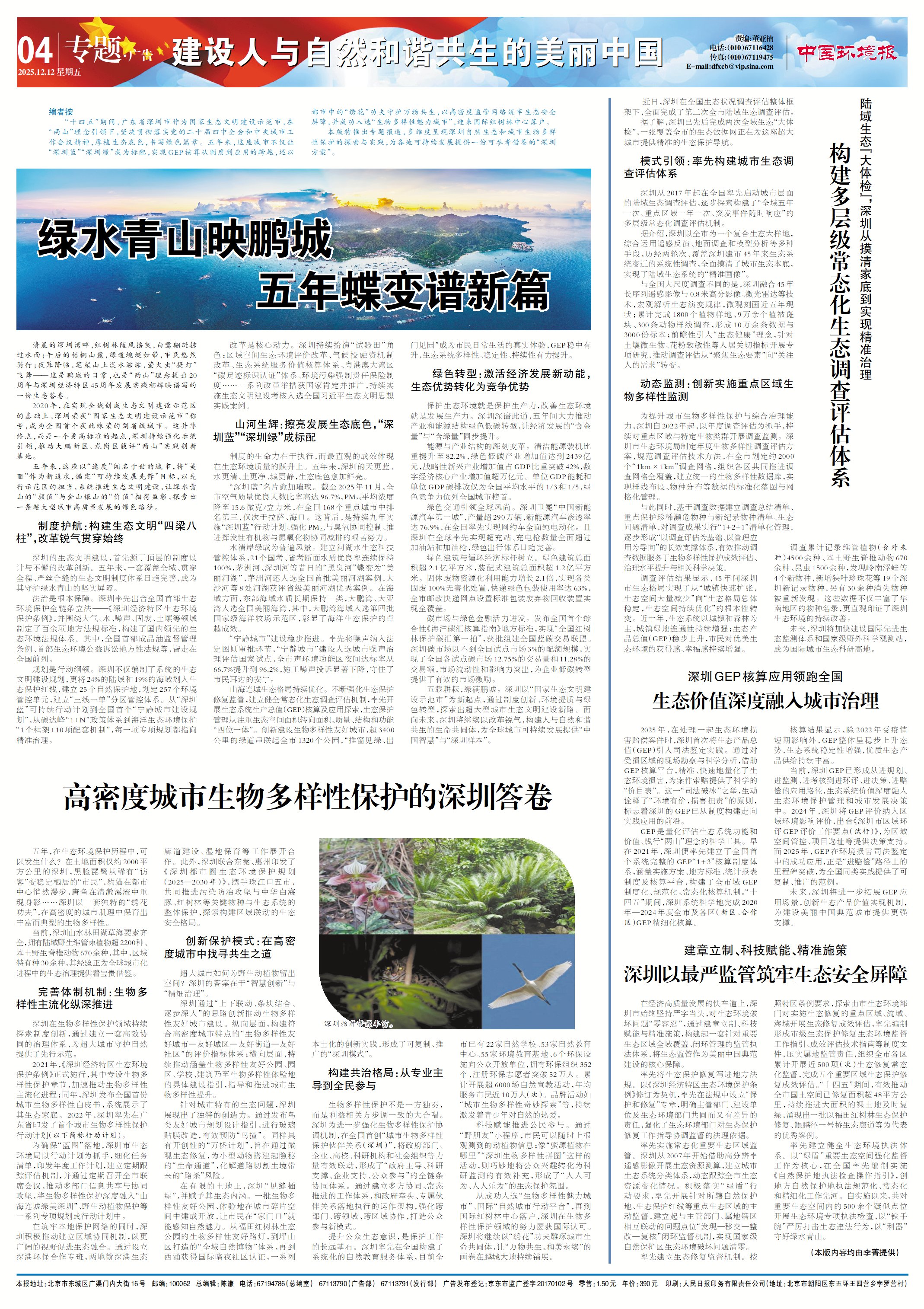
绿水青山映鹏城五年蝶变谱新篇
Zhong Guo Huan Jing Bao· 2025-12-12 01:53
Core Viewpoint - Shenzhen has made significant strides in ecological civilization construction, becoming a national model city for ecological development, integrating environmental protection with economic growth, and setting a benchmark for sustainable urban development [2][14][22]. Institutional Support - Shenzhen has established a comprehensive ecological civilization system, including the first ecological environment protection legislation in China, which covers air, water, noise, solid waste, and soil [5][17]. - The city has developed a systematic ecological civilization construction plan, designating 24% of land and 19% of sea areas for ecological protection [17][18]. Environmental Quality Improvement - Over the past five years, Shenzhen has achieved a significant improvement in environmental quality, with air quality good days reaching 96.7% and PM2.5 concentration dropping to 15.6 micrograms per cubic meter, ranking third among 168 major cities in China [20]. - The city has transformed polluted rivers into clean water bodies, with 100% of monitored river sections meeting water quality standards [20][21]. Green Economic Transformation - Shenzhen has shifted towards a green economy, with clean energy accounting for 82.2% of installed capacity and the value added of green low-carbon industries reaching 2.439 billion yuan [22][23]. - The city has become a leader in electric vehicles, with over 2.9 million units produced and a penetration rate of 76.9% for new energy vehicles [22]. Carbon Market and Green Finance - Shenzhen's carbon market has achieved significant trading volume and value, accounting for 12.75% of the national pilot market's trading volume, providing effective market incentives for low-carbon transitions [23].
【省农业农村厅】陕西冷水鱼年产量位居全国第三
Shan Xi Ri Bao· 2025-12-11 22:48
Group 1 - The core viewpoint of the news is the promotion of high-quality development in the Qinling cold-water fish industry, emphasizing the integration of ecological protection and industrial growth [1][2] - As of now, Shaanxi has achieved an annual cold-water fish production of over 30,000 tons, ranking third in the country, with a production value exceeding 3 billion yuan, placing it among the top regions nationally [1] - The city of Shangluo, a key production area, has an annual cold-water fish output of 11,000 tons and a comprehensive production value of 1.86 billion yuan, serving as a model for the implementation of the "green mountains and clear waters are invaluable assets" concept [1] Group 2 - The overall fishery industry in Shaanxi has seen significant growth, with funding increasing from over 10 million yuan in 2019 to an average of about 150 million yuan annually, and it is projected that by 2025, the province's aquatic product output will exceed 250,000 tons, with a production value surpassing 10 billion yuan [1] - Shaanxi is home to the Qinling fine-scaled salmon, one of the top ten characteristic aquatic genetic resources in the country, and has achieved national leadership in areas such as the giant salamander industry and artificial breeding of the Lanzhou catfish [1] - A collaborative agreement was signed between the provincial agricultural and rural affairs department and Shangluo city, marking a new phase in industry-academia-research cooperation, alongside the establishment of a digital fishery research center to drive digitalization in the industry [2]
与青山绿水相拥 和美丽中国同行——“绿水青山·美丽中国行”系列生态文化传播活动在兰州正式启动
Xin Lang Cai Jing· 2025-12-11 08:53
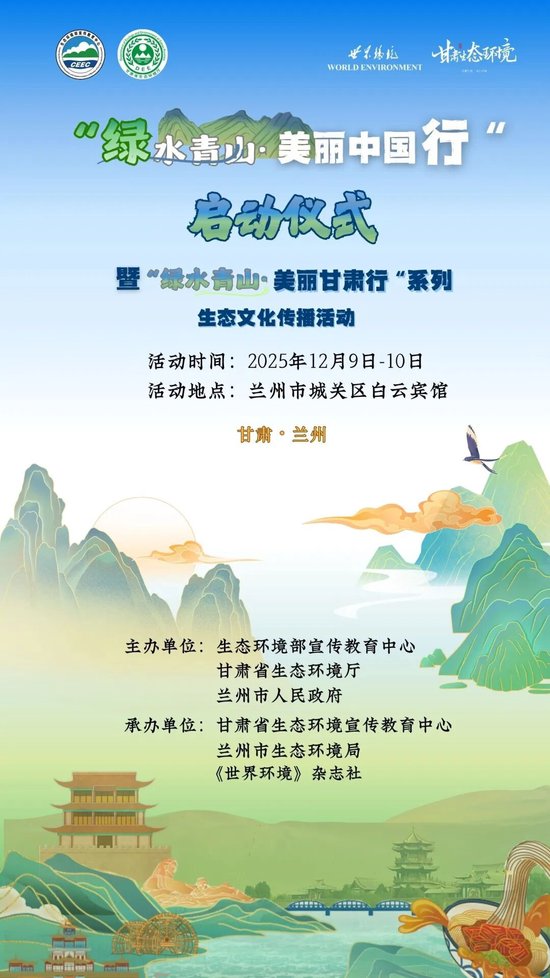
来源:微言环保 以文艺为媒,以文化为桥,与青山绿水相拥,和美丽中国同行。2025年12月9-10日,"绿水青山·美丽中 国行"启动仪式暨首站"绿水青山·美丽甘肃行"系列生态文化传播活动在黄河之滨——兰州正式拉开帷 幕,一场汇聚各方"智慧"的生态之旅正式启程。 活动由生态环境部宣传教育中心、甘肃省生态环境厅和兰州市人民政府联合主办。来自全国各地的生态 环境专家学者、传媒、企业、国际机构、社会组织和文艺界代表等共聚一堂,共研生态环境治理之策, 共绘美丽中国建设蓝图;共同走进多姿多彩的祖国河山,用脚步丈量大地,用镜头、画笔和文字,发掘 鲜活实践案例,讲述美丽中国故事。 林玉副主任在讲话中指出,"绿水青山·美丽中国行"是一场凝聚社会各界智慧和力量,发现生态之美、 共话绿色未来的盛会,活动将生态环境宣教与生态文旅融合,旨在讲好美丽中国故事,为"十五五"时期 绿色高质量发展凝聚最广泛的社会共识与行动力量。首站选在甘肃,很有意义。这片土地历史底蕴深 厚、生态资源丰富;八步沙三代治沙的坚韧奇迹、祁连山国家公园的生态修复、黄河之畔的绿色发展等 绿色实践故事都是生态文化传播的生动素材,希望活动从甘肃开始,让更多动人的绿色声音从这 ...
东西问丨付子堂:“美丽中国”实践如何丰富全球人权文明形态?
Zhong Guo Xin Wen Wang· 2025-12-11 07:36
Core Viewpoint - The interview with Fu Zitang emphasizes how China's rural revitalization practices contribute to enriching and reshaping the global discourse on human rights, highlighting the interconnectedness of economic development, environmental protection, and cultural preservation [3][4][6]. Group 1: Rural Revitalization and Human Rights - China's poverty alleviation efforts have historically addressed absolute poverty, achieving the UN's 2030 sustainable development goal a decade early, thus accelerating global poverty reduction [3]. - Rural revitalization is not only about securing basic living standards but also encompasses cultural, environmental, and political rights, aiming for a holistic enhancement of democratic and livelihood rights [4]. - The establishment of a "people's participatory" human rights protection mechanism transforms human rights from passive acceptance to active creation, redefining the role of rights holders [4]. Group 2: Environmental Rights and Sustainable Development - Environmental rights are recognized as fundamental human rights in China's National Human Rights Action Plan (2021-2025), emphasizing the integration of environmental rights with economic, social, cultural, and political rights [6]. - The concept of harmonious coexistence between humans and nature is essential for sustainable development, advocating for respect and protection of nature as a foundation for survival and development rights [7]. - The "Two Mountains" theory, which prioritizes ecological preservation over economic gain, offers a new philosophical approach to address global environmental crises and sustainable development [9][11]. Group 3: Global Implications of China's Human Rights Approach - The "Two Mountains" concept challenges the traditional dichotomy between environmental protection and economic development, providing a new model for developing countries to follow [11]. - China's initiatives, including "Beautiful China" and rural revitalization, aim to construct a human rights narrative centered on people's needs, prioritizing survival and development rights while integrating environmental rights [11].

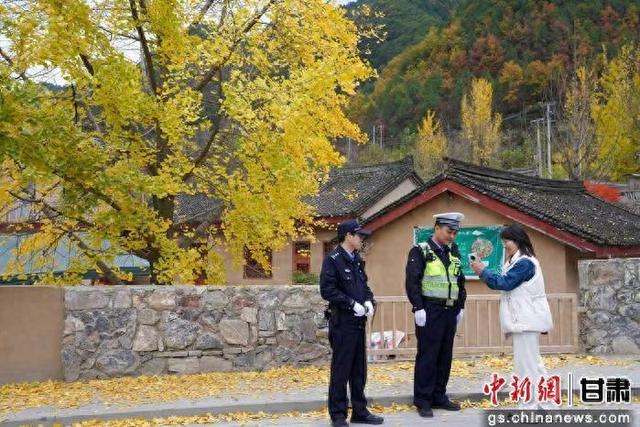
徽县公安局:践行“两山”理念 以高水平安全保障高质量发展
Zhong Guo Xin Wen Wang· 2025-12-11 06:44
为服务乡村振兴与文旅融合发展,徽县公安局持续推动"银杏警务"重心下移。通过警务前移、警力前 置,广泛动员群众参与,构建起"多方融合、协同共治"的乡村警务新模式。警方依托专业力量与社会资 源,对景区、林区及重点区域实施立体化、网格化管理,并在执法中注重柔性管理与贴心服务,致力将 公安服务的温度融入徽县"大景区+全域游"的文旅品牌之中。 今年以来,徽县公安局深入践行"绿水青山就是金山银山"理念,创新构建了全方位、全地域、全过程 的"银杏警务"生态保护机制。该机制聚焦"专业带动、全警行动、部门联动、群众发动",从严打击防范 涉江、涉林、涉矿等破坏生态资源的违法犯罪,相关工作已取得阶段性成效。 在守护绿色屏障方面,徽县公安局突出科技赋能,构建智能化防护体系。通过建立健全"无人机巡航 +视频监控+人工巡防"的立体巡防机制,运用红外监测、振动传感等科技手段,确保预警灵敏、处置高 效。同时,推动巡防模式向"科技巡护+动态巡护+重点防范"升级,探索生态数据与治安要素深度融合 的警务模型,全面提升生态领域"打防管控服"效能。在此基础上,警方还着力构建长效治理机制,通过 提高见警率与管事率、深化与相关部门的协作联动,推动生态保护 ...
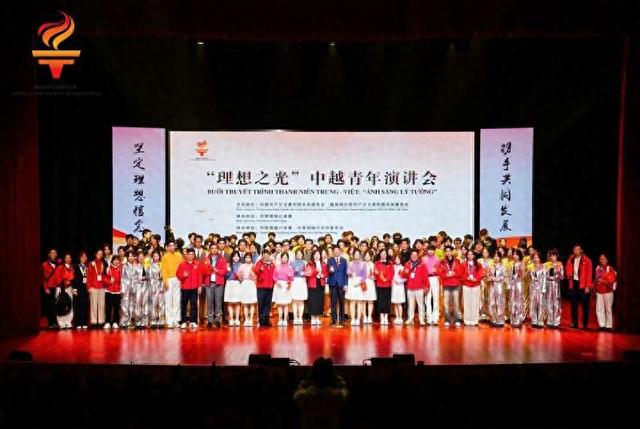
山海同心 中越青年共赴“追光之旅”
Zhong Guo Qing Nian Bao· 2025-12-09 11:35
Core Viewpoint - The article highlights the significance of the "Light of Ideals" study tour for Vietnamese youth in China, emphasizing the shared revolutionary history and aspirations between China and Vietnam, fostering deeper understanding and cooperation among the youth of both nations [1][3][8]. Group 1: Event Overview - The "Light of Ideals" study camp took place from November 30 to December 7, involving 200 Vietnamese youth representatives visiting various locations in China to strengthen youth exchanges as per Xi Jinping's directives [1][3]. - The event included a series of activities such as speeches, visits to historical sites, and discussions on shared revolutionary experiences, showcasing the cultural and historical ties between the two countries [4][7][10]. Group 2: Historical and Cultural Significance - The speeches at the event emphasized the parallel revolutionary journeys of China and Vietnam, highlighting key historical moments such as the founding of the Communist Parties in both countries and their struggles against foreign invasions [4][5][7]. - The shared revolutionary spirit was celebrated through cultural expressions, including singing the "Internationale" in both languages, symbolizing unity despite linguistic differences [3][7]. Group 3: Modernization and Innovation - Vietnamese youth observed China's advancements in various sectors, including agriculture, technology, and automotive industries, gaining insights into modern practices that could be applied in Vietnam [10][12][14]. - The study tour included visits to innovative companies and exhibitions, where participants learned about the integration of technology in traditional industries, inspiring them to explore similar paths in Vietnam [12][14]. Group 4: Environmental and Rural Development - The tour also focused on China's rural revitalization efforts, particularly the "Two Mountains" concept, which emphasizes the balance between ecological preservation and economic development [16][18]. - Vietnamese participants expressed interest in adopting similar policies to attract youth back to rural areas and promote sustainable development, recognizing the importance of supportive government policies in achieving these goals [18][19].