
交通强国建设

Search documents
145亿元!广州港大手笔
Zhong Guo Ji Jin Bao· 2025-06-23 16:11
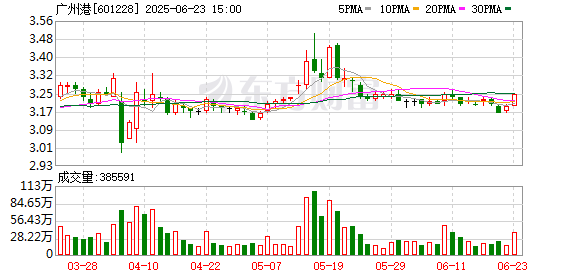
Core Viewpoint - Guangzhou Port, the largest comprehensive port operator in South China, announced a total investment of 14.5 billion yuan for the construction of the Nansha Port Phase V project, along with an additional capital increase of 2.809 billion yuan for its wholly-owned subsidiary [2][4][5] Investment Details - The total estimated investment for the Nansha Port Phase V project is 14.5 billion yuan, aimed at enhancing the hub service capabilities of the Nansha Port and adapting to the trend of larger container vessels [4][6] - The project will be funded through the company's own funds and self-raised funds, with a planned construction period from 2026 to 2032, pending government approvals [4][5] Project Specifications - The project includes the construction of four 200,000-ton container ship berths and 15 5,000-ton barge berths, with a total berth shoreline of 1,880 meters and 1,931 meters respectively [5] - The designed annual throughput capacity of the terminal is 6.7 million TEUs, with 4.6 million TEUs from the container ship berths and 2.1 million TEUs from the barge berths [5] Strategic Importance - The Nansha Port Phase V project is part of China's national development plan and is included in the Greater Bay Area infrastructure connectivity plan, marking it as a significant national project [6][8] - The project is expected to enhance the company's container throughput capacity and support the development of a world-class port cluster in the Guangdong-Hong Kong-Macao Greater Bay Area [8] Financial Performance - As of the first quarter of 2025, Guangzhou Port reported a revenue of 3.42 billion yuan, a year-on-year increase of 5.5%, while the net profit attributable to shareholders decreased by 17.6% to 262 million yuan [8] - The company's stock price was 3.24 yuan per share, with a market capitalization of 24.44 billion yuan as of June 23 [8]


145亿元!广州港大手笔
中国基金报· 2025-06-23 16:05
Core Viewpoint - Guangzhou Port is investing 145 billion yuan in the construction of the Nansha Port Phase V project, with an additional capital increase of 28.09 billion yuan to ensure project implementation [2][6][11]. Investment Details - The total investment for the Nansha Port Phase V project is estimated at 145 billion yuan, aimed at enhancing the service capacity of the Nansha Port hub and accommodating the trend of larger container vessels [6][11]. - The funding sources for the project will be from the company's own funds and self-raised funds, with a planned construction period from 2026 to 2032 [6][9]. Company Background - Nansha International Container Company, a wholly-owned subsidiary of Guangzhou Port, was established in August 2023 and focuses on various logistics and port operations [8]. - As of March 31, 2025, Nansha International Container Company had total assets of 50.18 million yuan and a net profit of -1.10 million yuan for the first quarter of 2025 [8]. Project Specifications - The project will include the construction of four 200,000-ton container ship berths and additional smaller berths, with a total designed throughput capacity of 6.7 million TEUs per year [9][11]. - The project is part of the national "Transportation Power Construction Project" and is included in the Greater Bay Area infrastructure connectivity plan [11]. Financial Performance - In the first quarter of 2025, Guangzhou Port reported a revenue of 3.42 billion yuan, a year-on-year increase of 5.5%, while net profit decreased by 17.6% [11].

我国交通运输行业实现新突破 为经济发展提供坚实支撑
Ren Min Wang· 2025-06-13 06:12
Core Insights - The transportation industry in China is advancing high-quality development, with significant investments and growth in various metrics for 2024 [1][8] Investment and Infrastructure - In 2024, the transportation sector completed fixed asset investments of 37,893 billion yuan, maintaining a high level [2] - The national comprehensive transportation network has expanded, with over 260,000 kilometers of main routes and a completion rate of approximately 90% [2] - New railway lines added 3,113 kilometers, while highway mileage increased by 53,500 kilometers [2] - The number of civil aviation airports increased by 4, and postal service points grew by 33,000 [2] Rural Development - Investment in rural road construction has remained above 400 billion yuan for eight consecutive years, with 164,100 kilometers of rural roads newly constructed or renovated [3] - The establishment of village-level logistics service stations has reached 426,700, enhancing service supply in western regions [3] Transportation Services - Daily cross-regional travel reached approximately 180 million people, a 5.4% increase from the previous year [4] - Daily freight volume averaged about 16 million tons, reflecting a 3.9% growth [4] - The postal delivery volume increased by 19.2%, with over 530 million items processed daily [4] Equipment Upgrades - The transportation equipment sector has seen advancements in specialization, intensification, and greening [6][7] - The number of high-speed trains increased by 3,032 units, and the proportion of electric locomotives reached 65.3% [7] - The share of new energy vehicles in public transport reached 82.7%, marking a 5% increase [7] Future Outlook - The Ministry of Transport aims to continue promoting high-quality development and strengthen transportation services as part of the "14th Five-Year Plan" [8]
总里程超600万公里!我国综合立体交通网主骨架基本形成
Ren Min Ri Bao· 2025-06-13 03:16
Core Viewpoint - The construction of a strong transportation system in China has made significant progress in recent years, with a focus on high-quality development and the establishment of a comprehensive transportation network [2][3]. Infrastructure Development - China's comprehensive transportation network has exceeded 6 million kilometers, connecting over 80% of counties and serving approximately 90% of the economy and population [2]. - As of the end of last year, the railway operating mileage reached 159,000 kilometers, with over 45,000 kilometers of high-speed rail; the total length of highways reached 5.4368 million kilometers, including 183,600 kilometers of expressways [2]. - Inland waterway navigation mileage is 128,200 kilometers, with 15,400 kilometers of class three and above waterways; there are 22,023 productive port berths, including 2,878 berths for vessels of 10,000 tons and above [2]. Transportation Efficiency - Daily transportation volumes have increased, with approximately 150 million tons of goods and 445 million express parcels delivered each day in 2023 [4]. - The railway sector has improved service levels, enhancing both passenger and freight transport capabilities [4]. - The civil aviation sector has seen a 13.4% year-on-year increase in flight volume, with an on-time performance rate exceeding 80% for six consecutive years [5]. Logistics and Cost Reduction - The logistics cost as a percentage of GDP decreased by 0.3 percentage points compared to the previous year, indicating improved efficiency in logistics operations [5]. - The proportion of freight volume from rail and water transport has increased by 1.4 and 3 percentage points, respectively, since 2017 [5]. Technological Innovation - Significant advancements in transportation technology have been made, including the development of high-speed rail technology and the introduction of smart logistics solutions [7]. - The low-altitude economy is thriving, with over 14,000 drone companies and more than 225,000 licensed drone operators in China [7]. - The number of newly registered drones reached nearly 608,000 in the first half of this year, a 48% increase from the end of last year [7]. Future Initiatives - The Ministry of Transport plans to accelerate the construction of the "6 axes, 7 corridors, and 8 channels" framework and enhance the national comprehensive freight hub [3][6]. - Efforts will be made to lower logistics costs and improve efficiency through structural, systematic, and technological enhancements [6]. - The government aims to develop a robust low-altitude service guarantee system and improve infrastructure standards to support the growth of the low-altitude economy [8].
科技力量铺就交通强国建设“快车道”
Ke Ji Ri Bao· 2025-05-30 01:20
Group 1 - The core theme of the article is the significant advancements in domestic TBM (Tunnel Boring Machine) technology, exemplified by the "Tianshan" TBM, which has transitioned from being entirely imported to largely domestically produced during the 14th Five-Year Plan period [1][2] - The "Tianshan" TBM, measuring over 280 meters in length and weighing more than 2,800 tons, is described as a "underground dragon" that can operate continuously like an assembly line, showcasing its efficiency in challenging construction environments [1][2] - The article highlights the importance of advanced geological detection equipment integrated into domestic TBMs, which allows for preemptive geological assessments and enhances operational safety and efficiency [2] Group 2 - The article discusses the challenges of road construction in the harsh climate of the Tibetan Plateau, particularly the issue of permafrost, and the innovative solutions developed by researchers to address these challenges [3] - Techniques such as mixing cement with the "sesame paste" (a metaphor for the soft permafrost) and using pile foundations to support loads directly on the underlying permafrost are highlighted as effective methods for road construction in difficult terrains [3] - The rapid development of waterway transportation, particularly the advancements in the management of the Three Gorges ship lock and elevator, is also emphasized, showcasing the role of technology in enhancing operational efficiency [4][5] Group 3 - The Three Gorges ship lock is noted as the largest continuous ship lock in the world, with significant improvements in maintenance and operational efficiency achieved through innovative technologies [4][5] - The annual throughput of the Three Gorges shipping has reached 169 million tons, exceeding the original design capacity of 100 million tons, indicating the effectiveness of technological advancements in increasing operational capacity [5] - Future plans include the integration of big data and smart technologies to further enhance the efficiency of the Yangtze River shipping operations [5]
600万公里交通网上的担当与奉献(权威发布)
Ren Min Ri Bao· 2025-05-29 22:21
Core Points - The article highlights the significant advancements in China's transportation infrastructure, emphasizing its role as a pioneer in modernizing the country [1] - It showcases the dedication and achievements of various professionals in the transportation sector, including engineers, researchers, and maritime personnel [2][3][4] Group 1: Transportation Infrastructure - China has the world's largest high-speed railway and highway networks, with a comprehensive transportation network exceeding 6 million kilometers [1] - The construction of the world's largest ship lift at the Three Gorges is a major engineering challenge, with successful operational and maintenance systems established [2] - The Tian Shan Victory Tunnel, the longest highway tunnel globally, was completed ahead of schedule, demonstrating the effectiveness of domestic TBM technology [2] Group 2: Technological Advancements - Domestic TBM manufacturing technology has significantly improved, moving from reliance on imports to developing advanced local solutions [3] - The article mentions the evolution of transportation logistics, with improved postal services in remote areas due to better infrastructure [4] - The integration of technology in logistics, such as the potential use of drones for deliveries, is highlighted as a future development [4]
2025年机场行业分析
Lian He Zi Xin· 2025-05-26 04:40
Investment Rating - The airport industry is rated with a stable outlook, indicating a positive long-term growth potential supported by government policies and infrastructure investments [34]. Core Insights - The airport industry is a crucial part of China's transportation infrastructure, with 263 civil transport airports as of the end of 2024, reflecting a net increase of 4 airports from the previous year [4][10]. - The revenue structure of airport operations is divided into aviation-related income, which is quasi-public, and non-aviation income, which is market-driven, allowing for improved profitability [5][6]. - The industry is experiencing a robust recovery in operational metrics, with passenger throughput exceeding pre-pandemic levels, although international passenger traffic has not fully recovered [10][14]. Industry Overview - The airport industry is characterized by strategic importance and public service, with strict management by the Civil Aviation Administration of China [4]. - The revenue from aviation-related services includes essential operations such as takeoff and landing fees, while non-aviation services encompass various commercial activities [5]. - The industry is undergoing a transformation with the gradual marketization of non-aviation service fees, enhancing the revenue structure and competitive edge of airport operators [6]. Policy Environment - Recent policies, such as the "Guidance on Promoting International Aviation Hub Construction," aim to enhance the functionality of international aviation hubs and improve operational efficiency [7][9]. - The "14th Five-Year Plan" outlines a target to increase the number of civil transport airports from 241 to at least 270 by 2025, indicating significant growth potential [8][27]. - The government continues to support the industry through subsidies and funding for infrastructure projects, which is crucial for the sector's recovery and expansion [8][30]. Operational Performance - In 2024, the airport industry saw a significant recovery, with passenger throughput increasing by 15.9% year-on-year, surpassing 2019 levels [10][14]. - The total revenue for airport enterprises reached 1136.7 billion yuan, marking an 8.5% increase from the previous year, while the total profit showed a substantial reduction in losses [26]. - The operational metrics indicate a strong recovery trajectory, with domestic passenger traffic growing by 12.2% compared to 2019, while international traffic is still recovering [16][18]. Supply and Demand Dynamics - The airport industry has substantial growth potential, driven by ongoing fixed asset investments and improvements in flight capacity [27][28]. - The demand for air travel is expected to continue rising, supported by economic recovery and increased consumer spending [30]. - The competitive landscape is characterized by regional monopolies, with airports facing limited competition due to geographical and regulatory constraints [32][33]. Future Development - The airport industry is positioned for rapid growth, with ongoing investments in infrastructure and a clear policy framework supporting its expansion [34]. - The recovery of domestic and international travel demand is anticipated to sustain the industry's growth momentum in the coming years [34].
招商公路(001965) - 2025年5月20日投资者关系活动记录表
2025-05-21 08:06
Group 1: Traffic Volume and Road Management - The overall traffic volume on managed road sections is consistent with last year, with some sections slightly lower due to regional factors such as construction and weather conditions [1] - The company manages 26 road projects with a total length of 2008 kilometers, primarily national and provincial main roads, with an average toll period of approximately 14 years [2] - The decision-making for road expansion and reconstruction projects is based on a comprehensive evaluation of regional economic development, financing costs, investment returns, and safety enhancements [2] Group 2: Project Updates - The Beijing-Tianjin-Tanggu expressway expansion project is progressing well, aimed at alleviating traffic pressure and supporting national strategies for regional development [3] - The construction is being carried out using a non-disruptive method to minimize the impact on road traffic [3] Group 3: Technological Development - The company focuses on four main business areas: investment operations, transportation technology, smart transportation, and transportation ecology, with an emphasis on innovation [4][5] - The goal is to create a leading infrastructure investment management platform, enhancing safety, intelligence, and sustainability in operations [5] Group 4: Shareholder Returns - From 2022 to 2024, the company has distributed a total cash dividend of 9.026 billion yuan, reflecting a commitment to sustainable development and shareholder value [6] - Future shareholder return plans will balance funding needs with shareholder returns, considering the company's growth stage [6] Group 5: Financial Management - The company's debt ratio is approaching 45%, but remains below the industry average, with plans to optimize financial costs and manage capital expenditures effectively [7][8] - The company has diverse financing channels and healthy financing capabilities to support capital expenditure needs for projects like the Beijing-Tianjin-Tanggu expansion [8]

“有”→“好” “大”→“强” 我国交通强国建设乘势而上 成绩亮眼
Yang Shi Wang· 2025-05-21 03:12
Core Viewpoint - The Ministry of Transport of China has made significant progress in the internationalization of transportation standards since the 14th Five-Year Plan, enhancing the integration of Chinese technology into the international standard system [1][3]. Group 1: International Standards Development - China has published 18 international standards in the field of railway track quality detection, with another 18 standards in the process of being developed [3]. - A total of 28 international standard proposals have been submitted, which has effectively promoted the integration of Chinese technology into the international standard system [3]. - Over 550 transportation standards have been published in foreign languages, with 125 multilingual standards specifically aimed at supporting the Belt and Road Initiative [3]. Group 2: Port Standardization - The construction of a safe, green, intelligent, and efficient port standard system is being accelerated, which will facilitate the development of a global port collaboration network [7]. - A comprehensive set of advanced and practical technical achievements has been established in port construction and operation, focusing on safety, green practices, intelligence, and efficiency [9]. Group 3: Energy Integration in Transportation - The installed capacity of clean energy in national transportation infrastructure has exceeded 890,000 kilowatts, with 35,000 charging piles and approximately 51,000 charging parking spaces established [10]. - The proportion of new energy city buses has reached 77.6%, and over 430 clean energy vessels have been built or are under construction [10]. - The Ministry of Transport plans to enhance the integration of transportation and energy infrastructure, promoting the application of new energy vehicles across various sectors [12].
评读︱《2024年民航行业发展统计公报》
Zhong Guo Min Hang Wang· 2025-05-15 03:41
Core Insights - The civil aviation industry in China has achieved significant qualitative and quantitative growth in 2024, marking a new stage in the construction of a strong transportation nation under the leadership of the central government [2][6] Group 1: Safety and Operational Performance - The civil aviation sector maintained a strong safety record in 2024, with no transportation accidents reported and a major accident rate of 0.024 per million flights over ten years [2][3] - The total air transport volume reached historical highs, with passenger traffic exceeding 700 million for the first time and cargo volume nearing 900 thousand tons [3][4] - The average daily utilization of registered transport aircraft increased to 8.89 hours, up by 0.77 hours year-on-year, with passenger load factors reaching 83.3% [3][4] Group 2: Strategic Development and Infrastructure - The industry implemented the "New Era New Journey" action plan to support national strategies, enhancing its role as a strategic industry [3][4] - By the end of 2024, the number of certified transport airports reached 263, with a net increase of 4 airports, and the fleet size grew to 4,394 aircraft, adding 124 aircraft during the year [4][5] Group 3: Service Quality and Customer Experience - The average on-time performance rate for passenger airlines was 87.1%, maintaining above 80% for seven consecutive years, and 257 airports achieved "paperless" travel [5] - A total of 126,000 passengers benefited from a seamless travel service that includes a single payment, check-in, security check, and baggage handling [5] Group 4: Innovation and Sustainability - The industry saw a significant increase in drone registrations, with 1.619 million registered users and 2.177 million drones, reflecting nearly 100% growth [5] - The civil aviation sector initiated sustainable aviation fuel trials and improved energy efficiency, achieving a 20.5% reduction in fuel consumption per ton-kilometer since 2005 [5][6]