
免疫治疗

Search documents
10/31财经夜宵:得知基金净值排名及选基策略,赶紧告知大家
Sou Hu Cai Jing· 2025-10-31 15:56
Core Insights - The article provides a ranking of open-end funds based on their net asset value growth as of October 31, 2025, highlighting the top and bottom performers in the market [2][4][6]. Fund Performance Summary - The top 10 funds with the highest net value growth include: 1. 中航优选领航混合发起C with a unit net value of 1.8264, up from 1.6624, showing an increase of 0.16 2. 中航优选领航混合发起A with a unit net value of 1.8359, up from 1.6711, also increasing by 0.16 3. 申万菱信医药先锋股票A with a unit net value of 0.5106, up from 0.4719, an increase of 0.03 4. 申万菱信医药先锋股票C with a unit net value of 0.5019, up from 0.4639, an increase of 0.03 5. 东方阿尔法健康产业混合发起C with a unit net value of 1.0013, up from 0.9259, an increase of 0.07 6. 东方阿尔法健康产业混合发起A with a unit net value of 1.0030, up from 0.9275, an increase of 0.07 7. 同泰大健康主题混合C with a unit net value of 0.5288, up from 0.4902, an increase of 0.03 8. 同泰大健康主题混合A with a unit net value of 0.5385, up from 0.4992, an increase of 0.03 9. 广发医药创新混合发起式C with a unit net value of 1.3928, up from 1.2939, an increase of 0.09 10. 广发医药创新混合发起式A with a unit net value of 1.4113, up from 1.3111, an increase of 0.10 [2][4]. - The bottom 10 funds with the lowest net value growth include: 1. 永赢高端制造A with a unit net value of 1.7642, down from 1.8874, a decrease of 0.12 2. 水赢高端制造C with a unit net value of 1.7430, down from 1.8647, a decrease of 0.12 3. 山证资管策略精选混合 with a unit net value of 1.6421, down from 1.7552, a decrease of 0.11 4. 德邦露星价值A with a unit net value of 3.3857, down from 3.6114, a decrease of 0.22 5. 德邦鑫星价值C with a unit net value of 3.2544, down from 3.4713, a decrease of 0.21 6. 宏利绩优混合A with a unit net value of 2.3849, down from 2.5435, a decrease of 0.15 7. 宏利绩优混合C with a unit net value of 2.3532, down from 2.5096, a decrease of 0.15 8. 信澳业绩驱动混合C with a unit net value of 1.5438, down from 1.6463, a decrease of 0.10 9. 长安鑫瑞科技6个月定开混合C with a unit net value of 0.9629, down from 1.0268, a decrease of 0.06 10. 信澳业绩驱动混合A with a unit net value of 1.5739, down from 1.6783, a decrease of 0.10 [4][6]. Market Analysis - The overall market showed a decline with the Shanghai Composite Index closing lower, while the ChiNext Index experienced a brief recovery before falling again. The total trading volume reached 2.35 trillion, with a market breadth of 3760 gainers to 1553 losers [6]. - Leading sectors included Media & Entertainment, Pharmaceuticals, Internet, and Hospitality, all showing gains of over 2%, while sectors like Communication Equipment and Semiconductors faced declines exceeding 3% [6].


港股创新药调整期真的来了? 维立志博董事长康小强:不会将注意力集中于“追风”
Mei Ri Jing Ji Xin Wen· 2025-10-30 14:24
Core Viewpoint - The article discusses the recent developments and market positioning of Weili Zhibo, a biotech company that has recently gone public in Hong Kong, focusing on T-cell engagers (TCE) as a novel cancer treatment approach, amidst a competitive landscape in the innovative drug sector [1][4]. Company Overview - Weili Zhibo completed its IPO in July 2023, becoming the first TCE-focused company listed in China [1]. - The company has gained significant market attention, with retail subscriptions reaching a record 3,494.8 times during its IPO [4]. - The CEO, Kang Xiaoqiang, emphasizes a long-term development strategy over quick fame, focusing on the company's research pipeline and clinical data [4][5]. TCE Technology - TCEs are positioned as a promising alternative to antibody-drug conjugates (ADCs), with the potential to activate T-cells against cancer cells [3][5]. - The first TCE drug to surpass $1 billion in sales is Amgen's Blincyto, which targets leukemia [5]. - TCEs have advantages in terms of lower antigen expression requirements and longer duration of action compared to ADCs [5]. Clinical Development - Weili Zhibo has six innovative drug candidates in clinical stages, with LBL-024 being the closest to market, targeting advanced neuroendocrine carcinoma [8][9]. - The clinical strategy involves starting with niche indications and expanding to larger cancer types, aiming for a broad-spectrum anti-cancer approach [9]. - The company plans to showcase two new blood cancer drugs at the 2025 ASH annual meeting, indicating strong clinical data [6][7]. Market Strategy - The company has opted for a "small first, then large" strategy to address unmet clinical needs in less competitive areas [9]. - Weili Zhibo has secured a global licensing agreement with Dianthus Therapeutics, potentially generating over $10 billion in total transaction value [10]. - The CEO remains cautious about market volatility and emphasizes the importance of having sufficient funds to support R&D for the next 4-5 years [10][11].

免疫治疗新突破:改写1型糖尿病治疗史
GLP1减重宝典· 2025-10-26 14:01
Core Viewpoint - The article highlights a significant medical breakthrough with the FDA approval of the first innovative drug, Tzield (teplizumab), for delaying the onset of Type 1 Diabetes (T1DM), marking a new phase in diabetes treatment in China [4]. Group 1: Medical Breakthrough - The first prescriptions for Tzield were successfully issued at the Boao Future Hospital, indicating a milestone in diabetes management [4]. - The drug is designed to delay the onset of T1DM, providing hope for patients and families affected by this autoimmune disease [6]. Group 2: Early Screening and Monitoring - Early screening is crucial for high-risk individuals, particularly those with a family history of T1DM, as they are 15 times more likely to develop the disease compared to the general population [8]. - The latest guidelines recommend systematic screening for first-degree relatives of T1DM patients aged 1-45, emphasizing the importance of islet autoantibody (IAb) testing as a reliable predictive indicator [8][9]. - Regular blood glucose monitoring, including Oral Glucose Tolerance Test (OGTT), is essential for assessing glucose metabolism and disease progression [9]. Group 3: Intervention Strategies - The progression of T1DM can be delayed through timely interventions, with studies showing that 44% of stage 1 and 75% of stage 2 patients progress to stage 3 within five years [10]. - Establishing a structured follow-up system can significantly reduce the risk of diabetic ketoacidosis (DKA) by over 50% and extend the intervention window for high-risk groups [10]. - The use of CD3-targeted drug Tzield can preserve beta cell function and delay disease onset by nearly three years for stage 2 patients [10]. Group 4: Conclusion - A standardized early screening and dynamic monitoring system is essential for extending the intervention window for T1DM, ultimately improving long-term outcomes for patients [11].

打造“生物战士” 精准攻击肿瘤
Ke Ji Ri Bao· 2025-10-24 01:12
Core Viewpoint - The innovative intracranial injection method for oncolytic virus therapy enhances the treatment of brain tumors, demonstrating safety and efficacy in treating pediatric diffuse intrinsic pontine glioma (DIPG) [1][6]. Group 1: Oncolytic Virus Therapy - Oncolytic virus therapy is emerging as a disruptive new strategy for cancer treatment, with the potential to revolutionize clinical approaches [2]. - This therapy utilizes engineered viruses that selectively infect and destroy tumor cells while activating the immune system, providing a dual mechanism of action [3][4]. - The modified oncolytic virus (Ad-TD-nsIL12) shows improved targeting of tumor cells and reduced toxicity to normal cells through specific genetic alterations [5][6]. Group 2: Clinical Trials and Efficacy - Recent clinical trials have confirmed the safety of the oncolytic virus Ad-TD-nsIL12, with significant preclinical and clinical evidence supporting its effectiveness [6]. - Global statistics indicate over 200 ongoing clinical trials related to oncolytic viruses, with a substantial portion originating from China, highlighting the rapid advancement in this field [7]. - A notable study demonstrated that a new oncolytic virus (VG161) significantly extended the median overall survival of patients with recurrent liver cancer from 9.4 months to 17.3 months [7]. Group 3: Future Directions - The focus for future research includes enhancing collaboration between basic and clinical research to facilitate the transition of oncolytic virus therapies into clinical practice [7]. - The team plans to explore combination therapies involving oncolytic viruses with surgery, chemotherapy, and antibody treatments to address the heterogeneity of malignant tumors [8].
信达生物(01801):携手武田,加速新一代IO及ADC疗法推向全球市场
Southwest Securities· 2025-10-23 11:35
Investment Rating - The report does not specify a clear investment rating for the company [1] Core Insights - The company has entered a global strategic partnership with Takeda to co-develop three therapies, including IBI363 and IBI343, with a total potential deal value of up to $11.4 billion [5] - IBI363 is a next-generation immune checkpoint inhibitor that has shown promising results in clinical trials for non-small cell lung cancer (NSCLC) and colorectal cancer (CRC) [5] - IBI343 targets CLDN18.2 and is being developed for pancreatic and gastric cancers, with ongoing clinical trials showing encouraging results [5] - The company aims to become a leading global biopharmaceutical enterprise, leveraging its expertise in IO and ADC fields alongside Takeda's commercialization capabilities [5] Financial Projections - The company is expected to achieve revenues of 114.4 billion, 149.7 billion, and 201.1 billion CNY for the years 2025, 2026, and 2027 respectively, with growth rates of 21.4%, 30.9%, and 34.3% [6][7] - The net profit attributable to the parent company is projected to be 864.68 million, 1,643.79 million, and 2,749.81 million CNY for the same years, reflecting significant growth [7] - The earnings per share (EPS) is expected to improve from -0.06 CNY in 2024 to 1.60 CNY by 2027 [7] Revenue Breakdown - Revenue from the oncology pipeline is projected to grow from 80.3 billion CNY in 2024 to 133.1 billion CNY in 2027, with a stable gross margin of around 85% [9] - Non-oncology pipeline revenues are expected to increase significantly, from 2 billion CNY in 2024 to 60 billion CNY in 2027, with a gross margin of 78% [9] - Licensing income is forecasted to stabilize at around 7 billion CNY annually from 2025 to 2027 [9]
海通国际:信达生物(01801)与武田制药达成114亿美元交易 合作商业化值得期待
Zhi Tong Cai Jing· 2025-10-23 09:28
Core Insights - Sinda Biopharma (01801) has entered into a global strategic collaboration with Takeda Pharmaceutical, which includes two late-stage therapies IBI363 (PD-1/IL-2α-bias) and IBI343 (CLDN18.2 ADC), as well as an early-stage project IBI3001 (EGFR/B7H3 ADC) [1][2] - The collaboration will provide Sinda Biopharma with an upfront payment of $1.2 billion, including a strategic equity investment of $100 million, with potential milestone payments reaching up to $10.2 billion and potential sales sharing [1][2] - IBI363 is viewed as a next-generation cornerstone therapy for tumors, with a significant market potential, targeting a global immune-oncology (IO) responder population of approximately 1.5 million, corresponding to a $50 billion hot tumor market [1] Group 1 - IBI363 has accumulated clinical data from over 1,200 patients, with plans to advance its global development in non-small cell lung cancer (NSCLC) and colorectal cancer (CRC), including first-line indications [2] - The first global Phase 3 clinical study (MarsLight-11) for IBI363 has received FDA approval, focusing on IO-resistant squamous NSCLC patients, comparing the efficacy and safety of IBI363 at a 3 mg/kg dose against docetaxel [2] - The collaboration model will help Sinda Biopharma build experience in global clinical and commercialization teams, leveraging its development efficiency in China and Takeda's international capabilities [2] Group 2 - Takeda invests approximately $5 billion annually in R&D and has a clinical team of 4,500, possessing extensive experience in oncology and immunotherapy [2] - This partnership is expected to enhance Sinda Biopharma's global footprint, gradually establishing R&D and commercialization capabilities in key international markets, maximizing long-term sustainable value [2]
中国新药组合,让这类癌症生存期几乎翻倍
Hu Xiu· 2025-10-23 01:54
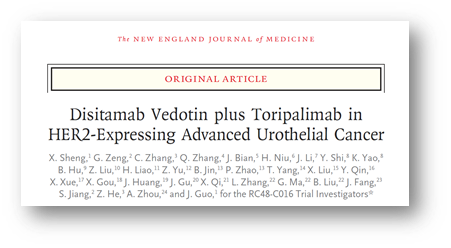
Core Viewpoint - The article discusses a significant clinical study on bladder cancer treatment conducted by Chinese researchers, highlighting the promising results of combining two novel drugs, a PD-1 immune drug and an HER2-targeted antibody-drug conjugate, which may redefine first-line treatment standards for advanced bladder cancer [1][6][9]. Group 1: Bladder Cancer Overview - Bladder cancer is the most common type of urinary system tumor, with nearly 100,000 new cases reported annually in China, primarily affecting middle-aged and older men, largely due to smoking [1][2]. - Early detection of bladder cancer leads to high survival rates, but advanced stages are challenging due to drug resistance and recurrence [2]. Group 2: Treatment Landscape - Traditional chemotherapy has been the main treatment for bladder cancer for decades, but it has limited effectiveness, with a median survival of just over one year and significant side effects [3]. - New drug classes, including immune therapies and antibody-drug conjugates (ADCs), have emerged as hopeful alternatives, with several PD-1/PD-L1 immune drugs already approved for bladder cancer [4][5]. Group 3: Clinical Study Insights - The recent study involved 484 patients with HER2-positive advanced urothelial carcinoma, randomly assigned to receive either the new drug combination or traditional chemotherapy [9]. - Results showed that the new drug combination significantly outperformed chemotherapy across various metrics, indicating a potential shift in treatment standards [10][14]. Group 4: Drug Development and Approval - The combination of the PD-1 immune drug Toripalimab and the HER2-targeted ADC Disitamab Vedotin has shown promising results, with the potential for approval in first-line treatment for advanced bladder cancer [17][18]. - The success of this study reflects the rapid advancement of China's domestic drug development capabilities, with increasing recognition in top-tier clinical journals [19][20]. Group 5: Future Directions - The emergence of multiple treatment options for bladder cancer, including various drug combinations, suggests a move away from traditional chemotherapy as the sole first-line treatment [21]. - Future treatment decisions may rely on biomarker expressions, such as HER2 and PD-L1, to optimize patient outcomes [22]. - Ongoing research is expected to explore the durability of treatment responses and the potential for earlier intervention in the treatment process [24].
Cell重磅:发现肿瘤“破防区”,T细胞由此进入,促进免疫治疗成功
生物世界· 2025-10-20 04:05
Core Viewpoint - The study identifies CRATER (Cancer regions of antigen presentation and T cell engagement and retention) as critical areas on tumor surfaces that facilitate CD8+ T cell engagement, which is essential for the success of immunotherapy [4][10][11]. Group 1: Key Findings - CRATER regions are described as "hotspots" where CD8+ T cells interact with tumor cells, significantly enhancing immune response [8][10]. - The research utilized live imaging techniques in zebrafish to observe that CD8+ T cells gather in specific depressed areas at the edges of melanoma, indicating targeted engagement rather than random movement [9][10]. - CRATER regions are characterized by a diameter of approximately 20-50 micrometers and are rich in antigen-presenting molecules, which are crucial for T cell activation [11][14]. Group 2: Mechanism of Action - CRATER is an active platform that enhances anti-tumor immune responses, with tumor cells expressing higher levels of antigen-presenting molecules (e.g., MHC-I) within these regions [14]. - The expansion of CRATER during immune stimulation correlates with increased accumulation of activated CD8+ T cells, marking it as a primary site for tumor cell apoptosis [14]. Group 3: Clinical Implications - The density of CRATER regions in melanoma patients correlates with the response to immune checkpoint blockade (ICB) therapy, suggesting its potential as a predictive biomarker [16]. - Patients who responded to treatment exhibited significantly higher CRATER density in post-operative biopsy samples compared to non-responders [16]. Group 4: Future Directions - The presence of CRATER has been observed in non-small cell lung cancer, indicating its potential relevance across various solid tumors [18]. - The findings may lead to the development of personalized treatment strategies, where CRATER density could guide predictions of patient responses to immunotherapy [18].

超40亿美元!强生拟收购Protagonist
Xin Lang Cai Jing· 2025-10-17 04:30
Core Insights - Johnson & Johnson is in talks to acquire its immunotherapy partner Protagonist Therapeutics for over 28.5 billion RMB (approximately 4 billion USD) [1] - The key asset in this acquisition is the oral cyclic peptide IL-23 inhibitor icotrokinra, which is expected to change the treatment landscape for psoriasis [1] Group 1: Acquisition Details - The two companies are currently collaborating on the development of icotrokinra for treating plaque psoriasis and ulcerative colitis [2] - Johnson & Johnson holds exclusive commercialization rights for icotrokinra [2] - The acquisition would help Johnson & Johnson strengthen its product line as its blockbuster immunotherapy drug Stelara recently lost patent exclusivity in the U.S. [2] Group 2: Drug Development Progress - Icotrokinra has shown success in two Phase 3 trials for plaque psoriasis [4] - Johnson & Johnson's CEO stated that if approved, icotrokinra would have a significant market impact [4] - The companies are also looking to expand icotrokinra's application to other immune and inflammatory diseases, with successful results reported in a Phase 2b trial for ulcerative colitis [4] Group 3: Drug Mechanism - Icotrokinra is a targeted oral peptide that selectively blocks the IL-23 receptor (IL-23R), which plays a critical role in the activation of pathogenic T cells in moderate to severe plaque psoriasis [6] - The drug binds with high affinity to IL-23R and exerts strong selective inhibition of IL-23 signaling in human T cells [6] Group 4: Company Background - Johnson & Johnson, founded in 1886, is one of the most comprehensive and widely distributed healthcare product companies globally, with operations in medical technology and innovative pharmaceuticals [7] - In 2023, Johnson & Johnson successfully completed the spin-off of its consumer health business and announced a brand refresh, consolidating its medical technology and innovative pharmaceuticals under the Johnson & Johnson name [7]


10/15财经夜宵:得知基金净值排名及选基策略,赶紧告知大家
Sou Hu Cai Jing· 2025-10-15 15:42
Core Insights - The article provides a ranking of open-end funds based on their net asset value growth as of October 15, 2025, highlighting the top and bottom performers in the market [2][4][6]. Fund Performance Summary - The top 10 funds with the highest net value growth include: 1. Penghua Hong Kong and Shanghai Emerging Growth Mixed A: Net value increased from 1.7121 to 1.8298, a growth of 6.3% [2]. 2. Penghua Hong Kong and Shanghai Emerging Growth Mixed C: Net value increased from 1.2561 to 1.3424, a growth of 6.9% [2]. 3. China Europe Manufacturing Upgrade Mixed Initiation C: Net value increased from 0.9904 to 1.0468, a growth of 5.9% [2]. 4. China Europe Manufacturing Upgrade Mixed Initiation A: Net value increased from 0.9911 to 1.0475, a growth of 5.5% [2]. 5. Nanhua Fengchun Mixed A: Net value increased from 1.7244 to 1.8223, a growth of 5.7% [2]. 6. Nanhua Fengchun Mixed C: Net value increased from 1.6386 to 1.7316, a growth of 5.7% [2]. 7. China Ocean Charm Yangtze River Delta Mixed: Net value increased from 3.3480 to 3.5290, a growth of 5.4% [2]. 8. Furong Fuxin Mixed A: Net value increased from 2.2843 to 2.4066, a growth of 5.3% [2]. 9. Furong Fuxin Mixed C: Net value increased from 2.2451 to 2.3653, a growth of 5.4% [2]. 10. Shanzheng Asset Management Reform Selected Mixed: Net value increased from 1.2579 to 1.3248, a growth of 5.3% [2]. - The bottom 10 funds with the lowest net value growth include: 1. Jinxin Industry Preferred Mixed C: Net value decreased from 2.6604 to 2.5938, a decline of 2.5% [4]. 2. Jinxin Industry Preferred Mixed A: Net value decreased from 2.6350 to 2.5691, a decline of 2.5% [4]. 3. Jinxin Stable Strategy Mixed C: Net value decreased from 2.1823 to 2.1279, a decline of 2.5% [4]. 4. Jinxin Stable Strategy Mixed A: Net value decreased from 2.1917 to 2.1371, a decline of 2.5% [4]. 5. Jinxin Selected Growth Mixed C: Net value decreased from 1.5697 to 1.5353, a decline of 2.2% [4]. 6. Jinxin Selected Growth Mixed A: Net value decreased from 1.5896 to 1.5548, a decline of 2.2% [4]. 7. Huian Runyang Three-Year Holding Mixed C: Net value decreased from 1.2179 to 1.1967, a decline of 1.8% [4]. 8. Huian Runyang Three-Year Holding Mixed A: Net value decreased from 1.2353 to 1.2138, a decline of 1.7% [4]. 9. Huian Yuyang Three-Year Holding Mixed: Net value decreased from 1.7569 to 1.7279, a decline of 1.7% [4]. 10. Huian Hongyang Three-Year Holding Mixed: Net value decreased from 1.4563 to 1.4324, a decline of 1.6% [4]. Market Trends - The Shanghai Composite Index opened high but closed lower, with a trading volume of 2.09 trillion, showing a market breadth of 4,333 gainers to 950 losers [6]. - Leading sectors included engineering machinery, communication equipment, and daily chemical products, each with gains exceeding 3% [6]. - Concepts such as immunotherapy and PEEK materials also saw gains over 3% [6]. - The worst-performing sectors were telecommunications and oil [6].