
全球南方

Search documents
中非合作研讨会在南非开普敦举行
人民网-国际频道 原创稿· 2025-11-21 02:29
人民网海口11月20日电 (记者崔译戈)南非消息:近日,浙江师范大学非洲研究院与南非共融社 会研究院在南非开普敦联合主办研讨会,纪念中非合作论坛成立25周年。来自中国、南非、尼日利亚、 塞拉利昂、冈比亚、布基纳法索、津巴布韦、埃塞俄比亚、利比里亚等国的各界代表出席会议。 刘鸿武在开幕式致辞中指出,本次会议的举办旨在回顾中非合作论坛成立25年以来的历史进程,分 析当前所面临的形势,为推动中非合作迈上新台阶贡献思想智慧。 刘鸿武表示,中方提出全球治理倡议,对全球南方具有重大而深远的意义。他认为,全球治理 的"非洲与南非时刻""中非合作时刻"已经到来,二十国集团(G20)领导人第二十次峰会即将在南非召 开,这是G20峰会首次在非洲大陆举办,对非洲发展、对中非合作、对全球南方都具有重要意义。 格特表示,中非合作论坛以相互尊重、平等共商为核心,推动中非关系实现跨越式发展,助力构建 中非命运共同体。作为论坛重要支撑,中非智库论坛成果丰硕,"达累斯萨拉姆共识"深化中非学术交 流。 研讨会上,各国学者围绕深化"中非达累斯萨拉姆共识"、"全球南方"国家发展道路、构建高水平中 非命运共同体、维护"全球南方"共同利益等议题展开深入 ...
美国干预G20沪金涨势放缓
Jin Tou Wang· 2025-11-20 03:05
今日周四(11月20日)亚盘时段,黄金期货目前交投于930附近,截至发稿,黄金期货暂931.22元/克, 涨幅0.06%,最高触及945.80元/克,最低下探929.20元/克。目前来看,黄金期货短线偏向震荡走势。 打开APP,查看更多高清行情>> 今日沪金期货需重点关注的关键阻力位区间为945元/克至1020元/克,而重要支撑位区间则位于930元/克 至950元/克。 德国支持南非担任G20主席国。约15位国家元首及多位欧洲国家领导人、日本首相将出席本周末约翰内 斯堡峰会。会谈症结包括性别和气候问题措辞,美国盟友阿根廷反对提及气候融资和全球气候协议。 【要闻速递】 南非与美国关系紧张,特朗普政府曾对南非出口产品征30%关税。南非外长称政府多次寻求修复关系。 【最新黄金期货行情解析】 美国正式警告南非勿推动发布G20峰会联合声明。11月15日美国外交照会显示,其将不参与峰会筹备及 本周末领导人峰会,阻止以G20共识立场发布成果,称南非优先事项"与美国政策观点相悖",若发布成 果文件将仅定性为主席国声明。 尽管遭美国反对,南非仍努力争取峰会联合声明,确保宣言是其首要任务,且寻求在"全球南方"此前主 席国议程基础 ...
构建更加公正合理全球治理体系的科学指南(深入学习贯彻习近平新时代中国特色社会主义思想)
Ren Min Ri Bao· 2025-11-19 22:20
Core Viewpoint - The global governance initiative proposed by General Secretary Xi Jinping aims to reform and improve the global governance system, addressing the pressing global challenges of peace, development, security, and governance deficits [2][3][4]. Group 1: Global Governance Initiative - The initiative emphasizes five core principles: equality of sovereignty, adherence to international law, practice of multilateralism, a people-centered approach, and action-oriented solutions [2][3]. - It provides a systematic approach to address global challenges, enhancing the authority, representation, and effectiveness of the global governance system [3][4]. Group 2: Response to Global Challenges - The initiative directly confronts issues such as hegemonism, unilateralism, and protectionism, which threaten multilateralism and the United Nations [3][4]. - It recognizes the rising influence of developing countries and emerging markets, advocating for their greater representation in international affairs [4][5]. Group 3: Historical Context and Cultural Roots - The initiative reflects the historical evolution of international power dynamics and the urgent need to correct historical injustices in global governance [4][5]. - It draws on the rich traditions of Chinese culture, emphasizing values such as equality, rule of law, and collective well-being [11]. Group 4: International Support and Impact - Since its introduction, the initiative has garnered support from over 140 countries and international organizations, highlighting China's role as a stabilizing force in global governance [6][7]. - It aims to provide an alternative framework for international governance that contrasts with Western-dominated models, promoting fairness and justice [6][7]. Group 5: Practical Implementation - The initiative encourages practical actions in various fields, including climate change, public health, and digital governance, to address urgent global issues [16][17]. - It emphasizes the importance of cooperation and consensus-building among nations to effectively tackle global challenges [16][17].
突发特讯!沙特通告全球:对美国投资增至1万亿美元,引爆国际舆论
Sou Hu Cai Jing· 2025-11-19 07:51
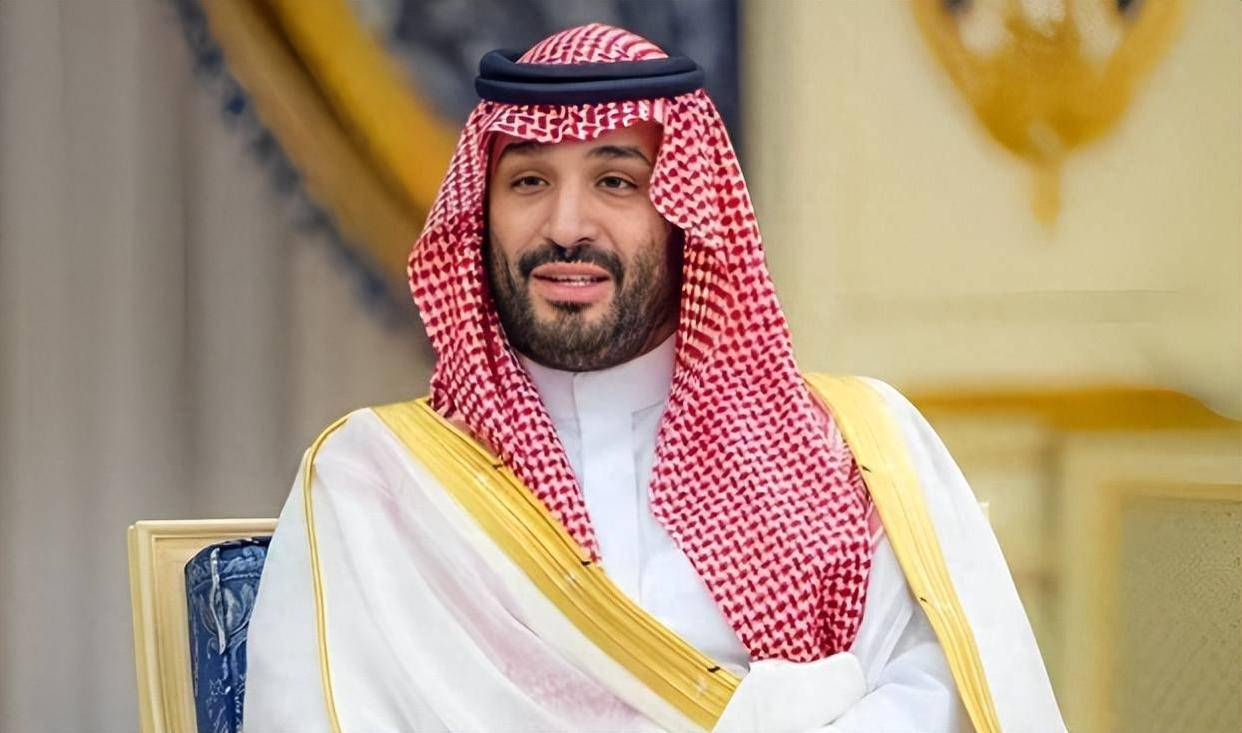
Group 1 - The core announcement from Saudi Crown Prince Mohammed bin Salman is the increase of Saudi investments in the U.S. from $600 billion to an unprecedented $1 trillion, signaling a significant shift in international economic relations [1][2]. - This investment is not merely a financial maneuver but is underpinned by three strategic layers: strengthening U.S.-Saudi relations, accelerating Saudi Arabia's Vision 2030, and positioning Saudi Arabia within the geopolitical landscape [2][3]. - The investment serves as a "super adhesive" to solidify the alliance between Washington and Riyadh, reminiscent of the "petrodollar" agreements of the 1970s, creating a mutually beneficial relationship based on economic interdependence [2][3]. Group 2 - The $1 trillion investment is viewed as a catalyst for Saudi Arabia's transition away from oil dependency, facilitating access to advanced technologies in various sectors such as AI, renewable energy, biotechnology, and semiconductors [2][3]. - This move also reflects a strategic positioning in the geopolitical chess game, indicating Saudi Arabia's continued alignment with Western powers amidst a rapidly changing Middle Eastern landscape [3][4]. - The investment highlights the dual nature of U.S. dollar dominance, reinforcing its status while simultaneously exposing systemic risks associated with over-reliance on dollar assets, as global economies seek diversification [5][6]. Group 3 - The announcement signifies a broader trend of "Global South" countries seeking a dynamic balance between traditional alliances and new partnerships, moving away from binary choices in international relations [5][6]. - The implications of this investment extend beyond immediate financial impacts, suggesting a reconfiguration of global power dynamics and the emergence of new economic orders [8][10]. - The investment is a reminder that national interests drive international actions, with pragmatic calculations often overshadowing ideological considerations in global affairs [8][10].

中国香港:服务全球南方
Sou Hu Cai Jing· 2025-11-16 11:27
Core Insights - Hong Kong's role as a "super connector" and "super value creator" is increasingly significant in the current complex international political and economic environment, especially as it continues to attract capital and talent due to its stable and international business environment [2][3] - The Hong Kong government is actively pursuing new economic strategies to maintain its status as a global financial center and to enhance its connections with emerging markets, particularly in the Global South [3][8] Economic Indicators - As of August 2025, total bank deposits in Hong Kong exceeded HKD 18 trillion, with a net inflow of over USD 44 billion year-on-year [2] - The Hang Seng Index is projected to rise approximately 30% following an 18% increase in 2024, with the IPO market raising USD 16 billion, reclaiming the top global ranking [2] - By October, Hong Kong had attracted 102 key enterprises, expected to generate around HKD 60 billion in investments and create approximately 22,000 jobs [2] Financial Center Status - The Global Financial Centres Index published in September 2025 indicates that Hong Kong maintains its position as the third-largest international financial center, with the gap to New York and London narrowing to a historical low [3] - Hong Kong is increasingly recognized as a safe harbor for international capital, with both international and domestic investors rediscovering its unique value [3] Trade and Economic Relations - Hong Kong's trade relations with ASEAN have strengthened, with ASEAN surpassing the U.S. as Hong Kong's second-largest export market since 2019 [5] - The Hong Kong government emphasizes its free trade status and aims to maintain open markets for goods, capital, and information flow [5] Supply Chain and Industry Development - Starting in 2024, Hong Kong has proposed a series of industrial plans to position itself as a supply chain center in Asia, including expanding customs services for goods transiting through Hong Kong to Vietnam [6] - A significant percentage of local companies are actively adjusting their supply chains, with 72% planning to relocate production closer to major customers, primarily in mainland China [7] Global Market Expansion - Hong Kong is focusing on expanding its economic network with emerging markets, particularly in the Global South, through regional cooperation and investment agreements [8][9] - The Hong Kong government is actively pursuing partnerships with countries along the Belt and Road Initiative and is negotiating investment agreements with various nations [9] New Platforms for Business - A new platform named "Mainland Enterprises Going Global Task Force" was established to assist mainland companies in expanding overseas through Hong Kong, integrating various local resources for better support [10][11] - The platform aims to provide comprehensive services, including legal, financial, and logistical support, to facilitate the overseas expansion of mainland enterprises [12][13] Strategic Role of Hong Kong - Hong Kong is positioned as a transitional space for mainland enterprises, helping them align with international standards and navigate regulatory environments [13] - The government plans to enhance its service offerings by integrating various agencies to provide tailored support for businesses looking to expand internationally [14][15]

深化交流互鉴 凝聚发展信心——来自“红厅论坛·哈瓦那研讨会”的声音
Xin Hua She· 2025-11-16 02:00
Core Insights - The "Red Hall Forum Havana Seminar" highlighted the importance of China's 20th Central Committee's Fourth Plenary Session and its "14th Five-Year Plan" as a blueprint for both China's future development and Cuba's socialist modernization [1][2] Group 1: China's Five-Year Planning - China's five-year planning has been a model of coherence and systematic approach, emphasizing a people-centered development strategy, which is seen as a key to its success and a valuable lesson for Cuba [2] - The decision-making system of China's five-year plans is characterized as scientific, democratic, and pragmatic, allowing for flexible adjustments based on socio-economic needs, which is crucial for effective governance [2] Group 2: High-Quality Development - The 20th Central Committee emphasized high-quality development as a primary goal for the "14th Five-Year Plan," which is expected to yield significant results in innovation and technology, providing a model for balanced development [3] - China's advancements in innovation, energy transition, and technology are seen as foundational for future high-quality development, with a focus on creating an inclusive innovation ecosystem that attracts global talent [3] Group 3: Global South Cooperation - The seminar underscored the responsibility of Global South countries to voice their perspectives against unilateralism and inequality, with China's initiatives contributing to global cooperation and governance [5] - The concept of a community with a shared future, promoted by China, is viewed as a unique approach to international relations, fostering partnerships rather than alliances, which resonates with Cuba's strategic interests [5][6]
响应全球治理需求 顺应时代共同呼声
Xin Hua She· 2025-11-14 15:11
Core Viewpoint - The report on "Building a New Type of Global Leadership" emphasizes the urgent need for global governance reform in response to the current international challenges, advocating for a collaborative approach to replace confrontation and unilateralism [1][2][3]. Group 1: Global Governance Challenges - The world is experiencing a period of significant upheaval, characterized by deficits in peace, development, security, and governance, which are exacerbated by a lack of effective global leadership [1]. - The existing post-World War II governance structures are increasingly seen as inadequate in terms of applicability, fairness, and legitimacy, necessitating a reevaluation of these systems [2]. Group 2: Role of Global South - The Global South, particularly emerging markets and developing countries, is undergoing a transformation, positioning itself as a key player in reshaping global governance [3]. - The report highlights that the Global South has been actively contributing to global leadership by advocating for reforms in traditional platforms and establishing new governance frameworks [3]. Group 3: China's Contribution - China is recognized as a constructive force in global governance, promoting initiatives aimed at creating a more equitable global governance system based on principles of sovereignty and true multilateralism [3][4]. - The four major initiatives proposed by China—Global Development Initiative, Global Security Initiative, Global Civilization Initiative, and Global Governance Initiative—are seen as practical pathways for fostering cooperation among Global South countries [3]. Group 4: Collaborative Efforts - The collaboration between China and Africa is highlighted as a model for enhancing the role of the Global South in global governance reform, demonstrating the vitality of multilateral mechanisms focused on common development [4]. - There is a strong belief among participants that united efforts from Global South countries can lead to a more equitable and representative global governance system [4].
【高端访谈】全球南方国家不仅要“在场”,更要“发声”——访非盟新闻司司长莱斯利·里彻
Xin Hua She· 2025-11-14 15:11
Core Viewpoint - The African Union (AU) emphasizes the need for global South countries to not only be present but also to voice their interests in the evolving international order, advocating for fair representation and equal development rights [1][2]. Group 1: International Order and Representation - The current international order is undergoing significant changes, with a shift in economic activity towards the global South, making Africa's voice crucial in these transformations [1][2]. - The AU's recent invitation to join the G20 symbolizes a broader representation for Africa in multilateral systems, enhancing the continent's influence and voice on the global stage [2]. Group 2: Role of Media and Think Tanks - Media plays a vital role in fostering mutual understanding and cooperation between Africa and China, enabling better storytelling and showcasing collaborative efforts [1][2]. - Think tanks are essential in policy discussions, and their collaboration with media can create a powerful force to unify various stakeholders towards common development goals [2]. Group 3: Multilateral Institutions and Development - There is a need to reassess the intentions and benefit structures of international institutions to ensure that the voices of the global South are genuinely heard [3]. - The current international financial system often limits the development space for developing countries, as many rules were not designed with their needs in mind [2][3]. Group 4: Cooperation between Africa and China - The partnership between Africa and China is based on unity and mutual respect, leading to extensive cooperation in trade, infrastructure, technology, public health, education, and cultural exchanges [3].
“全球南方”媒体智库高端论坛中非伙伴大会即将召开
Xin Hua She· 2025-11-12 23:37
Core Points - The "Global South" media think tank high-end forum, the China-Africa Partnership Conference, will be held in Johannesburg, South Africa on November 13-14, focusing on the theme of "Reforming the Global Governance System: New Roles and Missions of China-Africa Cooperation" [1] - Over 200 representatives from mainstream media, think tanks, government departments, and the African Union from China and 41 African countries will participate in extensive discussions [1] - Key topics include "China-Africa Responsibilities in Global Governance Reform," "China-Africa Actions in Global South Revitalization," and "China-Africa Integration in Global Civilizational Coexistence" [1] Summary by Categories - **Event Details** - The forum will feature over 160 media and think tank representatives from China and 41 African countries [1] - It is co-hosted by Xinhua News Agency and the African Union [1] - **Discussion Topics** - In-depth discussions will cover three main areas: global governance reform, revitalization of the Global South, and cultural integration [1] - Activities include a cultural exchange meeting titled "Xiangyue Africa" [1] - **Reports and Initiatives** - A think tank report titled "Building a New Type of Global Leadership: Joint Actions Towards a More Just and Reasonable Global Governance System" will be released during the forum [1] - The launch of the Global South Media Think Tank Cooperation Communication Partnership Network and the "2026 China-Africa Partnership Empowerment Action Plan" will also take place [1] - **Goals and Expectations** - The forum aims to deepen cooperation between media and think tanks, promoting the narrative of a new era of the all-weather China-Africa community of shared destiny [1] - It seeks to contribute wisdom for the Global South to become a stabilizing force for peace, a backbone for open development, a builder of global governance, and a promoter of civilizational exchange [1]
“全球南方”故事有新篇
Jing Ji Ri Bao· 2025-11-07 22:13
Core Insights - The China International Import Expo (CIIE) provides a significant platform for global South countries, offering opportunities for collaboration and development amidst current global economic challenges [1][2][3] - The contribution of global South countries to world economic growth has risen to approximately 80%, yet their participation in international events remains limited due to various barriers [1][2] Group 1: Opportunities for Global South Countries - CIIE has established a dedicated section for least developed countries, showcasing unique products such as honey from Zambia, handmade wool carpets from Afghanistan, and coffee beans from Ethiopia, attracting considerable attention from buyers [2] - The expo has implemented measures such as free standard booths for least developed countries, a logistics subsidy system, and a green customs clearance channel, significantly lowering the barriers for participation [2][3] Group 2: China's Commitment to Global South Cooperation - China, as the largest developing country, is dedicated to enhancing South-South cooperation and has provided development assistance to over 160 countries while collaborating with more than 150 countries and 30 international organizations on initiatives like the Belt and Road [3] - The establishment of the "China-UN Global South Development Support Mechanism" aims to accelerate the achievement of sustainable development goals through practical tripartite cooperation [3]