
医保谈判

Search documents
科伦博泰生物-B(06990):上半年业绩好于预期,维持SKB264全年销售指引
SPDB International· 2025-08-20 04:32
Investment Rating - The report maintains a "Buy" rating for the company with a target price of HKD 525, representing a potential upside of 15% from the current price of HKD 456 [1][10]. Core Insights - The company's 1H25 performance exceeded expectations, with revenue of RMB 950 million and a narrowed net loss of RMB 145 million, which is a 146.8% year-over-year improvement [4]. - The sales of SKB264 reached RMB 302 million in the first half of the year, and the company maintains its first-year sales guidance of RMB 800-1,000 million [4]. - The company has successfully commercialized SKB264 in two indications and has a sales team of over 350 people, with sales established in over 1,000 hospitals across 29 provinces [4]. - The report highlights the upcoming ESMO conference where important data for SKB264 will be presented, which could further boost market confidence [4]. Financial Performance Summary - For 1H25, product revenue was RMB 310 million, with licensing revenue at RMB 630 million, slightly better than consensus estimates [4]. - The company’s cash and cash equivalents reached RMB 3.1 billion as of June 30, 2025, significantly up from RMB 1.34 billion at the end of 2024 [4]. - The report projects revenue growth with total revenue expected to reach RMB 2.286 billion in 2025, reflecting an 18.3% year-over-year increase [6]. Sales and Product Development - SKB264 has received preliminary approval for basic medical insurance and is expected to enter the insurance negotiations in the second half of the year [4]. - The company anticipates further approvals for additional indications of SKB264 in 2H25, which could enhance its market position [4]. - Other approved products, A167 and A140, are expected to contribute limited sales this year but may see significant growth once included in the insurance directory [4]. Valuation and Forecast - The report adjusts the 2025E net loss forecast to RMB 260 million and projects a net profit of RMB 220 million in 2026 [4]. - The target price of HKD 525 is derived from a DCF valuation model with a WACC of 8.7% and a perpetual growth rate of 3% [4].
亿帆医药2025年中报简析:营收净利润同比双双增长,盈利能力上升
Zheng Quan Zhi Xing· 2025-08-15 23:04
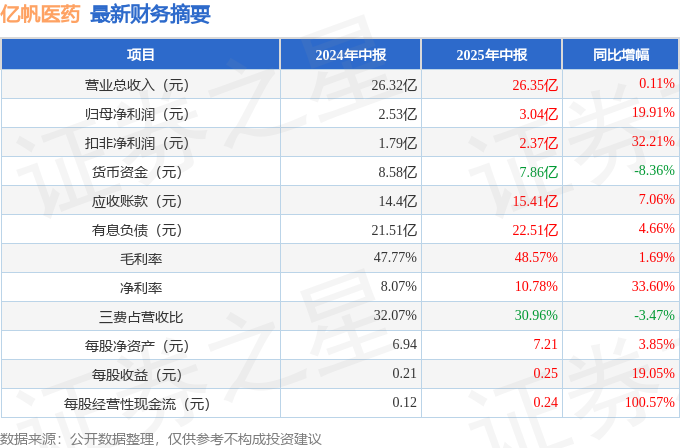
Core Viewpoint - Yifan Pharmaceutical (002019) reported a slight increase in total revenue and a significant rise in net profit for the first half of 2025, indicating improved profitability and operational efficiency [1]. Financial Performance - Total revenue for the first half of 2025 reached 2.635 billion yuan, a year-on-year increase of 0.11% [1]. - Net profit attributable to shareholders was 304 million yuan, up 19.91% year-on-year [1]. - In Q2 2025, total revenue was 1.308 billion yuan, reflecting a 0.18% increase year-on-year, while net profit for the quarter rose by 40.48% to 150 million yuan [1]. - Gross margin improved to 48.57%, an increase of 1.69% year-on-year, and net margin rose to 10.78%, up 33.6% year-on-year [1]. Cost Management - Total selling, administrative, and financial expenses amounted to 816 million yuan, accounting for 30.96% of revenue, a decrease of 3.47% year-on-year [1]. - The company reported a significant increase in operating cash flow per share, which reached 0.24 yuan, up 100.57% year-on-year [1]. Balance Sheet Changes - Construction in progress increased by 41.36% due to investments in various projects [3]. - Long-term borrowings rose by 19.13% due to changes in loan structure and new project financing [3]. - Accounts receivable increased by 7.069% to 1.541 billion yuan [1][3]. Cash Flow Analysis - Net cash flow from operating activities increased by 98.99%, driven by higher cash receipts from sales [4]. - Cash flow from financing activities decreased significantly by 170.94%, attributed to increased dividend payments and reduced financing from financial institutions [4]. Business Model and Market Position - The company's performance is primarily driven by research and marketing efforts, indicating a need for careful analysis of these underlying drivers [5]. - The core product, Yilishu, is expected to see significant sales growth, with projected net sales exceeding 500 million yuan in 2024 [8]. Investment Sentiment - The largest fund holding Yifan Pharmaceutical is the Caitong Asset Management Healthcare Mixed A fund, which recently increased its position [7]. - Analysts expect the company's performance in 2025 to reach 578 million yuan, with an average earnings per share of 0.47 yuan [6].


基石药业-B午后涨超13% 上半年研发支出增超58% 下半年有望获得授权费收入
Zhi Tong Cai Jing· 2025-08-15 06:34
Core Viewpoint - 基石药业 reported a significant decline in revenue while increasing R&D expenditure, indicating a focus on future growth despite current losses [1] Financial Performance - The company achieved revenue of RMB 49.451 million, a year-on-year decrease of 80.54% [1] - R&D expenses amounted to RMB 105 million, reflecting a year-on-year increase of 58.75% [1] - The net loss for the period was RMB 270 million [1] - As of June 30, the company had cash and cash equivalents totaling RMB 652.8 million [1] Strategic Developments - The company completed a placement in July 2025, raising net proceeds of approximately RMB 425.79 million [1] - To prepare for negotiations regarding the National Medical Insurance Drug List, the company adjusted the price of its drug, Pralsetinib [1] - If Pralsetinib is included in the National Medical Insurance List, the expected sales growth from 2026 onwards may offset the short-term negative impact on revenue [1] - In the first half of 2025, the company did not enter into any significant external licensing agreements, but it signed a major external licensing agreement with Gentili in July 2025, with expected licensing fee income in the second half of 2025 [1]
2025国谈初审名单公布
Guo Ji Jin Rong Bao· 2025-08-13 12:29
Core Viewpoint - The National Healthcare Security Administration (NHSA) has announced the preliminary review results for the 2025 National Basic Medical Insurance, Maternity Insurance, and Work Injury Insurance drug catalog, along with the commercial insurance innovative drug catalog, indicating a significant increase in the number of drugs under review and the introduction of a new commercial insurance category for innovative drugs [1][3]. Group 1: Drug Catalog Submission and Review - A total of 718 submissions were received for the basic medical insurance catalog, involving 633 drug generic names, with 534 passing the preliminary review [3]. - For the commercial insurance innovative drug catalog, 141 submissions were received, involving 141 drug generic names, with 121 passing the preliminary review, including 79 drugs that may be negotiated under both insurance schemes [3][4]. Group 2: Impact on the Pharmaceutical Industry - The introduction of the commercial insurance innovative drug catalog is expected to create new pathways for multi-channel payment for innovative drugs and promote collaboration between commercial insurance and basic medical insurance [3]. - The review process for drugs that have passed the preliminary review does not guarantee inclusion in the final catalog, as they must undergo strict evaluation and successful negotiations [4]. Group 3: Notable Drugs and Categories - The commercial insurance catalog includes 12 monoclonal antibodies, 3 CAR-T therapies, and other innovative drugs, with notable products like CAR-T therapies and PD-1 inhibitors included [5][6]. - There are 42 drugs that only passed the preliminary review for the commercial insurance catalog, primarily from major pharmaceutical companies [6]. Group 4: Future Negotiation Timeline - The NHSA plans to conduct negotiations for the 2025 insurance catalog between September and October, with results expected to be announced between October and November [7].
药盒里的潮汐进退:进口原研药高溢价神话崩塌与国产药逆袭
Hua Xia Shi Bao· 2025-08-12 11:07
Core Insights - The shift from imported original research drugs to domestic generics and innovative drugs is significant, with the market share of imported original cancer drugs in top-tier hospitals dropping from 68% in 2021 to 34% in 2024, while domestic generics and innovative drugs now account for 66% [1][5][10] - The decline of imported original drugs is attributed to aggressive pricing strategies by multinational pharmaceutical companies and the cost advantages of domestic generics [1][6][10] - Patients are increasingly accepting domestic drugs, with many reporting satisfactory treatment outcomes and reduced financial burdens [4][12] Industry Dynamics - Multinational pharmaceutical companies are accelerating localization efforts, expanding production bases, and upgrading R&D centers to balance cost and innovation [2][13] - The Chinese government's policies, including centralized drug procurement and price negotiations, are effectively reducing drug prices and reshaping the market landscape [10][16] - The acceptance of domestic drugs is growing among patients, driven by improved quality and increased awareness [5][12] Market Trends - The usage of imported original cancer drugs has significantly decreased, with one hospital reporting a drop from over 200 units per month to around 50 units, while the usage of domestic innovative drugs has more than doubled [4][5] - The market for imported original drugs is facing challenges, with a low bid success rate in centralized procurement, leading to many companies withdrawing from public hospital markets [6][10] - The trend of patients preferring cost-effective domestic drugs is supported by studies showing equivalent efficacy and safety compared to original drugs [12][16] Future Outlook - The pharmaceutical industry is expected to continue evolving, with multinational companies adapting their strategies to maintain market presence through innovation and collaboration with local firms [13][14] - The Chinese market is becoming increasingly competitive, with domestic companies focusing on differentiated innovation to capture market share [11][14] - Ongoing reforms in the healthcare system aim to ensure that patients have access to a wider range of affordable and high-quality medications [16]
特稿 | 药盒里的潮汐进退:进口原研药高溢价神话崩塌与国产药逆袭
Hua Xia Shi Bao· 2025-08-12 04:19
Core Viewpoint - The article highlights a significant shift in the pharmaceutical market in China, where the market share of imported original research cancer drugs in top-tier hospitals is projected to drop from 68% in 2021 to 34% in 2024, while the combined share of domestic generic and innovative drugs is expected to rise to 66% [5][10]. Group 1: Market Dynamics - The transition from imported original drugs to domestic alternatives reflects deeper changes in the pharmaceutical market, driven by cost advantages of domestic generics and innovations [1][6]. - In the first half of 2025, over 30 original research drugs from multinational companies are expected to withdraw from the market, including those from Takeda, Pfizer, and GlaxoSmithKline [1]. - The declining market share of imported drugs is attributed to multinational companies' pricing strategies and the competitive pricing of domestic generics [6][10]. Group 2: Patient Perspectives - Many patients are initially hesitant to switch from imported to domestic drugs due to concerns about efficacy and safety, as illustrated by the experiences of patients like Ms. Zhou and an elderly male patient [3][4]. - However, some patients have reported positive outcomes after switching to domestic drugs, noting both cost savings and effective treatment [4][12]. Group 3: Policy and Regulatory Environment - The article discusses the impact of national drug procurement policies, which have significantly reduced the market presence of imported original drugs, with a low winning rate of 3.7% in recent procurement rounds [6][10]. - The ongoing reforms in the healthcare payment system, including DRG and DIP models, are pushing hospitals to prioritize lower-cost drugs, further squeezing the space for imported original drugs [10][12]. Group 4: Industry Adjustments - Multinational pharmaceutical companies are adapting by localizing their operations, including expanding production bases and upgrading research centers in China [13][14]. - Companies like Sanofi and Roche are shifting their focus towards innovative drugs and adjusting their product portfolios in response to market changes [8][14]. Group 5: Future Outlook - The article emphasizes the need for a transparent and competitive market environment to foster the development of high-quality, reasonably priced drugs, whether domestic or imported [16]. - The ongoing evolution in the pharmaceutical landscape suggests that both multinational and domestic companies will continue to adapt their strategies to meet changing patient needs and regulatory requirements [9][16].
银河日评|A股三大指数集体收涨,上市公司业绩或成为影响资金配置的重要因素
Sou Hu Cai Jing· 2025-08-06 15:13
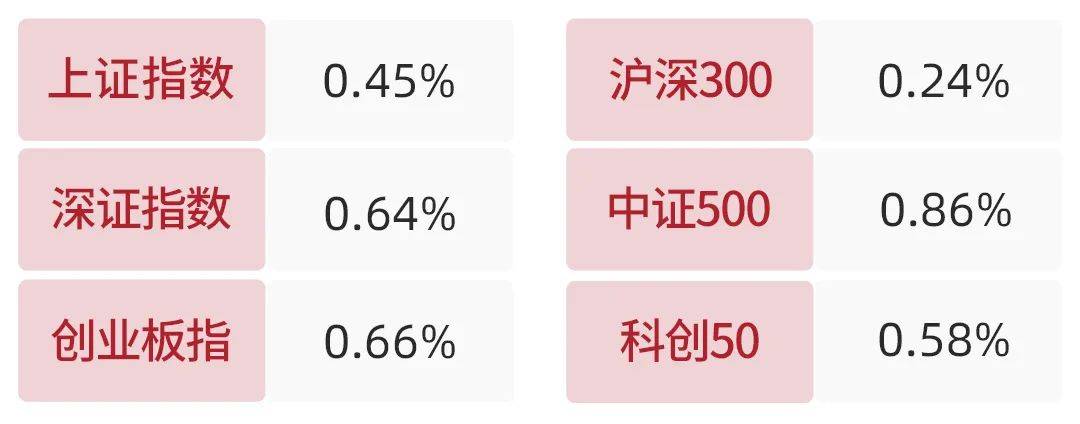
Core Viewpoint - The overall market sentiment has improved, with over 3,300 stocks rising, driven by capital inflow and increased trading volume, leading to a positive performance across major indices [1][2]. Industry Performance - **Top Performing Sectors**: - Defense and Military Industry: Increased by 3.07% due to expectations of order releases following supportive policies from financial institutions [2][3]. - Machinery Equipment: Rose by 1.98% as global mining capital expenditure trends upward and equipment export orders increase [3]. - Coal: Increased by 1.89% with strong futures prices and expectations of supply contraction due to new safety regulations [3]. - **Underperforming Sectors**: - Pharmaceutical and Biotechnology: Decreased by 0.65% due to concerns over U.S. tariff policies and upcoming price negotiations [3]. - Retail: Fell by 0.23% as uncertainties in import costs and a decline in retail sales growth dampen sentiment [3]. - Construction Materials: Decreased by 0.23% as cement prices drop and demand remains weak [3]. Market Focus - The defense and military, machinery equipment, and coal sectors are leading the market due to favorable policies and improving economic conditions, while pharmaceuticals, retail, and construction materials are facing headwinds from regulatory and demand concerns [4]. Future Outlook - The market is currently in a period of intensive earnings disclosures, and the certainty of corporate performance will significantly influence capital allocation decisions moving forward [4].
长城基金谭小兵:仍看好创新药行情
Xin Lang Ji Jin· 2025-08-06 09:37
Group 1 - The domestic economy showed strong resilience in Q2, and the "anti-involution" policies continue to be implemented, leading to a steady rebound in A-shares in July [1] - In August, uncertainties from overseas tariffs and rising expectations for a Federal Reserve rate cut may impact the market, while domestic policies are expected to support the stabilization of the capital market [1] - The A-share mid-year reports will enter a concentrated disclosure period, increasing the importance of performance trading [1] Group 2 - Changcheng Fund's manager, Tan Xiaobing, noted multiple factors influencing the market in August, including unclear US-China trade tensions and the upcoming performance window, suggesting a potential short-term market fluctuation [1] - Tan Xiaobing expressed a relatively optimistic view on sectors such as non-bank financials, military industry, and new consumption that has been consolidating for a while [1] - The innovative drug sector is also viewed positively, although due to significant gains in July and a lack of catalysts in August, this sector may experience short-term fluctuations, with potential catalysts expected after September's major meetings and medical insurance negotiations [1]
千亿巨头患上“原创焦虑症” 解码中生制药的收购逻辑
Xi Niu Cai Jing· 2025-08-01 11:29
Group 1 - The core viewpoint of the article revolves around China Biologic Products' acquisition of Lixin Pharmaceutical for approximately $680 million, raising questions about whether this high-priced acquisition will fill the innovation gap or lead to new challenges for the traditional pharmaceutical giant [2][21]. - The strategic intent behind the acquisition is highlighted, focusing on Lixin's significant licensing agreements with AstraZeneca and Merck, which are expected to generate substantial revenue [3][4]. - The financial pressure from the acquisition is evident, as the payment of around $350 million represents 69% of China Biologic's annual R&D expenditure, raising concerns about cash flow and operational sustainability [4][22]. Group 2 - Lixin Pharmaceutical's financial performance is scrutinized, revealing a sharp increase in revenue from $21,000 in 2024 to $4.218 billion in the first half of 2025, primarily due to licensing deals, while the company still reported losses in previous years [6][7]. - The uncertainty surrounding Lixin's R&D pipeline is discussed, with potential competition from other companies and the risk of not achieving commercial success for its innovative products [8][12]. - The challenges of integrating Lixin into China Biologic's operations are emphasized, particularly the need for effective management and the risk of losing key talent from Lixin's R&D team [10][11]. Group 3 - The article outlines the impact of policy changes on the commercialization of innovative drugs, including price negotiations and procurement policies that could threaten profit margins [13][14]. - The internationalization challenges faced by China Biologic are noted, as reliance on licensing agreements may lead to a loss of technological leverage in global markets [15][16]. - Valuation pressures and market skepticism are highlighted, with concerns that the high valuation of Lixin may not reflect its actual product value, leading to potential reevaluation of China Biologic's overall valuation [18][20].


中药股上涨,中药ETF、中药50ETF、中药ETF华泰柏瑞涨超2%
Ge Long Hui· 2025-08-01 03:53
Group 1: Market Performance - Chinese medicine stocks have seen significant increases, with New Tian Pharmaceutical and Tai Long Pharmaceutical reaching their daily limit, and Zhongsheng Pharmaceutical rising over 9% [1] - The Chinese Medicine ETF, Chinese Medicine 50 ETF, and Huatai-PB Chinese Medicine ETF have all risen by over 2% [2] Group 2: Price Governance and Policy Impact - Multiple regions have initiated price governance for traditional Chinese medicine (TCM), with various provinces like Jilin and Hebei implementing measures to address pricing risks [3] - The price adjustments are aimed at TCMs that exceed local minimum daily treatment costs, indicating a targeted approach to price control [3] Group 3: Investment Insights - Feng Liu's fund, Gao Yi Lin Shan No.1 Yuan Wang, has become a significant shareholder in Tai Ji Group, holding 20 million shares valued at approximately 435 million yuan [4] - The fund also holds shares in Tong Ren Tang, indicating a continued interest in TCM stocks [4] Group 4: Strategic Focus Areas - Three main investment themes in the TCM sector are highlighted: price governance, consumption recovery, and state-owned enterprise reform [5][6][7] - Price governance is expected to create a clearer market differentiation, favoring companies with competitive advantages [5] - Consumption recovery is driven by macroeconomic improvement and an aging population, benefiting TCM sales [6] - State-owned enterprise reform presents opportunities for performance improvement and growth in the TCM sector [7]