口红效应

Search documents
港股新消费指数年内涨幅超20%,如何选择合适的ETF?
2 1 Shi Ji Jing Ji Bao Dao· 2025-06-08 10:32
Group 1 - The core viewpoint of the articles highlights the significant rise of new consumption companies in the market, with notable examples like Pop Mart being compared to "the Moutai of young people" and other companies like Lao Pu Gold and Mixue Ice City experiencing substantial stock price increases [1][11] - The new consumption trend is primarily driven by the Z generation, who advocate for "self-consumption," and in the context of macroeconomic pressure, products that provide emotional value have become necessities, reflecting a modern "lipstick effect" [2][12] - The performance of new consumption indices, particularly the Guozheng Hong Kong Stock Connect Consumption Index, which has risen by 20.66% this year, indicates strong market interest and investment in this sector [1][2] Group 2 - The Guozheng Hong Kong Stock Connect Consumption Index includes a diverse range of sectors such as apparel, jewelry, beauty, home appliances, food and beverage, and consumer services, with Pop Mart being a significant representative stock [3][11] - Several ETFs have been launched to track these new consumption indices, with the fastest progress seen in the Fuguo Guozheng Hong Kong Stock Connect Consumption Theme ETF, which is currently in subscription [3][4] - The Zhongzheng Hong Kong Stock Connect Consumption Index selects 50 liquid and large-cap stocks, with Alibaba and Tencent being the top two weighted stocks, while Pop Mart ranks sixth [3][5] Group 3 - The Zhongzheng Hong Kong Stock Connect Big Consumption Theme Index includes a broader selection of stocks, including pharmaceutical companies, but currently lacks an ETF tracking it [5][6] - The Zhongzheng Hong Kong Stock Connect New Consumption Index focuses on large-cap new consumption companies from the Shanghai, Hong Kong, and Shenzhen markets, with a lower proportion of discretionary consumption compared to other indices [5][6] - The Hang Seng Consumption Index, while not performing as strongly as the new consumption indices, demonstrates stability and defensive characteristics during market volatility, indicating long-term investment opportunities [8][12] Group 4 - The Zhongzheng Hong Kong Stock Connect Consumption Leader Index and the Zhongzheng Hong Kong Stock Connect Brand Consumption 50 Index both focus on high-performing companies in the consumption sector, with limited ETF tracking available for these indices [9][10] - Overall, the new consumption sector has shown remarkable performance this year, driven by significant inflows of capital, while traditional consumption indices have lagged behind [11][12] - The articles suggest that for investors optimistic about the new consumption sector, the Guozheng Hong Kong Stock Connect Consumption Index is the preferred choice due to its high proportion of new consumption companies [12][13]
镶牙、隆臀、改肤色…欧美人魔改Labubu停不下来,山寨Lafufu也来蹭热度了!
华尔街见闻· 2025-05-27 05:17
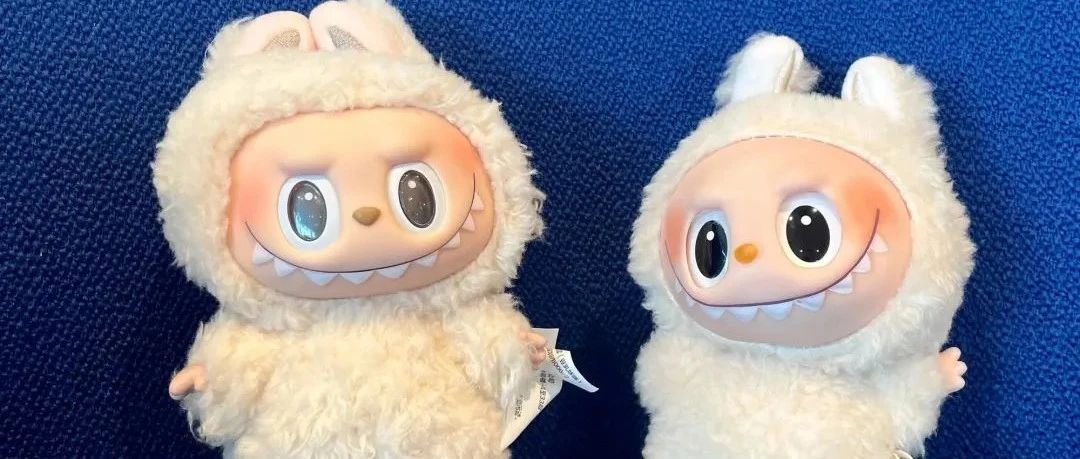
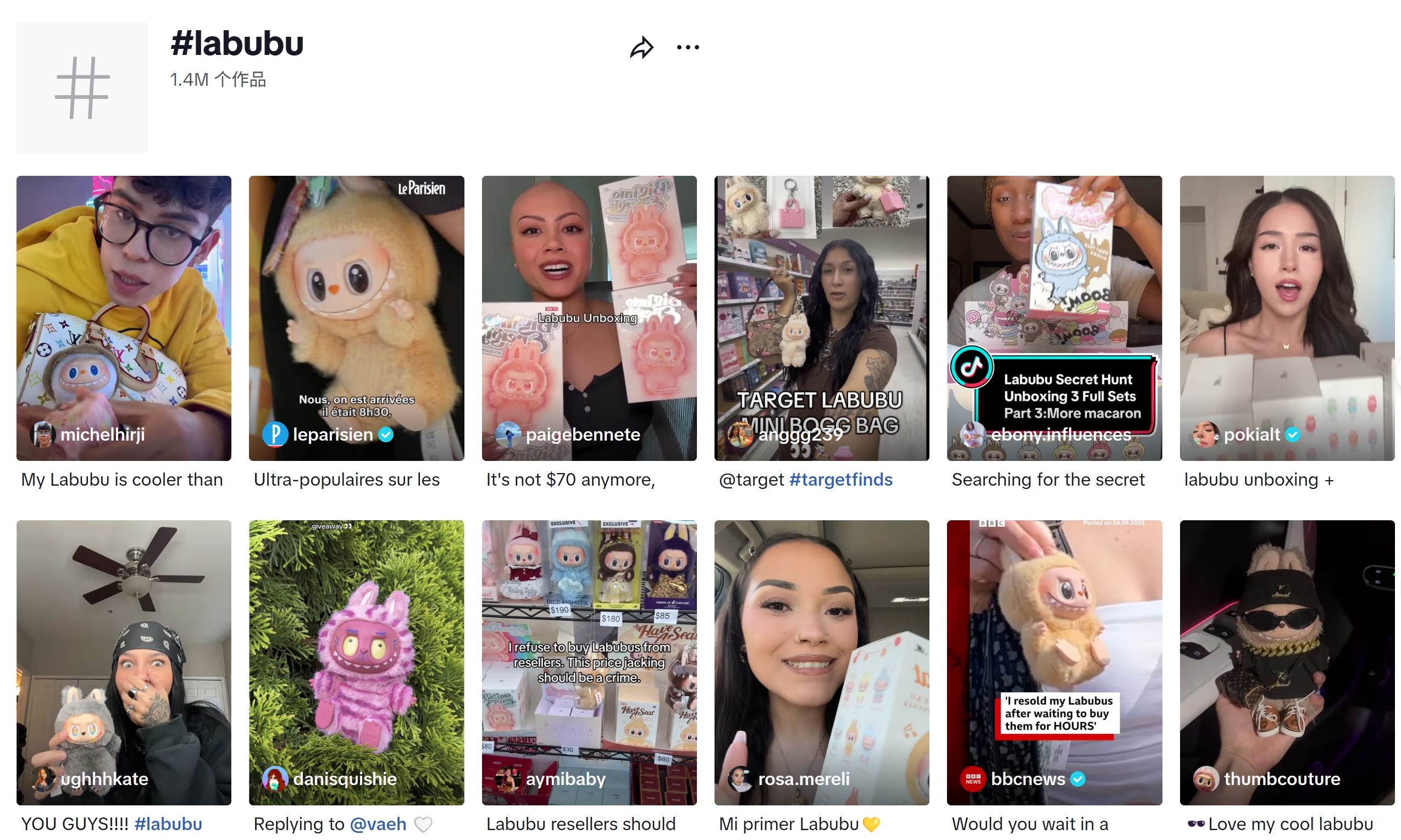
Core Viewpoint - A plush toy from China, Labubu, is creating a speculative frenzy in Europe and the US, surpassing even cryptocurrency trends, indicating a shift in traditional business logic and market rules [1][2]. Group 1: Market Dynamics - The hashtag Labubu on TikTok has garnered hundreds of millions of views, showcasing the intense fan engagement and excitement surrounding the toy [3]. - Labubu's offline sales are exceptionally strong, with consumers queuing for hours at Pop Mart stores, and new releases selling out within seconds, often leading to bidding wars where prices can double or triple on resale platforms [5]. - Due to the chaos caused by the rush to purchase, Pop Mart has had to suspend all Labubu sales in the UK [7]. Group 2: Cultural Impact and Consumer Behavior - Labubu's popularity is rooted in its unique blind box purchasing model, which turns buying into a ritualistic experience, combining elements of gambling and excitement [12]. - The character serves as a status symbol in the fashion world, with its presence at major events like New York Fashion Week, reflecting a trend where owning rare or fashionable Labubu toys signifies cultural sophistication [14]. - The phenomenon aligns with the "lipstick effect," where consumers opt for small luxuries during economic uncertainty rather than high-priced items [14]. Group 3: Modification Trends - Initially, consumers were excited about purchasing authentic Labubu toys, but this quickly evolved into a trend of modifying the toys, such as giving them exaggerated features like long eyelashes and enhanced body shapes [15][18]. - The trend of modifying Labubu has gained traction on social media, with videos showcasing these transformations going viral, despite the risks associated with such procedures [20]. - The rise of "Lafufu," a knockoff version of Labubu, highlights a growing market for cheaper alternatives, with some consumers preferring these for their quirky and imperfect characteristics [34][36]. Group 4: Cultural Exchange - The global Labubu craze exemplifies a blend of consumer psychology, social media influence, and cultural exchange, where both Chinese and Western markets are influencing each other's trends [36].


镶牙、隆臀、改肤色…欧美人魔改Labubu停不下来,山寨Lafufu也来蹭热度了!
Hua Er Jie Jian Wen· 2025-05-26 10:55
Core Insights - A plush toy from China, Labubu, is creating a speculative frenzy in Europe and the US, surpassing even cryptocurrency trends, indicating a shift in traditional business logic and market rules [1] Group 1: Popularity and Sales Dynamics - The hashtag Labubu on TikTok has garnered hundreds of millions of views, showcasing the intense enthusiasm among fans [2] - Labubu's offline sales are booming, with customers queuing for hours outside Pop Mart stores, and new releases selling out within seconds, often leading to bidding wars where consumers pay two to three times the retail price on resale platforms [10] - Due to chaos from purchasing frenzies, Pop Mart has had to suspend all Labubu sales in the UK [12] Group 2: Cultural and Artistic Background - Labubu was created by Hong Kong artist Kasing Lung in 2015 as part of a monster-themed picture book, gaining traction after a licensing agreement with Pop Mart in 2019, which led to mass production [16] - The blind box purchasing model has transformed buying toys into a ritualistic experience, combining elements of gambling and excitement, making Labubu a symbol of identity and fashion [18] Group 3: Social Media Influence and Trends - In the post-pandemic era, Labubu aligns with the "lipstick effect," where consumers opt for small luxuries during economic uncertainty [20] - The initial excitement around Labubu has evolved into a trend where Western players modify the toy, reflecting cultural preferences such as long eyelashes and enhanced body features [22][30] - The rise of counterfeit versions, affectionately dubbed "Lafufu," highlights a unique consumer behavior where some prefer the quirky imperfections of knock-offs, which still keep the brand relevant in discussions [40][42] Group 4: Cultural Exchange and Innovation - The global Labubu phenomenon exemplifies a blend of consumer psychology, social media algorithms, and cultural exchange, indicating that true commercial success lies in cultural integration and innovation rather than mere product export [43]
经济不好,有些行业反而火了
商业洞察· 2025-05-18 06:31
Core Insights - The article emphasizes that economic cycles do not eliminate demand but reshape its form, leading to the emergence of industries that thrive during downturns [3][4][26]. Group 1: Economic Trends - During economic downturns, certain industries experience unexpected growth, indicating a shift in consumer behavior towards more cost-effective options [5][10]. - The concept of "value-for-money economy" emerges as consumers prioritize savings, leading to a rational flow of consumption rather than a complete decline in demand [7][8]. Group 2: Consumer Behavior - The rise of the "middleman profit" model, particularly on platforms like Xianyu, showcases how young individuals capitalize on price differences between low-cost goods and resale opportunities, with some earning over 10,000 yuan monthly [9][10]. - The second-hand economy is booming, driven by a strong desire for cost-effective purchases among younger consumers, as they increasingly opt for second-hand items over new ones [12][13]. Group 3: Emotional and Anxiety Economies - The "emotional economy" is highlighted through the growing pet care industry, where services like pet boarding and grooming are in high demand, reflecting consumers' emotional investments in their pets [16][17]. - The "anxiety economy" is characterized by a surge in self-investment as individuals seek to enhance their skills amid job insecurity, leading to increased enrollment in practical training courses and the rise of flexible employment [22][23]. Group 4: Market Dynamics - The article concludes that the current economic landscape in China is undergoing a process of creative destruction, where industries that adapt to changing consumer needs and behaviors will thrive [26].

食品饮料行业4月月报:食饮行情延续,零食、乳品领衔
Zhongyuan Securities· 2025-05-15 00:25
Investment Rating - The industry investment rating is "in line with the market," indicating that the industry index is expected to fluctuate between -10% to 10% relative to the CSI 300 index over the next six months [49]. Core Insights - The food and beverage sector has shown resilience, with the food and beverage index slightly declining but outperforming the market. In April 2025, the index had a range of -0.23%, while the CSI 300 index declined by 3% [4][6]. - The sector's valuation has increased but remains at a historically low level, with a valuation of 22.18 times as of April 30, 2025, reflecting an 11.35% increase from March [13][21]. - The performance of individual stocks within the sector has improved, with a notable increase in the number of rising stocks, particularly in snacks, dairy, and soft drinks [18][4]. - Investment in the food and beverage manufacturing sector has continued to grow significantly, with fixed asset investments in food manufacturing up 18% year-on-year as of March 2025, compared to a 4.2% increase in overall social fixed asset investment [21][4]. - Domestic production of various consumer goods has shown mixed results, with some categories like wine and beer continuing to decline, while fresh and frozen meat production has increased [24][25][27]. - Import trends indicate a significant decrease in the quantities of corn and wheat, while imports of high-end dairy products have surged, suggesting a recovery in domestic dairy inventory [29][31][32]. Summary by Sections 1. Market Performance - The food and beverage index outperformed the market, with a cumulative increase of 0.5% from January to April 2025, surpassing the CSI 300 index by approximately 2.9 percentage points [7][4]. - In April 2025, the snack sector rose by 32.45%, soft drinks by 12.67%, and dairy by 6.26%, while other alcoholic beverages saw a slight increase of 5.45% [6][4]. 2. Valuation - As of April 30, 2025, the food and beverage sector's valuation was 22.18 times, which is still lower than 16 other sectors, indicating potential for growth [13][21]. 3. Stock Performance - In April 2025, 67 out of 127 listed companies in the food and beverage sector saw their stock prices rise, with significant gains in the snack and dairy segments [18][4]. 4. Investment Trends - The food and beverage manufacturing sector has maintained high investment growth, with fixed asset investments significantly outpacing overall social investment growth [21][4]. 5. Production and Imports - Domestic production of essential consumer goods has shown a trend of decline in categories like wine and beer, while fresh meat production has increased [24][25][27]. - Import data reveals a sharp decline in corn and wheat imports, while high-end dairy product imports have increased, indicating a shift in domestic consumption patterns [29][31][32]. 6. Pricing Trends - Prices for various raw materials, including milk and vegetable oils, have shown a downward trend, while some packaging materials have seen price increases [33][34][35]. 7. Investment Strategy - The report recommends focusing on investment opportunities in sectors such as liquor, soft drinks, dairy, beer, and snacks, with a specific stock portfolio suggested for May 2025 [44][46].
Labubu在美国涨价,但泡泡玛特门前的队还是望不到头
36氪· 2025-05-01 09:48
Core Viewpoint - The article discusses the successful expansion of Pop Mart into the U.S. market, highlighting the popularity of its IP "labubu" and the significant revenue growth in overseas markets, particularly in North America, despite recent price increases [4][8][12]. Group 1: Market Performance - Pop Mart's IP "labubu" has seen a revenue surge, with its income exceeding 3 billion yuan globally last year, and U.S. sales in Q1 2025 surpassing the total sales of the previous year [4][8]. - The company's overseas business revenue grew by 475% year-on-year, with North America experiencing an astonishing growth rate of 895%-900% [8][9]. - The price of "labubu" products in the U.S. increased by approximately 30%, from $21.99 to $27.99, while other product prices also saw adjustments [5][6]. Group 2: Consumer Behavior - Despite the price hikes, consumer demand remains strong, with long queues observed at stores and high engagement on the Pop Mart app, indicating that consumers are willing to pay a premium for the brand [7][12]. - Some consumers expressed a willingness to pay higher prices due to the perceived scarcity and emotional value of the products, while others noted a shift in purchasing behavior, with some opting to buy from domestic platforms instead [7][10]. Group 3: Pricing Strategy - The price increases are seen as a strategic response to tariffs and market conditions, with the company needing to balance pricing without alienating consumers [6][10]. - Pop Mart's pricing strategy is informed by the "lipstick effect," where consumers may reduce larger expenditures but still engage in smaller, emotionally-driven purchases [9][10]. - The company is cautious about raising prices indiscriminately, focusing on maintaining brand value and consumer perception of worth [11][12]. Group 4: Future Outlook - Analysts suggest that Pop Mart is evolving into a brand comparable to Bandai Namco, LEGO, and Disney, with significant growth potential still ahead [12]. - The company's ability to innovate and create new popular IPs will be crucial for its long-term success, as reliance on existing products may lead to stagnation [13].
Labubu在美国涨价,泡泡玛特凭什么?
36氪未来消费· 2025-04-30 12:20
Core Viewpoint - The article discusses the successful expansion of Pop Mart's IP "labubu" into the U.S. market, highlighting significant sales growth and price adjustments that have not deterred consumer interest [4][7][8]. Group 1: Market Performance - Pop Mart's "labubu" IP generated over 3 billion yuan in revenue last year, with U.S. sales in Q1 2025 surpassing the total sales of the previous year [4]. - The company's overseas business revenue increased by 475% year-on-year, with the Americas market experiencing an astonishing growth rate of 895%-900% [8]. - The launch of the third-generation "labubu" plush toy led to long queues in stores across major cities, indicating strong consumer demand [5][7]. Group 2: Pricing Strategy - Pop Mart raised the price of "labubu" products in the U.S. by approximately 30%, from $21.99 to $27.99, while other new products also saw price increases [5][6]. - Despite the price hikes, consumer purchasing intent remained strong, with many willing to pay more due to the perceived scarcity and emotional value of the products [7][8]. - The company is cautious about pricing strategies, recognizing that excessive price increases could lead consumers to seek cheaper alternatives [9][10]. Group 3: Consumer Behavior - The article notes a shift in consumer behavior towards emotional and small-scale purchases, driven by economic conditions and societal changes [8][9]. - While new consumers are entering the market, there are concerns that some may not remain loyal after initial purchases [7][9]. - The "lipstick effect" suggests that during economic downturns, consumers may reduce larger expenditures but increase spending on smaller, emotionally-driven items [8]. Group 4: Competitive Landscape - Pop Mart views all emotional products as competitors, indicating a need for careful management of brand perception and pricing [9]. - The company is currently in a favorable position in overseas markets, with consumers willing to pay a premium for its products [11]. - The article warns that without continuous innovation and new product development, Pop Mart risks losing market momentum, similar to challenges faced by other brands like Nike [11][13].
消费符号与经济周期:从口红到Lululemon的百年演变
创业邦· 2025-04-03 09:58
Core Viewpoint - The article discusses the evolution of five significant consumer symbols over the past century, illustrating how they reflect economic cycles and the interplay of technological breakthroughs, business models, and cultural recognition, termed as the "innovation multiplier effect" [4][6]. Economic Cycles and Consumer Symbols - Economic cycles are characterized by the periodic adjustment of social resource allocation efficiency, driven by different factors such as technological revolutions, capital changes, and supply-demand dynamics [6]. - The article identifies three main economic cycles: - Kondratiev cycle (long-term, 50-60 years) driven by technological and institutional changes - Juglar cycle (medium-term, 7-11 years) focused on fixed asset updates - Kitchin cycle (short-term, 3-5 years) related to inventory adjustments [6]. - The current historical moment is marked by the resonance of these three cycles, leading to the emergence of unique consumer symbols [6]. Five Major Consumer Symbols 1. **Lipstick (1920-1930s)**: - Represents the "comfort economics" during the recession, with lipstick sales increasing by 50% despite a 25% unemployment rate in 1929 [9][12]. - The production cost of lipstick decreased by 80% due to advancements in synthetic dye technology, making it an affordable luxury [12]. 2. **Ford Model T (1908-1927)**: - Symbolizes industrial recovery and economies of scale, with production time reduced from 728 hours to 12.5 hours through assembly line techniques [13][14]. - By 1921, the Model T accounted for 56.6% of global automobile production, contributing 15% to the GDP growth of the 1920s [14]. 3. **Nike Air Jordan (1984-2020s)**: - Represents cultural dominance during the globalization boom, with Nike leveraging strategic sponsorships to gain market share in the NBA [15][19]. - Nike's focus on cultural empowerment through targeted sponsorships allowed it to become the leading sports brand [19]. 4. **iPhone (2007-present)**: - Acts as a technological revolutionary symbol, with the tech industry market cap increasing by 433% from 2009 to 2018, largely driven by Apple [20][21]. - The introduction of the iPhone 4 marked a significant shift in smartphone penetration and redefined market standards for consumer electronics [21]. 5. **Lululemon (2000-present)**: - Embodies the rise of self-care consumerism in the post-pandemic era, with a CAGR of 25% in revenue and net profit, positioning it as the second-largest sportswear company after Nike [22][25]. - Lululemon's success is attributed to its innovative product offerings and deep understanding of its target market, leading to high customer loyalty and profitability [22][24]. Insights from Consumer Symbols - Each consumer symbol reflects the historical context and market dynamics of its time, demonstrating how they adapt to economic cycles [26]. - The article emphasizes that while consumer symbols may experience peaks and troughs, their resilience often stems from meeting specific market demands, as seen with Lululemon and lipstick during economic downturns [26]. - The enduring pursuit of a better life remains a constant driver of economic innovation, regardless of the cyclical nature of the economy [26].



手机壳卖到数千上万元,知名品牌遭质疑,母公司年收入一度突破3亿美元!周杰伦、权志龙、朴彩英等明星都用过……
新浪财经· 2025-03-23 01:17
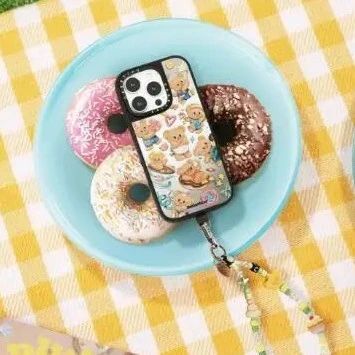
Core Viewpoint - CASETiFY, known as the "Hermès of phone cases," is facing consumer backlash over perceived high profit margins and pricing strategies, sparked by a viral post on social media [2][7]. Company Overview - Founded in 2011, CASETiFY specializes in personalized phone cases and accessories, with prices ranging from 300 to over 10,000 yuan for limited editions [3][4]. - The company's revenue exceeded 300 million USD (approximately 2.17 billion yuan) in 2022, and there are plans for an IPO in the future [4][20]. Market Dynamics - The phone case industry is characterized by high demand and significant profit margins, with the concept of "lipstick effect" suggesting that consumers are willing to spend on non-essential items like phone cases [5][19]. - The global phone case market was valued at 99.91 billion yuan in 2022 and is projected to reach 129.068 billion yuan by 2028 [19]. Profit Margins - CASETiFY's pricing strategy has led to discussions about the profitability of phone cases, with some experts suggesting a net profit margin of around 30% is reasonable [19][17]. - Comparatively, other companies in the industry, such as Jiemite, reported gross margins for smartphone protective products ranging from 34.45% to 54.67% [13][15]. Consumer Sentiment - The recent controversy has led to consumer perceptions that high-priced phone cases are a "tax on intelligence," raising concerns about the sustainability of such pricing strategies [7][19]. - Experts note that while high prices can be justified by design and branding, the increasing costs may alienate consumers [19]. Competitive Landscape - The phone case market is not high-barrier to entry, with numerous counterfeit products available at significantly lower prices [8][9]. - CASETiFY's reliance on celebrity endorsements and collaborations has helped establish its premium brand image, but this also invites competition from cheaper alternatives [7][19]. Future Outlook - The demand for phone cases is expected to persist as they evolve from mere protective accessories to expressions of individuality and social status [20]. - Continuous innovation in design will be crucial for brands like CASETiFY to maintain relevance in a rapidly changing market [20].