
多元化经营

Search documents
连锁药店的痛与变丨极刻
Sou Hu Cai Jing· 2025-06-07 12:57
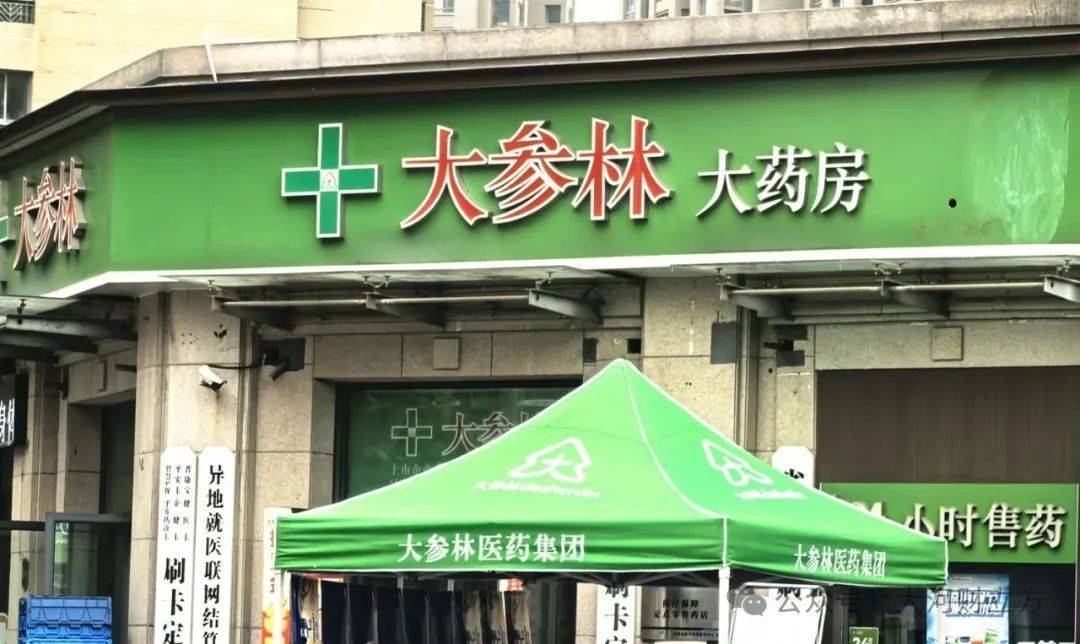
Core Viewpoint - The domestic chain pharmacy industry is experiencing significant challenges, transitioning from rapid expansion to a survival phase, with a focus on efficiency over scale [1][6][10]. Industry Overview - The chain pharmacy sector has shifted from a "land grab" phase to a "survival of the fittest" competition, with many stores closing or relocating due to poor performance [2][11]. - The number of retail pharmacies in China increased from 524,000 in 2019 to 667,000 in 2023, with projections of reaching 700,000 in 2024, indicating an oversupply situation [8][10]. Market Dynamics - In 2024, the number of closed pharmacies is expected to rise significantly, with quarterly closures projected at 6,778, 8,791, 9,545, and 14,114 respectively, marking the first negative growth in total pharmacy numbers in recent years [5][10]. - The rise of e-commerce and changing consumer habits have further pressured physical pharmacies, with online pharmacy sales expected to reach 75.8 billion yuan in 2024, growing by 14.4% year-on-year [8][10]. Financial Performance - In 2024, six listed chain pharmacy companies reported a collective decline in net profits, with only one company, Yifeng Pharmacy, showing growth [10][12]. - Major companies like Guoda Pharmacy have had to close numerous stores, with 1,273 direct stores and 389 franchise stores shut down in a short period [11][12]. Strategic Responses - To survive, many pharmacies are merging operations to reduce costs, with smaller chains collaborating to manage resources more efficiently [11][12]. - Major chains are adopting new strategies, including closing unprofitable stores and slowing expansion, as seen with Yifeng Pharmacy closing 1,078 stores in 2024 [12]. Future Directions - The future of pharmacies lies in diversification and service enhancement, with a shift towards health services beyond just selling medications [15][16]. - Companies are exploring models like "pharmacy + clinic" and expanding product offerings to include health-related items, aiming to create a more comprehensive service environment [15][16].

健之佳:销售费用率略有提升,门店数量仍保持稳定增长-20250606
Tai Ping Yang Zheng Quan· 2025-06-06 14:23
Investment Rating - The report maintains a "Buy" investment rating for the company [1][7]. Core Views - The company's performance in 2024 was impacted by an increase in sales expense ratio, leading to a decline in net profit [4]. - The company achieved a total revenue of 9.283 billion yuan in 2024, representing a year-over-year growth of 2.23%, while the net profit decreased by 69.08% to 128 million yuan [4][10]. - The company continues to expand its store count, reaching a total of 5,486 stores by the end of 2024, with a net increase of 370 stores [5]. - The company has over 26 million effective members, with member consumption accounting for nearly 70% of total sales, supporting stable growth [5]. - The company is focusing on differentiated competition and multi-channel operations, with online channel revenue growing by 19.51% year-over-year, accounting for 27.9% of total revenue [6]. Financial Summary - The company forecasts revenues of 10.1 billion yuan, 11.05 billion yuan, and 12.003 billion yuan for 2025, 2026, and 2027, respectively, with year-over-year growth rates of 8.80%, 9.41%, and 8.62% [7][10]. - The projected net profits for the same years are 196 million yuan, 242 million yuan, and 271 million yuan, with growth rates of 53.1%, 23.3%, and 12.2% [7][10]. - The company’s earnings per share (EPS) are expected to be 1.27 yuan, 1.56 yuan, and 1.76 yuan for 2025, 2026, and 2027, respectively [10].

小家电行业的破晓时分
2025-06-06 02:37
Summary of Key Points from the Conference Call Industry Overview - The small home appliance industry entered a plateau phase after 2021, but new categories like air fryers and coffee machines showed remarkable growth in 2022, with air fryers increasing by 88% and coffee machines by 41% [1][2][4]. - The macroeconomic downturn in 2023-2024 is expected to impact consumer spending, but the national subsidy policy in Q4 2024 is anticipated to boost confidence, particularly benefiting mid-to-high-end products [1][2][4]. Core Insights and Arguments - By 2025, small appliance companies are expected to face a mild recovery in demand, reduced competition, and improved profitability, driven by fiscal subsidies and low base effects [1][4]. - Online sales channels have become the mainstream for small appliances, accounting for 79% of sales, with platforms implementing cost-reduction policies to alleviate pressure on brands [1][5]. - Brands like Xiaoxiong are optimizing product structures and focusing on high-end products to enhance brand image and profitability, while also emphasizing marketing efficiency and supply chain cost reduction [1][6]. Future Trends and Recommendations - The kitchen small appliance market is projected to recover in 2025, with significant price-driven growth expected. The domestic market is entering a phase of enhanced product capabilities [1][7]. - Recommended companies to watch include Xiaoxiong, Feike, Delma, and the stable dividend-paying leader Supor, as well as the promising water purification company Yunmi Technology [1][7]. Market Environment and Strategic Directions - Current market conditions for small appliance companies include moderate demand recovery, easing competition, and improving profitability, with a focus on high-quality development [4]. - Companies are adopting various strategic directions, including market penetration, product development, market expansion, and diversification to adapt to the plateau phase [8][10]. - The mother and baby small appliance market is particularly strong, with Xiaoxiong's revenue in this segment growing by 32% in 2024, outperforming other business areas [2][9]. Additional Important Insights - The online retail share of kitchen small appliances rose from 55% in 2019 to 67% in 2020 due to the pandemic, with brands like Xiaoxiong, Beiding, and Xinbao seeing significant revenue growth [2]. - Platforms are shifting their strategies towards GMV (Gross Merchandise Volume) to enhance user engagement, repeat purchase rates, and average transaction value, leading to a reduction in price competition [5]. - Companies are increasingly focusing on overseas markets due to prolonged domestic demand weakness, with brands like Xiaoxiong and Beiding achieving substantial growth in international sales [10].


金字火腿易主莆田富豪8.7亿接盘 扣非止跌回升22%股价创年内新高
Chang Jiang Shang Bao· 2025-06-04 23:15
Core Viewpoint - The actual controller of Jinzi Ham (002515.SZ) has changed, with Zheng Qingsheng replacing Ren Guilong as the controlling shareholder and actual controller of the company [1][4]. Group 1: Shareholder Changes - On June 3, Jinzi Ham announced the completion of the share transfer, with Zheng Qingsheng acquiring 145 million shares (11.98% of total shares) from Ren Guilong for 870 million yuan [3][4]. - Zheng Qingsheng now holds a total of 18.83% voting rights in Jinzi Ham, making him the largest shareholder [4]. Group 2: Financial Performance - In Q1 2025, Jinzi Ham's net profit excluding non-recurring items increased by approximately 22% year-on-year to 24.34 million yuan [2]. - The company's revenue for Q1 2025 decreased by 2.76% to 129 million yuan, while the net profit attributable to shareholders slightly increased by 2.93% to 24.34 million yuan [6]. - The company's performance has shown fluctuations, with revenue figures of 4.45 billion yuan, 3.14 billion yuan, and 3.44 billion yuan for the years 2022 to 2024, respectively [5]. Group 3: Stock Performance - Jinzi Ham's stock price has been on the rise, reaching a closing price of 6.08 yuan per share on June 4, 2025, marking a 35.11% increase since the beginning of the year [1][6].

强强联合双店齐发 “大树漱玉”济南开业
Qi Lu Wan Bao· 2025-06-01 21:23
Core Viewpoint - The launch of the new health pharmacy brand "Dashi Shuyu" represents a significant collaboration between two major players in the pharmaceutical retail industry, aiming to create a comprehensive health service platform that goes beyond traditional pharmacy offerings [1][4]. Group 1: Company Overview - "Dashi Shuyu" is a joint venture between Dashi Pharmacy, the leading revenue-generating company in Taiwan, and Shuyu Pharmacy, a prominent chain in Jinan, China [1][4]. - The new stores feature a wide range of products, including pharmaceuticals, health foods, maternal and infant care, pet supplies, and cross-border goods, with nearly 5,000 items available in-store and more accessible through an online platform [2][3]. Group 2: Market Strategy - The stores are designed to prioritize non-pharmaceutical products, with a significant portion of the space allocated to health and wellness items, reflecting a shift in consumer purchasing behavior [3][6]. - The collaboration aims to leverage Dashi's extensive experience in maternal and infant health services and Shuyu's strong local supply chain to enhance operational efficiency and customer service [4][6]. Group 3: Industry Trends - The pharmacy retail industry is increasingly moving towards diversification, with a focus on integrating health, beauty, and convenience products, similar to trends seen in international markets [7]. - The emergence of "Dashi Shuyu" signifies a new business model in the pharmaceutical retail sector, aiming to provide personalized health consultations and lifestyle guidance, thus enhancing the overall customer experience [7]. Group 4: Future Plans - The company plans to open several demonstration stores in Jinan to better understand the local market and consumer needs, with a long-term goal of expanding its presence [4][6]. - "Dashi Shuyu" aims to contribute to the "Healthy China 2030" initiative by creating a five-in-one ecosystem that includes pharmaceuticals, health products, maternal and infant care, cross-border goods, and lifestyle services [6].

康养名企山屿海涉非法吸储被立案,“候鸟旅居”变金融陷阱
Nan Fang Du Shi Bao· 2025-05-23 08:26
Core Viewpoint - The company "Shan Yu Hai," a well-known cultural tourism and health care enterprise, is facing severe operational issues due to allegations of illegal public deposit absorption, leading to criminal investigations and the detention of its executives [1][4][10]. Group 1: Company Operations and Financial Issues - Shan Yu Hai was reportedly operating normally until early April 2024, with ongoing strategic meetings and new project announcements [2]. - However, by early April, numerous investors began to voice concerns online about the company's inability to process withdrawals from its leasing platform, "Mai Zi," indicating a liquidity crisis [3][5]. - The company has diversified its operations beyond tourism and health care into sectors such as real estate, health management, and overseas mining, which may have contributed to its financial strain [11]. Group 2: Investment Model and Legal Concerns - The investment model of "Mai Zi" involved high promised returns of 9%-12% on rental income, which attracted many investors but lacked transparency regarding the actual rental assets [6][7]. - Legal experts have indicated that the company's practices may constitute illegal public deposit absorption due to their high returns, lack of real product flow, and public solicitation [6][7]. - The company has not published financial reports since 2019, raising concerns about its financial health and transparency [10]. Group 3: Investor Reactions and Consequences - Investors have expressed frustration over their inability to withdraw funds, with some reporting losses exceeding 1 million yuan [5][14]. - The company's physical locations have been reported as closed, and there is a significant presence of investors seeking recourse for their losses [13][14]. - The founder and chairman of Shan Yu Hai has become less visible, and the company's communication channels have ceased updates since early April [12][14].
卖宠物食品,还卖卫生巾,三只松鼠不甘只做零食品牌
Bei Jing Shang Bao· 2025-05-21 14:20
Core Viewpoint - The company, Three Squirrels, is expanding its product line to include a new sanitary napkin brand called "She Zhi Mei," aiming to become a comprehensive consumer brand beyond just nuts [1][3]. Group 1: Product Expansion - Three Squirrels is not only launching sanitary napkins but also plans to develop various other product lines, including pet food, alcoholic beverages, and personal care products [1][5]. - The sanitary napkin brand "She Zhi Mei" emphasizes high safety and quality standards, featuring a sterilization level, 0 fungal contamination, and a 99% antibacterial effect [3]. Group 2: Market Context - The sanitary napkin industry has faced significant scrutiny due to safety issues, leading to a consensus that the industry is in a period of reshuffling and requires a reset [3][4]. - The entry of Three Squirrels and other brands into the sanitary napkin market is seen as an attempt to address these safety concerns and provide reliable products [3]. Group 3: Financial Performance - In 2024, Three Squirrels reported revenue of 10.622 billion yuan, a 49.3% increase year-on-year, and a net profit of 407.7 million yuan, up 85.5% [6][7]. - The company has invested heavily in marketing, with sales expenses reaching 1.868 billion yuan, a 50.9% increase from the previous year [7]. Group 4: Strategic Goals - Three Squirrels has set ambitious sales targets for its new product lines, including 250 million yuan for convenience food and 100 million yuan for both alcoholic beverages and personal care products by 2025 [5]. - The company aims to enhance its supply chain by establishing new processing plants across various regions in China and in Vietnam to achieve economies of scale [8]. Group 5: Future Outlook - The company's founder, Zhang Liaoyuan, describes the upcoming year as a "year of rebirth," indicating a focus on growth and market expansion [6]. - The success of Three Squirrels' diversification strategy will depend on its ability to establish competitive positions in new market segments [5][9].


威领股份孙公司2.2亿竞得矿业公司股权 新增多金属矿采选业务
Zheng Quan Shi Bao Wang· 2025-05-20 12:13
Core Viewpoint - The company, Weiling Co., Ltd., has acquired a 74.3% stake in Hunan Linwu Jiayu Mining Co., Ltd. for 220 million yuan, aiming to diversify its operations into the non-ferrous metal mining sector, particularly focusing on tin and tungsten, which are essential for various high-tech industries [1][3]. Group 1: Acquisition Details - Weiling Co., Ltd. announced the acquisition of a 74.3% stake in Jiayu Mining for 220 million yuan through its subsidiary Tianjin Changling Mining Partnership [1]. - The stake includes 51 million shares held by Huang Huamao (41.34%) purchased for 122 million yuan and 40.67 million shares held by Shenzhen Huarong Asset Management Co., Ltd. for 97.6 million yuan [1]. - Jiayu Mining, established in 2014, specializes in the mining and processing of non-ferrous and black metal ores, with key products including tin, tungsten, lead, and zinc [1]. Group 2: Resource and Production Capacity - Jiayu Mining's mining license allows for a maximum extraction of 300,000 tons per year, with current estimated reserves of tin at 2.47 million tons, lead at 1.19 million tons, zinc at 1.17 million tons, and tungsten at 290,000 tons [2]. - The company’s strategic focus is on integrating mining, processing, and production of lithium battery raw materials, enhancing its vertical integration in the industry [2]. Group 3: Financial Performance and Strategic Shift - In 2024, Weiling Co., Ltd. reported a revenue of 533 million yuan, a decrease of 53.33% year-on-year, and a net loss of 308 million yuan, down 37.95% [3]. - The decline in revenue is attributed to the ongoing downturn in the lithium carbonate market, which has negatively impacted the company's main business [3]. - To optimize its business structure and enhance overall performance, the company aims to leverage its experience in lithium resource development to accelerate Jiayu Mining's recovery and increase revenue and profitability by 2025 [3].

威领股份: 关于参与竞买并成功竞得湖南临武嘉宇矿业有限责任公司74.3%股权的提示性公告
Zheng Quan Zhi Xing· 2025-05-20 11:55
Transaction Overview - The company successfully acquired 74.3% equity of Hunan Linwu Jiayu Mining Co., Ltd. for 220 million yuan through a bidding process on JD Asset Trading Platform [1][9] - The equity was purchased from two sellers: Huang Huamao (51 million shares, 41.34% stake) for 122.4 million yuan and Shenzhen Huayong Asset Management Co., Ltd. (40.67 million shares, 32.96% stake) for 97.6 million yuan [1][9] - The transaction was settled in cash and did not involve the issuance of shares, with funding sourced from the registered capital of Changling Mining [1][9] Company Background - Jiayu Mining was established on January 16, 2014, with a registered capital of 123.376 million yuan, focusing on mining, selection, and smelting of non-ferrous and black metal ores [5][6] - The company operates in the mining sector, specifically dealing with tin, tungsten, lead, and zinc [6][8] Strategic Rationale - The acquisition aims to diversify the company's operations, which have been under pressure due to low lithium carbonate prices affecting revenue and profitability [9] - By entering the non-ferrous metal mining sector, the company seeks to leverage its expertise in lithium resource development and mineral processing to enhance Jiayu Mining's production and revenue [9] - The main minerals from Jiayu Mining, such as tin and tungsten, are critical for industries like military, aerospace, semiconductors, and new energy materials [9] Financial and Operational Impact - The company plans to conduct an audit and evaluation of Jiayu Mining post-acquisition to determine if it constitutes a major asset restructuring [1][9] - The acquisition is expected to improve the company's overall performance and revenue by 2025, while also stabilizing profits through diversification [9]
*ST四通: 四通股份2024年年度股东大会会议资料
Zheng Quan Zhi Xing· 2025-05-15 08:15
Core Viewpoint - The Guangdong Sitong Group Co., Ltd. is preparing for its 2024 Annual General Meeting, focusing on the appointment of an auditing firm and reviewing its financial performance, including a significant increase in revenue and ongoing challenges in profitability [1][5][15]. Meeting Agenda - The meeting will cover the reappointment of "Xinyong Zhonghe Accounting Firm" as the company's auditing institution [1]. - The agenda includes the presentation of the 2024 annual report and the independent director's report [3][5]. Financial Performance - In 2024, the company reported a total revenue of approximately 285.22 million yuan, a 53.50% increase from 185.81 million yuan in 2023 [15]. - The net profit attributable to shareholders was a loss of approximately 23.47 million yuan, an improvement from a loss of 37.36 million yuan in the previous year [15]. - The total assets as of December 31, 2024, were approximately 1.05 billion yuan, with net assets of about 971.80 million yuan, reflecting a slight decrease from the previous year [16]. Operational Highlights - The company has focused on expanding its market presence in the home ceramic sector, achieving a 196.49% increase in domestic sales revenue [16]. - The company has also diversified into new materials, establishing a subsidiary for zircon and titanium mineral refining [8][9]. Cost Management - The company has implemented lean management practices to control costs across production, operations, and management, aiming to optimize processes and reduce expenses [11]. - Direct material costs increased significantly, accounting for 52.12% of total costs, reflecting a 36.89% rise compared to the previous year [19]. Future Outlook - The company aims to become a globally recognized supplier of home ceramic products, focusing on quality and market expansion while exploring new material business opportunities [12][14]. - Plans include enhancing technological innovation, sustainable practices, and improving brand recognition in both domestic and international markets [13][14].
