
政策不确定性

Search documents
市场分析:市场已经将美元的政治风险溢价计价
Sou Hu Cai Jing· 2026-01-19 03:19
Core Viewpoint - The article discusses the unexpected reaction of the foreign exchange market to tariff threats, highlighting that increased political uncertainty in the U.S. tends to weaken the dollar rather than the euro as commonly assumed [1] Group 1 - Khoon Goh, the head of Asian research at ANZ, notes that the market has priced in the political risk premium associated with the dollar [1] - The current major concern is the extent and strength of Europe's response to President Trump's policies [1] - It appears that a trade agreement between the U.S. and Europe is unlikely to be reached, and the U.S.-UK trade agreement is also in limbo [1]
美国国债收益率基本持平 美联储官员将发表讲话
Sou Hu Cai Jing· 2026-01-15 06:57
Core Viewpoint - US Treasury yields remained stable during Asian midday trading, influenced by data, geopolitical factors, and monetary policy expectations [1] Group 1: Economic Indicators - Weekly initial jobless claims are a potential driver for market movements on Thursday [1] - The 10-year US Treasury yield increased by 0.4 basis points to 4.143% [1] Group 2: Geopolitical and Policy Factors - Increased policy uncertainty is causing cautious sentiment in the market, driven by efforts from the Trump administration to undermine the Federal Reserve's policy independence [1] - Escalating geopolitical risks in the Middle East and ongoing trade disputes are contributing to market apprehension [1] Group 3: Federal Reserve Insights - Speeches from Raphael Bostic, President of the Atlanta Federal Reserve Bank, and Jeffrey Schmid, President of the Kansas City Federal Reserve Bank, are anticipated to provide insights into monetary policy [1]
不确定性持续笼罩市场!关税裁决“再度跳票” 美股三大指数跳水
Zhi Tong Cai Jing· 2026-01-14 16:00
Group 1 - The U.S. Supreme Court has not yet made a ruling on the legal challenge to President Trump's tariff policy, indicating that global markets will have to wait at least until next week for the final outcome of this significant economic policy [1] - The court has not specified when it will issue its ruling, but justices will continue hearings next Tuesday or Wednesday, with the possibility of announcing a decision [1] - Analysts note that if the Supreme Court's ruling is delayed until late February, the legal balance that initially seemed unfavorable to the Trump administration may shift subtly [1] Group 2 - Multiple institutions, including Evercore ISI, maintain the baseline judgment that the Trump administration may lose, but they caution investors to consider the critical variable of time, suggesting that each week of delay increases the likelihood of a favorable outcome for the administration [2] - The potential impact of this ruling on financial markets is significant, with some strategists concerned that the removal of tariffs could increase policy uncertainty and negatively affect the stock market; however, others believe that dismantling tariff barriers could improve inflation prospects and support mid-term economic growth, benefiting risk assets [2] - On the day of the news, U.S. stock indices opened lower, with the Nasdaq down over 1.5%, the S&P 500 down over 1%, and the Dow Jones down 0.58% [2]
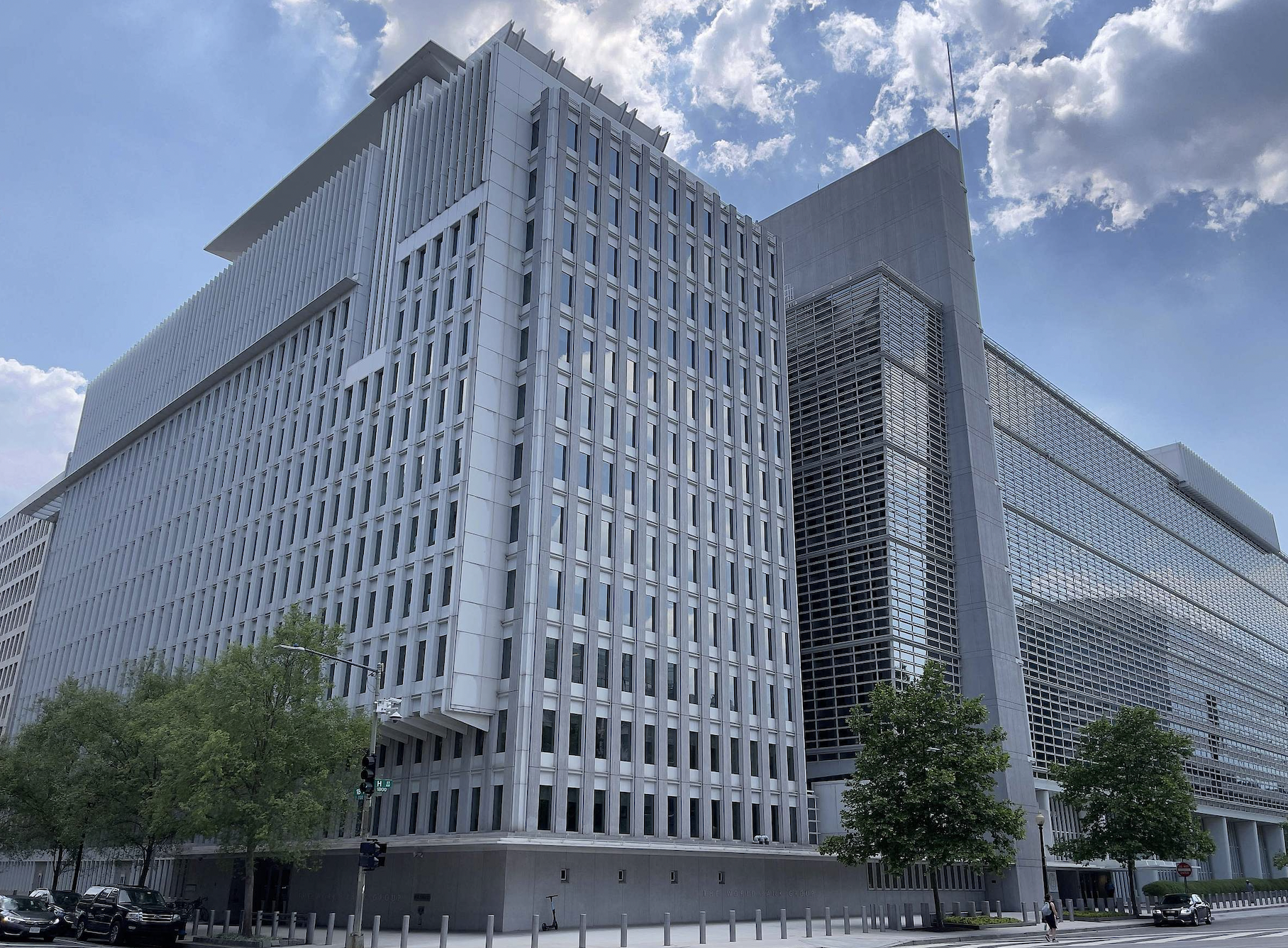
经济韧性凸显!世界银行上调2026年全球经济增长预期
Xin Lang Cai Jing· 2026-01-14 11:23
Global Economic Outlook - The World Bank's latest Global Economic Prospects report indicates that despite ongoing trade tensions and policy uncertainties, global economic resilience has exceeded expectations [1] - The report forecasts stable global growth rates over the next two years, with a decline to 2.6% in 2026 and a rebound to 2.7% in 2027, an upward revision from previous predictions [1] Economic Growth Factors - The report attributes the past year's economic resilience to increased investments in artificial intelligence, despite the challenges posed by trade tensions and policy uncertainties [1] - It is expected that the effects of trade surges and rapid adjustments in global supply chains will support economic growth until 2025, but these effects are likely to fade by 2026 as trade and domestic demand weaken [1] Inflation and Financial Conditions - Global inflation is projected to slightly decrease to 2.6% in 2026, influenced by a softening labor market and declining energy prices [1] - The report suggests that easing global financial conditions and fiscal expansions in major economies will help buffer against economic downturns [1] Regional Economic Projections - The East Asia and Pacific region is expected to see growth rates of 4.4% in 2026 and 4.3% in 2027, while Europe and Central Asia are projected to stabilize at 2.4% in 2026 and rise to 2.7% in 2027 [2] - South Asia's growth is anticipated to decline to 6.2% in 2026 before recovering to 6.5% in 2027 [2] China’s Economic Outlook - China's economic growth rate is projected to be 4.4% in 2026, consistent with previous forecasts, supported by recent fiscal measures and a degree of stability in global trade policies [2] Developing Economies - Growth in developing economies is expected to slow from 4.2% in 2025 to 4% in 2026, with a slight recovery to 4.1% in 2027, driven by easing trade tensions and improved financial conditions [3] - Low-income countries are projected to grow faster, with an average growth rate of 5.6% in 2026-2027, supported by solid domestic demand and recovering exports [3] Income Disparity - The report emphasizes that the growth in developing economies will not be sufficient to close the income gap with developed economies, with per capita income growth expected to be 3% in 2026, about 1 percentage point lower than the average from 2000-2019 [3]

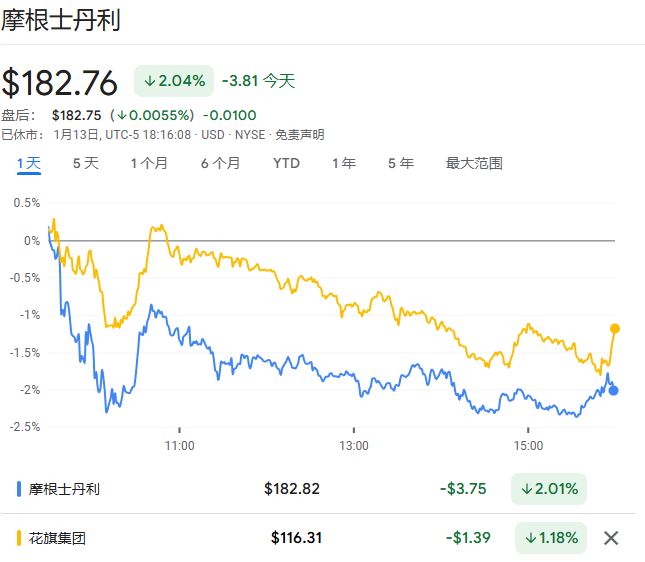
特朗普为大选掉转枪口?华尔街从昔日“宠儿”沦为政策“出气筒”
Hua Er Jie Jian Wen· 2026-01-14 07:37
Core Viewpoint - The Trump administration is shifting its stance from being an ally to Wall Street to becoming an adversary, implementing policies that prioritize consumer interests over investor concerns, particularly in light of the upcoming midterm elections [1] Group 1: Policy Changes - Recent measures include blocking large investors from purchasing single-family homes, calling for a cap on credit card interest rates at 10%, and announcing restrictions on executive compensation and stock buybacks [1] - The Department of Justice has initiated a criminal investigation into Federal Reserve Chairman Jerome Powell, which is perceived as an intimidation tactic to force interest rate cuts [1][7] Group 2: Market Reactions - Financial stocks have come under pressure, with major credit card issuers like Citigroup, American Express, Capital One, Mastercard, and Visa seeing stock declines of 4% to over 7% following Trump's credit card rate cap proposal [2] - The stock prices of large single-family home landlords and Blackstone were also negatively impacted by the plan to restrict large investors from buying homes, although some stocks have since recovered [5] Group 3: Investor Sentiment - Despite the unsettling news, the overall stock indices have not shown significant concern, as investors are accustomed to Trump's fluctuating ideas and recognize that many proposals require Congressional support [6] - Analysts suggest that the market is in a wait-and-see mode, with some believing that the credit card proposal and restrictions on institutional home purchases may not materialize [6] Group 4: Broader Implications - The investigation into Powell has drawn criticism from former Federal Reserve and Treasury officials, which could hinder Trump's ability to confirm Powell's successor [7] - Other proposals, such as reducing credit card rates, may inadvertently limit credit access for low- to middle-income consumers, potentially impacting housing supply and construction [7] - The administration's push for affordability could also affect sectors beyond finance, such as energy, by aiming to lower gasoline prices through increased Venezuelan oil supply [7] Group 5: Optimistic Perspectives - Despite the concerns, some analysts at Morgan Stanley believe that the administration's focus on housing affordability could benefit certain consumer-related stocks if incentives are provided to homebuilders to increase supply [8]

世界银行上调2026全球经济增速预期,强调关税阴影下仍具韧性
Feng Huang Wang· 2026-01-13 23:07
世界银行周二表示,尽管面对贸易紧张局势升级与政策不确定性加剧的局面,但全球经济仍然展现出显 著的韧性,不过全球增长过度集中在发达经济体,整体增长水平依然偏低,难以有效减少极端贫困。 Gill补充称,2025年全球人均GDP较新冠疫情暴发前高出10%,这是过去60年来主要危机后最快的一次 复苏。但他强调,许多发展中国家正在被甩在后面:约四分之一的发展中国家人均收入仍低于2019年水 平,其中以最贫困国家情况最为严峻。 世界银行预计,新兴市场和发展中经济体的整体增速将在2026年放缓至4.0%,低于2025年的4.2%,但 分别较去年6月的预测上调0.2和0.3个百分点。 欧元区方面,世界银行预计,2026年经济增速将从2025年的1.4%放缓至0.9%,主要受到美国关税政策 的拖累;但随着欧洲国防支出增加,2027年增速有望回升至1.2%。 日本方面,2026年经济增速预计将放缓至0.8%,低于2025年的1.3%。2025年的增长部分得益于日本企 业为规避特朗普关税政策而提前向美国出口商品。世界银行表示,消费和投资放缓将使日本在2027年的 GDP增速维持在0.8%不变。 该机构预计,美国GDP增速将在202 ...
Moneta Markets外汇:贵金属超买风险加剧
Xin Lang Cai Jing· 2026-01-13 09:54
Core Viewpoint - The global precious metals market is at a crossroads of high volatility and technical correction as it enters 2026, with significant downward risks accumulated from extreme price surges in late 2025 [1][4] Market Dynamics - Despite solid growth drivers in 2025 and potential indicated by ETF allocations, the extreme highs in gold, silver, and platinum group metals (PGMs) have created notable short-term correction pressures [1][4] - The potential threat from U.S. tariff policies has led to a large flow of precious metals into U.S. reserves, squeezing liquidity in other global markets [4] - The platinum market is expected to continue facing supply shortages in 2026, exacerbated by declining production in South Africa, which increases price sensitivity to buying interest [4] ETF and Speculative Positions - Gold and silver ETF holdings grew by 20% in 2025, but overall holdings remain below historical peaks, leaving room for potential investor entry [2][4] - Speculative net long positions have not reached extreme levels, indicating potential for further investment [2] - Technical indicators have raised warning signals, with platinum's daily RSI exceeding 90 in December, marking a severe overbought condition [2][4] - Historical data suggests that when prices deviate more than 20% from the 200-day moving average, a 10% to 20% deep correction is often anticipated [2][4] Geopolitical Influences - Geopolitical tensions have intensified in January, becoming a key driver for gold prices, with U.S. military and diplomatic actions in Latin America and strategic interests in Greenland's mineral resources complicating geopolitical relations and enhancing gold's safe-haven appeal [5] - Spot gold has stabilized above $4600 per ounce, but the extreme price increases in 2025 suggest a tendency for the market to consolidate at high levels to digest profit-taking [5] Silver Market Performance - The silver market has also experienced volatility, with prices reaching a new high of $84 per ounce before facing pressure due to increased margin requirements from CME and profit-taking by investors [3][5] - New export quotas for silver from major supply countries, effective January 1, have reduced the number of companies allowed to export to 44, tightening supply expectations and supporting a subsequent price increase of over 7% [3][5] Long-term Outlook - The long-term bullish logic for precious metals remains intact, but investors should be cautious of technical corrections following extreme overbought conditions [5] - Current gold and silver prices show strong resilience, but the dual pressures of policy uncertainty and increased margin requirements necessitate close monitoring of key support levels [5]

ATFX:美联储权威遭遇前所未有挑战 黄金突破4600美元只是开始还是终极警告
Sou Hu Cai Jing· 2026-01-13 09:33
Group 1 - The core viewpoint of the article highlights a significant surge in gold prices, driven by a rare systemic risk event in the global financial market, with gold surpassing the $4600 mark, indicating a re-evaluation of "trust in the financial system" rather than traditional inflation or recession drivers [1] - The primary catalyst for this surge is the heightened concern regarding the potential impact on the independence of the Federal Reserve, particularly in light of the controversy surrounding Chairman Powell, which has amplified investor fears of political interference in monetary policy [1] - The weakening of the US dollar index reflects a structural shift towards safe-haven assets, with investors actively reducing dollar exposure and turning to gold as a hedge against systemic risk and policy uncertainty [1] Group 2 - Geopolitical risks, including instability in the Middle East, domestic unrest in Iran, political variables in Latin America, and uncertainties in US foreign policy, contribute to a high-volatility, low-predictability global environment, leading to a sustained demand for safe assets like gold [2] - From a technical perspective, gold is currently in a clear upward channel, with recent price movements indicating a high-level consolidation phase rather than a reversal signal, suggesting that the upward trend remains intact [5] - The mid-term support for gold remains strong, as the market perceives interest rates to be near neutral levels, with expectations for rate cuts prevailing while the space for rate hikes is limited, which continues to exert downward pressure on real interest rates, benefiting non-yielding assets like gold [5] Group 3 - The $4600 level is viewed as a "risk warning line" rather than the end of a bull market, with potential for short-term fluctuations but a sustained bullish logic for gold in the face of ongoing systemic uncertainty, geopolitical risks, and policy expectations [6] - The article emphasizes that the key focus for the market should not be on short-term price corrections but rather on whether this trust and risk reassessment has fundamentally altered gold's long-term positioning in global asset allocation [7]
ATFX:美联储权威遭遇前所未有挑战,黄金突破4600美元只是开始,还是终极警告?
Sou Hu Cai Jing· 2026-01-13 08:44
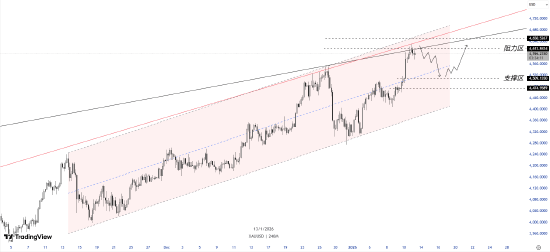
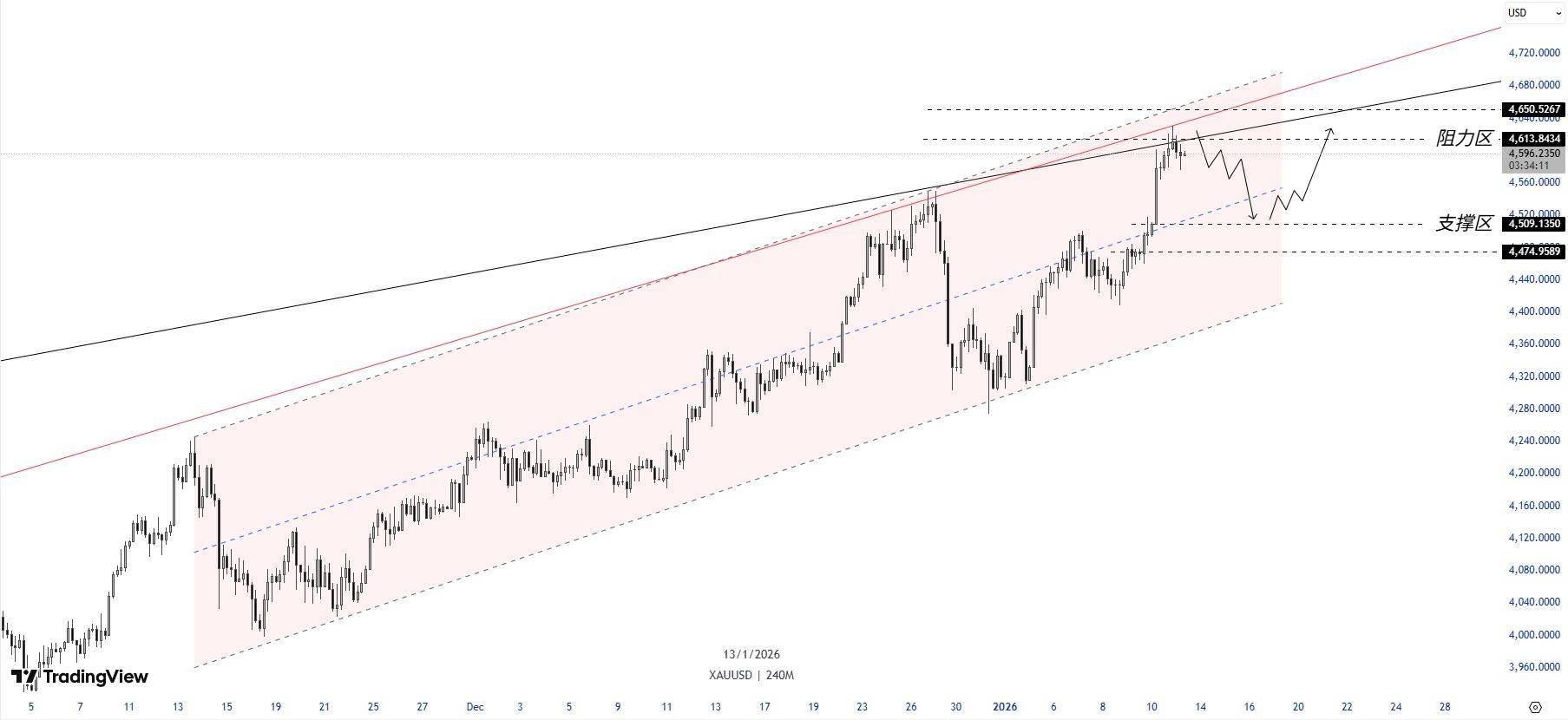
Core Viewpoint - The global financial market is experiencing a significant institutional risk event, leading to a surge in gold prices, which have surpassed the $4600 mark, driven by a reassessment of "trust in the financial system" rather than traditional inflation or recession concerns [1] Group 1: Market Dynamics - The primary catalyst for the current gold price surge is heightened market sensitivity to potential threats to the independence of the Federal Reserve, particularly due to the investigation surrounding Chairman Powell, which has amplified concerns about political interference in monetary policy [1] - The weakening of the US dollar index reflects a structural shift towards risk aversion, with investors actively reducing dollar exposure and reallocating to gold and other non-credit assets for hedging purposes [1] Group 2: Geopolitical Factors - Ongoing geopolitical risks, including instability in the Middle East, domestic unrest in Iran, political variables in Latin America, and uncertainties in US foreign policy, contribute to a high-volatility, low-predictability global environment [2] - The demand for safe-haven assets has evolved from short-term emotional reactions to more sustained strategic allocations, which is a key reason for gold's strength at elevated price levels [2] Group 3: Technical Analysis - Current gold price movements align closely with macroeconomic conditions, showing a clear upward trend within a defined channel, with recent price action indicating high-level consolidation without clear reversal signals [4] - Key resistance levels are identified between $4613 and $4650, while support is found around $4509 and $4474, suggesting that as long as prices remain above these support levels, the upward trend is intact [4] Group 4: Monetary Policy Implications - The medium-term support for gold remains robust, as the Federal Reserve is expected to maintain interest rates at neutral levels, with a prevailing bias towards rate cuts rather than hikes, which continues to suppress real interest rates and favor non-yielding assets like gold [4] Group 5: Long-term Outlook - The $4600 mark is viewed as a "risk warning line" rather than the end of a bull market, with potential for short-term fluctuations; however, the underlying logic for a medium-term bull market in gold remains intact due to ongoing institutional uncertainties, geopolitical risks, and policy expectations [5]
OEXN:白银波动加剧
Xin Lang Cai Jing· 2026-01-09 11:48
Core Viewpoint - The global silver market is at a critical turning point due to extremely low inventory levels, leading to price volatility that exceeds historical averages. The scarcity of silver has pushed its price into a highly sensitive range, where any capital flow can trigger significant market fluctuations [1][4]. Group 1: Inventory and Price Sensitivity - The weak inventory situation has set the stage for a potential "short squeeze," where a rapid increase in investor demand could lead to exponential price rebounds, while tightening signals could result in equally severe price corrections [1][4]. - Recent price instability is attributed more to regional supply bottlenecks and inventory mismatches rather than a global shortage of physical silver. A significant amount of silver has been transferred from London vaults to U.S. storage due to macro trade policies and potential tariff risks, distorting the pricing mechanism [1][4]. Group 2: Market Drivers - The surge in silver prices since 2025 has been driven by expectations of Federal Reserve interest rate cuts, diversification of assets, and safe-haven buying. However, the inventory squeeze in the London market has amplified the effects of these factors [2][5]. - In a normal market environment, a weekly net demand fluctuation of about 1,000 metric tons would typically increase silver prices by around 2%. In the current low inventory context, this price sensitivity has escalated to 7%, indicating a "high leverage" state in the silver market [2][5]. Group 3: Institutional Holdings and Future Outlook - Despite multiple recent peaks in silver prices, institutional investor enthusiasm has not yet reached its peak, with current silver ETF holdings still below the historical highs of 2021. As major global central banks enter a rate-cutting cycle, silver's appeal as an inflation hedge and asset diversification tool is expected to grow [2][5]. - If investor holdings continue to approach historical peaks alongside the fragile inventory system, silver prices may seek new highs in the coming quarters [2][5]. Group 4: Supply Chain and Policy Challenges - Institutional restrictions on silver exports in certain countries have fragmented the market, creating significant barriers to global flow and leading to a trend of "fragmentation" in the silver market. This structural shift from a "global shared inventory pool" to "isolated regional inventories" has weakened market liquidity [3][6]. - Policy ambiguities may result in long-term inventory retention in specific regions. Even if future trade environments become clearer, the speed of silver returning to traditional trading centers may not be as rapid as expected, potentially prolonging the tight inventory situation in London [3][6].