
汇率波动

Search documents
中美GDP差距再次缩小!25年中国GDP达20万亿美元,占美国GDP的64%
Sou Hu Cai Jing· 2026-01-20 15:42
Group 1 - The core viewpoint is that China's GDP is projected to reach $20 trillion by 2025, reducing the gap with the US to 64%, indicating a significant economic shift rather than mere catching up [1][4][6] - The 64% ratio reflects China's resilience in the face of global economic challenges, maintaining its position as the world's second-largest economy despite external pressures [6][9] - The strong performance in foreign trade, with exports growing by 6.1% and a historic trade surplus exceeding $1 trillion, highlights the shift towards high-tech products in China's export portfolio [11][16] Group 2 - Despite robust external trade, domestic consumption growth is only 3.7%, and investment is declining, indicating a structural imbalance in the economy [18][20] - The fluctuation of the exchange rate significantly impacts the perception of China's GDP in dollar terms, with the yuan's strength affecting the reported economic size [21][23] - The overall economic data may appear strong, but if household income does not increase and financial pressures remain, consumer confidence and spending will be adversely affected [25][26]

欧美央行立场分化 汇价维持整理
Jin Tou Wang· 2026-01-20 13:22
Group 1 - The core viewpoint indicates that the euro against the dollar is experiencing limited volatility and a neutral to bearish trend, with short-term momentum significantly weakened [1] - The euro had previously rebounded strongly after a significant pullback, breaking through a key psychological level, but showed signs of weakness as it briefly dipped below a core long-term moving average [1] - The recent decline of the dollar has been a crucial factor in the euro's rebound, driven by market assessments of geopolitical tensions and a risk-off sentiment towards the dollar [1] Group 2 - The Federal Reserve's cautious stance provides potential support for the dollar, with Chairman Powell signaling no urgent need for continued easing despite a rate cut in December [2] - The European Central Bank (ECB) has maintained its interest rates and shifted its policy stance towards maintaining the current position, ruling out the possibility of a rate cut in the near term [2] - Recent positive economic data from the Eurozone has stabilized market sentiment, with growth slightly exceeding expectations and domestic demand effectively countering manufacturing weaknesses [2][3] Group 3 - Inflation is expected to decline below target in the next two years due to easing energy price pressures, but service sector inflation may remain sticky due to lagging wage growth [3] - The ECB's policy will be based on data-driven assessments, with the current market pricing reflecting only a slight possibility of rate cuts this year [3] - The technical outlook for the euro against the dollar indicates that the core long-term moving average remains a critical support level, with potential for deeper corrections if breached [3]
3年或亏超15亿元!三房巷资产负债率高企
Shen Zhen Shang Bao· 2026-01-20 00:20
Group 1 - The core business of the company, Sanfangxiang, includes the production and sales of bottle-grade polyester chips and PTA, with supplementary operations in PBT engineering plastics and thermal power [3] - The company anticipates a significant decline in sales prices and capacity utilization rates in 2025 due to the release of new industry capacities, leading to increased competition and a decrease in gross profit [3] - Sanfangxiang has reported consecutive losses in 2023 and 2024, with net profits of -275 million yuan and -487 million yuan respectively, projecting a cumulative loss of approximately 1.52 billion to 1.60 billion yuan over three years [3] Group 2 - As of September 30, 2025, the company's asset-liability ratio reached 73.14%, significantly higher than the industry average of 39.31% [3] - Accounts receivable stood at 3.816 billion yuan, showing a year-on-year decrease of 7.59% [3] - The company's controlling shareholder has pledged a total of 2.967 billion shares, representing 100% of its holdings and 76.15% of the company's total share capital [4] Group 3 - On January 19, the company's stock price increased by 3.13%, closing at 2.64 yuan per share, with a total market capitalization of 10.29 billion yuan [5]

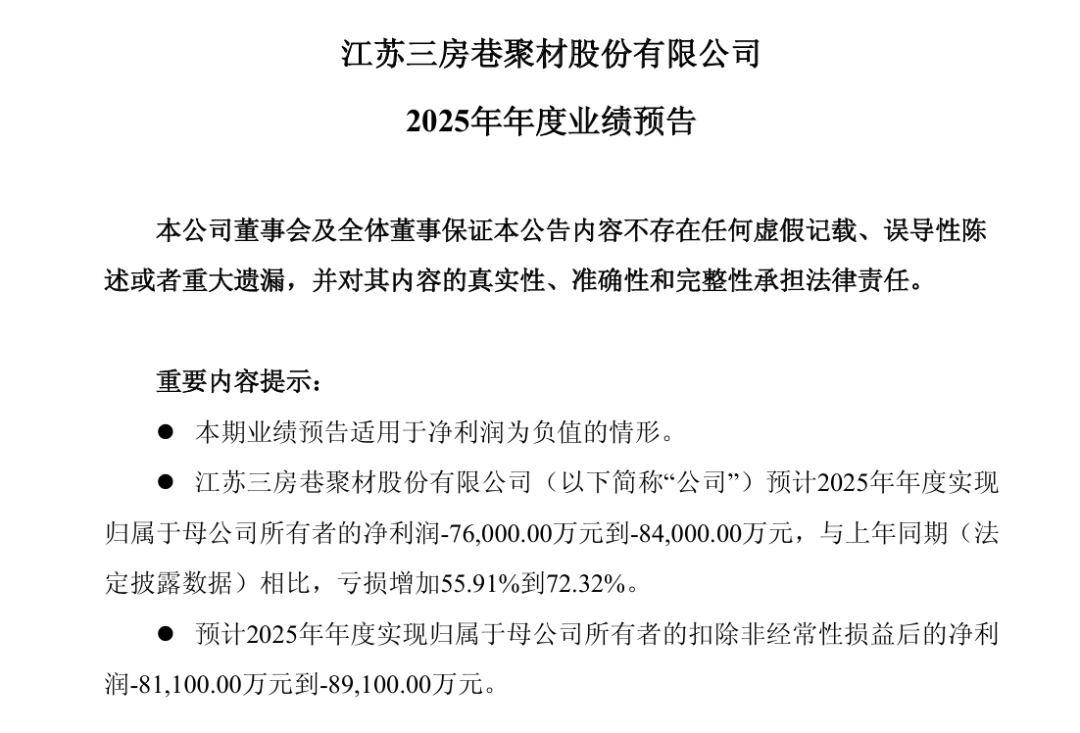
三房巷:预计2025年年度净利润亏损7.6亿元到8.4亿元
Xin Lang Cai Jing· 2026-01-19 08:23
三房巷公告,预计2025年年度实现归属于母公司所有者的净利润亏损7.6亿元到8.4亿元,与上年同期相 比,亏损增加55.91%到72.32%。报告期内,受行业新增产能持续释放影响,市场供需失衡,行业竞争 加剧,公司主要产品销售价格下降,产能利用率下降,加工费持续低位运行,毛利下降;同时,受汇率 波动影响,公司汇兑损失增加,公司整体亏损较上年同期扩大。 ...
2026,中国旅游业最大黑天鹅是美元?
虎嗅APP· 2026-01-18 13:33
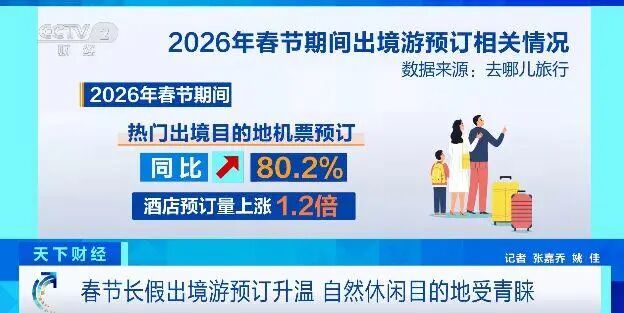
Core Viewpoint - The article discusses the impact of the strengthening Chinese yuan on the tourism and hospitality industry, highlighting the challenges faced by domestic hotels and the shift in consumer behavior towards outbound travel due to favorable exchange rates [4][10][18]. Group 1: Current Industry Situation - Domestic tourist traffic has decreased by 30% compared to 2024, but inbound tourism is recovering, particularly with high-net-worth visitors from South Korea [4][5]. - The appreciation of the yuan has made it more expensive for foreign tourists to visit China, leading to a decline in hotel bookings and a cautious approach from foreign clients [9][12]. - The recent increase in the yuan's value to 6.85 against the dollar means that foreign tourists can buy fewer services in China, while Chinese tourists find their money goes further abroad [10][12][18]. Group 2: Market Dynamics - The demand for outbound travel has surged, with a reported 80.2% increase in flight bookings to popular destinations during the 2026 Spring Festival [14]. - The competition for the Chinese tourism industry is shifting from domestic regions to international destinations with favorable exchange rates [17][18]. - The hospitality sector is experiencing a dual pressure: a decline in inbound tourists and a loss of high-net-worth domestic travelers who prefer cheaper options abroad [30][32]. Group 3: Future Outlook - The article predicts a K-shaped market differentiation in 2026, where businesses engaged in cross-border travel and high-end customized tours will thrive, while mid-tier hotels and travel agencies may face significant challenges [34][35][39]. - The lower segment of the market, focusing on extreme cost-effectiveness in domestic tourism, will remain resilient as budget-conscious travelers seek affordable options [38]. - The middle tier, characterized by overpriced services without unique offerings, is at risk of being severely impacted as consumers shift their preferences [39][44]. Group 4: Strategic Recommendations - To survive the changing landscape, companies must pivot from relying on price advantages to enhancing unique experiences and service quality [45][49]. - The focus should be on creating emotional connections and providing distinctive cultural experiences that cannot be easily replicated abroad [50][51]. - The industry must adapt to a new reality where value is defined by experience rather than cost, necessitating a shift in operational strategies [52][53].

突发!美国向韩国下通牒:管好你的韩元,别动我的3500亿!
Sou Hu Cai Jing· 2026-01-16 05:14
Core Viewpoint - The U.S. Treasury Secretary expressed concerns over the recent volatility of the Korean won, indicating that this trend does not align with South Korea's strong economic fundamentals [1][3]. Group 1: Economic Fundamentals and Currency Volatility - The U.S. Treasury Secretary, Scott Bensant, highlighted that the recent depreciation of the won deviates from South Korea's robust economic foundation, emphasizing that excessive fluctuations in the foreign exchange market are not ideal [1]. - The depreciation of the won is influenced by multiple factors, including the continuous appreciation of the U.S. dollar, rising global inflation pressures, and geopolitical economic uncertainties [3]. - South Korea's commitment to invest approximately $350 billion in the U.S. may also have a temporary impact on the exchange rate [3]. Group 2: Bilateral Economic Cooperation - Bensant stated that despite currency fluctuations, the progress of the investment plan should not be hindered, as it will further enhance U.S.-Korea economic relations and positively impact the revitalization of U.S. industrial capacity [5]. - The U.S. views South Korea as an indispensable partner in Asia, particularly in key industries that support the U.S. economy [1]. - Both countries have agreed to maintain close communication to address uncertainties in the global economy and work towards stabilizing financial markets [5].

2026,中国旅游业最大黑天鹅是美元?
3 6 Ke· 2026-01-16 02:19
Core Insights - The hospitality industry in China is facing challenges due to a significant drop in domestic tourist numbers and a shift in foreign tourist behavior, particularly influenced by currency fluctuations [3][5][11]. Group 1: Industry Performance - Domestic tourist traffic has decreased by 30% compared to 2024, but inbound tourism is recovering, particularly from high-net-worth individuals from South Korea [1]. - The recent appreciation of the Chinese yuan has made it more expensive for foreign tourists to visit China, leading to a decline in hotel bookings and a cautious approach from foreign clients [5][20]. - The exchange rate forecast by Morgan Stanley suggests the yuan may rise to 6.85 against the dollar, which could further impact the competitiveness of Chinese tourism [6][7]. Group 2: Market Dynamics - The strong yuan is causing a shift in consumer behavior, with Chinese tourists increasingly opting for travel to Southeast Asia and other destinations where their purchasing power is higher [11][23]. - The competition for the Chinese tourism market is no longer limited to domestic players but now includes global destinations with favorable exchange rates [11][24]. - The hotel industry is experiencing a dual pressure: a decline in inbound tourists and a loss of high-net-worth domestic travelers who find better value abroad [23][24]. Group 3: Strategic Responses - The hospitality sector must adapt to these changes by enhancing service quality and unique experiences rather than relying on price advantages [32][33]. - Companies that focus on cross-border travel services and high-end customized tours are likely to thrive, while mid-tier hotels that fail to provide exceptional experiences may struggle [27][31]. - The need for a value redefinition in the tourism industry is critical, emphasizing cultural experiences and emotional connections over mere pricing strategies [34].
央行:外贸企业以人民币开展跨境贸易结算的,目前比例约为30%
Sou Hu Cai Jing· 2026-01-16 01:42
Core Viewpoint - The People's Bank of China (PBOC) is enhancing policies to support the real economy's high-quality development amidst complex external conditions, including uncertain interest rate adjustments and geopolitical impacts on the exchange rate [1] Group 1: Monetary Policy and Economic Support - The PBOC is continuously improving the cross-border use of the Renminbi to support financial institutions in developing exchange rate hedging products, thereby enhancing the resilience of the foreign exchange market [1] - Approximately 30% of foreign trade enterprises are conducting cross-border trade settlements in Renminbi, which are largely unaffected by exchange rate fluctuations [1] - For settlements in foreign currencies, the hedging ratio has risen to around 30%, allowing enterprises to lock in exchange costs in advance and mitigate the impact of exchange rate volatility on operations [1] Group 2: Trade and Exchange Rate Impact - Overall, about 60% of import and export trade is minimally affected by exchange rate changes, indicating a significant level of stability in trade operations [1] - The ongoing deepening of high-level institutional openness and improvements in financial services are expected to further increase the proportion of trade insulated from exchange rate fluctuations [1]
秦兵:日元“跌跌不休”暴露深层矛盾
Sou Hu Cai Jing· 2026-01-15 22:49
Core Viewpoint - The Bank of Japan's recent interest rate hike to 0.75% is seen as a significant shift in monetary policy after decades of stagnation, yet the yen continues to depreciate, raising concerns about its ongoing weakness and the implications for the Japanese economy [1][4]. Group 1: Monetary Policy and Currency Dynamics - The Bank of Japan's interest rate increase was aimed at addressing the yen's depreciation and rising domestic prices, but the lack of clear guidance on future rate hikes has contributed to market uncertainty [1][2]. - Market speculation suggests that the yen's decline is not yet over, with traders believing that the current environment allows for further depreciation before any government intervention occurs [1][2]. - The divergence in monetary policy between the U.S. and Japan, particularly with the U.S. entering a rate-cutting cycle while Japan maintains a gradual rate increase, is reshaping capital flows and contributing to the yen's weakness [2]. Group 2: Economic Implications of Yen Weakness - The persistent depreciation of the yen is exacerbating import-driven inflation, increasing the cost of living for Japanese citizens, and undermining domestic price stability [3]. - Japan's reliance on imports for energy and resources means that a weaker yen raises import costs, putting pressure on small and medium-sized enterprises that struggle to pass on these costs [3]. - The ongoing yen weakness could lead to broader financial instability, affecting global markets through interest rate adjustments, currency fluctuations, and capital repatriation [3]. Group 3: Political and Fiscal Factors - The fiscal policies of the current Japanese government, including expansive economic stimulus measures, are viewed as a core factor suppressing the yen's value, with market participants expressing concerns over Japan's fiscal health [1][2]. - Geopolitical tensions, particularly related to Japan's stance on Taiwan and regional relations with Russia and North Korea, are diminishing investor confidence in Japanese assets, further impacting the yen [2]. - The potential for government intervention in the currency market remains a topic of speculation, with past interventions providing a reference point for future actions if the yen continues to decline [4].
润丰股份:公司97%以上的营收来自海外市场
Zheng Quan Ri Bao Wang· 2026-01-15 09:43
证券日报网讯1月15日,润丰股份(301035)在互动平台回答投资者提问时表示,公司97%以上的营收 来自海外市场,汇率波动对于公司各项财务数据的影响还是较大的,至于对于公司财务数据的具体影 响,这不仅取决于人民币的汇率波动,还取决于主要海外子公司所在国的汇率波动。 ...