汽车电动化转型

Search documents
太突然!中年男人的“神车”,首次关闭本土工厂
凤凰网财经· 2025-12-18 06:10
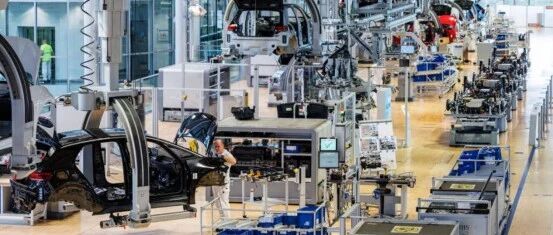
Group 1 - Volkswagen has closed its first factory in Germany, located in Dresden, marking a significant shift for the company after 88 years of operation [1] - The closure is a response to multiple challenges, including fierce competition in China, high import tariffs in the U.S., and rising costs associated with electric vehicle transformation in Europe [1][10] - Volkswagen's CEO Thomas Schäfer stated that the decision to end production at the Dresden plant was necessary from an economic perspective [2] Group 2 - In Q3, Volkswagen reported revenues of €80.305 billion, a 2.3% increase year-on-year, but faced an operating loss of €1.299 billion compared to a profit of €2.833 billion in the same period last year, marking a decline of over €4.1 billion [2][3] - The net loss for the quarter was €1.072 billion, a significant drop from a net profit of €1.558 billion in the previous year, representing a year-on-year decline of approximately 168.8% [2][3] - For the first three quarters of the year, Volkswagen's net profit decreased by 61.5% to €3.4 billion compared to the same period last year [2] Group 3 - Volkswagen anticipates that its automotive division's net cash flow will approach zero by 2025, leading to a reduction in its investment plans from €180 billion to €160 billion over the next five years [6] - The company is facing a potential financial loss of up to €5 billion due to U.S. tariffs on imported vehicles, which have significantly impacted sales in North America [9][10] - In Europe, Volkswagen's sales have decreased by 2 million units over the past four years, exacerbated by high energy costs and labor disputes, leading to increased production costs [10] Group 4 - In China, Volkswagen's sales have dropped from a peak of 4.23 million units in 2019 to approximately 2.9 million units in 2024, a decline of over 30% [13] - The majority of Volkswagen's sales in China still rely on fuel vehicles, with 95% of sales in the first nine months of the year being traditional fuel cars, which contrasts sharply with the rising demand for electric vehicles [13][14] - Consumer preferences in China are shifting towards electric vehicles with better features and pricing, making it difficult for Volkswagen's ID.3 to compete effectively [14][15] Group 5 - The ID.3 has faced criticism for safety issues, including reports of unexpected braking, which have raised concerns among consumers and affected the brand's reputation [15][16] - Volkswagen's electric vehicle sales are not meeting expectations, leading to a lack of confidence among its joint ventures in China, as electric vehicles contribute less to profit margins compared to fuel vehicles [17] - Despite the challenges, Volkswagen plans to launch over 20 new energy vehicles in China by 2027 and aims to offer around 30 electric models by 2030 [17]

亏不起!福特电动汽车战略大退步
Zhong Guo Qi Che Bao Wang· 2025-12-18 01:50
Core Viewpoint - Ford has announced a significant strategic shift by cutting back on electric vehicle (EV) development and production, focusing instead on hybrid models and smaller, more affordable electric vehicles, leading to an estimated $19.5 billion in related costs [2][6]. Group 1: Strategic Adjustments - The strategic adjustment is driven by two main factors: the cancellation of EV subsidies by the U.S. government and ongoing losses in Ford's EV business, which are projected to total $9 billion, $21 billion, $47 billion, and $51 billion from 2021 to 2024, with an additional $3.6 billion loss expected in the first three quarters of 2025 [3][5]. - Ford plans to reallocate capital to higher-return growth areas, including commercial vehicles, trucks, hybrid models, and battery storage [3][5]. - The production of the F-150 Lightning electric pickup truck will be halted due to low sales and high production costs, with resources redirected to more profitable fuel and hybrid versions [3][5]. Group 2: Production Changes - The next-generation F-150 Lightning, initially planned for production at the Blue Oval City factory in Tennessee, will now be adjusted to an extended-range version and produced in Michigan, with the factory being renamed to focus on fuel-powered trucks by 2029 [5]. - The Transit electric van project in Ohio has been canceled, with the factory set to switch to producing the next generation of fuel and hybrid vans by 2029 [5]. - Ford is shifting some battery production capacity from vehicle applications to energy storage systems, having ended its partnership with SK On and taking over two battery plants in Kentucky [5]. Group 3: Industry Context - Ford's strategic pivot coincides with a broader trend in the automotive industry, as major companies like General Motors, Volkswagen, Stellantis, Honda, and Nissan are also slowing their electric transition and focusing on hybrid models to mitigate risks [7][9]. - The global automotive industry is moving from aggressive electric vehicle strategies to a more diversified approach, balancing short-term profitability with long-term transformation [9].


国际观察|德国汽车业“巨象”转身难
Xin Hua She· 2025-12-17 15:43
新华社柏林12月17日电 题:德国汽车业"巨象"转身难 面对严峻财务形势,大众计划到2030年前在德国削减约3.5万个岗位,占其德国员工总数约四分之 一。德国汽车行业人士指出,德累斯顿工厂关厂打破了长期以来"德国本土产线不可触碰"的行业惯例, 反映出德国汽车行业面临高成本压力,电动化转型困难重重。 转型陷入困局 当前,德国汽车业正处于转型"十字路口"。一方面,电动化进程仍在推进,传统零部件供应链企业 因转型缓慢,频频陷入破产和裁员;另一方面,德国整车制造商虽不断加大技术投入,但在智能化、电 动化快速演进的技术竞争中并不占据明显优势。 咨询公司安永的最新分析显示,2025年第三季度,大众、宝马和梅赛德斯-奔驰三大德国车企的息 税前利润合计约17亿欧元,同比暴跌76%,创下2009年以来最低水平。 安永汽车行业专家康斯坦丁·加尔指出,高端市场需求疲软、美国关税政策带来外部冲击、电动车 领域高额投入尚未回本,以及企业重组成本攀升等多重因素叠加,对德国车企形成多方面挑战。 新华社记者李函林 德国大众汽车位于德累斯顿的工厂16日停产,这是大众成立88年来首次关闭德国本土整车工厂。这 一标志性事件再次凸显德国车企在转型过 ...
欧盟撤销全面电动化计划
Di Yi Cai Jing· 2025-12-17 11:29
Group 1: Core Views - The European Commission proposed a new amendment to relax the 2035 ban on the sale of fuel and diesel vehicles, changing the carbon emission reduction target from 100% to 90% [1] - Major automotive companies such as Mercedes-Benz, BMW, Stellantis, Volkswagen, and Renault support this amendment, citing high costs of electric vehicles and insufficient charging infrastructure as barriers to achieving the expected electric vehicle penetration by 2035 [1] - There are opposing views from companies like Volvo and Polestar, which argue that changing the ban could hinder the electric transition and lead to a lag behind other countries [1] Group 2: Market Trends - The global automotive market, including Europe, is undergoing an electrification transformation, with fuel vehicles losing market share to hybrid and electric vehicles [2] - According to ACEA data, new car registrations in the EU increased by 1.4% year-on-year in the first ten months of 2025, with hybrid vehicle registrations rising to 3.11 million, accounting for 34.6% of the market [2] - The market share of gasoline vehicles decreased from 34% to 27.4%, while pure electric vehicle registrations reached approximately 1.47 million, growing from 13.2% to 16.4% year-on-year [2] Group 3: Growth of Plug-in Hybrid Vehicles - The registration of plug-in hybrid vehicles in the EU surged to 819,200 units, with a market share of 9.1%, up from 7% the previous year [3] - Significant growth was observed in Spain (109.6%), Italy (76.5%), and Germany (63.4%) for plug-in hybrid vehicle sales [3] - Chinese automaker BYD reported substantial sales growth in the EU, with a 452.3% increase in Spain and a 647.5% increase in Germany [3] Group 4: Challenges for Traditional Automakers - Traditional automakers like Ford and Stellantis experienced a decline in sales, with Stellantis reporting a 6% drop in the first ten months of the year [4] - These companies face challenges in electric vehicle sales and rely heavily on external supply chains for key components like batteries [4] - German Chancellor Merz and Volkswagen CEO Oliver Blume expressed skepticism about the feasibility of a complete ban on internal combustion engines by 2035 [4] Group 5: Long-term Electrification Goals - The EU's new proposal includes a policy to support small electric vehicles, offering a reward mechanism for manufacturers that assemble small electric vehicles and battery packs in the EU [5] - Renault welcomed the new plan, emphasizing the need to accelerate the promotion of electric vehicles and the introduction of small electric cars [5][6] - Volkswagen described the new proposal as economically reasonable, highlighting the special support for small electric vehicles as a positive development [6]

欧盟放缓燃油车禁令步伐,2035年零排放目标放宽至90%
Huan Qiu Wang· 2025-12-17 03:21
Group 1 - The EU has adjusted its plan to ban the sale of new gasoline and diesel cars by 2035, now requiring manufacturers to ensure that 90% of new car sales are zero-emission vehicles [1] - This change follows strong lobbying from automotive manufacturers, particularly German companies, citing low current demand for electric vehicles and the risk of "billions of euros" in fines if rules were not adjusted [1] - The remaining 10% of sales can still include traditional gasoline, diesel cars, and hybrid models, while new regulations will require the use of EU-produced low-carbon steel and increased use of biofuels and "e-fuels" to offset emissions from remaining fuel vehicles [1] Group 2 - Opponents warn that this move may slow down the transition to electrification in Europe and put the EU at a competitive disadvantage in the global automotive industry [4] - UK automotive manufacturers are calling for better incentives from the government to encourage consumers to purchase electric vehicles before the 2030 sales ban takes effect [4] - Analysts suggest that while this adjustment may temporarily relieve pressure on traditional European car manufacturers, it could also result in missed opportunities against competitors like Tesla and BYD, who have fully embraced electrification [5]
718现车猛降近20万元,保时捷利润下跌近99%后:纯电放缓,努力卖燃油车?
3 6 Ke· 2025-12-17 00:25
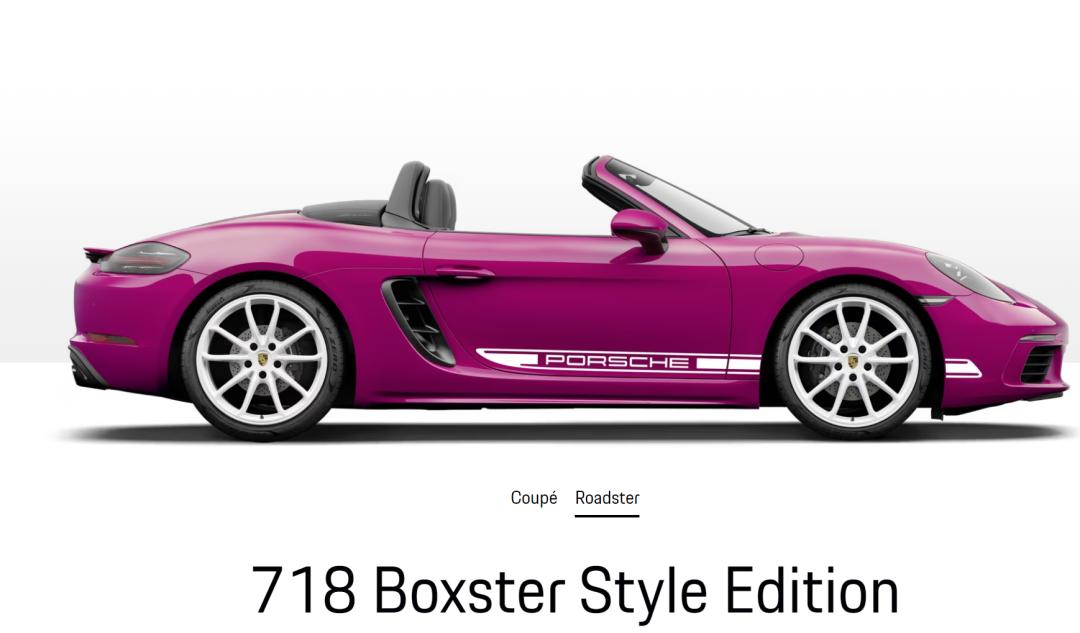
Core Viewpoint - Porsche is adjusting its strategy by continuing to offer fuel-powered models like the 718 series, as the electric vehicle (EV) transition has not met expectations, leading to a delay in the launch of new electric models [4][10]. Group 1: Sales and Pricing - The current price for the Porsche 718 is 741,900 yuan, with a discount of 25% (7.5折), resulting in a direct reduction of 185,500 yuan [1]. - The sales personnel indicated that the 718 Boxster Style Edition is the latest fuel version and cannot be customized due to its impending discontinuation [1]. - Porsche's sales in China have significantly declined, with a drop of 26% year-on-year, selling only 32,195 units compared to 43,280 units in the previous year [8]. Group 2: Electric Vehicle Strategy - Porsche's electric vehicle rollout has been slow, with only 27% of new car deliveries being electric in 2024, despite ambitious targets of over 50% by 2025 and 80% by 2030 [6]. - The company has announced delays in the launch of certain electric models, including the next-generation 718 series, which will continue to use fuel engines [4][10]. - The electric platform originally planned for the 2030s is being restructured in collaboration with other brands under the Volkswagen Group [4]. Group 3: Financial Performance - Porsche's revenue for the first three quarters of 2025 was 26.864 billion euros, down 6% from 28.564 billion euros in the same period the previous year [8]. - The operating profit plummeted nearly 99%, falling to 40 million euros from 4.035 billion euros year-on-year [9]. - The decline in sales and profits is attributed to increased competition from domestic brands in China, which has affected consumer preferences [8][10]. Group 4: Strategic Adjustments - Porsche is undergoing organizational changes and product strategy upgrades to adapt to significant market shifts in its core markets, the U.S. and China [10]. - The company plans to extend the lifecycle of existing fuel models and introduce new internal combustion engine vehicles, while delaying the electric platform development timeline [12]. - Analysts believe that returning to fuel vehicles may help Porsche regain consumer confidence and differentiate itself in a competitive market [12][13].
欧盟拟放宽内燃机禁令 汽车制造商迎喘息之机
智通财经网· 2025-12-16 11:36
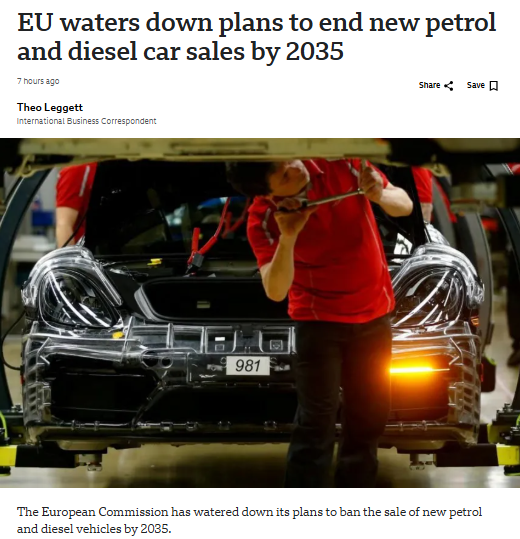
中国汽车市场继续快速电气化,外资品牌在这个曾是西方汽车制造商主要利润来源的全球最大汽车市场 中正被挤到一边。即使在本土市场,欧洲汽车制造商也正面临来自中国品牌日益增长的竞争威胁。欧盟 设置的新的进口关税只能为他们提供有限的保护。 智通财经APP获悉,在汽车行业数月的压力之下,欧盟准备提议放宽对新车的排放规定,实际上废除对 燃油发动机的禁令。此举将允许汽车制造商放缓在欧洲推出电动汽车的步伐,并使该地区在政策上更接 近于美国——美国总统特朗普正在废除前任政府制定的汽车能效标准。全球汽车制造商正面临电动化转 型的盈利困境,福特汽车公司(F.US)已宣布将因其电动汽车业务的全面改革而计提195亿美元的相关费 用。 欧盟此次政策回撤将于周二公布,这是全球绿色政策在经济转型现实压力下普遍收缩的一部分。日益加 剧的国际贸易紧张局势正推动欧洲进一步优先考虑支撑其本土工业。尽管欧盟在法律上承诺到2050年实 现气候中和,但各国政府和企业正加大呼吁要求更多灵活性,警告僵化的目标可能危及经济稳定。 据知情人士透露,根据新提案,欧盟委员会将降低原定于2035年起生效的停止销售新汽油和柴油车的要 求,转而允许一定数量的插电式混合动力车 ...
两家百年汽车巨头联手了!
Zhong Guo Qi Che Bao Wang· 2025-12-11 01:38
Core Viewpoint - Renault Group and Ford Motor Company have officially announced a strategic partnership to jointly develop two affordable electric vehicle models for the European market, aiming to reduce costs and address increasing competition [1] Group 1: Strategic Collaboration - The collaboration focuses on the electrification transition and product layout in the European market, with both companies set to launch two new Ford-branded electric vehicles based on Renault's Ampere platform, produced in the ElectriCity facility in northern France [2] - The new models will be small, affordable electric vehicles, with the first expected to hit the European market in early 2028, filling a gap in Ford's electric vehicle offerings in Europe while maximizing Renault's platform capacity [2] Group 2: Commercial Vehicle Development - In addition to passenger vehicles, the two companies have signed a memorandum of understanding to explore joint development and production of specific light commercial vehicles under both Renault and Ford brands [3] - Historically, Renault has partnered with Nissan and Daimler, while Ford's previous collaborations in Europe were primarily with Volkswagen, focusing on mid-sized and larger electric vehicles [3] Group 3: Market Challenges - Both companies face significant challenges in the European market, with Renault reporting a revenue of €27.6 billion in the first half of 2025, a 2.5% increase, but a net loss of €11.143 billion, largely due to a €9.3 billion impairment on its Nissan stake [7] - Ford's market share in Europe has declined from over 10% in the 1990s to 4% in 2023, with a reported market share of 3.3% for the first ten months of 2025 [9] - The collaboration is seen as a necessary step for both companies to share resources, reduce transformation costs, and strengthen their positions in the competitive European market [9]

德国推迟2035燃油车禁令惹众怒
Guo Ji Jin Rong Bao· 2025-12-03 10:18
Core Viewpoint - The debate over the electrification of the European automotive industry has intensified as Germany pressures the EU Commission to relax or cancel the ban on the production of internal combustion engine vehicles set for 2035, with contrasting views from German automakers and Swedish companies like Volvo and Polestar advocating for the continuation of the ban [1][2]. Group 1: Germany's Position - German Chancellor Merz has publicly requested the EU Commission to allow the production of new hybrid and efficient internal combustion engine models after 2035, citing consumer hesitance in purchasing electric vehicles as a reason [1]. - This stance has garnered support from traditional German automakers but has faced strong opposition from other European companies and officials [1]. Group 2: Opposition from Swedish Automakers - Volvo and Polestar have strongly criticized Germany's request, arguing that it would slow down the electrification process in Europe and potentially cede future market leadership to other countries [1]. - Polestar's CEO, Michael Lohscheller, expressed shock at the idea of pausing the 2035 ban, labeling it as an extremely poor idea and emphasizing the need for adaptation and change in Germany rather than regression [2]. Group 3: Technological Advancements - Both Volvo and Polestar assert that technological advancements are addressing consumer concerns regarding electric vehicles, with Polestar offering models with a range of up to 900 kilometers and Volvo introducing electric versions of popular models with ranges of 500-600 kilometers [3]. - Volvo's CEO, Håkan Samuelsson, believes that breakthroughs in range, charging, and cost will accelerate the adoption of electric vehicles, with charging times potentially reduced to 15-20 minutes in the future [3].
海斯坦普洛安东:加大对中国投资,已实现99.5%员工本土化
Zhong Guo Jing Ying Bao· 2025-11-26 12:21
海斯坦普亚太区首席执行官洛安东(Antonio López)日前就持续加码中国市场等话题接受了《中国经 营报》记者的专访。 不久前,西班牙国王费利佩六世对中国进行了国事访问。访问期间,两国元首共同见证了经贸、科技、 教育等领域10份合作文件的签署。中国商务部与西班牙经济、贸易与企业部签署了《关于中西经济工业 合作混委会的合作备忘录》,并召开了中西企业顾问委员会第三次会议。 费利佩六世访问期间参观了海斯坦普集团在北京的一座工厂。作为一家在中国深耕18年的西班牙企业, 海斯坦普目前在中国已布局13座工厂和2个研发中心。得益于中国市场的蓬勃发展,海斯坦普截至2024 年年末(最新完整财年)在中国市场的销售额达到16.28亿欧元,2021年至2024年间增幅高达80%。 中经记者 索寒雪 北京报道 洛安东:海斯坦普不仅是西班牙的重要企业,也是全球汽车行业的领先企业之一。我们与北京海纳川的 合资工厂,是海斯坦普在中国本地化战略的成功案例,也展示了我们在亚洲的先进制造能力。 国王的到访,体现了西班牙方面对本国企业在中国发展状况的高度关注。他希望进一步了解西班牙企业 如何在中国扎根,以及如何与本土企业建立紧密合作关系。这家 ...