
素质教育

Search documents
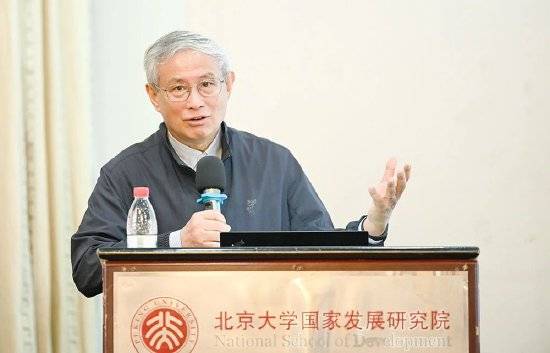
周其仁:问题比答案更重要
Sou Hu Cai Jing· 2025-07-18 15:23
Core Viewpoint - The importance of asking good questions in the pursuit of knowledge and understanding, as emphasized by the experiences of influential economists Zhang Peigang and Ronald Coase [3][12][18]. Group 1: Educational Insights - The focus of education should be on understanding and questioning rather than merely acquiring knowledge [3][27]. - Engaging with diverse perspectives and experiences enhances learning and personal growth [3][19]. - The process of learning should be driven by curiosity and the desire to solve real-world problems [18][27]. Group 2: Economic Theories and Contributions - Zhang Peigang's research highlighted the significance of understanding not just production costs but also commercial costs in ensuring food supply during wartime [9][10]. - Coase introduced the concept of transaction costs, explaining the role of firms in reducing these costs and facilitating economic transactions [14][16]. - Both economists contributed to the understanding of economic structures and the importance of addressing practical issues through their research [17][18]. Group 3: Application of Knowledge - The application of economic principles can extend beyond academia into real-world scenarios, such as business management and crisis response [22][24]. - The importance of proactive problem-solving in business, as demonstrated by a glass factory's approach to maintaining operations during the pandemic [22][24]. - Educational initiatives, like the "True Love Dream" program, emphasize the significance of problem-oriented learning in fostering student engagement and development [25][26].

家校协同发力 共推体育“2小时”政策落实
Xin Hua Ri Bao· 2025-07-17 20:20
Core Points - The "2-hour" requirement for daily physical activity for students reflects the central government's emphasis on student health and the commitment to fostering lifelong sports habits [1][2] - The evolution of physical education policies over the past two decades shows a trend from "1 hour" to "2 hours," indicating ongoing optimization of related policies [2] - Schools are identified as the primary venues for implementing the "2-hour" policy, necessitating a comprehensive approach that integrates both in-school and out-of-school activities [3][4] Policy Evolution - The initial requirement of "1 hour" was established in 2007, which evolved to "1 hour each for school and home" in 2020, and now to "not less than 2 hours" in 2025, showcasing a significant policy shift [2] - The new "2-hour" requirement aligns with practical implementation, enhancing the feasibility for various schools to meet the policy [2] Implementation in Schools - Schools are expected to adopt a comprehensive approach to physical education, incorporating various activities such as physical classes, breaks, extracurricular sports, and competitions [3] - The increase in break times and the frequency of physical classes in many schools post-policy implementation demonstrates a proactive response to the "2-hour" requirement [3] Educational Philosophy - The "comprehensive" approach emphasizes the need for schools to adopt a "teach, practice, and compete" philosophy, which enhances students' physical education experience [4] - The integration of physical education into the examination system further solidifies its importance in the overall educational framework [4] Role of Families - Families are recognized as crucial supporters in the implementation of the "2-hour" policy, with parents playing a significant role in encouraging physical activity [5][6] - Parents are encouraged to provide scientific guidance on exercise, which can significantly enhance children's engagement in physical activities [6] Strategic Importance - The "2-hour" policy is a strategic initiative aimed at promoting quality education and building a healthy China, aligning with the broader educational goals of holistic development [7] - Collaboration between schools and families is essential to effectively translate the "2-hour" policy into tangible educational outcomes [7]
艺培之“疾”
Hu Xiu· 2025-07-15 07:07
Core Viewpoint - The article discusses the evolving landscape of art education in China, highlighting its transition from a valued component of holistic education to a marginalized sector facing significant challenges due to changing societal values and regulatory pressures [1][2][3]. Group 1: Historical Context - In 2015, the Chinese education industry experienced a significant financing boom, marking the beginning of art education being recognized as an industry with structured policies and capital investment [3][4]. - The introduction of policies such as the "Art Quality Assessment Measures" by the Ministry of Education in 2015 integrated art education into the national education governance system, elevating its status [3][4]. - By 2016-2018, the art training industry saw rapid growth, with numerous financing events and the establishment of regulations that allowed for profit-making in art training institutions [6][7]. Group 2: Recent Developments - From 2019 to 2021, the industry experienced a shift towards "non-academic" training, with a focus on quality education and the rise of online platforms during the pandemic [11][12]. - The introduction of the "Double Reduction" policy in 2021 led to a significant decline in academic training institutions, while non-academic training was not subjected to the same level of scrutiny, allowing for a temporary boom in art education [12][13]. - However, by 2022-2023, the industry faced a regulatory tightening, with new guidelines and standards being implemented, leading to a decline in financing and a restructuring of the market [16][18][20]. Group 3: Current Challenges - The art education sector is now characterized by a "white list" governance model, requiring institutions to meet stringent criteria to operate, which has led to the exit of many previously successful entities [22][23]. - The market is experiencing a bifurcation, with high-end institutions dominating and low-end individual teachers thriving, while the mid-tier market is being squeezed out [23][24]. - The overall financing for the education sector has drastically decreased, with art education projects becoming increasingly rare, indicating a significant contraction in the industry [24][25]. Group 4: Societal Perception - Art education is perceived as a non-essential expenditure by many families, leading to a decline in enrollment and investment in this sector [28][29]. - The lack of a clear narrative and recognition of the value of art education contributes to its marginalization, as it struggles to justify its existence in a results-driven educational environment [30][31]. - The article suggests that the decline of art education reflects broader societal attitudes towards "useless" pursuits, questioning the value placed on artistic endeavors in contemporary education [35][36].
卓越教育集团(3978.HK):华南K12龙头 素质教育转型成功重回扩张
Ge Long Hui· 2025-07-13 04:03
Group 1 - The company is a leading education training provider in South China, established in 1997 and listed on the Hong Kong Stock Exchange in 2018, focusing on comprehensive growth services for children [1][2] - The company has seen significant growth in net profit, with a projected year-on-year increase of 108.99% and 74.21% for 2023 and 2024 respectively, driven by a strategic shift towards quality education [1] - The K12 education market in Guangdong is expected to grow, with a projected CAGR of 5% for Guangzhou and 7% for Shenzhen from 2025 to 2030, reaching market sizes of 202 billion and 279 billion respectively by 2030 [1] Group 2 - The company has a strong reputation in the education sector, with a summer course renewal rate of nearly 80% in Guangzhou, leveraging its "strong Chinese language" advantage post "double reduction" policy [2] - The introduction of AI programming courses aligns with national trends in education, contributing to the company's competitive edge and expansion opportunities in the Greater Bay Area [2] - The company plans to increase its dividend payout ratio to 60% and 70% in 2025 and 2026 respectively, reflecting strong cash flow and enhancing investor confidence [2] Group 3 - Revenue projections for the company are 1.995 billion, 2.381 billion, and 2.811 billion for 2025-2027, with year-on-year growth rates of 81.0%, 19.3%, and 18.1% respectively [3] - The net profit forecast for the same period is 325 million, 382 million, and 446 million, with growth rates of 68.9%, 17.6%, and 16.8% [3] - The company is currently undervalued with a target price of 6.89 HKD per share, corresponding to a PE ratio of 15 for 2025, indicating a potential upside of approximately 26.9% [3]
卓越教育集团(03978):华南K12龙头,素质教育转型成功重回扩张
Guoyuan Securities2· 2025-07-11 06:27
Investment Rating - The report assigns a "Buy" rating to the company with a target price of HKD 6.89, indicating a potential upside of 26.9% from the current price of HKD 5.43 [7]. Core Insights - The company, 卓越教育集团 (Excellence Education Group), is a leading player in the K12 education sector in South China, focusing on comprehensive growth services for children. The company has successfully transitioned to quality education, with a significant increase in net profit expected in the coming years [4][6]. - The K12 education market in Guangdong is projected to grow, with a compound annual growth rate (CAGR) of 5% to 7% from 2025 to 2030, driven by strong demand for quality non-subject education [5]. - The company has a strong brand reputation and teaching capabilities, with a high retention rate of nearly 80% for summer courses in Guangzhou. The introduction of AI-driven courses aligns with national trends, further enhancing its market position [6]. Summary by Sections Company Overview - Established in 1997 and listed in 2018, the company has shifted its focus from traditional subject education to quality education, particularly after the "double reduction" policy in 2021. The revenue from quality education is expected to account for 64.74% of total revenue by 2024 [16][21]. Industry Analysis - The "double reduction" policy has led to a significant reduction in the number of K9 subject training institutions, with a decrease of 96% in offline institutions. This has created opportunities for quality education providers [43][44]. - The demand for quality education remains strong, with increasing enrollment rates in high schools and a growing emphasis on comprehensive student development [48]. Financial Projections - The company is expected to achieve revenues of HKD 19.95 billion, HKD 23.81 billion, and HKD 28.11 billion from 2025 to 2027, with corresponding net profits of HKD 3.25 billion, HKD 3.82 billion, and HKD 4.46 billion, reflecting robust growth rates [7][8].
2025年中国少儿综合能力教育研究报告
艾瑞咨询· 2025-07-10 02:57
Group 1 - The core viewpoint of the articles emphasizes the shift in education policy from exam-oriented to comprehensive development, promoting quality education and the cultivation of children's overall abilities [1][2][10] - The government has continuously issued policies to support the development of non-subject education, creating a favorable environment for the growth of the quality education market [2][3] - The financial investment in basic education for children aged 3-12 has shown a year-on-year growth trend, with total education funding exceeding 645.95 billion yuan in 2023, a 5.3% increase from the previous year [5][6] Group 2 - The non-subject education market is entering an upgrade phase, driven by policy support and new curriculum reforms, focusing on the cultivation of children's comprehensive abilities [7][71] - The new curriculum standards released in 2022 emphasize the importance of moral education and the comprehensive development of students, facilitating a shift from knowledge transmission to ability cultivation [10][13] - Parents' educational philosophies are evolving, with a growing emphasis on children's mental health, personality development, and the cultivation of social adaptability and innovative thinking [22][25] Group 3 - The demand for comprehensive ability cultivation is becoming a new necessity for parents, particularly in high-tier cities where parents are more likely to invest in their children's overall development [31][34] - Parents are increasingly recognizing the need for external educational support to meet their children's comprehensive ability cultivation needs, as 44% believe that current school and family education are insufficient [36][39] - The market for comprehensive ability cultivation is projected to reach 646.3 billion yuan by 2024, with a compound annual growth rate (CAGR) of 20.44% from 2023 to 2027 [71] Group 4 - The evaluation of children's comprehensive abilities is expected to evolve towards a more diverse and scientific assessment system, moving away from traditional standardized testing [76][77] - The integration of AI technology in education is anticipated to enhance the assessment of children's abilities, allowing for a more dynamic and multi-dimensional evaluation approach [69][77] - The focus on cultivating children's comprehensive abilities is seen as a long-term endeavor, with an emphasis on collaboration among schools, parents, and social education institutions [69][70]

必看!中考“减负”元年,各地改革迎来大变化,超详细解读
21世纪经济报道· 2025-07-03 09:50
Core Viewpoint - The article discusses the recent reforms in the Beijing high school entrance examination (Zhongkao), highlighting a reduction in total score and the introduction of new question types, aiming to alleviate exam pressure while enhancing educational quality and student development [1][4][10]. Examination Reform Overview - The total score for the Beijing Zhongkao has been reduced from 670 to 510, with the number of subjects assessed decreased to six [4][10]. - Subjects include Chinese, Mathematics, Foreign Language (100 points each), Physics, Morality and Law (80 points each), and Physical Education (50 points) [4][5]. - The introduction of open-book exams for Morality and Law marks a significant change in assessment methods [4][10]. Educational Trends - The reforms reflect a broader trend across multiple regions in China, with many areas reducing the number of subjects and increasing the emphasis on physical education [6][8]. - The focus is shifting towards a more flexible and innovative examination approach, moving away from rote memorization to a model that encourages critical thinking and application of knowledge [5][10]. Emphasis on Comprehensive Development - The reforms aim to reduce the pressure of exam preparation and promote a more holistic approach to student development, including physical health and well-being [5][11]. - The increasing weight of physical education in the overall score is intended to encourage students to engage in regular physical activity [11][12]. Core Competency Focus - The reforms are designed to guide educational practices back to core competencies, emphasizing the importance of knowledge application over mere memorization [10][14]. - Subjects like Morality and Law are being assessed in a way that encourages open-ended responses and critical thinking, moving away from traditional testing formats [10][14]. Future Directions - The ongoing reforms are part of a larger national strategy to enhance educational quality and equity, aligning with the goals set out in the "Education Strong Nation Construction Plan (2024-2035)" [10][13]. - The focus on cultivating scientific literacy across all subjects indicates a shift towards interdisciplinary learning and the integration of practical skills into the curriculum [14].

炒作高分考生为何“树欲静而风不止”
Ke Ji Ri Bao· 2025-06-26 23:37
Group 1 - The core focus of the articles is the ongoing societal obsession with high-scoring students in the context of China's college entrance examination (Gaokao), despite official efforts to downplay this phenomenon [1][2] - The traditional narrative surrounding Gaokao positions it as a critical turning point in life, leading to public admiration for high scorers as "winners" from whom others seek replicable success paths [1] - Schools view high-scoring students as direct indicators of educational performance, with metrics like "number of high scorers" and "admission rates to top universities" serving as hard indicators of school quality [1] Group 2 - The ongoing high school examination reform aims to break the "score-centric" evaluation system by promoting classification exams, comprehensive evaluations, and diverse admissions [2] - There is a call for deeper educational evaluation reforms to shift societal views on education and success, emphasizing the importance of holistic student development rather than merely producing high scorers [2] - The narrative encourages recognition of all students' efforts, not just high scorers, promoting the idea that every individual should have the opportunity to shine in a lifelong learning society [2]
“短命”体培
Hu Xiu· 2025-06-24 00:13
Core Insights - The sports training industry in China is experiencing a systemic contraction, with major players facing operational difficulties and closures, leading to widespread complaints from parents and financial distress among coaches [1][2][3] - The initial boom in the industry was driven by favorable policies and a surge in consumer spending, but subsequent regulatory changes and economic pressures have led to a significant decline in participation and revenue [4][5][6][10][34] Industry Overview - The sports training sector began to flourish around 2015, coinciding with the "mass entrepreneurship and innovation" policy and the "two-child" policy, resulting in a rapid increase in the number of sports training enterprises [4][5][6] - By 2015, the industry saw a financing boom, with numerous startups emerging and attracting significant investment, as parents were willing to spend on their children's extracurricular activities [8][12][13][14] Market Dynamics - The peak of the industry occurred between 2016 and 2017, with a record birth rate and supportive government policies fueling growth [10][11][12] - However, by 2018, signs of a downturn began to emerge, with increased scrutiny from regulators and financial challenges for many smaller institutions [17][18][19][21] Recent Trends - The COVID-19 pandemic in 2020 severely impacted the industry, leading to a drastic reduction in financing and a shift in consumer behavior as parents paused spending on extracurricular activities [27][30][31] - The introduction of the "double reduction" policy in 2021 initially revitalized interest in sports training, but the long-term sustainability of this growth remains uncertain as parents become more cautious with their spending [34][35][39] Current State - As of 2023, the industry is characterized by a high number of training institutions with low student attendance and financial viability, with many parents opting for pay-per-class models rather than long-term commitments [46][47] - The regulatory environment continues to tighten, with new standards being implemented that restrict the marketing of sports training in relation to academic performance [48][50] Future Outlook - The industry is bifurcating into two paths: one focusing on targeted training for academic performance and the other on extracurricular achievements for college applications [54] - The overall sentiment among industry players is cautious, with many acknowledging the challenges posed by economic constraints and changing consumer priorities [55][56][58]
乐高可借助“寓教于乐”搭起国内主题公园新优势|2025消费趋势跟踪
Di Yi Cai Jing· 2025-06-19 02:37
Core Insights - Shanghai Lego Park aims to carve out a niche in the competitive theme park market dominated by giants like Shanghai Disneyland and Beijing Universal Studios, focusing on creativity and educational value for children [1] Market Positioning - Shanghai Disneyland leverages a century-old brand with a comprehensive IP matrix appealing to all age groups, while Beijing Universal Studios attracts young thrill-seekers with immersive experiences [2] - Lego Park emphasizes fostering children's creativity and logical thinking, which is highly valued in the education-focused Chinese market, providing a unique selling proposition [2] - The park's design may seem less appealing to adult visitors, but this limitation is a core strength, offering hands-on creative experiences that fill a significant gap in the theme park market [2] Regional Layout - The geographical location significantly influences visitor traffic; while Shanghai Disneyland has successfully turned its remote location into a vacation advantage, Lego Park faces challenges due to its distance of approximately 60 kilometers from downtown Shanghai [3] - The surrounding commercial infrastructure in Jinshan District is relatively weak, which may hinder the park's ability to attract visitors for extended stays [3] Strategies for Breakthrough - To overcome challenges, Lego Park should enhance its cultural content, user experience, and supporting environment [4] - Deepening cultural integration by collaborating with local IPs and showcasing Chinese cultural elements can enhance brand affinity and attract both domestic and international visitors [4] - Upgrading technological experiences with AR and VR can create immersive environments for children, while a dedicated app can enhance the overall visitor experience [5] - Addressing transportation issues is critical; establishing direct bus routes from major transport hubs and exploring metro extensions can significantly improve accessibility [5] Conclusion - Despite facing challenges, Shanghai Lego Park's focus on creativity and education opens new avenues in the theme park industry, positioning it as a comprehensive platform that integrates entertainment, education, and culture [6]