绿色生产

Search documents
活力中国调研行丨科技赋能绿色生产 涪陵榨菜打造低碳产业链
Xin Hua Wang· 2025-08-16 08:00
Core Viewpoint - The article highlights the sustainable development path of traditional industries, specifically focusing on the transformation of Fuling Pickled Vegetables in Fuling District, Chongqing, from traditional methods to modern, intelligent production lines [1]. Group 1: Industry Transformation - The traditional pickled vegetable industry is undergoing a green transformation, showcasing how it can evolve sustainably while maintaining its heritage [1]. - The upgrade from ancient fermentation pits to smart factories represents a significant technological advancement in the industry [1]. Group 2: Innovation and Brand Development - The transition from handmade workshops to world-leading intelligent production lines illustrates the commitment to innovation within the industry [1]. - Fuling Pickled Vegetables has successfully transformed from a local side dish to a globally recognized brand, demonstrating the potential for traditional products to gain international acclaim [1].


重庆啤酒上半年销量增长0.95%,重点发力1L装和精酿,加速O2O拓展抓即时零售
Cai Jing Wang· 2025-08-14 15:32
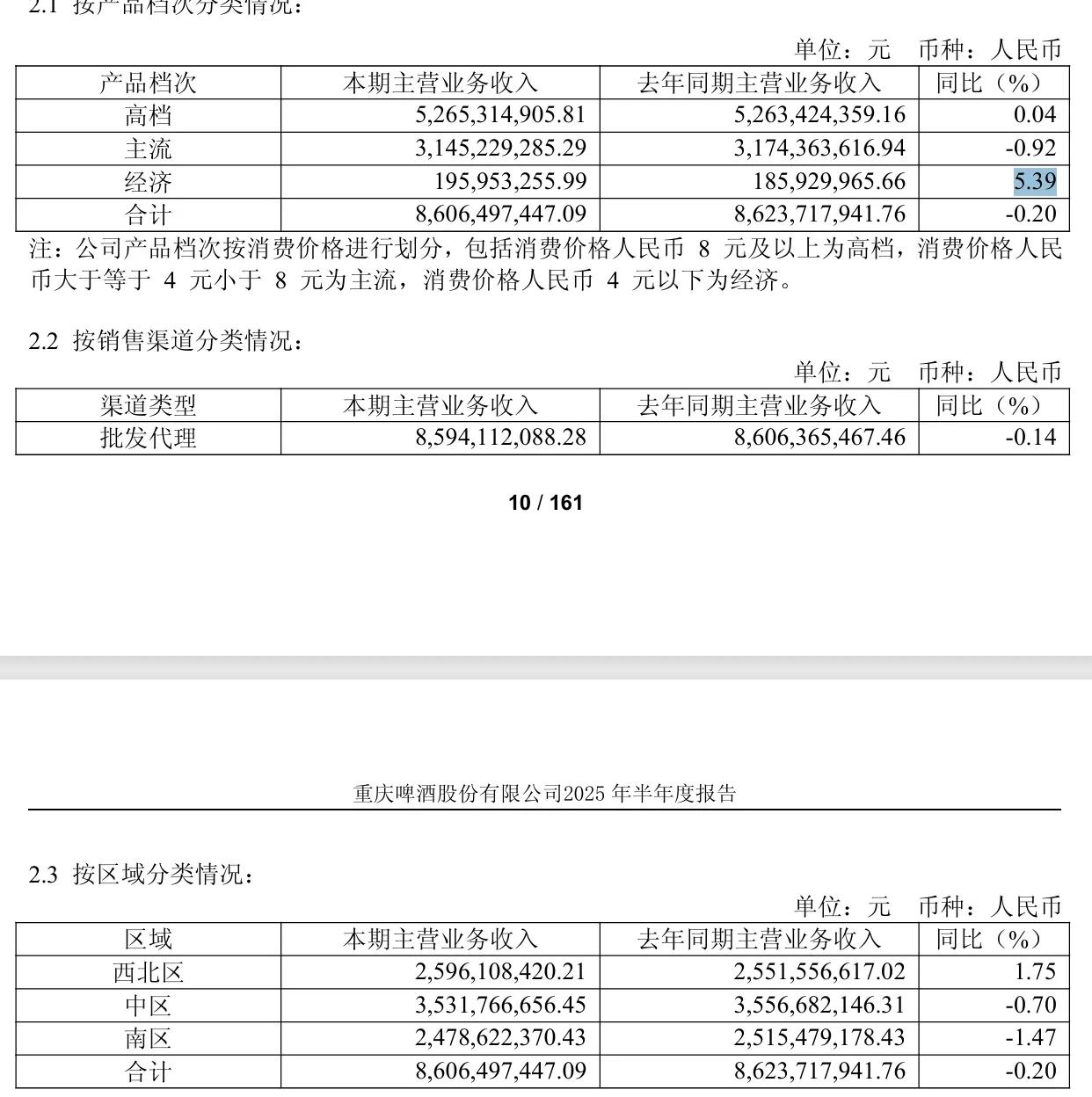
Core Insights - The company reported a slight revenue decline of 0.24% to 8.839 billion yuan for the first half of 2025, with net profit down 4.03% to 865 million yuan, while sales volume increased by 0.95% to 1.8008 million kiloliters, outperforming the industry average [1][2]. Revenue and Profit Analysis - The company's revenue for high-end products (priced at 8 yuan and above) increased by 0.04% to 5.265 billion yuan, while mainstream products (priced between 4 and 8 yuan) saw a decrease of 0.92% to 3.145 billion yuan. Economic products (priced below 4 yuan) experienced a growth of 5.39% to 196 million yuan [3][5]. Market Strategy and Product Development - The company faced external challenges but adapted by optimizing strategies and enhancing execution. It launched nearly 30 new products and several new packaging options, including craft beers and 1L cans, to meet consumer demand for diverse beverages [2][3][10]. - The company is focusing on digital tools to enhance channel performance and is expanding its O2O (Online to Offline) strategy to capture growth in instant retail [2][10]. Brand and Marketing Initiatives - The company is leveraging brand ambassadors and cultural events to strengthen brand identity. For instance, the U.S. brand has signed popular figures to appeal to younger consumers and is enhancing its marketing through various media channels [8][9]. - The company is also innovating in product offerings, such as introducing new flavors and packaging to cater to evolving consumer preferences [8][10]. Environmental and Operational Efficiency - The company reported a reduction in energy consumption per 100 liters of beer by 1.409 kWh and a decrease in CO2 emissions by 3,080 tons. Water usage has also decreased, with an average water consumption of 2.01 hl/hl, achieving significant sustainability goals ahead of schedule [10][11].

锌资源保卫战:95%再生率废料如何年省200万吨原生矿?
Sou Hu Cai Jing· 2025-08-12 15:17
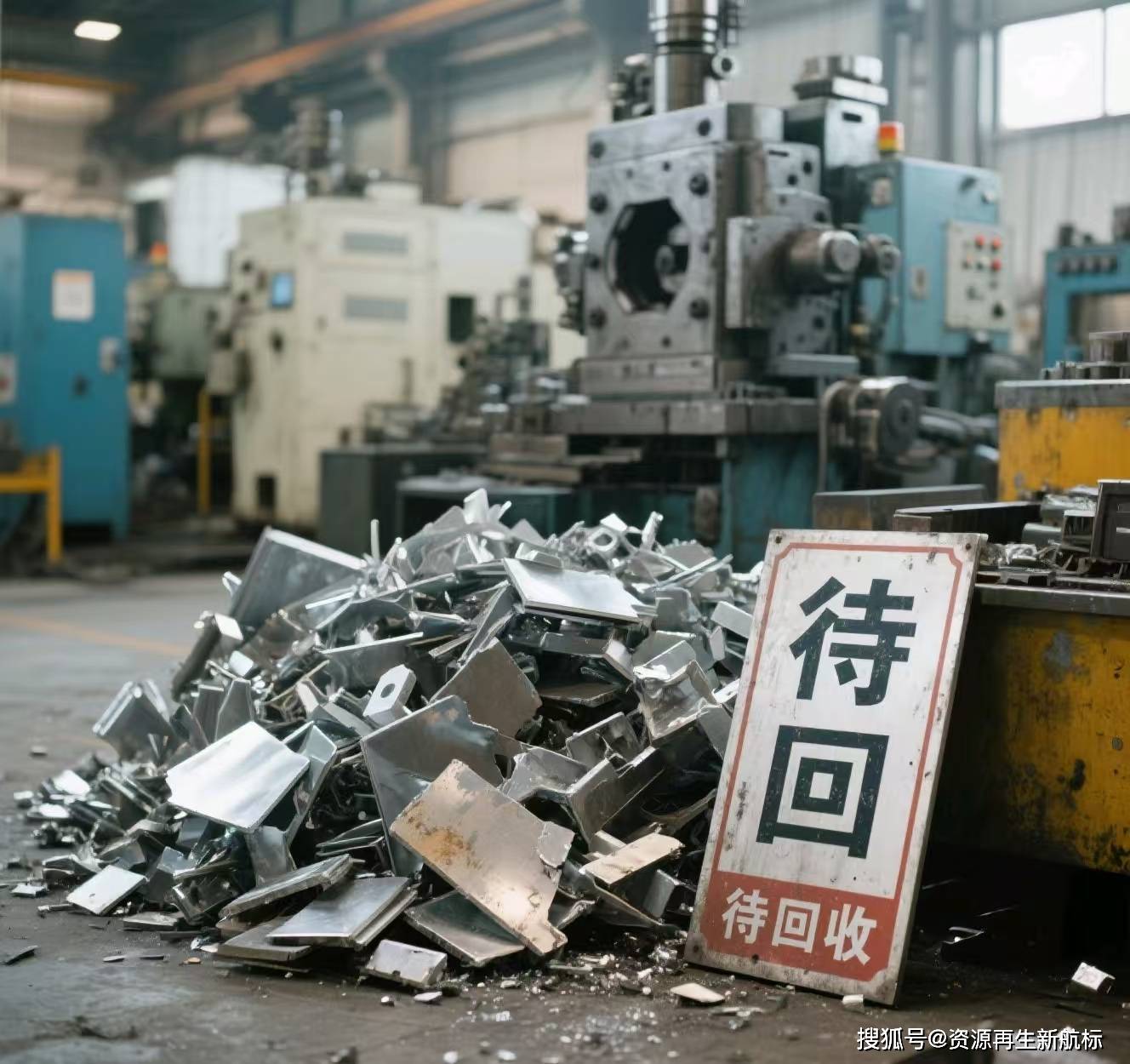
Group 1 - The article emphasizes the often-overlooked economic and environmental value of zinc alloy waste recycling, highlighting its potential for sustainable resource utilization [1] - Zinc alloy waste recycling involves a straightforward process of sorting, cleaning, and melting, allowing for high recyclability without performance loss, making it suitable for producing automotive parts, electronic components, and decorative items [1] - From an environmental perspective, recycling zinc alloys reduces dependence on mining, mitigating soil degradation and water pollution associated with mining activities, thus presenting a low-cost and low-pollution alternative [1] Group 2 - Companies are encouraged to establish waste recycling mechanisms in production management to lower raw material costs and enhance their environmental image, as green production is increasingly valued in the market [2] - Individuals can also participate in zinc alloy recycling by collecting discarded items made from zinc alloys, such as door handles and electronic casings, contributing to environmental efforts while potentially earning some money [2] - The concept of metal recycling is framed as a "second life project" for resources, reminding stakeholders that waste materials can be reactivated as valuable assets rather than being discarded [2]
Braskem(BAK) - 2025 Q2 - Earnings Call Transcript
2025-08-07 16:00
Financial Data and Key Metrics Changes - The company reported a consolidated recurring EBITDA of $74 million, which is 67% lower compared to the previous year due to a challenging market environment [7] - Operating cash consumption increased to $31 million, up by $129 million from the previous quarter [7] - The company's cash position at the end of the second quarter was approximately $1.7 billion, sufficient to cover debt maturities over the next 30 months [7][18] - Corporate leverage stood at 10.59 times at the end of the quarter, reflecting the lowest EBITDA in the last twelve months [18] Business Segment Performance - In Brazil, the petrochemical plants maintained an average utilization rate consistent with the previous quarter, with the gas-based plant in Rio de Janeiro operating at 95% [9] - The recurring EBITDA for the Brazilian segment was $152 million, 24% lower than the previous quarter, impacted by stock effects and increased fixed costs [10] - The utilization rate of the green ethylene plant was 71%, down 16 percentage points from the previous quarter, while sales of green polyethylene increased due to higher demand [11] - In the United States and Europe segment, the plant utilization rate remained at 74%, but the recurring EBITDA was negative by $8 million due to inventory effects [12] - The Mexico segment faced significant challenges, with a utilization rate of 44% due to a general maintenance shutdown, resulting in a negative recurring EBITDA of $9 million [13] Market Data and Key Metrics Changes - The global petrochemical industry continued to experience a downturn, with utilization rates stable in Brazil and the U.S. but significantly impacted in Mexico [6] - The average global accident frequency rate was recorded at 1.11 events per million hours worked, below the industry average, indicating a strong commitment to safety [7] Company Strategy and Industry Competition - The company is focused on a transformation plan aimed at increasing productivity and generating EBITDA, particularly through a shift to green production and gas-based feedstocks [35][45] - The outlook for the international petrochemical industry remains challenging, with significant investments in ethylene and propylene chains expected to lead to oversupply and increased idleness in the sector [19] - The Brazilian chemical industry faces structural challenges, including high levels of autonomy and uncompetitive cost structures, which the company aims to address through its resilience and transformation program [20][21] Management's Comments on Operating Environment and Future Outlook - Management acknowledged that the recovery of spreads is taking longer than expected and emphasized the need for liquidity initiatives to improve financial health [31][35] - The company is committed to managing working capital effectively and addressing the challenges posed by imports and pricing imbalances in the Brazilian market [38] - Future controlling shareholders may revise company plans, but current management believes in the effectiveness of their existing strategy [45][66] Other Important Information - The company has made significant progress in its Alagoas project, with a total provision of approximately BRL 17.5 billion, of which BRL 13.1 billion has been disbursed [16] - The company is exploring partnerships for green production and evaluating the hibernation of less competitive production lines to enhance efficiency [26][68] Q&A Session Summary Question: Concerns about leverage and asset sales - Management acknowledged high leverage due to low EBITDA and discussed measures to improve financial health through a transformation plan focused on increasing productivity and cash generation [31][35] Question: Update on discussions with Petrobras - Management clarified that they are not directly involved in negotiations regarding shareholder control and emphasized the importance of focusing on operational challenges [39][41] Question: Strategic importance of U.S. assets - Management confirmed that U.S. assets are integral to the company's strategy, particularly for technology and green product development [56] Question: Cash burn forecast for the second half of the year - Management expects to continue cash consumption in the second half but at a reduced rate, focusing on improving productivity and cash generation [50] Question: Capacity closure dynamics and industry outlook - Management stated that all production plants must generate positive cash flow, and those that do not will be subject to intervention or closure [84]

惠泉啤酒: 福建省燕京惠泉啤酒股份有限公司2025年半年度报告
Zheng Quan Zhi Xing· 2025-08-07 12:10
Core Viewpoint - The report highlights the financial performance and operational strategies of Fujian Yanjing Huiquan Brewery Co., Ltd. for the first half of 2025, showcasing growth in revenue and profit amidst a competitive beer market in China. Financial Performance - The company's operating revenue for the first half of 2025 reached CNY 351.30 million, a 1.03% increase compared to CNY 347.72 million in the same period last year [2] - Total profit amounted to CNY 45.77 million, reflecting a 25.04% increase from CNY 36.61 million year-on-year [2] - Net profit attributable to shareholders was CNY 39.57 million, up 25.52% from CNY 31.53 million in the previous year [2] - The company's net assets at the end of the reporting period were CNY 1.34 billion, a 3.05% increase from CNY 1.30 billion at the end of the previous year [2] Operational Analysis - The company sold 121,200 hectoliters of beer, marking a 1.61% increase in sales volume compared to the same period last year [3] - The company implemented a product quality strategy, enhancing its management systems and focusing on high-quality product offerings, which contributed to a double-digit growth in sales for its main brand series [4][5] - The company’s gross profit margin improved by 1.16 percentage points during the reporting period [4] Market Strategy - The company is focusing on optimizing its product structure and enhancing its market competitiveness by introducing new products that cater to consumer preferences for high-quality and personalized offerings [3][4] - The company has been actively promoting its brand through cultural integration and marketing activities, which has increased brand exposure and consumer engagement [4][5] - The company’s brand value was reported at CNY 29.04 billion as of June 2025, indicating a strong market presence [4] Industry Context - The Chinese beer industry is currently experiencing intense competition, with a shift towards premiumization and consumer demand for higher quality products [3] - The company is adapting to these trends by focusing on product innovation and market expansion, particularly in the southeastern coastal regions of China [4][5]

格力高入华三十周年首启工厂开放日 智能制造与绿色生产共筑健康未来
Sou Hu Wang· 2025-08-01 09:29
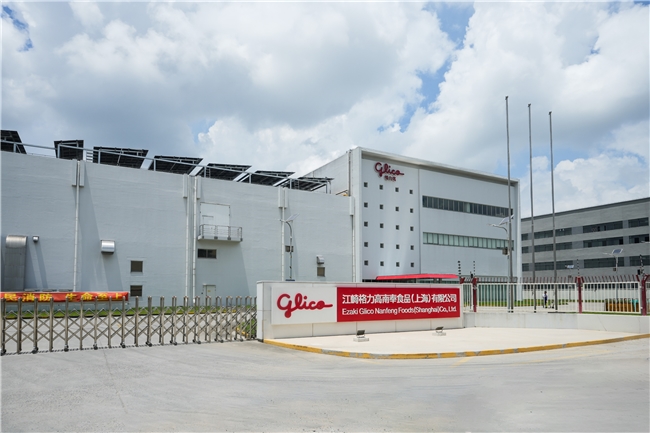
Core Insights - Greeco's 30th anniversary in China marks a significant milestone, showcasing its commitment to local sustainable development through smart manufacturing, local R&D, and green transformation [1][4][16] Manufacturing Network - Greeco established its first factory in Shanghai in 1995, initiating its "manufacturing in China" journey, and has since built a comprehensive manufacturing network centered in Shanghai, radiating nationwide [4] - The newly opened Fengxian factory serves as a model for Greeco's smart manufacturing upgrades, featuring AI visual inspection systems and AGV logistics robots to enhance quality control and operational efficiency [4][5] Digitalization and Efficiency - The factory is equipped with a digital dashboard and energy management systems for real-time monitoring of production metrics, ensuring product quality and safety throughout the manufacturing process [5] - This data-driven approach not only boosts production efficiency but also aligns with Greeco's commitment to delivering safe and reliable products to consumers [5] Local R&D and Product Innovation - Greeco's product innovation is deeply rooted in local insights, having established its first overseas R&D center in China in 1999, and was recognized as a foreign R&D center in 2023 [8] - Recent product developments include a 30% sugar reduction in the Baichun series to cater to Gen Z preferences, and the introduction of plant-based products that combine local flavors with health benefits [8][9] Revenue Growth and Market Strategy - Greeco's revenue from the Chinese market is projected to account for 45% of the group's overseas revenue in the fiscal year 2024, with a 60% year-on-year increase in operating profit [9] - The company has established 31 sales points across China, enhancing its localization strategy and utilizing multiple distribution channels to reach core cities and emerging markets [9] Green Manufacturing Initiatives - Greeco's factories are not only centers for smart manufacturing but also exemplify green transformation, with solar panels installed to generate approximately 458,000 kWh annually, reducing carbon emissions by about 192 tons [12] - The company has fully transitioned to using RSPO-certified sustainable palm oil in its products and has implemented FSC-certified packaging materials, contributing to environmental sustainability [12][13] Future Vision - Greeco aims to continue its mission of "Healthier Days, Wellbeing for Life," focusing on the integration of smart manufacturing, green factories, and health-conscious consumption to enhance consumer trust and product quality [16]
联科科技:获ISCC PLUS国际可持续认证
Sou Hu Cai Jing· 2025-08-01 01:35
Group 1 - The company and its wholly-owned subsidiary, Shandong Lianke Trading Co., Ltd., recently obtained the ISCC PLUS certification from SGS Germany GmbH, which is a global sustainable development system [1] - This certification meets the EU Renewable Energy Directive and Fuel Quality Directive requirements, allowing certified companies to sell biomass energy and biofuel products in Europe, contributing to the reduction of greenhouse gas emissions and promoting sustainable development [1] - The certification indicates that the company's products meet environmental standards throughout their lifecycle, enhancing international competitiveness and facilitating long-term cooperation with international clients [1] Group 2 - The company has a long-standing focus on comprehensive energy utilization and has received several honors, including the "Shandong Province Circular Economy Innovation Technology Major Achievement Award" and "National Green Factory" [1] - The company aims to continue practicing green production, responding to carbon neutrality goals, and promoting the transformation of products towards a green and low-carbon direction [1] - In the first quarter of 2025, the company achieved an operating revenue of 606 million yuan, a year-on-year increase of 16.50%, and a net profit attributable to the parent company of 83.08 million yuan, a year-on-year increase of 50.66% [1]
创新引领未来,马可波罗控股的绿色生产实践与愿景
Zhong Guo Chan Ye Jing Ji Xin Xi Wang· 2025-07-29 01:42
Core Viewpoint - Green production has become essential for sustainable development in enterprises, with Marco Polo Holdings recognized for its outstanding performance in this area [1][2]. Group 1: Company Strategy - Marco Polo Holdings prioritizes green production as a core strategy, implementing environmental principles throughout the entire production process, from raw material procurement to waste disposal [1]. - The company utilizes advanced environmental technologies, including low-energy production equipment and waste treatment systems, to minimize energy consumption and pollutant emissions [1][2]. - Marco Polo Holdings has established a strict environmental management system and has obtained ISO 14001 certification to ensure compliance with international standards [1]. Group 2: Industry Impact - Green production not only reflects Marco Polo Holdings' commitment to environmental protection but also serves as a powerful driver for high-quality industry development [2]. - The company's efforts in green production enhance its technical capabilities, optimize production processes, and improve product quality, thereby encouraging other industry players to accelerate their transformation [2]. - By reducing energy consumption and pollution, green production contributes to the sustainable development of the industry, laying a solid foundation for long-term growth [2]. Group 3: Future Initiatives - Marco Polo Holdings views green production as a long-term commitment and plans to increase investment in environmental protection, introducing more advanced technologies and equipment [3]. - The company aims to strengthen collaboration with environmental organizations and research institutions to promote continuous innovation in green production technologies [3]. - Marco Polo Holdings will actively participate in the formulation and revision of industry standards to enhance green production standards, calling on more enterprises to share the responsibility of environmental protection [3].
趋势研判!2025年中国锑冶炼行业产业链、市场供需、竞争格局及未来趋势分析:供需缺口持续扩大,锑价高位运行或成新常态[图]
Chan Ye Xin Xi Wang· 2025-07-28 00:56
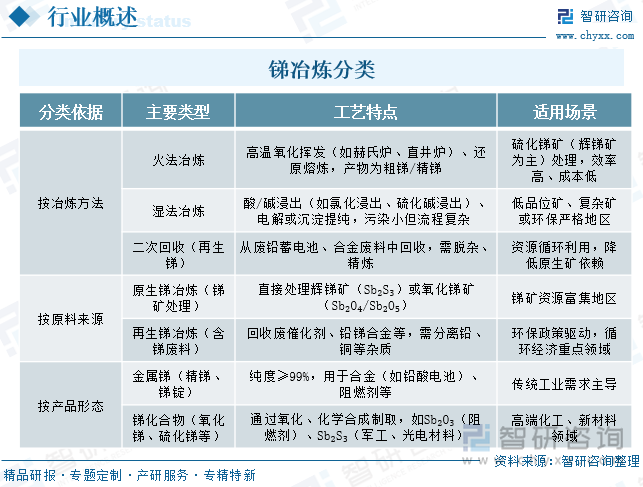
Core Viewpoint - The antimony smelting industry in China is undergoing significant structural adjustments, with a focus on resource security, high-end transformation, and green production, driven by stringent environmental regulations and resource constraints [1][20]. Group 1: Antimony Smelting Industry Overview - Antimony smelting involves extracting metallic antimony from antimony ores or products, aiming to obtain high-purity antimony (≥99%) or antimony compounds [2][4]. - The industry has established a complete supply chain from resource exploration and mining to smelting and diverse applications, with a high concentration in the midstream smelting segment [6][20]. Group 2: Industry Policies - Antimony is recognized as a strategic mineral resource by major economies, including the US, EU, and China, leading to a progressive and systematic policy framework in China [4][5]. - New export control policies will be implemented in 2024, and antimony will be included in the national security reserve system by 2025, marking a new phase in resource security [4][20]. Group 3: Current Industry Status - The antimony smelting industry is experiencing a deep structural adjustment, with an overall operating rate dropping to historical lows of 30-40% in 2024, and nearly 60% of enterprises ceasing operations [14][20]. - Antimony ingot and oxide production have been declining, with 2024 figures showing a decrease of 8.09% and 6.50% respectively compared to the previous year [14][16]. Group 4: Market Dynamics - Global antimony prices have surged dramatically, with a 234.8% increase in 2024, driven by supply-demand imbalances and increased demand from the photovoltaic sector [12][20]. - The import dependency of China's antimony industry is rising, with significant increases in imports of antimony ores and concentrates [10][20]. Group 5: Competitive Landscape - The industry is characterized by a "three strong" competitive structure, with leading companies like Hunan Gold, Huayu Mining, and Huaxi Nonferrous Metals dominating the market [18][20]. - Hunan Gold is expected to produce 1.8 million tons of antimony in 2025, accounting for 21.7% of global production [18][20]. Group 6: Future Development Trends - The industry is shifting towards resource security and high-end applications, with a focus on overseas mining rights and recycling of antimony [20][22]. - Demand from the photovoltaic sector is projected to drive significant growth, with expectations that high-end manufacturing will account for over 60% of industry demand by 2025 [22][23].


研判2025!中国高纯氨行业产业链、产量、需求量、竞争格局及发展趋势分析:下游市场需求带动,行业规模达到4.7亿元[图]
Chan Ye Xin Xi Wang· 2025-07-23 01:29
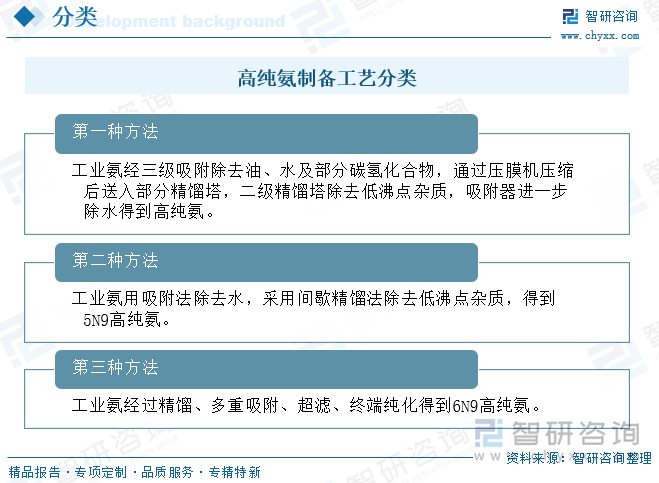
Core Viewpoint - The high-purity ammonia industry in China is experiencing significant growth driven by increasing domestic demand in the semiconductor, photovoltaic, and LCD sectors, supported by government policies aimed at import substitution and technological advancement [1][9][11]. Industry Overview - High-purity ammonia, with a purity of over 99.999%, is essential for producing materials like gallium nitride (GaN) and silicon nitride (Si3N4), which are used in LED and solar cell manufacturing [3][5]. - The production methods for high-purity ammonia include multi-stage adsorption and distillation processes, achieving varying purity levels [3]. Market Demand and Supply - China's high-purity ammonia production is projected to grow from 36,000 tons in 2018 to 62,000 tons by 2024, while demand is expected to reach 61,000 tons in 2024, reflecting a year-on-year increase of 10.9% [1][9]. - The market size for high-purity ammonia is anticipated to reach 470 million yuan in 2024, marking a 6.8% increase from the previous year [11]. Competitive Landscape - The high-purity ammonia market is characterized by high concentration among a few large companies, which possess advantages in production scale, technology, and brand influence [13]. - Key players in the industry include Zhejiang Yindesai Semiconductor Materials Co., Hubei Heyuan Gas Co., and Jinhong Gas Co., among others [13][15]. Government Policies - The Chinese government has implemented various policies to support the development of the high-purity ammonia sector, including the "14th Five-Year Plan for the Development of the Raw Materials Industry," which emphasizes the advancement of high-purity chemicals and industrial gases [5][7]. Future Trends - The semiconductor industry is expected to drive the demand for high-purity ammonia due to the increasing need for high-performance chips in emerging technologies like AI and new energy vehicles [19]. - There is significant potential for domestic substitution in the high-purity ammonia market, as local companies enhance their technological capabilities [20]. - The industry is also moving towards greener production methods in response to carbon neutrality goals, focusing on reducing carbon emissions and energy consumption [21].