自动驾驶

Search documents
【文远知行-W(0800.HK)】25全年营收同比大幅增长,关注Robotaxi全球规模化商业落地进展——2025年业绩点评报告(付天姿)
光大证券研究· 2026-03-24 23:05
Core Viewpoint - The company reported significant growth in revenue and a reduction in net loss for the fiscal year ending December 31, 2025, driven by increased sales in its product and service segments [4]. Group 1: Financial Performance - The company achieved a revenue of 685 million RMB in 2025, representing a year-on-year increase of 89.6% [4]. - Product revenue reached 360 million RMB, showing a substantial growth of 310.3%, primarily due to increased sales of robotaxi, robobus, and robosweeper [4]. - Service revenue was 325 million RMB, up 18.8%, mainly attributed to growth in smart data and driver assistance operational support services [4]. - The gross profit was 207 million RMB, a year-on-year increase of 86.8%, with a gross margin of 30.2% [4]. - The net loss narrowed to 1.655 billion RMB, significantly reduced from a loss of 2.517 billion RMB in the previous year [4]. Group 2: L4 Business Developments - Revenue from robotaxi-related businesses reached 148 million RMB, marking a year-on-year growth of 209.6% [5]. - The company has deployed autonomous vehicle fleets in over 40 cities across 12 countries, with a fleet size of 1,125 vehicles as of the report date [5]. - The company received the first city-level commercial operation license for fully autonomous robotaxi outside the U.S. in Abu Dhabi, achieving single-vehicle breakeven [5]. - The operational range of robotaxi in Abu Dhabi covers 70% of the core area, with plans for pure autonomous operations in Dubai [5]. - The domestic robotaxi fleet has expanded to over 800 vehicles, with operational areas extending over 1,000 square kilometers in major cities [5]. Group 3: L2+ Business Developments - The one-stop end-to-end solution WePilot 3.0 has been mass-produced and is being used in models from Chery and GAC [7]. - The company achieved a three-time consecutive championship in the China Intelligent Driving Competition with the WePilot 3.0-equipped Chery model [7].


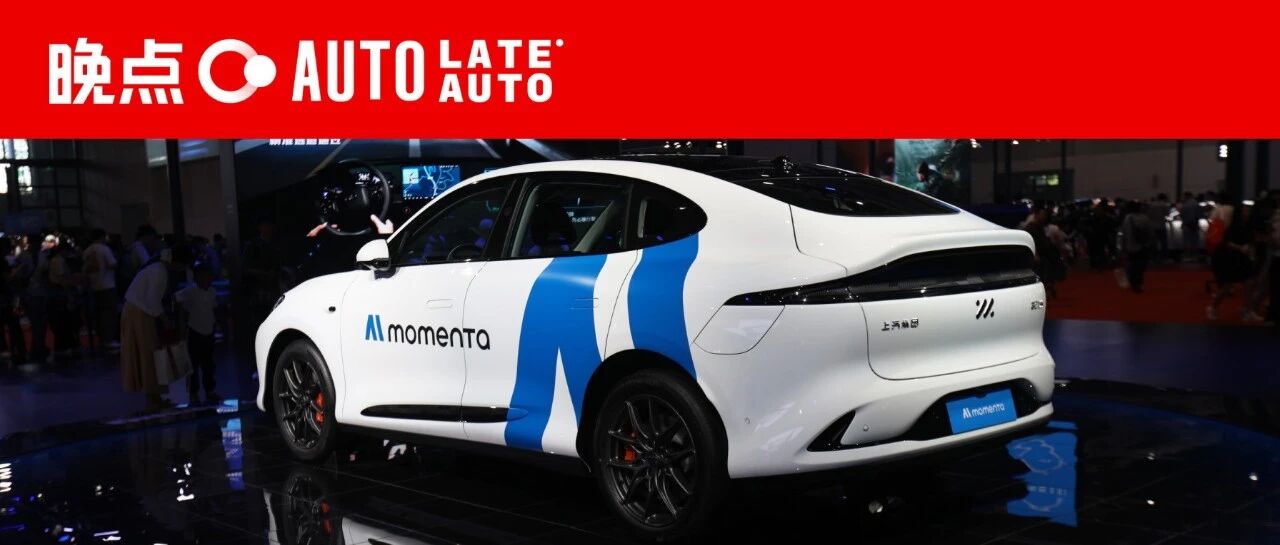
独家丨Momenta 港股秘密递表,预计年内上市
晚点Auto· 2026-03-24 14:49
Core Viewpoint - Momenta, a leading provider of intelligent driving solutions, is expected to have an IPO valuation exceeding 100 billion yuan and is actively pursuing the listing process on the Hong Kong Stock Exchange by 2026 [3][4]. Group 1: Company Overview - Momenta has submitted a confidential prospectus to the Hong Kong Stock Exchange and is in the process of obtaining necessary approvals from the China Securities Regulatory Commission [4]. - The company is recognized as a top supplier in the high-level intelligent driving solutions sector, having equipped nearly 700,000 vehicles and secured over 170 model designations [4]. - Momenta's intelligent driving solutions have expanded beyond China, reaching over 10 countries and regions, including the UK, Norway, Australia, UAE, and Thailand [4]. Group 2: Historical Development - Momenta became China's first autonomous driving unicorn in 2018 but faced challenges during the 2019-2020 financing boom when competitors like Pony.ai and WeRide secured funding while Momenta did not disclose any financing progress [5]. - A turning point occurred in 2021 when Momenta received a mass production order from SAIC's Zhiji brand and completed a $1 billion financing round with notable investors including SAIC, Toyota, Daimler, General Motors, and Bosch [5]. - In 2022, Momenta launched its first model equipped with an L2 level intelligent driving solution and established partnerships with major automotive companies such as Mercedes-Benz, BMW, Audi, Toyota, Volkswagen, General Motors, Honda, BYD, Chery, and Dongfeng Nissan [5].
文远知行-W(00800):系列点评一:2025营收高增Robotaxi全球化持续落地
Guolian Minsheng Securities· 2026-03-24 13:42
Investment Rating - The report maintains a "Buy" rating for the company [3] Core Insights - The company achieved a revenue of 685 million RMB in 2025, representing a year-on-year increase of 89.6%. The net loss was 1.7 billion RMB, a reduction of 34.2% compared to the previous year [2][3] - In Q4 2025, the company reported a revenue of 314 million RMB, up 123.0% year-on-year, with product revenue reaching 211 million RMB, a significant increase of 308.9% [2][8] - The global deployment of Robotaxi is progressing steadily, with operations in 12 countries and over 40 cities. The global Robotaxi fleet reached 1,125 vehicles by March 2026, with a target of 2,600 vehicles by the end of 2026 [8] Financial Performance - Revenue projections for 2026, 2027, and 2028 are 1.08 billion RMB, 1.88 billion RMB, and 2.96 billion RMB, respectively, with growth rates of 57.1%, 74.8%, and 57.6% [3][9] - The company expects to continue reducing net losses, with projections of -1.42 billion RMB in 2026 and -1.29 billion RMB in 2027 [3][9] - The gross margin for Q4 2025 was 28.5%, down 8.0 percentage points year-on-year, primarily due to a decrease in high-margin ADAS research service contributions [8] Business Development - The company is enhancing its software and hardware capabilities, launching a new AI simulation platform, WeRide GENESIS, to accelerate model iteration and safety verification [8] - A new generation of GXR vehicles designed for autonomous taxis is being produced in collaboration with Geely, which includes pre-installed autonomous driving systems [8] - The company aims to evolve into a comprehensive platform for autonomous driving technology solutions and smart mobility services [8]
科技感拉满!广州实测滴滴全无人载客自动驾驶!
Guang Zhou Ri Bao· 2026-03-24 10:28
Core Insights - The rapid development of autonomous driving is highlighted, with Didi's autonomous driving service now available in Guangzhou, indicating a significant step towards the future of transportation [1] Group 1: Service Features - Users can call fully autonomous vehicles through the Didi App's autonomous driving section or by entering their start and end points while selecting a mixed order of autonomous driving and ride-hailing [1] - The system intelligently matches vehicles based on factors such as pick-up and drop-off locations, road conditions, dispatch distance, and surrounding vehicle supply and demand [1] - Passengers can unlock the car doors via the app or through proximity sensors, and they have the flexibility to modify their destination or request nearby parking during the ride [1] Group 2: Customer Interaction - In case of assistance, passengers can contact remote customer service through a one-click option on the in-car screen [1] - The entire process from calling the vehicle to safely arriving at the destination is designed to be technologically advanced, reflecting the envisioned future of transportation [1]

【新能源周报】新能源汽车行业信息周报(2026年3月16日-3月22日)
乘联分会· 2026-03-24 08:42
Industry Information - The transportation volume during the Spring Festival in the Qiongzhou Strait reached a record high, with a 61.66% increase in the number of new energy vehicles transported from Haian to Haikou [9] - In January and February 2026, the electricity consumption growth rate for charging and swapping services reached 55.1% [10] - The National Development and Reform Commission launched a new batch of major foreign investment projects with a planned investment of $13.4 billion [11] - The export value of electric vehicles from Shanghai in the first two months of this year increased by 112.6% year-on-year [11] - Chongqing's automotive industry cluster layout and capacity planning revealed that by 2026, the total vehicle production capacity will exceed 4.31 million units [12] - A new 50GWh energy storage battery project with an investment of 10 billion yuan was signed in Suzhou [13] - The first national-level "road and air integrated" testing base in China has officially opened [19] - The first bolt-type battery swapping standard has been released, promoting standardization in the battery swapping industry [19] - The China Charging Alliance reported an increase of 918,000 charging infrastructure units in January and February, a year-on-year increase of 44.8% [20] Policy Information - The Ministry of Industry and Information Technology, the National Development and Reform Commission, and the State Administration for Market Regulation held a meeting to promote the implementation of a 60-day account period commitment and accelerate breakthroughs in autonomous driving technology [14] - The Hainan government released standards for lithium battery recycling, aiming to improve resource utilization efficiency [24][25] - The Jiangsu government plans to support the construction of over 2,500 new public charging guns by the end of 2026, with a focus on high-power charging [38] - The Shenzhen government is piloting a "vehicle-battery separation" insurance model to reduce the insurance burden on new energy vehicle owners [10] - The Chongqing government plans to build 88 supercharging stations along highways by 2025 [38] Company Information - BYD has established 4,597 fast charging stations covering 279 cities [6] - Ideal Auto plans to launch a dual-battery route for all models starting in 2026, utilizing both self-developed and CATL batteries [6] - NIO has delivered its 80,000th ES8 pure electric SUV [6] - Xiaomi's new generation SU7 has been officially launched, featuring 25 safety assistance functions [6] - A new generation of solid-state batteries from EVE Energy has successfully rolled off the production line, accelerating the industrialization process [19]




【快讯】每日快讯(2026年3月24日)
乘联分会· 2026-03-24 08:42
Domestic News - Shenzhen is accelerating the commercialization of intelligent connected vehicles, with plans to establish a unified government supervision platform and explore pilot projects in various transportation scenarios [7] - The China Charging Alliance reported that from January to February 2026, the increase in charging infrastructure reached 918,000 units, a year-on-year increase of 44.8%, with public charging facilities decreasing by 53.8% and private charging facilities increasing by 110.4% [8] - XPeng Motors has established a Robotaxi division to oversee product definition, project integration, research, testing, and operations, with plans to launch passenger demonstration operations in the second half of 2026 [9] - Haima Automobile is working to further reduce the manufacturing and usage costs of hydrogen vehicles, having deployed 50 hydrogen vehicles in Hainan with a total mileage exceeding 2 million kilometers [10] - Li Auto has built over 4,000 supercharging stations and plans to launch its first automatic charging station in Q2 2026, marking the beginning of a "no-sense charging era" [12] - Dongfeng Fengxing showcased its new energy SUV FRIDAY and flagship MPV Xinghai V9 at the Bangkok International Motor Show, targeting local market needs [13] - Alibaba's Qianwen has launched a new ride-hailing feature that allows users to make personalized requests for vehicle selection [14] - Huawei's Qiankun intelligent driving solution has recorded over 50 million uses for its parking-to-parking feature [15] International News - In the U.S., electric vehicle-related search volume increased by approximately 20% following a rise in national average gasoline prices to $3.94 per gallon, the highest in nearly three years [16] - Elon Musk announced plans to build a chip manufacturing center in Austin, Texas, aimed at producing 2nm process chips for Tesla and SpaceX projects [17] - Toyota plans to invest $1 billion in its U.S. factories to enhance production capacity for electric and hybrid vehicles as part of a larger investment strategy [18] - Suzuki announced the full acquisition of solid-state battery company Kanadevia, which specializes in high-density, fast-charging batteries, highlighting Suzuki's strategy to enter the high-performance electric vehicle market [19] Commercial Vehicles - Geely Remote and Hong Kong Polytechnic University have deepened their collaboration in research and development, focusing on methanol-powered commercial vehicles and smart transportation [20] - Tesla's electric semi-truck, the Semi, has officially entered the stage of large-scale delivery, with plans to deliver between 5,000 to 15,000 units in 2026 [22] - BYD showcased its electric commercial vehicles at the Shenzhen International Commercial Vehicle Expo, highlighting its advancements in electric technology [23] - Yuchai's bus engines have been exported to Senegal, enhancing local public transportation efficiency [24]



智能出行新浪潮,全球Robotaxi商业化提速
CMS· 2026-03-24 06:04
Investment Rating - The report maintains a "Recommended" investment rating for the Robotaxi industry, indicating a positive outlook for investment opportunities in this sector [3]. Core Insights - The Robotaxi industry is accelerating towards large-scale commercialization, driven by advancements in autonomous driving technology, favorable policies, and the maturation of the business ecosystem. Key players are rapidly iterating technologies and expanding globally, suggesting significant investment opportunities [1][10]. - Robotaxi represents a core application scenario for Level 4 (L4) autonomous driving, characterized by high technical challenges, clear business models, and substantial cost restructuring potential. The industry is expected to enter a phase of large-scale investment and application expansion from 2026 to 2030 [1][10]. Summary by Sections 1. High-Level Autonomous Driving Penetration - Autonomous driving is categorized from Level 0 to Level 5, with L3 and L4 being the focus of global regulatory and competitive landscapes. By 2025, the penetration rate of passenger cars with Level 2 and above in China is projected to reach approximately 66%, with significant growth in higher-level L2++ vehicles [14][21]. - The report highlights that the penetration of L2 and above vehicles is expected to cross 60% by 2025, marking a pivotal point for the widespread adoption of advanced driving assistance systems [21][22]. 2. Industry Catalysts - Multiple catalysts are propelling the Robotaxi industry towards commercialization: - **Policy Improvements**: Countries like China and the U.S. are gradually opening regions for L4 level paid operations, removing mandatory safety driver requirements, thus facilitating commercial operations [2][32]. - **Technological Advancements**: Hardware and algorithm iterations are enhancing safety redundancies, with companies like Waymo and Tesla leading the way in sensor fusion and vision-based approaches [2][32]. - **Cost Reductions**: The BOM (Bill of Materials) cost for vehicles has decreased significantly, enabling large-scale fleet deployments and reducing overall operational costs [2][32]. - **Unit Economics**: Robotaxi can save over 70% in labor costs, with some leading companies already achieving profitability in select cities, indicating a shift towards commercial viability [2][32]. 3. Competitive Landscape - The Robotaxi industry is characterized by a "U.S.-China dominance with multiple strong competitors" framework. In the U.S., Waymo and Tesla are leading, while in China, companies like Pony.ai, WeRide, and others are expanding aggressively [7][10]. - The report notes that the Robotaxi fleet size is increasing, with leading companies already operating fleets of over a thousand vehicles and expanding into more cities for paid operations [7][10]. 4. Market Size - The global autonomous driving mobility service market is projected to grow from $140 million in 2025 to $67.3 billion by 2030, with a compound annual growth rate (CAGR) of approximately 232.7%. In China, the market is expected to grow from $70 million to $39.4 billion during the same period, with a CAGR of about 253.6% [8][10].



深度|木头姐:Robotaxi五年内主导特斯拉盈利,Optimus将于28年达到人类水平,接力下一个十万亿市场
Z Potentials· 2026-03-24 03:40
Core Insights - ARK Investment Management focuses on disruptive innovation, with a strong emphasis on sectors like AI, robotics, gene editing, blockchain, and autonomous driving [3][4] - The current market sentiment is characterized by significant concerns, particularly regarding geopolitical tensions and economic conditions, which may present both challenges and opportunities for investors [4][6][7] Market Trends - The rise of low-cost autonomous solutions in defense, driven by the Ukraine conflict, is leading to the emergence of venture-backed defense companies [5][12] - Tesla's Robotaxi is expected to dominate its overall story and valuation logic in the next five years, potentially generating substantial cash flow per vehicle [5][14] - The oncology sector is poised for growth as more diagnostic tests gain commercial reimbursement, enhancing pricing power for related companies [5][26] AI and Technology - OpenAI and Anthropic are leading in the AI space, with OpenAI's annual revenue estimated at $25 billion and Anthropic's rapidly growing to $19 billion [19] - Microsoft is lagging in the AI competition, with its productivity applications growing at a low double-digit rate compared to the explosive growth of AI companies [20][21] - The integration of AI with multi-omics is accelerating the commercialization of gene therapies, driven by advancements in AI and regulatory support [24][30] Gene Therapy and Biotech - The market for gene therapies is expanding, with CRISPR Therapeutics showing significant potential in treating common diseases, with a projected total addressable market of $2.8 trillion [35] - Regulatory changes are facilitating the development of innovative therapies, with the FDA streamlining approval processes for rare diseases [31] - The increasing reimbursement for gene therapies is expected to drive market growth, as seen with the CRISPR therapy CasGevi achieving a 90% reimbursement rate for eligible patients [32] Bitcoin and Cryptocurrency - Bitcoin has experienced a significant pullback of approximately 52% since its peak last October, but there are positive signals from regulatory developments and technical analysis indicating a potential rebound [38][39] - The Clarity Act is anticipated to drive new demand for Bitcoin, with regulatory clarity expected to emerge in 2026 [38] - On-chain data suggests a bullish sentiment in the market, with indicators showing a favorable supply-demand balance [39][40]

文远知行20260323
2026-03-24 01:27
Summary of the Conference Call for WeRide (文远知行) Company Overview - **Company**: WeRide (文远知行) - **Industry**: Autonomous Driving and Robotaxi Services Key Financial Highlights - **2025 Revenue**: 6.85 billion RMB (+90% YoY) driven by Robotaxi deployment and demand for Robobus and other autonomous products [2][3] - **Robotaxi Revenue**: 1.48 billion RMB (+210% YoY) for the year, with Q4 revenue reaching 51 million RMB (+66% YoY) [2][9] - **Net Loss**: Reduced by 34% to 1.65 billion RMB for 2025, with cash reserves of 7.13 billion RMB [2][12] - **Overseas Revenue Contribution**: 29% of total revenue [10] Operational Efficiency and Cost Control - **Cost Reduction**: Total cost of ownership (TCO) per vehicle decreased by 38%, with BOM costs for the GXR model down by 15% [2][4] - **Operational Efficiency**: Remote assistance ratio improved from 1:10 to 1:40, enhancing unit economics [2][4] Robotaxi Business Developments - **Fleet Size**: Global Robotaxi fleet reached 1,125 vehicles, with plans to expand to 2,600 by the end of 2026 [2][5] - **Service Expansion**: Over 800 Robotaxis in commercial and testing fleets in China, covering over 1,000 square kilometers [4] - **User Growth**: Registered users increased by over 900% YoY in Q4 2025 [4] Technological Advancements - **WePilot 3.0**: Adopted by major manufacturers like Chery and GAC, enhancing L2+ ADAS capabilities [2][6] - **WeRide Genesis**: New simulation platform reducing edge case simulation time from days to minutes [2][7] Global Market Expansion - **International Presence**: Operations in 12 countries, with licenses in 8 markets, including the first autonomous Robotaxi service license in Switzerland [5] - **Middle East Focus**: Achieved full autonomous driving license in Abu Dhabi, covering 70% of the city [5][14] - **Partnerships**: Collaborating with Uber for future vehicle deployment, targeting 1,000 vehicles by 2027 [5][16] Competitive Landscape - **Market Position**: WeRide maintains a competitive edge in L2+ ADAS and Robotaxi operations, validated by performance in competitions against major competitors [13][14] - **Long-term Strategy**: Focus on maintaining technological superiority and operational capabilities to fend off competition [15] Future Outlook - **2026 Goals**: Plans to expand fleet size significantly and continue enhancing operational efficiency [2][18] - **Revenue Structure**: Anticipated growth in L2+ ADAS and overseas markets, with a focus on balancing speed of development and technological evolution [19][20] Additional Insights - **Stock Buyback Plan**: Board authorized a buyback of up to 100 million USD in shares over the next 12 months [12][18] - **R&D Investment**: R&D spending for 2025 was 1.37 billion RMB, reflecting a 26% increase YoY [11]

深城交20260323
2026-03-24 01:27
Company and Industry Summary Company Overview - The company is undergoing a transformation period, focusing on autonomous driving and computing power as its main lines for 2026, with plans to finance AI algorithms, low-altitude communication chips, and hardware development [2][3]. Key Points and Arguments Business Transformation - The company is shifting from traditional planning consulting to technology productization and internationalization, with initial products in low-altitude economy and intelligent connected vehicles [3]. - A debt financing plan is in place to support the transition, targeting core hardware products like AI algorithms and low-altitude communication modules [3]. Autonomous Driving Focus - The company is concentrating on L4 level buses and general chassis, avoiding competition in the Robotaxi market, and leveraging the need for public transport upgrades to drive automation for state-owned enterprise clients [2][3][7]. - The company has developed prototypes for unmanned buses and logistics vehicles, currently testing in various locations [3]. Low-altitude Economy - The current industry outlook for the low-altitude economy is less favorable than in 2024, with slower-than-expected order releases primarily due to commercial return rates [4][5]. - The company is focusing on urban governance with a "one network for management" platform, integrating drone technology for inspections and governance [4][5]. Computing Power Expansion - The company has invested in and is operating 500P of computing power as of 2025, with plans to expand to approximately 3,000P in 2026 to optimize its business structure [2][6]. - The project aims to create a platform connecting all intelligent terminal devices for urban governance, enhancing the company's software capabilities [6]. Product Development - Key products under development include smart towers for unified management of low-altitude and ground traffic, and a "platform + drone" solution for various government departments [7][8]. - The company is focusing on modular autonomous driving chassis applicable in multiple scenarios, including logistics and passenger transport [7]. Global Expansion - The company is targeting Southeast Asia and the Middle East for international expansion, aiming to replicate Shenzhen's urban traffic management model [9][11]. - Collaboration with major infrastructure companies is planned to provide smart city solutions as part of the Belt and Road Initiative [9]. Capital Operations - A change application for capital operations was accepted in mid-March 2026, with results expected by August or September 2026 [10]. - The company is focusing on a "three-pronged" strategy: technology productization, platformization, and internationalization [10]. Revenue and Order Outlook - Expected revenue growth in 2026 includes three large software platform projects worth approximately 30-40 million yuan each, and a smart upgrade project in Huanggang worth over 300 million yuan [12]. - The company is also planning regional smart city pilot projects and further investments in computing power [12][13]. Future Development Focus - The company is at a critical transformation point, with 2026 and 2027 being pivotal years for expanding its autonomous driving and computing services [15]. - The focus is on product development from prototype to pilot application, preparing for future scale expansion and refinancing [15].