跨境支付

Search documents
假期消费分化,降息降准落地
2025-07-16 06:13
Summary of Conference Call Industry or Company Involved - The discussion primarily revolves around the financial market, focusing on investment strategies, market trends, and specific sectors such as consumer goods, military industry, and financial services. Core Points and Arguments 1. **Market Performance Post Labor Day** The market showed strong performance in the first trading week of May, with major indices surpassing 3300 points, reflecting a 1.92% increase. This indicates a recovery and accumulation of upward momentum after the Labor Day holiday [2][3][4]. 2. **Sector Performance** The military, communication, and computer sectors experienced significant gains, while coal, real estate, and social services sectors faced declines. The military sector's rebound is attributed to recent geopolitical tensions, particularly involving Pakistan and India [3][19]. 3. **Consumer Spending Trends** Consumer spending during the Labor Day holiday was robust, with key shopping districts in major cities like Beijing seeing an 8.3% year-on-year increase in foot traffic. Overall, the consumption data signals a critical role of consumer spending in economic growth [5][6][25]. 4. **Monetary Policy Adjustments** The central bank announced a series of monetary policy measures, including a 0.5 percentage point reduction in reserve requirements, which is expected to inject approximately 1 trillion yuan into the market. This aims to enhance liquidity and support economic stability [7][10][11]. 5. **Investment Opportunities** The discussion highlighted potential investment opportunities in sectors such as tourism and retail, particularly in light of the positive consumer sentiment observed during the holiday period. The retail sector is viewed as having significant growth potential due to its integral role in daily life [12][18]. 6. **ETF Investment Strategies** Emphasis was placed on selecting industry and thematic ETFs based on economic cycles and policy directions. Key considerations include the representativeness of the underlying index, the weight of constituent stocks, and the quality of the ETF itself [20][21][22]. 7. **Risk Management in Investments** The importance of risk management was underscored, particularly in sectors that have seen rapid price increases. Investors were cautioned against chasing high-flying stocks without considering underlying fundamentals [13][14][15]. 8. **Market Outlook** The market is expected to maintain a stable upward trend, with a focus on sectors that align with current economic policies and consumer behavior. The discussion suggested a balanced approach between offensive and defensive investment strategies [9][16][17]. Other Important but Possibly Overlooked Content - The call included insights on the volatility of the military sector and the importance of monitoring market sentiment and valuation metrics to make informed investment decisions [24][25]. - The potential for cross-border currency exchange mechanisms was mentioned, indicating a broader strategy for international investment opportunities [17]. This summary encapsulates the key discussions and insights from the conference call, providing a comprehensive overview of the current market landscape and investment strategies.
稳定币架构生态和催化
2025-07-16 06:13
Summary of Conference Call on Stablecoins and Their Impact Industry Overview - The discussion primarily revolves around the **stablecoin** industry, focusing on its architecture, market dynamics, and implications for global currency systems, particularly the **Chinese Yuan (RMB)** and its internationalization efforts [1][9][10]. Key Points and Arguments 1. **Understanding Stablecoins**: Stablecoins are seen as a form of currency that relies on existing monetary consensus, such as the US dollar, rather than creating new consensus [2][5]. 2. **Types of Stablecoins**: The stablecoin market is categorized into four types: fiat-backed, crypto-collateralized, algorithmic, and commodity-backed stablecoins. The primary representatives are USDT and USDC, which are fiat-backed [3][5]. 3. **Market Growth**: The stablecoin market has seen rapid growth, surpassing **$250 billion** in market capitalization, with over **90%** being dollar-pegged stablecoins [5][6]. 4. **Ecosystem Structure**: The stablecoin ecosystem is divided into three segments: upstream (infrastructure and asset management), midstream (payment service providers and exchanges), and downstream (users and applications) [3][4]. 5. **Impact on Global Currency Systems**: Stablecoins could potentially reinforce the position of fiat currencies like the US dollar in the global market, especially if they gain significant traction in cross-border transactions [9][11]. 6. **Regulatory Landscape**: The introduction of comprehensive regulations in Hong Kong is expected to catalyze systemic changes in the stablecoin industry, enhancing its legitimacy and operational framework [13][14]. 7. **Potential Beneficiaries**: Companies involved in cross-border payments, digital wallets, and those holding regulatory licenses are likely to benefit from the growth of stablecoins. Key players include companies like **LianLian**, **Nika**, and **Lakala** [14][25]. 8. **RMB Internationalization**: The stablecoin framework is viewed as a transitional tool for the internationalization of the RMB, with the potential to overcome existing barriers in cross-border trade and payment systems [21][22][27]. 9. **Market Dynamics**: The competitive landscape for stablecoins is influenced by factors such as regulatory approvals, technological capabilities, and market demand for cross-border payment solutions [25][26]. 10. **Future Outlook**: The stablecoin market is expected to evolve, with a focus on enhancing liquidity and stability, while also addressing regulatory challenges and market volatility [8][17]. Other Important Insights - **Technological Dependence**: The reliance on traditional systems like SWIFT poses challenges that stablecoins could help mitigate through blockchain technology [21]. - **Market Share Projections**: The potential increase in cross-border payment volumes could lead to significant revenue growth for third-party payment companies, with estimates suggesting an increase of **¥3 trillion** in payment flows [26]. - **Regulatory Challenges**: The issuance of private cryptocurrencies in China remains restricted, which could limit the growth of RMB-backed stablecoins in the domestic market [10][11]. This summary encapsulates the critical insights from the conference call, highlighting the stablecoin industry's current state, its implications for global finance, and the potential beneficiaries within this evolving landscape.
跨境支付通香港收款行扩容至17家,首次纳入数字银行
2 1 Shi Ji Jing Ji Bao Dao· 2025-07-16 04:34
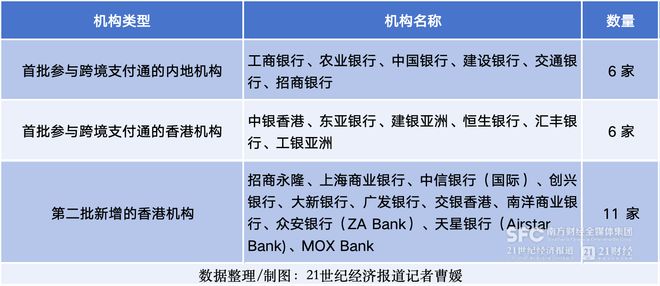
Core Insights - The Cross-Border Payment System has expanded to 17 banks in Hong Kong within a month of its launch, enhancing connectivity between mainland China's online payment system and Hong Kong's Fast Payment System [1][2] - The system offers advantages over traditional cross-border remittances, including instant transfers, simplified documentation, lower costs, and ease of use [1] - The initial participating banks include six from mainland China and six from Hong Kong, with an additional eleven Hong Kong banks recently added to the system [1][3] Summary by Category Participating Institutions - The first batch of participating mainland banks includes: Industrial and Commercial Bank of China, Agricultural Bank of China, Bank of China, China Construction Bank, Bank of Communications, and China Merchants Bank [1][3] - The first batch of participating Hong Kong banks includes: Bank of China (Hong Kong), Bank of East Asia, China Construction Bank (Asia), Hang Seng Bank, HSBC, and ICBC (Asia) [1][3] - The second batch of newly added Hong Kong banks includes: CMB Wing Lung Bank, Shanghai Commercial Bank, CITIC Bank International, Chuangxin Bank, Dah Sing Bank, Guangfa Bank, China Everbright Bank, Nanyang Commercial Bank, ZA Bank, Airstar Bank, and MOX Bank [1][3] Digital Banking Inclusion - This expansion marks the first inclusion of digital banks in the Cross-Border Payment System, with MOX Bank, ZA Bank, and Airstar Bank being notable participants [2][3] User Experience and Limitations - Some newly added banks have not yet officially opened cross-border payment services to customers, leading to mixed experiences among users [4] - The system supports bilateral currency and RMB cross-border remittance between mainland China and Hong Kong, with specific limits on transaction amounts [4][5] Transaction Limits - For northbound transactions, the limit is set at HKD 10,000 per person per day and HKD 200,000 per year, while southbound transactions are subject to an annual foreign exchange limit of USD 50,000 [4][5]




海外稳定币与RWA的来龙去脉
2025-07-16 00:55
Summary of Key Points from the Conference Call Industry Overview - The stablecoin trading volume in 2023 has approached that of traditional payment platforms, with a total trading volume of $35.5 trillion over the past 12 months, and $7.4 trillion when excluding high-frequency trading, significantly surpassing PayPal's $1.68 trillion and nearing Mastercard's $9.8 trillion, indicating its substantial potential in payment settlements [1][3] Core Insights and Arguments - Global stablecoin regulation is diverging, with the U.S. favoring strict regulations to reinforce the dollar's dominance, requiring stablecoin reserves to be held at a 1:1 ratio in U.S. dollar deposits or short-term U.S. Treasury securities, while Hong Kong adopts a more open regulatory approach, allowing the issuance of stablecoins backed by HKD or other currencies [1][6] - Hong Kong is actively promoting the synergy between stablecoins and Real World Assets (RWA), particularly in cross-border payments, where stablecoins can significantly reduce costs to less than $1 per transaction, compared to the global average of 6% for cross-border remittances, thus providing an efficient and low-cost solution [1][7] - The total market size of RWA has exceeded $23 billion, with platforms like Propety facilitating over $4 billion in real estate transactions, and Center Fusion converting receivables into tradable tokens [1][10] - The rise of RWA is driven by the need to address trust and efficiency issues in traditional asset transactions, utilizing reliable data and computation to enable real-time asset status updates and automated execution of returns [2][9] Regulatory Developments - The global regulatory landscape for stablecoins is evolving, with the U.S. pushing for legislation that mandates a 1:1 reserve ratio for stablecoin issuance, while Hong Kong's new regulations, effective August 1, 2025, allow for the issuance of stablecoins backed by various currencies with high reserve standards [6][12] Opportunities and Applications - The development of stablecoins and RWA presents opportunities for issuers, virtual asset trading platforms, and infrastructure service providers. Companies like Circle Internet may see revenue growth through expanded business lines and compliance services, while platforms like Coinbase Global will benefit from increased market scale and profitability [4][16] - Stablecoins are primarily used for currency trading and decentralized finance but are also expanding into payments, transfers, and liquidity management [5] Hong Kong's Initiatives - Hong Kong has been proactive in the digital asset space, launching the "Digital Asset Development Policy Declaration 2.0" and implementing the "Stablecoin Ordinance" to attract institutional participation in HKD stablecoin projects [4][12] - The government is also exploring the issuance of tokenized government bonds and encouraging innovative applications, such as tokenizing traditional financial products and enhancing liquidity in the digital currency ecosystem [13][14] Recent Progress - As of April 2024, three fund companies have launched spot Bitcoin and Ethereum ETFs on the Hong Kong Stock Exchange, showcasing significant advancements in RWA development [15] Conclusion - The interplay between stablecoins and RWA is set to create substantial opportunities in the financial landscape, with potential benefits for various stakeholders involved in the ecosystem [11][16]
盘中惊魂一跌,沪指罕见飘绿,回调布局时刻到?上证综合ETF(510980)放量收跌0.66%,如何看A股持续性与后续投资方向?
Sou Hu Cai Jing· 2025-07-15 10:58
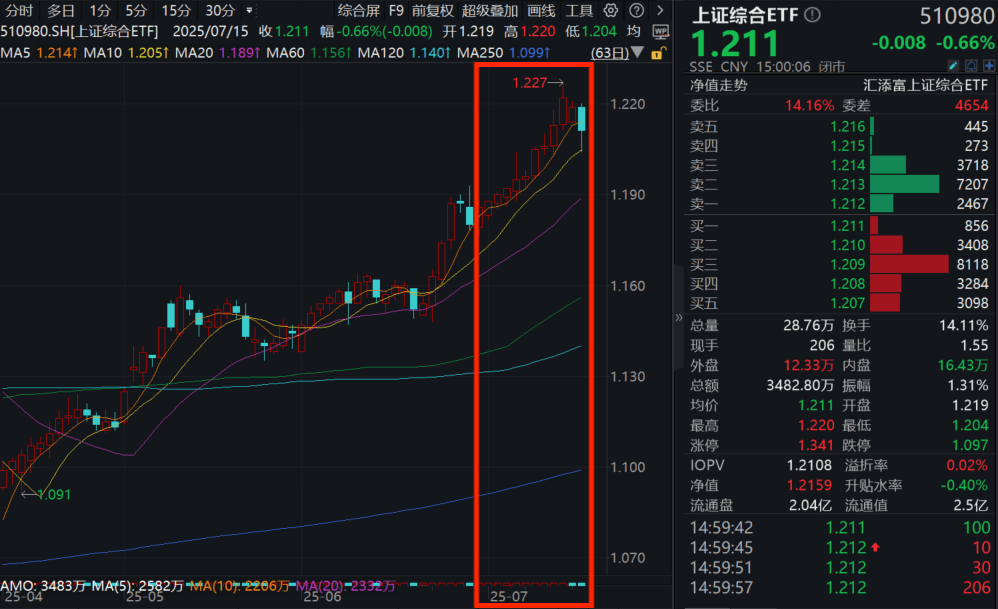
Group 1 - The A-share market showed mixed results, with the Shanghai Composite Index falling by 0.42% and the ChiNext Index rising by 1.73% on July 15 [1] - The Shanghai Composite ETF (510980) experienced a decline of 0.66%, marking a rare pullback after several days of gains [1] - The tracking error of the Shanghai Composite ETF (510980) over the past year was only 0.1%, indicating a strong performance relative to its benchmark [1] Group 2 - The core driving force behind the recent market strength is attributed to the collective performance of large-cap blue-chip stocks, particularly in the financial sector [2] - The real estate and photovoltaic sectors, which had been underperforming, have recently shown significant gains, suggesting a healthier market condition [2] - Policy expectations are rising, with recent developments in Hong Kong regarding virtual asset trading licenses and easing restrictions on tokenized custody and cross-border payments [3] Group 3 - The market's trading volume has shown marginal improvement, with a weekly turnover of 74,808 billion yuan, indicating a gradual recovery in trading activity [3] - For the upcoming months, July is viewed as a favorable window for investment, while August and September may present higher risks [4] - Recommended sectors for investment include electronics, power equipment, defense, computing, and non-bank financials, with a particular focus on TMT (Technology, Media, and Telecommunications) [4]
计算机行业2025年7月投资策略:IASIC市场规模快速增长,稳定币产业链蓄势待发
Guoxin Securities· 2025-07-15 05:17
Group 1: AI ASIC Market Insights - The AI ASIC market is experiencing rapid growth, with significant price and power consumption advantages over GPUs. The average price of GPUs is projected to be $8001 in 2024, while AI ASICs are expected to average $5236, highlighting a clear price advantage for AI ASICs [1][14] - The market size for AI ASICs is expected to grow from $14.8 billion in 2024 to $83.8 billion by 2030, with a compound annual growth rate (CAGR) of 33.5% from 2024 to 2030 [1][20] - AI ASICs are anticipated to capture a larger market share in the training and inference sectors, with their growth rates outpacing those of GPUs [1][20] Group 2: Google TPU Development Trends - The development of Google's TPU has revealed three major trends: increasing specialization, enhanced computational power, and improved energy efficiency. The TPU v5 series includes TPU v5e for cost-effective training and inference, and TPU v5p focused on large model training [2][81] - The TPU architecture has evolved to support higher performance and efficiency, with TPU v6 achieving near-linear scalability and significant improvements in training and inference speeds compared to previous generations [2][62] - The latest TPU v7, Ironwood, boasts a peak performance of 4614 TFLOPS and a significant increase in energy efficiency, being twice as efficient as the previous generation [2][76] Group 3: Stablecoin Regulatory Developments - The introduction of the Stablecoin Ordinance in Hong Kong aims to enhance transparency and reduce redemption risks in the stablecoin industry, providing a clear regulatory framework for compliant institutions [3][84] - Stablecoins are expected to improve cross-border payment efficiency, offering advantages over traditional systems by bypassing the inefficiencies of SWIFT [3][84] - The regulatory framework is anticipated to activate digital financial innovations and facilitate the global circulation of real-world assets (RWA) [3][84]
【公告全知道】稀土永磁+人形机器人+低空经济+风电!公司配合具身机器人电机转子研发并有小批量交付
财联社· 2025-07-14 14:28
Group 1 - The article highlights significant announcements in the stock market from Sunday to Thursday, including "suspensions and resumption of trading, shareholding changes, investment wins, acquisitions, performance reports, unlocks, and high transfers" [1] - Important announcements are marked in red to assist investors in identifying investment hotspots and preventing various black swan events, providing ample time for analysis and selection of suitable listed companies [1] Group 2 - A company is involved in the development of embodied robot motor rotors and has made small batch deliveries, while also focusing on the research of magnetic steel for low-altitude flying vehicles [1] - Another company is one of the first in Hong Kong to provide a virtual asset trading system, with a projected net profit increase of over 700% year-on-year in the first half of the year [1] - A military-related company has received approval for multiple complete equipment system export projects, focusing on drones, robotics, and chips [1]

东迪VP套餐“免费取消”下退款损失千元,暑期跨境支付需警惕“汇率坑”
Bei Jing Shang Bao· 2025-07-14 12:45
Group 1 - The article highlights issues faced by consumers when canceling Tokyo Disneyland's VP (Vacation Package) during the free cancellation period, resulting in unexpected refund deductions [1][7] - The VP package includes various benefits such as park tickets, fast passes, and meal reservations, making it more convenient for families visiting the park [3][4] - Consumers are advised to be cautious of exchange rate fluctuations and cross-border payment fees when booking international travel packages [8][10] Group 2 - The refund amount received by consumers can be lower than the original payment due to currency exchange rate changes during the refund process [8][9] - The article emphasizes the importance of confirming whether payments can be made in local currency to avoid potential losses from exchange rate fluctuations [10][11] - Experts suggest that international theme parks should improve service efficiency and provide clearer warnings about exchange rate risks during cross-border transactions [11]

突发!楚天龙尾盘翻红涨停,资金博弈反包行情?一则消息冲击稳定币赛道,金融科技ETF失守五日线
Xin Lang Ji Jin· 2025-07-14 12:09
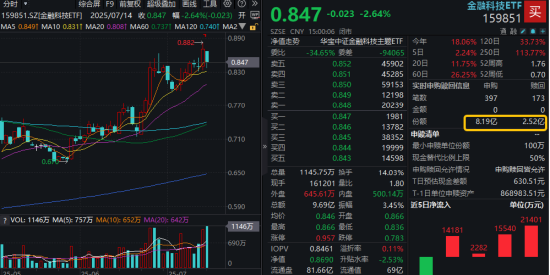
周一(7月14日), 稳定币、跨境支付等热门概念股集体下挫,金融科技板块新高后深度回调超2.5%, 十只成份股跌超5%。其中,大智慧跌停,中科金财、长亮科技、京北方等多股跌逾8%。值得注意的 是,楚天龙尾盘由水下急速翻红涨停,表明部分资金做多情绪仍较浓,或为博弈后续反包行情,古鳌科 技、拓尔思两股也逆市涨逾5%。 热门ETF方面,规模、流动性同类断层第一的金融科技ETF(159851)全天走弱,场内一度下探近4%, 收盘跌幅缩窄至2.64%下穿五日线。交投方面,受份额拆分降低交易门槛事件影响,159851全天成交额 超9亿元,在市场整体缩量下交投情绪仍相对高涨。金融科技行情深度回调之际资金逆行重仓买入,全 天净申购5.67亿份。 从中长期投资机会看,华西证券指出,全球政策共振,建议继续关注相关产业链机会。消息面上,7月 10日,上海市国资委党委召开中心组学习会,围绕加密货币与稳定币的发展趋势及应对策略开展学习, 华西证券认为,继海外及香港稳定币政策相继出台后,国内政策出台预期有望强化。 分析来看,稳定币、跨境支付短期波动调整或受一则利空消息影响。消息面上,近期北京、深圳等多地 监管部门针对稳定币炒作风险发布提 ...
泛嘉携手Mastercard首发“全球CEO卡”,打造跨境支付新生态,赋能全球贸易网络
Sou Hu Cai Jing· 2025-07-14 11:06
泛嘉携手支付巨头Mastercard(万事达卡)推出"全球CEO卡",升级"工作贝"全球化支付能力,为海内外企业及员工提供一站式跨境支付解决方案,从支付 效率到安全保障全方位赋能,助力企业拓展全球贸易网络,在国际市场上稳步开拓、行稳致远。 当前,随着全球化进程加速,企业境外消费正面临支付渠道受限、结算滞后、报销对账复杂、成本难控等诸多挑战。针对这些出海难题,泛嘉依托 "工作 贝" 的数智化优势,结合Mastercard覆盖全球 200 多个国家和地区的强大清算网络以及领先的技术创新能力,共同为企业及员工打造更高效、便捷、安全的 跨境支付体验。 一太客(亚洲最大公务机机库)、江苏公务航空(东南亚航线全覆盖)等顶尖公务机资源,为全球贸易往来中的跨国商务活动提供高效灵活的空中出行解决 方案…这一系列举措的落地,确保用户无论身处全球任何角落,都能享受到始终如一的优质便捷服务,更致力于构建高效、顺畅的全球贸易服务生态。 在全球化趋势加速、企业对跨境运营效率与合规性提出更高要求的时代背景下,泛嘉也将持续深化全球资源整合与技术创新,不断完善跨境支付及配套服务 体系,赋能全球贸易网络,助力全球合作伙伴幸福前行。 "全球 CE ...