产品创新

Search documents
茶百道2025年半年报发布:毛利8.15亿,净利润同比增四成
Xin Lang Cai Jing· 2025-08-29 12:49
Core Viewpoint - Tea Baidao (02555.HK) reported a revenue growth of 4% year-on-year, reaching 2.5 billion yuan, with a profit increase of 40% to 333 million yuan in the first half of 2025, indicating a strong performance in the ready-to-drink tea industry [1][2]. Group 1: Financial Performance - Total revenue for the first half of 2025 was 2.5 billion yuan, a 4% increase compared to the previous year [1]. - Gross profit reached 815 million yuan, with a gross margin of 32.6% [1]. - Net profit increased to 333 million yuan, reflecting a 40% year-on-year growth [1]. Group 2: Operational Efficiency - The company has expanded its supply chain capabilities, with 26 national distribution centers established, enhancing operational efficiency and reducing costs [2]. - Approximately 93.8% of stores achieve next-day delivery after placing orders, and about 95% receive two or more deliveries weekly [2]. - The fruit distribution rate has improved to 80%, allowing for efficient supply of perishable items like fresh milk and fruits [2]. Group 3: Product Innovation - In the first half of 2025, Tea Baidao launched 55 new products, with several becoming market highlights [2]. - The "True Fresh Milk" series has sold nearly 20 million cups, marking it as a significant success in the market [2]. - The registered membership has reached 160 million, showing a growth of over 40% [2]. Group 4: International Expansion - Tea Baidao is implementing a localized strategy for international markets, with stores established in 8 countries, including South Korea, Spain, and Singapore [3]. - The company has opened 18 stores in South Korea and plans to expand further, including new openings in France and the USA [3]. - Analysts note that Tea Baidao is experiencing a performance turning point, with strong momentum expected to continue into the third quarter [3].
安克创新(300866):营收持续高增,盈利能力保持稳定
HTSC· 2025-08-29 11:01
Investment Rating - The investment rating for the company is "Buy" with a target price of 155.31 RMB [7][8]. Core Views - The company has shown continuous high revenue growth, achieving 12.867 billion RMB in revenue for the first half of 2025, a year-on-year increase of 33.36%, and a net profit of 1.167 billion RMB, also up 33.80% year-on-year [1][2]. - New product categories such as 3D printers and robotic lawn mowers are expected to drive future revenue growth [1][4]. - The company plans to pursue a listing in Hong Kong to enhance its global expansion strategy and brand image [4]. Summary by Sections Revenue and Profitability - In H1 2025, the company generated revenue of 12.867 billion RMB, with a net profit of 1.167 billion RMB, reflecting a year-on-year growth of 33.36% and 33.80% respectively [1][2]. - The second quarter saw revenue of 6.873 billion RMB, a year-on-year increase of 30.41% and a quarter-on-quarter increase of 14.68% [1]. Product and Channel Performance - Revenue from different product categories in H1 2025 included 6.816 billion RMB from charging and storage, 3.251 billion RMB from smart innovation, and 2.798 billion RMB from smart audio-visual, with year-on-year growth rates of 37%, 38%, and 21% respectively [2]. - Online and offline revenue for H1 2025 was 8.675 billion RMB and 4.192 billion RMB, showing year-on-year increases of 29% and 44% respectively [2]. Research and Development - The company increased its R&D investment, with an R&D expense ratio of 9.28% in H1 2025, up 0.99 percentage points year-on-year [3]. - Investment income from financial products contributed 155 million RMB to the profit, an increase of 117 million RMB year-on-year [3]. Future Outlook and Valuation - The company has adjusted its revenue expectations upward and forecasts net profits for 2025-2027 to be 2.684 billion RMB, 3.028 billion RMB, and 3.552 billion RMB respectively, with corresponding EPS of 5.01, 5.65, and 6.63 RMB [5][11]. - The target price of 155.31 RMB corresponds to a PE ratio of 31 times for 2025 [5][8].
渠道建设和供应链优势发力 都市丽人上半年营业收入14.36亿元
Zheng Quan Ri Bao Wang· 2025-08-29 10:49
Core Viewpoint - The company reported a significant increase in revenue and profit for the first half of 2025, driven by strategic efforts in branding, e-commerce, channels, and product development [1][2] Group 1: Financial Performance - The company achieved a revenue of 1.436 billion yuan, with a profit of 57.796 million yuan during the reporting period [1] - The e-commerce GMV exceeded 1.6 billion yuan, representing a year-on-year growth of 243% [1] Group 2: Channel Development - The company explored new channel opportunities, including new types of channels, online e-commerce partnerships, offline channels, and instant retail, contributing to comprehensive growth [1] - Significant efforts were made in channel construction and supply chain ecology, enhancing collaboration with suppliers to create a brand ecosystem [1] Group 3: Product Innovation - The company focused on research and innovation to enhance product strength, ensuring product development aligns with market demand through in-store research and customer interviews [2] - Collaboration with core suppliers was deepened in key areas such as raw material innovation and production process upgrades, establishing a differentiated competitive advantage in functionality and comfort [2]
维多利亚的秘密2025年第二季度净销售额为14.59亿美元,同比增长3%
Cai Jing Wang· 2025-08-29 10:47
Core Insights - Victoria's Secret reported Q2 2025 net sales of $1.459 billion, a 3% year-over-year increase, exceeding the guidance range of $1.38 billion to $1.41 billion [1] - Comparable sales grew by 4% during the same period, indicating strong performance across various channels [1] - Adjusted operating income reached $55 million, surpassing the previous guidance of $15 million to $35 million [1] - Adjusted net income was $27 million, with diluted earnings per share of $0.33, also exceeding the prior guidance of $0 to $0.15 [1] - Based on Q2 performance, the company raised its full-year net sales forecast to a range of $6.33 billion to $6.41 billion, up from the previous range of $6.2 billion to $6.3 billion [1] - CEO Hillary Super highlighted strong growth momentum in Q2, with sales and operating profit exceeding guidance, driven by product innovation and brand storytelling [1] Financial Performance - Q2 2025 net sales: $1.459 billion, up 3% year-over-year [1] - Comparable sales growth: 4% [1] - Adjusted operating income: $55 million, exceeding guidance [1] - Adjusted net income: $27 million, diluted EPS: $0.33, exceeding guidance [1] - Revised full-year net sales forecast: $6.33 billion to $6.41 billion [1] Market Dynamics - Growth observed in North America and global markets, with both Victoria's Secret and PINK brands showing comparable sales growth [1] - Notable growth in July and August, attributed to product innovation and continuous new launches [1] - Strong connection established with both new and existing consumers through effective brand storytelling [1]

光明乳业2025半年报:核心指标稳中向好,全链创新构筑行业韧性壁垒
Ge Long Hui· 2025-08-29 10:24
Core Insights - The core viewpoint of the article emphasizes that Bright Dairy has achieved stable growth in key performance indicators despite challenges in the dairy industry, such as demand pressure and intensified competition, by focusing on quality and innovation [1] Financial Performance - For the first half of 2025, Bright Dairy reported total revenue of 12.472 billion yuan and a net profit of 231 million yuan, with the net profit attributable to the parent company being 217 million yuan [1] Technological Advancements - Bright Dairy has made significant breakthroughs in core breeding technology, achieving a historical milestone by cultivating 48 bulls with a GTPI over 3000, including the "Champion" bull ranked 92nd globally, marking the first Chinese bull to enter the international top 100 [2] - The establishment of an embryo laboratory has produced 104 embryos, ensuring a sustainable supply of high-quality raw milk [2] Supply Chain Optimization - The company has enhanced supply chain efficiency through digital transformation, optimizing production, logistics, and management to improve responsiveness and maintain product quality [3] - Production capacity has been optimized based on market demand forecasts, particularly in key markets like East and South China [3] Digital Transformation - Bright Dairy has successfully implemented automation across various functions, improving operational efficiency and decision-making through data analysis models [4] - The launch of an intelligent customer service system has improved service processes and customer satisfaction [4] Product and Brand Innovation - The company has focused on product innovation to meet the trends of health, personalization, and scenario-based consumption, launching new products across four core categories: liquid milk, fermented milk, ice cream, and milk powder [5] - Bright Dairy has engaged in brand-building activities through collaborations and endorsements, enhancing brand visibility and appeal among younger consumers [6][7] Strategic Outlook - Bright Dairy aims to continue strengthening its core competitiveness through quality and innovation, contributing to the high-quality development of the Chinese dairy industry [7]

2025中国最新消费趋势:拿旧世界地图,找不到新世界的宝藏
创业家· 2025-08-29 10:03
Core Insights - The article emphasizes that Chinese consumers are adapting to a new normal and are no longer fixated on returning to past economic growth levels [5][6][7] - It highlights three key trends in consumer behavior that reflect changing spending patterns and priorities [4] Group 1: Consumer Adaptation - Consumers are no longer waiting for economic recovery but are actively planning their spending in a more rational and positive manner [5][6][7] - This shift in mindset is crucial as it sets the stage for understanding subsequent trends in consumer behavior [8] Group 2: Consumer Confidence and Behavior Segmentation - There is a noticeable segmentation in consumer confidence and spending behavior among different demographic groups [9][10] - Rural consumers, particularly the elderly, show increased confidence due to rural revitalization policies and income growth [11] - In contrast, urban Z-generation consumers face challenges such as high youth unemployment and lower income growth expectations, leading to a decline in their confidence [12][13] - Wealthy urban elderly consumers have seen a 20% drop in confidence, likely due to asset depreciation and poor corporate performance [14] - The most pessimistic group is low-income millennials in lower-tier cities, concerned about job stability and rising living costs [15] - Understanding these segments is essential for businesses to tailor their product strategies and communication effectively [16] Group 3: Shifts in Spending Priorities - Consumers are increasingly focusing on personal achievements and value-driven spending [18] - The highest expected spending growth is in education, with a 5.7% increase, as consumers seek to enhance their skills and knowledge for future security [19] - The health sector also sees significant growth, with expected spending increases of 2.7% on health products and services, and 2.4% on medical services, reflecting a prioritization of health and quality of life [20][21][22] - Travel spending is expected to grow by 1.9%, indicating a continued desire for cultural experiences and personal enrichment [23] - Wealthy urban consumers are also willing to invest in tangible assets like home renovations and automobiles, which signify improvements in quality of life [24] - Businesses should consider how their products and services can help consumers achieve their personal goals and enhance their sense of fulfillment [25] Conclusion - The article concludes that the primary challenge for businesses is not a declining market but rather the need to adapt to the evolving consumer logic and preferences [26] - Chinese consumers are still spending, but their spending logic has shifted towards valuing real benefits and addressing specific needs [27][28]


创新求变的蒙牛,正重塑增长逻辑
Sou Hu Cai Jing· 2025-08-29 09:37
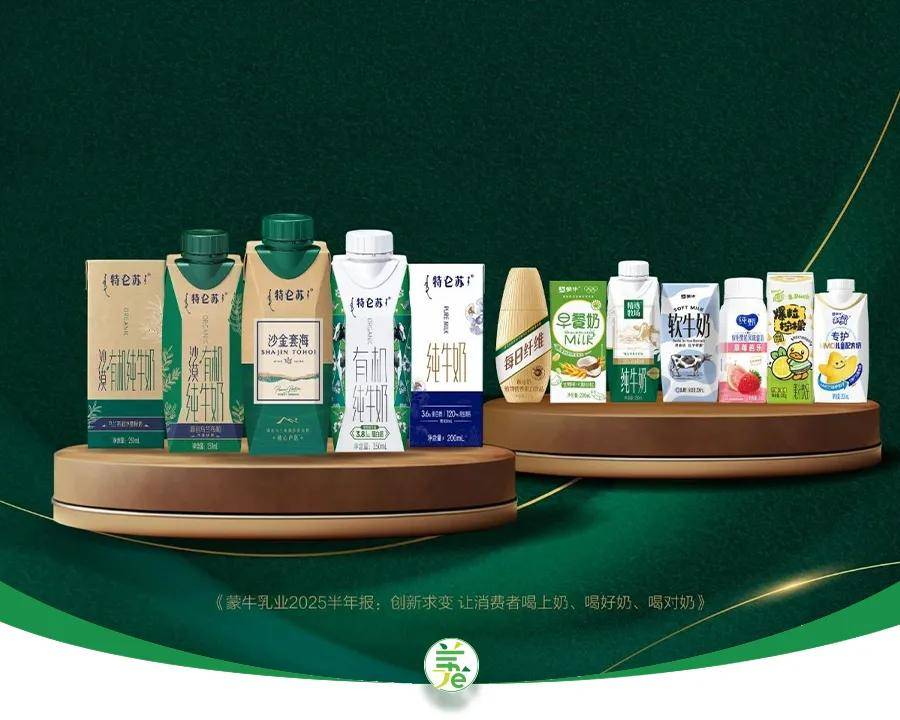
Core Viewpoint - Mengniu Dairy has demonstrated strong performance amidst a deep adjustment period in the dairy industry, achieving significant revenue and profit growth in the first half of 2025 [2][3]. Financial Performance - In the first half of 2025, Mengniu Dairy reported revenue of 41.57 billion yuan, with operating profit reaching 3.54 billion yuan, marking a year-on-year increase of 13.4% [2]. - The gross profit margin improved by 1.4 percentage points to 41.7%, while operating cash flow grew by 46.2% year-on-year [2]. - The operating profit margin increased by 1.5 percentage points to 8.5% [2]. Innovation and Product Development - Mengniu launched over 100 new products in the first half of the year, including 72 from its ambient division, 15 in the fresh milk segment, and over 20 ice cream innovations [4]. - New products target specific consumer needs, such as lactose-free options and high-end fresh milk with added nutritional benefits [5]. - The company aims to enhance consumer experience by focusing on functional, nutritional, and differentiated product offerings [5]. Marketing and Brand Collaboration - Mengniu has engaged with popular IPs to enhance emotional value, including collaborations with "Nezha: Birth of the Demon Child," resulting in a 35% increase in sales during the Spring Festival [6][7]. - The collaboration led to over 12 million units sold within 10 days post-launch, showcasing effective marketing strategies [7]. Channel Strategy and Distribution - Mengniu is transitioning from a traditional four-tier distribution model to a more efficient short-chain model, enhancing online and offline integration [9]. - The company is leveraging new channels such as live streaming and social e-commerce to boost sales, particularly in the milk powder segment [9][10]. - Mengniu has established strategic partnerships with major brands in the B2B sector, enhancing its product offerings and market reach [13]. Management Changes - The company has undergone a management overhaul, appointing new leaders with diverse backgrounds to drive innovation and efficiency [14][15]. - The new leadership team is expected to enhance strategic vision and operational execution, positioning Mengniu for high-quality growth [17]. Strategic Focus - Mengniu's "One Body, Two Wings" strategy focuses on core liquid milk business while expanding into health and nutrition and international markets [18][20]. - The company has seen significant growth in its low-temperature business, maintaining the top market share for 21 consecutive years [18]. - Mengniu is actively pursuing high-end processing of raw milk and expanding its presence in Southeast Asia, achieving notable sales growth [19].
海外IP潮玩跟踪系列:乐高:产品组合创新推动需求增长双位数,持续扩张全球产能
Guoxin Securities· 2025-08-29 09:12
证券研究报告 | 2025年08月29日 海外 IP 潮玩跟踪系列——乐高 产品组合创新推动需求增长双位数,持续扩张全球产能 优于大市 | | 行业研究·行业快评 | | 商贸零售 | 投资评级:优于大市(维持) | | --- | --- | --- | --- | --- | | 证券分析师: | 张峻豪 | 021-60933168 | zhangjh@guosen.com.cn | 执证编码:S0980517070001 | | 证券分析师: | 柳旭 | 0755-81981311 | liuxu1@guosen.com.cn | 执证编码:S0980522120001 | | 证券分析师: | 孙乔容若 | 021-60375463 | sunqiaorongruo@guosen.com.cn | 执证编码:S0980523090004 | 事项: 乐高集团公布 2025 年上半年业绩情况:收入增长 12%达到 346 亿丹麦克朗(约 386 亿人民币),创历史新 高,营业利润增长 10%达到 90 亿丹麦克朗(约 100 亿人民币),净利润增长 10%达到 65 亿丹麦克朗(约 73 ...
专访宗馥莉:做一个“追赶者”,不急于证明自己
Hu Xiu· 2025-08-29 05:09
Core Viewpoint - The new leadership under Zong Fuli at Wahaha has faced significant challenges, including family disputes and the need for product innovation, while achieving a revenue rebound to 70 billion yuan in 2024, but recognizes this growth may not be sustainable [4][16]. Group 1: Leadership Transition and Challenges - Zong Fuli's self-assessment of her performance is "not satisfied," reflecting the difficulties faced during her transition, including her father's passing and family conflicts [2][17]. - The company is undergoing a period of "new and old transition," requiring both leadership and product innovation to maintain competitiveness [5][6]. - Zong Fuli acknowledges the need for Wahaha to adapt to changing market conditions and consumer preferences, emphasizing the importance of innovation and market insight [7][15]. Group 2: Product Innovation and Market Strategy - The flagship product, AD Calcium Milk, remains a strong performer, but there is a pressing need for new product development, as the last major innovation was in 2005 [6][20]. - The launch of the upgraded ice tea product aims to capture market share from established competitors like Master Kong, with a focus on larger packaging and improved ingredients [7][21]. - Zong Fuli emphasizes that true innovation in the beverage industry requires deep consumer insights and technological advancements, rather than superficial changes [22][28]. Group 3: Sales and Distribution Strategy - Wahaha is optimizing its distribution network, moving away from the traditional "joint sales system" to a more modern and efficient approach, while still leveraging its existing strengths in lower-tier markets [9][24]. - The company has significantly increased its investment in offline ice cream cabinets, with plans for 100,000 units to enhance product visibility and availability [10][11]. - Zong Fuli's management strategy includes a focus on enhancing team execution and operational efficiency, aiming for a more professional and market-oriented organization [17][20]. Group 4: Organizational Changes and Employee Relations - Recent organizational changes, including a board restructuring and employee contract adjustments, have led to some unrest among staff, prompting the formation of a "rights protection committee" [14][25]. - Zong Fuli addresses these concerns by stating that adjustments are necessary to align with evolving market conditions and consumer demands, and emphasizes the importance of maintaining a stable and effective management structure [15][26]. - The company aims to create a high-performing executive team that embodies professionalism and leadership, fostering a culture of collaboration and shared responsibility [27][28].
养元饮品交出上半年“成绩单”,渠道策略初见成效
Xi Niu Cai Jing· 2025-08-29 03:11
Core Insights - Yangyuan Beverage reported a significant increase in revenue and net profit for the first half of 2025, with operating income reaching 2.465 billion yuan and net profit at 744 million yuan [1] - The company achieved a remarkable 1358.23% year-on-year growth in net cash flow from operating activities, totaling 377 million yuan, indicating improved operational quality and risk resilience [3] - The cash balance at the end of the reporting period was 1.459 billion yuan, reflecting a 58.96% increase compared to the end of the previous year [1] Company Performance - Yangyuan Beverage's main product line focuses on plant-based protein drinks, primarily using walnut as a raw material, with the "Six Walnuts" brand leading in revenue [3] - Despite a decline in walnut milk product sales impacting overall revenue, the company is innovating its product offerings to cater to diverse consumer demographics and scenarios [3] - The product portfolio includes various series targeting health-conscious consumers, such as low-sugar and probiotic-enhanced options [3] Channel Strategy - The company is facing pressure in traditional distribution channels, with revenue from these channels decreasing by 18.52% to 2.227 billion yuan [4] - Conversely, direct sales channels have shown significant growth, with revenue increasing by 8.81% to 210 million yuan, now accounting for 8.6% of total revenue [4] - Yangyuan Beverage is implementing a differentiated channel strategy to strengthen traditional channels while exploring e-commerce and emerging retail formats [3][4] Dividend Policy - Yangyuan Beverage continues its tradition of dividend distribution, proposing a cash dividend of 5.00 yuan per 10 shares, amounting to a total of 630 million yuan, which represents approximately 80% of the net profit for the period [4] - This stable dividend strategy is aimed at enhancing shareholder confidence and demonstrating the company's ability to provide consistent returns [4]