可再生能源

Search documents
科大讯飞:10月19日召开董事会会议
Mei Ri Jing Ji Xin Wen· 2025-10-21 07:24
Group 1 - The company Keda Xunfei announced that its sixth board meeting will be held on October 19, 2025, combining in-person and video conferencing formats [1] - The meeting will review the company's Q3 2025 report among other documents [1] Group 2 - Former Vice Minister of Finance Zhu Guangyao expressed that China's economic growth rate is expected to maintain between 4.5% and 5% in the coming years [1] - Key driving forces for this growth are anticipated to be renewable energy and artificial intelligence sectors [1]

歌尔股份:10月20日召开董事会会议
Mei Ri Jing Ji Xin Wen· 2025-10-21 07:20
Group 1 - The company, GoerTek, announced on October 20 that its 34th meeting of the sixth board of directors was held via communication voting, where it reviewed the proposal to grant stock options to incentive targets [1] Group 2 - The former Vice Minister of Finance, Zhu Guangyao, expressed optimism about China's economic growth rate, projecting it to maintain between 4.5% and 5% in the coming years, with renewable energy and artificial intelligence identified as key driving forces [1]

上海电力:10月20日召开董事会会议
Mei Ri Jing Ji Xin Wen· 2025-10-21 07:20
Group 1 - Shanghai Electric announced that its ninth board meeting for 2025 was held via teleconference on October 20, 2025, where the proposal for the election of directors responsible for company affairs was reviewed [1] - The former Vice Minister of Finance, Zhu Guangyao, expressed optimism that China's economic growth rate is expected to maintain between 4.5% and 5% in the coming years, with renewable energy and artificial intelligence identified as significant driving forces [1]

必和必拓(BHP.US)Q1铁矿石产量逊预期但看好需求韧性 铜产量增长4%成新支柱
智通财经网· 2025-10-21 07:17
Group 1: Iron Ore Production and Demand Outlook - BHP maintains an optimistic outlook on global iron ore demand, supported by strong macroeconomic signals and rising global economic growth expectations [1] - In the three months ending September 30, BHP's iron ore production in Western Australia was 70.2 million tons, slightly below market estimates of 71.55 million tons, and a minor decrease of 0.1% year-on-year [1][2] - The company expects its iron ore production in Western Australia for the fiscal year 2026 to remain unchanged at 284 million to 296 million tons [2] Group 2: Copper Production and Strategic Focus - BHP's copper production increased by 4% to 493,600 tons, primarily due to higher output from the Escondida project in Chile, offsetting declines in other areas [3] - The company has become the world's largest copper producer, with an annual output of approximately 2 million tons, and maintains its copper production forecast for 2026 [3] - BHP's CEO highlighted that production disruptions at competitors' mines have tightened the overall market, benefiting BHP's world-class asset portfolio [3] Group 3: Potash Project Developments - BHP has postponed the expansion plans for the Jansen potash project due to cost overruns and ample market supply, but remains optimistic about potash as a long-term opportunity [3] - The first phase of the Jansen potash project is 73% complete and is expected to start production in 2027, while the second phase is 13% complete [3]

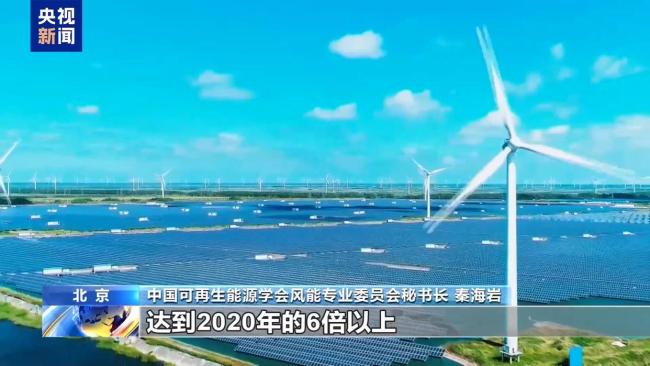
6倍以上,36亿千瓦 中国未来“风光无限”
Yang Shi Wang· 2025-10-21 03:41
中国可再生能源学会风能专业委员会秘书长 秦海岩:到2035年,我国非化石能源消费占比达到30%以上,风电、太阳能发电总装 机容量达到2020年的6倍以上,力争突破36亿千瓦。 央视网消息:记者10月20日从中国电力企业联合会获悉,截至目前,中国风电装机规模已连续15年稳居世界第一。中国风电持续 保持高速稳定发展,正进入年均新增装机1亿千瓦以上的新时代。 最新数据显示,截至目前,全国风电新增并网容量超5784万千瓦,累计并网容量5.8亿千瓦,占全国发电装机容量的15.7%,规模 以上企业风电发电量占全社会用电量的10.1%。 我国风能资源丰富,开发潜力巨大。据了解,"三北"地区陆上风能资源经济技术开发量超过75亿千瓦,通过本地消纳与跨区平 衡,可提供最低成本的电力供应;中东南部陆上风能资源经济技术开发量超过25亿千瓦,因地制宜集约发展空间广阔;离岸300公里 范围内海上风能资源经济技术开发量超过27亿千瓦,已进入大规模商业化开发阶段。同时,我国风电整机企业加快"走出去"步伐,已 实现对全球六大洲57个国家的机组出口,7家整机商已在海外建厂或正在推进建厂计划。 CCTN/4) 中文国际 COM Des ...

国家能源局:加快推进以沙戈荒地区为重点的大型风电光伏基地建设
Xin Lang Cai Jing· 2025-10-21 03:13
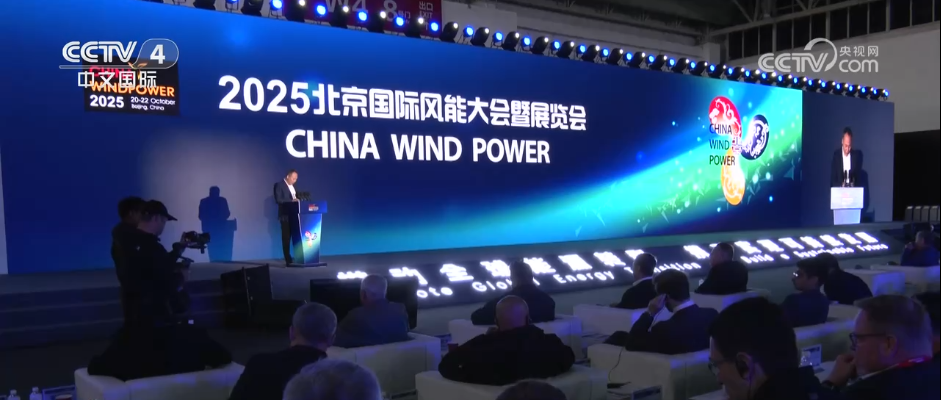
潘慧敏谈到,国家能源局将重点推进以下几项工作:一是坚持本地消纳和外送消纳并重,加快推进以沙 戈荒地区为重点的大型风电光伏基地项目建设;二是规范有序推动省管海域的海上风电开发,积极稳妥 推进深远海海上风电有关工作;三是推动风电集成发展,不断拓展"风电+"模式;四是同上合组织其他 国家一道实施新增"千万千瓦光伏"和"千万千瓦风电"项目,依托"一带一路"、南南合作等平台,加强国 际交流与合作,深化风电产业链供应链国际合作。(刘丽丽)新浪声明:新浪网登载此文出于传递更多 信息之目的,并不意味着赞同其观点或证实其描述。文章内容仅供参考,不构成投资建议。投资者据此 操作,风险自担。 责任编辑:宋雅芳 10月21日消息,2025北京国际风能大会暨展览会(CWP 2025)10月20日-22日在京举行。在大会开幕式 上,国家能源局新能源和可再生能源司副司长潘慧敏表示,今年是"十四五"的收官之年,也是谋划"十 五五"的关键之年,更是开启碳达峰的攻坚之年。下一步,国家能源局将准确把握新能源发展新形势、 新要求,积极配合全国人大做好可再生能源法修改工作,科学编制"十五五"可再生能源发展规划,加快 出台《可再生能源消费最低比重目标和 ...
“双碳”五周年的电力担当与未来展望
Zhong Guo Dian Li Bao· 2025-10-21 02:07
Core Viewpoint - The Chinese power industry has made significant progress in achieving the "dual carbon" goals over the past five years, with renewable energy surpassing coal power in installed capacity and increasing its share in the energy mix, while facing ongoing challenges and the need for further advancements [1][2][3]. Group 1: Achievements - Renewable energy installed capacity has historically surpassed coal power, with wind and solar power capacity expected to exceed 1.67 billion kilowatts by mid-2025, accounting for approximately 45.8% of total installed capacity [2]. - The carbon intensity of the power sector continues to decline, with a projected 11.6% reduction in energy consumption per unit of GDP by 2024 compared to 2020, equating to a decrease of 1.1 billion tons of CO2 emissions [2]. - Significant technological innovations have emerged, including smart grids and virtual power plants, enhancing the system's ability to accommodate a high proportion of renewable energy [2]. Group 2: Challenges - There is a structural tension between energy security and the rapid reduction of fossil fuels, as coal power remains a crucial backup source that cannot be fully replaced in the short term [3]. - Issues with renewable energy consumption and system adjustment capabilities persist, with some regions experiencing a rebound in renewable energy curtailment and low consumption rates [3]. - The industry faces bottlenecks in high-end materials and key components for solar and wind energy, as well as concerns over low-level redundant construction and overcapacity in certain areas [3]. Group 3: Future Pathways - The power industry must integrate safety and low-carbon goals, balancing the role of coal power during the transition period while promoting its transformation into a more flexible and supportive energy source [4]. - There is a need to accelerate the construction of a new power system dominated by renewable energy, enhancing the integration of various energy sources and improving cross-regional adjustment capabilities [4]. - The development of new energy storage technologies and the establishment of a multi-level adjustment system are essential for increasing system flexibility [5]. - Digitalization and smart technologies should be leveraged to enhance operational efficiency and renewable energy consumption capabilities [5]. - The market and policy mechanisms require improvement, including expanding the national carbon market and refining the electricity pricing mechanism to reflect green value [5]. - Strengthening international cooperation and setting standards will enhance China's influence in the global clean energy supply chain [5].
碳酸锂期货日报-20251021
Jian Xin Qi Huo· 2025-10-21 02:01
1. Report Basic Information - Report Title: Carbonate Lithium Futures Daily Report [1] - Date: October 21, 2025 [2] - Researcher: Zhang Ping, Yu Feifei, Peng Jinglin [3] 2. Market Review and Operation Suggestion - Carbonate lithium futures fluctuated slightly down, with the 11 - 01 spread expanding to 240, and near - month contracts performing slightly weaker. The spot was continuously at a discount to the futures, with the spot price rising by 650 to 74,000 during the day, Australian ore rising by 10 to 860, and lithium mica ore remaining flat at 1,825. The production losses of salt plants using purchased lithium spodumene and lithium mica were narrowed to 1,852 and 6,553 respectively. The price of lithium hexafluorophosphate rose to 79,000, and the demand from downstream electrolyte and battery manufacturers continued to pick up [9]. - The current carbonate lithium market features high supply, high demand, and social inventory reduction. It is expected that with the continuous increase in battery production, domestic carbonate lithium inventory will continue to decline, which will support the price of carbonate lithium. Therefore, the downside space of carbonate lithium price is limited, but the upside space depends on the acceleration of social inventory reduction [9]. 3. Industry News Import Data - In September 2025, China's carbonate lithium imports were 19,600 tons, a 10.3% month - on - month decrease and a 20.5% year - on - year increase. Imports from Chile were 10,800 tons, a 30.8% month - on - month decrease and a 22.5% year - on - year decrease. Imports from Argentina were 6,948 tons, a 63.4% month - on - month increase and a 242.9% year - on - year increase. From January to September, China's carbonate lithium imports were 173,000 tons, a 5.2% year - on - year increase. In September, China's lithium hydroxide imports were 1,473 tons, a 20.3% month - on - month increase and a 74.8% year - on - year decrease. From January to September, China's lithium hydroxide imports were 10,654 tons, an 81.9% year - on - year increase [12]. - In September 2025, China's ternary cathode material imports were 8,906 tons, a 17.6% month - on - month increase and an 87.8% year - on - year increase. Among them, the imports of lithium nickel cobalt manganese oxide (NCM type) were 6,871 tons, and the imports of lithium nickel cobalt aluminum oxide (NCA type) were 2,034 tons. From January to September, the cumulative imports of cathode materials in China were 53,477 tons, a 5.3% year - on - year decrease [12]. Renewable Energy Report - According to the latest report of the International Renewable Energy Agency (IRENA), although the global new installed capacity of renewable energy reached a record 581.9 GW in 2024, the current growth rate is still far from the 11.2 TW target set by COP28 for 2030. To achieve this goal, the world needs to add about 1.122 TW of new renewable energy installed capacity annually from 2025 to 2030, with an average annual growth rate of 16.6%. Photovoltaic is the main growth driver, with 452 GW added in 2024, accounting for nearly 80% of the total renewable energy increment. To achieve the 6.15 TW photovoltaic target in 2030, the average annual new installed capacity needs to reach 716 GW. Meanwhile, the growth of energy storage facilities was strong in 2024, with the global new energy storage capacity reaching 74 GW, doubling that of 2023. IRENA called on countries to update their national climate commitments before COP30, double their renewable energy targets, and increase annual investment to at least $1.4 trillion to make up for the current development gap and promote the clean energy transition [12][13]
电车出行折射中国“十四五”绿色转型力度
Zhong Guo Xin Wen Wang· 2025-10-21 01:49
Core Insights - The article highlights the significant progress China is making in its green transition during the "14th Five-Year Plan" period, particularly in the electric vehicle (EV) sector and charging infrastructure [1][6]. Charging Infrastructure Development - During the recent holiday period, China's highway EV charging reached 123 million kilowatt-hours, with a daily average increase of over 45% year-on-year, marking a historical high [1]. - By the end of August 2025, China is expected to have 17.348 million electric vehicle charging points, approximately ten times the number from five years ago [2]. - The number of charging facilities on highways has increased to over 40,000, five times the number from five years ago, with significant expansion into rural areas [2]. Charging Speed and Technology - The average power of newly added DC charging stations has increased from 73.90 kilowatts at the end of 2021 to 98.51 kilowatts by June 2025, indicating a rapid adoption of high-power charging facilities [3]. - Shenzhen has established 1,057 supercharging stations and over 487,000 charging piles, surpassing the number of gas stations and making "full charge with a cup of coffee" a reality [3]. Renewable Energy Integration - The "14th Five-Year Plan" has seen a rapid increase in renewable energy, with the share of renewable energy generation capacity rising from 40% to around 60% [4]. - Wind and solar power generation has significantly increased, with their contribution to total electricity consumption rising from 9.7% in 2020 to an expected 18.6% by 2024 [4]. Traditional Energy Transition - 95% of coal-fired power units in China have achieved ultra-low emissions, with ongoing improvements in coal gangue utilization rates [5]. - The recent announcement of new national contribution targets aims for non-fossil energy to account for over 30% of total energy consumption by 2035, with a sixfold increase in wind and solar capacity compared to 2020 [5]. Future Ambitions - The new targets set forth are more ambitious and indicate that the next five years will see an even greater push towards green transformation in China [6].
装机规模连续15年世界第一 中国风电变“聪明”了
Yang Shi Xin Wen Ke Hu Duan· 2025-10-21 00:27
连续15年居世界第一 最新数据显示,截至目前,全国风电新增并网容量超5784万千瓦,累计并网容量5.8亿千瓦,占全国发 电装机容量的15.7%,规模以上企业风电发电量占全社会用电量的10.1%。 中国可再生能源学会风能专业委员会秘书长秦海岩:到2035年,我国非化石能源消费占比要达到30%以 上,风电、太阳能发电总装机容量达到2020年的6倍以上,力争突破36亿千瓦。 我国风能资源丰富,开发潜力巨大。 记者20日从中国电力企业联合会获悉,截至目前,我国风电装机规模已连续15年稳居世界第一。 我国风电持续保持高速稳定发展,正进入年均新增装机1亿千瓦以上的新时代。 我国风电装机规模 "三北"地区陆上风能资源经济技术开发量超过75亿千瓦,通过本地消纳与跨区平衡,可提供最低成本的 电力供应。 中东南部陆上风能资源经济技术开发量超过25亿千瓦,因地制宜集约发展空间广阔。 离岸300公里范围内海上风能资源经济技术开发量超过27亿千瓦,已进入大规模商业化开发阶段。 同时,我国风电整机企业加快"走出去"步伐,已实现对全球六大洲57个国家的机组出口,7家整机商已 在海外建厂或正在推进建厂计划。 中国可再生能源学会风能专业委员会 ...