
大语言模型

Search documents
闹玩呢!首届大模型对抗赛,DeepSeek、Kimi第一轮被淘汰了
机器之心· 2025-08-06 04:31
Core Viewpoint - The article discusses the results of the first large model chess competition organized by Google, highlighting the performance of various AI models, particularly Grok 4, which emerged as a strong contender with a perfect record [2][30]. Group 1: Competition Overview - The chess competition lasted three days and featured models such as Gemini 2.5 Pro, o4-mini, Grok 4, and o3, all achieving a 4-0 victory in the first round [4]. - The competition was held on the Kaggle Game Arena platform, aiming to evaluate the performance of large language models (LLMs) in dynamic and competitive environments [6]. Group 2: Match Results - Kimi k2 lost to o3 with a score of 0-4, failing to make legal moves in all four games [7][8]. - o4-mini defeated DeepSeek R1 with a score of 4-0, showcasing a decline in game quality after a few strong opening moves [18][21]. - Gemini 2.5 Pro won against Claude 4 Opus with a score of 4-0, although its true strength remains uncertain due to Claude's mistakes [23][24]. - Grok 4 achieved a perfect score of 4-0 against Gemini 2.5 Flash, demonstrating superior chess skills and the ability to capitalize on unprotected pieces [30][33]. Group 3: Key Observations - The competition revealed three main weaknesses in current AI models: insufficient global board visualization, limited understanding of piece interactions, and issues executing legal moves [36]. - Grok 4's performance suggests it may have overcome these limitations, raising questions about the stability of these advantages in future matches [36]. Group 4: Audience Engagement - A poll conducted prior to the competition indicated that 37% of participants favored Gemini 2.5 Pro as the likely winner, with Grok 4 receiving 7.04% of the votes [37][38].


OpenAI开源!深夜连发两个推理模型
Di Yi Cai Jing Zi Xun· 2025-08-06 00:16
2025.08.06 本文字数:304,阅读时长大约1分钟 作者 |一财科技 OpenAI发布两款"开源"和免费使用的AI模型,GPT-oss-120b和GPT-oss-20b。这次发布是 OpenAI 自发布 GPT-2以来,首次推出新的"开源"大语言模型。 OpenAI CEO 山姆·奥尔特曼在社交媒体表示:"GPT-oss是一个重大突破,这是最先进的开放权重推理模 型,具有与o4-mini相当的强大现实世界性能,可以在你自己的电脑(或手机的较小版本)上本地运 行。"他透露公司将在未来几天里带来许多新东西。 微信编辑| 七三 第一财经持续追踪财经热点。若您掌握公司动态、行业趋势、金融事件等有价值的线索,欢迎提供。专 用邮箱:bianjibu@yicai.com (注:我们会对线索进行核实。您的隐私将严格保密。) ...
AI解读7月中央政治局会议:总量收敛,结构鲜明
Guoxin Securities· 2025-08-05 13:06
Economic Overview - The GDP growth rate for 2025 is reported at 5.3%, indicating resilience amid complex internal and external conditions[4] - The Central Political Bureau emphasizes the need for more proactive fiscal policies and moderately loose monetary policies in the second half of the year[4] Policy Direction - The overall policy intensity score from the July meeting is 0.51, slightly down from April but still at a relatively high level, indicating a shift towards a more stable policy style[11] - Fiscal policy score is 0.51, reflecting a normalization in language, with less emphasis on creating new tools[11] - Monetary policy score is 0.53, showing a mild decline, with a focus on maintaining liquidity and reducing financing costs[11] Structural Focus - Key themes include "consumption," "market," and "risk," with a strong emphasis on stabilizing domestic demand and managing risks[9] - The focus has shifted from "total support" to "structural efforts," highlighting the importance of quality and efficiency improvements[21] Sectoral Insights - Significant increases in policy expressions related to service consumption, particularly in childcare, elderly care, and cultural tourism[22] - The real estate policy is transitioning towards "urban renewal," indicating a shift from merely stabilizing the market to enhancing quality[22] Future Outlook - The macroeconomic policy for the second half of the year is expected to feature "weak stimulus, strong reform, and structural focus"[22] - The probability of further interest rate cuts or reserve requirement ratio reductions in Q3 is relatively low, contingent on internal and external developments[22]
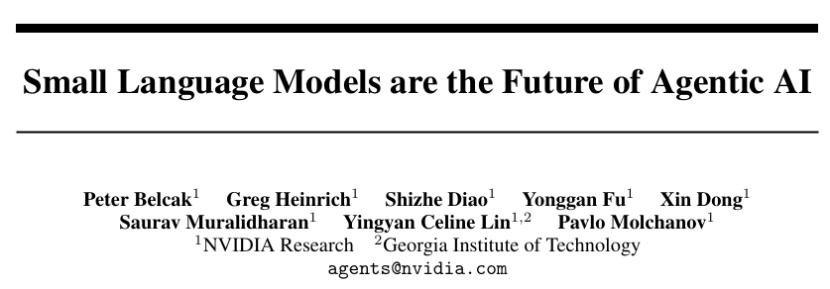
英伟达最新研究:小模型才是智能体的未来
3 6 Ke· 2025-08-05 09:45
Core Viewpoint - Small Language Models (SLMs) are considered the future of AI agents, as they are more efficient and cost-effective compared to large language models (LLMs) [1][3]. Group 1: Advantages of SLMs - SLMs are powerful enough to handle most repetitive and specialized tasks within AI agents [3]. - They are inherently better suited for the architecture of agent systems, being flexible and easy to integrate [3]. - Economically, SLMs significantly reduce operational costs, making them a more efficient choice for AI applications [3]. Group 2: Market Potential - The AI agent market is projected to grow from $5.2 billion in 2024 to $200 billion by 2034, with over half of enterprises already utilizing AI agents [5]. - Current AI agent tasks are often repetitive, such as "checking emails" and "generating reports," making the use of LLMs inefficient [5]. Group 3: SLM Characteristics - SLMs can be deployed on standard consumer devices, such as smartphones and laptops, and have fast inference speeds [9]. - Models with fewer than 1 billion parameters are classified as SLMs, while larger models typically require cloud support [9]. - SLMs are likened to a "portable brain," balancing efficiency and ease of iteration, unlike LLMs which are compared to "universe-level supercomputers" with high latency and costs [9]. Group 4: Performance Comparison - Cutting-edge small models like Phi-3 and Hymba can perform tasks comparable to 30B to 70B large models while reducing computational load by 10-30 times [11]. - Real-world tests showed that 60% of tasks in MetaGPT, 40% in Open Operator, and 70% in Cradle could be replaced by SLMs [11]. Group 5: Barriers to Adoption - The primary reason for the limited use of SLMs is path dependency, with significant investments (up to $57 billion) in centralized large model infrastructure [12]. - There is a strong industry bias towards the belief that "bigger is better," which has hindered the exploration of small models [12]. - SLMs lack the marketing hype that large models like GPT-4 have received, leading to fewer attempts to explore more cost-effective options [13].

首破10亿美元!“AI应用神话”Palantir Q2营收暴增48%,上调全年指引
Sou Hu Cai Jing· 2025-08-05 00:54
Core Viewpoint - Palantir's second-quarter earnings report highlights a significant surge in revenue driven by increased demand for AI applications, marking the company's first revenue exceeding $1 billion in a quarter and prompting an upward revision of its full-year guidance [1][2]. Financial Performance - In Q2, Palantir achieved revenue of $1.004 billion, surpassing the expected $940 million, and representing a year-over-year growth of 48% [2]. - The adjusted earnings per share (EPS) were reported at $0.16, exceeding the anticipated $0.14 [2]. - Revenue from U.S. operations grew by 68% year-over-year, reaching $733 million, with commercial revenue nearly doubling to $306 million [3]. Government Contracts and Growth - Palantir's revenue from U.S. government contracts increased by 53% to $426 million, accounting for over 42% of total revenue [4]. - The company completed 66 transactions exceeding $5 million and 42 transactions over $10 million, with total contract value rising 140% to $2.27 billion [4]. - Palantir has raised its full-year revenue forecast to a record high of $4.142 billion to $4.15 billion, up from a previous estimate of $3.89 billion to $3.9 billion [4]. Market Position and Valuation - Palantir's stock price surged nearly 5% post-earnings, with a cumulative increase of over 641% since June of the previous year, leading to a market capitalization exceeding $379 billion [1][6]. - The company's expected price-to-earnings (P/E) ratio stands at 276, indicating a high valuation compared to peers [6][7]. Strategic Insights - CEO Alex Karp emphasized the role of AI breakthroughs in driving growth and expressed ambitions for Palantir to become a dominant software company [6]. - The company aims to increase revenue while reducing employee count, targeting a tenfold revenue increase with a current workforce of 4,100 [6].

大模型年中报告:Anthropic 市场份额超 OpenAI,开源模型企业采用率下降
Founder Park· 2025-08-04 13:38
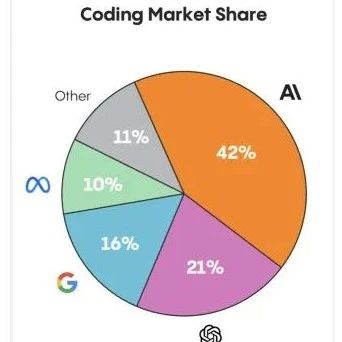
Core Insights - The foundational large models are not only the core engine of generative AI but are also shaping the future of computing [2] - There has been a significant increase in model API spending, which rose from $3.5 billion to $8.4 billion, indicating a shift in focus from model training to model inference [2] - The emergence of "code generation" as the first large-scale application of AI marks a pivotal development in the industry [2] Group 1: Market Dynamics - Anthropic has surpassed OpenAI in enterprise usage, with a market share of 32% compared to OpenAI's 25%, which has halved from two years ago [9][12] - The release of Claude Sonnet 3.5 in June 2024 initiated Anthropic's rise, further accelerated by subsequent releases [12] - The code generation application has become a killer app for AI, with Claude capturing 42% of the market, significantly outperforming OpenAI's 21% [13] Group 2: Trends in Model Adoption - The adoption of open-source models in enterprises has slightly declined from 19% to 13%, with Meta's Llama series still leading [17] - Despite the continuous progress in open-source models, they lag behind closed-source models by 9 to 12 months in performance [17][20] - Developers prioritize performance over cost when selecting models, with 66% opting to upgrade within their existing supplier ecosystem [24][27] Group 3: Shift in AI Spending - AI spending is transitioning from model training to inference, with 74% of model developers indicating that most of their tasks are now driven by inference, up from 48% a year ago [31]
直播电商“兴趣产业带”为实体经济发展注入新活力
Zhong Guo Xin Wen Wang· 2025-08-04 10:10
Group 1 - The core viewpoint is that short video and live streaming e-commerce platforms, such as Douyin, are becoming dominant organizational methods in the digital economy, enabling physical businesses to break spatial and temporal limitations and provide higher quality products and services through digital means [1][2] - The integration of live streaming e-commerce with "interest industry belts" significantly reduces transaction costs and enhances profitability for traditional manufacturing enterprises, allowing them to respond quickly to consumer demands and trends [3][4] - Live streaming e-commerce empowers "interest industry belts" by creating new consumption models and connecting supply and demand, enabling manufacturers to better target niche markets and adapt to changing consumer preferences [4][5] Group 2 - Short video and live streaming platforms help manufacturing enterprises build their own brands and meet new consumer demands by offering personalized products and enhancing consumer trust through direct content presentation [5] - The rise of "interest industry belts" driven by live streaming e-commerce fosters the development of new brands and stimulates diverse consumer needs, contributing to the overall growth of the digital economy [2][4]
LLM抢人血案:强化学习天才被挖空,一朝沦为「无人区」
3 6 Ke· 2025-08-04 07:22
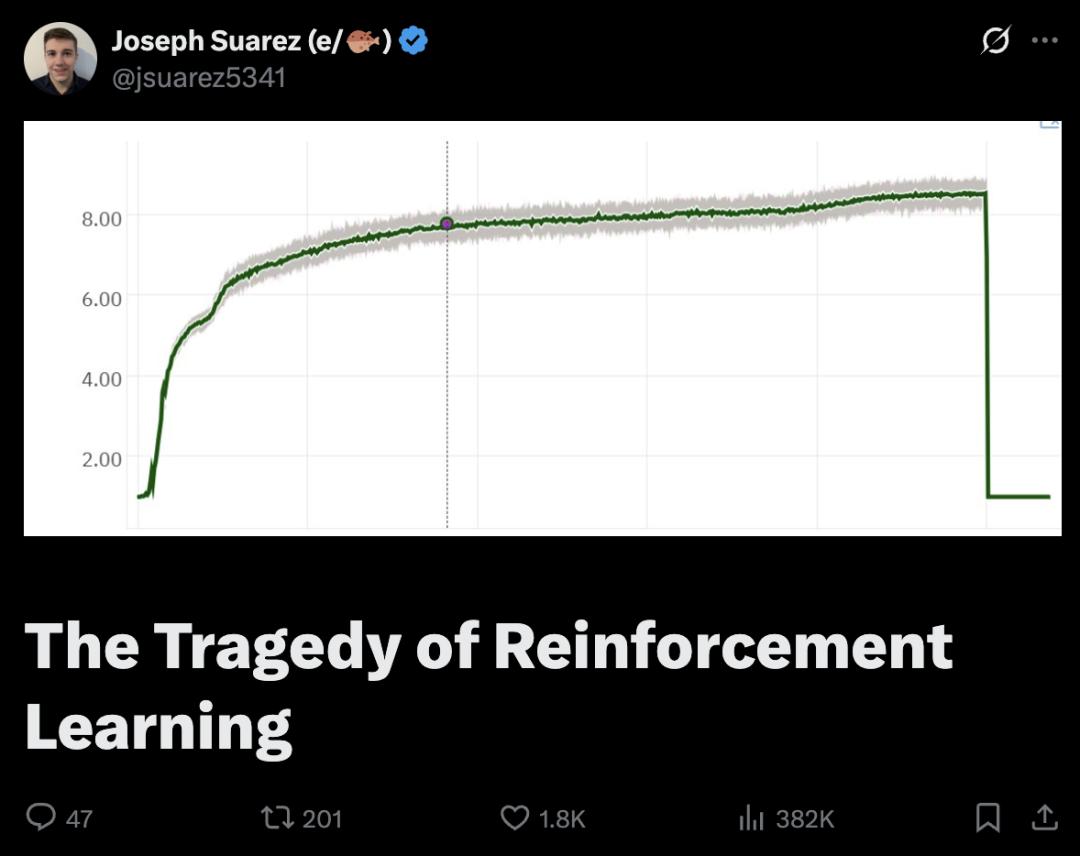
最近,斯坦福的AI+CS博士Joseph Suarez发表了对强化学习的历史回顾。 结果,在上火了!目前,已有38.2万阅读。 封面可谓醒目:一条曲线线先是快速上升,然后平缓爬升,最后却急转直下 ,暗喻RL领域的研究前途不妙! 从历史角度看,强化学习发生了什么?为什么到现在它才真正开始起飞? 他提供了独特的个人视角。 师出名门 2019年, 他本科毕业于斯坦福大学计算机科学专业人工智能方向。 2018年,他利用休学期在OpenAI完成6个月实习,期间正式发布Neural MMO首个公开版本 更早之前,他曾在李飞飞课题组、吴恩达实验室参与过研究项目。 大约从2017年,他开始从事强化学习。 当时,他在麻省理工学院Phillip Isola实验室攻读博士,开始创建开源计算研究平台Neural MMO。 他的研究聚焦于推动现代基于智能体的学习方法向更复杂、更具认知真实性的环境拓展。 后来,这个项目后来成为他整个博士生毕业论文的的主题。 当时,各大实验室也在做从零开始、非语言模型的强化学习RL。 事实上,这是当时大多数工作的重点:多智能体(multiagent)刚刚兴起,所有核心算法刚刚发布。 AlphaGo让研究者 ...
在WAIC耳朵听出茧子的「智能体」,是时候系统学一下了
机器之心· 2025-08-04 07:05
Core Insights - The article emphasizes the shift in perception of AI large models from simple chatbots to intelligent agents capable of proactive thinking, planning, and task execution [1][2]. Group 1: LLM and Its Capabilities - Standard LLMs generate text responses based on given prompts, showcasing their versatility as a significant advantage [5]. - The integration of reasoning and external API interactions into LLMs is crucial for developing advanced AI agents [6]. Group 2: Tool Utilization - The ability to teach LLMs to integrate and use external tools has become a hot topic in AI research, with examples including calculators, calendars, and search engines [7]. - LLMs can act as "commanders" that coordinate various specialized tools to solve problems effectively [8]. Group 3: Reasoning Models - Reasoning capabilities have been a core focus in LLM research, with the ability to break down complex problems into smaller tasks and determine which tools to use being essential [21][23]. - The Chain of Thought (CoT) method enhances LLMs' reasoning by guiding them to generate a reasoning process before arriving at a final output [24][25]. Group 4: ReAct Framework - The ReAct framework allows LLM-driven agents to autonomously decompose and solve complex problems through a sequential process that integrates reasoning and action [41]. - The framework expands the action space to include language as a form of action, enabling agents to "think" in addition to executing actions [46][49]. Group 5: Applications and Performance - ReAct has been applied in knowledge-intensive reasoning tasks and decision-making scenarios, demonstrating its effectiveness in various contexts [63][64]. - Performance comparisons show that ReAct consistently outperforms other models, highlighting the importance of reasoning during action execution [77]. Group 6: Future of AI Agents - The development of reliable AI agent systems is crucial, as current systems may fail if any step in the sequential problem-solving process goes wrong [114]. - Ongoing research aims to enhance the capabilities and reliability of AI agents, indicating significant advancements in the near future [115].

人形机器人商业化进程加速!订单密集公布,下个突破点在哪?
Zhong Guo Zheng Quan Bao· 2025-08-03 22:54
Core Insights - The humanoid robot industry is expected to enter a year of mass production, with several companies announcing significant product orders and financing activities [1][2][5] Group 1: Production and Orders - Songyan Power achieved a record monthly production and delivery of 105 humanoid robots in July, a 176% increase month-over-month, with over 2,000 intention orders and a contract value exceeding 100 million yuan [2] - Galaxy General reported receiving orders for its supermarket service robots from 100 stores, aiming for nationwide deployment by the end of the year [2] - Star Motion Era's Q5 robot has received dozens of orders, with an expected delivery of 100 units this year, priced between 400,000 to 500,000 yuan each [3] - Yubiquitous announced over 100 orders for its humanoid robot, Tian Gong Xing Zhe, with expected deliveries exceeding 300 units in the education and research sector [3] - Zhi Yuan Robotics plans to deliver thousands of humanoid robots this year, with over 2,000 already in production [3] Group 2: Financing Activities - Zhi Yuan Robotics completed a new round of strategic financing led by LG Electronics and Mirae Asset Group, following previous investments from major industry players [5] - Yushu Technology has initiated its listing process, with evaluations scheduled for October to December [6] - Star Motion Era and Yun Shen Chu announced nearly 500 million yuan in financing, while other companies like Galaxy General and Magic Atom also secured significant funding [6] Group 3: Technological Advancements and Challenges - The humanoid robot industry is facing a need for technological breakthroughs to achieve commercial viability, particularly in enhancing the success rate and generalization capabilities of robots [7] - The industry is expected to see a significant application promotion wave by the second half of 2025, as indicated by Morgan Stanley [4] - Companies are focusing on creating tools and platforms to support the commercialization of humanoid robots, such as Tencent's Tairos and Zhi Yuan's open-source operating system [8]
