
对等关税

Search documents
最高50%!特朗普再宣称对8国加征关税,缘何摩尔多瓦也上榜?
Di Yi Cai Jing· 2025-07-10 07:15
Core Points - The latest tariff letters from President Trump target eight countries, including Brazil, the Philippines, and Moldova, with varying rates of tariffs set to begin on August 1, 2025 [2] - Tariffs on products from the Philippines will be 20%, while those from Brunei and Moldova will face 25%. Algeria, Iraq, Sri Lanka, and Libya will see a 30% tariff, and Brazil will face a 50% tariff [2] - Compared to previous rates announced in April, tariffs on Iraq and Sri Lanka have decreased from 39% and 44% to 30%, while the tariff on the Philippines has increased from 17% to 20% [2] Group 1 - Trump criticized Brazil for "unfair trade practices" and indicated that the 50% tariff is still below what is necessary for fair competition [4] - He warned that if Brazil retaliates with higher tariffs on U.S. goods, the U.S. may increase tariffs on Brazil beyond 50% [4] - Trump has instructed the U.S. Trade Representative to initiate a Section 301 investigation against Brazil, suggesting potential adjustments to tariffs based on trade relations [5] Group 2 - The inclusion of Moldova in the tariff letters is notable, as the trade deficit with the U.S. was only $85 million last year, raising questions about the rationale behind the designation [6] - Experts suggest that the U.S. government has previously focused too much on major trading partners, neglecting smaller countries, and the current approach appears to lack a coherent strategy [6] - The trade policy being executed by the Trump administration is seen as consistent, based on perceptions of "reciprocity" and trade imbalances, without differentiating between countries [6]

抢出口!越南上半年GDP增速创14年新高,后续要警惕哪些风险?
Di Yi Cai Jing· 2025-07-10 06:49
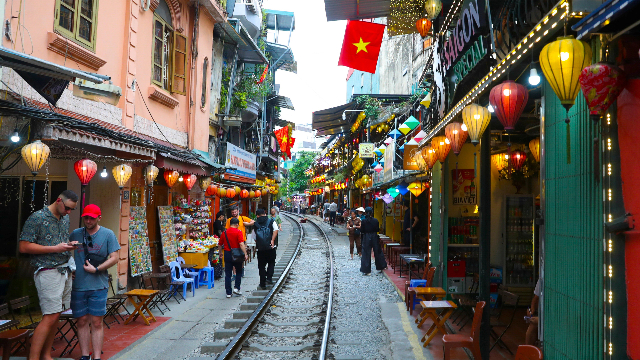
Economic Growth - Vietnam's GDP growth rate for the first half of the year reached 7.52%, the highest level for the same period since 2011 [1][3] - The OECD predicts Vietnam's GDP growth will slow to 6.2% this year and 6% next year due to global policy uncertainties [4] Export Performance - Vietnam's total export value increased by 14.4% year-on-year in the first half of the year, with the most significant growth in computers and electronic products, which saw a 42% increase [3][5] - The United States remains Vietnam's largest export market, with an export value of $70.91 billion in the first half of the year [3] Trade Agreements and Tariffs - A trade agreement between the U.S. and Vietnam was announced, imposing at least a 20% tariff on all Vietnamese exports to the U.S., while a temporary "equal tariff" period allows for a 10% baseline tariff [1][5] - Vietnamese companies are rushing to fulfill orders before the higher tariffs take effect, indicating a heightened urgency in the manufacturing sector [5] Industry Challenges - Despite strong overall economic growth, certain sectors like textiles, leather, and wood processing are facing challenges with order growth [3] - Domestic consumption in Vietnam shows signs of recovery, but cautious sentiment persists among consumers [3] Investment Factors - Factors contributing to Vietnam's economic growth include increased public infrastructure investment, a recovering real estate market, and significant administrative reforms by the government [6]
特朗普发出新一轮关税威胁,为何瞄准东亚和东南亚?
Xin Lang Cai Jing· 2025-07-10 06:44
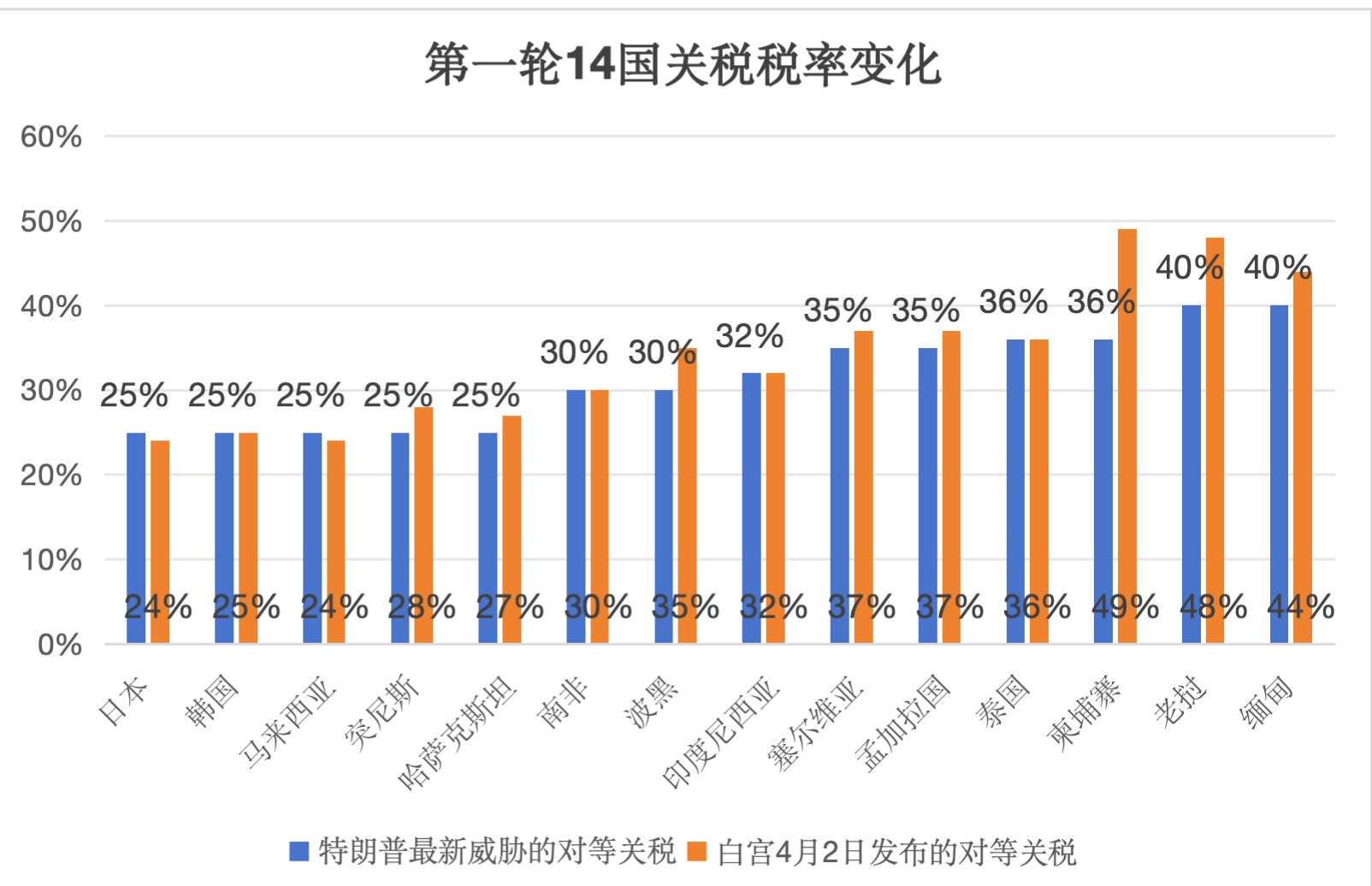
Core Viewpoint - The article discusses the recent developments in the U.S. tariff policy under President Trump, highlighting the focus on East and Southeast Asia, and the implications of the ongoing trade negotiations with various countries [1][3][5]. Tariff Policy Updates - Trump announced a reciprocal tariff plan with a baseline rate of 10%, targeting countries with significant trade surpluses with the U.S. [1] - The implementation date for these tariffs has been postponed from July 9 to August 1, with potential rates ranging from 25% to 40% for 14 countries if agreements are not reached [1][3]. - The latest tariff rates have not increased overall compared to three months ago, with some countries seeing rate reductions [4]. Trade Negotiation Dynamics - The U.S. has only reached framework agreements with the UK, China, and Vietnam, while negotiations with traditional allies like Japan and South Korea remain stalled [3][5]. - Analysts suggest that Trump's approach is a pressure tactic aimed at countries that have not reached timely agreements with the U.S. [3][6]. Country-Specific Impacts - Japan's tariff rate has been increased by 1% to 25%, while other countries like South Korea and Thailand have maintained their rates [4]. - The impact of the reciprocal tariffs on Japan and South Korea is mitigated as these tariffs do not apply to products already subject to specific industry tariffs [6]. Future Negotiation Outlook - If no agreements are reached by August 1, the U.S.'s negotiating power may decline, forcing a shift in focus back to domestic issues ahead of the midterm elections [7]. - Analysts predict that the final tariff rates may stabilize around 10% for allied countries, 20% for friendly nations, and 40% for competitive countries [8].
中美经贸关系稳下来、好起来,有利于两国和世界|专家热评
Di Yi Cai Jing· 2025-07-10 06:36
Group 1 - The core development in US-China economic relations is the transition from a "tariff truce" in Geneva to the establishment and implementation of the "London Framework," indicating a significant adjustment in posture between the two nations [1][2] - The "London Framework" includes key agreements such as China's approval of export licenses for controlled items and the US's cancellation of a series of restrictive measures against China [1][2] - As of July 4, US companies have been notified by the Department of Commerce that exports of EDA software, ethane, and certain aircraft engine components to China have been restored, while China is expediting the approval of export licenses for strategic resources like rare earths [1][2] Group 2 - Despite progress, structural challenges remain in US-China economic relations, particularly in areas like AI chips and quantum computing, where US restrictions are still in place [3] - The implementation of "reciprocal tariffs" by the US has not yielded benefits and has led to market turmoil, highlighting the need for continued dialogue and cooperation [3] - The US is encouraged to expand the scope of lifted restrictions and seek broader cooperation, moving beyond a zero-sum mindset to view China as an equal partner [3][4] Group 3 - The ideal future state of US-China economic relations should shift from friction and conflict to cooperation and mutual benefit, emphasizing the importance of managing competition while expanding collaboration [4] - Mechanized dialogue is essential to transform the "measures framework" into a "results list," achieving breakthroughs in tariff reductions, technological cooperation, and rule restructuring [4] - The Geneva-London negotiations mark the beginning of this transition, but further progress requires mutual actions and the accumulation of political and economic trust [4]
弱需求叠加新装置预期,PTA基差快速走弱
Hua Tai Qi Huo· 2025-07-10 05:36
化工日报 | 2025-07-10 弱需求叠加新装置预期,PTA基差快速走弱 市场要闻与数据 需求方面,聚酯开工率90.2%(环比-1.2%),内外销进入淡季,终端订单和开工呈现下滑趋势,但聚酯表现相对良 性,负荷表现坚挺, 短期长丝负荷预计还能维持,继续关注聚酯库存变化;短纤库存不高,虽然也有减产消息,但 实际执行力度存疑;瓶片方面,华润6.22检修20%已执行,万凯逸盛计划7月初开始检修,涉及产能170万吨,7月 聚酯负荷预计下降至89%~90%,关注实际兑现情况。 PF方面,现货生产利润262元/吨(环比+36元/吨)。短纤现货偏紧、库存不高,PF自身基本面尚可,但下游对原料 高价位接受能力有限,大多刚需采购为主,,但需求走弱预期,关注成本端支撑。 PR方面,瓶片现货加工费405元/吨(环比变动+35元/吨),随着价格下跌,市场贸易商和下游客户补仓动作有所增多。 基本面方面,逸盛和万凯检修逐步兑现中,预计瓶片负荷将进一步下滑。短期而言,在减产逐步兑现下瓶片加工 费预计会有所修复,但上方空间有限. 策略 弱需求叠加新装置预期,PTA基差快速走弱,市场预期三房巷PTA新装置提前至7月投产。 市场分析 成本端 ...
特朗普对巴西发难,提出50%关税
3 6 Ke· 2025-07-10 03:41
Group 1 - The core point of the news is the announcement by President Trump regarding new reciprocal tariff rates for eight countries, with Brazil facing a significant increase to 50% starting August 1 [1][2] - The new tariff rates for the other countries include 20% for the Philippines, 25% for Brunei and Moldova, and 30% for Sri Lanka, Algeria, Iraq, and Libya [1] - The U.S. had previously proposed a much lower tariff rate of 10% for Brazil due to a slight trade surplus, indicating a shift in trade policy [1] Group 2 - Trump criticized Brazil's digital policies, claiming they unfairly target U.S. companies, and indicated that the U.S. Trade Representative would investigate under Section 301 of the Trade Act [2] - There is a possibility of additional retaliatory tariffs on top of the 50% rate based on the investigation's findings [2] Group 3 - Trump referred to the judicial actions against former Brazilian President Bolsonaro as a "witch hunt" and called for an immediate halt to these actions, suggesting that Brazil should hold a national election [3] - The Brazilian government expressed strong opposition to Trump's comments, asserting its sovereignty and rejecting external interference [3] Group 4 - Trump also criticized Brazil's measures against misinformation, labeling them as illegal censorship of U.S. social media [4] - The Brazilian Supreme Court has mandated the removal of accounts deemed harmful due to misinformation, which has led to legal disputes involving Trump's social media company [4] Group 5 - The U.S. has not yet announced tariff rates for major trading partners such as the EU, India, and Taiwan, with negotiations ongoing [5] - Trump indicated that a decision regarding the EU would be communicated shortly, suggesting a potential temporary agreement to avoid significant tariff increases on key products [6] Group 6 - The EU is reportedly seeking a temporary agreement with the U.S. to prevent tariff increases on important products like aircraft and spirits, while also requesting a reduction in automotive tariffs [6]
金十整理:对等关税2.0vs1.0,哪些国家关税遭上调,哪些国家获得了特朗普的“优惠”?
news flash· 2025-07-10 03:12
Tariff Increases - Japan will face a 25% tariff starting August 1, up from 24% in April [1] - Brazil will see a significant increase to 50% from 10% in April [1] - Brunei's tariff will rise to 25% from 24% [1] - The Philippines will experience a tariff increase to 20% from 17% [1] - Malaysia's tariff will also increase to 25% from 24% [1] Tariff Stability - South Korea's tariff remains at 25% [2] - Thailand's tariff stays at 36% [2] - South Africa will maintain a 30% tariff [2] - Indonesia's tariff will remain at 32% [2] - Algeria's tariff is unchanged at 30% [2] Tariff Decreases - Laos will see a decrease to 40% from 48% [3] - Myanmar's tariff will drop to 40% from 44% [3] - Bosnia and Herzegovina will have a reduced tariff of 30% from 35% [3] - Cambodia's tariff will decrease to 36% from 49% [3] - Iraq's tariff will be lowered to 30% from 39% [3] - Tunisia will see a reduction to 25% from 28% [3] - Libya's tariff will decrease to 30% from 31% [3] - Moldova's tariff will drop to 25% from 31% [3] - Sri Lanka's tariff will be reduced to 30% from 44% [3] - Bangladesh will see a decrease to 35% from 37% [3] - Serbia's tariff will also drop to 35% from 37% [3] - Kazakhstan's tariff will decrease to 25% from 27% [3] Additional Information - On July 8, Trump indicated that a letter regarding tariffs might be sent to the EU within two days [4]
全球航运与供应链在关税不确定性中“漂泊”
Huan Qiu Wang· 2025-07-10 03:00
Core Insights - The U.S. President has extended the "reciprocal tariff" deferral period to August 1, which is expected to impact global shipping and supply chains significantly [1] - The extension has not led to a new surge in imports, with Los Angeles port data showing a 5% year-on-year decline in TEU volume for May and an anticipated 27% decline in July [1] - High inventory levels among U.S. retailers, resulting from a previous import rush, are contributing to weak shipping demand and falling freight rates, with container shipping costs down 5.7% month-on-month and over 20% from peak levels [1] Shipping Industry Challenges - Shipping giant Maersk has noted that declining policy transparency and changing deadlines are affecting transportation decisions, with an average tariff burden of approximately 21% [2] - Geopolitical conflicts are also raising insurance costs, with war risk insurance rates increasing, particularly for Israeli ports, which have surged to 0.7% [4] - Companies are advised to adopt multi-faceted strategies to navigate these challenges, including renegotiating with freight forwarders, testing crisis plans, optimizing transportation in high-risk areas, diversifying supply chains, adjusting pricing efficiency, and expanding insurance coverage [4] Long-term Implications - The trend of rising costs due to tariff policies is likely to impact global manufacturing and consumers, with the restructuring of supply chains facing uncertainties and challenges from both policy and geopolitical factors [4]
特朗普对巴西发难,提出50%关税
日经中文网· 2025-07-10 02:36
Group 1: Tariff Changes - The U.S. will impose a new reciprocal tariff rate of 50% on Brazil starting August 1, significantly higher than the previous rate of 10% [1][2] - Other countries receiving new tariff rates include the Philippines at 20%, and Brunei and Moldova at 25% [1] - The U.S. trade surplus with Brazil influenced the initial lower tariff rate announced in April [1] Group 2: Political Tensions - Trump criticized Brazil's digital policies, claiming they unfairly target U.S. companies, and indicated a potential investigation under Section 301 of the Trade Act [2] - The letter to Brazil also condemned the trial of former President Bolsonaro, labeling it a "witch hunt" and calling for its immediate cessation [3] - Brazil's government expressed strong opposition to Trump's comments, asserting its sovereignty and rejecting external interference [3] Group 3: Legal and Regulatory Issues - Brazil's Supreme Court has mandated the removal of accounts deemed harmful for spreading misinformation, leading to a ban on X (formerly Twitter) in Brazil for non-compliance [4] - Trump's social media platform, Truth Social, is engaged in legal battles with Brazilian authorities over the removal of right-wing accounts [4] Group 4: EU Trade Negotiations - The U.S. has not yet announced tariff rates for the EU, India, and Taiwan, with a delay in notifying the EU being noted [5][6] - Trump indicated that negotiations with the EU are ongoing, with a focus on avoiding a 50% tariff on key products like aircraft and spirits [6] - The EU is seeking to negotiate lower tariffs on automobiles, potentially based on the production levels of European manufacturers in the U.S. [6]
中信期货晨报:国内商品期货大面积飘红,金银价格回调-20250710
Zhong Xin Qi Huo· 2025-07-10 01:15
投资咨询业务资格:证监许可【2012】669号 国内商品期货大面积飘红,金银价格回调 ——中信期货晨报20250710 中信期货研究所 重要提示:本报告非期货交易咨询业务项下服务,其中的观点和信息仅作参考之用,不构成对任何人的投资建议。我司不会因为关注、收到或阅读 本报告内容而视相关人员为客户;市场有风险,投资需谨慎。 仲鼎 从业资格号F03107932 投资咨询号Z0021450 重要提示:本报告非期货交易咨询业务项下服务,其中的观点和信息仅作参考之用,不构成对任何人的投资建议。 我司不会因为关注、收到或阅读本报告内容而视相关人员为客户;市场有风险,投资需谨慎。 金融市场涨跌幅 国内主要商品涨跌幅 | 板块 | 品种 | | | 现价 日度涨跌幅 周度涨跌幅 月度涨跌幅 季度涨跌幅 今年涨跌幅 | | | 板块 品种 | | | | 现价 日度涨跌幅 周度涨跌幅 月度涨跌幅 季度涨跌幅 今年涨跌幅 | | | | --- | --- | --- | --- | --- | --- | --- | --- | --- | --- | --- | --- | --- | --- | | 股指 | 沪深300期货 ...