经济复苏

Search documents
国际金融市场早知道:5月6日
Xin Hua Cai Jing· 2025-05-06 01:13
Group 1 - The 28th ASEAN Plus Three (10+3) Finance Ministers and Central Bank Governors Meeting was held in Milan, discussing global and regional macroeconomic conditions and financial cooperation [1] - The Hong Kong Monetary Authority sold a total of HKD 116.614 billion over three days to stabilize the Hong Kong dollar exchange rate, ensuring the effectiveness of the linked exchange rate system [1] - President Trump announced a 100% tariff on all foreign-produced films entering the U.S. market as part of a broader trade strategy aimed at negotiating new trade agreements with multiple countries [1] Group 2 - California Governor Gavin Newsom stated that the Trump administration's tariff policies have significantly harmed California, but the state remains committed to maintaining long-term trade relations with China [2] - The U.S. Bureau of Labor Statistics reported an increase of 177,000 non-farm jobs in April, with the unemployment rate remaining unchanged at 4.2% [2] - Eurozone inflation levels remained stable, and the manufacturing Purchasing Managers' Index (PMI) showed improvement, indicating a gradual recovery in the European economy [2] Group 3 - Japan's official unemployment rate for March was reported at 2.5%, slightly above expectations [3] Group 4 - The Dow Jones Industrial Average fell by 0.24% to 41,218.83 points, the S&P 500 dropped by 0.64% to 5,650.38 points, and the Nasdaq Composite decreased by 0.74% to 17,844.24 points [4] Group 5 - COMEX gold futures rose by 3.09% to USD 3,343.50 per ounce, while COMEX silver futures increased by 1.29% to USD 32.68 per ounce [5] Group 6 - U.S. crude oil main contract fell by 1.82% to USD 57.23 per barrel, and Brent crude oil main contract decreased by 1.55% to USD 60.34 per barrel [6] - The 2-year U.S. Treasury yield rose by 1.86 basis points to 3.8302%, the 5-year yield increased by 2.1 basis points to 3.9376%, the 10-year yield rose by 3.5 basis points to 4.3433%, and the 30-year yield increased by 4.67 basis points to 4.8336% [6] - The U.S. dollar index fell by 0.25% to 99.79, while the euro rose by 0.14% against the dollar to 1.1316 [6]
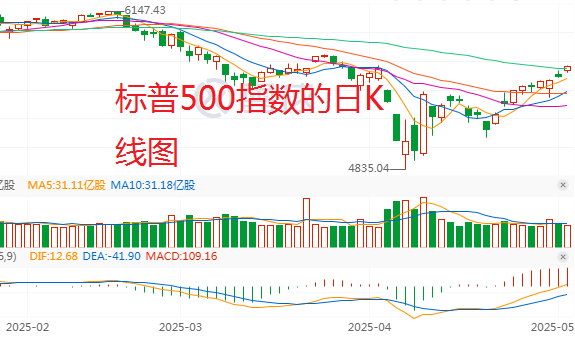
继续上涨,A股节后也将接力,不然白搭了!
Sou Hu Cai Jing· 2025-05-03 05:58
Group 1 - The core viewpoint is that the U.S. stock market has shown significant recovery, with the Dow Jones and S&P 500 indices achieving a nine-day winning streak, marking the longest consecutive rise since 2004, indicating strong market sentiment [1] - The A-share market is currently trading below 3,300 points, presenting a valuation attractiveness compared to global markets, with lower price-to-earnings and price-to-book ratios [2] - The recent rally in the U.S. stock market was supported by prior gains in the A-share market, suggesting a potential for A-shares to follow suit in the global bullish trend [3] Group 2 - The prolonged low valuation of A-shares indicates a lack of sustained upward momentum in the market, suggesting that being "cheap" has become a long-term trend rather than a temporary state [4] - Despite the attractive valuations, funds are hesitant to enter the market due to doubts about the sustainability of economic recovery and corporate profit improvements, creating a paradox where lower prices lead to lower buying interest [5] - For the market to thrive, it requires not only value support but also visible profit potential and investor confidence, as a lack of market enthusiasm can lead to liquidity issues [7]

美国财政部:鉴于自俄罗斯全面侵犯乌克兰以来,美国人民为乌克兰的防务提供了重要的财政和物质支持,这一经济伙伴关系使我们两国能够合作并共同投资,以确保我们共同的资产、人才和能力能够加速乌克兰的经济复苏。
news flash· 2025-04-30 21:41
Core Viewpoint - The U.S. Treasury emphasizes the significant financial and material support provided by the American people to Ukraine's defense since the onset of Russia's full-scale invasion, highlighting a strong economic partnership that enables collaboration and investment to accelerate Ukraine's economic recovery [1] Group 1 - The U.S. has provided important financial and material support to Ukraine since the beginning of the conflict with Russia [1] - This economic partnership allows for collaboration and joint investment between the U.S. and Ukraine [1] - The focus is on ensuring shared assets, talent, and capabilities to facilitate Ukraine's economic recovery [1]
股指期货周报-20250430
Rui Da Qi Huo· 2025-04-30 10:48
业务咨询 瑞达期货研究院 「2025.4.30」 股指期货周报 作者:廖宏斌 期货从业资格号F30825507 期货投资咨询证号:Z0020723 联系电话:4008-8787-66 添加客服 关 注 我 们 获 取 更 多 资 讯 目录 1、行情回顾 2、消息面概览 3、周度市场数据 4、行情展望与策略 1、行情回顾 2020.06.30 厦门 「行情回顾」 「摘要」 • 周度观点:A股主要指数本周窄幅震荡,三大指数涨跌不一。四期指表现分化,中小盘股强 于大盘蓝筹股。本周,据中国官方PMI数据,国内经济受外部环境冲击呈现"制造业短期承 压、非制造业韧性支撑"的特征,但经济复苏态势不变。此外,受假期不确定性影响,市场 情绪相对谨慎。本周,市场成交活跃度与上周基本一致,成交金额维持在1万亿元左右。 2 来源:瑞达期货研究院 | 期货 | 合约名称 | 周涨跌幅% | 周三涨跌幅% | 收盘价 | | --- | --- | --- | --- | --- | | | IF2506 | -0.60 | -0.17 | 3752.00 | | | IH2506 | -0.67 | -0.48 | 2627.20 | ...
德专家:美贸易政策是德国经济面临的最大不确定性
news flash· 2025-04-30 10:44
Core Points - Germany's GDP showed a slight recovery of 0.2% in the first quarter of this year according to preliminary data from the Federal Statistical Office [1] - Economic experts have warned that the outlook for Germany's economic recovery remains grim, with the possibility of a recession re-emerging in the summer [1]
中国A股策略|25年A股二季度展望
野村东方国际证券· 2025-04-28 09:35
■■ 回顾:亚太股市重拾外资关注 在特朗普新政与美国经济走弱的预期影响下,逆向投资成为了2025年一季度最有效的投资策略。过去两年大 幅上涨的美日股市收跌,而恒生指数领跑亚太。欧洲国家在财政赤字扩大和俄乌冲突停火可能性上升的背景 下领跑发达国家股市。此外Deepseek等AI agent获得了更广泛的市场关注,并带动全球科技投资者进行国别 资产再平衡,这成为了推动中国科技股表现的另外一个因素。 基于美国经济走弱、美联储政策摇摆以及特朗普政府带动地缘风险升温这三点因素,我们认为国际资金将持 续出现交易一致性的松动,国际投资者将开始尝试寻求美国资产以外的备选投资方案。我们认为国际资本流 出美股所面临的"资产荒"将成为影响二季度全球股市最重要的驱动因素,面对诸多不确定性,具备资金规模 容量优势的中国股市(A股及港股)有望成为外资全球配置的重要选项。此外,当前基本面的改善趋势仍未 成为市场共识,且市场仍需要更充分的数据验证经济的复苏趋势,因此我们认为资金面的变化在二季度将较 基本面有更强的定价权。虽然海外地缘不确定性将加剧市场的波动率水平,但资金面改善将有望通过估值扩 张带动A股市场走强。 下调对沪深300的净利润增 ...
西南期货早间评论-20250428
Xi Nan Qi Huo· 2025-04-28 02:57
Report Industry Investment Ratings No relevant content provided. Core Views of the Report - The report analyzes various commodities including bonds, stocks, precious metals, and industrial and agricultural products, providing market trends, influencing factors, and investment strategies for each [5][8][10]. - Overall, the market is affected by factors such as tariffs, economic policies, and supply - demand relationships, with different commodities showing different trends and investment opportunities [6][8][22]. Summary by Commodity Bonds - Last trading day, most bond futures closed higher. The central bank conducted 159.5 billion yuan of 7 - day reverse repurchase operations, with a net withdrawal of 91 billion yuan. The government plans to implement more active fiscal and monetary policies [5]. - Although external environment is favorable for bond futures, current bond yields are relatively low. China's economy shows a stable recovery trend, so it is recommended to be cautious [6]. - It is expected that the fluctuation range will increase, and caution should be maintained [7]. Stocks - Last trading day, stock index futures showed mixed performance. Although tariffs disrupt the domestic economic recovery rhythm and global recession risk increases, domestic asset valuations are low and policies have hedging space [8]. - It is still optimistic about the long - term performance of Chinese equity assets and suggests waiting for long - entry opportunities [9]. Precious Metals - Last trading day, gold and silver futures prices declined. The US consumer confidence index and inflation expectations have certain impacts [10]. - The complex global trade and financial environment, potential monetary policy easing, and tariff environment are expected to drive up the price of gold. It is still optimistic about the long - term value of gold, and it is recommended to take profit on previous long positions and wait for new long - entry opportunities [10][11]. Industrial Metals - **Steel Products (including rebar, hot - rolled coil)**: Last trading day, prices slightly declined. The real - estate industry's downturn suppresses demand, but the peak demand season may provide short - term support. Valuations are low, and there are signs of technical support. It is recommended to look for short - selling opportunities on rebounds [12]. - **Iron Ore**: Last trading day, prices slightly adjusted. The increase in iron ore demand and the decrease in supply and inventory support prices. Valuations are relatively high. It is recommended to look for long - entry opportunities at low levels [14]. - **Coking Coal and Coke**: Last trading day, prices slightly declined. Coking coal supply is loose, while coke demand has improved to some extent. There are signs of a technical bottom. It is recommended to look for short - selling opportunities on rebounds [16]. - **Ferroalloys**: Last trading day, prices declined. Manganese ore supply may be disrupted, and the supply - demand situation of ferroalloys is gradually improving. It is recommended to consider call options on manganese silicon and short - covering opportunities on silicon iron [18][19]. - **Copper**: Last trading day, prices rose. The cooling of tariff disputes and the possibility of a Fed rate cut in June support prices. It is expected that prices will be strong, and long - entry operations are recommended [48][49]. - **Tin**: Last trading day, prices declined. Affected by tariffs, price fluctuations have intensified. The supply side has both positive and negative factors, and demand is good. It is expected that prices will fluctuate, and risk control is needed [50][51]. - **Nickel**: Last trading day, prices declined. Affected by tariffs, the market sentiment is pessimistic. The supply side has cost support, but demand may weaken in the off - season. It is recommended to control risks and wait and see [52]. - **Industrial Silicon/Polysilicon**: Last trading day, prices declined. The supply - demand imbalance persists, and costs are expected to decrease. It is recommended to short - sell at high levels on rebounds [53][55]. Energy and Chemicals - **Crude Oil**: Last trading day, prices fluctuated upward. The increase in net long positions of speculators and the increase in the number of oil and gas rigs are noteworthy. The Sino - US negotiation and OPEC's production policy are uncertain. It is recommended to wait and see [20][23]. - **Fuel Oil**: Last trading day, prices followed crude oil and fluctuated higher. The high - sulfur fuel oil market may enter the peak demand season, and the low - sulfur fuel oil market is stable. Due to the sanctions on Russia, the supply of high - sulfur fuel oil is expected to be tight. It is recommended to wait and see [24][25]. - **Synthetic Rubber**: Last trading day, prices rose. Supply pressure persists, demand improvement is limited, and costs are stable. It is expected that prices will fluctuate [26][28]. - **Natural Rubber**: Last trading day, prices showed mixed performance. The supply is expected to increase, and demand is affected by tariffs. It is expected that prices will be weakly volatile [29][30]. - **PVC**: Last trading day, prices declined. Supply pressure eases, demand recovers weakly, and inventory removal is slow. It is expected that prices will fluctuate at the bottom [31][33]. - **Urea**: Last trading day, prices declined. Agricultural demand will weaken seasonally, and new production capacity will be released. It is expected that prices will be weakly volatile in the short term [34][35]. - **PX**: Last trading day, prices rose. PX device maintenance reduces supply, and downstream demand improves. Affected by crude oil prices, it is expected that prices will fluctuate with the cost side [36][37]. - **PTA**: Last trading day, prices rose. Supply increases, demand improvement is less than expected, and costs provide support. It is expected that prices will fluctuate with the cost side [38]. - **Ethylene Glycol**: Last trading day, prices declined. Supply increases, inventory removal is difficult, and demand is affected by tariffs. It is expected that prices will fluctuate at the bottom [39][40]. - **Short - Fiber**: Last trading day, prices rose. Supply is at a relatively high level, demand is weak, and costs provide limited support. It is expected that prices will fluctuate with the cost side [41]. - **Bottle Chips**: Last trading day, prices rose. Raw material prices recover, supply increases slightly, and demand improves. It is expected that prices will fluctuate with the cost side [42]. - **Soda Ash**: Last trading day, prices declined. Supply remains high, demand is weak, and inventory removal is slow. It is expected that the market will remain weak in the short term [43]. - **Glass**: Last trading day, prices declined. Production lines are at a low level, inventory changes little, and demand is affected by tariffs. It is expected that the market sentiment will be weak [44]. - **Caustic Soda**: Last trading day, prices declined. Some large - scale devices are under maintenance, demand from the alumina industry is limited, and the market turns weak again [45]. - **Pulp**: Last trading day, prices declined slightly. Inventory accumulates, downstream start - up rates vary, and the market is weak and volatile [46]. Agricultural Products - **Soybean Oil and Soybean Meal**: Last trading day, soybean meal prices declined, and soybean oil prices rose. Argentine weather is favorable for soybean harvesting, and domestic soybean supply is expected to be loose. It is recommended to wait and see for soybean meal and consider call options on soybean oil at the bottom [56][57]. - **Palm Oil**: Malaysian palm oil prices rose. Domestic imports increase, and inventory accumulates. It is recommended to wait and see [58][60]. - **Rapeseed Meal and Rapeseed Oil**: Canadian rapeseed prices rose. China has imposed tariffs on Canadian rapeseed products. Inventory shows different trends. It is recommended to consider the opportunity to expand the spread between soybean and rapeseed products [61][62]. - **Cotton**: Last trading day, prices fluctuated. The spring sowing of Xinjiang cotton is almost completed, and weather is a key factor. Textile exports are affected by tariffs. It is recommended to short - sell at high levels on rebounds in the long - term [63][68]. - **Sugar**: Last trading day, domestic sugar prices rose slightly, and international sugar prices rose significantly. Indian sugar production is lower than expected, and domestic supply pressure is not large. It is recommended to wait and see [70][72]. - **Apple**: Last trading day, prices rose significantly. Inventory is low, consumption is good, and spot prices are strong. It is recommended to go long at low levels after corrections [74][75]. - **Pig**: Last trading day, prices declined. Supply increases, consumption is in the off - season, and prices are expected to decline in the short term. It is recommended to take profit on previous short positions [76][78]. - **Egg**: Last trading day, prices were stable. Egg supply is expected to increase, and consumption is in the off - season. It is recommended to pay attention to reverse spread opportunities [79][80]. - **Corn and Corn Starch**: Last trading day, prices rose. Corn supply is still under pressure in the short term, but the bottom is supported. Corn starch follows the corn market. It is recommended to wait and see [81][83]. - **Log**: Last trading day, prices rose. Log prices decline, inventory is relatively neutral, and the real - estate market is in the destocking cycle. The spot market provides weak support for the futures market [84][85].
东莞银行五年来首次营利“双降” 资产负债结构持续调整
2 1 Shi Ji Jing Ji Bao Dao· 2025-04-27 06:09
Core Viewpoint - Dongguan Bank reported a decline in both revenue and net profit for the first time in five years, indicating challenges in its financial performance amid efforts to support economic recovery [1][3]. Financial Performance - In 2024, Dongguan Bank achieved operating income of 10.197 billion yuan, a year-on-year decrease of 3.69% [1][3]. - The net profit for the year was 3.733 billion yuan, down 8.20% compared to the previous year [1][3]. - The bank's total assets reached 672.73 billion yuan, an increase of 6.97% year-on-year [1][5]. - The loan balance stood at 365.55 billion yuan, reflecting an 11.54% increase from the previous year [1][5]. Asset Quality - As of the end of 2024, the non-performing loan ratio was 1.01%, a slight increase of 0.08 percentage points from the previous year [1]. - The provision coverage ratio was 212.01%, down 40.85 percentage points year-on-year [1]. Revenue Breakdown - Interest income decreased to 20.059 billion yuan, a decline of 1.66% year-on-year, while interest expenses rose to 12.941 billion yuan, an increase of 7.26% [3]. - Net interest income fell to 7.119 billion yuan, down 14.57% year-on-year [3]. - Non-interest income from fees and commissions was 894 million yuan, a decrease of 10.01% [4]. Business Structure Adjustment - The bank's loan structure is shifting, with corporate loans at 228.795 billion yuan and personal loans at 109.857 billion yuan, representing 62.59% and 30.05% of total loans, respectively [6]. - The bank aims to enhance support for key sectors such as small and micro enterprises, technology innovation, and consumer promotion [6]. Shareholder Changes - On January 20, 2025, Dongguan Bank's fourth-largest shareholder transferred approximately 105 million shares, increasing the state-owned shareholding from 37.52% to 42% [2]. Future Outlook - Dongguan Bank plans to maintain a reasonable return on equity and steady asset growth, focusing on cost reduction and differentiated competition strategies [7].
风险月报 | 关税冲击下权益市场估值、情绪双降,黑色系评分步入低风险区域
中泰证券资管· 2025-04-24 10:04
Core Viewpoint - The overall market sentiment has stabilized after initial panic due to the tariff war initiated by the U.S., but uncertainties in global economic recovery and geopolitical risks continue to pose challenges for future investments [5]. Group 1: Market Risk Assessment - The Zhongtai Asset Management risk system score for the CSI 300 index is 45.53, a slight decrease from 47.51 last month, indicating moderate to low risk in the market [2]. - The valuation of the CSI 300 has decreased to 38.93 from 45.01 last month, reflecting a general decline in market valuation levels [2]. - Valuation adjustments have occurred in previously high-valued sectors like electronics and computers, while defensive sectors have remained relatively stable [2]. Group 2: Market Expectations - The market expectation score has decreased to 48.00 from 56.00 last month, indicating a decline in market optimism [3]. - Fiscal and monetary policies are expected to continue supporting economic recovery, with local infrastructure spending showing improvement [3]. - Market sentiment has increased to 50.89 from 45.77 last month, primarily due to increased market volatility [3]. Group 3: Economic Indicators - The GDP growth rate for Q1 is reported at 5.4%, with industrial output and retail sales showing significant improvements [8]. - Fixed asset investment growth has strengthened to 4.3%, while real estate investment has declined [8]. - The government is focusing on expanding domestic demand, with measures to enhance consumption and support new industries [9]. Group 4: Sector-Specific Insights - The Zhongtai risk system score for the black commodity sector is 41.6, indicating low risk, with recent improvements in inventory and demand data [13]. - The real estate market is still in a phase of adjustment, with significant declines in development investment and new construction area [13]. - The overall scoring for the black commodity sector is approaching its lowest since the supply-side reform, suggesting high asset value from a valuation perspective [13].