产教融合

Search documents
陕西建立健全技能人才培养体系,搭起从学到用的成长阶梯 这些职业学校,如何培育出大国工匠(民生一线·职业教育观察)
Ren Min Ri Bao· 2025-10-14 22:04
Core Viewpoint - Shaanxi Province has established a robust vocational education system with 268 schools and 800,000 students, contributing to the development of skilled professionals in various industries, particularly in aerospace and agriculture [1][2][6] Group 1: Vocational Education Development - Shaanxi's vocational education system includes at least one secondary vocational school in each county and one higher vocational school in each city, fostering a skilled workforce [1] - The province has implemented a multi-faceted approach to enhance student growth, integrating practical skills with theoretical knowledge [1][3] - The establishment of two new vocational universities aims to elevate the training of skilled talents and provide diverse pathways for students [4] Group 2: Skills Competitions and Practical Training - The integration of competitions into the curriculum has proven effective, with students achieving significant awards in national and international skill competitions [3] - Shaanxi has developed a comprehensive skills competition mechanism, ensuring that each vocational program hosts at least one competition annually, resulting in record achievements in recent competitions [3] - The "dual mentor" system, combining school and enterprise guidance, supports students in applying theoretical knowledge in practical settings [3] Group 3: Industry Collaboration and Talent Supply - The collaboration between vocational schools and industries is crucial, with institutions like Xi'an Aviation Vocational Technical College supplying a significant number of skilled workers to the aerospace sector [7][8] - The curriculum is dynamically adjusted based on industry needs, ensuring that students are well-prepared for real-world challenges [7][8] - Shaanxi's vocational education system has expanded its professional offerings to align with regional industrial demands, establishing numerous technical innovation platforms [8]
鲁迅美术学院染织服装艺术设计学院加快推进特色纺织服装产业集群发展
Jing Ji Ri Bao· 2025-10-13 08:17
Core Viewpoint - The mission of higher education institutions in the new era is to inherit and promote excellent traditional Chinese culture, integrating its rich artistic heritage and exquisite craftsmanship into modern teaching systems and design research [1] Group 1: Cultural Inheritance and Innovation - The academy aims to inherit and innovate the Shengjing Qipao culture by systematically exploring historical patterns, traditional techniques, and regional aesthetics, thereby strengthening cultural confidence in the new era [1][2] - A professional team is organized to conduct surveys and collect data from Manchu communities and traditional artisans, documenting intricate traditional skills like Panjin embroidery and their socio-cultural contexts [2] - A digital archive system is established to convert pattern and color data into visual models for design application and academic sharing, preserving cultural heritage while providing elements for innovative design [2] Group 2: Educational Integration and Practical Skills - The academy incorporates "Shengjing Qipao" into specialized courses such as "Traditional Qipao Structure and Craft" and "Research and Application of Manchu Patterns," directly linking to innovative projects like "New Chinese Qipao" [3] - Activities like "Intangible Cultural Heritage into Campus" invite representatives of non-material cultural heritage to conduct workshops, fostering respect for traditional crafts among students [3] - The academy hosts themed exhibitions and fashion shows to showcase the results of cultural inheritance and innovation to the public [3] Group 3: Industry Empowerment and Development - The ultimate goal of cultural inheritance is development, with the academy actively driving local industry growth through design innovation and brand incubation [4] - The "Lu Yi" design brand is created to integrate talented faculty, students, and alumni, focusing on high-end customization and cultural products, establishing itself as a model within the industry cluster [4] - Collaborative platforms are built with local governments and enterprises to create a comprehensive innovation platform that supports research, design, and training [4] Group 4: Think Tank Support and Talent Development - The academy conducts research on strategies for accelerating the development of specialized textile and apparel industry clusters, providing decision-making support for government and enterprises [5] - Research outcomes serve both macro-level government decisions and actionable strategic guidelines for businesses, enhancing the effectiveness of industry-education integration [5] - The academy offers "order-based" training programs to cultivate talents who understand design, market dynamics, and local culture, aligning with industry cluster development needs [5] Group 5: Cultural Empowerment and Industry Feedback - The relationship between cultural inheritance and development is a mutually reinforcing cycle, with the academy's cultural IP leading to diverse product lines and continuous optimization of design strategies based on market feedback [6] - A portion of industry profits is allocated to support digital preservation projects for Shengjing Qipao, engaging young designers in the transmission of traditional skills [6] - This cycle promotes the active utilization of cultural resources, making the industry a new vehicle for cultural dissemination while enriching the cultural connotation of the industry cluster [6] Group 6: Addressing Industry Challenges - The academy's integration of "Shengjing Qipao culture" provides local enterprises with unique brand stories and design differentiation, facilitating a transformation from "processing and manufacturing" to "brand creation" [7] - Collaborative platforms established with enterprises address innovation bottlenecks while cultivating talents with both cultural literacy and technical skills, creating a sustainable cycle of "industry supporting culture, culture driving industry" [7] - The strategic positioning of the academy illustrates the social responsibility of art institutions in the new era, fostering a creative and culturally prosperous ecosystem [7]
聚焦“教育强国”战略下应用型外语人才培养的创新实践
Yang Shi Wang· 2025-10-13 07:19
Core Concept - The "Education Strong Nation" strategy aims to support and lead Chinese-style modernization by cultivating a large number of high-quality talents, with foreign language talents being crucial for global governance and cultural exchange [1] Group 1: Concept Innovation - The core contradiction in cultivating applied foreign language talents has shifted from "language skill shortage" to "insufficient cross-cultural empowerment ability" [2] - The focus must transition from training "tool users" to "empowerers" who can effectively communicate China's narrative and participate in international rule-making [2] - A three-pronged educational framework of "value shaping, ability cultivation, and knowledge transmission" is proposed to support this transition [2] Group 2: Curriculum Innovation - A modular, project-based, and interdisciplinary "Foreign Language +" curriculum system is essential to meet the demand for composite foreign language talents [3] - The curriculum should integrate "Foreign Language + Professional," "Foreign Language + Technology," and "Foreign Language + Chinese Studies" to enhance practical application and cultural understanding [3] Group 3: Model Innovation - The strategy emphasizes deepening industry-education integration and advancing digital education to bridge the gap between classroom learning and workplace requirements [4] - Project-based learning (PBL) will be implemented to align educational content with real-world business needs, creating a closed-loop mechanism involving enterprises and educators [4] - Collaborative education involving government, industry, academia, and research will create a diverse educational community [4] Group 4: Faculty Innovation - The quality of the teaching staff is critical, necessitating the establishment of a "dual-teacher" international teaching team with global perspectives and practical experience [5] - Teachers are required to have industry experience and obtain relevant qualifications to enhance their teaching capabilities [6] Group 5: Evaluation Innovation - A multi-dimensional evaluation system is needed to assess the composite abilities and practical skills of applied foreign language talents, moving beyond traditional examination methods [6] - The evaluation should combine process and outcome assessments, incorporating feedback mechanisms to improve educational outcomes [6] Group 6: Overall Strategy - The innovation in cultivating applied foreign language talents is a systematic project that requires breaking down barriers and integrating across disciplines to produce talents proficient in foreign languages and international rules [7]
成都推进高职院校专业“换血式”优化调整 到2027年专业调整率将达88%
Si Chuan Ri Bao· 2025-10-13 06:11
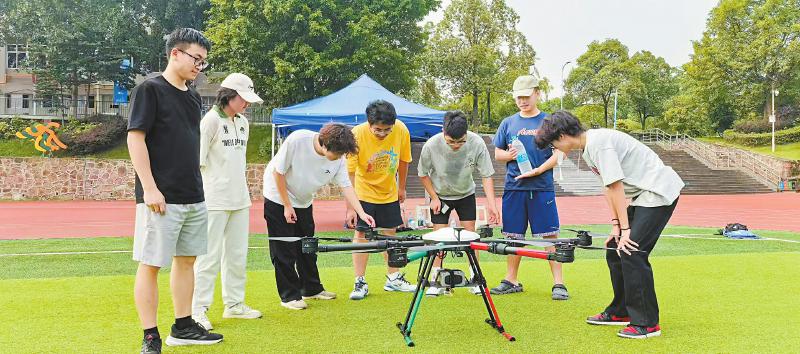
Core Insights - Chengdu is implementing a significant reform in vocational education, focusing on aligning academic programs with industry needs and enhancing practical training opportunities for students [9][10][13] Group 1: Professional Optimization and Adjustment - Four vocational colleges in Chengdu are undergoing a comprehensive evaluation of their 162 programs, with a target adjustment rate of 88% by 2027 to match key industries [9][10] - The evaluation process emphasizes a "regional-industry-professional" closed-loop indicator system, with 36% of indicators focusing on industry alignment and 38% on school-enterprise cooperation [9][10] - As part of the reform, 25 outdated programs have been discontinued, 27 upgraded, and 13 new programs introduced, achieving a 40% adjustment rate so far [10][11] Group 2: New Program Development - New programs are being developed in response to emerging technologies and market demands, such as drone technology and artificial intelligence [11][12] - The collaboration between Chengdu Industrial Vocational Technical College and Xinhua San Group has led to the establishment of an artificial intelligence application program, ensuring that course content remains relevant to industry needs [11][12] - The introduction of micro-specialties, which consist of 3 to 5 courses, aims to enhance students' employability and align educational offerings with urgent industry requirements [12][13] Group 3: Industry Collaboration and Practical Training - The colleges are forming partnerships with leading companies to co-develop core courses and training materials, investing over 28 million yuan in establishing 28 training bases [12] - The focus on practical training and real-world projects is expected to bridge the gap between education and employment, with students experiencing a seamless transition into the workforce [12][13] - The reform is anticipated to improve job placement rates, with students opting for micro-specialties reportedly achieving a 25% increase in starting salaries [13]

内蒙古工业大学成立卓越工程师学院
Nei Meng Gu Ri Bao· 2025-10-13 04:46
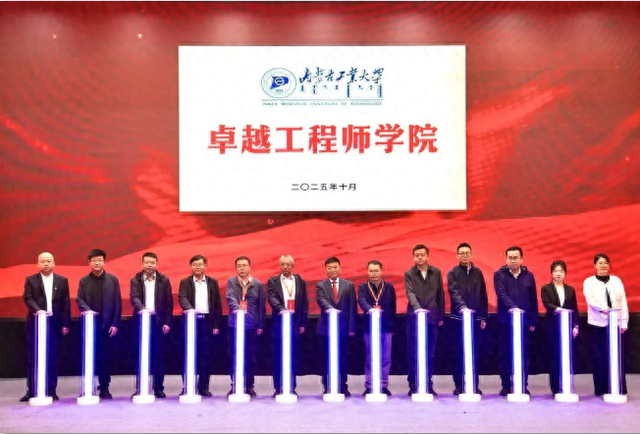
Core Points - Inner Mongolia University established the Excellence Engineer College to implement Xi Jinping's directive on cultivating a large number of excellent engineers and to deepen the integration of industry and education [3][5] - The college aims to focus on key areas such as new energy, next-generation information technology, high-end equipment, new materials, and modern coal chemical engineering, creating a collaborative platform for industry-academia-research [3][5] - The establishment of the college is seen as a crucial step in accelerating the university's development and enhancing its educational quality to support national and regional modernization efforts [5] Summary by Sections - **Establishment and Purpose** - The Excellence Engineer College was inaugurated as a response to national and regional development needs, emphasizing the integration of education and industry [3][5] - It aims to cultivate high-level engineering talent in critical fields urgently needed by the state and the autonomous region [3] - **Strategic Importance** - The college is a key initiative for the university to serve national strategies and regional development, promoting engineering education reform [5] - It is part of a broader effort to enhance the university's academic standing and contribute to modernization [5] - **Collaborative Efforts** - The college will leverage the university's engineering strengths and extensive corporate resources to build a collaborative education platform [3] - A joint training agreement was signed between industry and academia during the establishment ceremony, highlighting the commitment to collaborative education [8]
高校劳动教育“应有何为”
Zhong Guo Qing Nian Bao· 2025-10-13 03:33
Core Viewpoint - Tsinghua University has introduced a labor education course aimed at enhancing students' understanding of labor and its significance in modern industrial systems, addressing concerns about the disconnect between students and practical labor experiences [1][4][12]. Group 1: Course Objectives and Structure - The course "Modern Industrial Systems and Labor Practice" is a mandatory course for the Marxist Theory major, designed to provide students with practical labor experiences alongside theoretical knowledge [1][4]. - The course includes three main components: theoretical learning, labor practice, and enterprise visits, allowing students to engage directly with the industrial environment [6][8]. - The course aims to deepen students' understanding of the labor process and the relationship between labor and production, moving beyond simplistic views of labor [5][10]. Group 2: Educational Philosophy and Rationale - The course is rooted in the educational tradition of the Communist Party and aligns with the goal of cultivating well-rounded socialist builders and successors [2][4]. - There is a recognition that modern students are increasingly distanced from agricultural and industrial production, necessitating a more hands-on approach to labor education [4][12]. - The course seeks to bridge the gap between theoretical knowledge and practical application, emphasizing the importance of understanding the material basis of labor [5][10]. Group 3: Student Experiences and Insights - Students reported that their experiences in labor practice provided them with a more profound appreciation for the challenges faced by workers, transforming abstract concepts into tangible understanding [8][9]. - The labor practice component involved physically demanding tasks, which helped students realize the effort behind production processes and the value of labor [8][9]. - Students expressed that the course fostered a sense of camaraderie and teamwork, enhancing their overall educational experience [9]. Group 4: Challenges and Future Directions - The course faces challenges in ensuring depth and professionalism in labor education, with ongoing efforts to refine and improve the curriculum based on student feedback [10][12]. - There is an emphasis on the need for continuous exploration and adaptation of labor education practices to better integrate with industrial realities [11][12]. - The course aims to establish a more systematic approach to labor education in higher education, addressing existing gaps and enhancing the overall quality of labor-related learning [12].
高校劳动教育“应有何为” 清华马院探索劳动教育必修课
Zhong Guo Qing Nian Bao· 2025-10-12 23:11
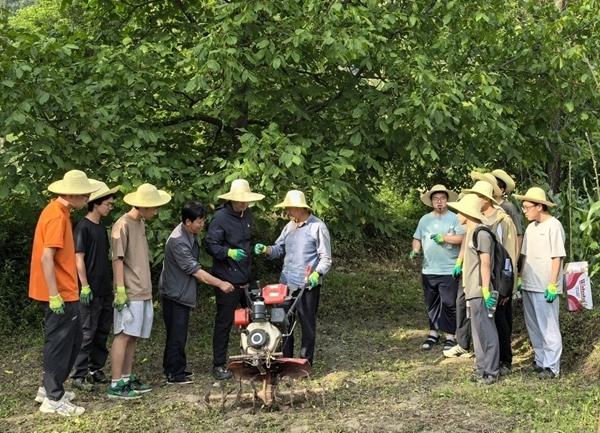
Core Viewpoint - Tsinghua University has introduced a labor education course aimed at enhancing students' understanding of labor through practical experience in agricultural and industrial settings, addressing the disconnect between students and the realities of labor in modern society [1][2][10]. Group 1: Course Objectives and Structure - The course "Modern Industrial Systems and Labor Practice" is a mandatory course for the Marxist Theory major, designed to provide students with a comprehensive understanding of labor through direct engagement in industrial settings [1][3]. - The course consists of three main components: theoretical learning, labor practice, and enterprise visits, allowing students to connect theoretical knowledge with real-world labor experiences [6][7][8]. - The course aims to cultivate a deeper understanding of the labor process, moving beyond superficial knowledge to a more profound appreciation of the complexities of modern production [3][10]. Group 2: Educational Philosophy and Rationale - The course is rooted in the educational philosophy of cultivating well-rounded individuals who understand the importance of labor in society, as emphasized by national educational policies [2][11]. - There is a recognition that traditional labor education in universities has been lacking in depth and professional relevance, necessitating a more integrated approach that combines theory with practical experience [10][11]. - The course seeks to bridge the gap between students and the realities of labor, fostering a sense of empathy and understanding towards workers and the labor process [2][3][11]. Group 3: Student Experiences and Insights - Students participating in the course reported significant shifts in their understanding of labor, moving from abstract concepts to tangible experiences that highlight the challenges faced by workers [6][7][9]. - The hands-on labor practice component allows students to engage directly with the physical demands of industrial work, leading to a greater appreciation for the labor involved in production [7][9]. - Feedback from students indicates a desire for more extensive labor practice experiences to deepen their understanding of industrial labor processes [10][11].

积极探索艺术教育与融媒体产业协同发展
Jing Ji Ri Bao· 2025-10-12 21:57
Core Insights - The arrival of the media convergence era has fundamentally transformed the dissemination of visual information, the forms of media, and audience interaction patterns [1] - Luxun Academy of Fine Arts, a prestigious institution in art education, has established a media convergence studio to explore the collaborative development of art education and the media industry [1] Curriculum Development - The media convergence studio has led the development of a series of specialized courses, such as "Media Convergence Visual Narrative," which breaks traditional boundaries and teaches students to master multi-media integration techniques [2] - The "Interactive Interface and User Experience Design" course focuses on designing visual interfaces suitable for various devices, emphasizing user perception and operational habits in media convergence scenarios [2] Project-Based Learning - The studio collaborates with well-known media platforms like "New World" and "Pear Video" to implement project-based teaching, exemplified by the "Liaoning Regional Culture Media Convergence Dissemination" project [3] - Students engage in various roles, from visual packaging of documentaries to social media content design, enhancing their practical skills and teamwork abilities [3] Innovative Artistic Creation - The studio has produced experimental media convergence art pieces, such as the "Digital Ink Painting" series, which utilizes VR technology to create immersive experiences [4] - The "Northeast Dialect Visual Map" project translates dialects into visually impactful symbols, achieving millions of exposures on platforms like Douyin and WeChat [4] Brand Development in Commercial Media - The studio provides media convergence visual communication solutions for various enterprises, including a brand upgrade project for "Zhongjie Ice Point," which successfully enhanced its appeal to younger consumers [5] - The design of a "Metaverse Virtual Mall" visual system explores new forms of visual communication in commercial spaces [5] Social Responsibility and Community Engagement - The studio offers comprehensive visual services to local media centers, enhancing their professional image and user engagement [6] - In the "Rural Revitalization - Liaoning Agricultural Products Media Promotion" project, the studio helped increase sales of local products by 30% through effective visual marketing [6][7] Innovation Pathways and Ecosystem Building - The studio aims to deepen interdisciplinary integration, combining visual communication with fields like computer technology and sociology to cultivate versatile media talent [8] - Future plans include enhancing faculty media literacy, upgrading hardware facilities, and creating nationally influential media visual projects [8][9] Conclusion - Through diverse explorations in teaching, creation, and social service, the studio has developed an effective model for integrating visual communication and media convergence [9] - The ongoing development of media technologies will continue to drive innovation in visual communication and contribute to the collaborative growth of art education and the media industry in China [9]
湖北机场集团航务公司恩施空管站党支部联合恩施职业技术学院信息工程学院教工党支部开展特色实践活动
Zhong Guo Min Hang Wang· 2025-10-11 12:22
座谈交流环节,双方围绕恩施州航空发展现状等议题展开深入研讨。经过充分交流,双方达成合作共 识,将重点推进联合开展学生研学科普活动,以寓教于乐的方式激发青年学子对航空科技的兴趣。依托 恩施空管站、恩施职业技术学院及恩施空天智飞科技有限公司三方资源,推动为地方经济发展探索新方 向、注入新动能。(编辑:李佳洹 校对:许浩存 审核:程凌) 空管站一行参观了中心的建设成果,了解了其空天地一体化遥感等领域的教学实践与人才培养的模式。 该中心致力于推动教育与产业深度融合,提升区域产业智能化水平,为地方经济发展提供有力支撑。 《中国民航报》、中国民航网 记者冯智君 通讯员雷伊姝报道:10月10日,湖北机场集团航务公司恩施 空管站党支部组织全体管理人员及业务骨干,前往恩施职业技术学院空天地一体化遥感行业产教融合实 践中心开展参观学习与座谈交流。 ...
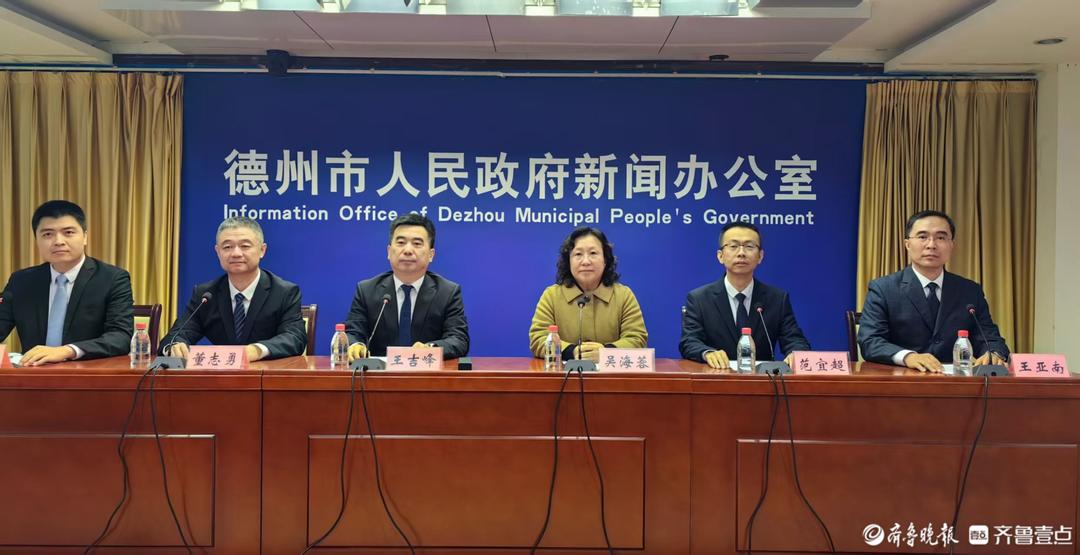
六大提升,“十四五”期间德州教育事业发展取得长足进步
Qi Lu Wan Bao Wang· 2025-10-11 09:29
Core Insights - The article discusses the achievements in education development in Dezhou during the "14th Five-Year Plan" period, highlighting significant improvements in various aspects of the education system [1] Group 1: Overall Educational Improvements - The education sector in Dezhou has made substantial progress under the leadership of the municipal government, focusing on quality enhancement and safety [3] - A comprehensive育人体系 has been established, promoting physical health, aesthetic education, labor cultivation, and mental health among students [3] Group 2: Resource Supply Enhancements - A total of 223 new or renovated primary and secondary schools and kindergartens have been established, adding 126,000 new student places [5] - The public enrollment rate for preschool education has increased by nearly 10 percentage points, with over 95% of students benefiting from inclusive education [5] Group 3: Local Development Empowerment - The vocational education system has been optimized to align with local industries, with over 10% of programs adjusted annually to meet industry needs [5] - More than 130 technology achievements were transformed into contracts worth over 170 million yuan last year, supporting the training of approximately 128,000 applied talents [5] Group 4: Teacher Workforce Development - A total of 11,398 teachers were recruited during the "14th Five-Year Plan," with over 580 recognized as model teachers [6] - The implementation of the "Five batches" reform has improved the quality of teacher management and training [6] Group 5: Educational Reform Deepening - The introduction of tiered teaching methods has shown effectiveness, with significant improvements in student performance in competitions [7] - The establishment of 13 integrated education groups has enhanced the early cultivation of innovative talents [7] Group 6: Educational Service Guarantees - Over 80% of primary and secondary schools now provide after-school services, and more than 700 schools have implemented lunch and rest services [8] - Financial support for economically disadvantaged students has reached 830 million yuan, benefiting over 960,000 individuals [8]