
新消费

Search documents
百年老店的时代岔路口:广州酒家2025年上半年增收不增利、传承中的创新困局
Xin Lang Zheng Quan· 2025-09-18 09:53
Core Insights - Guangzhou Restaurant is experiencing a disconnect between traditional offerings and modern consumer preferences, leading to stagnant profits despite a slight revenue increase [1][2][4] - The company reported a revenue of 1.991 billion yuan in the first half of 2025, a year-on-year increase of 4.16%, while net profit decreased by 33.11% to 39.1 million yuan [1] Group 1: Traditional vs. Modern Consumer Preferences - The signature products of Guangzhou Restaurant, such as lotus seed mooncakes and preserved meat gift boxes, are not resonating with the new generation of consumers who prefer low-sugar and trendy options [2] - The dining experience at Guangzhou Restaurant is struggling to adapt to the experience economy, where competitors are integrating cultural performances and workshops into their offerings [2] Group 2: Online Presence and Market Identity - The company's online sales efforts are cautious, lacking viral products that can generate significant social media buzz, contrasting with competitors who engage audiences through interactive content [3] - Communication with customers remains formal and restrained, missing opportunities for engaging interactions that resonate with modern consumers [3] Group 3: Cultural Relevance and Future Directions - Guangzhou Restaurant is not facing a survival crisis but must navigate the challenge of remaining a cultural symbol in a rapidly changing market [4] - The company needs to adjust its offerings to appeal to younger consumers who seek new culinary experiences rather than merely nostalgic visits [4]

加仓中国资产
Shang Hai Zheng Quan Bao· 2025-09-17 19:28
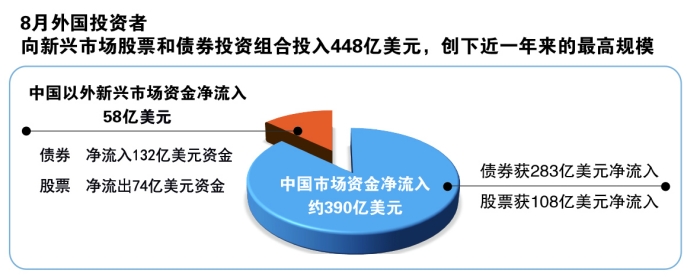
Group 1 - Foreign capital has shown increasing interest in the Chinese market, with a net inflow of 1.1 billion yuan from actively managed foreign investments for four consecutive weeks, marking the highest duration of net inflow since 2024 [3][4] - In August, foreign investors allocated approximately 39 billion USD to Chinese stocks and bonds, with 28.3 billion USD flowing into Chinese bonds and 10.8 billion USD into Chinese stocks, contributing to a total net inflow of around 39 billion USD [4] - International investment banks, such as Morgan Stanley and UBS, have noted a significant rise in overseas investors' interest in Chinese assets, with over 90% of U.S. investors expressing willingness to increase their allocation to the Chinese market, the highest level since early 2021 [4][5] Group 2 - The investment interest is extending towards the A-share market, with U.S. investors beginning to focus on A-shares rather than just American Depositary Receipts (ADRs) and internet sectors [6] - Factors driving this investment interest include China's leading position in sectors like humanoid robotics and biotechnology, ongoing policy support for economic stability, improved market liquidity, and a growing need for portfolio diversification away from the U.S. market [6][7] - Despite the heightened interest, the inflow of U.S. funds into the Chinese market is still in its early stages, with many investors needing time to familiarize themselves with specific stocks, particularly in sectors lacking U.S. counterparts [7]

新产品新模式新业态涌现 消费增长潜能持续释放
Shang Hai Zheng Quan Bao· 2025-09-17 19:28
Group 1 - The core viewpoint of the articles highlights the robust growth in consumer spending in China, with retail sales of consumer goods increasing by 4.6% year-on-year in the first eight months of the year, and service retail sales growing by 5.1% [1] - The emergence of "emotional consumption" reflects an upgrade in consumer demand, shifting from basic needs to personalized and quality-oriented demands as material conditions improve [2] - The retail sales of household appliances, audio-visual equipment, cultural office supplies, and furniture saw year-on-year growth rates exceeding 10% in August, significantly outpacing overall retail sales growth [2] Group 2 - The integration of sports events with local tourism and shopping has become a significant driver of economic growth, with Jiangsu Province reporting a nearly 200% increase in summer tourist attraction bookings since July [3] - The "tourism+" model, which combines tourism with various sectors such as performing arts and technology, is gaining popularity and stimulating consumer activity [5] - The introduction of silver tourism trains, aimed at the elderly population, reflects the growing market potential for services catering to aging demographics, with plans for 1,860 such trains in 2024 [6] Group 3 - The application of AI in consumer sectors is driving rapid growth in related industries, with significant increases in the manufacturing value of smart vehicle equipment and integrated circuits [7][8] - Policies aimed at optimizing tax refunds for outbound tourism and supporting the development of international consumer cities are being implemented to enhance domestic demand [9] - The government is focusing on deepening reforms and opening up to facilitate domestic and international economic circulation, with a goal of achieving high-quality development [10][11]
创新药板块波动明显加大 部分主题基金换赛道求稳
Zheng Quan Shi Bao· 2025-09-17 18:13
部分基金寻找确定性投资 在医药基金重仓股剧烈波动之际,公募赛道高低切换预期大幅提升。 证券时报记者注意到,近期创新药基金面临重仓股调整的压力,由于持仓风格过度集中,使基金在市场 波动中寻找确定性成为关键需求。前期资金分流导致股价承压的红利股、消费股等,在风格切换中成为 基金控制回撤、保业绩的重要品种。 创新药基金回撤压力增大 随着医药基金年内净值达到一个小高峰,公募抱团持仓的创新药开始有点"恐高"。 9月17日,港股恒生指数收盘大幅上涨1.78%,而当日恒生创新药指数却以1.08%的跌幅收盘,QDII基金 重仓的各类医药股普遍走跌。数据显示,创新药主题基金业绩目前仍遥遥领先,业绩表现最强的医药基 金在全市场排名中也高居第二,港股创新药成为基金业绩排名的关键指标。 但随着市场波动不断加大,创新药基金也在面临净值回撤压力。例如,截至9月17日收盘,汇添富香港 优势精选基金年内收益已超1.7倍,排名QDII基金业绩第一名,该基金股票仓位几乎全是医药股。当 日,该基金前十大重仓股中有六只股票收盘走跌,其中,第一大重仓股映恩生物下跌5.90%,考虑到仅 映恩生物一只股票的持仓占比即达17.27%,因此,单一个股大幅走跌 ...
保健品CDMO:新消费与全球化时代
2025-09-17 14:59
Summary of the Conference Call on the Health Supplement CDMO Industry Industry Overview - The health supplement market in China is the second largest globally, with significant growth potential due to low penetration rates, approximately 1/4 to 1/5 of that in Europe and the US [1][4] - The largest segment is vitamin dietary supplements (EDS), accounting for about 60% of the market, with a noticeable trend towards functional foods [1][4] - The dual-track regulatory policy (registration + filing) has lowered entry barriers and accelerated product launches while enhancing regulatory oversight [1][5] Key Trends and Insights - Online channels have significantly impacted the health supplement market, achieving a penetration rate of around 60%, the highest globally, which has disrupted traditional offline channels [1][9] - Emerging brands are leveraging online platforms to target specific demographics, leading to a decline in traditional dietary supplement market share [1][9] - The concentration of brands and contract manufacturing in the health supplement industry is low, below 20%, with new online brands further dispersing market concentration [1][8] Regulatory Impact - The introduction of the dual-track system in 2016 has streamlined the approval process for new products, allowing for quicker market entry while increasing regulatory scrutiny to eliminate non-compliant products [5][7] - The 2019 Tianjin Qianjin incident led to stricter internal control mechanisms and a comprehensive industry cleanup, enhancing the overall transparency and standardization of the market [5][6] Consumer Demand and Behavior - Increasing income and health awareness among Chinese consumers are driving demand for health supplements, with a shift from serious health products to functional foods [6][12] - The traditional dietary supplement consumption patterns are evolving, with younger demographics becoming the primary consumers, influenced by the rise of online shopping [6][9] Company-Specific Insights Xianle Health - Xianle Health, a leading player in the health supplement CDMO sector, has achieved continuous revenue growth through international expansion and product innovation, despite profit fluctuations due to industry and global factors [3][13] - The acquisition of the US-based BF company has temporarily impacted profits but is expected to become a long-term growth driver [3][18] - Collaborations with new consumer brands have improved domestic revenue, with a notable partnership with brands like Dongfang Zhenxuan and Yang Men Dian [3][17] Baihe Co. - Baihe Co. has recently acquired New Zealand's Auri Company, which is expected to contribute to revenue growth [21] - The company has shown strong performance in the functional beverage sector, adapting well to new consumer demands despite being less focused on large client customization compared to Xianle [21] Future Outlook - The health supplement CDMO industry in China has substantial growth potential, with a current penetration rate of about 10%, lower than that of Europe and Japan (15%-20%) [12] - The high online penetration rate suggests a promising future for contract manufacturing, with expectations of increased demand driven by the rise of online sales channels [12][20] - Xianle plans to enhance cooperation with new consumer clients and expand into Southeast Asia through cross-border e-commerce and new factory setups [20]
不卷价格的北鼎,如何用颜值赢得年轻人?
Sou Hu Cai Jing· 2025-09-17 14:13
Group 1 - The importance of color design in new consumer products is increasing, with consumers willing to pay extra for their preferred colors [1][3] - The small home appliance company Beiding has achieved impressive sales by focusing on a "macaron color scheme," appealing to young consumers amidst a saturated market [1][5] - Beiding's products are priced higher than traditional appliances, with items like enamel pots exceeding 1,000 yuan and electric kettles priced above 600 yuan, indicating a strategy of high aesthetics and quality [5][6] Group 2 - Beiding's revenue for the first half of 2025 reached 432 million yuan, a year-on-year increase of 34.05%, with operating profit at 65 million yuan, up 89.6%, positioning it among the top performers in the small appliance industry [5][6] - Many brands emphasize "youthfulness," but those truly favored by young consumers often do not overtly market themselves as such, suggesting that product attributes should align with young consumers' aesthetics and needs [7][6] Group 3 - Color significantly influences consumer perception, with studies indicating that 16% of consumers first notice a brand's color scheme, and half choose brands based solely on color [8][9] - Different colors carry psychological implications in various consumer sectors, with blue often associated with trust and black with high-end quality [9][10] Group 4 - The shift in consumer preferences from traditional color schemes to lighter, softer colors reflects a broader change in consumer values towards health and environmental consciousness [14][13] - The transition from offline retail to online platforms has altered competitive dynamics, with brands now focusing on aesthetic appeal rather than just visual impact [16][15] Group 5 - Maintaining a consistent color scheme is crucial for brand loyalty, as changing established colors can alienate consumers, with studies showing that one-third prefer brands with unchanged color schemes [17][16]

行业点评报告:8月社零增速环比放缓,消费动能仍待提振
KAIYUAN SECURITIES· 2025-09-17 08:27
Investment Rating - The industry investment rating is "Positive" (maintained) [1] Core Viewpoints - The report indicates that the retail sales growth rate in August 2025 has slowed down, primarily due to the diminishing effects of the "old-for-new" policy and a gradual recovery in consumer demand. However, with economic stimulus policies being implemented, the macroeconomic environment is expected to improve in the medium to long term, leading to an increase in household income and consumer willingness, which will benefit the food and beverage sector [4] - The liquor industry is approaching the peak demand season around the Mid-Autumn Festival and National Day, showing signs of improvement in demand. The fundamentals of the liquor market are expected to stabilize and trend upwards as consumption scenarios recover. The current bottoming out presents long-term investment value [4] - The report recommends focusing on new channels, new products, and new markets to identify new consumption targets that align with industry development trends. Specific recommended stocks include Weilian Meishi, Yanjinpuzi, Ximai Food, Dongpeng Beverage, Youfu Food, Wancheng Group, and Bairun Co., Ltd. [4] Summary by Sections Industry Trends - The food and beverage sector is experiencing a retail sales growth rate of 3.4% year-on-year in August 2025, with a month-on-month decline of 0.3 percentage points [5] - The growth rates for food, beverages, and tobacco and alcohol categories in August 2025 are 5.8%, 2.8%, and -2.3% respectively, indicating a month-on-month decline in the tobacco and alcohol category due to high base effects and lack of consumption scenarios [5][6] Subsector Observations - The liquor industry is currently in a bottom recovery phase, with sales under pressure but showing signs of improvement due to the upcoming festive season. The fundamentals are gradually stabilizing [7] - Ximai Food is accelerating its health business by launching new products in the health food segment, focusing on traditional Chinese medicine ingredients and weight loss products, which are expected to become significant growth drivers for the company [7]




“宏观猎手”看A股:谁将接过时代的权杖?
券商中国· 2025-09-17 07:52
Core Viewpoint - The article emphasizes the importance of macroeconomic policies and industry trends in investment strategies, highlighting the ability to identify investment opportunities through careful analysis of policy changes and market dynamics [1][3][17]. Group 1: Investment Philosophy - The investment philosophy of the company is characterized by a balance between aggressive and defensive strategies, adapting to market conditions through a dynamic asset allocation approach [6][11]. - The company focuses on capturing economic cycles and industry rotations, selecting 3 to 5 high-prospect industries for investment each year [6][7]. - The investment strategy includes a mix of long-term holdings and opportunistic trades, with a keen eye on emerging trends and sectors [15][17]. Group 2: Historical Context and Experience - The company’s investment manager, Yin Tao, has a rich background in macroeconomic research and media, which has shaped his investment acumen over 27 years [3][4]. - Yin Tao transitioned from journalism to investment management in 2008, where he developed skills in asset allocation and risk management during the global financial crisis [4][5]. - The company has successfully navigated multiple market cycles, demonstrating resilience and adaptability in its investment approach [5][12]. Group 3: Performance Metrics - The company’s managed funds have shown significant performance, with a net value growth rate of 19.18% over the past six months and 18.70% over the past year [5]. - According to data from Galaxy Securities, the company’s products ranked in the top 5% of their category over the past two years, indicating strong competitive performance [5]. Group 4: Sector Focus - The company identifies key sectors for investment, including AI, innovative pharmaceuticals, and new consumption, which are seen as the main drivers of future growth [17]. - Yin Tao has successfully invested in leading stocks within these sectors, capitalizing on trends such as the rise of electric vehicles and innovative consumer products [14][15]. Group 5: Research and Analysis - The company employs a rigorous research methodology, including in-depth analysis of financial statements and market conditions, to identify high-quality growth stocks [10][9]. - Yin Tao emphasizes the importance of patience and thorough investigation in investment decisions, often revisiting companies to validate investment theses [9][10]. Group 6: Market Adaptation - The company adapts its strategies based on market conditions, employing a flexible approach to portfolio management that allows for quick adjustments in response to market volatility [12][13]. - Yin Tao’s strategy includes a focus on maintaining a balanced portfolio, with adjustments made to stock allocations based on performance and market signals [12][13].

外资机构密集调研A股 多行业受关注
Huan Qiu Wang· 2025-09-17 02:39
Group 1 - A total of 395 foreign institutions have participated in A-share listed company research since the beginning of the second half of the year, with a cumulative research count of 1,782 times as of September 16 [1] - Point72 has conducted the most research, with 59 instances, while Goldman Sachs, Bank of America Securities, and Citigroup have each exceeded 40 research instances [1] Group 2 - Key sectors attracting foreign institutional attention include industrial machinery, electrical equipment, electronic instruments, and medical care equipment [3] - Companies such as Estun, Huaming Equipment, Opto, Tianfu Communication, Lens Technology, United Imaging, Mindray, and BeiGene have received research from over 50 foreign institutions [3] - Estun's recent investor relations activity indicates that foreign institutions like Merrill Lynch, Citigroup, Morgan Stanley, BNP Paribas, Deutsche Bank, and Point72 are focused on the demand situation in downstream industries, with Estun expecting continued growth in automotive, electronics, and lithium battery sectors [3] - United Imaging has reported that its AI-driven smart operation system has significantly improved efficiency and reduced costs, supporting its long-term development in the global medical imaging industry [3] - Many foreign institutions believe that the A-share market currently offers rich investment opportunities, particularly in the technology and pharmaceutical sectors [3] - Morgan Stanley recently highlighted areas to watch in the A-share market, including AI computing and applications, innovative drugs, new energy (benefiting from policy adjustments), semiconductors, new consumption, resource products, and high-end manufacturing [3]






上证早知道|扩大服务消费 九部门发文;腾讯宣布:全面适配;Meta 大消息
Shang Hai Zheng Quan Bao· 2025-09-16 22:58
Group 1: Service Consumption Policies - The Ministry of Commerce and nine other departments released measures to expand service consumption, proposing 19 initiatives across five areas, including the launch of "Service Consumption Season" activities [3] - The initiatives aim to enhance the supply of quality services to meet diverse consumer demands, reflecting new consumption trends such as rational quality consumption and emotional value consumption [3] Group 2: Meta's AI Glasses - Meta announced the Meta Connect 2025 event scheduled for September 17-18, where CEO Mark Zuckerberg will share updates on AI glasses and the company's vision for AI and the metaverse [4] - Two new smart glasses are expected to be unveiled, one featuring a display and priced around $800, targeting a more premium market compared to existing products priced at $300 [4][5] Group 3: Robotics Industry Growth - The humanoid robot industry is anticipated to see significant growth, with Tesla starting factory audits and suppliers receiving notifications for new orders [6] - Research indicates that Tesla's Gen3 model is expected to produce 30,000 to 50,000 units, with plans for a Gen4 model, while domestic companies like Yushu Technology are accelerating their IPO processes [6] Group 4: Investment Trends - Foreign investment institutions have been actively researching high-end manufacturing and technology innovation companies, with nearly 400 foreign institutions conducting around 1,800 research sessions since July [11] - The focus of these institutions includes sectors such as industrial machinery, electrical equipment, electronic instruments, and healthcare [11]