
风险管理

Search documents
连平:构建更加适配外向型经济的跨境金融服务体系
2 1 Shi Ji Jing Ji Bao Dao· 2025-09-04 10:05
Core Viewpoint - The development of cross-border financial services in China is progressing steadily, but there are significant challenges that need to be addressed to enhance its effectiveness and support international economic participation [1][2]. Group 1: Current State of Cross-Border Financial Services - China's cross-border financial service system has been steadily advancing, contributing significantly to international economic circulation [1]. - The current landscape presents various challenges, including increased complexity in cross-border financial risks due to global economic instability [2]. Group 2: Challenges Faced by Financial Institutions - Chinese financial institutions face threats related to international financial infrastructure, overseas asset security, and regulatory scrutiny [2]. - Companies expanding internationally encounter more complex financial and non-financial issues compared to domestic operations [2]. Group 3: Recommendations for Improvement - It is essential to innovate and diversify cross-border financial products and services supported by new technologies, including optimizing foreign exchange management and expanding free trade account functionalities [3]. - Establishing syndicate loan centers in banks can help meet the financing needs of domestic companies going abroad [3]. - Risk management must be a priority, with recommendations for developing diverse foreign exchange hedging products and enhancing insurance support for export enterprises [3]. Group 4: Enhancing Financial Market Capabilities - Increasing openness and access in domestic financial markets is crucial for providing cross-border financial services [3]. - Optimizing existing financial connectivity mechanisms like Shanghai-Hong Kong Stock Connect and introducing more RMB-denominated financial products can enhance liquidity [3]. Group 5: Infrastructure Development - The construction of cross-border financial infrastructure is vital, with suggestions to utilize technologies like blockchain and cloud computing to create adjustable financial service platforms [4]. - Enhancing the functionality of the Cross-Border Interbank Payment System (CIPS) is necessary for efficient and secure settlement services in global trade and investment [4].
狮桥融资租赁:创新风控体系助力实体经济发展
Sou Hu Cai Jing· 2025-09-04 09:03
Core Viewpoint - Lionbridge Financing Leasing has established a robust financial support system for the development of the real economy through an intelligent risk control system [1][3] Group 1: Risk Management Innovations - The company has implemented a comprehensive risk management mechanism covering pre-loan, in-loan, and post-loan processes, serving various sectors such as logistics, manufacturing, and healthcare [1] - The bad debt ratio for 2022 was 1.25%, which is lower than the average level in the financing leasing industry, indicating effective risk management [3] - Key innovations in risk control include: - Multi-dimensional data assessment by integrating over 20 data sources such as business, tax, and judicial data to create a customer credit profile system [3] - An intelligent early warning mechanism utilizing big data technology for real-time asset status monitoring, enabling early risk identification and resolution [3] - Industry-specific models that establish differentiated risk control standards based on the characteristics of different industries [3]


A股高位震荡市,如何运用股指期货和期权守住浮盈?这门课给你答案
Mei Ri Jing Ji Xin Wen· 2025-09-04 04:26
Core Viewpoint - The A-share market is experiencing a significant rise, with the Shanghai Composite Index reaching around 3888 points, leading to increased volatility and divergence among investors [1] Group 1: Market Conditions - The market is currently in a high-level fluctuation phase, causing many investors to feel conflicted as their stocks may not reflect the overall index gains, leading to anxiety about potential losses [1][2] - Traditional "buy and hold" strategies are failing for many investors, as they face challenges in maintaining profits amidst market corrections [2] Group 2: Professional Traders vs. Retail Investors - Professional traders are generally more composed during market fluctuations, utilizing financial derivatives such as index futures and options to hedge against risks and capitalize on market volatility [3] - There is a common misconception among retail investors that derivatives are overly risky and complex, whereas, when used correctly, they can actually reduce overall trading risk [4] Group 3: Educational Opportunities - The current market environment presents an ideal opportunity for traders to learn about and utilize financial derivatives, with specialized courses being offered to educate investors on index futures and options [5] - The courses will cover fundamental concepts, practical strategies, and risk management techniques to help traders navigate the current market conditions effectively [7][8] Group 4: Simulation Competitions - A nationwide futures simulation competition is being organized to provide investors with a risk-free environment to practice trading skills, offering virtual funds and the chance to win cash prizes [10] - The competition is designed to be accessible to all users of the Daily Economic News app, with no real capital required for participation, thus encouraging learning through practice [10][11]

城商行转型样本再现:郑州银行跑出“新速度”
Sou Hu Cai Jing· 2025-09-03 16:01
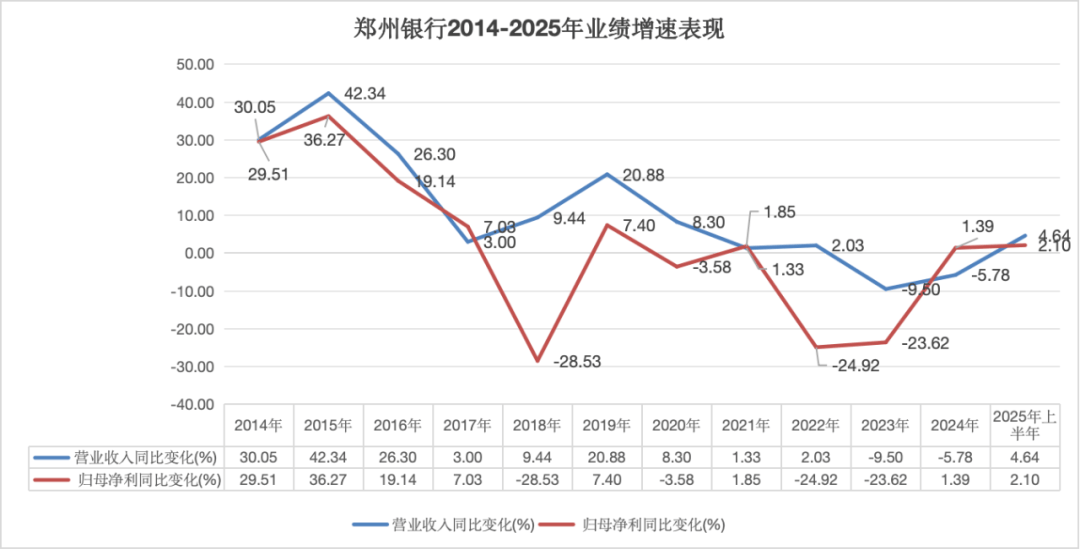
Core Viewpoint - Zhengzhou Bank has successfully transformed its performance in the first half of 2025, achieving significant growth in profit and revenue amidst a challenging banking environment [2][3]. Financial Performance - In the first half of 2025, Zhengzhou Bank reported revenue of 6.69 billion yuan and net profit attributable to shareholders of 1.627 billion yuan, with year-on-year growth rates of 4.64% and 2.10% respectively [2]. - The bank's profit growth rate has increased by 24.22 percentage points compared to the previous year, positioning it among the top A-share listed banks in terms of profit growth [2][3]. Asset Quality and Growth - Zhengzhou Bank's net interest income grew by 1.04% to 5.351 billion yuan, while non-interest income surged over 20% to 1.339 billion yuan, indicating a positive change in revenue structure [4]. - The bank's non-performing loan ratio decreased by 0.03 percentage points from the end of the previous year, with a provision coverage ratio of 179.20% and a capital adequacy ratio of 11.85%, all meeting regulatory requirements [4]. Strategic Positioning - The bank's success is attributed to its focus on serving the local economy, small and medium-sized enterprises, and urban and rural residents, which has guided its business transformation and risk management [6]. - Zhengzhou Bank's total assets reached 700 billion yuan in the first quarter of 2025, with a significant increase in asset scale, achieving a historical high growth rate of 11.47% in total assets compared to the same period in 2018 [7][8]. Loan and Credit Structure - As of June, the total amount of loans and advances issued by Zhengzhou Bank was 406.094 billion yuan, reflecting a growth of 4.75% since the beginning of the year, with notable increases in both corporate and retail loan balances [8]. - The bank has implemented tailored financing solutions for struggling enterprises, showcasing its commitment to supporting local businesses and stabilizing regional economic development [8]. Retail Transformation - Zhengzhou Bank has made significant strides in retail transformation, focusing on customer-centric services and developing various financial service models, with a balance of inclusive small and micro loans reaching 52.578 billion yuan [9]. Operational Efficiency - The bank achieved a reduction in overall business and management expenses to 1.468 billion yuan, a decrease of 6.82% year-on-year, effectively enhancing profitability [11]. - Continuous improvements in digital services and risk management have been emphasized, aiming to strengthen the foundation for high-quality development [11].
FPG财盛国际:合规监管保障稳健外汇交易
Sou Hu Cai Jing· 2025-09-03 10:48
Core Viewpoint - FPG Financial International emphasizes the importance of compliance regulation in ensuring a safe and transparent forex trading environment, which ultimately enhances investor confidence and market trust [1][20]. Group 1: Compliance and Regulation - FPG Financial International ensures trading transparency and security through a strict compliance regulatory framework, which enhances market trust [1]. - The company believes that a compliant platform effectively reduces trading risks while optimizing returns [1][20]. - Innovative compliance measures, including the use of blockchain and artificial intelligence, are employed to enhance trading security [1][19]. Group 2: Risk Management Strategies - Risk management strategies are crucial for maintaining trading stability, with stop-loss orders and diversified portfolios being effective methods to mitigate risks [2][9]. - Regular assessment and adjustment of risk exposure are necessary to adapt to market changes, ensuring better asset protection [9][12]. - The use of stop-loss and take-profit settings helps limit potential losses and secure profits, while diversification and leverage control further reduce overall investment risk [17]. Group 3: Platform Selection Criteria - When selecting a trading platform, regulatory qualifications and user reputation are critical factors to ensure investment safety [8][18]. - Transparency, trading costs, and quality of customer service significantly impact the trading experience [8][20]. - Compliance platforms provide potential benefits such as increased trading transparency and reduced risks, which are vital for informed investment decisions [8][20].

华泰天玑系统重磅升级:打造产业风险管理“智慧大脑“,科技赋能实体企业行稳致远
Qi Huo Ri Bao Wang· 2025-09-03 05:00
Core Insights - The article discusses the comprehensive strategic upgrade of Huatai Futures' self-developed intelligent hedging system, Huatai Tianji, marking a significant advancement in digital service capabilities within China's futures industry [1][4]. Group 1: System Upgrade and Features - The upgrade focuses on three core directions: intelligence, visualization, and professionalism, creating a digital solution that covers the entire lifecycle of risk management [1][4]. - The new digital module will fully transition eight key processes online, including data forecasting, exposure analysis, feasibility analysis, market analysis, hedging strategy design, cost estimation, and compliance risk control [2][4]. - The system integrates quantitative models and scenario factors to predict spot price trends and calculate exposure gains and losses, assisting companies in monitoring exposure changes and adjusting hedging strategies in a timely manner [2][4]. Group 2: Visualization and Data Integration - The industry intelligence research module has undergone a significant visual upgrade, providing a comprehensive analysis tool that integrates over 5,000 industry data indicators, including spot prices, futures prices, supply and demand data, and inventory data [3][4]. - A personalized report generator allows users to create customized research reports based on their needs, supporting the delivery of tailored content [3][4]. Group 3: Industry Collaboration and Future Plans - The upgrade reflects Huatai Futures' commitment to breaking traditional service bottlenecks and building a new industry ecosystem, including the establishment of an industry risk database and collaboration with academic institutions [4][5]. - Future plans include expanding coverage to foreign exchange, new energy, and carbon emissions, deepening AI applications, and developing predictive risk control models [5][6]. - The company aims to transform from a traditional "channel provider" to a "comprehensive risk management service provider," showcasing the potential of fintech in the futures industry [5][6].
量子位AI Agent沙龙实录 | RockFlow创始人:投资是见自己的过程
RockFlow Universe· 2025-09-03 03:52
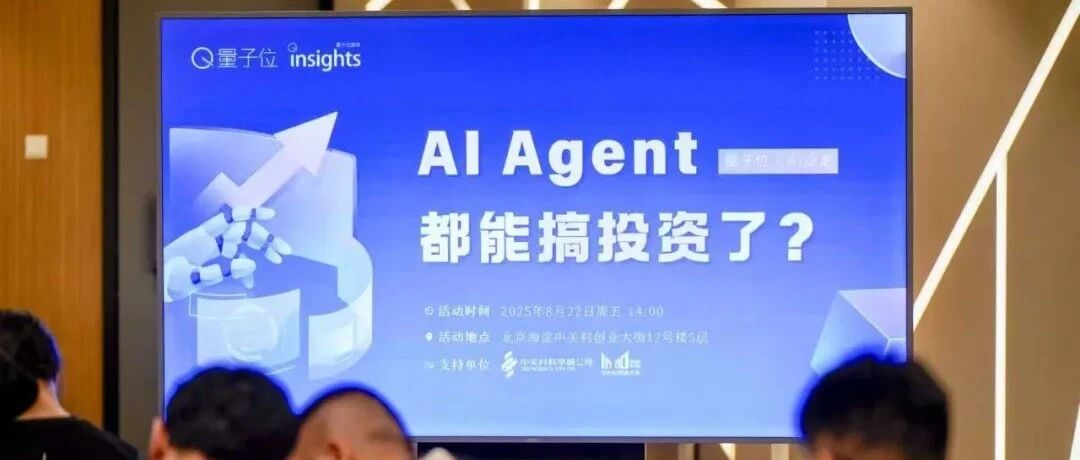
Core Viewpoint - The interview with Vakee, founder of RockFlow, emphasizes the belief that investing can be simple and enjoyable, aiming to lower barriers for ordinary people to engage in investment activities [3][32]. Group 1: Investment Philosophy - Vakee believes that the complexity of investing is largely a barrier created by professionals, and true investment should focus on efficiently transforming ideas into trading opportunities [7][8]. - The investment process involves five key nodes: inspiration, analysis, strategy, order execution, and position management [72][88]. Group 2: Company Development and AI Integration - RockFlow was founded to create a product that simplifies investment for everyday users, leading to the development of the AI assistant Bobby [5][35]. - The company aims to reduce the complexity of trading by utilizing AI to enhance user experience and facilitate the transformation of ideas into actionable investment decisions [41][42]. - The introduction of generative AI and large models has been pivotal for RockFlow, enabling the development of more interactive and personalized investment tools [43][47]. Group 3: Market Trends and User Engagement - The financial industry is predicted to see a shift where AI-related subscription revenues may surpass traditional commission and interest income, indicating a significant change in business models [57][59]. - Younger investors are increasingly using investment as a means of self-expression and lifestyle representation, with a notable trend of early engagement in investment activities [110]. Group 4: Risk Management and User Education - Vakee emphasizes that risk management is crucial in investing, and the goal is to help users develop better investment habits and discipline [23][95]. - The AI assistant Bobby is designed to assist users in making informed decisions and managing risks effectively, thereby enhancing their overall investment experience [92][99].
以创新服务为中小纸企保驾护航
Qi Huo Ri Bao Wang· 2025-09-02 00:50
Core Insights - The low concentration of the domestic household paper industry leads to numerous small and medium-sized enterprises (SMEs) facing challenges in pricing power, price assessment, and risk hedging tools [1][2] - Guotai Junan Futures has developed a "industry ecosystem + cooperative hedging" service plan to help SMEs manage risks associated with raw material price fluctuations [1][3] Industry Challenges - SMEs in the household paper sector struggle with weak bargaining power and lack of brand advantages, resulting in squeezed profit margins due to rising pulp prices while facing difficulties in raising product prices [1][3] - The reliance on local supplier quotes and fragmented industry information leads to delayed responses to global supply and demand dynamics, causing missed opportunities for low-cost procurement [1][2] Solutions Provided - Guotai Junan Futures employs a phased strategy to assist SMEs, starting with familiarizing them with the spot market and gradually introducing them to risk management tools [2][3] - The company offers customized services, explaining the principles and operational processes of hedging, and addressing concerns regarding the feasibility of hedging with futures contracts [2][3] Implementation of Hedging - A specific SME, referred to as Company A, engaged in a cooperative hedging model with Guotai Junan to manage raw material price risks, successfully securing necessary pulp supplies while mitigating price volatility [3][4] - In May 2023, Company A identified a favorable time to build inventory due to low pulp prices and entered into a cooperation agreement with Guotai Junan, purchasing 0.2 million tons of needle pulp and 0.8 million tons of broadleaf pulp [3] Risk Management Framework - Guotai Junan Futures has created a comprehensive risk management solution tailored for SMEs, utilizing standardized services and promoting an ecosystem that connects various stakeholders in the industry [4] - The company aims to enhance SMEs' understanding and trust in derivative products through knowledge sharing and real-world case demonstrations, ultimately improving the overall risk resilience of the industry [4]

从“试水”到“深耕” 国有企业期现融合的进阶之路
Qi Huo Ri Bao Wang· 2025-09-02 00:47
Core Viewpoint - The futures market is increasingly recognized as a vital tool for risk management and resource optimization across various entities, including state-owned enterprises, which are leveraging these tools to enhance the resilience of the industrial chain and support high-quality economic development [2][3][15]. Group A: Role of Futures in Risk Management - Futures tools are not merely financial instruments but essential risk management tools rooted in the industry, with state-owned enterprises playing a significant role in optimizing the industrial ecosystem [3][4]. - The application of futures tools by companies like Wuchan Zhongda Chemical has demonstrated their effectiveness in stabilizing operations amidst significant commodity price fluctuations [4][5]. - Wuchan Zhongda Chemical has established a comprehensive risk control system that includes variety access, risk warning, and position monitoring to ensure all transactions align with physical operations, thereby preventing speculative behavior [4][5]. Group B: Innovations in Futures Application - Wuchan Zhongda Chemical has evolved from single hedging to a diversified futures ecosystem, creating a research institute that integrates research, trading, and operations to enhance its competitive edge [7][8]. - The company employs various models, including basis trading and option trading, to manage price risks effectively, with 95% of its liquefied gas transactions in 2024 utilizing basis trading [7][8]. - The innovative approach of combining futures pricing with basis trading has allowed Wuchan Zhongda Chemical to optimize costs and support traditional distributors in transitioning from losses to profits [9][10]. Group C: Challenges and Opportunities in Futures Participation - State-owned enterprises face challenges in participating in the futures market, including a lack of understanding among external auditors and regulatory bodies regarding derivative products, which increases communication costs [11][12]. - The balance between market responsiveness and compliance management is a significant challenge for state-owned enterprises, necessitating a careful approach to risk control while adapting to market changes [11][12]. - Companies like Fuhai Chuang have developed risk assessment mechanisms to evaluate futures products, ensuring that participation in hedging activities remains within manageable risk limits [12][13]. Group D: Future Directions for State-Owned Enterprises - The participation of state-owned enterprises in the futures market is expected to expand, with a growing recognition of the market's functions in risk management and resource allocation [15][16]. - To enhance the integration of state-owned enterprises with the futures market, it is recommended to build collaborative ecosystems, reform regulatory frameworks, and cultivate talent that understands both futures and physical markets [16][17]. - The ongoing efforts of state-owned enterprises in utilizing futures tools are anticipated to significantly improve the resilience of the entire industrial chain, contributing to the high-quality development of the real economy [17].


行业新周期下,宁波银行正悄然“筑堤”
Huan Qiu Lao Hu Cai Jing· 2025-09-01 13:33
Core Viewpoint - Ningbo Bank has demonstrated robust performance amidst challenges in the banking sector, achieving steady growth through a differentiated operational strategy focused on service quality, digital transformation, and risk management [1][3][11]. Financial Performance - For the first half of 2025, Ningbo Bank reported operating income of 37.16 billion yuan, a year-on-year increase of 7.91%, and a net profit attributable to shareholders of 14.77 billion yuan, up 8.23% [1][4]. - As of June 30, 2025, the bank's total assets reached 3.47 trillion yuan, reflecting an 11.04% growth since the beginning of the year, with total loans and advances amounting to 1.67 trillion yuan, a 13.36% increase [1][3]. Asset Quality - The bank maintained a non-performing loan (NPL) ratio of 0.76%, consistent with the previous quarter, and a provision coverage ratio of 374.16%, which increased by 3.62 percentage points quarter-on-quarter, indicating strong risk management [1][4][5]. Dividend Policy - In 2025, Ningbo Bank announced its first interim dividend plan, distributing 3 yuan per 10 shares, totaling 1.98 billion yuan, reflecting its commitment to shareholder returns [2][6]. - Cumulatively, the bank has distributed approximately 37.79 billion yuan in cash dividends since its listing, exceeding the total funds raised through IPO and other equity financing [7]. Strategic Focus - The bank is shifting from a growth model based on rapid credit expansion to one focused on quality growth, adapting to the new economic environment and regulatory landscape [3][11]. - It has prioritized lending to key national support sectors and enhanced its service to the real economy, particularly in inclusive finance and green finance [4][10]. Technological Innovation - Ningbo Bank is leveraging financial technology to enhance service quality and efficiency, implementing a "fast approval and fast loan" model for small and micro enterprises, which significantly reduces loan processing times [9][10]. - The bank has upgraded its financial products and services to provide comprehensive solutions for businesses, focusing on digital management and customer-centric approaches [10][11].
