资产配置

Search documents
直播预告丨陈果、金梓才:基民跨年坦白局
天天基金网· 2025-12-25 09:29
Group 1 - The article announces a live event titled "Year-End Confession Session for Fund Investors," organized by Tian Tian Fund in collaboration with Caitong Fund, featuring discussions on market insights and investment strategies [1][2] - The event will include a review of the recent market trends and share genuine reflections from the speakers, focusing on three key asset allocation directions for 2026 [1] - The speakers, Chen Guo from Dongfang Caifu Securities and Jin Zicai from Caitong Fund, will address common investment concerns of fund investors and provide personal perspectives on wealth and life for the younger generation [1][5] Group 2 - The live session is scheduled for December 26, 2025, at 10:00 AM, and aims to create an engaging and meaningful dialogue for participants [6] - The event will be hosted by Yang Tiannan, a well-known financial media personality, and Su Su, host of the "Fund Community" podcast [5][6]

国金资管:2026年权益资产或将成配置主战场,债市将维持宽幅震荡
Xin Hua Cai Jing· 2025-12-25 07:06
Group 1 - The core viewpoint is that in 2026, equity investment opportunities are expected to become the main battlefield for asset allocation, while the bond market is likely to continue a wide fluctuation pattern in yields [1][2] - Current liquidity and regulatory environments are improving, with long-term capital inflows continuing, driven by breakthroughs in the technology sector and structural economic highlights, which may create structural investment opportunities [1] - In equity quantitative strategies, the overall strategy depth is continuously improving, and despite market volatility and declining trading volumes, the excess returns of quantitative strategies are expected to demonstrate new breakthroughs, indicating their continued allocation value in 2026 [1] Group 2 - In the bond market outlook, it is anticipated that proactive fiscal policies will continue to exert influence, with inflation expectations gradually rising, but the downward space for bond market interest rates may be limited due to increased institutional behavior disturbances [2] - The central bank is likely to maintain liquidity easing to support the implementation of fiscal policies, indicating that the bond market yields may continue to experience wide fluctuations [2] - Regarding CTA (Commodity Trading Advisor) investment strategies, the company holds a neutral outlook due to the current market lacking comprehensive trend opportunities similar to past large-scale investments or extensive monetary easing, with the risk-reward ratio needing further observation [2]
低利率、资产配置荒、外部环境干扰背景下,关注现金流ETF(159399)投资机遇
Mei Ri Jing Ji Xin Wen· 2025-12-25 01:16
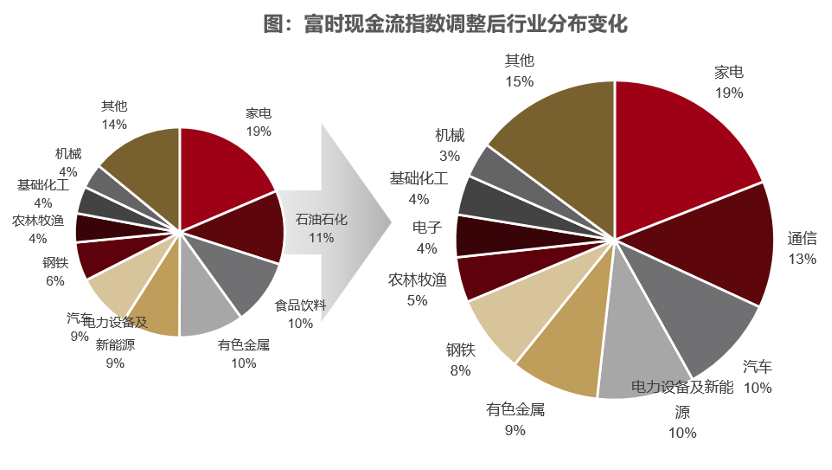
近日现金流ETF(159399)标的指数完成四季度调仓。从中信一级行业分布的视角看:富时现金流指数25Q4调仓大幅 增加通信的行业权重,提升电子、商贸零售、钢铁、汽车等行业的配置权重,削减石油石化、食品饮料、有色金属等 行业的权重。指数调整后行业分布更加均衡,成分股自由现金流率略有提升。 (数据来源:Wind,调整前数据截至2025年11月28日,指数调整于2025年12月22日生效。注:根据指数编制方案,自 由现金流收益率按最近12个月的自由现金流除以企业价值计算,取截至审核月份前一个月最后一个交易日收盘时的数 据。风险提示:行业分布根据中信一级行业划分,会随行情,公司行为和成分股变化波动) 在低利率、资产配置荒、外部环境干扰的背景下,现金流类资产一方面具有"类黄金"的安全属性,另一方面也更有能 力提供稳定的现金回报,其配置价值凸显。 回顾2014年以来,富时现金流指数与国证现金流、中证现金流以及800现金流2014年以来总体表现接近,强于中证红利 指数与红利低波指数。对比同类现金流指数走势,富时现金流指数的年化波动率相对较低、卡玛比率相对较高,具有 较好的风险收益比。 (数据来源:Wind,截至2025/ ...
基金经理投资笔记 | 2026年资产配置的基准线
Jin Rong Jie· 2025-12-24 22:37
Core Viewpoint - The article discusses the macroeconomic strategies for asset allocation in 2026, emphasizing the importance of understanding economic cycles and the need for wealth management upgrades. The proposed strategy focuses on "risk premium decline, profit increase, and structural differentiation" as a framework for investment decisions [1][2]. Growth Factors - The expected GDP growth rate for China in 2026 is projected at 4.9% for real GDP and 5.2% for nominal GDP, indicating a moderate recovery characterized by a "stable real and rising nominal" trend. This recovery is supported by proactive fiscal policies and monetary easing, which bolster infrastructure and foster new productive capacities [3]. - Corporate profitability is anticipated to improve, with industrial profit margins expected to rise to 5.8%-6.0% and return on equity (ROE) for listed companies increasing to 9.5%-10%. This improvement is driven by supply-side reforms and a recovery in pricing power [4][5]. Inflation Factors - The Consumer Price Index (CPI) is expected to rise moderately to a central value of 0.5% in 2026, while the Producer Price Index (PPI) is projected to turn positive in the third quarter, with an annual average of -0.4%. This reflects a weak recovery in consumption and a gradual alleviation of production pressures [6]. Liquidity Factors - The 10-year government bond yield is expected to remain low, with a "low first, high later" trend. The Loan Prime Rate (LPR) is likely to be reduced by 10 basis points, aligning with growth stabilization policies while avoiding excessive pressure on bank profitability [7]. - The expected range for the USD/CNY exchange rate in 2026 is between 6.80 and 7.15, indicating a "first rise, then stabilize" pattern influenced by U.S. Federal Reserve rate cuts and improved foreign exchange supply-demand dynamics [7]. Asset Allocation Recommendations - Equity assets are likely to enter a "profit-driven" golden period, with a focus on new productive capacities and cyclical goods benefiting from PPI recovery expectations. This shift represents a significant change in risk asset pricing [10]. - The bond market is expected to exhibit "low volatility and narrow fluctuations," with a balanced approach to liquidity and yield. The reduction in LPR is favorable for high-rated credit bonds [10]. - Indirect investment tools such as wealth management products and funds are expected to benefit from the "residential savings migration," serving as a transitional option for conservative investors [10]. - The attractiveness of RMB-denominated assets is expected to increase, suggesting a moderate allocation to RMB-denominated equities and bonds to mitigate single currency risks [11].

今日金价跌了价!12月24日最新黄金价格!各大金店、黄金回收价格
Sou Hu Cai Jing· 2025-12-24 19:39
在短暂整理后,黄金市场再度走强,向历史高位发起持续冲击,国际现货黄金盘中首次突破4400美元/盎司关口,刷新历史纪录,随后在亚洲交易时段进一 步攀升至4480美元/盎司附近,单日涨幅显著。 COMEX黄金突破4520美元后回落,国内金饰价格突破1400元/克,白银站上70美元, 机构普遍看多中长期前景但提示风险管理,投资者宜以资产配置视角审慎布局,避免追高短线博弈,关注即将到来的技术性抛压。 一、金价屡创新高,年内表现领跑主要资产 今年年初,金价仍运行在2600美元/盎司上下,至今累计涨幅接近70%,创下上世纪70年代末以来最强年度表现。 国际金价的持续走高迅速传导至国内市场,上海期货交易所黄金期货主力合约收盘突破1000元/克整数关口,创出新高,显示人民币计价黄金价格同样进入 历史高位区间,黄金在大类资产中的相对收益优势进一步凸显。 二、多重因素共振,支撑金价持续上行 本轮金价上涨并非单一因素驱动,多重宏观与市场力量叠加的结果,首先,地缘政治风险反复升温,国际局势不确定性加大,显著抬升避险需求,黄金作为 传统避险资产收益 关税政策不确定性、资金持续流入黄金ETF以及各国央行延续购金行为,共同推升黄金需求,部 ...
债市调整 理财净值波动不断!多家银行理财公司“喊话”别慌
Bei Jing Shang Bao· 2025-12-24 15:21
Core Viewpoint - The recent fluctuations in the bond market have led to noticeable declines in the net value of fixed-income wealth management products, prompting investor concern and caution [1][2]. Group 1: Market Performance - The bond market has experienced continuous adjustments since November, with a brief rebound in early December followed by renewed weakness. As of December 24, the 30-year government bond yield was reported at 2.2185%, down 0.45 basis points from the previous trading day, while the 10-year yield stabilized at 1.835% [2][3]. - Nearly 100 wealth management products announced early termination between November 1 and December 9 due to the bond market's price decline, which directly impacted the net value of these products [4]. Group 2: Causes of Market Fluctuation - Multiple factors have contributed to the bond market's volatility, including year-end institutional behaviors, pressure from performance assessments, and uncertainty surrounding new public fund redemption fee regulations [3]. - Despite the current volatility, signs of recovery in the bond market are emerging, with long-term bonds showing improved value and potential for recovery as central bank policies support liquidity [3]. Group 3: Investment Strategies - Financial institutions recommend that investors focus on cash management products, which are primarily based on short-term deposits and money market instruments, as they are less affected by long-term bond fluctuations [5][6]. - For investors with a higher risk tolerance, "fixed income plus" products that include a small portion of equity assets can help hedge against bond market volatility [6]. - Institutions suggest that investors should adopt a long-term perspective and consider mid-duration pure bond products for lower risk, while those with a slightly higher risk appetite may opt for mid-to-long duration bonds or "micro-inclusion" fixed income products to enhance returns [6].
中国前沿科技集团拟800万港元出售媒体内容制作及发行业务
Zhi Tong Cai Jing· 2025-12-24 15:03
Core Viewpoint - The company plans to sell its entire issued share capital of Torch Media Co., Ltd. to Crestwell International Limited for HKD 8 million, as part of its ongoing business optimization efforts [1] Group 1: Sale Details - The sale is scheduled for December 24, 2025, and involves the transfer of certain prepayments held by the target group to the company's subsidiary, Shenqian Technology [1] - Torch Media Co., Ltd. primarily engages in media content production and distribution [1] Group 2: Strategic Rationale - The board believes that the target company has limited strategic development prospects within the group due to two consecutive years of net losses and the need for ongoing financial resources to maintain operations [1] - The sale allows the company to optimize asset allocation and focus on areas with greater growth potential [1] Group 3: Financial Flexibility - By divesting the loss-making business, the company can reallocate internal resources to support the development of its event hosting and functional materials trading segments, thereby enhancing overall financial flexibility [1]
中国前沿科技集团(01661.HK)以800万港元出售Torch Media Co.Ltd全部股本
Ge Long Hui· 2025-12-24 15:03
Group 1 - The company has entered into a sale agreement with Crestwell International Limited to sell its entire issued share capital in Torch Media Co., Ltd. for HKD 8 million [1] - Following the completion of the sale, the company will no longer hold any interest in the target company, and the financial performance of the target will not be consolidated into the group's financial statements [1] - Torch Media Co., Ltd. is a limited company registered in the British Virgin Islands, primarily engaged in media content production and distribution [1] Group 2 - The sale is part of the company's ongoing business optimization efforts, aimed at enhancing asset allocation and focusing on areas with greater growth potential [2] - The board has determined that the target company has recorded net losses for two consecutive years, limiting its strategic development prospects within the group [2] - The divestment allows the company to reallocate internal resources to support the development of its event hosting and functional materials trading segments, thereby improving overall financial flexibility [2]
中国前沿科技集团(01661)拟800万港元出售媒体内容制作及发行业务
智通财经网· 2025-12-24 15:01
Core Viewpoint - The company plans to sell its entire issued share capital of Torch Media Co., Ltd. to Crestwell International Limited for HKD 8 million, as part of its ongoing business optimization efforts [1] Group 1: Sale Details - The sale involves the transfer of certain prepaid amounts held by the target group to the company's subsidiary, Shenqian Technology [1] - Torch Media Co., Ltd. primarily engages in media content production and distribution [1] Group 2: Strategic Rationale - The board believes that the target company has limited strategic development prospects within the group due to two consecutive years of net losses and the need for ongoing financial resources to maintain operations [1] - The sale allows the group to optimize asset allocation and focus on areas with greater growth potential [1] - By divesting the loss-making business, the group can reallocate internal resources to support the development of event hosting and functional materials trading sectors, enhancing overall financial flexibility [1]
债市调整,理财净值波动不断!多家银行理财公司“喊话”别慌
Bei Jing Shang Bao· 2025-12-24 14:41
Core Viewpoint - The bond market has experienced significant fluctuations, leading to noticeable declines in the net value of fixed-income wealth management products, raising concerns among investors [3][4]. Group 1: Market Performance - Since November, the bond market has entered a continuous adjustment phase, with a brief rebound in early December followed by renewed weakness. As of December 24, the 30-year government bond yield was reported at 2.2185%, down 0.45 basis points from the previous trading day, while the 10-year yield stabilized at 1.835% [3][4]. - The decline in bond prices directly impacts the net value of wealth management products, which primarily rely on bonds as their main asset [3][5]. Group 2: Causes of Market Fluctuation - Multiple factors have contributed to the market's volatility, including year-end institutional behaviors and regulatory pressures, which have decreased the willingness of banks and insurance companies to hold long-term bonds [4]. - Despite the current fluctuations, there are signs of recovery in the bond market, with long-term bonds showing improved value and potential for recovery as central bank policies support liquidity [4][5]. Group 3: Investment Strategies - Various financial institutions have provided asset allocation strategies in response to the market conditions. For instance, cash management products are recommended for their stability and low risk, while "fixed income +" products can help hedge against bond market volatility [6][7]. - Investors with lower risk tolerance are advised to focus on short to medium-term pure bond products, while those with a higher risk appetite may consider medium to long-term bonds or "micro-rights" fixed income products to enhance returns [7][8].