
人民币汇率稳定

Search documents
央行:今年6月末与2023年初相比,融资平台数量下降超过60%,金融债务规模下降超过50%
Sou Hu Cai Jing· 2025-09-22 09:24
Core Insights - The People's Bank of China (PBOC) emphasizes a balanced approach during the 14th Five-Year Plan, focusing on supporting the real economy while managing financial risks and maintaining stability [1][3]. Financial Support and Risk Management - The PBOC has taken significant steps to mitigate debt risks associated with financing platforms, resulting in a reduction of over 60% in the number of financing platforms and a decrease of more than 50% in financial debt scale compared to the beginning of 2023 [3]. - In the real estate sector, the PBOC has adjusted policies such as down payment ratios and mortgage rates, which is expected to save over 300 billion yuan in interest payments for more than 50 million households annually [3]. - The PBOC, in collaboration with regulatory bodies and local governments, has implemented measures to reduce the number of high-risk small and medium-sized banks significantly from peak levels [3]. Market Stability and Regulatory Measures - The PBOC maintains that the market plays a decisive role in exchange rate formation, ensuring the basic stability of the RMB amid external fluctuations [4]. - In the bond market, the PBOC has strengthened regulatory coordination and risk assessment, resulting in a low default rate and overall stable market operations [4]. - The PBOC is exploring monetary policy tools to maintain capital market stability, including the creation of swap facilities and stock repurchase loans in collaboration with the China Securities Regulatory Commission [4]. Overall Financial Health - The PBOC asserts that during the 14th Five-Year Plan, financial risks are generally controllable, and the financial system is operating robustly, providing strong support for high-quality economic development [4].

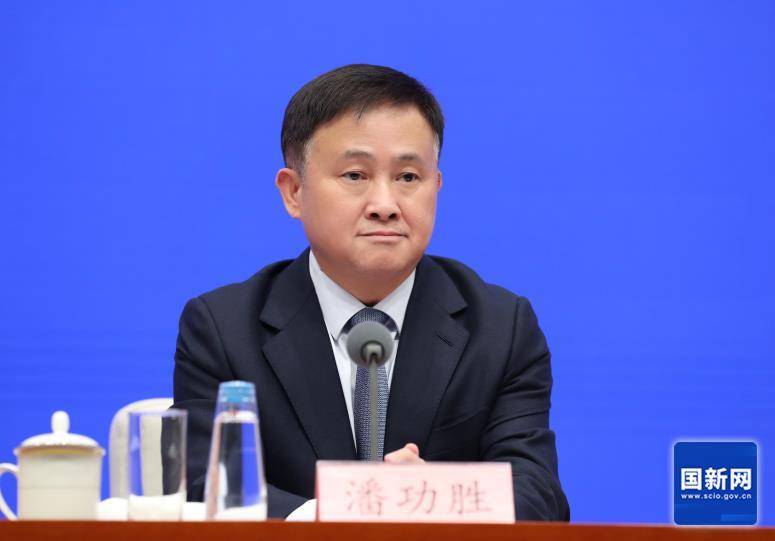
潘功胜:面对多变的外部环境,保持了人民币汇率的基本稳定
Di Yi Cai Jing· 2025-09-22 08:23
"十四五"期间,有力维护金融市场平稳运行。 9月22日,央行行长潘功胜在国新办新闻发布会上表示,"十四五"期间,有力维护金融市场平稳运行。 外汇市场方面,坚持市场在汇率形成中的决定性作用,面对多变的外部环境,保持了人民币汇率的基本 稳定。债券市场方面,债券违约率保持低位,市场运行总体平稳。资本市场方面,探索维护资本市场稳 定的货币政策工具,会同证监会创设互换便利和股票回购增持再贷款两项工具。支持中央汇金公司发挥 类"平准基金"作用,不断健全支持资本市场的长效机制。同时,健全金融稳定保障体系。不断健全金融 风险监测、评估和预警体系。设立金融稳定保障基金,存款保险机制平稳有序运行。 ...
美联储开启降息周期 人民币资产吸引力提升
Di Yi Cai Jing· 2025-09-18 14:01
Group 1: Federal Reserve Rate Cut Impact - The Federal Reserve announced a 25 basis point rate cut to 4.00%-4.25% and hinted at two more cuts within the year, leading to mixed reactions in various asset classes [1][3] - Following the rate cut, U.S. stock indices showed varied performance, with the Dow Jones rising by 0.57% while the S&P 500 and Nasdaq fell by 0.10% and 0.33% respectively [1] - The Chinese stock market initially rose but later fell, with the Shanghai Composite Index down by 1.15% [1] Group 2: Currency Market Reactions - The Chinese yuan showed minor fluctuations, with the onshore yuan against the U.S. dollar reported at 7.1085, down 72 basis points from the previous day [1][3] - Analysts suggest that the narrowing interest rate differential between China and the U.S. will attract more global funds to yuan-denominated assets [1][3] Group 3: Gold Market Dynamics - COMEX gold futures reached a record high of $3744 per ounce before retreating to $3692, indicating market uncertainty regarding the sustainability of high gold prices [2][7] - The gold market is experiencing upward pressure due to expectations of continued U.S. rate cuts and a weakening dollar, with predictions of gold prices potentially reaching $4000 to $5000 per ounce [9][8] Group 4: A-Share Market Outlook - A-share indices have shown resilience, with significant trading volumes despite recent fluctuations, indicating a healthy market environment [5][6] - Analysts believe that structural opportunities remain in sectors such as solar energy, batteries, and artificial intelligence, despite potential short-term volatility [5][6]
时隔9个月,美联储降息!影响几何?
Sou Hu Cai Jing· 2025-09-18 03:33
Group 1 - The Federal Reserve announced a 25 basis point reduction in the federal funds rate target range to between 4.00% and 4.25%, marking its first rate cut since December 2024 [1][2] - The Fed's decision comes amid slowing economic activity, rising unemployment, and persistent inflation, with the committee acknowledging increased downside risks to employment [2][5] - The Fed's projections indicate a potential further reduction of 50 basis points by the end of the year, with an additional 25 basis points cut each year for the next two years [2] Group 2 - Following the Fed's announcement, the U.S. stock market showed mixed results, with the Dow Jones Industrial Average rising by 260.42 points (0.57%), while the S&P 500 and Nasdaq Composite indices experienced slight declines [2] - The dollar index initially fell by 0.4% but later recovered to show a 0.3% increase after Powell's press conference emphasized inflation risks [3] - Analysts suggest that the Fed's rate cut could trigger a global wave of central bank rate cuts, potentially benefiting the Chinese stock market and leading to a second wave of upward momentum [5][6]
降息后,美元怎么走?
国泰君安国际· 2025-09-16 06:43
Group 1: Dollar Dynamics - The Federal Reserve is expected to initiate a rate cut cycle in September, which typically puts downward pressure on the dollar[4] - The dollar index has completed a significant correction, with the market pricing in the Fed's policy path adequately[6] - The dollar's strength is increasingly influenced by the relative performance of other major currencies rather than solely by the U.S. economy[6] Group 2: Eurozone and Pound Sterling Challenges - Eurozone economic data, such as the August composite PMI at 51, indicates insufficient growth momentum, limiting the euro's upward potential[6][7] - The UK faces fiscal policy uncertainty, with the Chancellor's budget announcement set for November 26, leading to market speculation and pressure on the pound[7] - The relative weakness of other currencies, including the euro and pound, supports the dollar's stability even in a loosening cycle[7] Group 3: Renminbi Stability - The renminbi index has shown a high correlation with the dollar index over the past two years, maintaining relative stability during dollar corrections[9][11] - China's economic policy is shifting towards growth stabilization and structural optimization, contributing to the renminbi's resilience[11] - The renminbi is positioned to act as a stabilizing anchor in the Asian currency system amid global currency fluctuations[11]
人民币中间价大幅拉升,CFETS人民币汇率指数趋于稳定
Hua Xia Shi Bao· 2025-08-31 01:34
Core Viewpoint - The recent significant appreciation of the Renminbi (RMB) against the US dollar is primarily attributed to a substantial increase in the RMB central parity rate, which has been adjusted to stabilize the currency amidst a backdrop of a weakening US dollar and concerns over the US government's creditworthiness [1][2]. Group 1: RMB Central Parity Rate - The RMB central parity rate against the US dollar began to rise after hitting a low of 7.2133 on April 16, coinciding with the onset of the US-China trade war initiated by Trump [1]. - The RMB central parity rate has seen a notable increase, with a jump of 160 basis points on August 25, reaching 7.1161, the highest since November of the previous year [1][2]. - As of August 29, the RMB central parity rate further increased by 45 basis points to 7.1063, continuing to set new records since November [1][2]. Group 2: Market Reactions and Implications - The appreciation of the RMB central parity rate has led to a significant rise in the spot exchange rate, with the onshore and offshore RMB rates reaching nine-month highs [2]. - On August 28, the onshore RMB spot rate closed at 7.1385, up 237 basis points from the previous day, and surged over 340 points within the same day [2]. - The recent labor market deterioration in the US, along with signals from the Federal Reserve regarding potential interest rate cuts, has contributed to a moderate depreciation of the US dollar, while the RMB has appreciated significantly [2][3]. Group 3: CFETS RMB Exchange Rate Index - The CFETS RMB exchange rate index reached a low of 95.3000 on July 4, 2023, indicating a significant depreciation of the RMB against a basket of currencies [3][4]. - The index has since stabilized, rising to 96.5700 by August 29, reflecting the central bank's efforts to mitigate depreciation pressures against major currencies such as the euro, yen, pound, and Swiss franc [3][4]. - Year-to-date, the RMB has depreciated against the euro by 9.37%, the yen by 3.85%, the pound by 7.92%, and the Swiss franc by 11.78%, highlighting the need for intervention to stabilize the currency [3].
9月12日证券之星早间消息汇总:央行公布重磅数据
Zheng Quan Zhi Xing· 2025-08-14 10:09
Company News - Dalian Thermal Power plans to acquire Kanghui New Materials for 10.153 billion yuan, marking a shift to the new materials industry [4] - China Communications Construction Company intends to purchase 70% equity of Boda New Energy, expanding into the photovoltaic business [5] - Zongshen Power's subsidiary Meixin Yishen has been approved for listing on the Beijing Stock Exchange [5] - Airport Holdings has terminated the transfer of its wholly-owned subsidiary Tianrui Real Estate [5] - Saiteng Co. plans to repurchase company shares worth between 200 million to 400 million yuan [5] - Kingood Co. has received three notifications for designated supply of Avatar electric vehicles [5] - Andavil's subsidiary is expected to win a bid for a 255 million yuan airborne system project [5] - Guorui Technology's subsidiary is anticipated to win a bid for a 380 million yuan engineering signal system procurement project [5] Macro News - As of the end of August, the broad money supply (M2) stood at 286.93 trillion yuan, with a year-on-year growth of 10.6%, which is 0.1 percentage points lower than the previous month and 1.6 percentage points lower than the same period last year [1] - The total social financing stock was 368.61 trillion yuan, with a year-on-year increase of 9% [1] - In August, the increment of social financing was 3.12 trillion yuan, which is 631.6 billion yuan more than the same month last year [1] - The increase in RMB loans was 1.36 trillion yuan, which is 868 billion yuan more than the same month last year [1] - The China SME Development Index for August was 89.4, rising 0.1 points from July and marking the third consecutive month of increase [3]

人民币汇率完全有条件保持基本稳定
Zheng Quan Ri Bao· 2025-08-08 07:31
Core Viewpoint - The recent meeting of the China Foreign Exchange Market Guidance Committee emphasized the need to maintain the stability of the RMB exchange rate at a reasonable and balanced level amidst a complex international environment and a strengthening US dollar [1][2]. Group 1: Market Conditions - The international situation has become increasingly complex and severe since the beginning of 2024, with the US dollar index showing volatility and non-US currencies generally weakening [1]. - The RMB has shown overall strength among major international currencies, with the China Foreign Exchange Trading Center RMB exchange rate index appreciating by 4.2% throughout the year [1]. Group 2: Regulatory Measures - The People's Bank of China and the State Administration of Foreign Exchange will continue to implement comprehensive measures to stabilize expectations, enhance market resilience, and strengthen foreign exchange market management [2]. - The committee will focus on correcting pro-cyclical behaviors in the market and addressing actions that disrupt market order, while also preventing risks of excessive exchange rate fluctuations [2]. Group 3: Self-Regulation and Market Conduct - The foreign exchange market self-regulation mechanism members are urged to prioritize serving the real economy and provide a stable exchange rate environment for enterprises and residents [2]. - Members must adhere to self-regulatory norms, avoid disrupting market order, and refrain from exacerbating pro-cyclical behaviors to maintain orderly and regulated market operations [2].
央行副行长:中国不寻求通过汇率贬值获取国际竞争优势
Zhong Guo Xin Wen Wang· 2025-08-08 07:19
Core Viewpoint - The People's Bank of China (PBOC) emphasizes that China does not seek to gain international competitive advantages through currency devaluation, maintaining a clear and consistent stance on exchange rate policy, which prioritizes market determination and aims to keep the RMB stable at a reasonable equilibrium level [1][2]. Economic Stability - Domestic economy shows signs of recovery, with a GDP growth of 5.4% year-on-year in the first quarter, indicating a positive start to the year [1]. - The Central Political Bureau of the Communist Party of China has made important deployments for economic work, suggesting a continuation of high-quality economic development [1]. Monetary Policy Expectations - There is a growing market expectation that the Federal Reserve will resume interest rate cuts in the second half of the year, which may improve the alignment of monetary policy cycles between China and the U.S. and narrow the interest rate differential [1]. Balance of Payments - The current account surplus is projected to be 2.2% of GDP in 2024, indicating a balance within a reasonable range [2]. - China's financial market is operating stably, with steady progress in opening up, making RMB assets attractive, and facilitating orderly cross-border capital flows, with a net inflow of approximately $100 billion in the first five months of the year [2]. Foreign Exchange Market Development - Significant progress has been made in the development of the foreign exchange market, with more mature market participants and rational trading behaviors, enhancing market resilience [2]. - The hedging ratio for enterprises and the proportion of RMB cross-border receipts in goods trade have both increased to around 30%, indicating improved capacity for enterprises to respond to external shocks [2].
财信证券:下半年货币政策将维持适度宽松的总基调
Sou Hu Cai Jing· 2025-07-15 05:14
Group 1 - The central bank's monetary policy is expected to maintain a moderately accommodative tone in the second half of the year despite a shift in language regarding rate cuts and reserve requirement ratio adjustments [1][2] - The foundation for economic recovery in China is still fragile, with uncertainties in external demand for the third quarter and expectations of a potential rate cut by the Federal Reserve in September [1][2] - The central bank aims to enhance domestic demand, stabilize social expectations, and invigorate market activity to support the overall economic and social development goals for the year [1] Group 2 - China is not seeking to gain international competitive advantage through currency depreciation, reflecting the country's confidence and responsibility [2] - The removal of certain phrases regarding market behavior and the weakening of statements on preventing excessive currency fluctuations indicate a reduced risk of RMB depreciation [2] - The RMB/USD exchange rate is expected to trend towards stability and gradual appreciation in the future [2]