存储超级周期

Search documents
未知机构:AI载板重视存储和AI超级周期驱动下的载板投资机会2026年载板价格-20260120
未知机构· 2026-01-20 02:10
Summary of Conference Call Records Industry Overview - Focus on the investment opportunities in the substrate industry driven by storage and AI supercycle, with significant price increases expected for substrates by 2026 [1][2] Key Companies Mentioned - **Shennan Circuit**: Projected revenue of approximately 4 billion CNY in 2025, with a potential profit elasticity of 2 billion CNY if prices increase by 50%. Long-term target value exceeds 8 billion CNY, currently valued at 160 billion CNY [3] - **Xinxing Technology**: Expected revenue of around 1.5 billion CNY in 2025, with a profit elasticity of 3 billion CNY if prices rise by 50%. Potential AI PCB revenue could reach approximately 10 billion CNY if overseas clients are secured, currently valued at 40 billion CNY [3] - **Honghe Technology**: Positioned to dominate the T-glass market by 2026, with a current production capacity of 210 million square meters per year, expected to expand to 36 million square meters per year for high-performance electronic cloth. Projected net profit of 400-500 million CNY in 2026, with significant profit increases possible based on price adjustments [3] Core Insights and Arguments - **ABF Substrate**: - Supply: No new production capacity planned by Taiwanese manufacturers for 2026 [2] - Demand: Surge in GPU and CPU demand expected [2] - Anticipated supply-demand gap of at least 10-20% in 2026 [2] - **BT Substrate**: - Supply: Severe limitations due to raw material shortages, particularly T-glass, which is driving up production costs [2] - Demand: Benefiting from the storage supercycle [2] - Expected severe supply-demand imbalance from 2026 to 2028 [2] Price Projections - Both BT and ABF substrates are expected to see price increases of at least 5-10% each quarter in 2026 [1] Additional Important Points - The overall market for substrates is experiencing significant growth due to the increasing demand for high-end computing chips and storage solutions [1][2] - The current market valuations of the mentioned companies are considered undervalued relative to their potential growth and profit elasticity [3]
警惕存储“超级周期”下的潜在风险
Zheng Quan Ri Bao· 2026-01-18 17:12
Core Viewpoint - The storage market is experiencing a significant price increase, driven by a "super cycle" primarily fueled by the demand for AI infrastructure and data center expansions, leading to a shortage of general memory supplies like DDR4 and DDR5 [1][2]. Group 1: Market Dynamics - Since September last year, the storage market has seen rare price hikes, with a notable increase of 19.36% in the price of DDR5 memory kits within a week [1]. - Counterpoint Research reports that the storage market has surpassed the historical high of 2018, with suppliers' bargaining power at an all-time high, and prices expected to rise by 40% to 50% in Q1 2026, followed by an additional 20% in Q2 [1]. - The current "super cycle" is distinct from previous recoveries driven by consumer electronics, as it is fundamentally driven by the demand for data storage resulting from AI applications [1]. Group 2: Industry Impact - Upstream manufacturers are benefiting significantly in the short term, with major storage companies like Micron projecting revenues of approximately $18.7 billion and a gross margin increase to 68% for Q2 2026 [2]. - However, downstream sectors are facing cost pressures, leading to increased prices for consumer electronics such as PCs and smartphones [2]. - The "super cycle" is expected to accelerate technological innovation and industry upgrades, but it may also lead to irrational exuberance and resource misallocation, with potential issues arising from over-speculation and neglect of foundational technology reliability [2]. Group 3: Cautionary Insights - The AI-driven "super cycle" may create a "siphoning effect" on supply, reducing the availability of general storage chips for consumer electronics, which could lead to price surges and supply shortages [3]. - There is a risk of blind expansion and technological iteration leading to a "cycle trap," where excessive production capacity could result in a market reversal once new technologies are fully deployed [3]. - The storage market's "super cycle" is reshaping the industry's product focus, competitive landscape, and value chain distribution, necessitating a balanced approach to avoid distorting the long-term health of the industry [3].

彭博社:存储芯片最好的押注!刘德音高位增持!
是说芯语· 2026-01-18 00:41
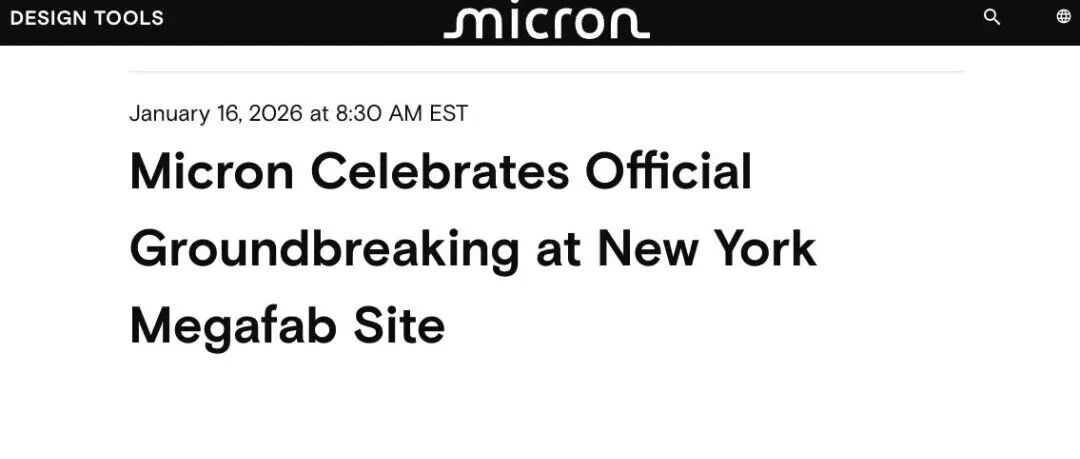
Core Viewpoint - Micron Technology's stock surged nearly 8%, reaching a historic high and surpassing a market capitalization of $400 billion, reflecting strong growth momentum in the storage chip sector driven by the AI wave [1][3]. Group 1: Company Developments - Micron held a groundbreaking ceremony for a $100 billion memory manufacturing complex in New York, which will include up to four fabs and become the largest semiconductor facility in the U.S. upon completion in 2030 [3]. - The company’s strategic moves, including the establishment of this facility, are aimed at solidifying its long-term production capacity [3]. Group 2: Insider Activity - Micron's board member, Liu Deyin, disclosed a significant stock purchase of 23,200 shares for $7.82 million, indicating confidence in the company's future despite its high stock price [6]. - Liu's background in the semiconductor industry and his previous role as chairman of TSMC lend credibility to his investment decision, suggesting he may have insights into Micron's undisclosed positive developments [6][7]. Group 3: Market Insights - The semiconductor industry is experiencing a structural bull market driven by AI, with professional investors like ClearBridge highlighting the potential for a decade-long upward cycle in storage chips [8]. - The supply-demand dynamics for high-bandwidth memory (HBM) are expected to remain tight until 2027, with Micron securing HBM supply orders for 2026 and planning to ramp up production of HBM4 products [8]. - The collaboration between Micron and TSMC in the AI chip supply chain could enhance their competitive edge, particularly in packaging and capacity coordination [7][8]. Group 4: Industry Outlook - The storage chip sector is transitioning from traditional cycles to an AI-driven structural bull market, with Micron and other leaders like Samsung and SK Hynix poised to benefit from this shift [8][9].

佰维存储:请投资者持续关注AI投资的持续性、存储行业周期变化 目前存储价格处于历史高位
Zhi Tong Cai Jing· 2026-01-16 13:22
Core Viewpoint - The company, Baiwei Storage (688525.SH), has announced a stock price fluctuation notice, indicating a significant market focus on the storage supercycle and confirming a current supply-demand imbalance along with rising prices in the storage market [1] Group 1: Market Conditions - The storage market is experiencing tight supply and price increases [1] - Current storage prices are at historical highs, prompting caution for investors regarding potential risks [1] Group 2: Company Developments - The company is actively advancing its advanced packaging business, which is currently progressing steadily [1] - The wafer-level advanced packaging manufacturing project is still in the sample verification stage, with future progress potentially falling short of expectations [1] Group 3: Investor Guidance - Investors are advised to continuously monitor the sustainability of AI investments and changes in the storage industry cycle [1]
佰维存储(688525.SH):晶圆级先进封装制造项目尚处于打样验证阶段
Ge Long Hui A P P· 2026-01-16 12:43
Group 1 - The core viewpoint of the article highlights the current tight supply and rising prices in the storage market, which has garnered widespread attention during the storage supercycle [1] - The company is actively advancing its advanced packaging business, with projects currently progressing steadily [1] - The company has not identified any media reports or market rumors that could significantly impact its stock trading price [1] Group 2 - The company's wafer-level advanced packaging manufacturing project is still in the sampling verification stage, and future progress in the advanced packaging business may not meet expectations [1] - Investors are advised to pay attention to the sustainability of AI investments and the cyclical changes in the storage industry, as current storage prices are at historical highs [1]
佰维存储:晶圆级先进封装制造项目尚处于打样验证阶段 先进封装业务进展未来可能不及预期
Di Yi Cai Jing· 2026-01-16 11:03
Core Viewpoint - The company announced that its stock price has deviated significantly, with a cumulative increase of over 30% in three consecutive trading days, indicating abnormal trading activity [1] Group 1: Market Conditions - The market is currently experiencing a super cycle in storage, leading to heightened attention and demand [1] - There is a notable supply-demand imbalance in the storage market, resulting in rising prices [1] Group 2: Company Developments - The company is actively advancing its advanced packaging business, with projects progressing steadily [1] - The wafer-level advanced packaging manufacturing project is still in the sampling verification stage, and future progress may not meet expectations [1] Group 3: Investor Advisory - Investors are advised to pay attention to the sustainability of AI investments and the cyclical changes in the storage industry [1] - Current storage prices are at historical highs, and investors should remain cautious regarding investment risks [1]
佰维存储:公司晶圆级先进封装制造项目尚处于打样验证阶段,先进封装业务进展未来可能不及预期
Mei Ri Jing Ji Xin Wen· 2026-01-16 10:59
Core Viewpoint - The company Bawei Storage has experienced a significant stock price increase, with a cumulative rise of over 30% in three consecutive trading days, indicating abnormal trading activity [1] Company Summary - The stock price increase is attributed to widespread market attention on the storage supercycle, with current supply-demand tightness and rising prices in the storage market [1] - The company is actively advancing its advanced packaging business, which is currently progressing steadily [1] - The company's wafer-level advanced packaging manufacturing project is still in the sample verification stage, and future progress in the advanced packaging business may not meet expectations [1] Industry Summary - Investors are advised to pay attention to the sustainability of AI investments and the cyclical changes in the storage industry [1] - Current storage prices are at historical highs, prompting caution among investors regarding potential risks [1]
突发!AI应用大面积跌停,有个股650万手封死跌停板!半导体王者归来,1900亿巨头涨停,历史新高...
雪球· 2026-01-16 08:34
Market Overview - The market opened high but closed lower, with all three major indices declining: Shanghai Composite Index down 0.26%, Shenzhen Component Index down 0.18%, and ChiNext Index down 0.2% [3] - The total trading volume in the Shanghai and Shenzhen markets reached 3.03 trillion yuan, with over 2900 stocks declining [4] Sector Performance Semiconductor Sector - The semiconductor industry chain showed strong performance, with Longji Technology hitting the daily limit and reaching a five-year high, while Bawei Storage and Jiangbolong both achieved historical highs [4][13] - Notable stocks included Ningbo Silicon Electronics and Tianyue Advanced, both hitting the daily limit with a 20% increase, and Bawei Storage rising 17% to a historical high [14] - The semiconductor sector is experiencing a "super bull market," with expectations of a 40% to 50% increase in the memory market by Q1 2026 [21] AI Application Sector - The AI application sector faced significant declines, with many stocks hitting the daily limit, including Yanshan Technology and Xinhua Net [5][6] - Companies like BlueFocus and Kunlun Wanwei saw declines exceeding 10% [7] Electric Power Equipment Sector - The electric power equipment sector experienced a strong rally, particularly in grid equipment, with stocks like Bofei Electric and Hancable hitting the daily limit [22] - The State Grid announced a fixed asset investment of 4 trillion yuan for the "14th Five-Year Plan," a 40% increase from the previous plan, focusing on technological innovation and new power system construction [25][26] - Goldman Sachs predicts that AI-driven global digital infrastructure and energy system investments could reach $5 trillion over the next decade, with grid equipment being a direct beneficiary [26]

涨价潮不止,存储芯片再爆发!
Ge Long Hui· 2026-01-16 07:57
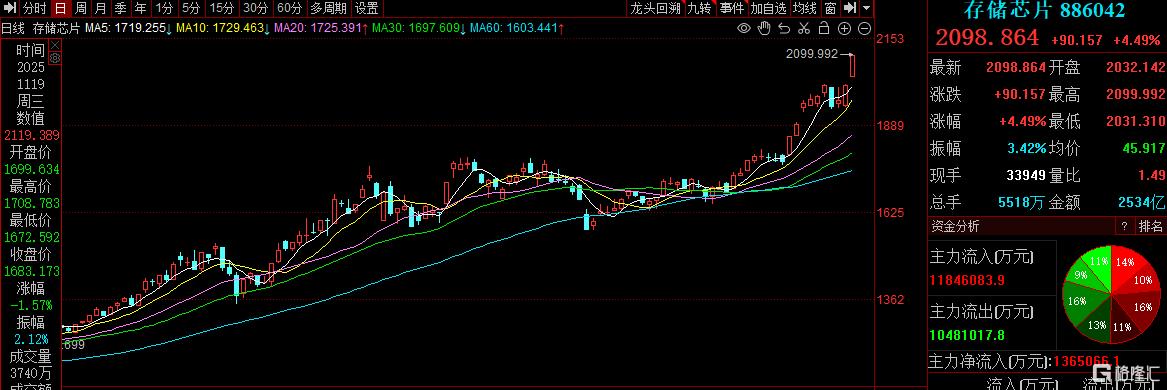
Group 1: Market Trends - The prices of memory modules and hard drives have surged significantly, increasing by three to four times compared to last year, with daily price hikes of approximately 40 yuan [1][6] - The A-share storage chip sector index rose over 4% today, accumulating a rise of over 18% for the year [2] - The storage stocks in the U.S. market have collectively surged, with major players like SanDisk and Western Digital reaching new highs, which has positively influenced A-share storage stocks [1] Group 2: Individual Stock Performance - Notable individual stock performances include Jin Tai Yang reaching a 20% limit up, while Baiwei Storage and Jingce Electronics rose over 16%, and Huicheng Co. and Blue Arrow Electronics increased over 9% [4] - Baiwei Storage's stock price increased by 16.87% to 183.52, while Jingce Electronics rose by 15.85% to 138.16 [5] Group 3: Price Increases and Demand Drivers - Since September 2025, DDR5 memory prices have increased by over 300%, while DDR4 prices have risen by over 150% [7] - AI servers are consuming 53% of the global monthly memory production capacity, with demand for memory in AI servers being 8-10 times that of regular servers, leading to a significant squeeze on consumer-grade memory supply [7] - The storage market is currently in a "super bull market," surpassing historical highs from 2018, driven by increasing demand from AI and server capacity [7] Group 4: Company Earnings Forecasts - Baiwei Storage expects to achieve revenues between 10 billion to 12 billion yuan for 2025, representing a year-on-year growth of 49.36% to 79.23%, with net profits projected to increase by 427.19% to 520.22% [9] - The company anticipates a quarterly revenue of 3.425 billion to 5.425 billion yuan in Q4 2025, with net profits expected to grow by 1225.40% to 1449.67% [10] Group 5: Analyst Upgrades - Bernstein has significantly raised SanDisk's target price from $300 to $580, citing an unprecedented storage super cycle driven by AI [11] - Wells Fargo has also increased target prices for several storage companies, including SanDisk and Western Digital, reflecting the bullish outlook on the storage sector [12]


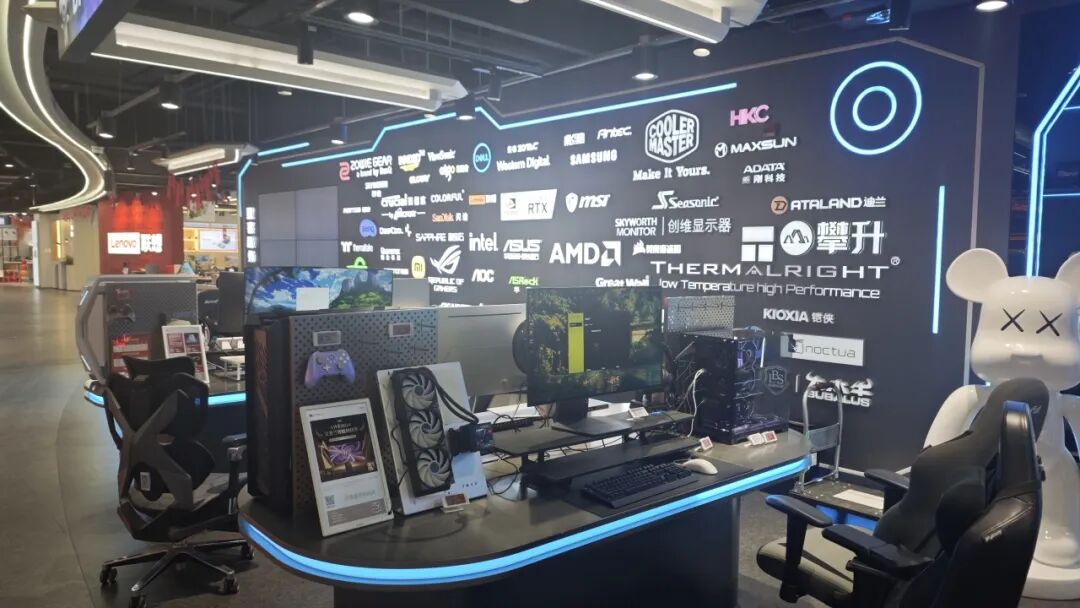
存储步入“超级周期” 多款笔记本电脑涨价
Shang Hai Zheng Quan Bao· 2026-01-16 06:58
Group 1 - The global memory market is entering a "super cycle," leading to price increases in consumer electronics such as laptops and desktops [1] - The cost of assembling a computer has increased by approximately 1500 yuan due to rising memory prices [2][4] - The price of DDR5 memory has surged from around 1000 yuan to 2500 yuan within a few months, causing consumers to delay purchases [3][4] Group 2 - Major brands like Lenovo, HP, and Dell have strategic stockpiles, which may delay the impact of price increases, but smaller businesses may struggle to cope with rising costs [8] - The current surge in memory prices is primarily driven by the increased demand for AI computing power, which is consuming high-performance storage units [8] - Memory manufacturers are cautious about expanding production due to the long lead times and the ongoing demand from AI applications, making it difficult for consumer-grade products to compete for capacity [8]