
气候变化

Search documents
29次来华!他联手中国科学家,在青藏高原破解“冰川密码”
Bei Jing Ri Bao Ke Hu Duan· 2026-01-27 06:37
Core Viewpoint - The article highlights the significant contributions of American glaciologist Lonnie Thompson to glacier research in the Tibetan Plateau, emphasizing his collaboration with Chinese scientists over nearly four decades to unlock the climate secrets of this region [3][4][6]. Group 1: Thompson's Contributions and Achievements - Lonnie Thompson is recognized as a pioneer in low-latitude glacier research, having led numerous expeditions to collect ice core samples from various regions, including the Tibetan Plateau [3][4]. - He introduced advanced ice core drilling technology to China, which laid the foundation for glacier research in the country [4][6]. - Thompson's team has achieved several milestones, including the first deep ice core drilling in China and the longest ice core record from a low-latitude region, spanning over 700,000 years [12][14]. Group 2: Collaborative Efforts and Scientific Impact - The collaboration between American and Chinese scientists has resulted in significant findings, such as the confirmation of dry snow zones in mid-latitude glaciers, enhancing the understanding of ice core preservation [14][16]. - The joint research efforts have led to the publication of over 30 articles in influential scientific journals, increasing the international academic influence of Chinese scientists [18][19]. - The establishment of the Third Pole Environment (TPE) international plan aims to address climate change challenges, with Thompson playing a crucial role in promoting this initiative [20][22]. Group 3: Future Directions and Environmental Concerns - The article emphasizes the importance of continued collaboration in glacier research to address global climate change, with Thompson advocating for a united scientific community [22][23]. - The advancements in glacier research in China, supported by government investment and international collaboration, have positioned the country at the forefront of this field [20][22].


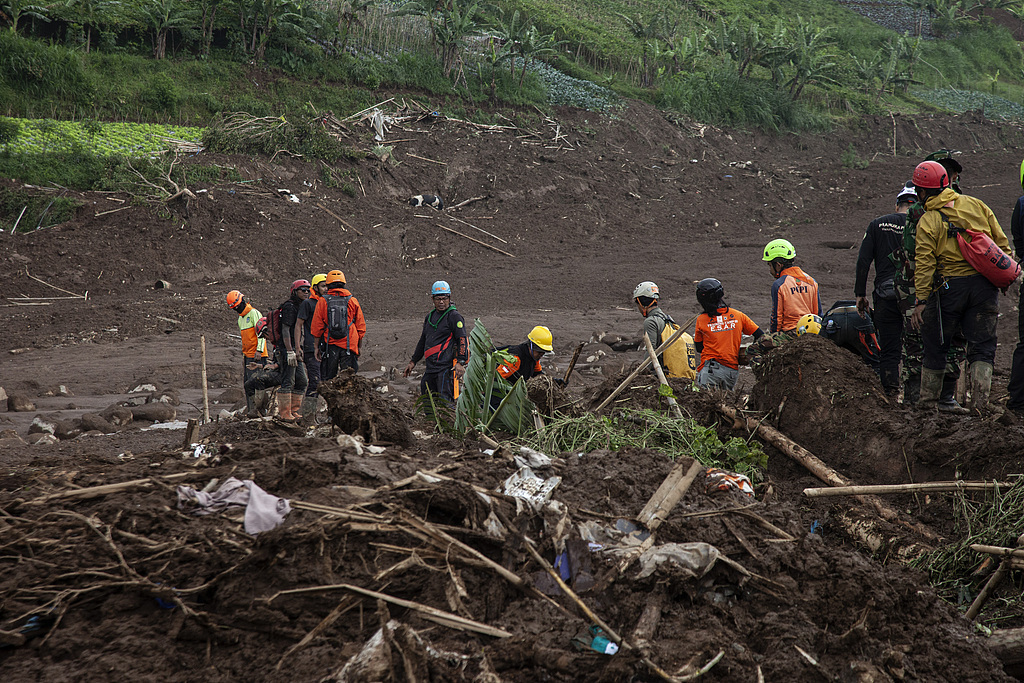
印尼山体滑坡遇难人数升至38人
Yang Shi Xin Wen· 2026-01-27 06:09
Core Viewpoint - A landslide in West Java, Indonesia, has resulted in 38 fatalities, with ongoing rescue and recovery efforts being coordinated by the National Disaster Management Agency [2] Group 1: Casualties and Identification - As of 6:30 PM local time on the 26th, 38 bodies have been transferred to the identification team, with 20 identified and returned to families, while 18 remain under identification [2] - The disaster has prompted a significant response, with approximately 800 rescue personnel deployed to assist in search and rescue operations [2] Group 2: Relief Efforts - The National Disaster Management Agency is actively distributing relief supplies to ensure the basic needs of affected individuals are met, including ready-to-eat food, folding beds, blankets, sleeping mats, and hygiene products [2] Group 3: Seasonal Context and Climate Impact - Indonesia's rainy season typically runs from November to April, during which floods and landslides are common, exacerbated by climate change leading to longer rainy seasons and more intense rainfall [2]
美国冬季风暴肆虐数十州进入紧急状态 极寒天气威胁数百万人
Zhong Guo Xin Wen Wang· 2026-01-27 06:05
报道称,此次风暴带来暴雪、强风、冻雨和冰雹等多种极端天气。美国国家气象局表示,全国约1.9亿 人处于不同程度的极寒警报之下。在五大湖地区,极端低温可在几分钟内导致裸露皮肤冻伤,部分地区 气温已降至零下30摄氏度左右。 据报道,灾害已造成重大人员伤亡。据各州政府和地方媒体报道,遇难者死因包括体温过低,由风暴引 发的交通事故,以及与雪橇、全地形车和铲雪车等相关的意外。灾害导致多地大面积停电,截至当地时 间26日晚间,仍有超过60万用户无电可用。 田纳西州、得克萨斯州等南方州受灾尤为严重,这些地区对如此极端低温天气普遍准备不足。在田纳西 州首府纳什维尔,树木在结冰的重压下不断倒塌,甚至砸毁刚刚修复的供电线路。多地政府已紧急设立 取暖庇护所,协助断电居民转移。 气象专家指出,此次灾后恢复工作异常艰难。由于受灾范围过广,从南至北同时告急,使得通常应对能 力较强的北方州无法有效支援资源紧张的南方地区。此外,这场由极地涡旋扩张引发的大范围风暴, 其"干燥蓬松"的雪质极易被强风吹起,严重阻碍清雪作业与能见度。 中新网1月27日电据法新社报道,一场席卷全美多州的冬季风暴已造成至少23人死亡。目前,极端低温 天气仍在持续,对数百 ...
美国正式“退群”,联合国表态!
中国能源报· 2026-01-27 02:54
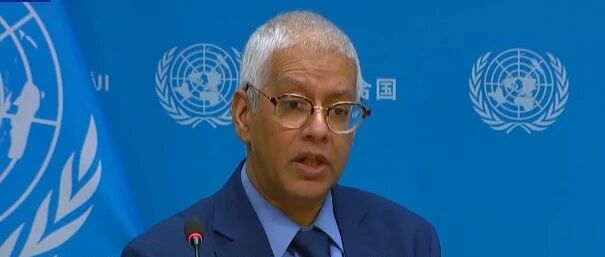
Core Viewpoint - The article discusses the United States' formal withdrawal from the Paris Agreement, highlighting the implications and reactions from the United Nations regarding climate commitments [1][3]. Group 1: U.S. Withdrawal from the Paris Agreement - On January 20, 2025, President Trump signed an executive order declaring the U.S. withdrawal from the Paris Agreement, with the exit officially taking effect on January 27, 2026 [1]. - The U.N. Secretary-General's spokesperson emphasized that all countries must fulfill their obligations to combat climate change and opposed any attempts to evade these commitments [3]. Group 2: Historical Context - The Paris Agreement was established during the 2015 U.N. Climate Change Conference as a significant global effort to address climate change [3]. - The U.S. initially announced its intention to withdraw from the agreement in June 2017, with the formal exit occurring on November 4, 2020, which faced widespread criticism domestically and internationally [3]. - President Biden signed an executive order on his first day in office, January 20, 2021, to rejoin the Paris Agreement, with the U.S. officially rejoining on February 19, 2021 [3].
美正式退出《巴黎协定》 联合国:反对任何逃避气候承诺的做法
Yang Shi Xin Wen· 2026-01-27 02:41
Core Points - The United States will officially withdraw from the Paris Agreement on January 27, 2026, following President Trump's executive order on January 20, 2025 [1][3] - The United Nations emphasizes the importance of all countries fulfilling their obligations to combat climate change and opposes any attempts to evade these commitments [3] Group 1 - The Paris Agreement was established as a significant outcome of the 2015 United Nations Climate Change Conference to address climate change globally [3] - The U.S. previously announced its withdrawal from the Paris Agreement in June 2017, with the formal exit occurring on November 4, 2020, which faced widespread criticism domestically and internationally [3] - President Biden signed an executive order to rejoin the Paris Agreement on January 20, 2021, and the U.S. officially rejoined on February 19, 2021 [3]
破解青藏高原冰川密码(相知无远近)
Ren Min Wang· 2026-01-26 22:38
Core Viewpoint - The article highlights the significant contributions of Dr. Lonnie Thompson in the field of glaciology, particularly in the study of low-latitude glaciers and the collaboration between Chinese and American scientists in ice core research on the Tibetan Plateau [11][20]. Group 1: Contributions of Dr. Lonnie Thompson - Dr. Thompson is recognized as a pioneer in low-latitude glaciology, having led numerous expeditions to collect and analyze ice core samples from various countries [11][12]. - He introduced ice core drilling technology to China, significantly advancing the country's glaciology research [15][19]. - His collaboration with Chinese scientists, particularly with Dr. Yao Tandong, has resulted in numerous groundbreaking discoveries and the establishment of the Chinese glaciology research framework [14][19]. Group 2: Ice Core Research Significance - Ice cores serve as "environmental archives," preserving climate data over thousands to millions of years, which is crucial for understanding past climate changes and human impacts [12][13]. - The Tibetan Plateau, with over 40,000 glaciers covering approximately 49,000 square kilometers, is vital for studying climate patterns in Asia and globally [13][14]. - Recent achievements include the successful drilling of a 324-meter ice core in 2024, marking the longest ice core extracted from low-latitude glaciers [22]. Group 3: Collaborative Efforts and Achievements - The collaboration between Chinese and American scientists has led to significant milestones, including the first deep ice core drilling in China and the longest ice core record spanning over 700,000 years [19][20]. - The establishment of the Third Pole Environment (TPE) initiative aims to enhance international cooperation in glaciology and climate research [24]. - Dr. Thompson's ongoing efforts to promote scientific collaboration and education have resulted in the training of over 200 Chinese students in glaciology [21][24].

美国前副总统戈尔:中国主导全球能源转型,是我最想不到的结果
Sou Hu Cai Jing· 2026-01-26 18:57
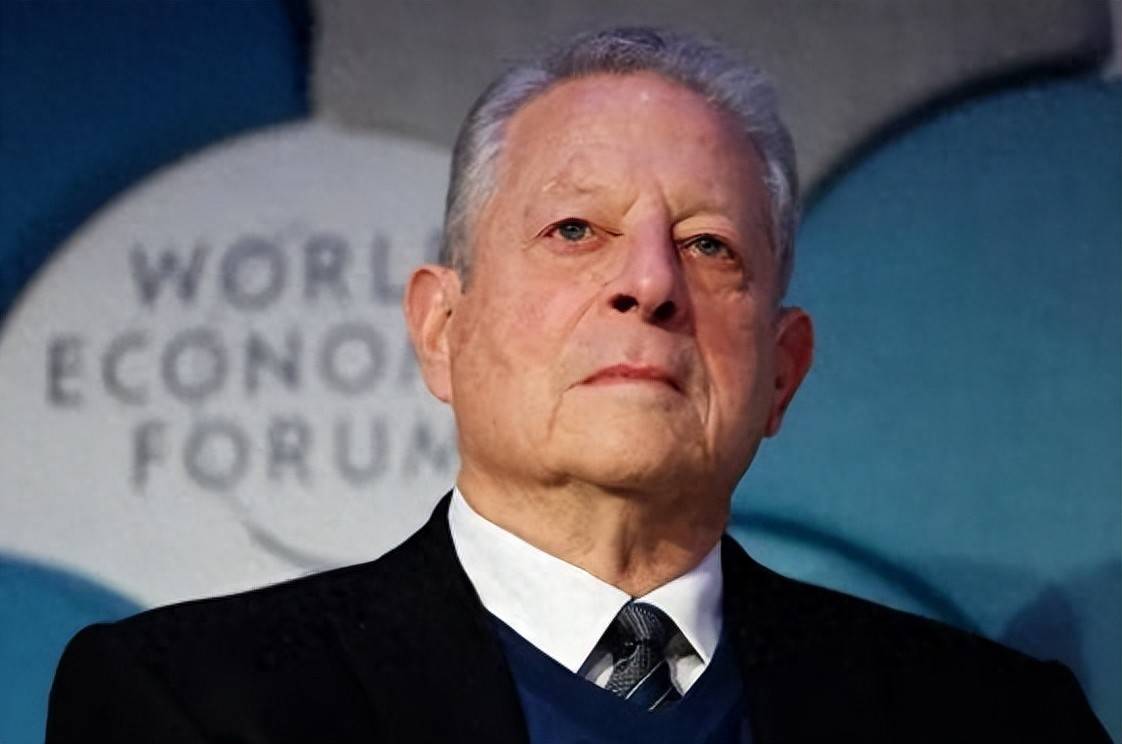
Core Viewpoint - The article discusses Al Gore's transformation from a political figure to a climate change advocate, highlighting the shift in global leadership in clean energy from the U.S. to China, and the implications of this transition for international relations and climate action. Group 1: Al Gore's Journey and Climate Advocacy - Al Gore initially believed in the U.S. leading global environmental efforts but shifted focus to climate change advocacy after losing the 2000 presidential election [1] - He won the Nobel Peace Prize in 2007 for promoting climate change awareness and later founded an investment company focused on sustainable projects [3] - Gore has been critical of U.S. climate policy inconsistencies, particularly the withdrawal from the Paris Agreement, which he believes hampers global emission reduction efforts [3][5] Group 2: China's Role in Clean Energy Transition - Gore expressed surprise at China's emergence as a leader in energy transition, noting its rapid advancements in solar energy and wind power [3][9] - China has become the largest producer of solar panels and electric vehicle batteries, filling the gap left by the U.S. in clean technology [7] - The Chinese government has set achievable carbon emission targets and has made significant investments in renewable energy, which Gore views as a positive signal for global climate action [5][9] Group 3: Implications for Global Climate Action - The shift in clean energy leadership to China has significant implications for international trade and alliances, with many countries seeking closer ties with China [7] - Gore believes that the global energy transition is irreversible, with decreasing technology costs and diminishing influence of fossil fuel industries [7] - He emphasizes the importance of stable policies in the U.S. to accelerate global climate action and warns that failure to catch up with China could lead to a shift in geopolitical dynamics [9]
美媒:加对华合作是务实,而非短视
Xin Lang Cai Jing· 2026-01-23 22:58
Core Viewpoint - The article argues that Canada's diplomatic engagement with China is a strategic move for diversification rather than a short-sighted provocation against the U.S. [1][2] Group 1: Strategic Diversification - Canada's approach to deepen cooperation with China is a calculated strategy to mitigate risks associated with U.S. protectionism and unilateralism [2][4] - The shift towards China is not an emotional reaction to U.S. policies but a rational decision based on national interests [2][4] Group 2: Economic Benefits - Canada has reduced tariffs on Chinese electric vehicles to 6.1%, benefiting consumers and promoting green energy transition [3] - The reduction of tariffs on Canadian canola to 15% by China provides significant advantages to Canadian farmers, offering a buffer against market volatility [3] Group 3: Arctic Sovereignty and Cooperation - Discussions on Arctic sovereignty with China are framed as a necessary collaboration to address climate change and resource management, rather than a betrayal of NATO [4] - Canada’s willingness to engage with China in Arctic governance reflects a recognition that global challenges require inclusive dialogue rather than military alliances [4] Group 4: Changing Global Dynamics - The article highlights a shift away from a unipolar world dominated by a single superpower, emphasizing the need for middle powers like Canada to collaborate [5] - Canada's recent actions are portrayed as a bold step towards establishing itself as a resilient core in the global economy, rather than a subordinate to Washington [5]
Poll: Most Americans Believe Cities Will Be Lost to Rising Sea Levels
Insurance Journal· 2026-01-23 13:36
Many Americans believe climate change climate change is likely to cause some cities to be lost to rising sea levels, and they also expect mass displacement of people and serious damage to the global economy, a new poll shows.A YouGov survey on climate change and the environment shows respondents think climate change is likely to cause cities to be lost to rising sea levels (56%), mass displacement of people from some parts of the world (57%) and serious damage to the global economy (58%). The online survey ...


高温、暴雪、局地强对流成关键词
Xin Lang Cai Jing· 2026-01-22 23:19
气温持续偏高 降水偏多 2025年全市平均气温为9.4℃,较历年同期(8.5℃)偏高0.9℃。7月平均气温较历年同期偏高1.5℃,为 1951年以来历史同期第三高;9月平均气温较历年同期偏高2.2℃,为历史同期第一高;11月平均气温较 历年同期偏高2.9℃,为历史同期第二高。 全年日极端最高气温为36.3℃,6月25日出现在康平;日极端最低气温为-31.3℃,2月4日出现在沈北。 各地日最高气温≥30℃的日数平均为50天,比历年平均多20天,辽中多达62天。 降水方面,2025年全市年平均降水量为633.4毫米,比历年同期(615.9毫米)多17.5毫米。全年降水时 空分布不均,极端性强。1月降水量为1951年以来历史同期第一多。2月、3月、10月和11月降水量异常 偏少,均不足历年同期的2成,10月降水量不足1毫米,为1951年以来历史同期第二少。 2025年全市年平均总日照时数为2501.7小时,比历年同期多1.4小时。 气候事件关键词: 过去的一年,你对于沈阳哪些气候事件印象深刻?是除夕的暴雪?是夏季的暴雨?还是湿热的"桑拿 天"? 1月21日,沈阳市气象部门发布2025年度气候公报。2025年沈阳气候 ...