
经济衰退

Search documents
Fed rate cut is 'insurance' buffer against labor market, says economist Claudia Sahm
Youtube· 2025-12-10 19:13
Our next guest says today's cut is an insurance cut against a weakening labor market. Let's bring in Claudia Som, chief economist at New Century Adviserss, creator of the SOM rule. Claudia, it's great to see you.Let me just set this up a little bit because we had Jason Ferman earlier saying we shouldn't cut because of inflation and because of the deficit. Those pressures are still too high. Um, obviously others are are more doubbish.They think that we can and should. Explain where you come down on this. >> ...


高盛拉响警报:2008年危险信号又出现了!
Sou Hu Cai Jing· 2025-12-10 16:56
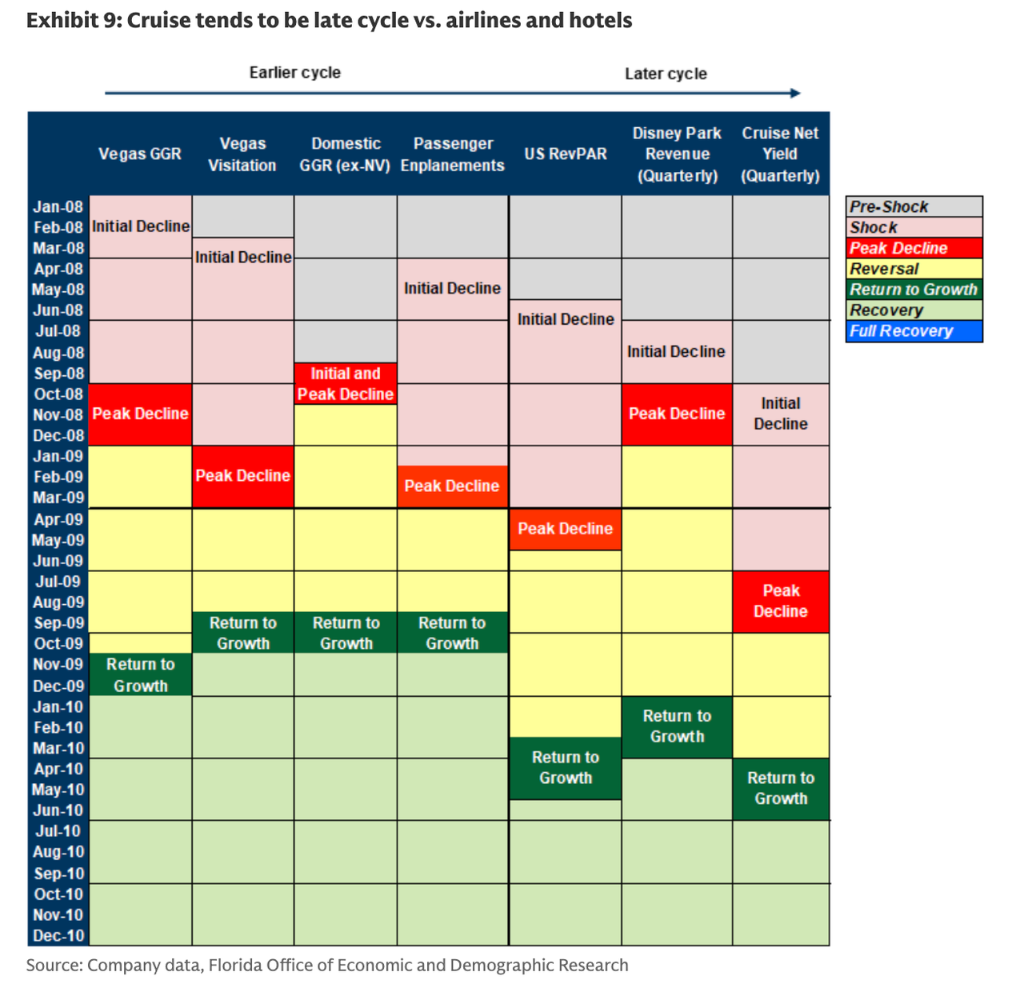
财政部长贝森特此前传达的信息显示,针对工薪阶层消费者的利好因素预计将在第一季度某个时候开始显现。 衰退周期的传导路径 分析显示,不同行业的衰退时间点存在显著差异。 在2008年全球金融危机(GFC)期间,拉斯维加斯和航空业是最先受到冲击的领域。拉斯维加斯的博彩收入早在2008年2月至3月就开始下降,航空公司的 登机量则在2008年年中显示出下滑。 来源:华尔街见闻 高盛分析师指出,目前的消费者支出环境正在发出早期预警信号,其特征与2008年金融危机前夕几乎如出一辙,拉斯维加斯的博彩收入再次成为衡量经济 周期的"领头羊"。 据由Lizzie Dove领导的高盛分析团队发布的报告,拉斯维加斯的消费趋势已经开始走低,这重现了当年经济衰退早期的疲软迹象。 与此同时,尽管目前的消费环境呈现K型分化和双轨特征,但这一早期信号值得市场高度警惕。 高盛认为,投资者应密切关注直至2026年初的消费趋势。虽然目前航空业需求依然坚挺,但若后续该领域需求开始下滑,将是经济疲软范围扩大的明确信 号,这可能会迫使美联储主席鲍威尔对更多的降息持开放态度。 | | | Earlier cycle | | | Later cycle | | ...

顶级经济学家马克・赞迪发出新的衰退预警
Xin Lang Cai Jing· 2025-12-10 16:08
Core Viewpoint - Economist Mark Zandi expresses concerns about a weakening labor market and potential recession risks [1][5] Group 1: Labor Market Conditions - The unemployment rate has gradually increased from 4.0% in January to 4.4% in September, reaching a four-year high, indicating more Americans are struggling to find jobs [3][7] - The unemployment rate for young workers aged 20 to 24 is particularly high at 9.2%, more than double the overall unemployment rate [3][7] - Zandi attributes the slowdown in the labor market to the implementation of global tariffs by President Donald Trump in April [3][7] Group 2: Job Openings and Layoffs - The latest Job Openings and Labor Turnover Survey (JOLTS) report shows that the layoff rate increased slightly from 1.1% in September to 1.2% in October, while the hiring rate remained stable at 3.2% [3][7] Group 3: Economic Signals - The current labor market is characterized by "low hiring, low layoffs," as defined by economists and analysts [4][8] - A positive signal for the economy is reflected in a slight increase in the small business confidence index reported by the National Federation of Independent Business, with more employers planning to hire in early next year [4][8]
120 万人丢了饭碗,美股涨了 17 万亿:AI 正在把美国撕成两半
美股研究社· 2025-12-10 12:06
Core Viewpoint - The article highlights a paradox in the U.S. economy where significant layoffs and a perceived recession coexist with a booming stock market, particularly driven by AI and technology investments [5][20][36]. Group 1: Employment and Layoffs - Since 2025, U.S. companies have announced approximately 1.2 million layoffs, with the scale of layoffs expected to match levels seen during the 2008 financial crisis [5][7]. - In November alone, 71,321 jobs were announced for elimination, marking the third-highest monthly layoff figure on record [9]. - The manufacturing sector has been particularly hard hit, with a reduction of 18,000 jobs in November, continuing a trend of job losses in this sector [11][12]. Group 2: Economic Sentiment - A survey by Affirm indicates that 60% of Americans believe the economy is in a recession, primarily citing inflation and rising living costs as key factors [20][21]. - Despite the negative sentiment, market pricing suggests a low probability (33%) of a recession occurring before 2027, reflecting a disconnect between public perception and market performance [21][27]. Group 3: Stock Market Dynamics - The S&P 500 index has seen a significant increase, with a total market value rise of approximately $17 trillion since April, approaching historical highs [5][22]. - The current market rally is heavily concentrated among a few tech giants, with the top 10% of stocks accounting for about 76% of the market's total value, a record high [37][41]. - The article notes that the growth in GDP is largely driven by AI-related investments, which accounted for about 63% of the GDP increase in Q2 2025 [26][30]. Group 4: Economic Disparities - There is a growing divide between financial assets and the real economy, with private sector financial assets relative to GDP at historically high levels, indicating a "Wall St vs Main St" disparity [38][40]. - The article emphasizes that the ongoing economic conditions favor asset holders, suggesting that individuals without assets may face significant challenges in the current economic landscape [40].

高盛拉响警报:2008年危险信号又出现了
3 6 Ke· 2025-12-10 11:26
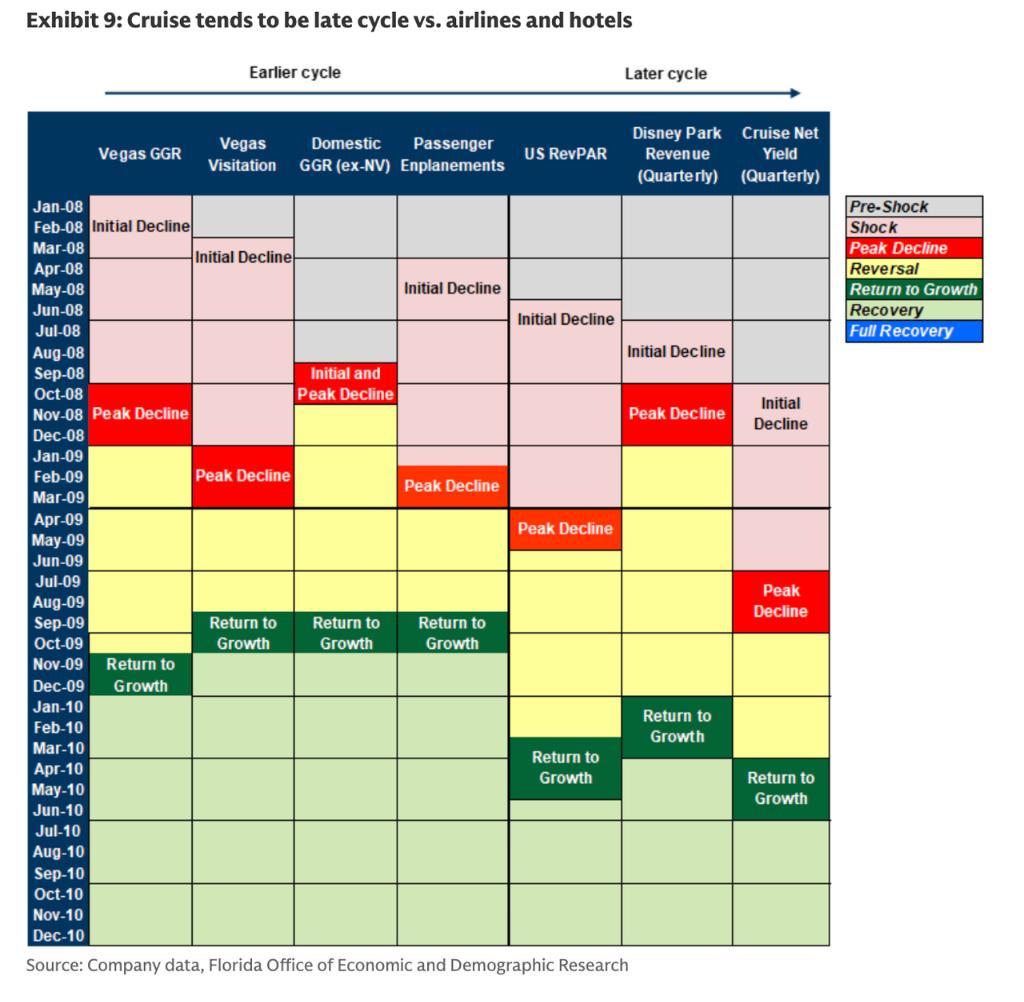
高盛分析师指出,目前的消费者支出环境正在发出早期预警信号,其特征与2008年金融危机前夕几乎如出一辙,拉斯维加斯的博彩收入再次成为 衡量经济周期的"领头羊"。 据由Lizzie Dove领导的高盛分析团队发布的报告,拉斯维加斯的消费趋势已经开始走低,这重现了当年经济衰退早期的疲软迹象。 与此同时,尽管目前的消费环境呈现K型分化和双轨特征,但这一早期信号值得市场高度警惕。 高盛认为,投资者应密切关注直至2026年初的消费趋势。虽然目前航空业需求依然坚挺,但若后续该领域需求开始下滑,将是经济疲软范围扩大 的明确信号,这可能会迫使美联储主席鲍威尔对更多的降息持开放态度。 财政部长贝森特此前传达的信息显示,针对工薪阶层消费者的利好因素预计将在第一季度某个时候开始显现。 与此同时,高盛的分析框架为识别消费者压力在旅游休闲领域的传导路径提供了重要参考。 K型复苏下的预警信号 衰退周期的传导路径 高盛分析师Lizzie Dove的研究通过复盘旅游和休闲行业的不同细分领域在2008-2009年衰退期间的反应及复苏过程,建立了一个识别消费者压力传 导顺序的分析框架。 分析显示,不同行业的衰退时间点存在显著差异。 在2008年全 ...
高盛拉响警报:2008年危险信号又出现了!
华尔街见闻· 2025-12-10 10:12
与此同时,高盛的分析框架为识别消费者压力在旅游休闲领域的传导路径提供了重要参考。 高盛分析师指出,目前的消费者支出环境正在发出早期预警信号, 其特征与2008年金融危机前夕几乎如出一辙,拉斯维加斯的博彩收入再次成为衡量经济周 期的"领头羊"。 据由Lizzie Dove领导的高盛分析团队发布的报告,拉斯维加斯的消费趋势已经开始走低,这重现了当年经济衰退早期的疲软迹象。 与此同时,尽管目前的消费环境呈现 K型分化和双轨特征 ,但这一早期信号值得市场高度警惕。 高盛认为, 投资者应密切关注直至2026年初的消费趋势。 虽然目前航空业需求依然坚挺,但若后续该领域需求开始下滑,将是经济疲软范围扩大的明确信 号,这可能会迫使美联储主席鲍威尔对更多的降息持开放态度。 财政部长贝森特此前传达的信息显示, 针对工薪阶层消费者的利好因素预计将在第一季度某个时候开始显现。 衰退周期的传导路径 高盛分析师Lizzie Dove的研究通过复盘旅游和休闲行业的不同细分领域在2008-2009年衰退期间的反应及复苏过程,建立了一个识别消费者压力传导顺序的分 析框架。 分析显示,不同行业的衰退时间点存在显著差异。 在2008年全球金融危机 ...

高盛提醒客户:在2008年金融危机爆发前,拉斯维加斯率先崩溃,而如今已经“复现”
美股IPO· 2025-12-10 03:38
Core Viewpoint - Goldman Sachs analysts warn that the current decline in Las Vegas gaming revenue reflects early warning signs similar to those before the 2008 financial crisis, indicating potential economic weakness ahead [1][3]. Group 1: Consumer Spending Trends - The consumer spending environment is showing early warning signals reminiscent of the pre-2008 financial crisis, with Las Vegas gaming revenue acting as an economic cycle bellwether [3]. - Despite some resilience in sectors like air travel, a broader decline in demand could prompt the Federal Reserve to consider more aggressive interest rate cuts [3][8]. - The analysis framework developed by Goldman Sachs highlights the transmission paths of consumer pressure in the travel and leisure sectors, emphasizing the need for vigilance until early 2026 [3][8]. Group 2: Historical Context and Analysis - The research by Goldman Sachs, led by Lizzie Dove, reviews the responses of various segments within the travel and leisure industry during the 2008-2009 recession, establishing a framework for identifying consumer pressure transmission sequences [4]. - Las Vegas and the airline industry were among the first sectors to be impacted during the 2008 global financial crisis, with gaming revenue declining as early as February-March 2008, while hotel and cruise industries experienced a lag in downturn [4][5]. - The report indicates that the cruise industry typically faces downturns at the end of economic cycles, while declines in gaming, airlines, and hotels are often visible before the overall cycle turns downward [8]. Group 3: K-Shaped Recovery Signals - The current K-shaped recovery and differentiated spending environment are flashing early warning signals, with Las Vegas trends indicating a downward trajectory consistent with early signs of economic downturn [7]. - The performance of airlines remains robust, and certain demographics, such as the baby boomer generation, continue to book cruise trips, highlighting the fragmented nature of the current market [7][8].

高盛提醒客户:在2008年金融危机爆发前,拉斯维加斯率先崩溃,而如今已经“复现”
Hua Er Jie Jian Wen· 2025-12-10 00:16
Group 1 - The current consumer spending environment is showing early warning signs similar to those before the 2008 financial crisis, with Las Vegas gaming revenue acting as an economic cycle indicator [1] - Goldman Sachs analysts, led by Lizzie Dove, report that consumer trends in Las Vegas are declining, reflecting early signs of economic recession [1][4] - Despite a K-shaped recovery and a bifurcated spending environment, the early signals warrant close attention from the market until early 2026 [1][4] Group 2 - The research establishes an analytical framework to identify the transmission path of consumer pressure, based on the responses of the tourism and leisure industry during the 2008-2009 recession [2] - Las Vegas and the airline industry were the first sectors impacted during the 2008 global financial crisis, with gaming revenue declining as early as February to March 2008 and airline boarding numbers showing a drop by mid-2008 [2] - In contrast, the hotel and cruise industries experienced a lag in their downturn, with U.S. hotel revenue per available room (RevPAR) starting to decline in late 2008 and cruise industry net yields reaching their lowest point by mid-2009 [2] Group 3 - The emphasis on historical consumer behavior patterns is due to the current K-shaped recovery and differentiated spending environment signaling early warning signs [4] - Las Vegas trends indicate a downward trajectory, consistent with early signs of economic downturn, while the airline sector remains robust [4] - If airline demand begins to decline following Las Vegas, it would provide clearer evidence of broader economic weakness, potentially necessitating macroeconomic policy adjustments [4]
降息倒计时,黄金博弈加剧!
Jin Tou Wang· 2025-12-09 10:51
Group 1: Gold Market - Gold prices are currently fluctuating around $4209, with a slight decline of 0.2% to close at $4190.48 [1] - The market is experiencing a high-level consolidation, indicating mixed expectations regarding the pace of interest rate cuts [16] Group 2: Australian Central Bank - The Reserve Bank of Australia (RBA) decided to maintain the key policy rate at 3.6%, marking the third consecutive meeting without a rate cut [2][5] - Analysts from Goldman Sachs, UBS, and Barrenjoey have shifted their outlook, suggesting that the RBA is more likely to raise rates rather than cut them further [5] Group 3: US Federal Reserve - Traders are increasingly betting on a third consecutive rate cut by the Federal Reserve, with a probability of 89.6% for a 25 basis point cut in the upcoming meeting [6][8] - Two potential scenarios for the Fed's December meeting are identified: a dovish cut to support a weak labor market or a hawkish cut with a strong forward guidance [8] Group 4: Indian Rupee and Central Bank Intervention - The Indian central bank is intervening in the market to stabilize the rupee, which has depreciated significantly, with foreign currency assets decreasing by approximately $38 billion since June [10] - Ongoing trade negotiations between the US and India are seen as a critical factor for the future trajectory of the Indian rupee [10] Group 5: Market Sentiment and Predictions - Concerns are raised by Wall Street analysts regarding the sustainability of recent gains in the US stock market, with suggestions to underweight major tech stocks due to changing profit growth trends [11] - Notable figures like Ray Dalio have warned of an uncertain global economic outlook, reiterating concerns about market bubbles [10][11]

福利金与平均工资挂钩,税收占GDP比重创新高,德国微调养老金,市场担心增税
Huan Qiu Shi Bao· 2025-12-07 23:11
Group 1 - The German pension reform plan has been passed by the Bundestag, which includes a slight increase in pensions for retirees, directly affecting 21 million retirees and all contributors to the pension system [1][2] - The plan ensures that the pension level (ratio of average pension to average wage) will not fall below 48% until at least 2031, extending a previously set "stop-loss line" that was due to expire [1][2] - The passage of the pension reform is expected to result in an additional expenditure of €233 billion for the federal budget by 2040, amidst an existing fiscal gap of approximately €170 billion [2][3] Group 2 - Experts warn that the costly pension plan may lead to higher taxes, with predictions that tax increases will be necessary to cover mid-term losses [3] - The German economy is facing a structural decline in industrial output, with a forecasted decrease of 2% this year, marking the fourth consecutive year of decline [4] - Factors contributing to the industrial crisis include weak domestic demand, high energy prices, and increased non-wage labor costs, with companies responding to the crisis through layoffs [4]