绿色化

Search documents
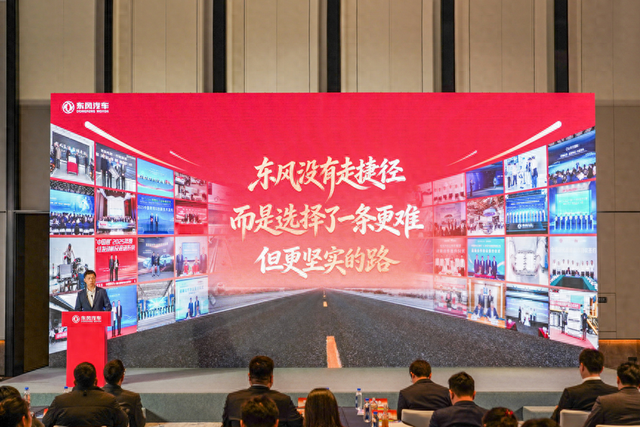
东风汽车2026年销量目标325万辆,去年自主品牌销量占比已超六成
Xin Lang Cai Jing· 2026-02-05 16:22
Core Insights - Dongfeng Motor aims for a total sales target of 3.25 million units in 2026, with 1.7 million units from new energy vehicles and 600,000 units for exports, focusing on "intelligent, green, and integrated" transformation [1][2] Group 1: Strategic Goals - The company emphasizes the "One Dongfeng" strategy to enhance collaboration across its various business segments, showcasing a commitment to innovation and transformation [2][3] - Dongfeng plans to implement technology advancements from concept to reality, marking 2026 as the "Year of Technology Realization" with new power systems and smart driving technologies [2][3] Group 2: Product Development - The new brand "Yijing," co-created with Huawei, will be globally launched in March, focusing on high-end intelligent vehicles that understand user needs [4] - Dongfeng will introduce several new models across its brands, including the U series, high-end models from Lantu, and new strategic vehicles from Fengxing, aiming to capture various market segments [4] Group 3: Market Strategy and Reforms - The company is set to deepen its organizational reforms to enhance market responsiveness by granting more autonomy to frontline business units, ensuring quicker decision-making and actions [6] - In 2025, Dongfeng's overall sales are projected to reach 2.47 million units, with new energy vehicle sales at 1.05 million units, reflecting a 21% year-on-year growth and marking a transition to a phase of "scale and efficiency" [6]


八部门发文!中药工业迎五年黄金发展期:新培育10个中成药大品种 推动一批中药创新药获批上市
Mei Ri Jing Ji Xin Wen· 2026-02-05 15:34
Core Viewpoint - The "Implementation Plan for the High-Quality Development of Traditional Chinese Medicine Industry (2026-2030)" aims to establish a collaborative development system for the entire industry chain of traditional Chinese medicine by 2030, enhancing supply capabilities, technological breakthroughs, and innovation levels [1][2]. Group 1: Industry Development Goals - By 2030, the plan targets the emergence of innovative products, approval of new traditional Chinese medicine drugs, and the cultivation of 10 major traditional Chinese medicine varieties [2][3]. - The plan emphasizes the establishment of 60 high-standard raw material production bases and the construction of 5 innovation centers for traditional Chinese medicine [1][2]. Group 2: Strategic Focus Areas - Companies are encouraged to build full-chain capabilities centered on clinical value to overcome homogenization in the market, shifting from "sales-driven" to "innovation-driven" approaches [2][3]. - Emphasis on conducting high-level evidence-based medical research to provide differentiated academic evidence for products [2][3]. Group 3: Digital Transformation - The plan highlights the importance of "digital intelligence" in transitioning the traditional medicine industry from experience-based practices to modern scientific management [4][5]. - Key strategies include establishing digital quality control systems and intelligent factories to ensure product quality and compliance with regulatory standards [5][6]. Group 4: Support for Enterprises - The plan proposes actions to cultivate outstanding enterprises, including establishing development funds and providing financial services to traditional Chinese medicine companies [6]. - It aims to enhance the competitiveness of small and medium-sized enterprises in the sector and promote their modernization [6].
太钢不锈:公司以深化改革创新为动力
Zheng Quan Ri Bao Wang· 2026-02-05 12:17
Core Viewpoint - The company is committed to deepening reform and innovation to drive high-end, intelligent, green, and efficient development in the steel industry, enhancing the quality and sustainability of its products [1] Group 1 - The company aims to increase the gold content, new material content, and green content of its steel products [1] - The company leverages its advanced stainless steel national key laboratory to focus on the research and development of "bottleneck" materials and cutting-edge products [1]

家电行业2026年度信用风险展望(2026年1月)
Lian He Zi Xin· 2026-02-05 11:01
Investment Rating - The report indicates a stable outlook for the home appliance industry, with a focus on credit risk assessment for 2026 [7] Core Insights - The home appliance industry in China experienced a historical high in domestic sales in 2025, driven by government policies and consumer demand, although growth is expected to slow down due to high base effects and market saturation [10][20] - The export of home appliances faced challenges in 2025, with total export value and quantity declining compared to the previous year, influenced by high base effects and uncertain trade environments [10][22] - The industry is undergoing structural changes, with growth driven by smart, green, and high-end product upgrades, as well as deeper market penetration [10][11] Industry Overview - In 2025, China's GDP reached 140.19 trillion yuan, growing by 5.0% year-on-year, supported by domestic demand and government policies [11] - The retail sales of home appliances and audio-visual equipment reached 1.16949 trillion yuan, a year-on-year increase of 11.0% [20] - The home appliance market is characterized by a shift from policy-driven growth to market-driven dynamics, with a notable impact from the "old-for-new" subsidy policies [10][20] Policy and Regulatory Environment - The government continued to enhance the "old-for-new" subsidy policy in 2025, expanding the scope and funding to stimulate home appliance consumption [15][16] - The 2026 policy will maintain support for the "old-for-new" program, focusing on energy-efficient products and expanding the range of supported items [17] Industry Performance - The home appliance sector showed resilience in 2025, with sample companies reporting revenue growth of 7.35% and profit growth of 10.42% in the first three quarters [44] - The industry is experiencing a structural differentiation in performance, with leading brands benefiting from government policies and market dynamics [38] Competitive Landscape - The home appliance industry is highly competitive, with leading companies like Midea, Haier, and Gree dominating the market, accounting for a significant share of total revenue [38][41] - The market is increasingly concentrated, with the top ten companies accounting for approximately 82.38% of the industry's revenue [38] Financial Condition - The sample companies in the home appliance industry maintain a low leverage level, with a median debt-to-asset ratio of 43.29% as of September 2025 [49] - Profitability indicators show a decline in gross margin to 21.61% in the first three quarters of 2025, compared to 23.15% for the previous year [45]
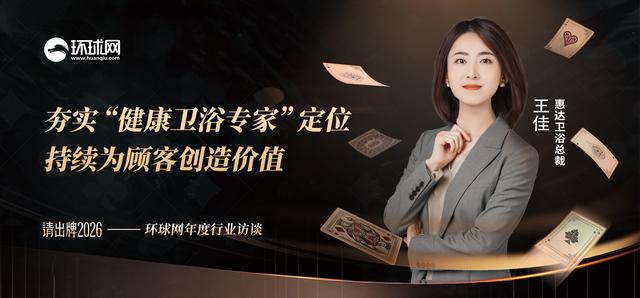
请出牌2026丨惠达卫浴王佳:夯实“健康卫浴专家”定位 持续为顾客创造价值
Huan Qiu Wang· 2026-02-05 10:14
Core Viewpoint - The Chinese home furnishing industry is undergoing significant changes in 2025, with companies needing to adapt their strategies to meet evolving consumer demands for quality and health [1][3] Group 1: Health Technology Focus - The most notable change in 2025 is the shift in consumer decision-making from brand premium and basic functionality to tangible value enhancement, particularly health value [3] - Huida Sanitary Ware has launched the "Deep Shield" series featuring a "full waterway sterilization" system, extending health protection throughout the entire water usage chain [3] - Huida has established itself as the first company in the sanitary ware industry to standardize the "full waterway sterilization" technology, providing a basis for "healthy sanitary ware" [3][5] Group 2: Addressing Market Challenges - In the context of a saturated market, Huida's Deep Shield series has become a core growth engine in the high-end market due to its unique health technology advantages [5] - To tackle the challenges of the renovation market, Huida has introduced the "Quick Installation Magic Box" solution, promising kitchen and bathroom renovations within 2 to 7 days with a ten-year warranty [5][7] - The company is focusing on the elderly care market by developing a complete product ecosystem to address the full range of elderly bathroom needs [7] Group 3: Global Expansion and Standards - Huida is committed to quality as a foundation for global competition, achieving certifications from various international quality systems, including ETL, UPC, CE, and Watermark [7][9] - The company aims to promote global mutual recognition of technology and standards, transitioning from merely exporting products to achieving technical recognition and standard alignment [9] Group 4: Strategic Direction and Innovation - The sanitary ware industry is experiencing structural changes, and future competition will focus on professional depth, technological research, supply chain collaboration, and user experience [10] - Huida is concentrating on the smart toilet segment as a core growth point for the next five to ten years, reinforcing its strategic direction and product foundation [10][11] - The company is transitioning to become a "scene integrator" to meet complex consumer demands for functionality, aesthetics, and emotional connection [11]

中药产业迎利好,八部门重磅发布
21世纪经济报道· 2026-02-05 10:14
Core Viewpoint - The article discusses the "Implementation Plan for High-Quality Development of Traditional Chinese Medicine Industry (2026-2030)", emphasizing the establishment of a collaborative development system for the entire industry chain by 2030, enhancing the supply capacity of key Chinese medicinal materials, and promoting digital and green transformation [1][2][3]. Overall Requirements - The plan aims to optimize the structure and upgrade the traditional Chinese medicine industry, enhancing the resilience and stability of the supply chain, while ensuring the protection, development, and inheritance of traditional Chinese medicine [3]. Key Tasks Raw Material Quality Improvement and Stable Supply - Establish high-standard production bases for Chinese medicinal materials, focusing on key varieties and leveraging the advantages of leading enterprises [4][5]. - Improve initial processing levels at production sites and support the development of automated production lines [5][6]. - Accelerate the revision of production technology specifications and quality standards for key processing stages [6]. Collaborative Innovation - Strengthen the collaborative innovation system by integrating resources from enterprises, medical institutions, and research organizations to address technological bottlenecks [6][7]. - Enhance the research and development of new drugs using artificial intelligence and big data technologies [7]. Manufacturing Capability Enhancement - Improve the standardized production of Chinese medicinal pieces and establish a quality standard system [8]. - Promote the application of intelligent and green technologies in manufacturing processes [8][9]. National Medicine Industry Revitalization - Explore and develop unique medicinal resources from ethnic minorities, ensuring stable supply and clinical demand [9][10]. - Modernize the ethnic medicine industry through comprehensive planning and support policies [10]. Promotion of Quality Traditional Chinese Medicine Products - Enhance the protection of intellectual property for traditional brands and improve production processes for existing products [11][12]. - Develop innovative health products that integrate traditional Chinese medicine with other industries [12]. Cultivation of Excellent Enterprises - Foster a competitive market environment to stimulate innovation and development among traditional Chinese medicine enterprises [12][13]. - Support international market expansion for traditional Chinese medicine products and enhance brand recognition [13]. Implementation Organization - Local governments and relevant departments are encouraged to implement the plan, exploring new collaborative support models for high-quality development in the traditional Chinese medicine industry [13].

光伏告别出口退税后怎么办?王勃华:倒逼企业转向高质量高附加值竞争
Xin Lang Cai Jing· 2026-02-05 05:52
Core Insights - The Chinese photovoltaic industry will enter a new market-driven phase focused on technology, cost, and brand starting April 1, 2026, as it phases out the value-added tax export rebate [1][2][3] - This transition will compel companies to shift from low-price competition to high-quality, high-value competition, aiming to build sustainable global competitiveness [1][2] Industry Transformation - A significant transformation in development philosophy and logic is anticipated, moving from scale and price competition to value competition [3] - Two key areas for this transformation include: - Policy level: Implementing a combination of policies to promote industry upgrades and create a healthy development environment [3] - Corporate level: Companies need to explore second growth curves by building technological moats and fostering collaborative industry ecosystems [3] Manufacturing Development - The manufacturing sector should focus on three key directions: intelligent, green, and integrated development, which are interrelated and mutually reinforcing [2][3] - Intelligent development encompasses smart R&D, production, and operation of power plants, as well as contributing to societal smart transformation [2][3] - Green development involves promoting green energy use within the photovoltaic industry and advancing energy-saving and carbon-reducing technologies [2][3] - Integrated development includes deep integration with other industries and active participation in the electricity market [2][3]
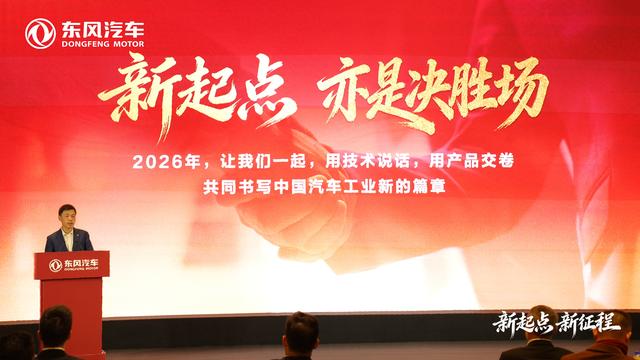
向新而行 加速跃迁 东风汽车全力奔赴智能化、绿色化、融合化新程
Bei Jing Ri Bao Ke Hu Duan· 2026-02-05 01:37
Core Insights - Dongfeng Motor is undergoing significant transformation and aims to achieve a new phase of development by focusing on self-controlled technology and innovation [1][3][9] Group 1: Sales and Market Performance - In 2025, Dongfeng Motor's new energy vehicle sales reached 1.05 million units, a year-on-year increase of 21%, with total sales of self-owned brands exceeding 1.5 million units, accounting for over 60% of total sales [1] - The company has set ambitious targets for 2026, aiming for total sales of 3.25 million vehicles, including 1.7 million new energy vehicles and 600,000 exports [5][9] Group 2: Technological Advancements - Dongfeng's R&D investment intensity reached 7.9%, with the mass production of the DF30 high-end MCU chip and a 67% localization rate for chips in self-owned brand vehicles [3] - The Mahle hybrid engine achieved a thermal efficiency of over 48%, setting a new industry record, and a new integrated die-casting production line with a capacity of 16,000 tons has been established [3] Group 3: Brand Strategy and Product Development - Dongfeng's brand strategy includes the launch of several new models, such as the U series from Dongfeng Warriors and high-end models from Dongfeng Lantu, focusing on intelligent driving and technology [5][7] - The company is collaborating with Huawei to launch the "Yijing" brand, which will debut globally in March 2026, emphasizing user-centric high-end smart vehicles [7] Group 4: Organizational Reforms - Dongfeng is empowering frontline business units with greater autonomy to enhance decision-making speed and responsiveness, which is crucial for its transformation efforts [9] - The company is committed to deepening reforms and leveraging technological innovation as a core engine for growth, aiming to lead the Chinese automotive industry towards high-quality development [9]
四中全会精神在基层丨不到30秒,一辆汽车出口!这座港口涌动“开放密码”
Xin Hua Wang· 2026-02-04 15:31
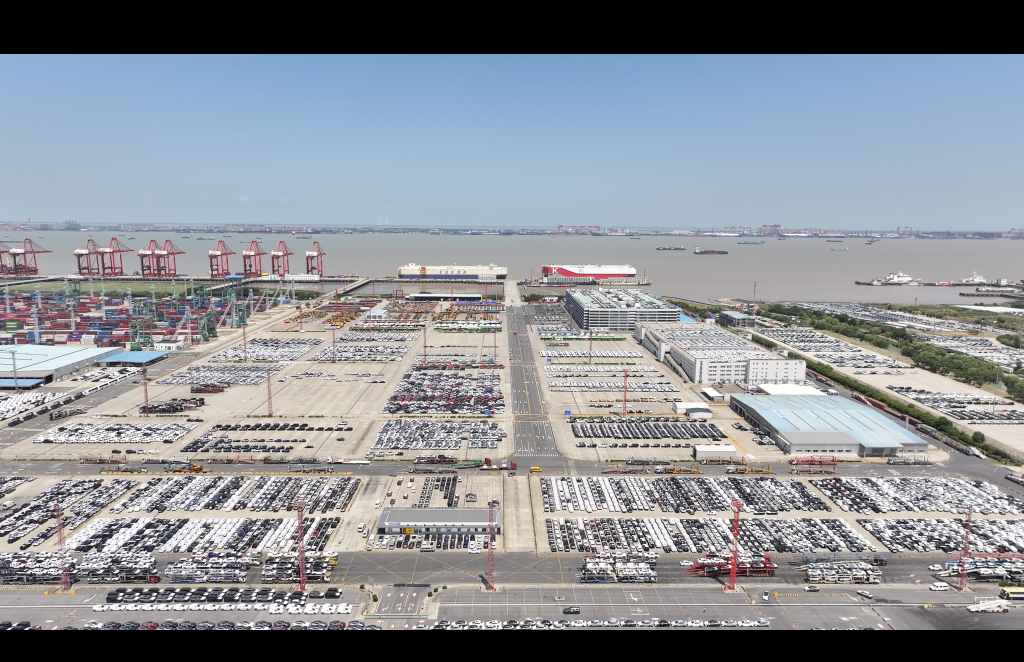
Core Insights - The article highlights the significant growth of the automotive export sector in Shanghai, particularly through the Haitong Automotive Roll-on/Roll-off Terminal, which is set to export 1.457 million vehicles by 2025, marking a 15% year-on-year increase [1] - Shanghai's total import and export volume reached 4.51 trillion yuan, a historical high, with exports increasing by 10.8% [1] Group 1: Terminal Operations and Growth - The Haitong Terminal has expanded its operations from a single port to a collaborative model involving two ports and three locations, increasing its vehicle handling capacity from 2.06 million in 2021 to 3.98 million by 2025, representing a growth of over 90% [3] - The export volume of vehicles from the terminal is projected to rise from 900,000 in 2021 to 2.74 million by 2025 [3] Group 2: Logistics and Infrastructure - The "Two Ports and Three Locations" model integrates resources and enhances logistics efficiency, addressing challenges such as tight shipping schedules and limited space [3] - The terminal has established 12 international automotive roll-on/roll-off shipping routes, covering 295 ports in 135 countries and regions, with a projected volume of over 200,000 for "water-water transport" by 2025 [3] Group 3: Future Development and Sustainability - The terminal aims to focus on green and intelligent development during the 14th Five-Year Plan, enhancing its green energy systems and achieving near-zero carbon emissions [4] - Plans include the implementation of a unified data platform, automated handling, and AI decision-making systems to transform port operations [4]
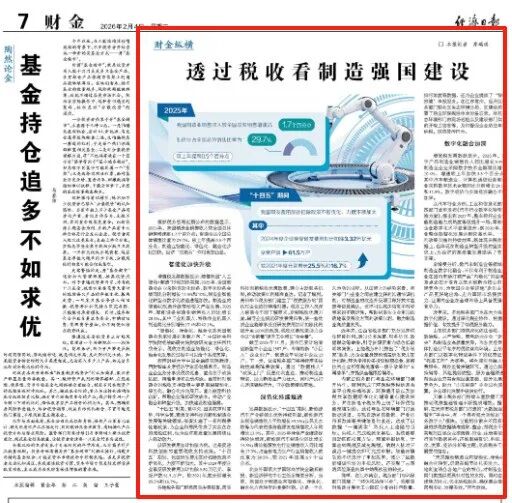
经济日报:透过税收看制造强国建设
Xin Lang Cai Jing· 2026-02-04 12:20
Core Insights - The manufacturing sector in China is projected to grow faster than the overall national sales growth by 1.7 percentage points by 2025, with its share of total sales reaching 29.7%, an increase of 0.5 percentage points from the previous year, highlighting its role as an economic stabilizer [2][14]. Intelligent Upgrading - By 2025, the procurement of automation and digital equipment by manufacturing enterprises is expected to increase by 11.3% and 10% year-on-year, respectively, indicating a rapid transformation towards intelligent manufacturing [4][16]. - The sales revenue of the intelligent equipment manufacturing sector is anticipated to grow by 28.1% year-on-year, with industrial robots and special operation robots seeing increases of 17.4% and 42.1%, respectively [4][16]. - Tax policies are being tailored to support the intelligent, green, and integrated development of the manufacturing sector, encouraging technological innovation and reducing R&D costs [4][16]. Green Development - The sales revenue of the new energy vehicle manufacturing sector is expected to grow by 14.3% year-on-year by 2025, while the clean energy generation sector is projected to see a 17.3% increase, with its share of total electricity production revenue rising to 38.5%, up 6.9 percentage points from 2021 [7][19]. - The government is focusing on establishing effective communication mechanisms between departments and enterprises to facilitate the accurate enjoyment of tax benefits related to green development [7][19]. Digital Integration - The sales revenue of the digital product manufacturing sector is projected to grow by 9.4% year-on-year by 2025, with manufacturing enterprises' procurement of digital technologies increasing by 10.4%, reflecting a deepening integration of the digital economy with the real economy [10][22]. - The automotive industry is set to enhance its digital transformation capabilities significantly by 2027, with a goal of achieving a high level of digital development by 2030 [10][22]. - Local tax authorities are enhancing their digital capabilities to improve tax services and compliance, thereby supporting the manufacturing sector's transition towards intelligent, green, and integrated development [10][22]. Tax Incentives and Support - During the "14th Five-Year Plan" period, tax incentives have been implemented to support technological innovation and manufacturing development, resulting in significant tax reductions for businesses [5][17]. - The R&D expense deduction policy has been optimized, with an expected deduction of 3.32 trillion yuan for 2024, benefiting 615,000 enterprises, marking increases of 25.5% and 16.7% from 2021 [5][17]. - Local tax departments are actively engaging with enterprises to ensure they can access these tax benefits effectively, including personalized support for R&D expense deductions [5][17][18].