
AI云

Search documents
全球AI云战场开打:微软云、AWS 向左,谷歌、阿里云向右
雷峰网· 2025-09-20 11:01
Core Viewpoint - The article emphasizes the necessity for cloud vendors to continuously invest in computing power, models, chips, and ecosystems to build a "super AI cloud" [2][25]. Group 1: AI Cloud Competition - AI cloud has become a new entry ticket in the cloud computing arena, crucial for vendors to escape price wars and rebuild competitive advantages [2]. - The competition for "AI Cloud No. 1" is intensifying among domestic cloud vendors, with the focus on market leadership becoming a core industry concern [2]. - Globally, only four major players remain in the AI cloud space: AWS, Microsoft, Google, and Alibaba Cloud [2][11]. Group 2: Evaluation Criteria for AI Cloud Leaders - The evaluation of who is the "AI Cloud No. 1" depends on various standards, with models being a key factor for some [5][6]. - The article outlines four critical questions to assess the capabilities of AI cloud vendors: 1. Annual infrastructure investment of at least 100 billion [6]. 2. Possession of million-level large-scale computing clusters and cloud scheduling capabilities [8]. 3. Availability of top-tier large model capabilities that perform across various scenarios [9]. 4. Strategic layout of AI chip computing power [10]. Group 3: Capital Expenditure Insights - Major cloud vendors like Google, Microsoft, and AWS have significantly increased their capital expenditures to meet the explosive growth in AI infrastructure demand, with Google raising its annual target to $85 billion [6][7]. - Alibaba's capital expenditure for 2024 is projected at 76.7 billion RMB, significantly lower than its competitors, indicating a disparity in financial strength [10]. Group 4: Development Models - Two primary development models are identified: "Cloud + Ecosystem" (AWS and Microsoft) and "Full Stack Self-Research" (Google and Alibaba) [12][19]. - The "Cloud + Ecosystem" model allows vendors to leverage external models, reducing R&D costs and risks while increasing platform attractiveness [14][15]. - The "Full Stack Self-Research" model involves significant upfront investment but can create a strong competitive moat and higher long-term value [19][20]. Group 5: Alibaba Cloud's Position - Alibaba Cloud is positioned as a representative of the "Full Stack Self-Research" model in the Eastern context, competing closely with Google Cloud [25]. - The company plans to invest over 380 billion RMB in cloud and AI hardware infrastructure over the next three years, demonstrating a commitment to enhancing its capabilities [24]. - Alibaba Cloud's strategy includes embracing open-source models, creating a large AI model community, and addressing hardware constraints through software ecosystem development [24][25].






国信证券每日晨报精选:中国高端SAFFOB价为2480美元/吨,较年初的1800美元/吨,上涨了55.00%
Zhong Guo Neng Yuan Wang· 2025-09-19 02:25
Group 1: Baidu Group and AI Chip Market - Baidu Group's AI chip subsidiary, Kunlun Chip, is expected to see significant revenue growth, with projections of reaching 5 billion yuan in 2025 and 10 billion yuan in 2026, with Baidu holding a 59% stake [1] - Kunlun Chip's third-generation P800 has an FP16 computing power of 345 TFLOPS, surpassing A800, and is expected to support large-scale deployments [1] - The demand for domestic AI chips is anticipated to increase, with external clients including China Mobile, Southern Power Grid, and BYD, alongside potential partnerships with other internet companies like Tencent [1] Group 2: Baidu AI Cloud Revenue Growth - Baidu AI Cloud reported a revenue of 6.5 billion yuan in Q2 2025, a year-on-year increase of 27%, with full-year revenue expected to reach 27.4 billion yuan in 2025 and 35 billion yuan in 2026 [1] - The domestic cloud business is projected to accelerate growth from over 10% to over 20% year-on-year, driven by AI demand [1] - Major domestic cloud providers are expected to see a capital expenditure (Capex) growth of over 40% in 2024, with a further increase to over 50% in 2025 [1] Group 3: Apollo Go and Robotaxi Market - Apollo Go is projected to exceed 10 million orders in 2025, having provided over 2.2 million rides in Q2 2025, a 148% year-on-year increase [2] - The cumulative service count for Apollo Go has surpassed 14 million, with profitable models established in cities like Wuhan [2] - Despite the large market potential for Baidu's robotaxi services, commercial viability is still in the investment phase, leading to limited short-term profit contributions [2] Group 4: Sustainable Aviation Fuel (SAF) Market - The price of high-end SAF in China has risen to 2,480 USD/ton as of September 17, 2023, a 55% increase from 1,800 USD/ton at the beginning of the year [3] - The European SAF market is facing a supply-demand gap, with consumption expected to reach 1.9 million tons this year against a production capacity of only 1 million tons [2][3] - China's SAF production capacity is projected to exceed 1 million tons by the end of 2024, with current and planned HVO/SAF capacity exceeding 10 million tons per year [2]

百度智能云 加快AI基础设施提质升级 助力“人工智能+”发展
Ren Min Ri Bao· 2025-09-17 21:55
Core Viewpoint - The article discusses the release of the "Opinions on Deepening the Implementation of 'Artificial Intelligence+' Action," which emphasizes the integration of artificial intelligence across various sectors to reshape production and living paradigms, promoting a revolutionary leap in productivity and deep changes in production relations [2] Group 1: AI Infrastructure Development - Baidu's intelligent cloud has launched upgraded versions of its AI computing platform (Baihe AI Computing Platform 5.0) and enterprise-level AI development platform (Qianfan 4.0) to support businesses in leveraging AI opportunities with lower costs and higher efficiency [2][3] - The Baihe AI Computing Platform 5.0 enhances capabilities in network, computing power, inference systems, and training-inference integration, addressing efficiency bottlenecks in AI computing [3][4] - The platform has been adopted by leading research institutions and over 20 key enterprises, significantly improving their development efficiency [4] Group 2: AI Agent Development - The Qianfan 4.0 version focuses on creating a one-stop service platform centered around AI Agents, providing necessary models, orchestration, data, and enterprise-level services [5] - The introduction of the RFT (Reinforcement Feedback Tuning) toolchain allows for a significant reduction in the data required for model fine-tuning, lowering the technical and data barriers for enterprises [5] Group 3: Industry Applications - Baidu's intelligent cloud supports various sectors, including 3D modeling, wearables, and gaming, by providing tailored AI solutions that enhance user experience and operational efficiency [6] - The launch of the "One View" compliance analysis capability allows users to generate standard operating procedure (SOP) detection tasks quickly, improving production safety and efficiency [7] Group 4: Market Position and Partnerships - Baidu's intelligent cloud holds a 24.6% market share in China's AI public cloud service market, maintaining its position as the leader for six consecutive years [4] - 65% of central enterprises have chosen to collaborate with Baidu's intelligent cloud to explore AI innovations, indicating strong market acceptance and partnership growth [8]

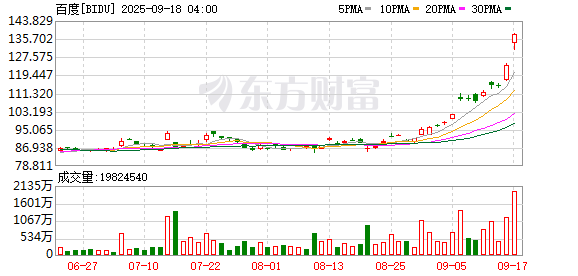
美股异动 | 阿里巴巴(BABA.US)涨逾2% 高盛:全栈式云厂商正迎来新的增长机遇
智通财经网· 2025-09-17 15:05
高盛分析师强调,中国云厂商在自研推理芯片方面取得进展,并采取"多芯片策略",这意味着中国AI云 行业的增长"已不再仅仅依赖于海外芯片供应"。这一转变,加之强劲的资本支出前景,为该行业带来了 复合增长潜力。 智通财经APP获悉,周三,阿里巴巴(BABA.US)涨逾2%,报166.10美元。高盛在一份最新报告中称,受 益于企业对大模型的加速采用和计算需求的持续强韧,以阿里巴巴为代表的全栈式云厂商正迎来新的增 长机遇。高盛认为,阿里巴巴凭借其领先的模型能力、47%的中国公有云市场份额以及多样化的芯片供 应,处于有利地位,并具备国际化扩张的空间。 基于对行业前景的乐观看法,高盛将阿里巴巴的目标价从163美元上调至179美元,维持"买入"评级。高 盛特别将其对阿里云的估值从每股ADS 36美元提升至43美元,并上调了阿里云在2026财年第二至第四 季度的增长预期。 ...
传媒行业动态跟踪:国产AI云投资机会
Huafu Securities· 2025-09-17 10:00
Investment Rating - The industry rating is "Outperform the Market" indicating that the overall return of the industry is expected to exceed the market benchmark index by more than 5% in the next 6 months [14]. Core Insights - Alibaba Cloud leads the domestic public cloud market with a 47% market share in the big data public cloud sector, surpassing the combined market share of the second to fourth players [2][3]. - Tencent Cloud is adapting to mainstream domestic chips and actively contributing to the open-source ecosystem, focusing on long-term strategic investments in AI cloud [4]. - Baidu Cloud is implementing a full-stack AI strategy, achieving significant success in government and enterprise sectors with its self-developed Kunlun chip [5]. - Kingsoft Cloud is supporting Xiaomi's AI strategy across its ecosystem, with a substantial increase in related transactions expected [6]. - Volcano Cloud is shifting from internal support to external B2B services, aiming for aggressive market capture with competitive pricing strategies [6]. Summary by Relevant Sections Alibaba Cloud - Alibaba Cloud is the leader in the data infrastructure market with a significant market share [2]. - The company announced plans to issue approximately $3.2 billion in zero-coupon convertible bonds to enhance its cloud infrastructure [3]. Tencent Cloud - Tencent Cloud has fully adapted to mainstream domestic chips and is committed to enhancing the open-source community [4]. Baidu Cloud - Baidu Cloud is focusing on a full-stack AI layout, with its Kunlun chip achieving notable success in government procurement projects [5]. Kingsoft Cloud - Kingsoft Cloud is set to benefit from Xiaomi's AI strategy, with a significant increase in related transaction limits [6]. Volcano Cloud - Volcano Cloud is transitioning to a B2B model, targeting over 20 billion yuan in revenue by 2025 [6].
沪指再创新高,有色大涨,房地产反转,电池概念陷入调整
Ge Long Hui· 2025-09-12 10:59
冲高回落后再度拉升,截止午盘沪指上涨0.24%,深成指上涨0.15%,创业板指下跌0.52%。两市合计超 3000只个股下跌,合计成交额1.63万亿。 欢迎您在评论中分享自己的看法,大家一起学习和讨论。 有色金属概念股高开高走集体大涨,截止午盘上涨2.95%,贝壳、北方铜业、盛达资源等在内的多股涨 停。芯片概念股表现活跃,其中芯原股份涨停。房地产板块震荡反弹,其中荣盛发展涨停。 消息面:中国AI云市场报告,阿里云以35.8%的市场份额稳居行业第一。铠侠宣布与英伟达展开合作, 打造读取速度较传统SSD快近百倍的固态硬盘。国家发展改革委、国家能源局印发新型储能规模化建设 专项行动方案,鼓励新型储能全面参与电能量市场。 电池概念股出现分化,其中先导智能大跌。玻璃玻纤、游戏、化妆品概念、轮毂电机、生物质能发电、 家用轻工、食品饮料、科创板做市商、白酒等行业板块紧随其后。 ...
港股收盘 | 恒指收涨1.01%站上两万六 科网股普遍上扬 云计算概念表现亮眼
Zhi Tong Cai Jing· 2025-09-10 08:55
Market Overview - The US non-farm payroll data has been significantly revised downwards, leading to sustained expectations for interest rate cuts. The Hong Kong stock market has risen again, with the Hang Seng Index successfully breaking through the 26,000 mark, reaching a nearly four-year high. The index closed up 1.01% or 262.13 points at 26,200.26, with a total turnover of HKD 288.21 billion [1] Blue Chip Performance - Lenovo Group (00992) led the blue-chip stocks, rising 4.63% to HKD 11.31, contributing 5.88 points to the Hang Seng Index. Huatai Securities expects Lenovo to benefit from strong demand for AI products in the second half of the year, maintaining a "buy" rating with a target price of HKD 16 [2] - Other notable blue-chip performances include JD Logistics (02618) up 4.45%, Sun Hung Kai Properties (00016) up 4.28%, while Xinyi Solar (00968) and Xiaomi Group-W (01810) saw declines of 2.77% and 2.22% respectively [2] Sector Highlights - Large technology stocks performed well, with Bilibili rising over 7% and JD up over 3%. Cloud computing stocks also saw gains, with Kingsoft Cloud rising nearly 9% [3] - Oracle's cloud business reported a 28% year-on-year revenue growth, with cloud infrastructure revenue up 55%. The company expects cloud infrastructure revenue to reach USD 18 billion in FY2026, a 77% increase from FY2025 [4] Real Estate Sector - Hong Kong real estate stocks generally rose, with Sun Hung Kai Properties up 4.28% and Hang Lung Properties (00101) up 2.79% [4] - The Hong Kong government is set to release its 2025 policy address, with expectations of further tax cuts on residential properties and measures to attract more mainland visitors [5] Lithium Sector - Lithium stocks faced significant declines, with Ganfeng Lithium (01772) down 7.02% and Tianqi Lithium (09696) down 7.97%. The lithium carbonate main contract fell nearly 5% amid expectations of oversupply [6][5] Popular Stocks - Yunfeng Financial (00376) surged 27.83% after receiving approval to upgrade its securities license to offer virtual asset trading services [7] - Yaojie Ankang-B (02617) reached a new high, up 27.57%, following its inclusion in the Hong Kong Stock Connect program [8] - Longfor Group (03380) rose 9.47% after reaching a revised agreement with creditors regarding its offshore debt restructuring [9] - Shandong Molong (002490) (00568) increased by 7.92% due to rising oil prices amid geopolitical tensions in the Middle East [10]
百度智能云:十年磨一剑,AI云市场抢攻时刻已至
Sou Hu Cai Jing· 2025-08-30 23:30
Core Insights - The article highlights the transformative role of Baidu Intelligent Cloud in the competitive cloud computing landscape, emphasizing its strategic patience and focus on technology development rather than rapid market expansion [1][5]. Group 1: Strategic Positioning - Baidu Intelligent Cloud adopts a "cloud intelligence integration" strategy, focusing on building a comprehensive technology stack rather than engaging in price wars or rapid market share expansion [1]. - The company has developed foundational technologies such as Kunlun chips and the Baijie computing platform, which enhance AI computing efficiency [1][2]. Group 2: Technological Advancements - The launch of large models has reshaped the cloud computing market, allowing Baidu Intelligent Cloud to transition from a follower to a leader in the AI cloud sector [1]. - Baidu Intelligent Cloud's AI cloud infrastructure is built on four core elements: computing power, models, data, and engineering capabilities, which are integrated through the Baijie AI computing platform and Qianfan AI development platform [2]. Group 3: Industry Applications - Baidu Intelligent Cloud has demonstrated a deep understanding of industry needs, achieving significant competitive advantages across various sectors, including finance, energy, government, and manufacturing [4]. - The company has made notable advancements in embodied intelligence, enhancing model development efficiency through effective resource scheduling and acceleration of large model training [5]. Group 4: Financial Performance - In Q2 2025, Baidu Intelligent Cloud reported a 27% year-on-year revenue growth, reaching 6.5 billion yuan, indicating both technological breakthroughs and market recognition [5]. Group 5: Ecosystem Development - Baidu Intelligent Cloud's growth story exemplifies the synergy between technology empowerment and ecosystem building, providing essential infrastructure for the intelligent transformation of industries in China [7].

AI云时代:云计算产业的新变局与长期主义者的领跑之路
Sou Hu Cai Jing· 2025-08-29 12:10
Core Insights - The integration of AI and cloud computing is reshaping the technology and business landscape, marking a new starting point for the industry [2][4] - In 2024, China witnessed the emergence of 50 trillion-level parameter models, leading to a 74.1% year-on-year growth in intelligent computing power, significantly outpacing general computing growth [1] - Baidu's intelligent cloud has become a leader in the AI field, leveraging its comprehensive AI technology stack to drive innovation and transformation in cloud services [4][6] Industry Trends - The cloud computing sector is undergoing unprecedented changes due to the incorporation of AI technologies, which are redefining service architectures and value propositions [1][4] - The competitive landscape in cloud computing is shifting from cost-based competition to a focus on innovative solutions that address specific business challenges [4][6] Company Developments - Baidu has made significant advancements in AI, launching the first deep learning framework "PaddlePaddle" in 2016 and the AI chip "Kunlun" in 2018, establishing a robust foundation for its AI capabilities [4][5] - Baidu's intelligent cloud has achieved a 24.6% market share in China's AI public cloud market, maintaining its position as the leader for six consecutive years [6][7] - The "Cloud Intelligence Integration" strategy of Baidu's intelligent cloud is set to evolve further, aiming to enhance intelligence capabilities and expand its market penetration [6][7] Product Innovations - The Baidu "Baihe" AI computing platform has been upgraded to version 5.0, focusing on enhancing inference capabilities and optimizing resource utilization [6][7] - The "Qianfan" platform has transitioned to version 4.0, providing a one-stop enterprise service platform centered around AI agents, aimed at accelerating application deployment [7] Financial Performance - Baidu's intelligent cloud revenue grew by 27% year-on-year, contributing to the company's AI new business surpassing 10 billion yuan for the first time, with a 34% year-on-year increase [7]

百度造了个“吴彦祖”
Hua Er Jie Jian Wen· 2025-08-29 10:05
Core Insights - Baidu is transitioning its AI cloud strategy from a cost center to a profit center, emphasizing efficiency over scale in the AI era [2][7] - The introduction of the digital human "Wu Yanzu" signifies Baidu's commitment to making AI more accessible and user-friendly [2][6] - Baidu's intelligent cloud strategy is underpinned by two core engines: "Baihe" and "Qianfan," focusing on enhancing AI capabilities and infrastructure [3][4] Group 1: AI Cloud Strategy - Baidu's AI cloud is evolving to prioritize efficiency, moving away from the traditional scale-based competition in cloud computing [2][3] - The "Baihe 5.0" engine enhances AI computing efficiency through advancements in network, computing power, and reasoning systems [3][4] - The "Qianfan 4.0" platform is designed to support the development and deployment of AI agents, addressing key challenges in building intelligent systems [4][5] Group 2: Technological Advancements - The "Baihe" engine's new Kunlun chip significantly improves computing density and inference efficiency, enabling rapid deployment of large models [3][4] - The "Qianfan" platform has upgraded its model library to over 150 models, including specialized models for various industries, enhancing task performance [4][5] - Baidu's new RFT toolchain allows companies to fine-tune models with significantly less data, reducing technical barriers [4][5] Group 3: Market Performance - Baidu's AI new business, driven by intelligent cloud and autonomous driving, achieved quarterly revenue exceeding 10 billion yuan, growing at 34% year-on-year [7] - Major enterprises, including over 65% of state-owned enterprises and 95% of mainstream automotive companies, are adopting Baidu's intelligent cloud for large model deployment [7] - The success of the "Qianfan" platform is exemplified by its application in job matching solutions, which reduced reasoning costs by 70% and improved response times [7]