ASIC芯片

Search documents
富瀚微涨2.08%,成交额1.33亿元,主力资金净流入159.73万元
Xin Lang Cai Jing· 2025-08-22 02:42
Company Overview - Shanghai Fuhang Microelectronics Co., Ltd. is located at 717 Yishan Road, Xuhui District, Shanghai, established on April 16, 2004, and listed on February 20, 2017. The company specializes in the research and sales of digital signal processing chips and provides professional technical services [1]. - The main business revenue composition is 96.84% from product sales and 3.16% from service provision [1]. Financial Performance - For the first half of 2025 (January to June), the company achieved operating revenue of 688 million yuan, a year-on-year decrease of 14.04%. The net profit attributable to the parent company was 23.02 million yuan, down 78.10% year-on-year [2]. - Since its A-share listing, the company has distributed a total of 178 million yuan in dividends, with 96.47 million yuan distributed over the past three years [3]. Stock Performance - As of August 22, the stock price increased by 2.08% to 55.95 yuan per share, with a trading volume of 133 million yuan and a turnover rate of 1.09%, resulting in a total market capitalization of 12.996 billion yuan [1]. - Year-to-date, the stock price has decreased by 4.16%, but it has increased by 5.75% over the last five trading days, 16.03% over the last 20 days, and 16.05% over the last 60 days [1]. Shareholder Information - As of July 31, the number of shareholders is 38,100, a decrease of 2.05% from the previous period, with an average of 5,749 circulating shares per person, an increase of 2.10% [2]. - As of June 30, 2025, Hong Kong Central Clearing Limited is the eighth largest circulating shareholder, holding 2.2915 million shares, an increase of 831,600 shares from the previous period [3]. Market Position - The company belongs to the Shenwan industry classification of Electronics - Semiconductors - Digital Chip Design, and is involved in sectors such as ASIC chips, security, smart cities, specialized and innovative enterprises, and machine vision [1].

富满微涨2.20%,成交额2.69亿元,主力资金净流出1211.89万元
Xin Lang Cai Jing· 2025-08-22 02:41
Company Overview - Fuman Microelectronics Group Co., Ltd. is located in Shenzhen, Guangdong Province, and was established on November 5, 2001, with its listing date on July 5, 2017 [2] - The company specializes in the design, research and development, packaging, testing, and sales of high-performance analog and mixed-signal integrated circuits [2] - The revenue composition includes: Power management chips 49.39%, LED lighting and control chips 25.24%, other chips 14.68%, MOSFET chips 10.24%, rental income 0.35%, design income 0.07%, service fee income 0.02%, and other income 0.00% [2] Financial Performance - For the period from January to March 2025, Fuman Micro achieved operating revenue of 169 million yuan, representing a year-on-year growth of 16.13% [2] - The net profit attributable to the parent company was -25.05 million yuan, with a year-on-year increase of 11.19% [2] - Since its A-share listing, the company has distributed a total of 96.54 million yuan in dividends, with no dividends distributed in the past three years [3] Stock Performance - As of August 22, the stock price of Fuman Micro increased by 2.20%, reaching 41.90 yuan per share, with a trading volume of 269 million yuan and a turnover rate of 3.00% [1] - The total market capitalization is 9.123 billion yuan [1] - Year-to-date, the stock price has risen by 17.90%, with a 2.12% increase over the last five trading days, 29.08% over the last 20 days, and 27.01% over the last 60 days [1] Shareholder Information - As of March 31, 2025, the number of shareholders is 40,900, a decrease of 15.23% from the previous period, with an average of 5,313 circulating shares per person, an increase of 17.98% [2] - Among the top ten circulating shareholders, Hong Kong Central Clearing Limited is the fifth largest, holding 2.4623 million shares, an increase of 1.0184 million shares from the previous period [3] Market Activity - Fuman Micro has appeared on the "Dragon and Tiger List" once this year, with the most recent appearance on April 11, where it recorded a net purchase of 55.236 million yuan [1] - The total buying amounted to 82.2846 million yuan, accounting for 34.60% of the total trading volume, while total selling was 27.0484 million yuan, accounting for 11.37% of the total trading volume [1]

英伟达GB300引爆100%液冷革命!800亿市场谁与争锋?
材料汇· 2025-08-17 15:23
Core Insights - The upgrade of NVIDIA's architecture is driving the development of liquid cooling, with the GB300 liquid cooling system covering over 80% of high-power components, and the Rubin architecture expected to achieve 100% liquid cooling by 2027 [1][4] - The ASIC cooling segment shows high gross margin potential, with a surge in ASIC chip shipments anticipated in 2026, as major tech companies like Google, Meta, and Amazon plan to release large quantities of ASIC chips [4][5] - The liquid cooling industry is expected to give rise to new industry leaders, with significant growth potential for Chinese companies in this sector due to their strong manufacturing and materials science foundations [5][6] Group 1: Liquid Cooling Development - The GB300 liquid cooling system utilizes a Direct-to-Chip Liquid Cooling (DLC) architecture, allowing for precise thermal conduction by cooling liquid through microchannel cold plates directly attached to high-power components [2][3] - The GPU liquid cooling market is projected to reach 80 billion yuan by 2026, driven by the demand for liquid cooling solutions in high-performance computing environments [3][4] - The first batch of GB300 shipments will still use the Bianca architecture, while future iterations will adopt independent liquid cooling plate designs to enhance cooling efficiency [4][38] Group 2: ASIC Chip Market - ASIC products are primarily designed and developed in collaboration with clients, leading to more flexible pricing and higher gross margins, making them a key focus for future industry growth [4][5] - Google has fully adopted liquid cooling solutions for its TPU clusters, achieving a GW-level operational scale with high availability [4][5] - Major companies are expected to release significant quantities of ASIC chips, with Google projected to ship 1.5 to 2 million TPUs by 2025, and Meta planning to release 1 to 1.5 million high-performance AI ASIC chips between 2025 and 2026 [4][5][56] Group 3: Industry Leaders and Opportunities - Companies like Qiyi Technology and Shuguang Data Creation are positioned to become leaders in the liquid cooling market, with successful deployments and innovative solutions [5][6] - The liquid cooling market is anticipated to expand significantly, with NVIDIA's GB200 and GB300 architectures driving increased adoption and market penetration [4][47] - The integration of liquid cooling solutions in data centers is expected to enhance overall system performance and efficiency, creating new opportunities for growth in the sector [5][6]



CoWoP未来有望逐步商用,一文详解PCB工艺及相关材料
智通财经网· 2025-08-16 13:52
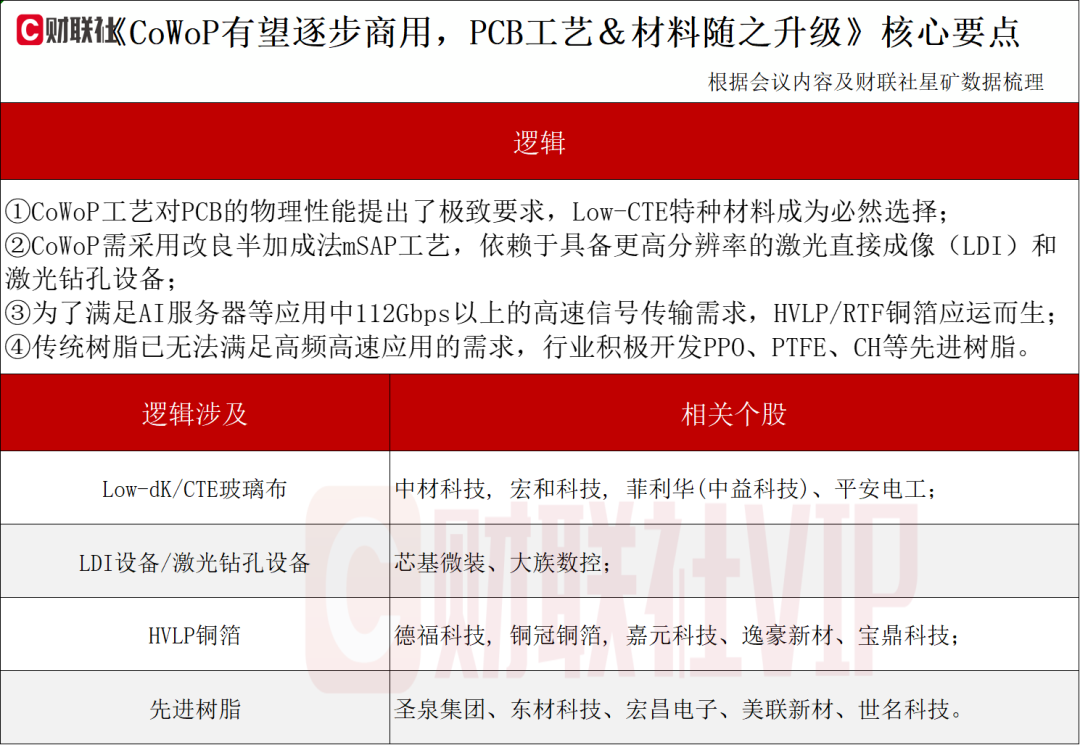
Group 1: Market Trends and Growth - The PCB concept is experiencing significant activity, driven by increasing performance requirements for PCB products in AI servers, leading to a substantial rise in HDI market demand. The HDI market is expected to grow at a CAGR of 6.4% from 2024 to 2029, reaching a global market size of $17.037 billion by 2029 [1] - Major companies are reporting impressive earnings, with Shengyi Electronics (688183.SH) announcing a revenue of 3.769 billion yuan for the first half of 2025, a 91% year-on-year increase, and a net profit of 531 million yuan, up 452% [1] - Google disclosed a record high capital expenditure of $22.446 billion for Q2 2025, a 30.5% quarter-on-quarter increase and a 70.2% year-on-year surge, with a significant portion allocated to AI training and high-end servers [1] Group 2: Technological Advancements - The PCB industry is evolving towards high-frequency, lightweight, and lead-free technologies, with key materials like copper foil and electronic cloth gaining attention [2] - The current upward cycle in the PCB market is primarily driven by increased capital investments in AI hardware by international giants, with Nvidia leading the demand for high-density interconnect (HDI) technology [3][4] - The CoWoP (Chip-on-Wafer-on-Panel) process is transforming the role of PCBs from mere connectors to high-precision "inner substrates," necessitating advanced materials with low thermal expansion coefficients [5] Group 3: Supply Chain and Material Requirements - The production of Low-CTE glass cloth is highly concentrated, with few manufacturers capable of supplying it, including domestic leader Zhongcai Technology [6] - The CoWoP process demands high precision in PCB manufacturing, requiring advancements in laser direct imaging (LDI) and laser drilling equipment, with companies like Chipbase Microelectronics and Dazhong CNC leading in these technologies [7] - The demand for high-quality copper foil is increasing due to the skin effect in high-frequency circuits, with HVLP copper foil being developed to minimize signal loss [8] Group 4: Advanced Resin Development - The industry is shifting from traditional epoxy resins to advanced resin systems like PPO, PTFE, and BMI to meet the demands of high-frequency applications, with PTFE offering superior electrical performance but at a higher manufacturing cost [9][10]

资金爆买,“牛市旗手”,飙升
Zheng Quan Shi Bao· 2025-08-15 04:49
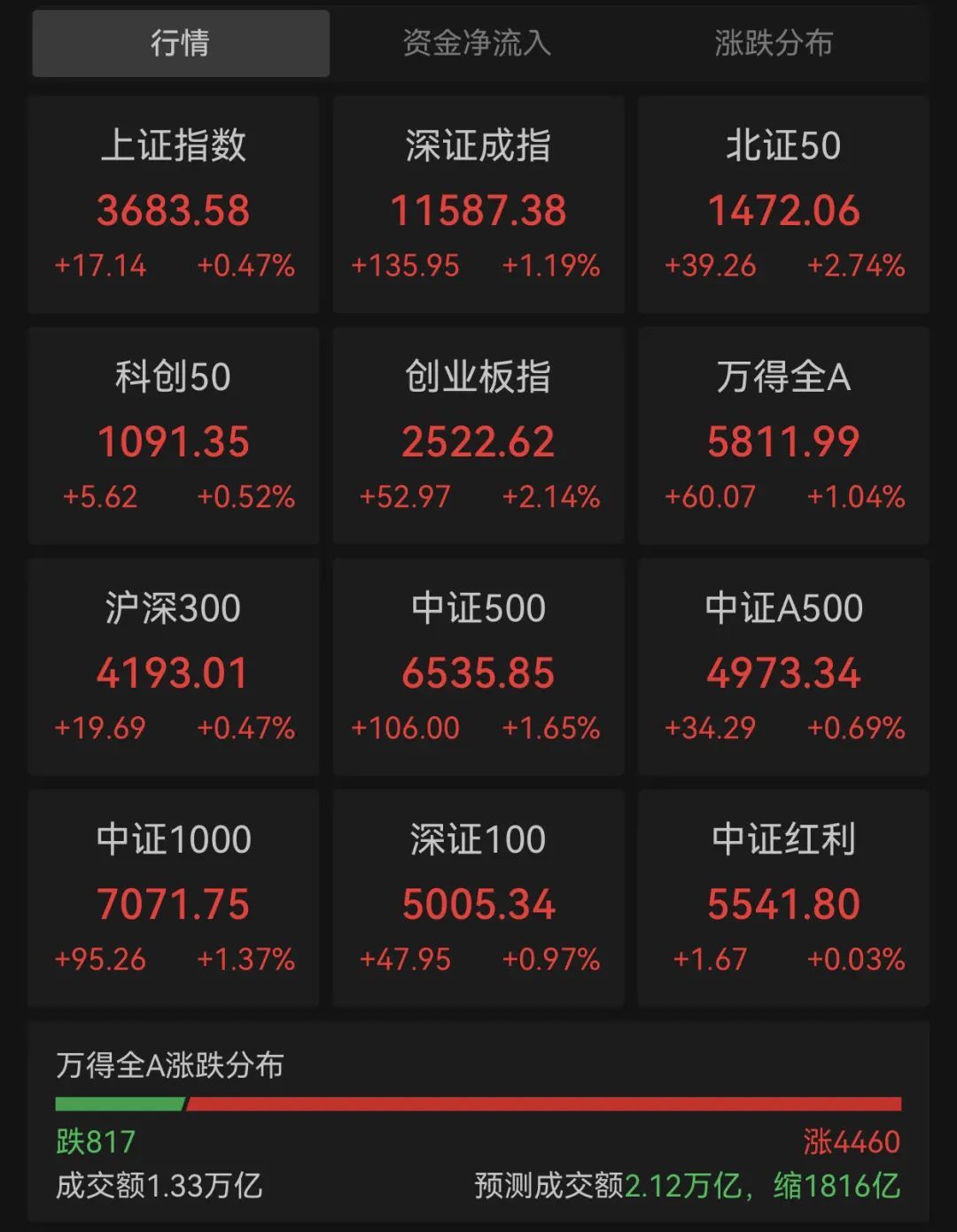
Market Overview - The A-share market saw a strong performance on August 15, with major indices rising, including the Shanghai Composite Index up by 0.47% and the ChiNext Index up by 2.14% [1][2] - The total trading volume reached 1.33 trillion yuan, with a predicted total of 2.12 trillion yuan, indicating a decrease of 181.6 billion yuan [2] Brokerage Sector Performance - The brokerage sector experienced a significant inflow of nearly 12 billion yuan, with a strong increase of 3.57% in the sector index [2][4] - Notable performers included Changcheng Securities and Tianfeng Securities, both hitting the daily limit, while Zhongyin Securities and Dongfang Caifu rose nearly 7% [4][6] Fund Inflows and Stock Movements - The brokerage sector led the market with a net inflow of 11.979 billion yuan, followed by the electric power and industrial machinery sectors [3] - The overall market saw 4,460 stocks rise, with the brokerage sector being a key contributor to this upward movement [2][3] AI Industry Activity - The AI industry chain stocks showed strong activity, with companies like Chuanhuan Technology and Jintian Co. hitting the daily limit, reflecting ongoing advancements in AI technology [8][9] - The release of significant AI models, such as OpenAI's GPT-5, is expected to drive demand for computing power and related components, benefiting the ASIC industry [9] Company Earnings Forecasts - Changcheng Securities projected a net profit of 1.335 to 1.407 billion yuan for the first half of 2025, representing a year-on-year growth of 85% to 95% [6][7] - The overall performance of listed brokerages is expected to show significant improvement due to a recovering capital market and increased trading activity [7]



粤开市场日报-20250812
Yuekai Securities· 2025-08-12 08:44
Market Overview - The A-share market showed a mixed performance today, with major indices mostly closing higher. The Shanghai Composite Index rose by 0.50% to close at 3665.92 points, while the Shenzhen Component increased by 0.53% to 11351.63 points. The Sci-Tech 50 index saw a significant rise of 1.91%, closing at 1069.81 points, and the ChiNext index gained 1.24%, ending at 2409.40 points. Overall, there were 3162 stocks that declined, while 2083 stocks advanced, with 172 stocks remaining flat. The total trading volume in the Shanghai and Shenzhen markets reached 18815 billion yuan, an increase of 545.47 billion yuan compared to the previous trading day [1][2]. Industry Performance - Among the primary industries, telecommunications, electronics, coal, household appliances, real estate, and non-bank financials led the gains, while sectors such as defense, steel, building materials, food and beverage, non-ferrous metals, and social services experienced declines [1][2]. Sector Highlights - The top-performing concept sectors today included optical modules (CPO), GPU, optical chips, servers, photolithography machines, ASIC chips, AI computing power, industrial gases, East Data West Computing, optical communications, semiconductor materials, stock trading software, semiconductor industry, consumer electronics OEM, and the National Big Fund [2].
嘉楠科技上涨2.48%,报0.666美元/股,总市值3.16亿美元
Jin Rong Jie· 2025-08-06 14:30
资料显示,嘉楠公司是一家就复杂计算问题提供先进半导体解决方案的无晶圆厂IC设计公司。特别是, 根据弗若斯特沙利文,在高效能及重复计算ASIC芯片方面,公司是领先的IC设计公司。该公司的董事长兼 首席执行官张先生及其团队凭藉发明了第一批内置ASIC芯片的加密货币挖矿机而声誉著重。 本文源自金融界 大事提醒: 8月21日,嘉楠科技将披露2025财年中报(数据来源于纳斯达克官网,预计披露日期为美国当地时间, 实际披露日期以公司公告为准)。 8月6日,嘉楠科技(CAN)盘中上涨2.48%,截至22:07,报0.666美元/股,成交155.81万美元,总市值3.16 亿美元。 财务数据显示,截至2025年03月31日,嘉楠科技收入总额8277.6万美元,同比增长135.89%;归母净利 润-8643.1万美元,同比减少119.41%。 ...

粤开市场日报-20250725
Yuekai Securities· 2025-07-25 07:53
Market Overview - The A-share market saw most major indices decline today, with the Shanghai Composite Index falling by 0.33% to close at 3593.66 points, and the Shenzhen Component Index decreasing by 0.22% to 11168.14 points. The ChiNext Index dropped by 0.23% to 2340.06 points, while the Sci-Tech 50 Index increased by 2.07% to 1054.20 points. Overall, 2724 stocks declined, 2532 stocks rose, and 158 stocks remained flat, with total trading volume in the Shanghai and Shenzhen markets amounting to 12189 billion yuan, a decrease of 6258.16 billion yuan from the previous trading day [1][2]. Industry Performance - Among the primary industries, electronic, computer, real estate, light manufacturing, textile and apparel, and media sectors led the gains, while construction decoration, building materials, food and beverage, coal, comprehensive, and steel industries experienced declines [1][2]. Sector Highlights - The top-performing concept sectors today included GPU, Kimi, multimodal models, ChatGPT, photolithography machines, intelligent agents, servers, selected rare metals, AIGC, artificial intelligence, machine vision, ASIC chips, selected semiconductors, Xiaohongshu platform, and Pinduoduo partners [2].
英伟达铁王坐不稳?ASIC成“心腹大患”,三大软肋暴露无遗
3 6 Ke· 2025-07-08 23:33
Core Insights - Nvidia reached a historic market capitalization of $3.92 trillion, surpassing Apple's previous record, driven by advancements in AI computing power [1] - The new Blackwell platform is expected to significantly boost Nvidia's data center revenue, contributing nearly 70% in Q1 2025 [1] - However, Nvidia faces challenges from key clients like OpenAI, which is testing Google's TPU chips for its products, indicating a potential shift away from Nvidia's GPUs [3][7] Group 1: Market Position and Competition - Nvidia's dominance is threatened by the rise of ASIC chips, which are being developed by major cloud players like Google, Amazon, and Meta, as well as startups like Cerebras and Graphcore [6][11] - The UALink alliance, formed by AMD, Intel, Google, Meta, Microsoft, and AWS, aims to create an open interconnect standard that could reduce reliance on Nvidia's GPU technology [6][12] - Google's TPU series, particularly the seventh generation Ironwood, is designed for inference tasks and is reported to outperform Nvidia's Blackwell in terms of performance per watt [7][9] Group 2: Dependency and Pricing Challenges - Nvidia's revenue is heavily reliant on a few large clients, with approximately 88% coming from data center operations, raising concerns about over-dependence [12] - The high cost of Nvidia's latest products, such as the $3 million GB200 NVL72 server, may deter potential customers, pushing them to seek more cost-effective alternatives [13][16] - As AI inference becomes mainstream, the demand for cost-effectiveness is increasing, favoring specialized ASIC chips over Nvidia's high-performance GPUs [16] Group 3: Ecosystem and Strategic Responses - Nvidia's NVLink Fusion architecture aims to create a more open ecosystem, but it still requires third-party chips to connect to Nvidia's products, indicating a defensive strategy [4][11] - The rise of open ecosystems like UALink and alternatives to Nvidia's CUDA programming environment may limit Nvidia's ability to maintain its competitive edge [12][17] - Despite being a leader in AI chip technology, Nvidia's position is increasingly challenged by a decentralized market driven by customer preferences for flexibility and cost [17]



嘉楠科技将停止其AI半导体业务
是说芯语· 2025-06-24 02:47
Core Viewpoint - 嘉楠科技 is terminating its non-core AI semiconductor business to focus on its core operations, which include Bitcoin mining machine sales, self-mining, and consumer mining products. This strategic shift is expected to significantly reduce operational costs in the coming months [1][2]. Group 1: Business Strategy - The decision to end the AI semiconductor business is primarily due to its low revenue of approximately $900,000 for FY 2024, which accounts for 15% of the company's total operational expenses, thus dragging down overall efficiency [2]. - Post-strategic adjustment, resources will be concentrated on mining equipment sales, self-mining, and consumer-grade mining machines, where the company has established a clear competitive advantage [2]. Group 2: Mining Operations - 嘉楠科技's mining business is set to launch the Avalon Q mining machine in 2025, which will be compatible with global voltage standards, and the next-generation A16 series is expected to achieve an energy efficiency ratio of 15J/TH, nearing industry-leading levels [2]. - The company has a global hash rate of 8.15 EH/s in North America, with a low average electricity cost of $0.044 per kWh, and overseas projects in Ethiopia are operating with over 95% uptime [2]. Group 3: Financial Performance - In Q4 FY 2024, 嘉楠科技 reported a 33.2% reduction in net losses and achieved positive EBITDA, indicating improved financial health [2]. - The Avalon miner series, particularly the A14 product line, saw significant revenue growth following the Bitcoin halving event in April 2024, with demand for the A15 and upcoming A16 series continuing to rise [3]. Group 4: Company Milestones - 嘉楠科技 was founded in 2013 and released the world's first blockchain computing device based on ASIC chips, marking the beginning of the ASIC era in the industry [4]. - The company underwent a name change in 2015 and achieved significant milestones in chip production, including the mass production of 28nm and 16nm chips [5][6].