
通货膨胀

Search documents
黄金近期波动较大,还能上涨吗,当前估值如何?|第415期直播回放
银行螺丝钉· 2025-11-04 14:03
Core Viewpoint - The article discusses the historical performance of gold, its current valuation, and investment considerations in light of recent market fluctuations. Group 1: Historical Performance of Gold - Over the past 200 years, gold has slightly outperformed inflation, with a long-term annualized return of around 0.6% after adjusting for inflation [3][4] - Since 1971, the annualized return of gold has significantly increased to 8.89% [7][11] - The transition from the gold standard to fiat currency has led to higher inflation rates, which in turn has driven up gold prices [9][10][11] Group 2: Bull and Bear Markets - Gold has experienced three major bull and bear market cycles since the U.S. abandoned the gold standard in 1971 [12] - The first cycle (1971-2000) saw gold prices rise from $37 to $850 per ounce, followed by a 20-year bear market where prices fell nearly 70% [14][16] - The second cycle (2001-2016) included a rise to $1921 per ounce during the financial crises, followed by a bear market with a maximum drawdown of about 44% [16][17] - The third cycle (2017-present) has seen gold prices rise significantly, reaching a peak of $4251.448 per ounce, with a maximum increase of 262.73% [19][20] Group 3: Volatility and Risk - Gold's volatility can be measured by its volatility rate of around 35% and a maximum drawdown of 44% since 2008, which is lower than the average risk of stock assets [22] - Historical maximum declines in A-shares were approximately 71% in 2008 and nearly 50% in 2015, indicating that gold's risk level is slightly lower than that of stocks but higher than bonds [22] Group 4: Factors Influencing Gold Prices - The primary factor affecting gold prices is the real interest rate of the U.S. dollar, which is calculated as nominal interest rate minus inflation rate [24][25] - A significant decrease in the real interest rate typically leads to an increase in gold prices, while an increase in the real interest rate tends to decrease gold prices [25] - Other influencing factors include the cost of gold mining, which is currently around $1624 per ounce, and geopolitical risks such as regional conflicts and financial crises [29][31] Group 5: Valuation of Gold - Gold valuation can be assessed using the ratio of gold price to average mining cost; prices below mining costs indicate a buying opportunity [35] - As of November 3, 2025, gold is rated at approximately 1.1 stars, suggesting it is not currently undervalued [39][40] Group 6: Investment Purposes - There are three main purposes for investing in gold: decorative (jewelry), short-term investment (gold funds), and long-term hedging (physical gold) [44] - The decision to take profits from gold investments should depend on the initial investment purpose, with long-term holders typically not selling during short-term price increases [49][50]


波黑通胀率达欧盟两倍
Shang Wu Bu Wang Zhan· 2025-11-04 13:59
Core Insights - Bosnia and Herzegovina's inflation rate has reached double the EU average, with a reported rate of 4.2% in September compared to the EU's 2.2% [1] - Significant price increases were noted in the hospitality sector (8.0%) and food and non-alcoholic beverages (7.8%), while clothing and footwear (-7.5%) and transportation (-0.8%) saw price declines [1] - The Eurozone's inflation rate rose from 2% in August to 2.2% in September, marking a five-month high, driven by narrowing energy price declines and rising service prices [1] Economic Analysis - Economists attribute Bosnia's high inflation primarily to domestic policies, including raising the minimum wage without reducing taxes, increasing electricity and public service prices, and a lack of measures to curb inflation and unreasonable price hikes [1] - The heavy reliance on imports due to insufficient support for local production exacerbates the inflation issue in Bosnia [1] - In contrast, the EU maintains controllable inflation through a superior business environment, adequate market competition, and stable fiscal policies [1]
澳洲联储维持现金利率3.6%不变 符合市场预期
Zhong Guo Ji Jin Bao· 2025-11-04 10:59
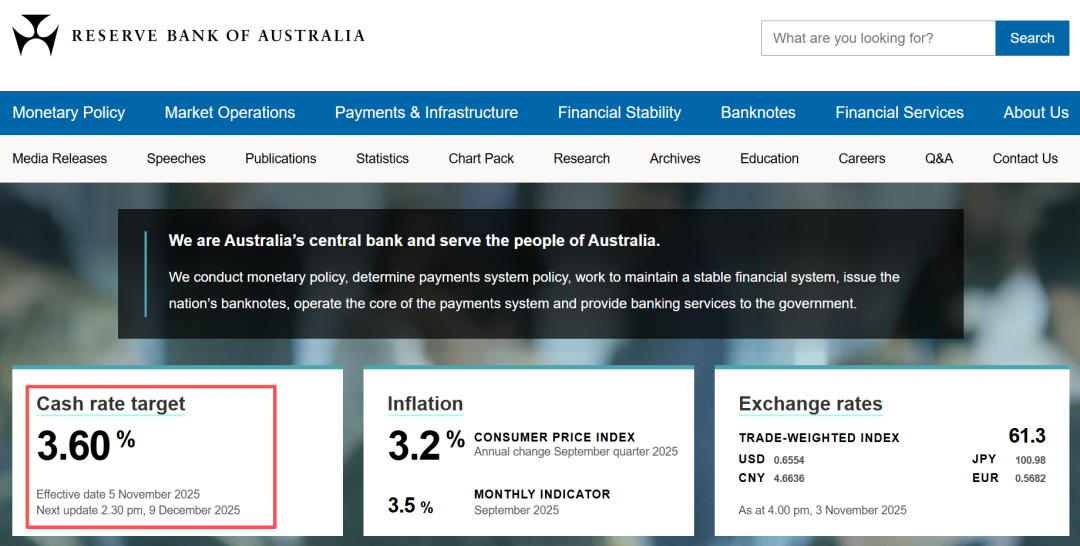
Core Viewpoint - The Reserve Bank of Australia (RBA) has decided to maintain the cash rate at 3.6%, reflecting a cautious approach amid rising inflation and a recovering economy [4][7]. Monetary Policy - The RBA's monetary policy committee unanimously agreed to keep the cash rate unchanged at 3.6%, citing a rebound in private demand and a tight labor market as reasons for this decision [4]. - Recent data indicates stronger economic growth and persistent inflation, suggesting that the economy's potential capacity is more limited than previously expected [4]. - The RBA acknowledges the complexity of the financial environment and maintains a neutral policy stance [4]. Economic Forecasts - Core inflation is expected to remain above the target range of 2% to 3% until mid-2026, with the labor market projected to remain stable [5]. - The unemployment rate is forecasted to stabilize around 4.4% by the end of 2027, with employment growth slowing to 1.1% by mid-2026 [5]. - GDP growth is anticipated to be 2.0% by December 2025 and 1.9% by December 2026, with a return to 2.0% by the end of 2027 [5]. Market Reactions - Following the announcement, the Australian dollar experienced a short-term decline against the US dollar [6]. - The decision to maintain the cash rate aligns with market expectations, as economists had predicted no change [7]. Inflation Trends - Recent inflation data shows a significant increase, with the producer price index rising by 1% and consumer inflation by 1.3% for the July to September period [8]. - The overall inflation rate for Australia surged to 3.2% year-on-year in the third quarter, up from 2.1% in the previous quarter [8]. - The core inflation measure also increased from 2.7% to 3%, complicating the RBA's efforts to control inflation without causing significant job losses [8]. Real Estate Market - The Home Value Index in Australia rose by 1.1% in October, marking the strongest monthly increase since June 2023, with national and major city house price indices reaching historical highs [11]. - The recovery in the real estate market may complicate the RBA's efforts to manage inflationary pressures [11].
巴基斯坦9月CPI反弹至5.6%
Zhong Guo Jing Ji Wang· 2025-11-04 10:52
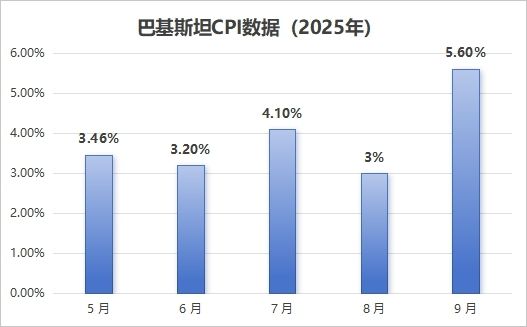
Core Insights - Pakistan's Consumer Price Index (CPI) showed a "stable then rising" trend from May to September 2025, with a significant rebound in September due to rising food prices and energy cost adjustments, indicating ongoing inflationary pressures [1][4]. Group 1: CPI Trends - The CPI remained relatively low from the second quarter to early third quarter of 2025, but saw a notable increase in September [2]. - In May, the CPI increased by 3.46% year-on-year, continuing a downward trend since the high inflation of 2023, primarily due to improvements in the food supply chain [4]. - By July, the CPI rebounded to 4.1% year-on-year, with a month-on-month increase of 2.9%, significantly lower than the 11.09% recorded in July 2024, indicating a marked easing of inflationary pressures compared to the previous year [4]. - September's CPI surged to 5.6% year-on-year, marking the highest point in two quarters and ending a two-month decline [4]. Group 2: Drivers of Inflation - Energy prices were a key driver of inflation, with gas costs rising by 29.85% year-on-year and electricity prices increasing by 21.46% in July, contributing over 30% to the CPI [5]. - The Asian Development Bank approved a $130 million loan to support energy sector optimization, which is linked to adjustments in energy prices and domestic distribution system reforms [5]. - Food prices also exhibited seasonal and disaster-related volatility, with fresh vegetable prices soaring by 56% month-on-month in July, contributing 40% to the urban CPI increase, primarily due to supply shortages caused by summer rains [5]. - In September, food prices again became a significant inflation driver, exacerbated by flooding that disrupted crop harvesting and transportation, leading to simultaneous increases in grain and vegetable prices alongside energy price effects [5]. Group 3: Economic Impact and Policy Response - The fluctuations in CPI have significantly impacted livelihoods and business operations, particularly affecting low-income groups who are most vulnerable to rising food and energy prices, thereby diminishing household purchasing power [6]. - Businesses are facing dual pressures from rising raw material and energy costs, with some small and medium enterprises showing signs of production contraction [6]. - The market is closely monitoring the State Bank of Pakistan's (SBP) policy decisions, as the monetary policy committee has maintained the policy rate at 11% for four consecutive meetings to balance inflation control and economic recovery needs [6].
Australia's central bank holds rates steady
RTE.ie· 2025-11-04 08:11
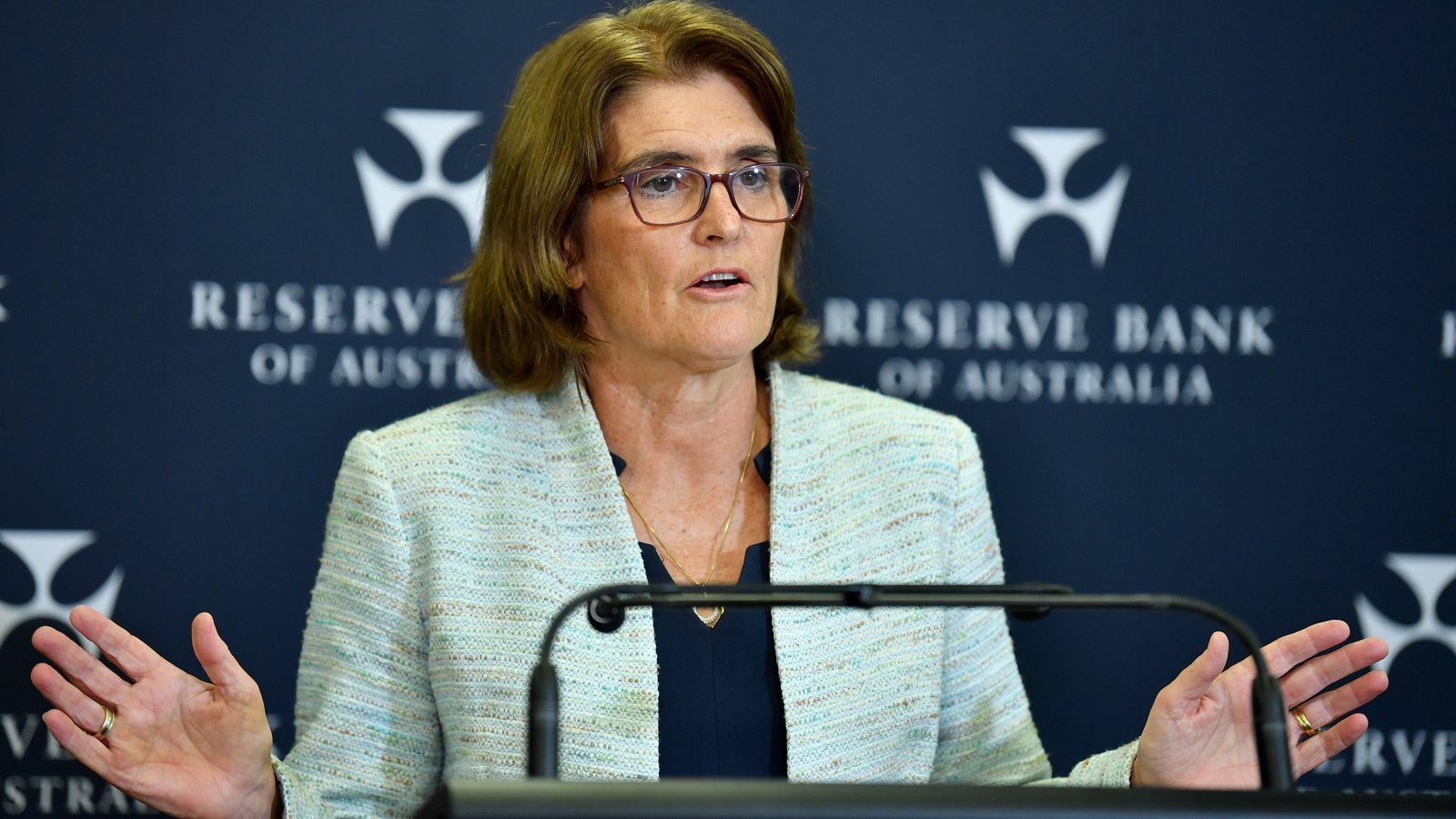
Australia's central bank has today left its cash rate steady as expected at 3.6%, saying it was cautious about easing further given higher inflation, firmer consumer demand and a revival in the housing market.Wrapping up a two-day policy meeting, the Reserve Bank of Australia said recent data suggested inflationary pressures could remain in the economy, adding that it would update its view as data evolves.Markets had seen little chance of a rate cut this week following an uncomfortably hot reading on third- ...
银行员工几乎不买定期存款,退休银行职员揭秘原因!
Sou Hu Cai Jing· 2025-11-04 06:08
Core Insights - The article discusses the reluctance of bank employees to invest in fixed-term deposits, despite the general public's tendency to seek security in bank savings due to uncertainties regarding unemployment, healthcare, and retirement [1][2]. Interest Rate Environment - The primary reason for the disinterest in fixed-term deposits is the persistently low interest rates, with three-year fixed deposits yielding only about 2.6% and one-year deposits dropping to 1.95% [3]. - These rates are insufficient to counteract inflation, leading to a potential decrease in the real purchasing power of the principal amount over time [3]. Liquidity Concerns - Liquidity issues also play a significant role, as bank employees find the low interest rates unattractive compared to the opportunity cost of locking funds for a year [5]. - Even though three-year deposits offer slightly higher rates, the inherent liquidity constraints deter many from choosing this option, as early withdrawal results in significant interest losses [7]. Information Advantage and Experience - Bank employees possess a unique advantage in accessing timely and accurate financial information, allowing them to identify low-risk, high-yield investment products [8]. - Their extensive experience in the financial market enhances their ability to manage investment risks, making them more resilient compared to average savers [8]. Advice for Ordinary Savers - Despite the general disinterest in fixed-term deposits among bank employees, it is advised that ordinary savers consider bank deposits as a relatively safe investment option, given their lack of financial knowledge and experience [9]. - The current investment environment is challenging, with many investment products experiencing significant losses, making cautious decision-making essential for ordinary savers [9].

RingCentral(RNG) - 2025 Q3 - Earnings Call Transcript
2025-11-03 23:00
Financial Data and Key Metrics Changes - The company's consolidated revenue for the third quarter was $138 million, a 7% increase compared to the previous year [11] - The gross margin for the third quarter was 38.3%, down from 40.4% in the same quarter last year [12] - Net income for the quarter was $2.7 million, up from $1.6 million in the previous quarter but down from $5.4 million in the same quarter last year [15] Business Segment Performance - Branded Products segment revenue was $85 million, down from $93 million year-over-year, attributed to order timing and lower sales volume [11][12] - Healthcare Apparel segment revenue declined by 5% to $32 million due to lower volume amid market uncertainty [12][9] - Contact Center revenue increased by 9% to $23 million, driven by new customer conversions despite existing customer losses [12][10] Market Data and Key Metrics Changes - The company noted a significant level of uncertainty among customers across all segments, impacting order sizes and timing [5][6] - The macroeconomic environment, including trade policies and inflation, continues to influence customer behavior and purchasing decisions [6][20] Company Strategy and Industry Competition - The company is focused on expanding market share in a fragmented market by recruiting more sales representatives and leveraging software automation [8] - Cost management has been emphasized, with SG&A expenses reduced by 7% or $3.9 million [6][14] - The company is actively seeking acquisition opportunities, particularly in the branded products sector, where competition is high [42][46] Management's Comments on Operating Environment and Future Outlook - Management expressed cautious optimism about future growth as market conditions normalize, with a strong pipeline of new business opportunities [17][12] - The full-year revenue outlook has been adjusted to a range of $560 million to $570 million, indicating slight growth year-over-year at the high end [16] Other Important Information - The company maintains a strong balance sheet with $17 million in cash and equivalents, providing over $100 million in liquidity for growth plans [16] - The company has a share repurchase authorization with approximately $12 million available as of September 30 [16] Q&A Session Summary Question: Can you describe the environment for Branded Products? - Management indicated that the market has been challenged due to tariff-related volatility and macroeconomic uncertainty, but recent positive tariff announcements may help stabilize the situation [20] Question: What is the status of inventory management? - The company has been opportunistic in sourcing inventory from lower tariff jurisdictions and has communicated with clients about inventory strategies based on market conditions [23][26] Question: What is the impact of losing a client in the contact center segment? - The loss of a client had an annualized impact of about $2 million, but management sees potential for growth in the pipeline despite current challenges [28][29] Question: How is pricing power being managed? - The company has been able to pass through cost increases to customers in the Branded Products segment and has initiated price increases in the Healthcare segment to offset tariff impacts [33][35] Question: What are the expectations for revenue growth in the fourth quarter? - Revenue growth is expected to be primarily driven by the Branded Products segment, with strong bookings and a robust pipeline [37][41] Question: What are the acquisition opportunities currently? - The company sees a rich environment for acquisitions, particularly in the branded products sector, and is actively evaluating potential deals [42][46]

Trump Reciprocal Tariff Case Heads to Supreme Court
Youtube· 2025-11-03 22:18
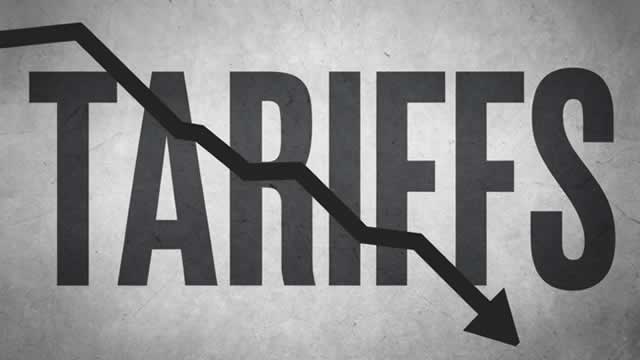
Core Viewpoint - The legal challenge by Rick Wattenberg against the president's tariffs could significantly impact the implementation of tariffs in the U.S. and potentially lead to over $100 billion in refunds for affected businesses [3][5][8]. Group 1: Company Impact - Rick Wattenberg leads two educational toy businesses that manufacture most of their products in China, making them vulnerable to tariffs [1][2]. - The company has faced challenges in adjusting production lines in response to tariff changes, leading to financial strain [2]. - The CEO of the company indicated that they have raised prices in the middle single digits due to inflationary pressures caused by tariffs [9]. Group 2: Legal and Economic Implications - The Supreme Court case revolves around the interpretation of a statute that grants the president emergency powers, which has been used to impose approximately 60% of current tariffs [4][5]. - A ruling against the president could invalidate many tariffs, complicating future tariff implementations and potentially easing inflationary pressures [5][8]. - The case is seen as a familiar legal issue for the Supreme Court, focusing on the statutory language regarding the president's authority to regulate importation [6][7].
Fed's Lisa Cook: Downside risk to employment are greater than upside risk to inflation
Youtube· 2025-11-03 19:46
Core Viewpoint - The Federal Reserve's policy direction remains unclear, with differing forecasts among officials regarding interest rate cuts and economic risks [1][4]. Group 1: Federal Reserve Officials' Perspectives - Fed Governor Lisa Cook supports the recent rate cut but emphasizes that downside risks to employment outweigh inflation risks, while maintaining that the current restrictive policy is necessary due to inflation exceeding the 2% target [2]. - San Francisco President Mary Daly highlights the need to reduce inflation while supporting the job market, advocating for a modestly restrictive policy that does not harm employment [3]. - Chicago Fed President Austin Gulby indicates that the criteria for a rate cut in December are more stringent compared to October, reflecting a cautious approach among Fed officials [4].

Federal Reserve governor Lisa Cook said she supported last week's decision to cut interest rates because she thought weaker-than-expected job-market conditions remained a greater risk than persistent inflation
WSJ· 2025-11-03 19:16
Core Viewpoint - The article discusses the public comments made by Cook following President Trump's attempt to dismiss her, indicating a reinforcement of views previously expressed by Fed Chair Jerome Powell [1] Group 1 - Cook's comments align with the Federal Reserve's stance on economic policies [1] - The context of the comments is significant due to the political backdrop involving President Trump [1]
