
餐饮酒店

Search documents
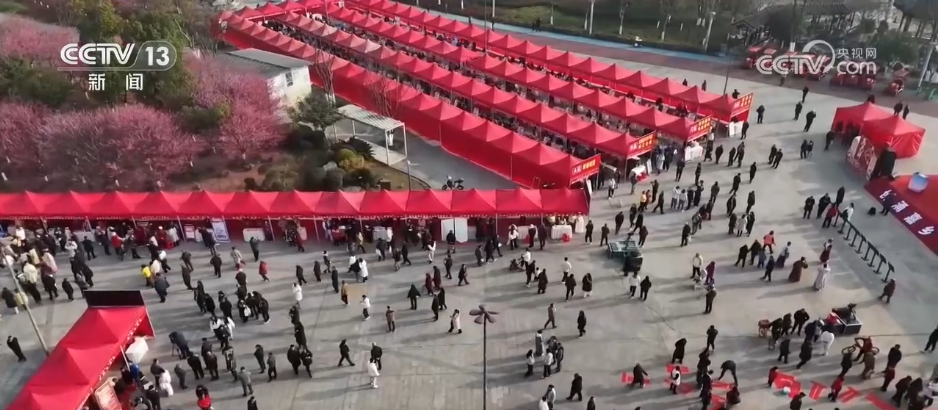
线上线下齐发力 新春就业“薪”机遇 多地启动“春风行动”助力“家门口”就业
Yang Shi Wang· 2026-02-14 08:02
Group 1 - The core message highlights that Sichuan province is conducting specialized recruitment events, offering over 10,000 job positions across various industries, including new energy automotive parts, equipment manufacturing, and hospitality, aimed at returning workers, recent graduates, and local residents [1] Group 2 - On February 11, a recruitment event in Nanchong's Jialing District featured over 140 companies, including quality enterprises from the paired assistance region of Zhejiang Linhai, providing more than 7,500 job opportunities [4] - In Jianyang, 100 local key enterprises and collaborative recruitment units from the Chengdu-Chongqing area offered over 6,000 positions, attracting more than 3,000 job seekers, including recent graduates and returning workers [6] - The Sichuan Provincial Department of Human Resources and Social Security estimates that from January to March, over 3,000 recruitment events will be held, providing approximately 3 million job positions [8]


操盘必读:影响股市利好或利空消息_2026年2月6日_财经新闻
Xin Lang Cai Jing· 2026-02-06 00:35
Industry News - The Ministry of Industry and Information Technology and seven other departments issued the "Implementation Plan for High-Quality Development of Traditional Chinese Medicine Industry (2026-2030)", aiming to establish a collaborative development system for the entire industry chain by 2030, promote the approval of innovative Chinese medicine drugs, cultivate 10 major traditional Chinese medicine products, and facilitate the transformation of Chinese medicine preparations in medical institutions into innovative drugs [20]. - Eleven departments jointly issued the "Implementation Opinions on Enhancing Digital Service Convenience for Foreign Personnel Entering the Country", proposing significant improvements in the internationalization and convenience of digital services by 2027, with a focus on streamlining digital applications in residence, healthcare, payment, tourism, and public services [20]. - Infineon Technologies announced a price increase for power switches and related chips due to ongoing supply shortages and rising costs of raw materials and infrastructure, effective April 1, 2026 [20]. - BASF announced an 11% price increase for TDI products in the Asia-Pacific region (excluding mainland China), with 24% of global TDI production capacity undergoing maintenance in January 2026, leading to a growing supply gap in overseas markets [22]. - Major PC manufacturers, including HP, Dell, Acer, and Asus, are considering sourcing memory chips from manufacturers in mainland China due to supply constraints threatening production and increasing costs across the tech industry [22]. Company News - GCL-Poly announced that it has not yet received any orders in the "space photovoltaic" sector [23]. - NewEase Technology indicated that the revenue share of its 1.6T related optical module products is expected to increase further in 2026 [24]. - Meituan announced plans to acquire Dingdong for $717 million [25]. - Tianqi Mould announced plans to purchase equity in Dongshi Co., leading to a stock suspension [26]. - Bolee announced that its actual controller, Ma Xuejun, is under investigation by the Securities Regulatory Commission for alleged market manipulation [27]. - Guoxuan High-Tech announced plans to raise no more than 5 billion yuan through a private placement for a 20GWh power battery project [28]. - ST Cube announced a cumulative increase of 314.93% in stock price from January 20 to February 5, leading to a stock suspension for verification [29]. - NIO expects to record an adjusted operating profit of 700 million to 1.2 billion yuan in the fourth quarter of 2025, marking the company's first quarterly adjusted operating profit [29]. - Muyuan Foods reported a sales revenue of 10.566 billion yuan for January 2026, reflecting a year-on-year decrease of 11.93% [30].




服务消费领域再迎政策利好
Bank of China Securities· 2026-01-31 14:31
Investment Rating - The industry investment rating is "Outperform the Market," indicating that the industry index is expected to perform better than the benchmark index over the next 6-12 months [13]. Core Insights - The report highlights the recent policy benefits in the service consumption sector, emphasizing the importance of optimizing and expanding service supply to foster new growth points in service consumption. The government's plan includes 12 measures across key and potential areas, aiming to enhance service quality and support economic development [1][3]. - The focus on supply-side structural reforms is expected to stimulate both short-term and long-term consumer demand, promoting a virtuous cycle of employment, income, and consumption, thereby providing long-term support for economic growth [3][7]. - Key areas of focus include transportation, domestic services, cultural tourism, and sports events, with potential areas such as performance services and experiential consumption also highlighted for their growth potential [3][7]. Summary by Relevant Sections Policy Support Areas - The report outlines three main policy support areas with twelve specific measures, including: 1. Transportation services aimed at integrating tourism and enhancing service quality [7]. 2. Domestic services focusing on innovation and skill training [7]. 3. Cultural tourism services that encourage infrastructure development and enhance consumer experiences [7]. Potential Growth Areas - The report identifies potential growth areas such as performance services, sports events, and experiential consumption, which are expected to drive demand in related sectors like accommodation and dining [3][7]. Financial and Structural Support - The report emphasizes the need for a robust support system, including the establishment of standards, credit building, and financial backing to ensure the stable development of service consumption [3][7].


波黑通胀率达欧盟两倍
Shang Wu Bu Wang Zhan· 2025-11-04 13:59
Core Insights - Bosnia and Herzegovina's inflation rate has reached double the EU average, with a reported rate of 4.2% in September compared to the EU's 2.2% [1] - Significant price increases were noted in the hospitality sector (8.0%) and food and non-alcoholic beverages (7.8%), while clothing and footwear (-7.5%) and transportation (-0.8%) saw price declines [1] - The Eurozone's inflation rate rose from 2% in August to 2.2% in September, marking a five-month high, driven by narrowing energy price declines and rising service prices [1] Economic Analysis - Economists attribute Bosnia's high inflation primarily to domestic policies, including raising the minimum wage without reducing taxes, increasing electricity and public service prices, and a lack of measures to curb inflation and unreasonable price hikes [1] - The heavy reliance on imports due to insufficient support for local production exacerbates the inflation issue in Bosnia [1] - In contrast, the EU maintains controllable inflation through a superior business environment, adequate market competition, and stable fiscal policies [1]
吉尔吉斯斯坦经济多点发力
Jing Ji Ri Bao· 2025-10-22 22:10
Economic Growth - Kyrgyzstan's GDP for the first eight months of the year reached 1.0421 trillion som (approximately 11.9 billion USD), with a year-on-year growth of 11.0%, significantly higher than last year's 8.3% [1] - The economic growth is primarily driven by industrial, construction, and service sectors, with industrial production growth at 13.7% [1] Industrial Performance - The total industrial output in Kyrgyzstan increased to 437.1 billion som, with a year-on-year growth of 11.5%, compared to 0.7% last year [2] - Key sub-sectors such as manufacturing, food and beverage, tobacco, chemicals, rubber and plastics, and construction materials experienced double-digit growth, with the pharmaceutical industry growing 2.2 times and food and beverage and tobacco products increasing by 44.4% [2] - The industrial sector accounted for 17.9% of GDP, contributing 1.93 percentage points to GDP growth [2] Service Sector Growth - The service sector remains dominant in Kyrgyzstan's economy, with an output of 808.6 billion som and a year-on-year growth of 9.9%, making up 50.7% of GDP [3] - Growth in the service sector is attributed to rising living standards and consumer spending, with consumer loans increasing by 45.3% and average household income rising by 20.4% [3] - Significant growth was noted in wholesale and retail (17.1%) and the restaurant industry (25.9%) [3] Construction Sector Dynamics - The construction sector's output surged by 34.8%, contributing 7.5% to GDP [3] - Fixed capital investments reached 166.1 billion som, growing by 20.1%, primarily directed towards housing, resource development, and urban infrastructure projects [3] Long-term Economic Outlook - Kyrgyzstan has maintained high economic growth rates and is expected to achieve an 8% growth rate in 2025, supported by proactive measures from the government and the national bank to prevent economic overheating [5] - Major infrastructure projects like the Kambar-Ata 1 hydropower station and the China-Kyrgyzstan-Uzbekistan railway are in active implementation, expected to create thousands of new jobs and stimulate regional development [4][5]
社会服务行业2025年四季度策略报告:出海和线下零售有望超预期,底部反转可期-20251013
ZHESHANG SECURITIES· 2025-10-13 09:35
Group 1: Local Life and E-commerce - The competition in local life services is expected to continue in Q4 2025, with major platforms like Meituan, JD, and Alibaba intensifying their investments in delivery services and instant retail [2][3] - In Q2 2025, Meituan, JD, and Alibaba reported significant losses in local life services, but these losses are anticipated to peak in Q3 due to increased summer demand and promotional activities [2][3] - The e-commerce sector is experiencing reduced competitive pressure, with online retail sales reaching 1.02 trillion yuan in August 2025, reflecting a year-on-year growth of 7.1% [4] Group 2: Tourism and Hospitality - The tourism sector is witnessing a recovery, with a 7% year-on-year increase in cross-regional travel during the National Day holiday, indicating a shift in traveler preferences towards experiential travel [7][8] - Online Travel Agencies (OTAs) are benefiting from the overall growth in tourism, with major players maintaining stable performance despite increased competition from new entrants [7] - The hotel industry is expected to reach a bottoming out phase, with leading companies like Jinjiang and Huazhu showing resilience and potential for profit recovery in Q4 2025 [10][11] Group 3: Retail and Consumer Goods - The offline retail sector is undergoing significant transformations, with supermarkets like Yonghui Supermarket expected to complete major store renovations, leading to improved profitability [9] - The retail landscape is shifting towards quality retail, with community stores like convenience stores maintaining high growth rates, while traditional department stores face slower growth [9] - The mother and baby retail sector is benefiting from supportive government policies and adjustments in store formats, leading to a notable recovery in same-store sales [14] Group 4: Cross-border E-commerce - Cross-border e-commerce is experiencing profit differentiation due to external factors like tariffs, with platform-based companies showing stable performance while product-based companies seek innovative advantages [12][13] - The sales peak for cross-border e-commerce is anticipated in the second half of 2025, driven by promotional events like Amazon's Prime Day, which saw a 30.3% increase in online spending [12][13] Group 5: Recommendations - Key investment targets include Yonghui Supermarket, Alibaba, Meituan, and various hotel chains such as Jinjiang and Huazhu, reflecting a diversified approach across sectors [5]
25年中报业绩综述:竞争加剧,布局线下和出海
ZHESHANG SECURITIES· 2025-09-14 11:33
Investment Rating - The industry investment rating is "Positive" (maintained) [4] Core Insights - The tourism sector is expected to experience high growth in 2025, with inbound travel demand surging. In H1 2025, tourism trips increased by 20.6% year-on-year, and travel spending grew by 15.2%. The trend of younger and more localized tourism continues, with 45% of travel orders during the "May Day" holiday coming from the post-95 generation [2] - Online Travel Agencies (OTAs) are benefiting from the overall growth in the tourism market, maintaining a stable market structure. Major OTAs like Tongcheng and Ctrip reported revenue growth of 10.0% and 16.2% respectively in Q2 2025, exceeding market expectations [2] - The offline retail sector is undergoing transformation, with supermarkets expected to accelerate profit release due to store renovations and supply chain improvements. The retail landscape is improving, with supermarkets showing better performance compared to department stores [4][5] - The restaurant sector is recovering faster than hotels, with a focus on wedding and niche markets. However, the overall restaurant market is under pressure, with a 3.8% year-on-year increase in retail sales from January to July 2025 [7] - The e-commerce sector is rebounding, with online retail sales reaching 3.12 trillion yuan in Q2 2025, a year-on-year increase of 6.29%. Instant retail is emerging as a new growth driver, with the market expected to reach 780 billion yuan by 2024 [10][11] Summary by Sections Tourism - Inbound tourism demand is accelerating, with a 15.8% increase in entry and exit trips in H1 2025, and a 30.2% increase in foreign visitors [2] - Major OTAs are performing well, with Tongcheng's revenue at 4.669 billion yuan (up 10.0%) and Ctrip's revenue at 14.843 billion yuan (up 16.2%) in Q2 2025 [2] Retail - The retail sector is seeing varied growth across formats, with supermarkets growing by 5.2% and convenience stores by 7.0% in the first seven months of 2025 [4] - Supermarket renovations are expected to enhance customer attraction and profitability [4] Restaurants and Hotels - The restaurant sector is under pressure, with a 3.8% increase in retail sales in the first half of 2025, while hotel RevPAR is facing challenges [7] - Major hotel chains are experiencing a decline in RevPAR, with some companies showing resilience through operational efficiency [7] E-commerce - E-commerce is recovering, with Q2 2025 online retail sales reaching 3.12 trillion yuan, a 6.29% year-on-year increase [10] - Instant retail is projected to grow significantly, with the market expected to reach 780 billion yuan by 2024 [10][11] Cross-border E-commerce - Platform-based companies are showing stable performance, with revenue growth for companies like Xiaoshangcheng and Jiaodian Technology at 14% and 16% respectively in H1 2025 [12] - Product-based companies are experiencing revenue resilience but face profit uncertainties due to external factors [12] Baby and Maternity Retail - The industry is being catalyzed by supportive policies, with steady recovery in same-store sales [16] - Companies like Haiziwang and Aiyingshi are optimizing store structures and launching new brands to enhance profitability [16]
同庆楼:上半年营收13.31亿元已实现11家富茂酒店开业运营
Xin Lang Cai Jing· 2025-08-28 21:11
Core Insights - The company reported a revenue of 1.331 billion yuan for the first half of 2025, representing a year-on-year growth of 4.67% [1] - The net profit attributable to shareholders was 71.9986 million yuan, with a non-recurring net profit of 67.163 million yuan [1] Business Overview - The company's main business segments include catering services, hotel accommodation, and food operations [1] - As of the end of the reporting period, the company operated 133 directly-owned stores across various regions including Anhui, Jiangsu, Beijing, Shanghai, and Hangzhou [1] - The breakdown of stores includes 58 catering outlets, 11 hotels under the Fumao brand, and 64 new brand outlets [1] Product Development - The company leveraged its culinary expertise to create new product lines such as "one dumpling one dish" and "one shao mai one dish" [1] - During the Dragon Boat Festival, the sales of the "famous chef dumplings" exceeded 42 million yuan [1] - The chain operation of fresh meat buns also showed steady growth during the reporting period [1] Shareholder Returns - The company is committed to enhancing shareholder returns through improved business competitiveness, cash dividends, share buybacks, and effective communication with the capital market [1] - Since its listing in 2020, the company has conducted cash dividends five times [1]

美国大学生就业遇冷,主要怪AI?
Sou Hu Cai Jing· 2025-07-29 14:54
Group 1 - The unemployment rate for recent college graduates aged 22 to 27 has reached its highest level in nearly a decade, with a rate of 5.8% projected for Q1 2025, significantly above the overall U.S. unemployment rate [1][2] - The unemployment rate for recent graduates and job-seeking college students was 6.6% in the past year, an increase from 6% the previous year, marking the highest level in about ten years, excluding the pandemic period [2] - The job market for college graduates is particularly affected in sectors like information technology and finance, where advancements in AI are rapidly changing hiring dynamics [2][3] Group 2 - Companies like Shopify and Duolingo are incorporating AI into their hiring and layoff decisions, indicating a shift in recruitment strategies where roles must prove they cannot be automated [2] - Meta's CEO revealed that the company is leveraging AI engineers for basic coding tasks, predicting that most of their code will be written by AI within the next 12 to 18 months [3] - Bill Gates noted that while AI may replace simpler jobs, it will serve as an auxiliary tool in more creative fields, potentially leading to increased productivity and new job opportunities [3] Group 3 - Despite concerns about AI's impact on employment, some economists argue that attributing the current job market challenges solely to AI is premature, as many companies are still in the early stages of adopting this technology [4][5] - LinkedIn's analysis found no significant evidence that AI is disproportionately affecting hiring across different job categories, suggesting that other factors may be at play [5] - The Federal Reserve's interest rate policies have also significantly influenced hiring in the tech sector, with low rates during the pandemic leading to a hiring surge that has since slowed due to rising borrowing costs [5]