
智能化

Search documents
乐歌股份:新投入使用的自建海外仓是公司践行智能化、自动化战略的重要载体
Zheng Quan Ri Bao Wang· 2026-01-06 13:12
证券日报网讯1月6日,乐歌股份(300729)在互动平台回答投资者提问时表示,新投入使用的自建海外 仓是公司践行智能化、自动化战略的重要载体。公司加快自建仓建设,降低仓租成本,构筑独一无二的 长期壁垒;实施降本增效,推进尾程物流降本和美国仓网建设,加强海外仓自动化和信息化投入,提高 运营效率,改善利润率;完善海外仓全链路跨境物流服务体系建设,进一步加强港口拖柜、头程货代业 务能力,提升客户粘性与吸引力,不断提升运营能力和服务质量,确保海外仓业务营收持续高增长。通 过大规模应用自研的自动化设备与信息系统,将显著提升单仓的作业效率、准确率和人均产出,这是构 建公司海外仓网络未来成本领先与高效服务核心竞争力的关键路径。 ...
浙江仙通拟定增募资不超10.5亿元 用于汽车无边框密封条智能制造等项目
Zheng Quan Shi Bao Wang· 2026-01-06 12:04
Core Viewpoint - Zhejiang Xiantong plans to issue A-shares to raise up to 1.05 billion yuan for smart manufacturing projects and working capital, targeting the growing demand for frameless sealing strips in the automotive industry [1][2] Group 1: Fundraising and Project Details - The company intends to issue shares to no more than 35 specific investors, including its controlling shareholder, to raise a total of up to 1.05 billion yuan [1] - The funds will be allocated to a smart manufacturing project for frameless sealing strips, with a total investment of 853 million yuan, and a research center upgrade project costing 148 million yuan [1][2] - The smart manufacturing project aims to build production workshops and logistics centers, with an expected annual production capacity increase of 67.7 million meters of frameless sealing strips upon completion [1] Group 2: Market Position and Strategic Importance - The company has become a core supplier for high-end brands such as Geely, Chery, and SAIC Volkswagen, with exclusive supply agreements for certain models [2] - By entering the supply chain of joint venture brands, the company has broken the monopoly of foreign suppliers, ensuring a stable order reserve for future production [2] - The strategic focus on frameless sealing strips aligns with the industry's shift towards electric and intelligent vehicles, positioning the company to capture market opportunities [1][2]

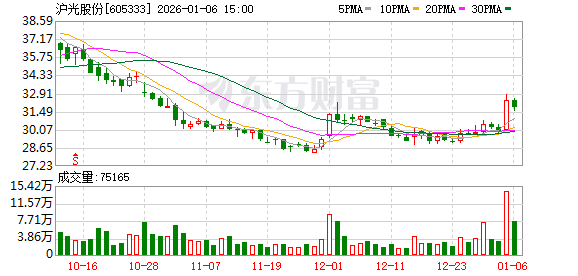
沪光股份:公司始终专注于汽车线束的研发、制造与销售
Zheng Quan Ri Bao· 2026-01-06 11:44
Core Viewpoint - The company has focused on the research, manufacturing, and sales of automotive wiring harnesses for nearly thirty years, seizing opportunities in the transition to new energy vehicles and expanding its product matrix [2] Group 1: Business Strategy - The company is enhancing its integrated supply capabilities around wiring harnesses and connectors while optimizing its customer structure to drive sustained profit growth [2] - The company is proactively entering emerging fields such as robotics, operational unmanned vehicles, and drones, establishing a diversified development pattern of "1+N" [2] Group 2: Industry Collaboration - The company is deepening collaborative efforts with industry leaders in robotics and drones to build research platforms, conduct key technology research, and develop products [2] - The company aims to contribute to the construction of China's intelligent manufacturing ecosystem through these collaborations [2] Group 3: Future Outlook - The company anticipates that its revenue and profit potential in emerging business areas will further expand [2] - The company is committed to achieving excellent performance and rewarding investors while adhering to a culture of stability and long-term growth [2]


观点 | 挖掘机市场技术革命与产业重构下的增长新范式
工程机械杂志· 2026-01-06 09:32
Core Viewpoint - The global infrastructure construction model is undergoing a fundamental shift from traditional extensive development to precise and sustainable operations, driving the evolution of the excavator industry from a mere earth-moving tool to a core execution unit of intelligent construction systems [1] Industry Underlying Logic Reconstruction - The value creation logic in the industry has fundamentally changed, with clients focusing more on the comprehensive value derived from efficiency improvements, cost reductions, and carbon emission reductions through intelligent and electrified technologies rather than just equipment performance [1] - Three core driving forces are identified: rising global labor costs and skilled labor shortages, increasing complexity of construction scenarios, and the accelerated elimination of high-emission old equipment under global carbon neutrality goals [1] Technological Revolution Electrification - Electric excavators are rapidly penetrating markets due to their core advantages of zero emissions, low noise, and low maintenance costs, with a projected market share exceeding 30% by 2030 for electric excavators [2] - Technological advancements in battery energy density and fast-charging technology are addressing range anxiety, while next-generation storage technologies like solid-state and hydrogen fuel cells are paving the way for electrification of larger equipment [2] Intelligentization - Intelligent technologies are redefining excavator operation modes, enabling basic functions like automatic slope repair and collision prevention, significantly lowering operational thresholds [3] - Leading companies are accelerating the development of Level 4 autonomous driving technology, allowing equipment to replace human labor in high-risk scenarios [3] - The shift towards a "product + service" business model is anticipated to create continuous value-added revenue for companies [3] Digitalization - Digital technologies are breaking down information silos between equipment, creating an intelligent construction ecosystem that covers the entire chain from design to operation and maintenance [4] - The transformation towards flexible manufacturing models driven by demand for on-demand production is expected to enhance operational efficiency [4] Regional Market Dynamics - There is a notable regional differentiation in global infrastructure construction demand, with emerging markets becoming the core growth engine due to urbanization and infrastructure needs, while mature markets focus on equipment upgrades and green transitions [5] - Companies are adjusting their market strategies to cater to these regional differences, enhancing service responsiveness in emerging markets and providing customized solutions in mature markets [5] Demand Structure - The diversification of downstream application scenarios is driving excavator demand towards specialization and segmentation, with new growth points emerging in sectors like renewable energy infrastructure and urban renewal [6] - This demand differentiation is reshaping product strategies, leading to a dual-track model of standardized general models and customized professional models [6] Competitive Focus - The industry is shifting from price competition to value competition, with clients evaluating equipment based on total lifecycle costs, efficiency improvements, and environmental compliance [7] - Companies are required to build competitive barriers through technology, service, and ecosystem collaboration to enhance customer experience and expand value creation boundaries [7] Future Outlook - From 2026 to 2030, the excavator industry is expected to enter a new phase of high-quality development driven by technological revolutions and industry restructuring, with growth primarily stemming from technological upgrades and demand structure optimization [8] - Strategic focus areas for companies include accelerating electrification and intelligent technology deployment, deepening digital transformation, and expanding overseas markets through localized operations [8]
机器人或将替代人工,“十五五”智慧化土壤监测实验室仪器配置清单
仪器信息网· 2026-01-06 09:03
Core Viewpoint - The article emphasizes the need for a systematic approach to develop a "Core Competency and Equipment Configuration Reference List" for soil monitoring, aimed at supporting ecological environment departments and research institutions during the "14th Five-Year Plan" period [1][6]. Group 1: Policy and Strategic Framework - The Ministry of Ecology and Environment highlighted the importance of continuing pollution prevention efforts and optimizing ecosystems during the "14th Five-Year Plan" period, focusing on collaborative efforts in pollution reduction and environmental protection [2][3]. - The modernization and intelligence of the ecological monitoring system are deemed essential to meet the new goals set forth in the strategic framework [3]. Group 2: Technological Advancements in Soil Monitoring - The "Core Competency and Equipment Configuration Reference List" covers the entire process from sample drying, preparation, pre-treatment, to physical and chemical analysis, reflecting modern monitoring concepts of "intelligence, integration, and domestication" [6][7]. - The new laboratories will increasingly utilize robotics for tasks such as sample transportation and pre-treatment, indicating a significant shift towards automation in the industry [6]. Group 3: Equipment and Functional Overview - The reference list includes various advanced equipment such as: - Automatic soil samplers with environmental sensing and geographic information capabilities [6]. - Sample drying platforms that maintain a controlled environment to prevent cross-contamination [6][9]. - Fully automated soil sample preparation systems that streamline the entire process from sample entry to analysis [10]. - The integration of automated systems for tasks like pH measurement and organic matter analysis is expected to enhance efficiency and data consistency in soil monitoring [10][11]. Group 4: Future Implications - The shift towards intelligent and automated soil monitoring systems may significantly impact job roles and the workforce within the industry, raising questions about the future of certain positions [6].

东风汽车丨2026年销量目标325万辆 汽车出口60万辆
Cai Jing Wang· 2026-01-06 08:29
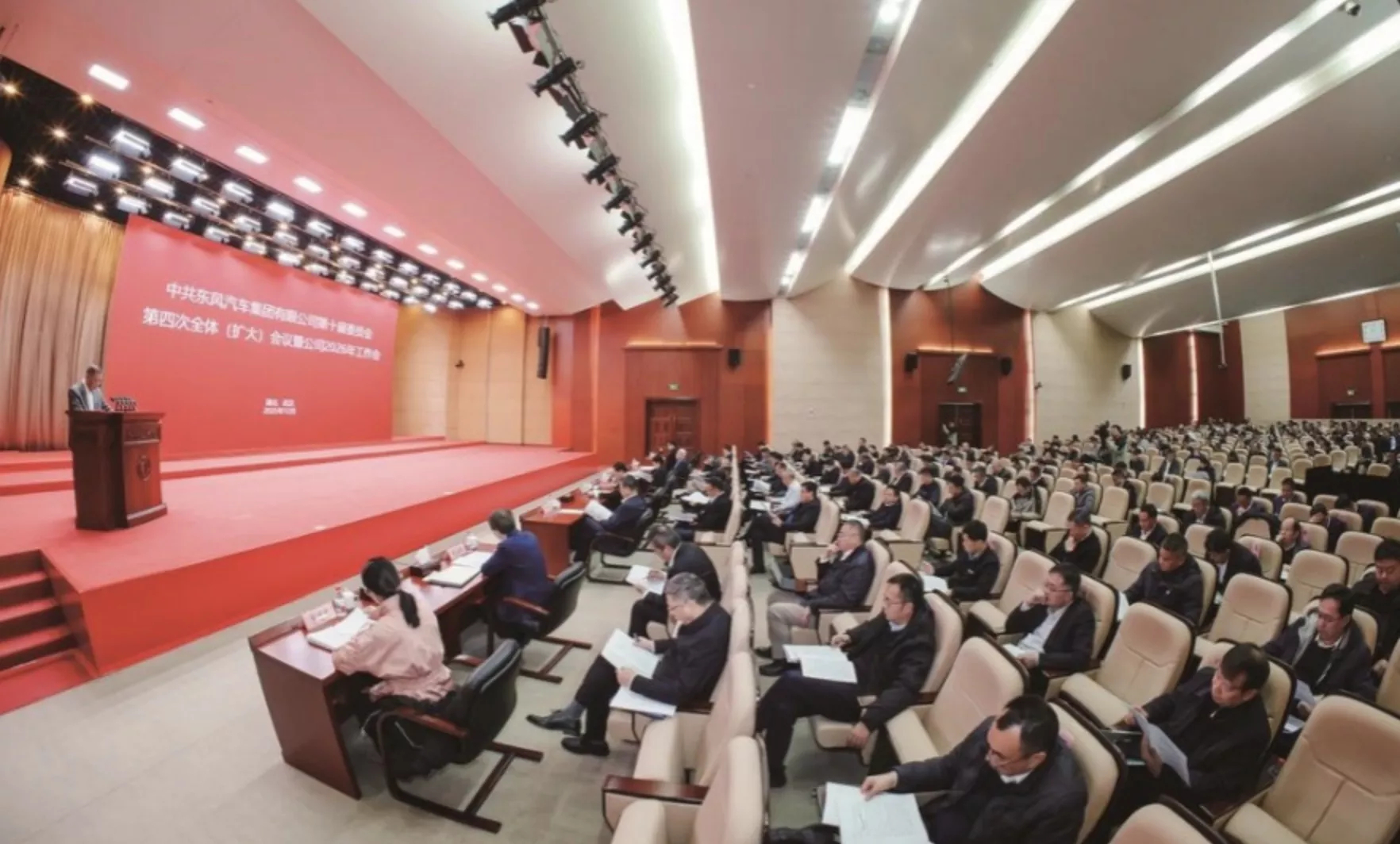
Core Viewpoint - Dongfeng Motor has outlined its "14th Five-Year" development strategy and key tasks for 2026 during its recent work conference, while also summarizing its achievements from 2025 and the "13th Five-Year" period [1]. Group 1: Sales and Market Performance - In 2025, Dongfeng's total sales reached 1.04 million units of new energy vehicles (NEVs), marking a 21% year-on-year increase, with a penetration rate up by 7 percentage points [2]. - The company aims for a total sales target of 3.25 million units in 2026, including 1.7 million NEVs and 600,000 units for export [2][6]. Group 2: Product Development and Innovation - Dongfeng's product lineup for its self-owned NEV brands expanded in 2025, featuring flagship models from Lantu and new products from Yipai and other brands [3]. - The company made significant advancements in hybrid, pure electric, and hydrogen technologies, achieving a thermal efficiency of over 48% for its Mahle hybrid engine and progressing in solid-state battery development [5]. Group 3: Strategic Initiatives and Partnerships - Dongfeng is transitioning its joint ventures towards new models, with the launch of new energy models from Dongfeng Nissan and upgrades in intelligent products [5]. - The company has established strategic partnerships with tech firms like Tencent and Huawei to enhance its "car-internet" integration and smart technology applications [5][8]. Group 4: Organizational and Operational Enhancements - Since 2025, Dongfeng has implemented reforms in organizational structure, process mechanisms, and supply chain collaboration to improve operational efficiency and profitability [8]. - The company plans to strengthen its global business layout, particularly in Europe and Southeast Asia, to drive growth through localized production and marketing networks [8].

2026年车圈这三大趋势藏不住
Zhong Guo Qi Che Bao Wang· 2026-01-06 08:02
Core Insights - The automotive industry in China is transitioning from "scale expansion" to "quality enhancement," indicating a shift in focus towards technological transparency and user trust as key competitive factors [1][3][4] Group 1: Technological Transparency - Companies are moving away from abstract innovation slogans to concrete technological commitments and public demonstrations, with firms like FAW aiming to become technology companies and SAIC focusing on electrification and intelligence [1] - The concept of "technological transparency" is becoming a competitive threshold, where companies must publicly verify their core component performance and manufacturing standards to build market trust [1] Group 2: Smart Technology as a Necessity - Smart technology is no longer an optional enhancement but a critical requirement for survival in the industry, as evidenced by leaders like Li Shufu and Yin Tongyue emphasizing the importance of emotional and intelligent vehicles [2] - The automotive value proposition is shifting from mere transportation to mobile intelligent terminals, with AI and advanced driving capabilities becoming essential for competitive advantage [2] Group 3: Trust as a Core Asset - The Chinese automotive market has transitioned to a stock competition phase, with a 52.7% penetration rate for new energy vehicles by 2025, shifting the focus from acquiring new customers to retaining existing ones [3] - Building user trust is now a fundamental asset for companies, requiring substantial investment in product quality, service experience, and commitment fulfillment [3] Group 4: Industry Implications - The ongoing competition around technology, intelligence, and trust is expected to enhance the resilience and security of the supply chain, fostering a modern automotive industry with international competitiveness [4][5] - As companies deepen their focus on core technologies and optimize user experiences, the Chinese automotive industry is poised to occupy a higher position in the global value chain, contributing significantly to the nation's automotive ambitions [5]
2026“有色盛宴”或仍延续 一季度有望迎来“开门红”
Sou Hu Cai Jing· 2026-01-06 07:12
上证报中国证券网讯(记者 霍星羽)Choice数据显示,2025年有色金属(申万行业2021年版)板块整 体涨幅为88.21%,"夺冠"全市场。步入2026年,这场"有色盛宴"是否仍将延续? 记者采访获悉,2026 年有色板块上行逻辑不变,但波动幅度、择时难度将加大。2026年国内外宏观环境仍总体利多有色, 铜、铝、镍和锡等品种,有望出现结构性牛市。2026年一季度有色板块或迎来"开门红"。 华鑫期货研 究所所长章孜海接受上证报记者采访时表示,有色金属有商品属性和金融属性,受到宏观面与供需基本 面的双重影响。 中信建投期货有色首席分析师江露表示,2026年美联储货币政策偏鸽,大概率进一步 渐进式降息,为有色市场提供偏多环境。 章孜海预计,下半年美联储或降息两次。国内,中央经济工 作会议指出,要继续实施更加积极的财政政策和适度宽松的货币政策。海内外宏观面形成共振,对风险 资产的影响偏积极。 在江露看来,贵金属价格正处于高位强势运行状态,且这种态势持续向有色板块 传导。基本面也为金属价格提供坚实支撑。需求端,"十五五"规划长期利好有色需求,"智能化、绿色 化"政策会推动新能源汽车、光伏、特高压等领域高速发展,有色 ...
香港汽车ETF(520720)涨超2%,政策延续或助推行业结构优化
Mei Ri Jing Ji Xin Wen· 2026-01-06 06:56
Group 1 - The core viewpoint is that the automotive industry in Hong Kong is expected to see an upward trend in 2026 due to the implementation of the vehicle replacement policy, with a positive outlook for the passenger car sector in Q1 2026 [1] - The domestic focus is on high-end electrification stocks that are less sensitive to policy changes, prioritizing mature overseas systems and verified execution capabilities of leading automotive companies [1] - The heavy truck policy has exceeded expectations, with a continued subsidy amount from 2025, and it is anticipated that 800,000 to 850,000 heavy trucks will be sold domestically in 2026, representing a year-on-year increase of 3% [1] Group 2 - The bus policy has also slightly exceeded expectations, with actual subsidies continuing despite prior market expectations of a reduction, leading to an expected 40,000 bus sales in 2026, a year-on-year increase of 5% [1] - The motorcycle sector, particularly large-displacement models and exports, is expected to maintain high growth, with total industry sales projected at 19.38 million units in 2026, a year-on-year increase of 14%, including 1.26 million large-displacement units, up 31%, and 830,000 exports, up 50% [1] - The comprehensive policy support is expected to benefit the automotive sector, leading to a sustained increase in industry prosperity [1] Group 3 - The Hong Kong Automotive ETF (520720) tracks the Hong Kong Stock Connect Automotive Index (931239), which selects listed companies involved in vehicle manufacturing, components, and intelligent driving, focusing on high-growth enterprises in electrification and intelligence [1]
招股书满6个月失效后 亿纬锂能二次递表港交所
Sou Hu Cai Jing· 2026-01-06 05:38
Core Viewpoint - EVE Energy Co., Ltd. has submitted a listing application to the Hong Kong Stock Exchange, aiming to accelerate its international expansion and address funding challenges amid geopolitical risks and market conditions [1][3]. Group 1: Company Overview - EVE Energy specializes in the research, production, and sales of consumer batteries, power batteries, and energy storage batteries, positioning itself as a leading lithium battery platform capable of serving various economic applications [1]. - The company reported a sales revenue of 45 billion yuan and a gross profit of 7.18 billion yuan for the first three quarters of 2025, with a gross margin of 15.96% [2]. Group 2: Revenue Breakdown - Energy storage batteries generated 17.07 billion yuan in sales, accounting for 37.9% of total revenue, while power batteries contributed 43.6% [2]. - Domestic market sales accounted for 76.6% of total revenue, with Europe being the largest international market at 7.9% [2]. Group 3: Fundraising and Investment Plans - The company has revised its fundraising plans, focusing on the construction of its Hungary production base, which is expected to support its future overseas business [2]. - The Malaysia battery production base, completed in 2025, is the company's first overseas mass production facility, while the Hungary base is projected to commence operations in 2027 [2]. Group 4: Market Trends and Growth Drivers - The demand for consumer batteries is expected to grow significantly, with the market size projected to increase from 21.7 billion units in 2025 to 55.1 billion units by 2029, reflecting a compound annual growth rate of 26.2% [3]. - The energy storage sector is anticipated to maintain rapid growth, driven by global low-carbon transitions and supportive policies, with a projected increase in global energy storage market cell shipments of approximately 30-50% in 2025 [6]. Group 5: Competitive Positioning - EVE Energy holds a strong market position in the consumer battery sector, with stable growth in smart meter battery shipments and significant increases in small cylindrical battery sales [4]. - The company ranks second in commercial vehicle battery installations in China, benefiting from the growing demand for electric commercial vehicles [7].
