
货币政策

Search documents
【环球财经】欧元区1月通胀率降至1.7%
Xin Hua She· 2026-02-04 14:03
新华财经布鲁塞尔2月4日电欧盟统计局4日公布的初步统计数据显示,欧元区1月通胀率按年率计算为 1.7%,较去年12月的2.0%有所下滑,也略低于欧洲央行2%的中期通胀目标。 欧洲央行去年12月决定维持欧元区三大关键利率不变,这是其自去年7月以来连续第四次维持利率不 变。市场普遍预期,欧洲央行将在5日的货币政策会议上维持现有关键利率水平。 市场服务机构晨星公司策略师迈克尔·菲尔德说,欧洲央行决策非常谨慎,既希望刺激经济,又要避免 通胀反弹。他认为,鉴于近期通胀率持续稳定在较低水平,欧洲央行应该将更多精力放在促进经济增长 上。 (文章来源:新华社) 数据显示,欧元区1月食品和烟酒价格上涨2.7%,服务价格上涨3.2%,非能源类工业产品价格上涨 0.4%,能源价格下降4.1%。能源价格下滑是欧元区通胀下降的主要因素。当月,剔除能源、食品和烟 酒价格的核心通胀率为2.2%。 ...
欧元区1月通胀率降至1.7%
Xin Hua Wang· 2026-02-04 13:39
Core Viewpoint - The Eurozone's inflation rate for January is reported at 1.7%, a decrease from 2.0% in December, slightly below the European Central Bank's (ECB) medium-term target of 2% [1] Inflation Data - Food and tobacco prices increased by 2.7% in January - Service prices rose by 3.2% - Non-energy industrial goods prices saw a 0.4% increase - Energy prices decreased by 4.1%, which is the main factor contributing to the decline in overall inflation [1][1][1] - The core inflation rate, excluding energy, food, and tobacco, stands at 2.2% [1] ECB Monetary Policy - The ECB decided to maintain the three key interest rates unchanged in December, marking the fourth consecutive month of no change since July [1] - Market expectations suggest that the ECB will keep the current key interest rates stable in the upcoming monetary policy meeting [1] - Analyst Michael Field from Morningstar indicates that the ECB is taking a cautious approach, aiming to stimulate the economy while avoiding a rebound in inflation [1]
海外宏观利率攻略系列:美联储利率走廊制度演变回顾
Guolian Minsheng Securities· 2026-02-04 13:03
海外宏观利率攻略系列 美联储利率走廊制度演变回顾 glmszqdatemark | [Table_Author] | | --- | | 分析师 | 徐亮 | | --- | --- | | 执业证书: S0590525110037 | | | 邮箱: | xliang@glms.com.cn | | 研究助理 | 黄涵静 | | 执业证书: S0590125110075 | | | 邮箱: | huanghanjing@glms.com.cn | 相关研究 1. 流动性跟踪与地方债策略专题:资金波澜 再起-2026/01/28 2. 指数增强策略系列: 基于科创债 ETF 的增 强策略-2026/01/27 3. 信用债周策略 20260126:怎么看民企发 债热度回升?-2026/01/26 4. 债券策略周报 20260125:当前各债券品 种及期限的定价分析-2026/01/25 5. 海外利率周报 20260125:美债延续高位 小幅波动格局-2026/01/25 本公司具备证券投资咨询业务资格,请务必阅读最后一页免责声明 证券研究报告 1 2026 年 02 月 04 日 为什么要研究美国的利率走 ...
8000亿元!央行出手
Sou Hu Cai Jing· 2026-02-04 09:01
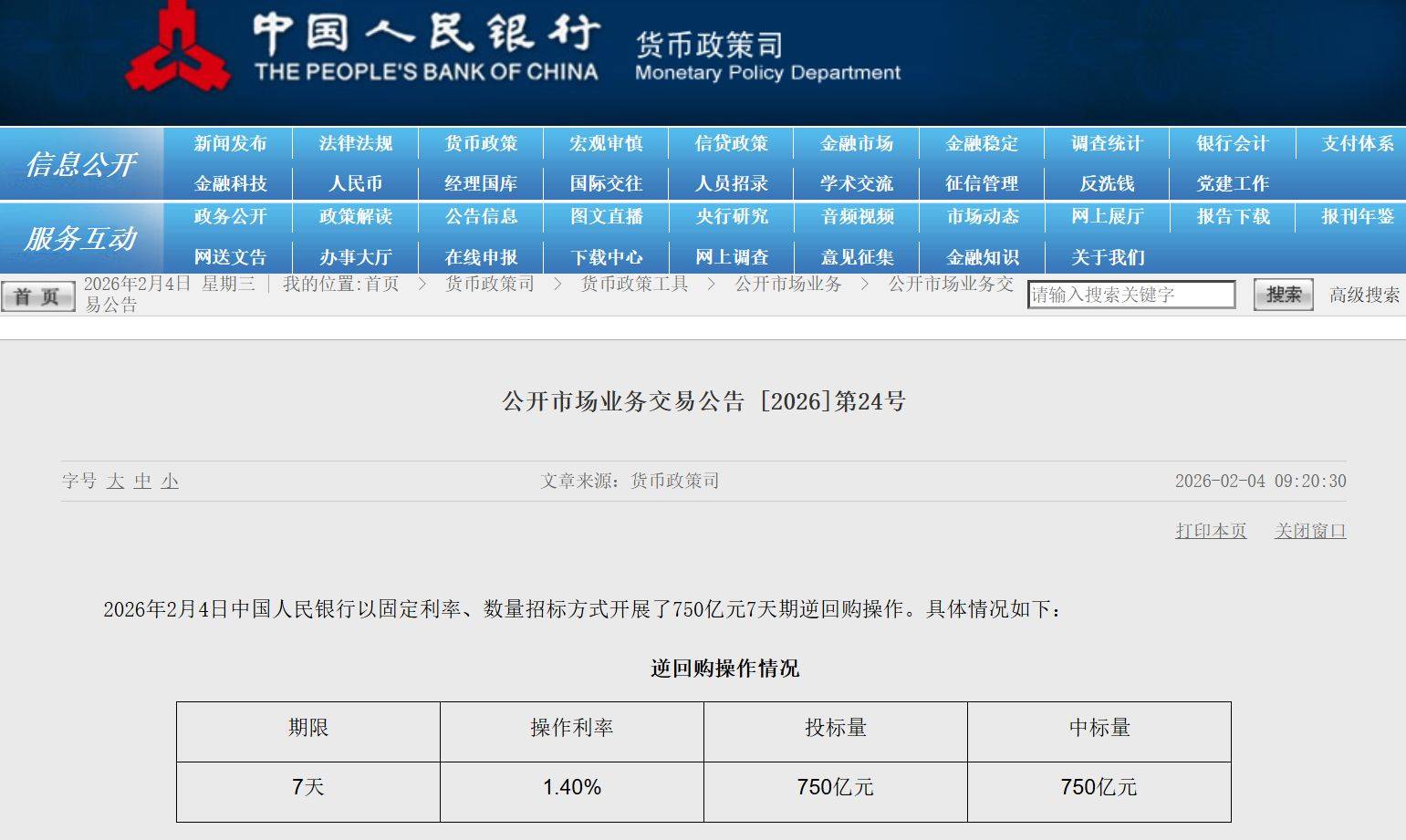
Group 1 - The People's Bank of China (PBOC) conducted a buyout reverse repurchase operation of 800 billion yuan with a term of 3 months to maintain liquidity in the banking system [1] - The buyout reverse repurchase is a new tool introduced by the PBOC in October 2024, allowing for more timely and precise adjustments of market liquidity [1] - On the same day, the PBOC also conducted a 7-day reverse repurchase operation of 75 billion yuan at an interest rate of 1.4%, resulting in a net withdrawal of 202.5 billion yuan after accounting for maturing operations [1] Group 2 - In January, the combined net injection from buyout reverse repos and Medium-term Lending Facility (MLF) reached 1 trillion yuan, indicating a generally stable liquidity environment [6] - The PBOC's meeting emphasized the importance of financial support for consumption expansion and risk mitigation in local government financing platforms, achieving positive results [6][7] - The PBOC plans to enhance financial services for key areas such as technology innovation, small and micro enterprises, and to continue supporting the market-oriented transformation of financing platforms [7]

爬疾牙就是他,把全球吓崩了-央行-加息-货币政策-通胀目标-美联储政策
Sou Hu Cai Jing· 2026-02-04 08:30
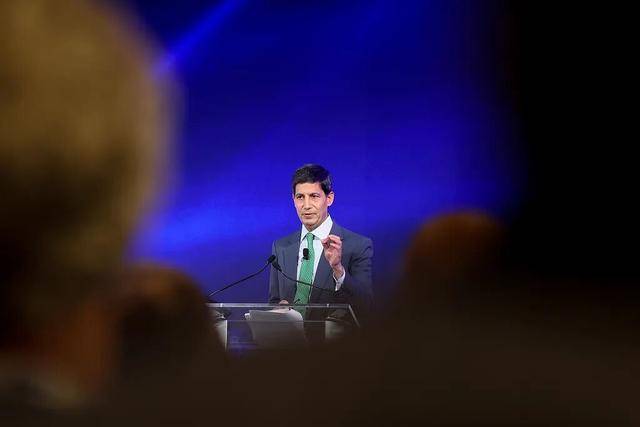
Core Viewpoint - The nomination of Kevin Warsh as the next Federal Reserve Chairman is seen as a significant move that could "re-anchor the credibility of the Federal Reserve" and has strong implications for gold and silver markets [1]. Group 1: Nomination and Background - Kevin Warsh, former Federal Reserve Governor, has been nominated by President Trump to replace Jerome Powell, whose term ends in May 2026, pending Senate confirmation [1]. - Warsh, aged 55, served as a Federal Reserve Governor from 2006 to 2011 and was involved in the coordination efforts during the 2008 financial crisis [1][3]. - After leaving the Fed, Warsh has been active in academic and policy research, contributing to discussions on monetary policy and central banking [1]. Group 2: Federal Reserve's Role and Independence - The Federal Reserve is crucial in formulating monetary policy, maintaining financial stability, and regulating certain financial institutions, with its decisions impacting U.S. Treasury yields, dollar exchange rates, and stock market expectations [3][4]. - Historically, the Federal Reserve has been viewed as one of the most independent institutions in the U.S. government, designed to minimize political influence on monetary policy [5][6]. Group 3: Market Reactions - Following the announcement of Warsh's nomination, U.S. financial markets reacted negatively, with major stock indices declining between 0.2% and 1%, and bond yields rising, indicating a reassessment of future monetary policy [4][6]. - The simultaneous movement in stock and bond markets was attributed to investor recalibration of policy expectations rather than new macroeconomic data [4]. Group 4: Challenges to Independence - The Federal Reserve's independence is under unprecedented pressure, particularly following the COVID-19 pandemic, which led to significant asset purchases and a substantial increase in its balance sheet [5][6]. - The blurred lines between monetary and fiscal policy have raised questions about the Fed's technical independence amid rising public and political scrutiny [5][6]. Group 5: Policy Implications - The ongoing debates surrounding interest rates, inflation control, and trade policies highlight the challenges faced by the Federal Reserve, especially under the Trump administration [6][7]. - Warsh's approach to monetary policy is expected to emphasize credibility, discipline, and clear boundaries, contrasting with Powell's more pragmatic style [10][11]. - The effectiveness of Warsh's proposed monetary policy framework, which focuses on institutional credibility, will depend on balancing short-term stability with long-term constraints in a complex economic environment [11].
下一轮金融危机,会由沃什引爆吗?
Hua Er Jie Jian Wen· 2026-02-04 07:52
Core Viewpoint - The article discusses the potential implications of Kevin Warsh's appointment as the next Federal Reserve Chair, questioning whether he will adopt a hawkish stance on inflation or align with political pressures from Trump [1][2]. Group 1: Warsh's Economic Philosophy - Warsh is characterized as a typical "hard currency" central banker, emphasizing the importance of the Federal Reserve's independence and the dangers of excessive monetary policy intervention [3]. - In a 2010 speech, Warsh outlined four key points regarding the Fed's responsibilities, including the need to resist becoming the ultimate rescuer and the importance of maintaining a reputation for historical significance rather than political expediency [3]. - His recent criticisms of the Fed's performance suggest a continuity of his hardline stance, particularly regarding the need for price stability and the dangers of fiscal dominance over monetary policy [4]. Group 2: Political Dynamics and Implications - The article raises concerns about Warsh's potential to act as a political tool, shifting his stance on monetary policy based on the ruling party, which could lead to unpredictable economic risks [2]. - Trump's choice of Warsh, despite his own fiscal dominance, suggests a complex relationship where Warsh's criticisms of the Fed's expansion may align with Trump's agenda [5][6]. - The potential for Warsh to adopt a more lenient view on inflation due to technological advancements raises questions about the risks associated with such a shift, especially given the current economic context of high fiscal deficits [6]. Group 3: Risks and Future Outlook - Concerns persist regarding Warsh's willingness to defend Trump's policies, which may lead to a scenario where fiscal expansion and deregulation undermine monetary discipline, potentially sowing the seeds for a financial crisis [8]. - The article warns that the combination of short-term political considerations and long-term economic stability could heighten systemic risks within the financial system [9]. - The need for a Federal Reserve Chair who can resist political pressures is emphasized, with the current chair, Powell, being recognized for his ability to maintain independence [9].
铝现货市场成交清淡
Hua Tai Qi Huo· 2026-02-04 07:49
新能源及有色金属日报 | 2026-02-04 铝现货市场成交清淡 重要数据 铝现货方面:SMM数据,华东A00铝价23290元/吨,较上一交易日变化-410元/吨,华东铝现货升贴水-220元/ 吨,较上一交易日变化0元/吨;中原A00铝价23160元/吨,现货升贴水较上一交易日变化40元/吨至-350元/吨; 佛山A00铝价录23310元/吨,较上一交易日变化-400元/吨,铝现货升贴水较上一交易日变化10元/吨至-200元/ 吨。 铝期货方面:2026-02-03日沪铝主力合约开于23435元/吨,收于23810元/吨,较上一交易日变化-230元/吨, 最高价达23930元/吨,最低价达到23140元/吨。全天交易日成交763560手,全天交易日持仓226641手。 库存方面,截止2026-02-03,SMM统计国内电解铝锭社会库存81.7万吨,较上一期变化3.5万吨,仓单库存150712 吨,较上一交易日变化253吨,LME铝库存495175吨,较上一交易日变化-2000吨。 氧化铝现货价格:2026-02-03SMM氧化铝山西价格录得2610元/吨,山东价格录得2555元/吨,河南价格录得 2635元 ...
【UNFX财经事件】缩表不等于收紧 沃什政策组合引发金融条件再评估
Sou Hu Cai Jing· 2026-02-04 03:41
Group 1 - Kevin Warsh's nomination as the next Federal Reserve Chair has intensified discussions around future monetary policy paths, emphasizing a structural difference in his approach compared to traditional "hawkish" views [1] - Warsh advocates for reducing the Fed's balance sheet and decreasing direct intervention in financial markets while simultaneously promoting policies that lower overall financing costs, reshaping market perceptions of financial conditions and asset pricing [1][2] - The combination of Warsh's approach with Treasury Secretary Becerra's emphasis on predictable fiscal policy creates conditions for informal coordination between monetary and fiscal policies, potentially improving market perceptions of liquidity and supply [2] Group 2 - Warsh's inclination towards lowering interest rates may provide support for the front end of the yield curve, while stable expectations for Treasury supply could lead to reduced volatility in long-term rates [3] - The shift in responsibility from the Fed to fiscal and regulatory systems may allow for adjustments in the strict constraints on bank reserves and high-quality liquid assets, enhancing market depth and supporting Treasury prices [3] - The precious metals market is experiencing significant price volatility, with gold and silver showing increased instability reminiscent of the 2008 financial crisis, indicating a new phase of price fluctuations [4] Group 3 - Recent policy uncertainties have marginally eased, with the extension of the African trade tax exemption until the end of 2026 providing temporary certainty for related countries and U.S. businesses, stabilizing market expectations for global trade [5] - Despite short-term market volatility, the core support for the gold market remains intact, driven by ongoing demand for hedging in global asset allocation and the accumulation of monetary policy uncertainties [5] - The extreme fluctuations in gold prices are viewed as part of a structural adjustment rather than a trend reversal, with market focus shifting from short-term movements to a longer-term risk framework [5]
央行加量续作3个月期买断式逆回购
Sou Hu Cai Jing· 2026-02-04 03:31
Core Viewpoint - The People's Bank of China (PBOC) announced an 800 billion yuan reverse repurchase operation to maintain liquidity in the banking system, marking a significant move to support monetary policy and stabilize the financial environment ahead of the holiday season [1] Group 1: Monetary Policy Actions - The PBOC will conduct a fixed-quantity, interest-rate tendering, multi-price bidding reverse repurchase operation of 800 billion yuan with a term of 3 months (91 days) [1] - In February, 700 billion yuan of 3-month reverse repos are set to mature, and the new operation will increase the total for the month by 100 billion yuan, indicating a resumption of increased reverse repos after three months [1] Group 2: Market Implications - The injection of medium-term liquidity through reverse repos is aimed at stabilizing the funding environment before the holiday, supporting government bond issuance, and encouraging financial institutions to increase credit supply [1] - The continuation of increased reverse repos suggests a reduced likelihood of a reserve requirement ratio (RRR) cut in the near term, as the PBOC is currently in an observation phase following the introduction of structural policies on January 15 [1] - The PBOC is expected to continue using medium-term lending facilities (MLF) and reverse repos to inject liquidity into the market, potentially increasing the scale of upcoming MLF and reverse repo operations [1]
分析师:货币政策失误或致美元贬值 收益率曲线变陡凸显通胀失控风险
Sou Hu Cai Jing· 2026-02-04 03:24
Core Viewpoint - Lazard's CEO Peter Orszag suggests that the Federal Reserve may have made a mistake by lowering interest rates at the end of last year, as inflation could unexpectedly rise this year despite market perceptions of a decline [1] Economic Outlook - Orszag anticipates that artificial intelligence and high-income consumers could boost U.S. economic growth, describing this growth as "fragile yet strong" [1] - He emphasizes that the full impact of tariffs has yet to be realized, which could further increase inflation [1] Federal Reserve Position - Orszag believes the Federal Reserve is behind the curve, stating that the rate cut at the end of last year was unwarranted [1] - He warns that if inflation rises as he predicts, it could lead to further depreciation of the dollar and a steeper yield curve [1]