
营商环境

Search documents
【风物郑州】此地何以郑与重
Zheng Zhou Ri Bao· 2025-07-24 01:39
Core Viewpoint - The article highlights the historical and cultural significance of Xinzheng, tracing its development from ancient civilization to a modern economic hub, emphasizing its rich heritage and contemporary growth. Historical Significance - Xinzheng is recognized as the birthplace of the Yellow Emperor, a key figure in Chinese civilization, and has been a center of cultural and political importance since ancient times [4][6][7]. - The region has a continuous history of over 5000 years, with significant archaeological findings from the Peili Gang culture and the establishment of various dynasties [5][6][7]. Economic Development - Xinzheng has transformed from an agricultural county to a strong economic city, benefiting from infrastructure developments such as the opening of the Zhengzhou International Airport and the establishment of a logistics hub [8][10]. - The city has a GDP target of 953.6 billion yuan for 2024, with six core economic indicators leading in Henan province [11]. Cultural Heritage - The city hosts numerous cultural events, such as the annual ancestor worship ceremony, which connects the local community with their historical roots [7][12]. - Xinzheng's cultural legacy is preserved through various heritage sites and modern educational institutions, fostering a blend of tradition and innovation [12][14]. Modern Industry - Xinzheng is a significant player in the food industry, producing 20% of the country's instant noodles and 25% of the market share for jujube products [14]. - The city is focusing on developing a modern industrial system centered around food production, smart manufacturing, and biomedicine, aiming for substantial economic growth [14].

清风为伴产业兴丨跟进监督纾困解难
Zhong Yang Ji Wei Guo Jia Jian Wei Wang Zhan· 2025-07-23 23:43
此前,崇州市纪委监委在监督走访中发现怀远镇某家具企业办理营业执照时遭遇吃拿卡要问题,随即展 开调查。经查,该镇时任副镇长陈某利用审批企业营业执照及增项的职务便利,向企业经营者索贿。最 终,陈某受到开除党籍、开除公职处分,并被判处有期徒刑四年十个月,违法所得予以收缴。 "我们以此案为契机,深挖问题根源,着眼标本兼治,督促责任部门举一反三,统一同类业务办理标 准,优化服务流程,着力实现'解决一个问题、规范一类事项、优化一片环境'的目标。"崇州市纪委监 委有关负责同志介绍,去年以来,该市纪委监委已推动解决相关问题52个,严肃查处破坏营商环境问题 12人。 如今,崇州家居产业正处于从"制造"迈向"智造"的新赛道。在崇州市纪委监委监督推动下,该市先后出 台《崇州市支持主导产业高质量发展十条政策》《崇州市实施智能家居产业消费品工业"三品"战略示范 行动方案(2024-2027)》等,推动智能家居产业向高端化、定制化和绿色化转型。(通讯员 赵婷) 走进四川省崇州市廖家镇的龙马艺雕厂,木料的香气扑鼻而来,摆满展厅的精致家具吸引了不少客商驻 足欣赏。 展厅内,非物质文化遗产"廖家木雕"第五代传承人陈冬林向前来走访的崇州市纪委监 ...
宝安“五虎上将”跻身《财富》中国500强
Nan Fang Du Shi Bao· 2025-07-23 23:08
Core Insights - The annual Fortune China 500 list reveals a shift in competition among top companies from scale to "value" amidst a macroeconomic backdrop seeking new balance, with total revenue slightly adjusted and total profit rising [2] Group 1: Company Performance - SF Express ranked 93rd, leading the Bao'an group, with a remarkable financial performance, achieving a net profit exceeding 10.17 billion yuan for the first time [3] - Luxshare Precision ranked 103rd, transitioning from consumer electronics to the smart automotive sector, with a 50% year-on-year growth in automotive interconnect products [3] - Aoxin Energy, ranked 299th, saw a 107% surge in energy storage system installations, establishing itself as a significant player in the energy storage sector [4] - Grinmei, ranked 411th, is a leader in the global supply of ternary precursor materials for power batteries, converting waste batteries into key materials for electric vehicles [4] - Pengding Holdings, maintaining its position as the largest PCB manufacturer globally, ranked 397th, showcasing steady growth and solidifying its role in high-end manufacturing [4] Group 2: Regional Development - Bao'an's industrial land preparation ranked first in the city over the past three years, supplying 31 plots totaling 934,000 square meters, supporting 35 key enterprises and potentially increasing output by over 200 billion yuan [6] - The "industrial building up" model has opened new avenues for industrial development, enhancing land utilization efficiency [6] - Bao'an has developed a highly collaborative industrial ecosystem in electronics, intelligent equipment, and new materials, enabling efficient manufacturing processes within a one-hour production circle [7] - The district has implemented a "three ones" enterprise service system, achieving a 98.4% completion rate for 2,563 collected enterprise requests and facilitating approximately 47.43 billion yuan in financing [7][8]





赵一德在省发展改革委调研并主持召开座谈会时强调加强战略谋划 抓好经济调度在推动稳增长和高质量发展中展现更大作为
Shan Xi Ri Bao· 2025-07-23 00:06
7月22日,省委书记赵一德到省发展改革委调研"十五五"规划编制、学习教育等工作并主持召开座 谈会。他强调,要深入学习贯彻习近平经济思想和习近平总书记历次来陕考察重要讲话重要指示精神, 锚定高质量发展首要任务,加强战略谋划,抓好经济调度,全力以赴稳增长、兴产业、扩投资、惠民 生、优环境、防风险,为谱写陕西新篇、争做西部示范贡献更多发改力量。 随后,赵一德主持召开座谈会,听取省发展改革委"十五五"规划编制、学习教育、问题整改、干部 教育培训等情况汇报。赵一德强调,要坚持目标导向和问题导向相统一,深入调研、开门问策,精心谋 划"十五五"时期全省发展新质生产力、构建现代化产业体系、促进城乡区域协调发展、扩大高水平对外 开放、加强生态环境保护、推进文化强省建设、促进共同富裕等重点任务,以高水平规划引领高质量发 展。要围绕稳就业稳企业稳市场稳预期、深化开展"三个年"活动、大力发展县域经济民营经济开放型经 济数字经济等工作,深入分析研判,强化工作举措,更好发挥参谋助手作用。要增强谋划和争取项目的 主动性,做好项目全生命周期管理服务,以项目建设扩大有效投资。要持之以恒打造一流营商环境,多 措并举促进民营经济持续健康发展。要把 ...

西安税务:让外来企业发展“不见外”
Sou Hu Cai Jing· 2025-07-22 10:10
统计数据显示,2024年陕西省新设外商投资企业521家,同比增长27.7%;截至今年5月底,欧盟国家累 计在西安设立外资企业259家,法国、德国等为主要投资国,累计投资企业达111家,截至目前,已有超 过200家世界500强企业在西安投资兴业。 凭借良好的营商环境、广阔的内需市场和完备的产业配套体系,西安让更多优质企业原意来、留得件, 长得壮。西安市税务部门依法依机落实税费政策,不断完善税收服务举措,为外来企业发展营造良好税 收环境。 "开业第一课"让企业开业无忧 今年4日,西安荟聚购物中心迎来了它的周岁生日,一场千人共享生日蛋糕活动让这里热闹非凡。西安 荟聚购物中心是英格卡集团在华布局的第9家商业体,总投资43亿元,是陕西目前最大的外商投资商业 项目,也是西安市民社交圈里的"打卡顶流"。 "在西安发展的这些年,我深刻感受到这里良好的营商环境,比如税务部门的'项目长'制,就让我们在 推进重大扩产项目时备感安心。"中德合资企业采埃孚东方汽车安全技术(西安)有限公司财务总监孟鑫 对记者说。去年7月,公司计划为气体发生器扩能及研发中心项目新增两条生产线,预计投资2150万欧 元,但由于项目体量大、涉及环节多,复杂的 ...
问策|深圳如何持续擦亮“民营经济第一城”招牌?
Sou Hu Cai Jing· 2025-07-22 05:26
Core Viewpoint - The private economy in Shenzhen is a vital force in advancing China's modernization and has become a significant symbol of the city's economic development, contributing substantially to various economic metrics [3][7]. Economic Contribution - As of 2024, Shenzhen has a total of 4.404 million operating entities, with a growth rate of 4.2%, and over 2.6 million private enterprises, making it the leading city in private economic contributions [7]. - The private economy exhibits a "456799" phenomenon, contributing approximately 40% of fixed asset investment, over 50% of tax revenue, nearly 60% of added value, over 70% of import and export volume, and over 90% of employment and business entities [7]. Innovation and R&D - Innovation is the core strength of Shenzhen's private economy, with total R&D investment reaching 223.661 billion yuan in 2024, accounting for 6.46% of GDP, and 93.3% of this investment coming from enterprises [8]. - Shenzhen boasts over 25,000 national high-tech enterprises and 10,800 specialized and innovative enterprises, forming a vibrant innovation ecosystem alongside major companies like Ping An and Huawei [8]. Industrial Strength - Shenzhen's private enterprises dominate 37 out of 41 industrial categories, with over 14,000 large-scale industrial companies, maintaining its status as the "Industrial First City" in China for two consecutive years [9]. - The city has transformed from a follower to a leader in various niche markets, achieving significant growth in the electronic information industry and establishing a "one-hour industrial circle" in the Greater Bay Area for efficient supply chain management [9]. Business Longevity and Growth - The average lifespan of a private enterprise in Shenzhen is approximately 6 years, significantly higher than the national average of 3.7 years, with 17% of enterprises surviving over 10 years [11]. - The time taken for a private enterprise to grow into a listed company on the Sci-Tech Innovation Board is an average of 13.35 years, which is 1.05 years faster than the national average [11]. Challenges and Solutions - Despite the robust growth, Shenzhen's private economy faces challenges such as financing difficulties for small and medium-sized enterprises (SMEs), high operational costs, and talent competition due to high living costs [12][17]. - The government is actively optimizing the business environment, reducing burdens on enterprises by over 150 billion yuan in 2024, and implementing various reforms to enhance market conditions [15][16]. Policy Innovations - The introduction of the "Private Economy Promotion Law" aims to provide comprehensive legal support for private enterprises, addressing market access barriers and improving regulatory frameworks [16]. - Shenzhen is enhancing its financial services by optimizing bank assessment mechanisms and promoting innovative financing products to support SMEs [16][22]. Talent and Resource Management - The city is focusing on improving land allocation, talent policies, and easing residency restrictions to foster a competitive environment and facilitate talent mobility within the Greater Bay Area [17]. - Learning from other cities like Hangzhou, Shenzhen aims to enhance collaboration between large enterprises and SMEs, providing resources and support for startups [18][19].

丽水龙泉“真金白银”激发企业创新力
Sou Hu Cai Jing· 2025-07-22 02:50
Core Viewpoint - The article highlights the positive impact of government financial support and policy optimization on local businesses in Longquan City, enhancing their confidence and encouraging expansion into new markets, particularly in the green and renewable sectors [1][2]. Group 1: Financial Support and Impact - Longquan City has disbursed 127 million yuan in enterprise subsidy funds through the "Longcaitong" application, benefiting 1,298 enterprises across various sectors including industry, technology, trade, and tourism [1]. - A specific cable company received a 200,000 yuan reward for accelerating its transition to a larger scale, with expectations to exceed 100 million yuan in output this year [1]. Group 2: Policy Optimization and Implementation - The city is focused on improving the execution of policies by simplifying approval processes and enhancing inter-departmental coordination, ensuring timely delivery of support to enterprises [2]. - The revised fiscal support policy for industrial enterprises aims to promote high-quality green development and the cultivation of characteristic industrial chains [1][2]. Group 3: Case Studies of Local Enterprises - A bamboo wood company in Longquan's Anren Town received 260,000 yuan in support for upgrading its operations, which will be used for new product development and expanding its product line [2]. - The company plans to shift its sales strategy to target both domestic and international markets, aiming to enhance overall sales performance [2].
2025苏州企业家日座谈会举行
Su Zhou Ri Bao· 2025-07-22 00:35
Core Insights - The "2025 Suzhou Entrepreneur Day" series of activities has officially launched, focusing on enhancing communication between government and enterprises [1] - The event highlighted the importance of private enterprises in Suzhou's development, with local government expressing commitment to support and create a favorable business environment [1] Group 1: Government and Enterprise Interaction - The Suzhou government, represented by Mayor Wu Qingwen, engaged with representatives from ten companies, discussing challenges in innovation, R&D, and intellectual property protection [1] - Mayor Wu emphasized the role of private enterprises as a crucial resource for the city and reiterated the government's commitment to being a strong support for business development [1] Group 2: Activities and Initiatives - The event included the release of the "Top 100 Private Enterprises in Suzhou 2025" and "Top 100 R&D Investment Private Enterprises in Suzhou 2025" lists [2] - A total of 46 activities will be conducted from July to August, including "New Navigation" public courses and "Safety Production" government-enterprise exchange meetings [2]
链博会火热收官!超40位500强跨国企业领导人出席,为全球供应链传递多重确定性
Hua Xia Shi Bao· 2025-07-21 14:57
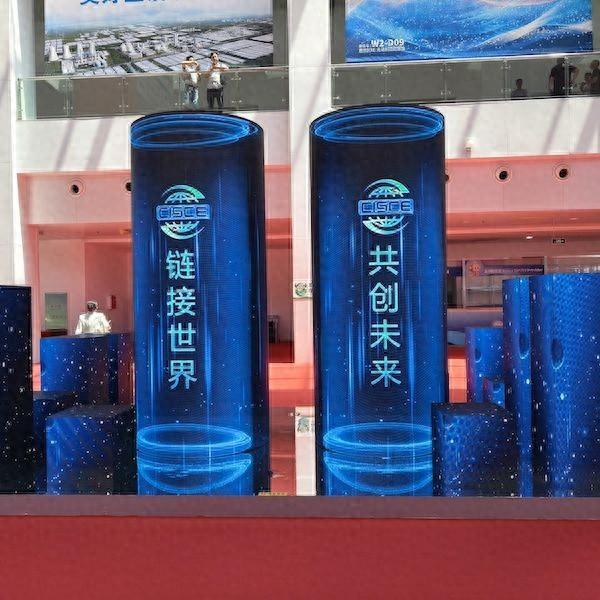
Group 1 - The third China International Supply Chain Promotion Expo was held from July 16 to 20 in Beijing, attracting 1,200 participating companies and institutions, with over 210,000 online and offline attendees, a 5% increase from the previous year [2] - A total of 15,200 new products, technologies, and services were launched at the expo, marking a 67% increase compared to the last event, with 55 items released for the first time [2] - The proportion of foreign exhibitors has steadily increased, reaching 35% this year, with over 65% of exhibitors being Fortune 500 companies [2][4] Group 2 - The presence of U.S. companies, including Nvidia, Apple, and Tesla, was a major highlight, with a 15% increase in the number of U.S. exhibitors compared to the previous year [3][4] - Cargill emphasized the importance of the Chinese market, which accounts for 17% of the global population, and highlighted the growing demand for diverse, nutritious, and environmentally friendly food products [4] - The expo facilitated over 6,000 cooperation agreements and intentions, showcasing the potential for international collaboration in supply chains [2] Group 3 - The event featured 70 meetings and activities, with over 14,000 participants, including industry leaders and international organization representatives [6] - High-level executives from participating companies actively engaged in networking and collaboration, enhancing the event's effectiveness in connecting research outcomes with market needs [6][7] - PwC highlighted the profound changes in global manufacturing and supply chains, emphasizing the need for transformation and risk management in the manufacturing sector [7]


舟山市围绕大宗商品资源配置枢纽建设作出最新部署
Qi Huo Ri Bao· 2025-07-20 23:17
Core Viewpoint - Zhoushan is emerging as a significant hub for the commodity trading industry, leveraging national strategies to enhance its oil and gas industry and expand into various commodities, marking a historic opportunity for open development [1][2]. Group 1: Development of Commodity Trading Center - The establishment of the "Zhejiang International Commodity Trading Center" aims to expand the oil and gas industry experience into other commodities such as iron ore, non-ferrous metals, and agricultural products [1]. - The Zhoushan government has outlined a clear action plan to support the construction of the commodity trading center, focusing on enhancing trading platform capabilities and price influence [1][4]. - The integration of various trading platforms under the Zhejiang International Commodity Trading Center is a crucial step towards building a modern commodity circulation system in Zhejiang Province [2]. Group 2: Price Index and Market Influence - "Zhoushan Price" has become a significant price index for low-sulfur fuel oil, breaking the monopoly of overseas markets and enhancing its global market presence [3]. - The Zhejiang International Oil and Gas Trading Center has launched several price guidance products and indices to improve the influence of the Zhoushan Price, including the "Zhoushan Biodiesel Storage Comprehensive Price" [3]. - The trading center has facilitated transactions worth approximately 88.3 million yuan through its price window system, indicating a growing market activity [3]. Group 3: Policy Support and Future Plans - The Zhoushan government has been actively developing policies to support the integration of commodity trading and has proposed various measures to enhance the trading center's capabilities [4]. - Future plans include further integration of trading platforms, enhancing trading varieties, and optimizing trading models to increase transaction scale and price influence [4]. - The government aims to create a better business environment to attract various market participants and promote trade aggregation [4].