
资产配置

Search documents
基金经理刘少军|为什么说资源品是2026年资产配置的重要选项?
Sou Hu Cai Jing· 2025-12-22 06:31
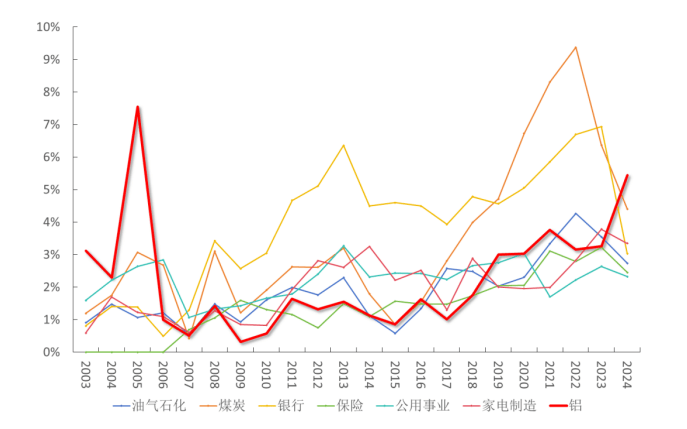
Core Viewpoint - The capital market is navigating through a complex macro landscape, with resource commodities emerging as a central focus for asset allocation due to global shifts, industrial cycles, and domestic policy directions [1] Group 1: Equity Market Outlook - The A-share market is expected to exhibit a more balanced style in the coming year, with value sectors likely to be revalued due to attractive valuations and high dividend strategies amid economic recovery [1][2] - The technology growth sector, while still a core direction for long-term industrial upgrades, is undergoing significant changes, shifting from broad speculation on frontier technologies to a focus on performance verification [1][2] Group 2: Global Perspective on Resource Commodities - The investment logic for resource commodities is rooted in structural changes driven by global macro shifts, highlighting their "scarcity" and "inflation resilience" [3] - Supply constraints and rising costs are evident as high-quality mining sources deplete, leading to increased extraction costs for key industrial metals like copper, aluminum, zinc, lead, and nickel [3] - Demand remains robust, driven by global energy transitions and re-industrialization, with strategic importance placed on resources like copper and aluminum, which are now considered as critical as "oil in the new era" [3] Group 3: Domestic Perspective on Cyclical Resource Commodities - The domestic cyclical resource sector presents unique investment opportunities due to improved supply-demand dynamics, leading to enhanced profitability and dividend attractiveness [5] - Capital expenditure has peaked in many domestic resource sectors, with limited new supply, while policies promoting "de-involution" and "unified market" are optimizing industry structures and stabilizing prices [5][6] - The aluminum industry, for instance, is experiencing a tight supply-demand balance, allowing companies to maintain strong profitability and cash flow, thus supporting high dividend yields [6] Group 4: Investment Fund Focus - The TaiKang Resource Select Fund aims to capitalize on historical opportunities in the resource sector, focusing on a wide range of resource-related industries [8][9] - The fund is positioned as a cyclical growth fund, targeting high elasticity sub-sectors and leveraging macro research to identify structural opportunities within the resource commodities market [10][12]

E目了然 | 指数化投资大时代来临,如何看待ETF的崛起?
Sou Hu Cai Jing· 2025-12-22 06:25
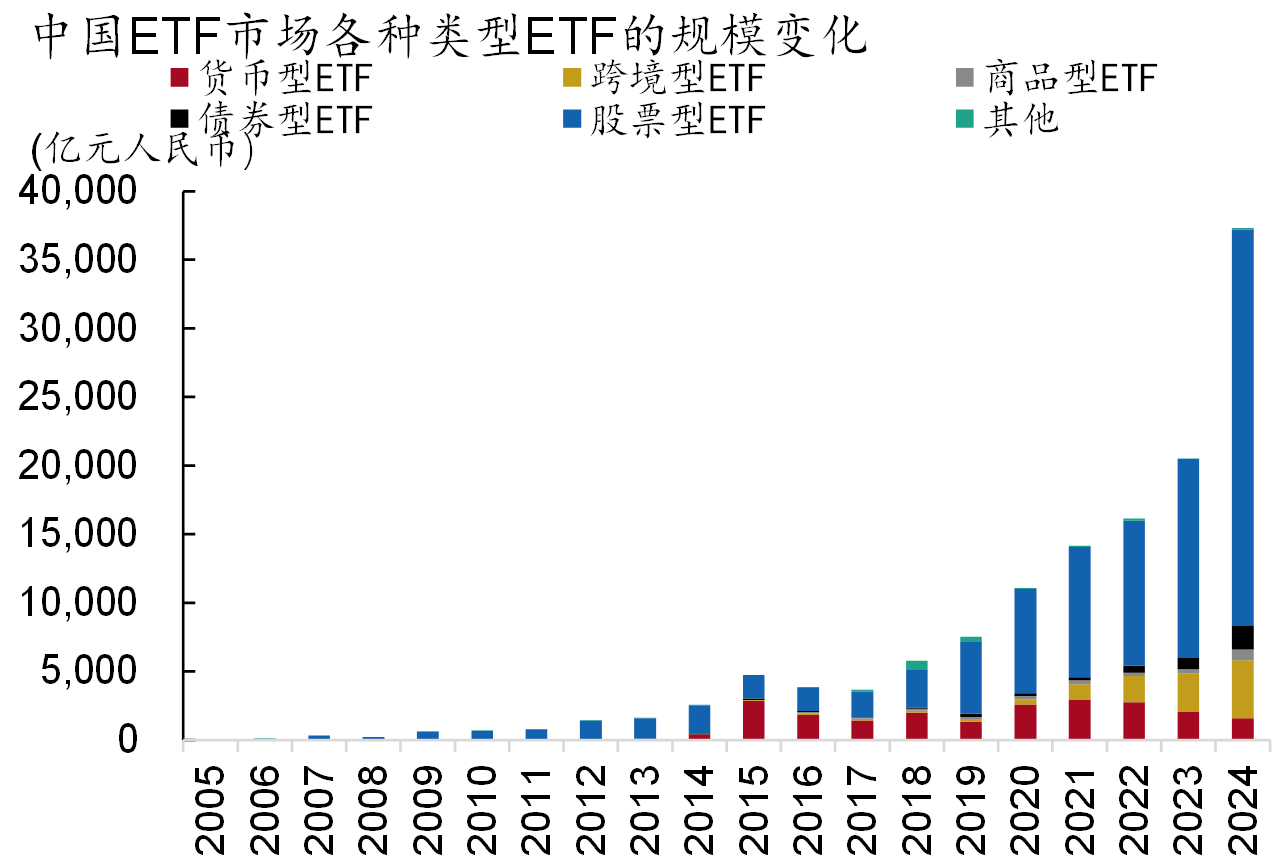
Core Insights - The article highlights the rapid growth and significance of Exchange-Traded Funds (ETFs) in global financial markets, particularly in China, where they are becoming a crucial tool for asset allocation [1][4]. Global ETF Market Growth - The global ETF market has seen continuous high growth, achieving an annualized compound growth rate of over 18% since 2010, with ETFs now accounting for over 15% of the total public fund market [2]. - Factors driving this growth include increasing demand for diversified asset allocation, regulatory encouragement for transparent and low-cost investment tools, and superior long-term performance compared to actively managed funds [2][3]. China's ETF Market Development - China's ETF market began in 2004 and has experienced a remarkable annualized compound growth rate of approximately 33% over the past eleven years, significantly outpacing the global average [5]. - As of mid-2025, ETFs represent about 12% of the total public fund market in China, while stock ETFs account for over 50% of all equity funds, indicating strong penetration in equity investment [8]. Future Prospects for ETFs - Institutional investors hold a significant portion of ETFs, with a holding ratio of 73.86%, which is much higher than that of actively managed funds [10]. - The demand for ETFs is expected to continue growing due to factors such as the need for stable returns in a declining interest rate environment, ongoing product innovation, and supportive policies for market reform and opening [10]. - Investors are encouraged to consider ETFs that align with market trends and offer liquidity and allocation value, such as the 泰康中证A500 ETF and 泰康中证红利低波动 ETF [11].
十年国债ETF(511260)近20日净流入超6.2亿元,政策层面持续释放利好
Sou Hu Cai Jing· 2025-12-22 05:45
每日经济新闻 十年国债ETF(511260)跟踪上证10年期国债指数,选取剩余期限7到10年且在上交所挂牌的国债作为 样本,久期恒定。从过往表现来看,十年国债ETF(511260)成立以来净值屡创新高,历史业绩持续稳 健。根据基金定期报告,截止三季度末,近1年回报率达4.17%,近3年回报率达14.04%,近5年回报率 达23.39%,成立至今累计回报率达35.77%。值得关注的是,十年国债ETF成立以来经历了2018-2024年 共计7个完整自然年度,均保持每年正收益,有望成为穿越牛熊周期的资产配置利器。 风险提示:数据来源基金定期报告、wind,相关业绩经托管行核对,过往表现不代表未来。十年国债 ETF成立于2017年8月4日,2017年-2025年上半年净值增长率/业绩比较基准为:-1.55%/-1.01%; 7.6%/8.47%;2.49%/4.81%;1.92%/2.09%;5.19%/5.78%;2.52%/2.87%;4.37%/4.83%;9.02%/8.09%; 0.67%/-0.24%。提及个股仅用于行业事件分析,不构成任何个股推荐或投资建议。指数等短期涨跌仅供 参考,不代表其未来表现,亦 ...
富国基金王保合:适配风险偏好,指数基金的科学配置之道
Cai Jing Wang· 2025-12-22 05:21
Core Insights - The article emphasizes the importance of factor-based investing and index funds as essential tools for asset allocation and dynamic adjustment in a complex market environment [1] Group 1: Index Fund Market Development - The domestic ETF market has experienced explosive growth, with passive index products surpassing active fund sizes for the first time in 2024, reaching a scale of 4.5 trillion, significantly higher than active funds even after excluding the 1.2 trillion held by state-owned entities [2] - There are over 1,500 ETFs available in the market, covering a wide range of categories, with TMT (Technology, Media, Telecommunications) accounting for 37% and financials for 15% [2] - ETFs provide diverse investment options, allowing investors to access overseas markets without QDII and meet asset allocation needs through gold ETFs [2] Group 2: Aggressive Investor Strategies - For aggressive investors, equity assets are expected to outperform in 2026, supported by three key factors: recovery in fixed asset investment, stabilization of the real estate market, and robust export performance [3][4] - The A-share market is characterized by structural valuation, with the CSI 300 index at a 12 times valuation compared to around 30 times for the Nasdaq, indicating significant value [4] - The investment strategy suggests a focus on technology sectors first, followed by cyclical sectors, with an emphasis on areas like overseas computing power and AI applications [4] Group 3: Conservative Investor Strategies - For conservative investors, a multi-asset and multi-strategy approach is recommended for long-term goals, emphasizing balanced allocation across different asset classes to mitigate risks [6] - The suggested asset allocation hierarchy is equities > commodities > bonds, with adjustments based on market conditions to optimize risk-return profiles [6] - The current market offers a variety of low-correlation assets, such as A-shares, Hong Kong stocks, U.S. stocks, bonds, and gold, providing a solid foundation for multi-asset allocation [6]
华鑫信托坚守金融为民初心 锻造一流财富管理品牌
Jin Rong Shi Bao· 2025-12-22 03:49
华鑫信托胸怀"国之大者",深刻践行金融政治性、人民性,将财富管理业务融入服务国家战略、推动高质量发展、助力共同富裕的大局中,通过构建体 系化、专业化、生态化的财富管理体系,成为值得客户长期信赖的财富伙伴,矢志书写"央企信托、财富为民"的时代篇章。 升级战略定位 华鑫信托坚持以客户为中心,推动财富管理从单一金融产品供给向"资产配置+综合服务"转型,积极拓展家族信托、家庭服务信托、其他个人财富管理 信托、特殊需要信托等创新业务,着力打造以信托账户为载体的综合生态体系。 针对普惠性财富管理需求,华鑫信托创新推出"安鑫"系列家庭服务信托,依托标准化、线上化的"一账户多功能"服务模式,有效满足中等收入家庭在财 富规划、风险隔离、养老保障及子女关爱等方面的现实需求,助力信托工具飞入寻常百姓家。 针对高净值客户财富管理需求,华鑫信托2024年5月推出"鑫传"、"鑫合"系列家族信托品牌,截至2025年11月末,公司自主营销管理的财富管理服务信 托,规模突破120亿元人民币,包括家族信托、其他个人财富管理信托、保险金信托等多种类型。 华鑫信托积极践行"金融助善"理念,充分发挥慈善信托架构灵活、运作规范、管理透明等核心优势,助力 ...

QDII基金2025年业绩爆发:17只收益率超70%,2026年该怎么投?
Sou Hu Cai Jing· 2025-12-22 03:17
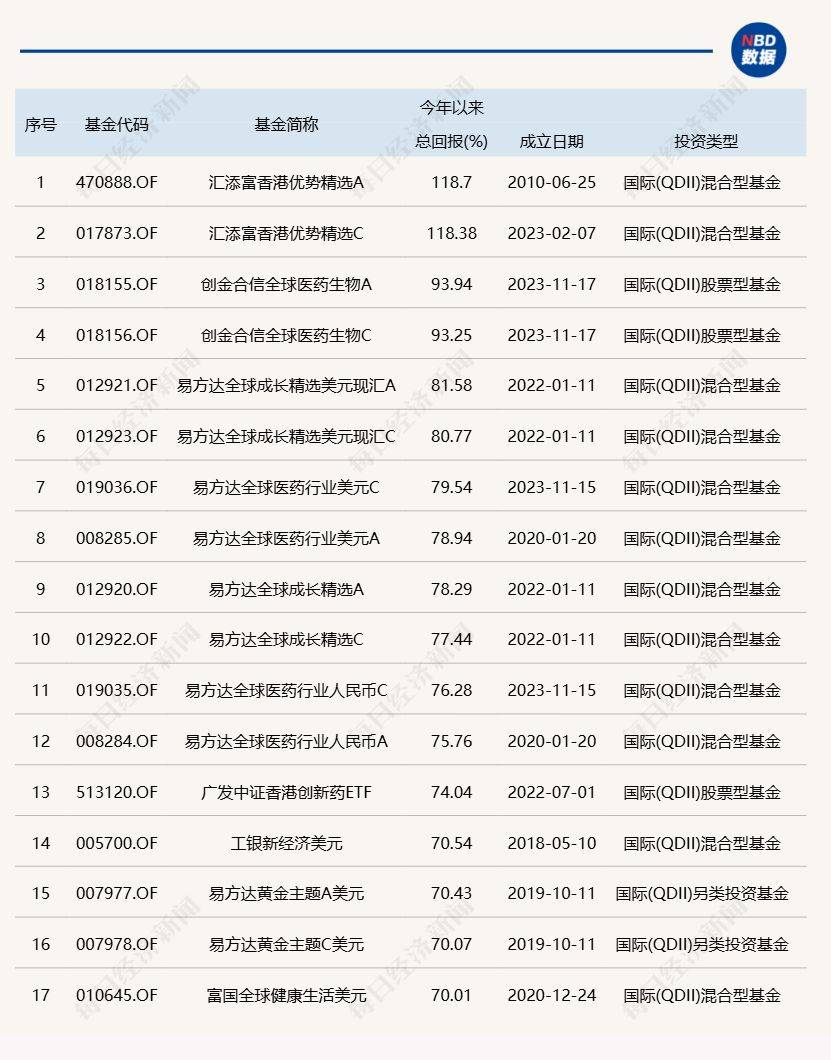
Core Viewpoint - QDII funds have emerged as a significant channel for investors to participate in global wealth growth amid increasing volatility in global capital markets and diversified asset allocation needs [1]. Group 1: 2025 Performance Overview - As of December 18, 2025, the QDII fund market showed a clear trend of "overall improvement with partial differentiation," with most products achieving positive returns [2]. - Over half of the QDII products recorded returns exceeding 15%, with more than 50 products surpassing 50%, and 17 products achieving returns over 70%, with some top products exceeding 100% [2]. - Notable performers include Huatai-PineBridge Hong Kong Advantage Selection A and C classes, with total returns of 118.70% and 118.38% respectively, leading the market [3]. Group 2: 2026 Investment Outlook - The market is optimistic about investment opportunities in QDII funds for 2026, particularly in Hong Kong and U.S. stocks, with a focus on sectors like innovative pharmaceuticals and new consumption [4][5]. - Analysts suggest that the structural trends in the innovative pharmaceutical sector are expected to continue, despite some short-term risks related to high valuations and geopolitical disturbances [5]. - The Hong Kong market is viewed positively due to its expanding asset base and increasing participation from mainland investors, with a notable reduction in the AH premium [5]. Group 3: Investment Strategy for 2026 - Investment strategies for 2026 recommend allocating to broad-based index QDII funds tracking major indices like the Nasdaq 100 and S&P 500, as well as comprehensive index funds covering the Hong Kong market [6]. - Given potential market volatility, a systematic investment approach such as dollar-cost averaging is advised to mitigate risks associated with short-term market fluctuations [7]. - Investors are encouraged to consider the management capabilities of fund managers, the research strength of fund companies, and fee structures when selecting QDII funds to build a diversified portfolio for long-term asset appreciation [7].
中信证券:人民币持续升值预期下资产配置关注三条线索
Zhong Guo Jin Rong Xin Xi Wang· 2025-12-22 02:26
Core Viewpoint - The report from CITIC Securities indicates that factors driving the appreciation of the RMB are increasing, leading to a growing market focus on asset allocation in a continuously appreciating RMB environment [1] Group 1: Industry Configuration - In the context of ongoing RMB appreciation, three driving factors for industry configuration are identified: short-term muscle memory, profit margin changes, and policy changes [2] - Approximately 19% of industries are expected to see profit margin improvements due to RMB appreciation, which will attract investor attention [1] Group 2: Beneficial Industries - Beneficial industries from RMB appreciation can be categorized into four main groups: 1. Upstream resources and raw materials, including steel, non-ferrous metals, petrochemicals, basic chemicals, building materials, and semiconductor materials [2] 2. Domestic consumer goods, primarily in agriculture, light manufacturing, and consumer electronics [2] 3. Service-related sectors, such as utilities, transportation, retail (import-based cross-border e-commerce), and social services [2] 4. Manufacturing equipment, mainly in machinery and semiconductor equipment [2]

一线基金投顾岁末谋新篇:配置走向科学 主线精耕细作
Zhong Guo Zheng Quan Bao· 2025-12-22 01:01
Core Insights - The market is entering the year-end phase, with fund managers preparing for 2026 through systematic adjustments and strategic asset allocation [1][2] - The focus has shifted from simple "stock-bond diversification" to a more scientific and dynamic asset allocation approach that emphasizes risk parity and global perspectives [1][5] - Fund managers are concentrating on three main investment themes: "technological innovation," "anti-involution dividends," and "new consumption recovery" [7][8] Year-End Rebalancing - Fund managers are engaged in structural optimization of investment portfolios, with a focus on long-term strategies rather than short-term rankings [2][3] - Specific actions include increasing exposure to traditional industries at low valuation levels and optimizing fund holdings based on performance and market conditions [2][3] Forward-Looking Strategies - Some institutions are adopting proactive strategies for left-side positioning in anticipation of economic recovery and favorable policies [3][4] - The emphasis is on reducing defensive asset allocations while increasing exposure to innovative technology and strategic assets [3] Dynamic Asset Allocation - The concept of dynamic asset allocation is gaining traction, moving beyond simple diversification to a more nuanced approach that considers macroeconomic cycles and risk management [5][6] - Institutions are developing all-weather strategies tailored to client risk preferences, emphasizing risk parity and multi-asset tactical adjustments [5][6] Investment Themes for 2026 - The investment landscape for 2026 is characterized by a cautious yet optimistic outlook, focusing on technological innovation, cyclical recovery, and consumer spending [7][8] - Specific sectors of interest include AI hardware, semiconductor equipment, and traditional industries benefiting from policy support [7][8] Core-Satellite Strategy - The "core-satellite" strategy is widely adopted among fund managers, with variations in execution based on individual institutional preferences [9] - Emphasis is placed on selecting core funds with strong long-term performance and using satellite funds to enhance returns while managing volatility [9]
中信证券:投资者要逐步适应在一个人民币持续升值的环境下去做资产配置
Xin Lang Cai Jing· 2025-12-22 00:29
Core Viewpoint - The report from CITIC Securities indicates that factors driving the appreciation of the RMB are increasing, leading to heightened market attention. Investors need to gradually adapt their asset allocation strategies in a continuously appreciating RMB environment [1] Group 1: RMB Appreciation Impact - Over the past 20 years, there have been seven cycles of RMB appreciation, and exchange rates are not the decisive factor in industry allocation decisions [1] - Certain industries may perform better during the initial phase of sustained appreciation expectations, suggesting that the market may replicate this "muscle memory" [1] - Approximately 19% of industries are expected to see profit margin improvements due to RMB appreciation, making these sectors increasingly attractive to investors [1] Group 2: Policy Responses and Industry Allocation - Policy responses aimed at curbing rapid unilateral appreciation trends are considered more significant in influencing industry allocation than the appreciation itself [1] - In the context of ongoing RMB appreciation, three key themes for industry allocation are identified: short-term muscle memory-driven performance, profit margin changes, and policy changes [1]
公募新发数量创近4年新高,股基赶超债基站上“C位”
Zheng Quan Shi Bao· 2025-12-22 00:24
Core Insights - The public fund issuance market has seen a significant shift since 2025, with equity funds taking center stage, marking a departure from the previously dominant bond funds [1][4][10] - A total of 1,468 new funds were established in 2025, the highest number in nearly four years, indicating a return of market vitality and a shift towards a more refined approach in fund management [2][3][10] Fund Issuance Trends - The total fundraising scale for new funds in 2025 reached 11,637.62 billion, remaining stable compared to previous years, reflecting a more rational and detailed market issuance rather than reliance on a few blockbuster products [3][10] - The number of new equity funds reached 807, with a fundraising scale of 4,083.62 billion, accounting for 35.96% of the total new fund issuance, the highest proportion in nearly a decade [4][5] Structural Changes in Fund Types - The proportion of bond funds has significantly decreased from 70.19% in 2024 to 41.22% in 2025, indicating a clear shift in market risk appetite [6][10] - Mixed funds saw an increase in issuance to 13.66% (1,551.03 billion), but still far from the peak of 56.58% in 2021, suggesting a preference for clearer investment styles among investors [7][10] Innovation in Fund Products - The market has seen a surge in innovative products, with FOFs (Fund of Funds) growing to 81 new funds and a scale of 810.68 billion, reflecting increasing demand for professional asset allocation [8][10] - Public REITs have also expanded, with 19 new products and 10.5 billion shares issued, providing new channels for investors to participate in physical assets [9][10] - QDII funds have shown a focus on strategy diversity, with recent products covering various international markets, indicating an active global investment approach [10] Future Outlook - The public fund industry is expected to play a more critical role in supporting the transformation of the real economy and meeting the wealth management needs of residents, driven by the clarity of equity investment and the development of diverse tools like FOFs, REITs, and QDIIs [11]