智能家居

Search documents
科沃斯股价下跌1.64% 中报预增57.64%至62.57%
Jin Rong Jie· 2025-08-12 19:36
Group 1 - The core stock price of Ecovacs as of August 12, 2025, is 88.79 yuan, down 1.64% from the previous trading day, with a trading volume of 678 million yuan [1] - The stock price fluctuated between 86.75 yuan and 90.99 yuan, with an amplitude of 4.70% [1] - Ecovacs specializes in the research, design, production, and sales of home service robots, cleaning small appliances, and related components [1] Group 2 - The company forecasts a net profit attributable to shareholders of 960 million to 990 million yuan for the first half of 2025, representing a year-on-year increase of 57.64% to 62.57% [1] - Ecovacs attributes its growth to innovative product combinations, a multi-price range strategy, and a balanced approach to online and offline sales [1] - On August 12, the net outflow of main funds was 37.1271 million yuan, with a cumulative net outflow of 131 million yuan over the past five days [1]

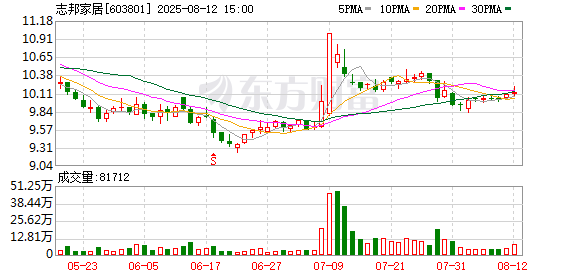
志邦家居:目前已完成定制家居智能化产品的研发及生态平台的建立,今年已陆续在终端门店呈现
Mei Ri Jing Ji Xin Wen· 2025-08-12 10:23
Core Viewpoint - The company is focusing on the development of smart home solutions to meet the demands of health, comfort, and intelligence in home environments, especially in the context of a contracting real estate market [2]. Group 1: Smart Home Positioning - The company has made initial progress in promoting its customized home smart business, which emphasizes scene-based, intelligent, and customized cabinet solutions for a comprehensive home experience [2]. - The smart home business has completed the research and development of customized smart home products and established an ecological platform [2]. Group 2: Future Development Plans - The company plans to continue showcasing its customized smart home products in terminal stores throughout the year [2].


浙江美大涨0.42%,成交额3217.62万元,今日主力净流入-195.32万
Xin Lang Cai Jing· 2025-08-12 07:34
异动分析 高股息精选+电子商务+长三角一体化+家用电器+智能家居 1、浙江美大最近3年的股息率分别为:5.60%,7.42%,4.09% 2、根据公司 2022 年报介绍:公司已在天猫、京东、苏宁易购等大型电商平台开设官方旗舰店,并由专 业电商运营机构运营,同时开设公司官方商城、抖音直卖店并对线下经销商开放线上经销权限,引导经 销商线上线下共赢发展。 3、公司注册地址为浙江省嘉兴市,主营业务为集成灶产品的制造、加工和销售。 来源:新浪证券-红岸工作室 8月12日,浙江美大涨0.42%,成交额3217.62万元,换手率0.86%,总市值46.00亿元。 区间今日近3日近5日近10日近20日主力净流入-195.32万-359.42万-434.09万-200.88万-2289.54万 主力持仓 主力没有控盘,筹码分布非常分散,主力成交额767.37万,占总成交额的2.7%。 技术面:筹码平均交易成本为7.29元 该股筹码平均交易成本为7.29元,近期该股获筹码青睐,且集中度渐增;目前股价靠近支撑位7.03,注 意支撑位处反弹,若跌破支撑位则可能会开启一波下跌行情。 公司简介 4、国内集成灶龙头,03年发明设计集成灶 ...

谷歌智能家居遭遇大量故障投诉,智能家居会成为谷歌的"弃子"吗?
3 6 Ke· 2025-08-11 23:52
Core Insights - Google Home and Google Nest tools are facing reliability issues, leading to user complaints about the smart home ecosystem [1][4] - The problems reported include device disconnections, unresponsive commands, and automation failures, affecting user experience significantly [3][4] - Google is not abandoning the smart home sector but is undergoing significant transformations to improve its products [5][9] User Complaints - Users have reported various issues such as 90% of Smart Life bulbs losing connection and malfunctioning devices like eufy doorbells and Tapo cameras [3] - Specific complaints include incorrect responses to commands, such as playing sounds in the wrong room or turning off all lights instead of a single one [3][4] - A forum summarized numerous issues, indicating that many previously functional commands have become unstable or non-operational [3] Google's Response - Google has acknowledged the issues and is working on improvements, with plans to provide updates in the fall [4] - The company has a history of discontinuing products, raising concerns about its commitment to the smart home market [5][6] Industry Trends - The smart home industry is experiencing rapid technological iterations, with many older devices becoming obsolete [9] - Google aims to focus on supporting the Matter protocol, which facilitates interoperability among different smart home products [9] - The global smart home market is projected to grow from $52.8 billion in 2018 to $154.3 billion by 2024, with a compound annual growth rate of 19.57% [11]

海尔智家股价微跌0.04% 智能家居战略合作引关注
Jin Rong Jie· 2025-08-11 18:48
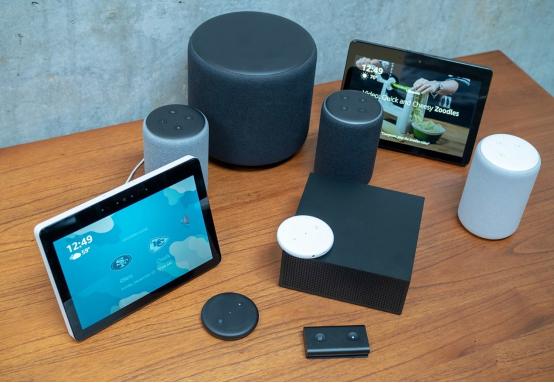
Group 1 - The stock price of Haier Smart Home is reported at 25.11 yuan, down 0.01 yuan from the previous trading day, with a decline of 0.04% [1] - The company’s main business includes the research, production, and sales of home appliances such as refrigerators, air conditioners, and washing machines, while actively expanding into the smart home sector [1] - Haier Smart Home is recognized as a representative enterprise in the home appliance industry, continuously promoting the intelligent upgrade of its products [1] Group 2 - Recently, Haier Smart Home has reached a strategic cooperation with Jomoo Group, focusing on deep collaboration in four major dimensions including smart living and technology interconnection [1] - The smart home market in China is expected to reach a scale of 682.1 billion yuan by 2024 [1] - On August 11, the net inflow of main funds was 19.58 million yuan, with a cumulative net inflow of 269 million yuan over the past five trading days [1]

智能家居市场规模超6800亿 行业如何破解“伪智能”困局
Bei Jing Shang Bao· 2025-08-11 14:36
Core Insights - Haier Smart Home and Jomoo Group have formed a strategic partnership to collaborate in four key areas: smart living, technology interconnectivity, scenario co-creation, and service ecosystem [1] - The smart home market in China is projected to reach a scale of 682.1 billion yuan by 2024, indicating significant growth potential [4][6] - Despite market expansion, the smart home industry faces challenges such as interoperability issues, complex user experiences, and the prevalence of "pseudo-smart" products [8][9] Market Expansion - The smart home market is becoming increasingly popular due to advancements in IoT, cloud computing, big data, and AI technologies, with the national technology contract transaction volume expected to reach 6.8 trillion yuan in 2024, growing by 11.2% year-on-year [3] - Companies like Kingboard Home and Beijing Lier are establishing new subsidiaries focused on smart technology, indicating a trend of businesses entering the smart home sector [1][4] Consumer Demand - There is a growing consumer interest in smart home products, particularly among younger demographics who seek convenience and enhanced living standards [6][7] - The Z generation, as digital natives, shows a high acceptance of smart products, shifting their consumption focus from functionality to emotional and experiential satisfaction [6][7] Challenges in the Industry - The smart home market is plagued by "pseudo-smart" products that do not deliver genuine smart functionalities, leading to consumer dissatisfaction and market confusion [8][9] - The lack of standardization and interoperability among different smart home ecosystems hinders consumer experience and market growth [9] Future Directions - To address the "pseudo-smart" issue, companies need to shift their focus from mere connectivity to creating seamless, intuitive user experiences that integrate various smart devices into cohesive living environments [9] - The future competition in the smart home market will revolve around ecosystem integration rather than individual product offerings, emphasizing the importance of creating comprehensive solutions for consumers [9]
多部门召开会议,定调下半年工作重点
Guoyuan Securities· 2025-08-11 14:34
Investment Rating - The report maintains a "Recommended" rating for the smart home industry [7][33]. Core Insights - The report highlights three main areas of focus for the second half of the year: expanding domestic demand, innovation integration, and capacity governance. It emphasizes the importance of financial support for new industrialization and the potential benefits of easing US-China trade tensions for Chinese home appliance companies [3][5][18]. Summary by Sections Market Review - In the past two weeks (July 26 - August 8, 2025), the Shanghai Composite Index rose by 1.15%, while the Shenzhen Component Index and the ChiNext Index fell by 0.35% and 0.26%, respectively. The smart home index (399996.SZ) increased by 1.46%, outperforming the Shanghai Composite by 0.31 percentage points [12][14]. - Year-to-date (January 1 - August 8, 2025), the Shanghai Composite Index increased by 8.45%, the Shenzhen Component Index by 6.86%, and the ChiNext Index by 8.98%. The smart home index rose by 11.90%, outperforming the Shanghai Composite by 3.45 percentage points [12][14]. Industry Policy Tracking - Multiple departments have clarified three key economic work priorities for the second half of the year: expanding domestic demand, innovation integration, and capacity governance. The National Development and Reform Commission and the Ministry of Industry and Information Technology are expected to implement policies to stimulate consumption in the home appliance and home sectors [16][18]. - The report notes that the contribution of domestic demand to economic growth reached 68.8% in the first half of the year, indicating its role as a primary growth driver [16]. Industry News Tracking - New Times has had its refinancing application accepted, aiming to raise 1.219 billion yuan through a private placement to its controlling shareholder [26]. - Hitachi is considering selling its domestic white goods business in Japan, with potential transaction values ranging from 100 billion to several hundred billion yen [27][28]. - The US has initiated a 337 investigation against companies including OnePlus, Lenovo, and TCL, related to specific mobile cellular communication devices [29][30]. Investment Recommendations - The report suggests that the smart home industry is poised for growth due to supportive policies, technological advancements in IoT, AI, and big data, and increasing consumer demand driven by rising living standards and aging populations. The entire smart home supply chain is expected to benefit, leading to a "Recommended" rating [5][33].
沙利文向荣泰健康颁发《中国智能按摩机器人开创者》市场地位声明证书
Zheng Quan Ri Bao Wang· 2025-08-11 11:48
上述报告认为,荣泰健康作为行业开创者,竞争力体现在三大层面。在技术创新上,从红外检测到"毫 米波雷达+压力反馈",搭载DeepHealth大模型实现语音交互与脑机接口;在场景覆盖上,公司在国内构 建线上直营、线下经销商及渠道合作为主的营销网络,覆盖一至四线城市及体检中心、机场贵宾厅等场 景,海外业务拓展至八十余国;在生态整合上,公司与小米等智能家居平台联动,打造"运动后恢 复""睡前助眠"等场景化健康解决方案。 《中国按摩机器人市场研究报告》基于沙利文对中国按摩机器人市场的深度调研,覆盖技术、市场、竞 争等八大核心维度。报告显示,中国按摩市场规模从2020年的311.2亿元增至2023年的508.5亿元,年均 增速达17%;其中按摩设备(含机器人)市场规模从2020年的17亿元增至2024年的27亿元,预计2029年 突破56亿元。 本报讯 (记者张文湘)8月11日,上海荣泰健康(603579)科技股份有限公司(以下简称"荣泰健康") 官方微信公众号发文称,全球知名增长咨询公司沙利文发布《中国按摩机器人市场研究报告》,并向荣 泰健康颁发《中国智能按摩机器人开创者》市场地位声明证书。该报告展示了中国按摩机器人行 ...

萤石网络(688475):业绩稳健增长,AI能力升级
GUOTAI HAITONG SECURITIES· 2025-08-11 06:05
Investment Rating - The report maintains a "Buy" rating for the company [4][11]. Core Insights - The company demonstrated steady growth in Q2, with an increase in profit margins and an upgrade in AI capabilities enhancing the smart home product experience [1][11]. - Revenue for the first half of 2025 reached 2.827 billion yuan, a year-on-year increase of 9.45%, with net profit attributable to the parent company at 302 million yuan, up 7.38% year-on-year [11]. - The company is expected to achieve earnings per share (EPS) of 0.77, 0.98, and 1.21 yuan for 2025, 2026, and 2027 respectively, with growth rates of +10.4%, +12.1%, and +13.7% [11]. Financial Summary - Total revenue projections are as follows: - 2023A: 4.841 billion yuan - 2024A: 5.442 billion yuan - 2025E: 5.972 billion yuan - 2026E: 7.061 billion yuan - 2027E: 8.039 billion yuan - Net profit (attributable to the parent) is projected as: - 2023A: 563 million yuan - 2024A: 504 million yuan - 2025E: 610 million yuan - 2026E: 772 million yuan - 2027E: 951 million yuan [3][12]. Business Segmentation - In H1 2025, the smart home camera segment generated 1.547 billion yuan in revenue, a 7.2% increase, accounting for 55% of total revenue [11]. - The smart entry segment achieved 436 million yuan in revenue, a 33% increase, representing 16% of total revenue [11]. - The IoT cloud platform contributed 555 million yuan, growing 12% year-on-year, making up 19.7% of total revenue [11]. Market Position - The company’s overseas business saw a revenue growth of 25.42% in H1 2025, increasing its share of total revenue to 38% [11]. - The report anticipates that as the company continues its overseas expansion, the proportion of international revenue will keep rising [11].

顾客断崖减少,卖场关灯省电:中国家居行业正经历三十年未有巨变
第一财经· 2025-08-09 08:18
Core Viewpoint - The Chinese home furnishing industry is undergoing significant changes due to shifts in consumer behavior and the real estate market, leading to a transformation in business strategies among key players [5][22]. Group 1: Market Changes - The home furnishing industry is experiencing a major transformation not seen in the past thirty years, driven by changes in real estate dynamics and evolving consumer habits [5][22]. - Traditional retail spaces are seeing decreased foot traffic, prompting businesses to adapt by targeting new housing developments and utilizing "community model homes" for customer acquisition [5][10]. - The shift towards online channels for customer engagement is evident, with over 95% of customer acquisition for some businesses now coming from online platforms [13]. Group 2: New Business Strategies - Companies are increasingly focusing on creating model homes in new residential areas to attract customers, with some businesses reporting up to 30-40 orders from a single community [10]. - The rise of direct factory sales is changing the landscape, as consumers seek lower prices by purchasing directly from manufacturers rather than through traditional retail channels [18][21]. - Some businesses are rethinking their physical locations, with the potential to move to less expensive areas while still maintaining customer engagement through online marketing [16]. Group 3: Industry Concerns - Major incidents involving leading home furnishing brands have raised concerns about the industry's future, as many companies expanded too aggressively during a time when they should have been consolidating [22]. - There is a growing apprehension among industry leaders regarding their understanding of younger consumers, who may not be attracted to traditional home furnishing stores [24]. - The need for comprehensive transformation in home furnishing retail is emphasized, as consumer preferences shift towards more personalized and fragmented shopping experiences [24].