
绿色金融

Search documents
2025上市公司与金融机构可持续发展典型案例征集
清华金融评论· 2025-12-24 09:25
随着国家正式启动"十五五"规划的宏伟蓝图,可持续发展正从一项关键战略,升级为衡量未来经济高质量发展的重要标尺。在此承前启后的 关键时刻,2025年成为中国可持续发展进程从"理念构建"迈向"实践深化"的关键年份。 企业非财务信息披露正经历一场深刻的"范式迁移"。 国务院国资委、证监会及沪深北交易所密集出台《央企ESG专项行动指南(2025)》、《上市公司信息披露管理办法》、《上市公司自律监管指 引——可持续发展报告(试行)》等相关政策,明确要求将可持续发展纳入公司治理核心,推动信息披露从"可选披露"迈向"规范披露"。 在此新周期下,金融机构作为资源配置的核心,已从理念倡导者转变为关键行动者。银行、保险、资管等机构正将ESG深度融入其战略与业 务流程,通过大力发展绿色金融、创新可持续金融产品、践行负责任投资、强化环境风险管理等一系列努力,精准引导金融活水支持实体经 济绿色低碳转型。 为系统梳理并推广实践,《清华金融评论》正式启动"2025可持续发展典型案例征集"活动,旨在搭建一个高层次的实践交流平台,通过征 集、遴选并展示在绿色金融、社会责任及可持续发展治理等领域的优秀案例,树立行业标杆,促进经验共享,共同助力中 ...

八部门:引进东南亚、港澳地区投资者支持绿色低碳基金等建设
Sou Hu Cai Jing· 2025-12-24 08:56
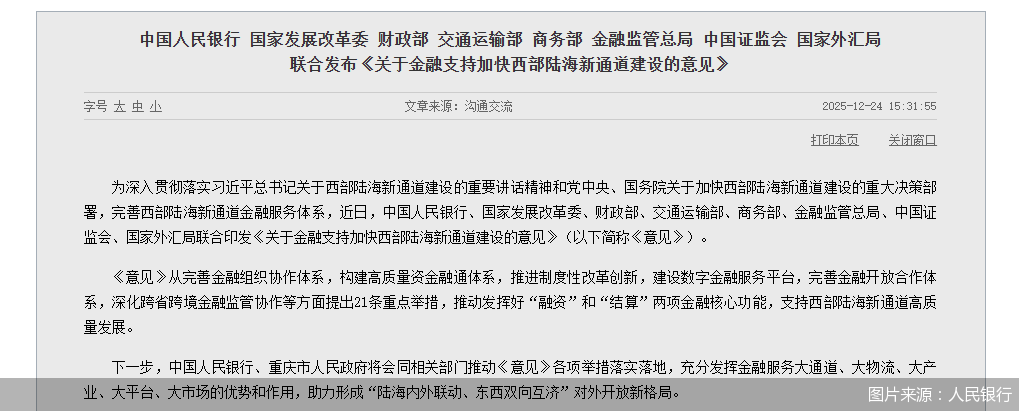
北京商报讯(记者 李海媛)12月24日,中国人民银行官网发布消息称,近日,中国人民银行、国家发展改革委、财政部、交通运输部、商务 部、金融监管总局、中国证监会、国家外汇局联合印发《关于金融支持加快西部陆海新通道建设的意见》(以下简称《意见》)。 | 字号 | 文章来源:沟通交流 | 2025-12-24 15:31:55 | | --- | --- | --- | | 打印本页 关闭窗口 | | | | 为深入贯彻落实习近平总书记关于西部陆海新通道建设的重要讲话精神和党中央、国务院关于加快西部陆海新通道建设的重大决策部 | | | | 罢,宗華西部陆海新通消全副服务体系,近日,中国人民锦行、国家发展改革委、财神部、交通运输部、商务部、会副监管总局、中国证 | | | 《意见》指出,加强绿色金融内外合作。支持沿线省(区、市)联合研究绿色金融标准。完善中国—新加坡绿色金融工作组机制,在绿色金融标 准的制定和应用、绿色金融产品、金融科技支持绿色金融等方面加强合作。引进东南亚、港澳地区投资者支持绿色低碳基金、绿色产业、零碳园 区和生态环保项目建设。鼓励东南亚、港澳地区投资者投资沿线省(区、市)金融机构或企业发行的绿色 ...
政策给劲儿吗?工作到位吗?发展合规吗?他们这么说……
Jin Rong Shi Bao· 2025-12-24 08:55
Core Viewpoint - Consumption is seen as the "ballast" for economic growth, while finance acts as the "lifeblood" that supports aspirations for a better life across various scenarios and urban-rural divides. Consumer finance companies play a crucial role in driving consumption and supporting new urban residents and county-level consumption upgrades [1] Policy Insights - By 2025, multiple policies related to consumption and consumer finance will be implemented, making it essential for consumer finance companies to adapt to regulatory changes and convert policy benefits into consumption potential [2] - Policies such as the "Special Action Plan to Boost Consumption" and "Guidance on Financial Support for Expanding Consumption" have provided a solid foundation and market confidence for the consumer finance industry [2] - Companies like China Post Consumer Finance are actively responding to new lending regulations by implementing a dynamic management whitelist for lending partners to ensure compliance and consumer protection [2] Development Strategies - The implementation of various policies has injected stronger momentum into consumption and provided clear directions for the standardized development of consumer finance companies [4] - Companies are leveraging technology to enhance compliance management and have established systems for fraud detection and risk control [4] - Strict regulatory requirements are viewed as a stabilizing force that can eliminate poor industry participants and create a fair competitive environment for compliant businesses [4] Technological Advancements - Technology remains a core competitive advantage for the consumer finance industry, with companies accelerating their digital transformation to provide more accessible financial services [7] - Ant Consumer Finance has upgraded its risk control system using AI to better match consumer needs and enhance the efficiency of credit decisions [7] - Companies like Xinyu Consumer Finance are focusing on standardizing their technology and processes to support the entire lifecycle of consumer credit services [7] Financial Focus Areas - Consumer finance companies are committed to serving the real economy through five key areas: technology finance, green finance, inclusive finance, pension finance, and digital finance [9] - Companies are developing tailored products for different consumer segments, such as flexible personal loans for younger consumers and enhancing financial education for the elderly [9] - Haier Consumer Finance has initiated the first ESG-linked syndicated loan in the industry, directing funds to green consumption scenarios [9]
厦门国际银行泉州分行:精准滴灌民营经济 彰显侨乡金融特色
Cai Fu Zai Xian· 2025-12-24 04:53
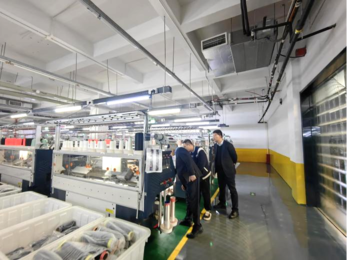
Core Viewpoint - The Xiamen International Bank Quanzhou Branch is actively supporting the high-quality development of the private economy in Quanzhou through targeted financial services and strategic initiatives, aligning with local government policies and focusing on key industries and sectors [1][2]. Group 1: Financial Support for Private Economy - The bank has implemented 15 financial support measures for the private economy in Quanzhou, focusing on industries such as textiles, footwear, and intelligent manufacturing to facilitate technology upgrades and expansion for local enterprises [2]. - A specialized working group has been established to create tailored credit strategies and guidelines for key industries, ensuring precise financial support for leading enterprises and significant projects [2]. - As of November 2025, the bank has provided financial relief of 2.07 million yuan to 86 enterprises, addressing issues of financing difficulties and high costs [2]. Group 2: Diverse Financial Services - The bank has introduced the "Science and Technology Loan" product, offering up to 30 million yuan in unsecured loans to qualified small and micro enterprises, resulting in a year-on-year growth of over 70% in technology finance loans by November 2025 [3]. - Green finance initiatives have been launched, including a carbon footprint loan evaluation system, with green finance loans increasing by over 15% since the beginning of the year [3]. - The bank has developed the "Sea Silk Food Rhythm Loan" to meet the diverse financial needs of small and micro enterprises and individual businesses, enhancing financial accessibility [3]. Group 3: Digital and Elderly Financial Services - The bank is advancing its digital transformation by enhancing financial technology applications, exemplified by the "Cross-border e-Station" platform that supports online cross-border transactions for overseas Chinese businesses [6]. - Financial products tailored for the elderly demographic have been introduced, focusing on stable investment returns and comprehensive protection of their rights [6]. Group 4: Overseas Chinese Financial Services - The bank has established a strong brand in overseas Chinese finance, with a total business volume nearing 4 billion yuan and over 700 overseas Chinese clients as of November 2025 [8]. - Special loan rate discounts and fee waivers for overseas Chinese clients have been implemented, along with a one-stop financial service for overseas Chinese businesses [8]. - The bank collaborates with other financial institutions to create a cross-border financial cooperation platform, supporting overseas Chinese investments in Quanzhou [8]. Group 5: Future Development Goals - The bank aims to continue its commitment to serving the private economy in Quanzhou, focusing on innovation in products and services to support local industries and contribute to the development of Quanzhou as a "21st Century Maritime Silk Road City" [10].
金融活水浇灌 红色桐柏展新颜
Jin Rong Shi Bao· 2025-12-24 03:38
巍巍桐柏山,滔滔淮河源。河南省南阳市桐柏县作为革命老区,80年前,这里是鄂豫边区抗日根据地的 核心区域,也是民生凋敝、满目疮痍的贫困山区。今天,这片曾浸染着先烈热血的赤贫山乡,依托"七 山一水二分田"的地理优势和丰富的生态资源,在金融活水的浇灌下,逐步形成以"茶叶+文旅+新能 源"为支柱的产业体系,并培育出"两金一银一碱"四大重点龙头企业,实现了从革命老区到生态经济强 县的华丽蜕变。截至2025年6月末,桐柏县贷款余额为144.03亿元,同比增长17.59%,增速位居南阳市 各县第一。 金融赋能 助力特色农业产业发展 "多亏了农商行25万元的助农贷款,去年扩建的5座大棚今年就见了效益,预计能多赚15万元。"桐柏县 朱庄镇粉坊村香菇种植户王大姐高兴地说。她口中的助农贷款,正是金融机构深耕特色产业的生动实 践。作为远近闻名的香菇特色产业村,粉坊村的香菇产业金融需求总规模超500万元,传统的信贷模式 难以满足分散化、周期性的融资需求。针对这一问题,中国人民银行南阳市分行精准施策,积极引导金 融机构创新信贷投放模式,针对种植户推出"三步走"金融帮扶策略,联合村两委绘制产业图谱、按经营 规模分档授信、根据香菇生产周期动 ...
中国信保上海分公司: 发挥政策性金融独特作用 助力上海“五个中心”联动建设
Jin Rong Shi Bao· 2025-12-24 02:47
Core Viewpoint - The China Export & Credit Insurance Corporation (Sinosure) plays a crucial role in supporting China's international trade by providing financial tools backed by national credit and fiscal resources, significantly contributing to the country's export growth and risk management strategies [1][2][7]. Group 1: Financial Support and Services - During the 14th Five-Year Plan period, Sinosure's Shanghai branch supported over $265 billion in foreign trade exports and investments, paying out claims of 2.219 billion yuan and helping companies reduce losses by nearly 3.6 billion yuan [1]. - In 2025, Sinosure's Shanghai branch actively participated in local government initiatives to stabilize foreign trade, introducing innovative services such as "安心接单保" and "参展速查宝," which helped develop 13,000 new overseas buyers, a 25.7% increase year-on-year [2]. - The "沪贸批次贷" financing model was launched to provide proactive credit to small and micro foreign trade enterprises, with 1.1 trillion yuan in credit limits pushed to over 30,000 companies [3]. Group 2: Support for Technological Innovation - Sinosure's Shanghai branch focuses on supporting key industries, particularly in technology innovation, by providing tailored insurance solutions that integrate into companies' risk management systems [4]. - The branch has significantly aided Shanghai United Imaging Healthcare Co., Ltd. in expanding its international market presence, particularly in North America, Europe, and Asia-Pacific, through personalized insurance plans [4]. Group 3: Cross-Border Financial Services - Sinosure has become an essential tool for promoting the internationalization of the renminbi and enhancing cross-border financial service convenience, as highlighted in the Shanghai International Financial Center's action plan [7]. - The company successfully facilitated a financing structure for HuanTai Energy Co., Ltd. for a wind power project in Kazakhstan, providing 95% coverage for political and commercial risks, thus enabling financing without credit guarantees [8]. Group 4: Shipping and Maritime Financing - In the first 11 months of the year, Shanghai port handled 50.56 million TEUs, a 6.7% increase year-on-year, supported by Sinosure's financing solutions for shipping projects [10]. - Sinosure has played a pivotal role in financing significant shipping projects, including the delivery of a methanol dual-fuel container ship for CMA CGM and financing arrangements for an $11 billion LNG dual-fuel container fleet for Hapag-Lloyd [11]. Group 5: Future Directions - Sinosure aims to enhance its role in supporting Shanghai's high-level opening-up and economic center status by providing innovative and targeted insurance support, contributing to the development of a modernized Shanghai [12].

国泰君安期货商品研究晨报:绿色金融与新能源-20251224
Guo Tai Jun An Qi Huo· 2025-12-24 01:29
2025年12月24日 国泰君安期货商品研究晨报-绿色金融与新能源 观点与策略 | 镍:印尼政策担忧,盘面情绪性补涨 | 2 | | --- | --- | | 不锈钢:基本面供需双弱,印尼镍矿消息扰动 | 2 | | 碳酸锂:下游材料存涨价预期,偏强震荡 | 4 | | 工业硅:逢高做空 | 6 | | 多晶硅:加大开仓限制,关注情绪面波动 | 6 | 国 泰 君 安 期 货 研 究 所 请务必阅读正文之后的免责条款部分 1 期货研究 商 品 研 究 2025 年 12 月 24 日 【宏观及行业新闻】 1)9 月 12 日钢联资讯:因违反林业许可证规定,印尼林业工作组接管 PT Weda Bay Nickel 超过 148 公顷矿区。印尼政府将负责管理该区域,并对该公司处以罚款。该矿区位于北马鲁古省哈马黑拉岛, 今年已通过的 RKAB 镍矿批复量级达 4200 万湿吨,其中包括 1000 万吨湿法矿,总矿区占地 4.7 万公顷, 包含 15 个矿点,印尼林业工作组接管区域占总矿区面积 0.3%,预计影响镍矿产量约 600 金属吨/月。 2)据外媒报道,中国暂停了一项针对从俄罗斯进口的铜和镍的非官方补贴。 ...
民生银行:以金融创新服务湾区建设
Zhong Jin Zai Xian· 2025-12-24 01:26
Core Viewpoint - Minsheng Bank has been committed to serving the public and supporting the local economy in Guangdong for 29 years, focusing on high-quality financial development through innovative products and services [1] Group 1: Inclusive Finance - Minsheng Bank's Guangzhou branch prioritizes inclusive finance, addressing financing challenges for small and micro enterprises and individual businesses with innovative products [2] - The branch developed an online supply chain product "Xinrong E," which has provided over 1.1 billion yuan in loans to more than 100 inclusive suppliers [2] - The "Minsheng Fast Loan" project, launched in 2025, has approved loans exceeding 60 million yuan for 38 dealers, enhancing the financial ecosystem for the real economy [2] Group 2: Technological Empowerment - The Guangzhou branch leverages technology to enhance financial services, transitioning from traditional to intelligent solutions [3] - The self-developed "Cloud Strategy" digital operating analysis platform has improved decision-making efficiency and service capabilities for customer managers [3] - The branch has introduced user-friendly banking solutions for elderly customers, including a simplified mobile banking interface and upgraded physical branches with senior-friendly features [3] Group 3: Community Welfare - Minsheng Bank emphasizes customer-centric service, implementing accessibility improvements in branches to better serve elderly clients [4] - The bank conducts community outreach, including financial fraud prevention seminars and home service initiatives for those with mobility challenges [4] - The branch has served nearly 2,500 individuals through community service points, providing essential services like social security card processing [4] Group 4: Green Finance - The Guangzhou branch focuses on green finance, supporting infrastructure and low-carbon industry development [5] - A strategic partnership with Guangzhou Metro Group has resulted in 4.2 billion yuan in green working capital loans for urban transportation projects [5] - The bank aims to expand its green finance product offerings to support the transition of related industries towards sustainability [5] Group 5: Social Responsibility - Minsheng Bank actively engages in social responsibility initiatives, contributing to rural revitalization and community support [6][7] - In 2025, the bank allocated 1 million yuan for targeted assistance in Henan, alongside additional funding for local infrastructure and industry development [7] - The bank has donated nearly 700,000 yuan to support rural revitalization efforts in Guangdong, promoting shared prosperity [7]

江西省吉安市 因地制宜让绿水青山产出丰厚红利
Jing Ji Ri Bao· 2025-12-23 22:52
Core Viewpoint - The concept of "Green Water and Green Mountains are as Valuable as Mountains of Gold and Silver" is being actively implemented in Ji'an, Jiangxi Province, transforming ecological advantages into development strengths and achieving significant economic benefits [1] Group 1: Ecological Product Value Realization - Ji'an's ecological product GEP accounting total value has reached 394 billion yuan, ranking among the top in the province, and it has been designated as a pilot area for the national ecological product value realization mechanism by December 2025 [1] - The city is focusing on a sustainable development path characterized by "beautiful ecology, thriving industries, and prosperous citizens" [1] Group 2: Three-Dimensional Activation of Ecological Value - Ji'an has implemented a refined strategy for different ecological spaces, introducing over 20 specialized financial products such as "Agricultural Facility Mortgage Loans" and "Water Rights Loans" [3] - The city has issued 12 types of ecological vouchers, with a total face value of 397 million yuan, and has secured bank credit exceeding 90 million yuan [3] Group 3: Financial Mechanisms and Support - Ji'an has established a "Inclusive + Green" financial product innovation mechanism, exploring new financing models for forest rights and carbon credits [5] - The city has successfully issued the first green bond worth 1.6 billion yuan and another green bond of 1 billion yuan by Xin Luling Company [5] Group 4: Responsibility and Benefit Sharing - Ji'an has integrated collective forest rights reform into its key initiatives, establishing a four-level responsibility system to ensure accountability in ecological value transformation [4] - The city promotes various joint operation models to create a tight-knit community of interests, ensuring that farmers and village collectives can share the benefits of ecological industry development [6] Group 5: Future Directions and Broader Implications - Ji'an aims to further expand carbon trading and ecological compensation as diversified value realization pathways, pushing for brand and high-end upgrades in ecological industries [6] - The city plans to summarize and promote the "Ji'an Experience" as a replicable solution for similar regions nationwide, contributing to the harmonious development of ecological protection and economic growth [6]
固根基·创价值·利长远——深圳公募基金高质量发展在行动 | 践行金融为民 以专业深度与服务温度护航高质量发展
Zhong Guo Zheng Quan Bao· 2025-12-23 22:35
Core Insights - 2025 marks a milestone year for China's public fund industry, entering a new phase focused on high-quality development driven by investor returns [1] - The company emphasizes its commitment to investor interests and aims to implement the "Action Plan for Promoting High-Quality Development of Public Funds" [1] Investment Research and Core Competitiveness - Investment research capability is identified as the core competitiveness of fund companies, essential for wealth preservation and serving the real economy [2] - The action plan requires public institutions to strengthen a "platform-based, integrated, multi-strategy" investment research system, which the company is prioritizing [2] - The company has implemented an integrated investment research reform, fostering collaboration between fund managers and researchers to cover hundreds of sub-industries [2] - The company is focusing on "Technology+" investments, creating a diverse product matrix that includes sectors like technology, medicine, military, energy, manufacturing, and consumption [2] Index Investment and Long-Term Value - The company is actively developing a diverse index product system in line with the trend of indexation and institutionalization in capital markets [3] - It aims to create low-volatility products and asset allocation products to provide a wider range of tools for wealth management [3] - A long-term performance-oriented assessment mechanism is being implemented to ensure the stability and professionalism of the investment research team [3] Enhancing Investor Experience - The action plan emphasizes enhancing investor satisfaction as a core goal, guiding service upgrades in the industry [4] - The company is cultivating a strong industry culture and innovating investor engagement models to build a mature investment ecosystem [4] - Various educational initiatives are being undertaken, including online and offline activities, to improve financial literacy among investors [4] Strategic Alignment with National Goals - The company is aligning its operations with national strategies, focusing on the "Five Major Articles" to drive high-quality development [6] - In the field of technology finance, the company is deepening its investment ecosystem and focusing on hard technology sectors [6] - The company is extending its financial literacy initiatives to rural areas, supporting sustainable rural economic development [6] - In green finance, the company is responding to national "dual carbon" strategies and enhancing research in green industries [6] Digital and Pension Finance Initiatives - The company is focusing on digital transformation to enhance operational efficiency and service precision [7] - It is actively participating in the construction of the national pension system, developing a diverse range of pension products [7]