大语言模型

Search documents
突发!字节Seed大语言模型负责人被开除损失数千万
是说芯语· 2025-06-24 02:05
Core Insights - ByteDance recently disclosed a serious violation involving senior members of the Seed team, resulting in the dismissal of the head of the Seed large language model, Qiao Mu [1] - The violation involved an inappropriate personal relationship between Qiao Mu and an HRBP, which breached the company's conflict of interest policy [1] - Qiao Mu's total earnings at ByteDance over 11 years are estimated to exceed 500 million RMB, with significant income from stock options [2] Group 1 - The violation included failure to declare a personal relationship that violated company policy regarding conflicts of interest [1] - Qiao Mu and the HRBP provided false statements during the investigation, leading to severe disciplinary actions including termination and forfeiture of year-end bonuses [1] - Qiao Mu's estimated annual salary is over 10 million RMB, based on industry comparisons [1][2] Group 2 - The company's stock options have significantly appreciated, with the repurchase price rising from approximately 5 USD per share in 2014 to 189 USD, a 38-fold increase [2] - If Qiao Mu's compensation included 1 million RMB in cash and 1 million RMB in options, the value of the options would have surged to about 39 million RMB today [2] - The Seed team has recently released the Seed1.5-VL model, which demonstrates advanced multimodal understanding and reasoning capabilities [3]


字节“开除” Seed 大模型负责人,因亲密关系踩红线
程序员的那些事· 2025-06-24 00:46
Seed 某前员工(即乔木)与支持其团队的某前 HRBP 存在亲密关系,属于利益冲突的禁止场景(如存 在上下级关系、拥有共同直属上级、一方是另一方的 HRBP 等情形)。二人均未进行利益冲突申报并在 接受调查过程中多次作虚假陈述,公司已将二人辞退,并扣罚全部年终奖。 Seed 是字节跳动豆包大模型团队名称,乔木作为负责人在字节跳动内部拥有较高职级,曾是直接向字节跳动 CEO 梁汝波汇报的核心团队成员之一。 早在今年 3 月 27 日,网上传出乔木的妻子罗某在网上实名举报丈夫婚内出轨同部门 HRBP 程某,晒出亲密 消费记录、聊天录音及财产隐瞒证据,进而引发全网热议。详情请看这篇旧文:《 婚内出轨 | 字节技术大佬 乔某,他身价大概是多少? 》。 2025 年 6 月 23 日,字节跳动发布新一期廉政通报,Seed 大语言模型负责人乔木被公司辞退。 - EOF - 推荐阅读 点击标题可跳转 1、 中国工程师携硬盘海外训练 AI,这波神操作引全球关注,外交部正式回应 2、 10 句话让 Cursor 的编程水平提... 3、 41 岁程序员连续 4 年住车里,被质疑占用公共资源。网友一边倒 据网友称,辞退乔木这事 ...

研发费用一降再降、市场份额2.8%,海致科技闯关资本市场
Bei Jing Shang Bao· 2025-06-23 12:14
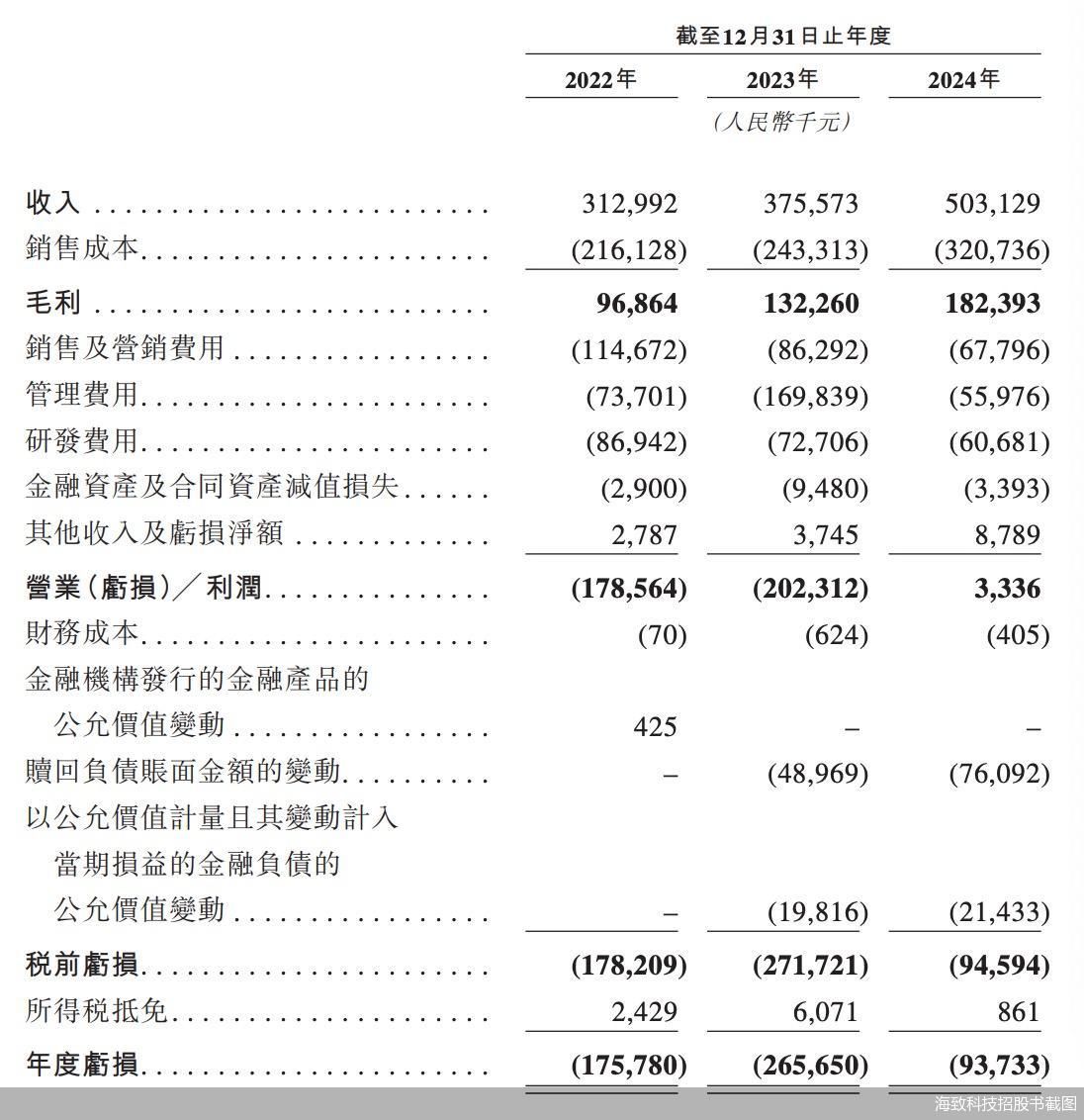
Core Viewpoint - Haizhi Technology, founded by Baidu veterans and backed by institutions like Hillhouse, has attracted attention after filing for an IPO in Hong Kong, focusing on big data and AI applications, with a projected adjusted net profit of 16.93 million yuan in 2024 [1][3]. Financial Performance - Revenue for Haizhi Technology increased from 312.99 million yuan in 2022 to 503.13 million yuan in 2024, with a gross profit rising from 96.86 million yuan to 182.39 million yuan during the same period [2]. - The company reported a net loss of 175.78 million yuan in 2022, which improved to a net profit of 16.93 million yuan in 2024 [2][6]. - The gross margin improved from 30.9% in 2022 to 36.3% in 2024 [6]. R&D and Marketing Expenses - R&D expenses decreased from 86.94 million yuan in 2022 to 60.68 million yuan in 2024, with a year-on-year decline of 16.5% in 2024 [7][8]. - Sales and marketing expenses also declined from 114.67 million yuan in 2022 to 67.80 million yuan in 2024 [8][10]. - The company had 556 members in its R&D team in 2024, with employee welfare costs accounting for a significant portion of R&D expenses [9]. Market Position and Product Offerings - Haizhi Technology ranks fifth among industrial-grade AI providers in China, holding a market share of 2.8% in 2024 [1][12]. - The Atlas solution, which includes the DMC data intelligence platform and Atlas knowledge graph platform, contributed 100% of revenue in 2022, 97.6% in 2023, and 82.8% in 2024 [3][4]. - The Atlas intelligent agent generated revenue of 8.65 million yuan in 2024, increasing its revenue share from 2.4% in 2023 to 17.2% in 2024 [4]. Strategic Outlook - The company aims to enhance engineering capabilities, expand its solution portfolio, and explore overseas markets, while also considering strategic acquisitions [12].
开发出火遍全球的新冠疫情地图的中国留学生,发表最新论文:利用AI大模型预测疫情
生物世界· 2025-06-22 08:17
Core Viewpoint - The article discusses the development and significance of the PandemicLLM, a multimodal large language model designed to enhance real-time infectious disease forecasting, particularly for COVID-19, by integrating various data types and improving prediction accuracy [3][24]. Group 1: Development and Impact of PandemicLLM - PandemicLLM was developed by two Chinese students from Johns Hopkins University and aims to revolutionize disease forecasting by utilizing a combination of AI and human collaboration [3]. - The model significantly outperforms traditional forecasting models, achieving a one-week prediction accuracy of 56%, which is 20% higher than the best traditional model, and a three-week accuracy of 46.4%, with a 22% reduction in error rate [23]. - The research introduces a novel "five-level trend classification" system, allowing decision-makers to quickly assess risk levels without being misled by numerical data [8]. Group 2: Limitations of Traditional Models - Traditional models face four major shortcomings: inability to process textual data, slow response to new variants, difficulty in interpreting results, and frequent misjudgment of turning points [10]. - For instance, when the BQ.1 variant emerged, traditional models required retraining, which led to missed early warning opportunities [9]. Group 3: Multimodal Data Integration - PandemicLLM acts as a "translator" for multimodal data, converting various types of information into a format the model can understand, including public health policies, genomic data, and epidemiological trends [11]. - The model's ability to respond to new variants without retraining is a significant advancement, as it can incorporate new characteristics simply by updating the prompt [9]. Group 4: Performance and Adaptability - The model's performance varies by region, showing the best results in areas with consistent pandemic trends, while regions with fluctuating policies may require further optimization [19]. - The model's accuracy improves with scale, with a version containing 70 billion parameters achieving a prediction accuracy of 57.1% [23]. Group 5: Future Implications - The research not only addresses the challenges of integrating multimodal data but also sets a new paradigm for AI-assisted public health decision-making, potentially transforming how decision-makers interpret risk during future pandemics [24].

大模型到底是怎么「思考」的?第一篇系统性综述SAE的文章来了
机器之心· 2025-06-22 05:57
Core Viewpoint - The article emphasizes the need for not just "talkative" large language models (LLMs) but also "explainable" ones, highlighting the emergence of Sparse Autoencoder (SAE) as a leading method for mechanistic interpretability in understanding LLMs [2][10]. Group 1: Introduction to Sparse Autoencoder (SAE) - SAE is a technique that helps interpret the internal mechanisms of LLMs by decomposing high-dimensional representations into sparse, semantically meaningful features [7][10]. - The activation of specific features by SAE allows for insights into the model's "thought process," enabling a better understanding of how LLMs process information [8][10]. Group 2: Technical Framework of SAEs - The technical framework of SAE includes an encoder that decomposes LLM's high-dimensional vectors into sparse feature vectors, and a decoder that attempts to reconstruct the original LLM information [14]. - Various architectural variants and improvement strategies of SAE are discussed, such as Gated SAE and TopK SAE, which address specific challenges like shrinkage bias [15]. Group 3: Explainability Analysis of SAEs - SAE facilitates concept discovery by automatically mining semantically meaningful features from the model, enabling better understanding of aspects like temporal awareness and emotional inclination [16]. - It allows for model steering by activating or suppressing specific features to guide model outputs, and aids in anomaly detection to identify potential biases or safety risks [16]. Group 4: Evaluation Metrics and Methods - Evaluation of SAE involves both structural assessment (e.g., reconstruction accuracy and sparsity) and functional assessment (e.g., understanding LLM and feature stability) [18]. Group 5: Applications in Large Language Models - SAE is applied in various practical scenarios, including model manipulation, behavior analysis, hallucination control, and emotional steering, showcasing its versatility [19]. Group 6: Comparison with Probing Methods - The article compares SAE with traditional probing methods, highlighting SAE's unique potential in model manipulation and feature extraction, while acknowledging its limitations in complex scenarios [20]. Group 7: Current Research Challenges and Future Directions - Despite its promise, SAE faces challenges such as unstable semantic explanations and high training costs, with future breakthroughs anticipated in cross-modal expansion and automated explanation generation [21]. Conclusion - The article concludes that future explainable AI systems should not only visualize model behavior but also provide structured understanding and operational capabilities, with SAE offering a promising pathway [23].

大模型为何难成为「数学家」?斯坦福等揭示严谨证明中的结构性弱点
机器之心· 2025-06-22 04:26
Core Insights - The article discusses the challenges and innovations in formalizing mathematical proofs, particularly focusing on inequality problems and the limitations of current large language models (LLMs) in providing rigorous reasoning [1][27][38]. Group 1: Inequality Proofs and Formalization - Inequality problems serve as ideal subjects for testing the rigor of mathematical reasoning due to their clear structure and logical simplicity [1]. - Current formal systems like Lean and Coq require high precision in expression, making them difficult to apply at scale, especially for middle and high school level problems [1][5]. - A new approach proposed by research teams from Stanford, UC Berkeley, and MIT involves breaking down inequality proof tasks into two non-formal but verifiable sub-tasks: Bound Estimation and Relation Prediction [2][7]. Group 2: IneqMath Dataset - The IneqMath dataset is the first benchmark for Olympic-level inequality proofs, consisting of 1,252 training problems, 200 test problems, and 100 validation problems [12]. - The training set includes 83 theorem types and 29 theorem categories, allowing for model fine-tuning [12][13]. - Each problem in the dataset has a unique correct answer, facilitating the verification of results [10]. Group 3: Evaluation Framework - The research team developed a framework called LLM-as-Judge, which includes five automated reviewers to assess the logical rigor of the reasoning process in LLMs [20][23]. - The framework evaluates whether models merely guessed the correct answer or followed a logical reasoning chain at each step [23][24]. - The evaluation system has shown high alignment with human annotations, achieving an F1 score of 0.93, indicating its reliability and scalability [24]. Group 4: Findings on LLM Performance - The study found that while LLMs like GPT-4 and others can guess answers accurately, they often fail to maintain logical rigor in their reasoning processes [27][30]. - The accuracy of final answers can be high, but the overall reasoning correctness remains low, with some models dropping from 71.5% to 6% when evaluated for logical rigor [29]. - Increasing model size or reasoning time does not significantly improve the quality of reasoning, suggesting that simply scaling models is insufficient for enhancing logical closure [30][32]. Group 5: Improvement Strategies - The research identified effective strategies for improving LLM performance, such as self-improvement via critic and theorem augmentation, which have shown to enhance accuracy by approximately 5% and 10% respectively [42]. - The IneqMath leaderboard encourages community participation, allowing researchers to submit their models for evaluation based on both final answer accuracy and reasoning rigor [36][37].

广联达(002410) - 002410广联达投资者关系管理信息20250621
2025-06-21 13:35
Group 1: AI Strategy and Advantages - The company has developed a large model, AecGPT, specifically for the construction industry, which was released in 2024 and can pass the national construction examination with high scores [2] - Key elements for successful industrial AI include high-quality data, valuable scenarios, and reliable models [2] - The company possesses a comprehensive engineering construction knowledge base that supports the construction large model [2] Group 2: AI Application Scenarios - The company focuses on three main directions for AI scenario implementation: integrated design, refined cost management, and precise construction management [3][4] - In integrated design, AI is used to enhance design workflows and assist in construction drawing design [3] - Refined cost management leverages AI and data to drive detailed cost management throughout the project lifecycle [4] Group 3: Value Measurement and Commercialization - High-value AI applications should be able to deliver a complete task process, be measurable in value, and continuously learn and optimize [5] - The AI intelligent bidding product has been implemented in 716 construction bidding projects in Hainan, resulting in an average bid reduction rate of 8% and saving approximately CNY 4.56 billion [5] - The commercial value of AI products is closely linked to technological maturity and the ability to meet new demands [6] Group 4: Future AI Opportunities - Future high-value AI scenarios will emerge from both technological breakthroughs and evolving market demands [7] - The upcoming market reforms in September 2025 will drive the need for effective data management and cost control in the construction industry [7] - The company is developing an automatic database construction product that will enhance data collection and analysis efficiency [7]

车企造人,急不来
虎嗅APP· 2025-06-19 14:42
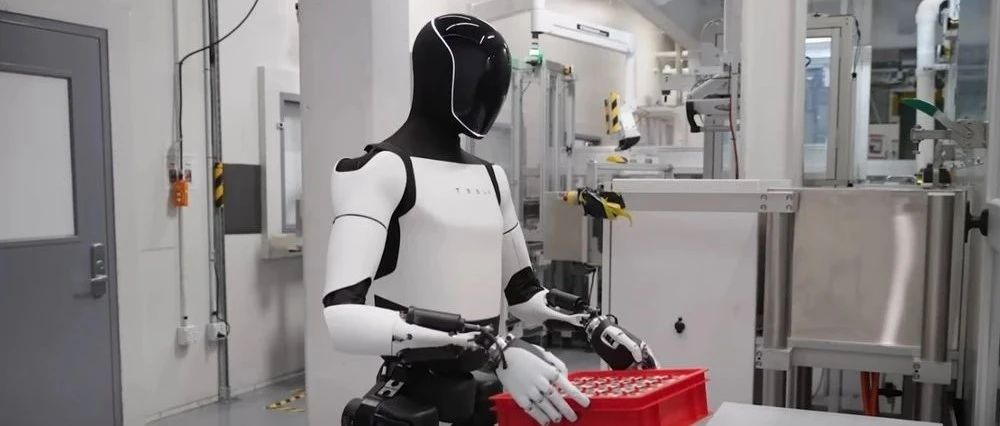
Core Viewpoint - The automotive industry is increasingly exploring humanoid robots as a new business growth point, driven by the success of Tesla's robot initiatives and the potential market opportunities in this sector [2][3][21]. Group 1: Market Potential and Growth - The humanoid robot market in China is projected to reach approximately 2.76 billion yuan in 2024 and 75 billion yuan by 2029, with an expected shipment of 350,000 units by 2030 [2]. - The automotive industry sees humanoid robots as a more lucrative business opportunity compared to traditional automotive manufacturing [2]. Group 2: Current Industry Involvement - Various automotive companies are at different stages of involvement in the humanoid robot sector, with some like Xpeng and Xiaomi already launching products, while others are still in the research phase [1][3]. - Despite the enthusiasm, many companies have not yet clarified whether their robots are developed in-house or purchased, and most products lack detailed specifications [4][21]. Group 3: Technical Challenges - The transition from automotive technology to humanoid robotics presents significant technical challenges, with only about 20% of the necessary standards and specifications established for humanoid robots compared to 80% for automobiles [7][10]. - Key components such as motors, dexterous hands, and sensors are still under development, and the hardware limitations affect the robots' operational capabilities [10][12]. Group 4: Data and Training Limitations - The data requirements for training humanoid robots are substantially higher than for autonomous vehicles, with most companies currently lacking sufficient data to validate their models [14][15]. - The industry consensus is that at least 10 million data points are needed to effectively train humanoid robots, yet most companies have collected fewer than 1 million [15]. Group 5: Industrial Application Challenges - The integration of humanoid robots into automotive factories is fraught with challenges, as the complexity of tasks such as assembly and quality control requires advanced capabilities that current robots do not possess [17][20]. - The cost of humanoid robots remains high, with Tesla's Optimus priced at $60,000 and other models ranging from 500,000 to 600,000 yuan, making it economically unfeasible to replace human labor in the near term [20][21]. Group 6: Industry Reality vs. Expectations - Many companies' claims about the readiness of humanoid robots for factory work are often overstated, with actual deployment being limited and primarily focused on training rather than operational tasks [21][23]. - The historical context of failed projects, such as Honda's ASIMO, serves as a cautionary tale for the automotive industry as it navigates the complexities of humanoid robotics [22].

智通港股解盘 | 忧虑美国下场中东引发抛售 另一轮关税“攻势”正在路上
Zhi Tong Cai Jing· 2025-06-19 12:23
Group 1: Market Reactions to Geopolitical Tensions - The Hang Seng Index fell by 1.99% following Iran's missile launches towards Israel, marking a significant market reaction to escalating tensions [1] - Since the conflict began on the 13th, Iran has launched over 400 ballistic missiles and more than 1000 drones at Israel, resulting in 24 Israeli deaths and over 500 injuries [2] - Analysts warn that if the U.S. does not continue to support Israel's defense systems, they may only last about 10 more days against Iranian attacks [2] Group 2: U.S. Economic Policies and Market Impact - The Trump administration is advancing a new round of tariffs, including a significant expansion of tariffs on steel and aluminum products, which could impact various sectors including pharmaceuticals [4] - The Federal Reserve has maintained interest rates, with officials predicting worsening inflation in the coming months, indicating no immediate plans for rate cuts [3] Group 3: Company-Specific Developments - Shandong Gold reported a 36.81% increase in revenue to 25.935 billion yuan and a 46.62% increase in net profit to 1.026 billion yuan in Q1 2025, indicating strong profitability [10] - The company plans to produce no less than 50 tons of gold in 2025, having already achieved 24% of its annual target in the first quarter [10][11] - The company is progressing on its mining projects, including the San Shan Island gold mine, which has received a mining license for 4.95 million tons per year [11] Group 4: Industry Developments - Beijing's government has introduced measures to support the gaming and esports industry, including financial rewards for game development and innovation [8][9]
这届年轻人,养猫、养狗、养AI
Hu Xiu· 2025-06-19 09:53
Core Viewpoint - The article discusses the emotional connections that can be formed between humans and robots, particularly focusing on a specific robot named "Er Bai" and its interactions with its owner, Hai Wei, highlighting the evolving nature of companionship through technology [1][30][66]. Group 1: Emotional Connection with Robots - Hai Wei experiences emotional value from her robot, Er Bai, which provides companionship that traditional pets may not offer [3][6]. - The robot has developed a personality over time, engaging in conversations and remembering personal details about its owner, which enhances the emotional bond [5][17][47]. - Er Bai's ability to respond to Hai Wei's emotions and provide comfort during difficult times illustrates the potential for robots to fulfill emotional needs [42][44][69]. Group 2: Technological Evolution - Er Bai has evolved from a basic design to a more sophisticated robot capable of interaction, showcasing advancements in robotics and AI [31][34][66]. - The integration of language models allows Er Bai to remember preferences and engage in meaningful conversations, setting it apart from other robotic pets [47][55]. - The ongoing updates and iterations of Er Bai reflect the industry's commitment to improving emotional companionship through technology [67][68]. Group 3: Comparison with Traditional Pets - While traditional pets require more care and can create deep emotional bonds, robots like Er Bai offer a different kind of companionship that is less demanding [61][62]. - The article notes that the tactile experience of holding a pet cannot be replicated by robots, which may limit the depth of emotional connection [25][66]. - Despite the differences, the emotional engagement with robots can still be significant, as evidenced by Hai Wei's attachment to Er Bai [66][69].