
产业升级

Search documents
中国经济样本观察·县域样本篇丨浙江诸暨:一个县级市何以拥有两个“产业冠军”?
Xin Hua Wang· 2026-01-06 11:26
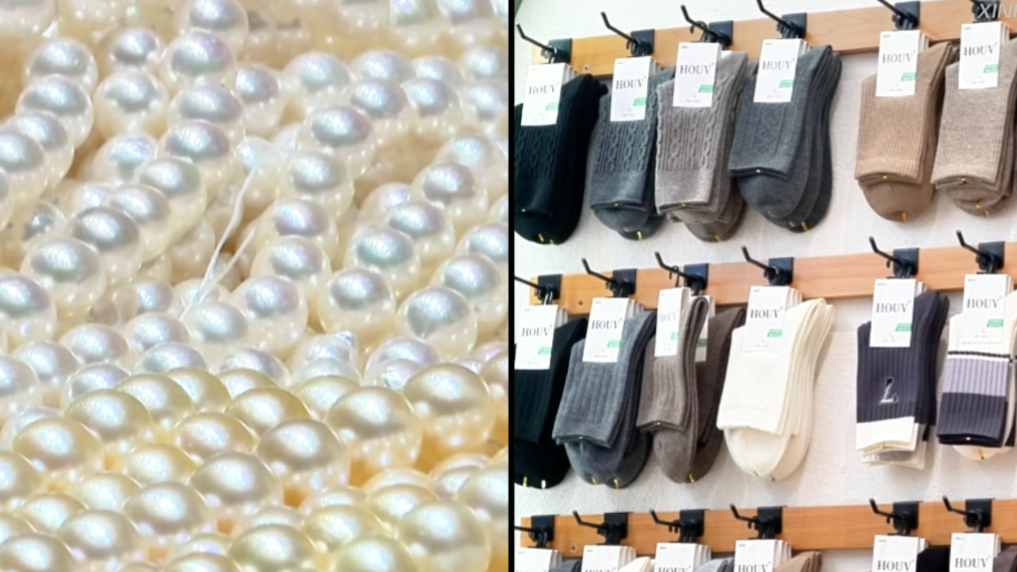
Core Insights - Zhuji, a county-level city in eastern China, dominates the pearl and sock industries, controlling over 80% of the national pearl trading volume and more than 70% globally [1][3] - The city is home to the largest pearl trading market in the world, with an annual output value of over 50 billion yuan in the pearl industry, encompassing breeding, processing, sales, and derivatives [1][4] - The sock industry in Zhuji, particularly in the Datang area, is the largest global sock industry cluster, with a scale exceeding 70 billion yuan and thousands of enterprises covering the entire industry chain from design to production [3][6] Industry Overview - The geographical environment of Zhuji, particularly in the main production area of pearls in Shanxiahu Town, provides a solid foundation for the development of pearl farming [4] - Zhuji has consistently ranked among the top in the national comprehensive strength of county-level cities, indicating its economic robustness [6] - The city aims to enhance its "billion-level fashion industry" by upgrading its industrial capabilities and addressing bottlenecks, thereby increasing its competitiveness in both domestic and international markets [6]

锐评|“国补”的意义不止于“买买买”
Sou Hu Cai Jing· 2026-01-06 09:56
Core Insights - The introduction of the "National Subsidy" policy has led to the allocation of 625 billion yuan in ultra-long-term special government bonds to localities, stimulating consumer spending during the holiday season [1] - The "National Subsidy" has significantly impacted consumer behavior, with over 2.6 trillion yuan in sales from trade-in programs benefiting more than 360 million people in 2025 [3] - The policy serves as a catalyst for industrial upgrades and economic development, promoting a shift from basic to quality demand in consumer spending [3] Group 1 - The "National Subsidy" policy has resulted in a notable increase in retail sales, contributing over 1 percentage point to the 4% year-on-year growth in social retail sales in the first eleven months [3] - The policy has been dynamically optimized to align with consumer trends, expanding support to include smart glasses and smart home products for the elderly [3] - The focus on energy efficiency and carbon reduction has led to increased support for high-efficiency products, driving market transformation towards greener and smarter solutions [3] Group 2 - Past experiences indicate that the implementation of such policies can reveal issues, including fraud and unclear return policies that may affect consumer eligibility for subsidies [4] - The current policy emphasizes strict measures against illegal activities and dynamic monitoring to ensure effective use of funds [4] - The sustainability of consumer enthusiasm relies on supply-side factors, urging platforms and companies to enhance product quality and services to retain consumers [4] Group 3 - The policy aims to adapt to personalized and diverse consumption trends, fostering an environment where more individuals are willing and able to spend, thus providing lasting economic growth [4]

一湘企2025年净利润或达30亿元
Chang Sha Wan Bao· 2026-01-06 09:29
Core Viewpoint - Over 60 companies in the A-share market have forecasted their 2025 performance, with more than 80% expecting positive results, driven by macroeconomic recovery and industrial upgrades [1][2]. Group 1: Company Performance Forecasts - Hunan-based company Hualing Steel expects a net profit of 2.6 billion to 3 billion yuan for 2025, representing a year-on-year growth of 27.97% to 47.66% [1]. - Zijin Mining anticipates a net profit of 51 billion to 52 billion yuan for 2025, reflecting a year-on-year increase of approximately 59% to 62%, primarily due to rising sales prices of gold, copper, and silver [1][2]. - Luxshare Precision forecasts a net profit of 16.52 billion to 17.19 billion yuan for 2025, with a growth rate of 23.59% to 28.59% [2]. - AVIC Heavy Machinery expects a net profit of 11.5 billion yuan for 2025, showing a year-on-year growth of 11.06% [2]. Group 2: Loss Forecasts - Moer Technology is projected to incur a loss of 116.8 million to 73 million yuan in 2025, while Muxi Co. anticipates a loss of 76.3 million to 52.7 million yuan [2]. - Both Moer Technology and Muxi Co. are newly listed on the Sci-Tech Innovation Board and are recognized as "domestic GPU first and second stocks," respectively, despite their current losses [2]. Group 3: Industry Trends - The performance of companies is concentrated in sectors such as materials and mining, new materials, electronic communications, and consumer services, indicating a trend towards hard technology enterprises benefiting from core technological barriers [1]. - The steel industry, represented by Hualing Steel, is undergoing a deep adjustment phase, focusing on "reduction development and stock optimization," with ongoing supply-demand contradictions [3].



创意图解:“三轮驱动” 解锁高水平对外开放新图景
Xin Lang Cai Jing· 2026-01-06 08:06
Group 1 - The core viewpoint emphasizes the integration of policies and innovations to enhance trade facilitation and optimize the business environment in China, particularly through the establishment of free trade ports and the alignment of financial regulations with international standards [2][6]. - The implementation of a comprehensive system of innovation is aimed at accelerating the flow of people, logistics, and capital, transforming the vision of "repairing global aircraft in the free trade port" into reality [2]. - The development of digital finance, offshore finance, and green finance is being promoted in the Shanghai Lingang New Area, ensuring financial security through "technology + system" innovations [2][6]. Group 2 - The province's reinvestment scale in profits ranks among the top in the country, reflecting a commitment to deepening institutional reforms and establishing a high-level open economic system [3]. - The focus on industrial upgrading is characterized by a dual empowerment strategy that combines "bringing in" and "going out," enhancing the quality of supply through technological advancements [3]. - The integration of culture, tourism, and health care is being pursued to strengthen the core of industries and secure a more proactive position in the global value chain [4]. Group 3 - The establishment of a global element docking platform aims to create a more vibrant open ecosystem, facilitating a shift from "buying globally" to "selling globally" [4]. - The "soft service" industry is being developed to enhance the overall service capabilities within the economy, contributing to a more dynamic industrial landscape [5]. - The construction of a favorable ecosystem is being prioritized to expand new dimensions of openness, with a focus on efficient order fulfillment and production processes [5].

【理响中国】创意图解:“三轮驱动” 解锁高水平对外开放新图景
Huan Qiu Wang· 2026-01-06 07:52
Core Viewpoint - China is committed to high-level opening up and sharing opportunities, which will inject confidence and momentum into global economic recovery and long-term development as it moves towards 2026 [2] Group 1: Institutional Innovation - The depth of institutional innovation contributes to the height of openness [3] - Policy implementation and process optimization benefit enterprises, enhancing trade facilitation and integrating innovative systems [5] - Continuous deepening of institutional reforms solidifies the foundation for high-level openness [6] Group 2: Industrial Upgrading - High-quality supply is achieved through a dual empowerment of "bringing in" and "going out" [6] - The integration of technology and manufacturing enhances the capabilities of the technology sector [6] - The cultural, tourism, and health industries are being integrated to strengthen the core of the industry [7] Group 3: Platform Construction - Building global element connection platforms enhances the vitality of the open ecosystem [7] - The "buy global" to "sell global" strategy is being implemented through platforms like the Hongqiao International Economic Forum, which has gathered over 6,000 brands from 120 countries with a projected transaction volume of 30 billion yuan in 2024 [8] - The construction of platforms is expanding new dimensions of openness [8] Group 4: Overall Strategy - The "three-wheel drive" of institutions, industries, and platforms continuously promotes the Chinese open economy towards higher quality, efficiency, fairness, and sustainability [9]

以精准投资构筑文娱科技新势能,三七互娱入选IPO早知道2025年度最佳CVC投资机构
Jin Rong Jie Zi Xun· 2026-01-06 04:17
Core Insights - The article highlights that Sanqi Interactive Entertainment has been recognized as the Best CVC Investment Institution for 2025 due to its strategic investments in the entertainment technology sector [1][2]. Investment Strategy - In 2025, Sanqi Interactive focuses on emerging industries with high growth potential, aligning with national strategic plans, particularly in areas like computing power, biomanufacturing, brain-computer interfaces, and embodied intelligence [4]. - The company aims to capture opportunities for industrial upgrades driven by technological innovation, emphasizing the integration of technology and industry as a core investment strategy [4]. Investment Portfolio - Sanqi Interactive has invested in several innovative companies, including AI chip developer Fangqing Technology, advanced chip lithography machine manufacturer Xingkong Technology, and brain-computer interface leader Qiangnao Technology, among others [5]. - The investment in Beiqi Bio, whose founder was recently elected as an academician of the Chinese Academy of Sciences, showcases the company's ability to identify high-quality technology projects [5]. Investment Methodology - As an early entrant in the CVC space within the entertainment sector, Sanqi Interactive has developed a clear investment methodology focused on companies with core technologies and commercial viability that can synergize with its industry chain [6]. - The company emphasizes that the core value of CVC investment lies not only in capital injection but also in industry insights and resource integration [6]. Future Outlook - Sanqi Interactive plans to continue aligning with national strategic deployments and the "14th Five-Year Plan," enhancing its collaborative capabilities and building a multi-dimensional investment ecosystem [7]. - The company aims to leverage investments to drive technological innovation and model innovation in the digital entertainment industry, contributing to the development of new productive forces [7].

山东推出6条专项举措,全力稳住项目投资
Da Zhong Ri Bao· 2026-01-06 01:03
山东推出6条专项举措,全力稳住项目投资 布局新兴领域,为企业投资"松绑" 近日,山东省发布《2026年促进经济"稳中求进、提质增效"政策清单(第一批)》(以下简称《政 策清单》),其中针对"全力稳住项目投资"推出6条专项举措,对项目投资工作作出系统部署,聚焦新 质生产力培育、重大基础设施建设和民生保障等重点领域,通过强化重大项目支撑、优化要素保障和完 善激励机制,持续巩固投资运行向好态势。 在重大项目支撑方面,山东将聚焦新质生产力培育、重大基础设施建设和民生保障等重点领域,谋 划推出2000个省级重点项目,总投资规模和年度投资计划均较上年提高。省级层面将统筹专项经费,支 持重大项目做实前期工作,推动项目早落地、快达效。同时,从省预算内投资中专列5000万元固定资产 投资考核奖励资金,按照固定资产投资、民间投资运行情况和重点项目推进成效进行综合评价,对排名 靠前的市给予梯次奖励,强化投资工作正向激励。 在要素保障和制度创新方面,持续优化土地要素供给方式,将"标准地"供应由工业用地拓展至物流 等产业用地,支持采取长期租赁、先租后让、弹性年期出让等多种方式供地。同时,扩大低效用地再开 发试点,探索低效工业用地市场化 ...
【寓理于事】因地制宜发展乡村特色产业
Xin Lang Cai Jing· 2026-01-06 00:55
【寓理于事】 因地制宜发展乡村特色产业 宋亚丽 2023年,我开始在崆峒区白水镇驻村,此后两年多的田间走访,我清晰地看到崆峒区立足乡土资源,走 出了一条蔬菜产业助推乡村振兴的特色路径。 科技创新与人才培育,是解锁产业升级的关键密钥。1992年,刚大学毕业的老党员陈银伟,放弃留校机 会扎进平凉市蔬菜工作站。当时推广日光温室种植技术,村民满是质疑:"种了几十年地,哪用毛头小 子教?""建大棚花那么多钱,能回本吗?"为打消疑虑,陈银伟带领团队在四十铺镇清街村建起4座日光 温室,成功实现冬季蔬菜品质与收益双提升。实打实的成效,让质疑声变成赞叹声,全区日光温室自此 规模化铺开,数千农户靠种菜走上致富路。这支仅10人的蔬菜工作站团队,三十余年接力深耕,不仅培 育出6名农业推广技术高级工,更在乡村干部与农户中带出一批懂技术、善经营的"田秀才""土专家", 他们走遍全区蔬菜产区的每一寸土地,把技术送到田间地头,解决农户种植难题,成为菜农口中名副其 实的"贴心人"。 规模化种植与市场化运营,筑牢了群众致富的坚实根基。驻村期间,我亲眼见证泾河川连片高标准日光 温室拔地而起,曾经零散的菜地,变成整齐划一的产业园。过去菜农最愁"种菜 ...
辽宁纺织服装新型工业化院成立
Xin Lang Cai Jing· 2026-01-06 00:55
1月4日,记者从大连工业大学获悉,辽宁纺织服装新型工业化院在大连工业大学成立。这一协同创新平 台的落地,标志着辽宁纺织产业在产学研用深度融合、转型升级迈向高质量发展的道路上迈出关键一 步,为该省从"纺织大省"变为"纺织强省"注入产业动能。现场还举行合作项目签约及主题报告等活动, 9个校企、政企合作项目集中签约,涵盖智能装备研发、绿色生产技术、产业集群协同等多个领域。 根据建设规划,辽宁纺织服装新型工业化院将当好"产学研用连接器",推动纺织产业与大健康、新能源 等领域深度联动;做好"企业发展服务员",聚焦绿色染整、高端面料等关键领域开展联合攻关,打通科 技成果转化"最后一公里";争当"产业升级引领者",统筹全产业链升级,培育产业发展新优势。 辽宁作为我国纺织工业重要发源地和早期工业基地,拥有完整的产业链条、深厚的产业积淀,在泳装、 定制西装、产业用纺织品等细分领域形成独特优势,培育了兴城泳装、西柳服装、小北河袜业等多个特 色产业集群。近年来,全省纺织产业加速向绿色化、智能化转型,但仍面临协同机制不健全、创新动能 不足、产业链衔接不紧密等瓶颈。"辽宁纺织服装新型工业化院的成立,既是回应产业发展诉求的务实 之举,更 ...
今日视点:三维共振 核心龙头资产加速崛起
Zheng Quan Ri Bao· 2026-01-05 22:50
■ 邢 萌 过去一年,A股总市值攀升,千亿元级龙头企业阵营大扩容。Wind资讯数据显示,截至2025年底,A股 万亿元级市值公司达7家,千亿元级市值公司161家,同比增长39%。 "存量提质"与"增量破局"并举,不仅加速了新旧动能的接续转换,更催生出一批具备全球竞争力的产业 新高地。龙头企业依托其在技术、规模与生态构建上的综合优势,成为重构产业生态、塑造未来经济格 局的中坚力量。 其次,资本市场投资逻辑演变,锚定长期成长价值,重塑龙头企业估值体系。 近年来,资本市场全面深化改革纵深推进,通过优化制度供给、改善资金结构与重塑估值逻辑,系统性 提升龙头企业的确定性溢价与成长空间。 具体来看,注册制改革与退市常态化的深化,加速市场"优胜劣汰",使业绩扎实、治理规范的龙头企业 持续获得资金青睐;险资等中长期资金以"长钱长投"理念增配高股息、高成长龙头股,夯实其估值韧 性;并购重组市场化改革激活产业整合动能,推动龙头企业扩大集群优势、打开成长空间。多重力量共 同引导资本向优质核心资产汇聚,持续推动龙头资产价值实现系统性重估。 最后,龙头企业质量持续提升,增强投资者回报,提振市场信心。 A股市场千亿元级、万亿元级龙头的集 ...