
AI大模型

Search documents
重磅!中国联通+三一重工
Xin Lang Cai Jing· 2025-12-08 14:28
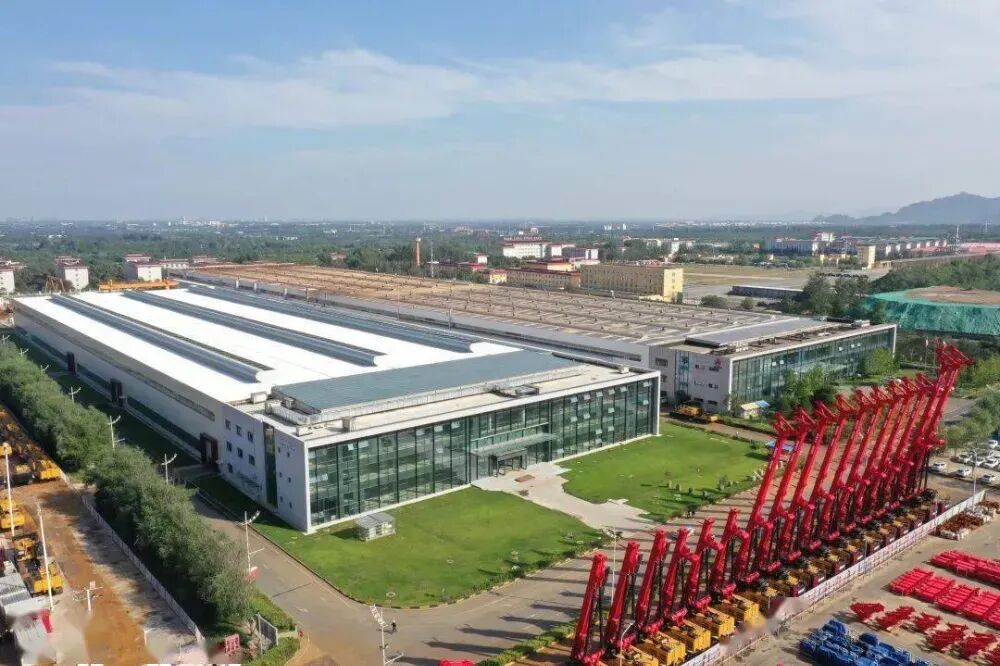
Group 1 - The core viewpoint of the articles highlights the collaboration between China Unicom and SANY Heavy Industry to leverage 5G and UWB technologies for enhancing manufacturing efficiency and precision in the heavy machinery sector [1][3][5] - The partnership aims to create a 5G+UWB integrated positioning system that enables visual management of personnel, vehicles, and materials within the factory, thereby improving production processes [1][3] - The implementation of AI-driven models for material utilization and automated scheduling in production processes is expected to optimize resource management and enhance operational efficiency [5][7] Group 2 - The strategic cooperation between China Unicom and SANY has evolved since 2019, with significant milestones including the establishment of a 5G industrial internet innovation center and the successful deployment of a 5G private network at SANY's Beijing facility [3][7] - The 5G+UWB positioning technology is noted for its high precision and cost-effectiveness, making it suitable for various industrial environments, thus addressing specific production challenges faced by SANY [3][5] - Future plans include expanding the collaboration to encompass AI model development and further integration of digital transformation strategies, aiming to set new benchmarks in the manufacturing and telecommunications sectors [7]



乐动机器人再战港股:割草机器人带动扭亏,面临反倾销调查
Nan Fang Du Shi Bao· 2025-12-08 08:43
Core Viewpoint - Ledong Robotics has refiled its IPO application after a six-month hiatus, presenting its first profitable financial report, with significant growth in revenue and net profit, while facing potential challenges from an EU anti-dumping investigation on its lawnmowers [2][5]. Group 1: Financial Performance - In the first half of 2025, Ledong Robotics reported revenue of 386 million yuan, a year-on-year increase of 97%, and an adjusted net profit of 2.178 million yuan [2][5]. - The lawnmower segment contributed 20% of the total revenue, with a gross margin of 45.6%, enhancing the company's overall profitability [2][5]. - The company experienced net losses of 73.1 million yuan, 68.5 million yuan, and 56.5 million yuan from 2022 to 2024, respectively [3]. Group 2: Product Development and Market Strategy - Ledong Robotics, established in 2017, focuses on visual perception technology and plans to launch its first-generation smart lawnmower in 2024, with a second generation expected in 2025 [3][4]. - The revenue from lawnmowers is projected to grow significantly, contributing 2.327 million yuan in 2024 and increasing to 7.746 million yuan in the first half of 2025 [4]. - The gross margin for lawnmowers is expected to be higher than that of visual perception products, with a gross margin of 33.6% in 2024 and 45.6% in the first half of 2025 [4]. Group 3: Market Expansion and Challenges - The share of overseas revenue is increasing, with international markets contributing 16.1% of total revenue in the first half of 2025, up from 4% in 2024 [4]. - The European market contributed 40.34 million yuan, accounting for 10.4% of total revenue, while North America contributed 15.34 million yuan, representing 4% [4]. - An EU anti-dumping investigation has been initiated against Chinese lawnmower manufacturers, which could impact the company's competitiveness in the European market [5].


机器人昔日万元“日薪”遭膝斩
3 6 Ke· 2025-12-08 01:01
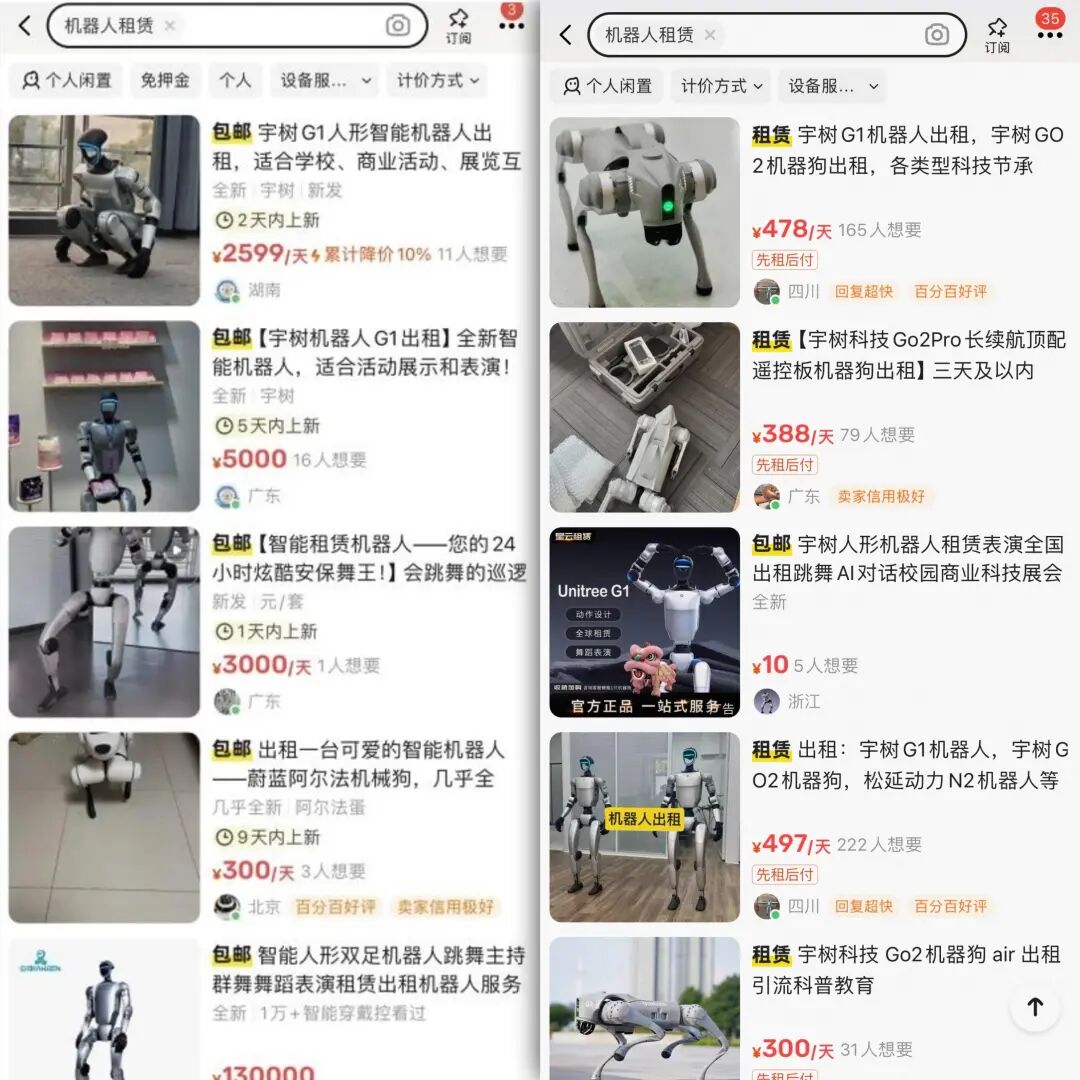
机器人租赁价格"膝斩",跌至千元无人问津? 近期,《科创板日报》记者调研发现,当前机器人租赁市场价格较年初万元"日薪"的高点已出现明显回落,整体跌幅可称为"膝斩"。基础款人形机器人日 租金已回落至2000元左右,四足机器人日租金更是下探至500元起步。 当机器人租赁市场挤出泡沫、回归理性,其长远价值正从聚光灯下的"表演者",转向生产、物流等更广阔的现实场景。而实现这一转型的关键,在于如何 技术上构建起类人的感知、决策与执行完整闭环。 机器人租赁价格"膝斩" 机器人租赁市场的狂热始于2025年春节。当时,宇树科技的人形机器人登上春晚舞台表演扭秧歌,视频播放量迅速突破亿,点燃了市场热情。 短时间内,商业演出、企业年会、婚庆典礼等需求集中爆发,机器人租赁市场迅速陷入"一机难求"的状态。 根据恒州诚思的统计,2024年全球智能机器人租赁收入规模约112.2亿元,预计到2031年收入规模将接近171.2亿元,2025-2031年的年复合增长率为6.1%。 其中商用服务机器人租赁占比达65%,主要应用于商演、景区导览、企业年会等场景。 在今年年初,据《科创板日报》记者调查,宇树科技旗下的机器狗(含Air版与Pro版)每日 ...
杭氧股份(002430):“周期+成长”兼备 可控核聚变+量子计算+商业航天齐发力
Xin Lang Cai Jing· 2025-12-08 00:35
Core Logic - The company is accelerating its growth attributes through controllable nuclear fusion, quantum computing, and commercial aerospace. It has established partnerships with leading firms like Anhui Fusion New Energy and is continuously winning orders in controllable nuclear fusion, indicating a significant growth potential [1] - In quantum computing, the company has signed a cooperation agreement with Zhejiang University to focus on advanced fields such as "deep low temperature + advanced computing" and "industrial gases + AI models" [1] - In commercial aerospace, the company has won a bid for a large liquid oxygen tank construction project at a launch site, following its previous provision of liquid hydrogen storage tanks, showcasing its capabilities in high-precision low-temperature storage equipment [1] Industry Outlook - The company is positioned as a leading player in the industrial gas sector, benefiting from both cyclical and growth attributes. The industry is currently at the bottom of the cycle, with expectations for a performance turnaround in the future. The company is accelerating its layout in controllable nuclear fusion and other fields, opening up a second growth curve [1][2] Market Segments - Pipeline gas is characterized by its defensive attributes, showing stable growth with minimal impact from macroeconomic fluctuations. The company is expected to increase its market share in the third-party stock market to 30-40% by 2021, contributing to long-term performance growth [2] - Retail gas represents the company's offensive attributes, with potential for significant performance elasticity as gas prices are currently at historical lows. Economic recovery could drive gas price increases, enhancing the performance of retail gas [2] - The controllable nuclear fusion equipment, quantum computing, and commercial aerospace sectors present substantial future market opportunities, creating a second growth engine for the company [2] Profit Forecast and Valuation - The company's projected net profit attributable to shareholders for 2025-2027 is estimated at 1.07 billion, 1.30 billion, and 1.51 billion yuan, with year-on-year growth rates of 16%, 22%, and 17% respectively. The corresponding price-to-earnings ratios are 26, 21, and 18 times [3]

靠一台电脑和3D打印机,80后男子在杭州车库手搓机器人
Huan Qiu Wang Zi Xun· 2025-12-07 13:12
Core Viewpoint - The article highlights the innovative work of Zhang Dong, who has created a community-driven workshop in Hangzhou focused on building humanoid robots using readily available materials and 3D printing technology, attracting young engineers and enthusiasts to learn and collaborate [1][5][16]. Group 1: Workshop and Community - Zhang Dong operates a 200-square-meter workshop in Hangzhou, where he and a group of robot enthusiasts assemble humanoid robots as a hobby rather than a commercial venture [3][5]. - The workshop features various workstations, including a live streaming area and multiple computer desks where young engineers work on robot prototypes [5][7]. - The community has grown to include over ten young engineers, primarily from the post-95 and post-00 generations, who travel from various regions to learn from Zhang [16]. Group 2: Robot Development - The humanoid robots being developed include three main types: a humanoid robot with a dexterous hand and lifelike head for interaction, a wheeled robot for factory tasks, and a robotic dog for patrol and assistance [7][8]. - The basic components for these robots are sourced online, while custom parts are produced using four 3D printers in the workshop [7][8]. - Zhang has a history of working on robotics, having previously developed agricultural robots and other automation equipment over the past 20 years [8][10]. Group 3: Educational Outreach - Zhang started a social media presence called "Zhang's Garage" to share his robot-building process and provide a platform for aspiring robot enthusiasts to learn [14][16]. - The initiative has gained significant traction, amassing thousands of followers and attracting young engineers eager to gain hands-on experience in robotics [14][16]. - Zhang aims to lower the entry barriers in the robotics field by sharing open-source code and encouraging innovation among hobbyists [16].

阿里巴巴-W(09988):电商老兵的“云上起舞”与即时零售豪赌
Sou Hu Cai Jing· 2025-12-07 06:52
Group 1: Company Fundamentals - Alibaba's business model is evolving from traditional e-commerce to a more diversified ecosystem that includes core e-commerce, cloud computing, digital media, and instant retail, driven by a shift in growth strategy [1] - The e-commerce segment remains the largest revenue contributor, accounting for 66.28% of total revenue, with customer management revenue growing by 10% year-on-year in Q3 2025 [2] - International e-commerce platforms like Lazada and Trendyol have seen a 45% year-on-year revenue increase, becoming significant channels for overseas expansion [3] Group 2: Cloud Computing and AI - Alibaba Cloud's revenue accelerated by 34% year-on-year, maintaining a leading market share of 35.8% in China, serving major clients like the NBA and Bosch for AI model training and big data analysis [4] - The "Qianwen" AI model app achieved over 10 million downloads within a week of public testing, indicating potential for integration into e-commerce and mapping applications [5] Group 3: Instant Retail Focus - The "Taobao Flash Purchase" service, which integrates with Ele.me, generated revenue of 22.9 billion yuan, reflecting a 60% year-on-year increase, although it still operates at a loss due to customer acquisition subsidies [6] Group 4: Competitive Position and Barriers - Alibaba's platform connects 10 million merchants with 900 million consumers, creating a data-driven efficiency barrier [7] - The company invests over 120 billion yuan annually in R&D, developing proprietary AI chips and models, with cloud services spanning 29 global regions [8] - The integration of 3,500 offline brand stores into instant retail has led to a 198% increase in orders during the Double 11 shopping festival [9] Group 5: Growth Potential and Industry Ranking - In Q3 2025, Alibaba reported revenue of 247.8 billion yuan, a 5% year-on-year increase, but operating profit fell by 85% due to investments in instant retail [10] - The company aims for cloud business revenue to exceed 30% of total revenue by 2027, with international e-commerce growth expected to maintain over 40% [11] - Alibaba ranks among the top three globally in e-commerce GMV and second in the Asia-Pacific cloud computing market [12] Group 6: Market Perception - Alibaba is recognized as a leading e-commerce player, a cloud computing concept, and a core asset in Hong Kong stocks [13] - However, it is also viewed as a high-growth stock with fluctuating net profit growth and a hard-tech company where R&D conversion may take time [14] Group 7: Management and Shareholder Structure - The company is led by a partner system ensuring strategic stability, with Chairman Cai Chongxin and CEO Wu Yongming focusing on a technology-driven strategy [15] - Major shareholders include SoftBank with a 23.9% stake and Hong Kong Central Clearing with a 4.01% stake, indicating active participation from northbound funds [16][17] Group 8: Financial Health - Key financial data for Q3 2025 shows revenue of 247.8 billion yuan (up 5% year-on-year), operating profit of 5.4 billion yuan (down 85%), and net profit of 20.6 billion yuan (down 53%) [19] - Operating cash flow decreased by 68% to 10.1 billion yuan, while cloud business gross margin improved to 38.5% [20] Group 9: Valuation Assessment - The current PE ratio is 22.17, below the industry average of approximately 28, indicating a 21% undervaluation, while the PB ratio is 2.61, 25% below the industry average [23] - If net profit recovers to 120 billion yuan in 2026, a 20x PE would suggest a reasonable market value of 2.4 trillion HKD, compared to the current valuation of 2.96 trillion HKD, indicating a 23% overvaluation [23] Group 10: Strategic Operations - Suggested entry price range is 125-135 HKD, with a target exit price of 170-180 HKD, contingent on cloud business growth and instant retail profitability [25] Group 11: Future Projections - Optimistic scenario predicts a surge in AI cloud orders and reduced losses in instant retail, potentially leading to a net profit of 140 billion yuan and a market value challenge of 3.5 trillion HKD by 2026 [26] - Pessimistic scenario anticipates continued price wars, with stock prices potentially dropping below 120 HKD [27] Group 12: Key Signals - Important indicators include maintaining cloud business gross margin above 40%, the timeline for instant retail profitability (expected mid-2026), and sustaining international e-commerce growth above 40% [28]


提供全天候智能陪伴体验 理想AI眼镜Livis正式上市
Bei Jing Ri Bao Ke Hu Duan· 2025-12-05 14:25
Core Insights - Li Auto officially launched its AI glasses, Livis, in collaboration with Zeiss, marking the first product from their global strategic partnership [1][3] - The glasses are priced starting at 1999 yuan, with a 15% national subsidy available until December 31 for the first sales month [1] - Livis aims to extend Li Auto's smart experience beyond the vehicle, serving as a natural interaction interface for users [3] Product Features - Livis glasses weigh only 36 grams and are optimized for comfort based on data from over 50,000 Chinese head shapes [8] - They feature IP54 dust and water resistance, making them suitable for daily use [8] - The glasses come with high-quality Zeiss lenses and offer various styles, including options for prescription, photochromic, and sunglasses [1][8] Technology and Functionality - Livis is equipped with a new version of Li Auto's AI assistant, powered by the self-developed MindGPT-4o multimodal model, allowing for hands-free operation of vehicle functions [5][6] - The glasses support a continuous operation time of 18.8 hours and can last up to 78 hours in standby mode [10] - They include a first-person camera with a 12-megapixel lens, supporting 105-degree ultra-wide-angle shooting and features like EIS electronic stabilization [8][10] Audio and User Experience - Livis incorporates open-space audio technology, providing a 360-degree surround sound experience [8] - The glasses are designed to enhance daily life interactions, allowing users to manage various tasks seamlessly without needing to use their phones [6][10]


万兴科技(300624):Q3亏损持续收窄,“双模驱动”技术产品迭代
ZHONGTAI SECURITIES· 2025-12-05 12:28
Investment Rating - The report assigns a rating of "Accumulate" for the company [3] Core Views - The company has shown a steady revenue growth of 8.50% year-on-year in the first three quarters of 2025, with total revenue reaching 1.142 billion yuan [4] - The net profit attributable to the parent company for the same period was a loss of 62 million yuan, indicating a decrease compared to the previous year [4] - The company is facing pressure on performance due to rising AI server costs and increased advertising expenses, which may impact short-term results [4] - Long-term prospects remain positive due to the company's unique multi-modal capabilities and the potential for growth as industry technology matures [4] Summary by Sections Financial Performance - For 2023, the company is projected to achieve a revenue of 1,481 million yuan, with a year-on-year growth rate of 25% [3] - The net profit for 2023 is expected to be 86 million yuan, reflecting a significant year-on-year growth of 113% [3] - The earnings per share (EPS) for 2023 is estimated at 0.63 yuan [3] Revenue and Profit Forecast - Revenue forecasts for 2025, 2026, and 2027 are 1,573 million yuan, 1,787 million yuan, and 2,065 million yuan respectively [5] - The net profit for 2025 is projected to be a loss of 43 million yuan, with subsequent years showing a recovery to 21 million yuan in 2026 and 41 million yuan in 2027 [5] Cost and Expense Analysis - The operating costs for the first three quarters of 2025 increased by 42.24% year-on-year, primarily due to rising AI server fees and platform service costs [4] - The company’s sales expenses are projected to rise from 849 million yuan in 2024 to 1,094 million yuan in 2027 [5] Strategic Initiatives - The company is implementing a "dual-mode drive" strategy, enhancing its AI capabilities and product offerings [4] - Significant upgrades to existing products and the introduction of new AI-driven features are expected to open new revenue streams [4]

贾可:中国汽车淘汰赛至少还有十年
Xin Lang Cai Jing· 2025-12-05 11:18
Core Viewpoint - The Chinese automotive industry is not yet in a stable state and may take at least another 10 years to reach a comfortable equilibrium, with an expectation that around 10 major automotive giants will remain in the market [1][36][56]. Group 1: Industry Outlook - The WNATCES 2025 event aims to address the current challenges in the automotive industry, focusing on the collaboration between manufacturers and suppliers to create a sustainable ecosystem [7][39]. - The event features 100 speakers, including 42 automotive executives and 1,000 attendees from 12 automotive groups and 300 supply chain companies, highlighting the industry's collaborative efforts [7][38]. - The theme of the event, "Long-term and Short-term," emphasizes the need for balance between immediate concerns and future growth strategies [5][36]. Group 2: Historical Context - The evolution of the automotive industry in Europe and the U.S. shows a historical pattern of consolidation, with significant changes occurring over more than a century [13][44]. - The Chinese automotive industry has undergone rapid changes since 2009, with government initiatives aimed at creating a few large manufacturers, but the market has seen a shift towards electric and intelligent vehicles [14][45]. Group 3: Competitive Landscape - The competitive landscape is shifting, with the emergence of six major camps in the Chinese automotive market, including traditional manufacturers, state-owned enterprises, and new entrants [49][51]. - The core competitive advantages have transitioned from traditional components to new technologies such as electric powertrains and intelligent systems, which are now critical for success in the market [17][48]. Group 4: Future Predictions - Industry leaders predict a "淘汰赛" (elimination race) in the automotive sector, with varying timelines for consolidation, ranging from 3 to 10 years [11][42]. - The future of the industry is expected to involve significant technological advancements, particularly in areas like AI and smart vehicle systems, which will reshape the competitive dynamics [25][56]. Group 5: Collaboration and Ecosystem Building - The event aims to foster collaboration among industry players to build a robust ecosystem that can adapt to ongoing changes and challenges [27][61]. - The focus on creating a cooperative environment is seen as essential for navigating the complexities of the automotive market and ensuring long-term sustainability [58][61].

贾可:中国汽车淘汰赛至少还有十年
汽车商业评论· 2025-12-05 07:31
Core Viewpoint - The Chinese automotive industry has not yet reached a stable state, and it may take another 10 years for the market to stabilize, with approximately 10 major automotive giants expected to remain in the future [3][35]. Group 1: Industry Overview - The WNATCES 2025 event focused on the theme of "long-term vs. short-term," featuring various forums and exhibitions aimed at addressing current industry pain points and promoting sustainable development in the new automotive ecosystem [5][7]. - Historical context shows that the automotive industry has undergone significant changes over the past century, with periods of fragmentation followed by consolidation, particularly in Europe and the U.S. [12][15][17]. Group 2: Market Dynamics - Predictions from industry leaders suggest a competitive landscape where only a few manufacturers will survive in the coming years, with estimates ranging from 3 to 10 major players by 2030 [10][19]. - The transition from traditional fuel vehicles to electric and intelligent vehicles has created new opportunities and challenges, with core components like the "three electrics" (battery, motor, and electronic control) becoming critical for competitiveness [20][22]. Group 3: Competitive Landscape - The current automotive market is categorized into six major camps, including traditional private enterprises, state-owned groups, new car-making forces, and joint ventures, each with distinct strategies and market positions [26][29]. - The rise of new entrants in the automotive sector, particularly those leveraging technology and innovative business models, indicates a dynamic and evolving competitive environment [31][38]. Group 4: Future Outlook - The industry is expected to continue evolving, with a focus on both cost leadership and superior user experience as key competitive strategies [24][30]. - The integration of AI and other advanced technologies into the automotive sector presents significant potential for transformation and growth, suggesting that the industry is still in a phase of exploration and development [33][43].
