全球化

Search documents
申万宏源:维持上美股份(02145)“买入”评级 公司战略落地成效持续显现
智通财经网· 2025-10-16 06:53
Core Viewpoint - The company is building long-term advantages through multi-brand collaboration, channel optimization, and increased R&D investment, with strategic implementation showing continuous results [1] Group 1: Brand Strategy - The company announced Jackson Wang as the global brand ambassador, enhancing its high-end image and international presence [2] - The company has signed popular stars like Ding Yuxi and Tian Xunying, with the latter achieving significant sales on the first day of announcement [2] Group 2: Sales Strategy - The company is focusing on profit and core products during the Double Eleven promotion, leveraging partnerships with influencers like Li Jiaqi to promote high-end series [3] - The X peptide series is reinforced by Jackson Wang's endorsement, while the "Red Luck" concept aligns with the festive season, aiming to boost the cosmetics segment [3] Group 3: Competitive Advantages - The company has a strong brand presence and consumer recognition, benefiting from extensive marketing coverage [4] - The organization employs a "top-tier talent" strategy, attracting high-level professionals and enabling quick responses to market changes [4] - The company has significant negotiation power due to its large sales volume, allowing it to secure resources effectively [4] - The supply chain is vertically integrated, enabling rapid product launches and maintaining high profit margins [4] Group 4: Growth Strategy - The company achieved an online GMV of 4.5 billion yuan in the first half of 2025, with multiple products exceeding 100 million yuan in sales [5] - Three new brands are set to launch in 2025, with positive performance from existing brands, supporting a long-term revenue target of 30 billion yuan by 2030 [5] - The company is expanding globally, with a factory investment of 300 million yuan in Southeast Asia and plans for further expansion into North America and Europe [5]
美国国家亚太裔商业与创业协会董继玲致辞NEX-T Summit 2025:汇聚前瞻思考,共同定义全球化新篇章
Tai Mei Ti A P P· 2025-10-16 02:50
大家好!来自华盛顿特区的问候。 我是美国全国亚太裔商业与创业协会总裁兼首席执行官董继玲(Chiling Tong),。我们代表着全美超 过 300万名亚太裔小企业主,并与全国约130家商会及合作机构密切协作。非常荣幸能够参与在斯坦福 大学举办的 2025 NEX-T峰会。 首先,我要感谢 NextFin.AI、全球亚裔领袖联盟、钛媒体集团、盛大集团及巴伦中国以及所有杰出领导 者和合作伙伴,他们为这场适逢其时、前瞻性大会付出了努力。 美西时间2025年9月27–28日,钛媒体集团携手NextFin.AI、全球亚裔领袖联盟(GALA)、盛大集团 (Shanda Group) 与 巴伦中国(Barron's China),在美国斯坦福大学成功举办了首届硅谷未来峰会 ——NEX-T Summit2025。 美国国家亚太裔商业与创业协会总裁兼首席执行官董继玲(Chiling Tong)在致辞中表示,人工智能与 全球格局的转变正处于关键拐点。她强调,亚裔美国企业家与创新者应携手推动技术与商业进步,搭建 文化桥梁、增强信任,共同塑造一个更具包容性的全球未来。 以下是董继玲(Chiling Tong)在钛媒体硅谷未来峰会—— ...

上美股份(02145):韩束官宣全球代言人,子品牌势头迅猛
Shenwan Hongyuan Securities· 2025-10-16 02:14
Investment Rating - The report maintains a "Buy" rating for the company [2] Core Insights - The company has announced Wang Jiaer as its global spokesperson, enhancing its brand's global positioning. This partnership is expected to leverage Wang's international fan base and high-end brand associations [2] - The company has shown strong sales performance, with significant revenue generated from collaborations with popular influencers, indicating robust consumer purchasing power [2] - The company is focusing on a multi-brand strategy and global expansion, with plans to enter Southeast Asia and eventually North America and Europe, aiming for a long-term revenue target of 30 billion by 2030 [7] Financial Data and Profit Forecast - Revenue projections for the company are as follows: - 2023: 4,191 million - 2024: 6,793 million - 2025E: 8,513 million - 2026E: 10,641 million - 2027E: 12,786 million - Year-on-year growth rates are projected at 57% for 2023, 62% for 2024, and 25% for 2025 and 2026, with a 20% growth rate expected in 2027 [4] - Net profit forecasts are as follows: - 2023: 461 million - 2024: 781 million - 2025E: 1,149 million - 2026E: 1,496 million - 2027E: 1,806 million - The net profit growth rates are projected at 213% for 2023, 69% for 2024, and 47% for 2025, with 30% and 21% expected for 2026 and 2027 respectively [4] - Earnings per share are expected to increase from 1.16 in 2023 to 4.54 in 2027, with a net asset return rate projected to be 36% in 2025 [4] Strategic Initiatives - The company is implementing a robust strategy for the Double Eleven shopping festival, focusing on high-margin products and leveraging influencer marketing [7] - The company is enhancing its competitive edge through brand development, talent acquisition, and supply chain integration, allowing for rapid product launches and cost control [7] - The multi-brand strategy includes the introduction of new brands and IP collaborations, with a clear path for expansion into various product categories [7]
配送超35分钟复购降 30%,巨头竞速即时零售,争最后一公里
Sou Hu Cai Jing· 2025-10-15 20:50
Core Insights - This year's "Double 11" shopping festival has started earlier than in previous years, with JD.com beginning promotions on October 9, resulting in the longest "Double 11" period ever, extending by 5 days compared to last year [1] - The shopping landscape has changed significantly, with platforms shifting focus from acquiring new users to retaining existing ones as the market nears saturation with nearly 1 billion online shoppers [6][8] Group 1: Simplification of Rules - E-commerce platforms are simplifying their promotional rules to enhance user experience, with Tmall and Taobao introducing "official discounts" and JD.com adding "official direct discounts" alongside traditional promotions [8][10] - The shift reflects a broader understanding that consumers now prefer straightforward and transparent value propositions rather than complex discount structures [10][12] Group 2: Instant Retail Revolution - Instant retail is emerging as a key competitive advantage, aiming to eliminate long delivery times and meet consumer needs immediately, transforming the traditional supply chain model [14][16] - Companies like Alibaba and JD.com are investing in infrastructure to support rapid delivery, with AI systems predicting consumer needs based on various data points [17][19] Group 3: Global Expansion - E-commerce giants are also focusing on global expansion, with Alibaba launching a "Taobao Outbound" initiative to facilitate international sales for domestic merchants, simplifying logistics and payment processes [23][25] - This strategy allows brands to operate in a dual market, catering to both traditional e-commerce and instant retail demands [25][27] Group 4: Consumer Behavior Changes - Consumers are adapting to a mixed shopping strategy, categorizing purchases into immediate needs and planned purchases, reflecting a shift in shopping behavior [27][29] - The overarching goal for companies is to deliver products and services in the most efficient and hassle-free manner possible, which will determine future success in the market [29]


当中国“卷王”遇见“松弛感”沙特工人
虎嗅APP· 2025-10-15 09:50
Core Viewpoint - The article discusses the cultural clash between Chinese workers and Saudi labor practices in the context of large-scale construction projects in Saudi Arabia, highlighting the differences in work ethics, labor conditions, and the impact of local regulations on foreign labor [2][3][4]. Group 1: Labor Dynamics - Saudi Arabia has approximately 15.7 million foreign residents, making up 44.4% of the total population, with foreign labor being crucial to the economy [3]. - Chinese workers in Saudi Arabia often work over 12 hours a day under extreme conditions, earning around 28,000 RMB per month, which is double the domestic salary for similar positions [5][6]. - The work culture in Saudi Arabia is influenced by religious practices, with local employees adhering to a more relaxed schedule, including multiple prayer breaks and shorter working hours during Ramadan [6][7]. Group 2: Wage Disparities - The article highlights a significant wage gap based on nationality, with Western experts earning up to five-digit salaries in USD, while experienced Chinese engineers earn between 3,000 to 8,000 USD per month [11]. - South Asian workers earn significantly less, with monthly salaries ranging from 200 to 600 USD, illustrating a stark contrast in living conditions and opportunities based on nationality [11][10]. Group 3: Cultural Integration Challenges - The "Kafala" sponsorship system in Saudi Arabia creates a divide between local and foreign workers, limiting the autonomy of foreign laborers [9][10]. - Chinese companies are adapting by localizing their workforce and respecting local customs, such as prayer times, to improve integration and productivity [17][18]. Group 4: Business Environment - Business operations in Saudi Arabia heavily rely on personal networks and relationships, making it essential for foreign companies to establish local partnerships to succeed [14][15]. - The article emphasizes the need for Chinese companies to adapt their business strategies to the local context, moving away from a purely efficiency-driven approach to one that respects local customs and practices [22][21].
天娱数科:贺晗出任董事长 持续推进数字化智能化全球化战略
Zhong Zheng Wang· 2025-10-15 05:00
Core Insights - Tianyu Digital Technology has completed a board restructuring, with He Han appointed as the new chairman, indicating a strategic shift in leadership [1] - The company has adopted a development strategy focused on "digitalization, intelligence, and globalization," integrating "data elements" with "artificial intelligence" to enhance its business operations [1][2] - In the first half of the year, the company reported a revenue increase of 29.64% year-on-year, and a turnaround in net profit, indicating strong financial performance [1] Digitalization - The company has established a comprehensive system from foundational capabilities to application scenarios by merging "data elements" with "artificial intelligence," solidifying its technological foundation [2] - The self-developed large model has accelerated the optimization of the AI marketing platform, transitioning AI tools into intelligent collaborative assistants, enhancing user service throughout the lifecycle [2] - Tianyu Digital Technology has proactively entered the AIGC technology field, integrating advertising intelligence and AI live-streaming e-commerce capabilities, providing a full-chain AI marketing service across various sectors [2] Intelligence - The company is continuously upgrading its spatial intelligence MaaS platform, enhancing its core capabilities in perception, reasoning, and execution, while improving the quantity and quality of data sets [3] - The spatial intelligence MaaS platform serves as a digital infrastructure, supporting cutting-edge applications such as spatial computing and humanoid robotics [3] - Strategic investment in high-tech companies like Chip Ming, which focuses on spatial computing and AI chip design, strengthens the company's competitive edge in the spatial intelligence sector [3] Globalization - Globalization is a key driver for Tianyu Digital Technology's growth potential, focusing on the integration of the latest global technologies with local AI application experiences [4] - The company has innovated marketing and customer acquisition methods through AI technology in various global markets, including Indonesia, Thailand, the USA, Latin America, and the Middle East [4] - The overseas programmatic application distribution platform, 3u tools, utilizes intelligent recommendation algorithms to support app deployment and management, continuously optimizing data diagnostics and verification [4] Future Strategy - The company aims to promote global expansion and localized operations by integrating global technologies with local market advantages [5] - There is a commitment to closely follow AI technology iterations to seize new marketing opportunities and promote AI products and services globally [5] - The globalization strategy will be embedded in management, research and development, marketing, and talent cultivation, ensuring alignment with local market needs and cultural characteristics [5]

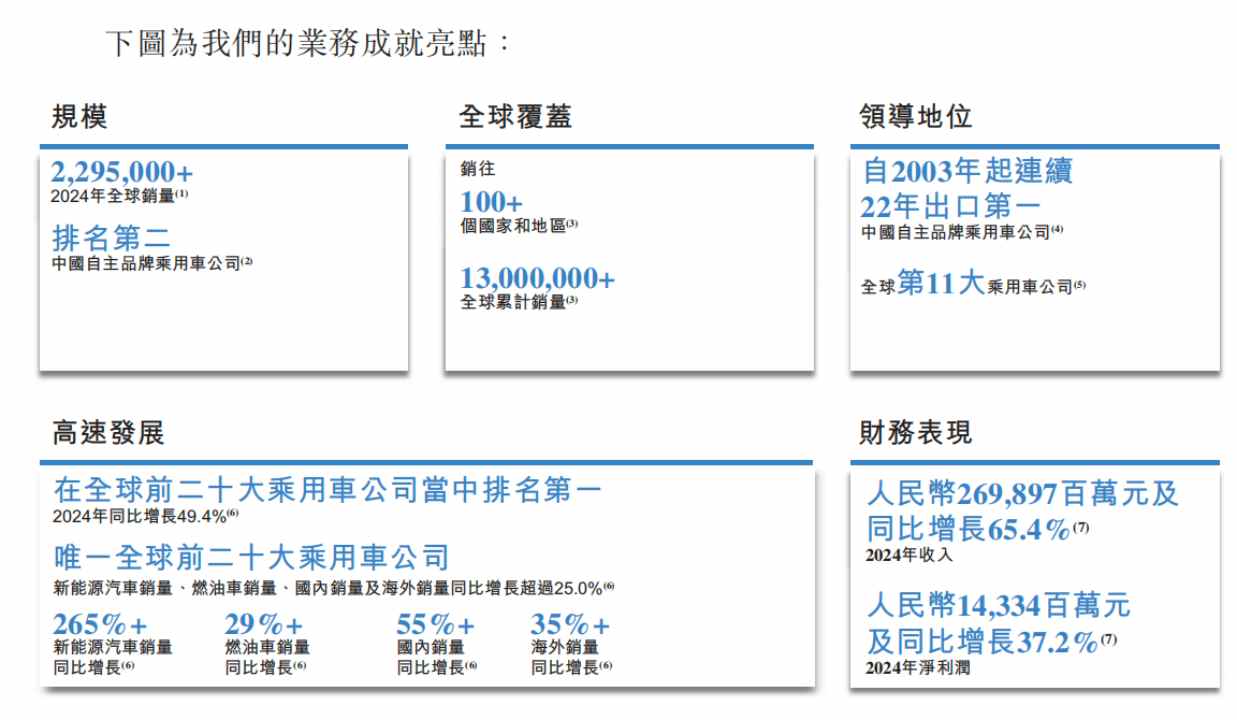
奇瑞汽车(09973)完成IPO里程碑:全球化领航,开启科技智能转型新征程
智通财经网· 2025-10-15 04:11
Core Viewpoint - Chery Automobile is set to list on the Hong Kong Stock Exchange on September 25, 2025, marking a significant milestone in its global expansion and technological transformation strategy, which will have a profound impact on the automotive industry landscape [1][11]. Group 1: Company Overview - Founded in 1997, Chery Automobile has evolved into a global passenger vehicle enterprise, with a complete industrial system in engine, transmission, and chassis manufacturing [2]. - Chery has sold over 13 million vehicles globally and has been the top exporter of Chinese passenger vehicles for 22 consecutive years since 2003, showcasing its strong competitiveness and brand influence in international markets [2][3]. Group 2: Financial Performance - Chery's global sales reached 2.295 million units in 2024, with a year-on-year growth of 49.4%, making it the only company among the top 20 global passenger vehicle manufacturers to achieve over 25% growth in both new energy and fuel vehicle sales [3][4]. - The company reported revenues of RMB 926.18 billion in 2022, RMB 1,632.05 billion in 2023, and projected RMB 2,698.97 billion in 2024, with a compound annual growth rate of 70.7% [4][5]. Group 3: Technological Advancements - Chery has established a comprehensive technology system focusing on key areas such as engine, transmission, electric drive, and battery safety systems, with significant investments in R&D [6][7]. - The company has increased its R&D expenditure from RMB 3.646 billion in 2022 to RMB 9.243 billion in 2024, reflecting a compound annual growth rate of 59.2% [6]. Group 4: Global Market Strategy - Chery has achieved significant sales growth in overseas markets, ranking first among Chinese brands in Europe, South America, and the Middle East, and second in North America and Asia (excluding China) [4][10]. - The company has established eight R&D centers globally and is actively localizing production to enhance competitiveness and meet local market demands [7][10]. Group 5: IPO Impact - Chery's IPO is the largest for an automotive company in recent years, raising over $1 billion, which will be used to enhance R&D, expand product offerings, and strengthen its global market presence [11]. - The successful listing is expected to attract significant capital into the Hong Kong automotive sector, boosting market activity and investor confidence [11][12].
出海沙特:当中国“卷王”遇见“松弛感”沙特工人
创业邦· 2025-10-15 03:23
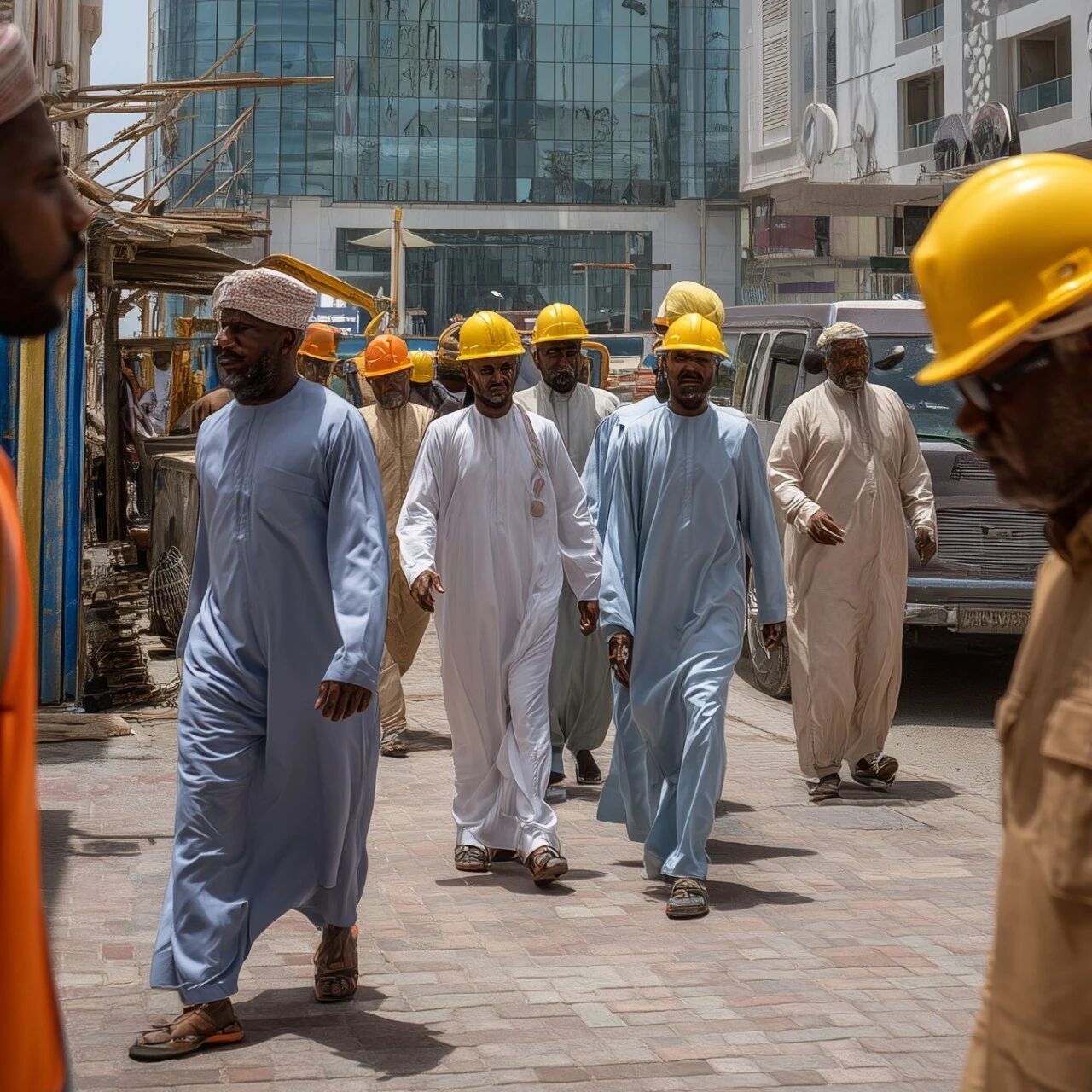
Core Viewpoint - The article discusses the cultural clash between Chinese workers and Saudi labor practices in the context of large-scale projects in Saudi Arabia, highlighting the differences in work ethics, labor conditions, and the impact of local regulations on foreign workers [4][10][21]. Group 1: Labor Conditions and Cultural Differences - Chinese workers in Saudi Arabia endure extreme conditions, working over 12 hours a day in temperatures reaching 50°C, earning approximately 28,000 RMB per month, which is double the domestic salary for similar positions [6][7]. - The work ethic of Chinese laborers is driven by a belief that delays are a sign of failure, leading them to push their limits despite health risks, while Saudi workers adhere to a more relaxed work schedule influenced by religious practices [9][10]. - The "Kafala" sponsorship system creates a significant divide between foreign workers and local employees, leading to disparities in pay and working conditions based on nationality, with some foreign workers earning significantly less than their Western counterparts [12][13]. Group 2: Economic and Social Implications - The Saudi economy relies heavily on foreign labor, with approximately 44.4% of the population being expatriates, and the influx of Chinese workers has increased significantly due to the Belt and Road Initiative [4][10]. - The high welfare system in Saudi Arabia, supported by oil revenues, has led to a lack of motivation among local youth, creating a "comfort trap" that hinders innovation and productivity [13][15]. - The article emphasizes the need for Chinese companies to adapt to local customs and labor laws, suggesting that successful integration requires respect for local practices and a willingness to compromise [21][22]. Group 3: Business Strategies and Local Integration - Chinese companies are increasingly adopting local hiring strategies to comply with Saudi regulations, often hiring local workers initially and then selectively retaining those who demonstrate capability [21][22]. - Building trust and relationships is crucial for business success in Saudi Arabia, where personal connections often outweigh formal contracts in securing projects [16][18]. - The article highlights examples of successful local integration, such as J&T Express's collaboration with local logistics training institutions, which helps develop local talent while maintaining operational efficiency [22][24].
天娱数科董事会完成换届 ,将持续推进数字化、智能化、全球化战略
Zheng Quan Shi Bao Wang· 2025-10-15 02:12
Core Insights - Tianyu Digital Technology has completed a board restructuring, with He Han appointed as the new chairman, who is also a member of the National Committee of the Chinese People's Political Consultative Conference and president of the Shanxi Digital Industry Association [1] - The company has implemented a development strategy focused on "digitalization, intelligence, and globalization," integrating "data elements" with "artificial intelligence" to enhance its business platforms [1][2] - In the first half of 2025, the company reported a revenue of 988 million yuan, a year-on-year increase of 29.64%, and a net profit of 23.62 million yuan, marking a significant turnaround from losses [1] Digitalization Foundation - The company has established a comprehensive system from foundational capabilities to application scenarios by integrating "data elements" with "artificial intelligence" [2] - The AI marketing SaaS platform has achieved significant improvements in efficiency and effectiveness, contributing to a revenue of 967 million yuan from data traffic business, with a gross margin of 21.70% [2] Intelligent Deepening - The company is enhancing its spatial intelligence MaaS platform, focusing on the core capabilities of "perception-reasoning-execution" and improving the quality and quantity of data sets [4] - The platform has registered over 150,000 3D data entries and 650,000 multimodal data entries, supporting advanced applications in various fields [4] Global Expansion - The company's globalization strategy aims to integrate the latest global technologies with Chinese AI application experiences and local market insights [7][8] - The company has achieved service provider qualifications in multiple countries and regions, including Indonesia, Thailand, the United States, and the Middle East, leveraging TikTok's extensive user base for global marketing [7][8]
比亚迪第1400万辆车在巴西下线,总统都来亲自站台
商业洞察· 2025-10-14 10:10
Core Viewpoint - BYD's success in Brazil signifies a new chapter in its globalization strategy, emphasizing the importance of technology and local integration in international expansion [1][3][5] Group 1: Globalization and Local Integration - BYD's 14 millionth electric vehicle rolled off the production line in Brazil, attended by President Lula, highlighting the company's commitment to global expansion [1] - The renaming of the road outside the factory to "BYD Road" reflects local recognition and acceptance of the brand [3] - The factory's workforce increased from 400 to 1,800 employees, with potential to create an additional 20,000 jobs, showcasing BYD's impact on local employment [3] Group 2: Product Success and Market Performance - The launch of the Song Pro in Brazil has made it a bestseller, with President Lula receiving one as his second BYD vehicle [3] - The U9 model demonstrated impressive features, attracting interest from wealthy Brazilian buyers [3] - In September, BYD achieved over 10,000 vehicle sales in Brazil, leading the new energy vehicle market, driven by technology and localization efforts [3] Group 3: Lessons for Other Companies - BYD sets an example for other companies looking to expand internationally, emphasizing that true globalization involves bringing technology, creating jobs, and integrating into local communities [5]