多边贸易体系

Search documents
王毅同巴西外长维埃拉通电话
Xin Hua Wang· 2025-08-28 21:40
Core Viewpoint - The relationship between China and Brazil has reached its historical best, with strong mutual trust and friendship established between the leaders of both countries, providing strategic guidance for building a China-Brazil community of shared destiny [1] Group 1: Bilateral Relations - Wang Yi emphasized the importance of strengthening strategic mutual trust and support between China and Brazil, and accelerating the implementation of key consensus reached by the leaders of both nations [1] - The Chinese side is willing to deepen practical cooperation across various fields with Brazil [1] Group 2: Multilateral Cooperation - Brazilian Foreign Minister Vieira expressed gratitude for the recent communication between the leaders of China and Brazil, highlighting the significance of close coordination among BRICS nations amid uncertainties in international trade and challenges to multilateralism [1] - Both sides aim to enhance communication and coordination to support the multilateral trading system and promote reforms in the World Trade Organization [1] Group 3: Global Governance - Wang Yi praised Brazil's role as the rotating presidency of BRICS, noting its successful hosting of the Rio Summit, which fostered cooperation among global South countries [1] - The Chinese side is committed to coordinating with Brazil and other BRICS nations to resist unilateralism and bullying, safeguard the legitimate rights of developing countries, and promote reforms in the global governance system [1]
波兰专家:美国将成为关税战的最大输家
Sou Hu Cai Jing· 2025-08-24 08:12
Group 1 - The core viewpoint is that the U.S. tariff policy is negatively impacting the global trade system, and the U.S. will ultimately be the biggest loser from the tariff increases [1][3]. - The current trade system will lead countries to adjust the global trade landscape, placing the U.S. in a disadvantageous position as other nations will not maintain a high-tariff trade system with the U.S. [3]. - Historical evidence from Trump's first term indicates that tariff increases do not lead to job growth in the U.S., and American consumers will ultimately bear the cost of these tariffs [5]. Group 2 - There is a hope for cooperation between China and Europe to defend the multilateral trade system [5][7]. - The World Trade Organization (WTO) is acknowledged to have shortcomings and operational challenges, but it remains the best existing framework for global trade that must be collectively maintained [7].


波兰学者:美国自身将成为加征关税最大输家
Yang Shi Xin Wen Ke Hu Duan· 2025-08-24 07:12
Group 1 - The core viewpoint is that the U.S. tariff policy is negatively impacting the global trade system, and the U.S. will ultimately be the biggest loser from the tariff increases [1] - The current trade system is expected to undergo a restructuring as countries adjust their trade relationships, leading to a disadvantageous position for the U.S. [1] - Historical evidence from Trump's first term indicates that tariff increases do not lead to job growth, suggesting that U.S. consumers will bear the cost of tariffs [1] Group 2 - There is a strong desire for cooperation between China and Europe to uphold global trade rules and the framework of the World Trade Organization (WTO) [2] - Despite existing shortcomings and operational challenges within the WTO, it remains the best available global trade framework that needs to be collectively maintained [2]
中经评论:重振世人对多边贸易体系信心
Jing Ji Ri Bao· 2025-08-20 00:10
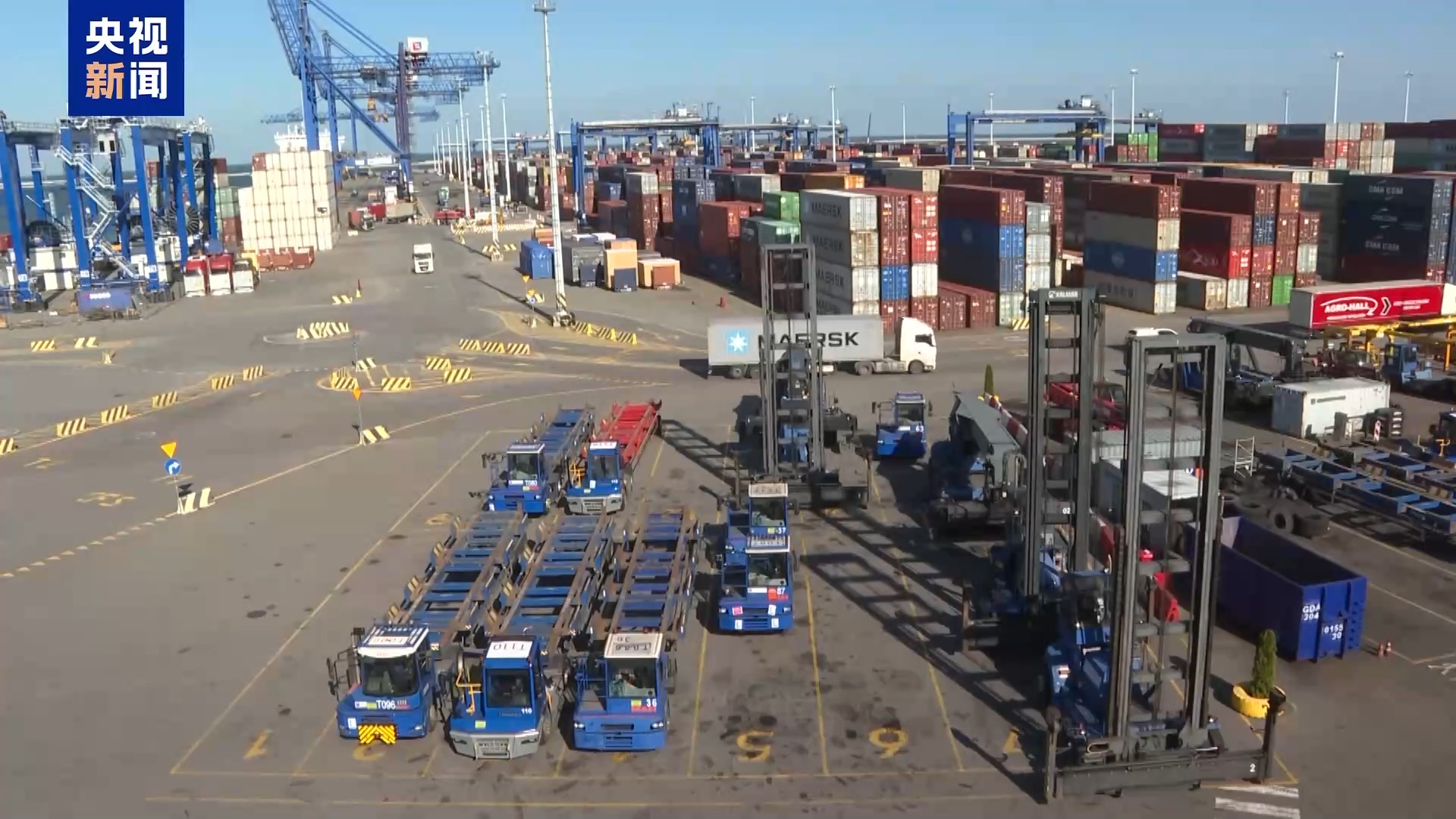
Group 1 - The World Trade Organization (WTO) has lowered its global goods trade growth forecast for 2026 from 2.5% to 1.8%, indicating increasing damage from U.S. tariff measures on the global trade system [1] - The U.S. has imposed differentiated tariffs ranging from 10% to 50% on 69 trading partners, raising the trade-weighted average tariff rate to 20.11% as of August 7 [1] - The imposition of tariffs violates WTO principles, leading to systemic risks in global trade rules and increasing uncertainty and fragmentation [1] Group 2 - The unilateral approach of the U.S. in trade negotiations has led to market access agreements that favor U.S. industries while harming global trade governance [2] - Developing countries bear the brunt of the costs associated with high transportation and tariff impacts, leading to their marginalization in value chains [2] - The current state of the multilateral trade system is precarious, with rising trade restrictions potentially exacerbating economic disparities and uncertainty [2] Group 3 - Urgent reforms are needed for the WTO's dispute resolution mechanism, including the selection of appellate judges and maintaining a two-tier structure for dispute resolution [3] - Emerging economies are encouraged to build diversified supply chain networks to mitigate risks and enhance resilience through regional resource integration [3] - Strengthening the core position of the multilateral trade system is essential, advocating for inclusive rule reforms and ensuring that global development benefits are shared equitably [3]
重振世人对多边贸易体系信心
Jing Ji Ri Bao· 2025-08-19 22:07
Group 1 - The World Trade Organization (WTO) has lowered its global goods trade growth forecast for 2026 from 2.5% to 1.8%, indicating increasing damage from U.S. tariff measures on the global trade system [1] - The U.S. has imposed differentiated tariffs ranging from 10% to 50% on 69 trading partners, raising the trade-weighted average tariff rate to 20.11% as of August 7 [1] - The imposition of tariffs violates WTO principles, leading to systemic risks in global trade rules and increasing uncertainty and fragmentation [1] Group 2 - The unilateral approach of the U.S. in trade negotiations has led to market access agreements that favor U.S. industries while harming global trade governance [2] - Developing countries bear the heaviest burden from these tariff measures, with 32 landlocked developing countries facing marginalization in value chains due to high transportation costs and tariffs [2] - The current multilateral trade system is at a crossroads, with rising trade restrictions potentially leading to further trade contraction and exacerbating economic disparities [2] Group 3 - Urgent reforms are needed for the WTO's dispute resolution mechanism, including the selection of appellate judges and maintaining a two-tier structure for dispute resolution [3] - Emerging economies are encouraged to build diversified supply chain networks to mitigate risks and enhance resilience through regional resource integration [3] - Strengthening the core position of the multilateral trade system is essential, advocating for inclusive rule reforms and ensuring that global development benefits are shared equitably [3]
美国骄傲宣布,特朗普创造了最大的谈判筹码!50多国无奈服软谈判
Sou Hu Cai Jing· 2025-08-16 09:06
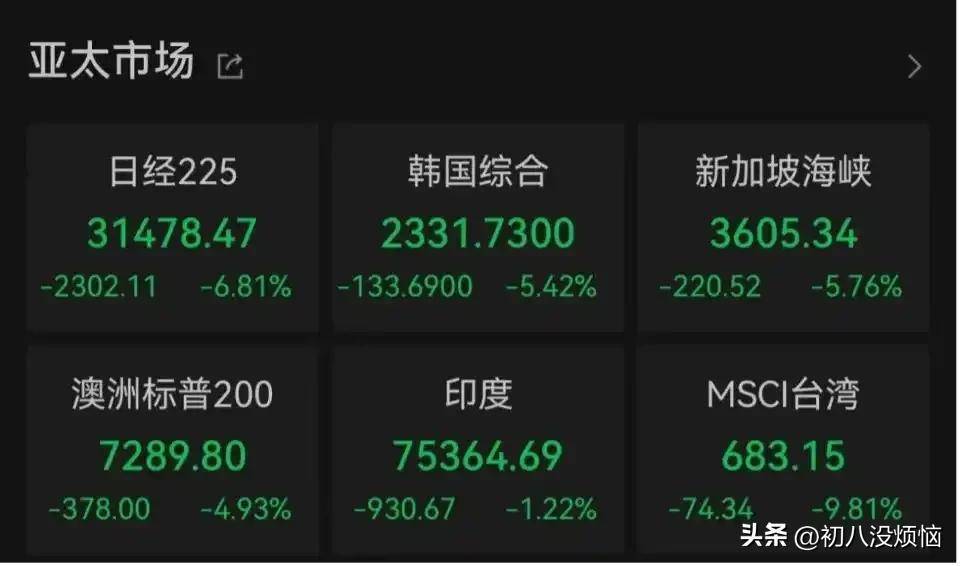
Core Viewpoint - The article discusses the significant market turmoil following the Trump administration's announcement of "reciprocal tariffs," which led to a sharp decline in U.S. and global stock markets, highlighting the potential long-term economic implications of such trade policies [1][8][31]. Group 1: Market Reaction - U.S. stock markets experienced their largest single-day drop since 2020, with a total market value loss exceeding $6 trillion within two trading days [8][12]. - Major global markets, including Australia, South Korea, Japan, and Europe, faced severe declines, with Australia's S&P index plummeting by 6.4% and South Korea's index triggering a trading halt [12][13][21]. - The Singapore Strait Times index fell by 8.5% within 20 minutes, and European indices like Germany's DAX and the UK's FTSE saw declines exceeding 4% [13][21]. Group 2: Government Response - U.S. Treasury Secretary Mnuchin downplayed the market volatility, asserting that short-term fluctuations should not be a concern and emphasizing a focus on long-term prosperity [3][8]. - Mnuchin claimed that Trump's tariff strategy has created significant negotiation leverage, with over 50 countries reportedly seeking trade negotiations with the U.S. [5][15]. - Despite the optimistic rhetoric, there is skepticism regarding the actual progress of these negotiations, as specific details remain undisclosed [15][36]. Group 3: Economic Implications - The tariffs are expected to have a detrimental impact on global commodity demand, affecting various industries and leading to significant stock price drops for companies like SK Hynix and BHP [19][21]. - Analysts warn that the ongoing trade conflict could result in a 0.3% reduction in U.S. GDP and an increase in the unemployment rate to 5.3% [31]. - The article highlights the potential for economic isolation for the U.S. as other countries may resist accepting what they perceive as "unequal treaties" [40][43]. Group 4: Internal Discontent - There are indications of internal discord within the Trump administration regarding trade policies, with some officials expressing concerns about the long-term economic consequences of the tariffs [25][36]. - Mnuchin's public support for Trump's strategy contrasts with reports of his personal frustrations with the tariff calculations, suggesting a potential for resignation [25][36]. Group 5: Global Trade Dynamics - The article notes that the tariffs have prompted retaliatory measures from countries like China, which announced a 34% tariff on U.S. goods, directly impacting critical sectors such as semiconductors and defense [31][38]. - The global trade landscape is shifting, with countries like Australia and New Zealand expressing significant distress over the economic fallout from U.S. policies, leading to currency depreciation and market instability [34][43].
特朗普威胁关税加到35%,拿不出6000亿美元的欧盟,转头制裁中国
Sou Hu Cai Jing· 2025-08-10 17:21
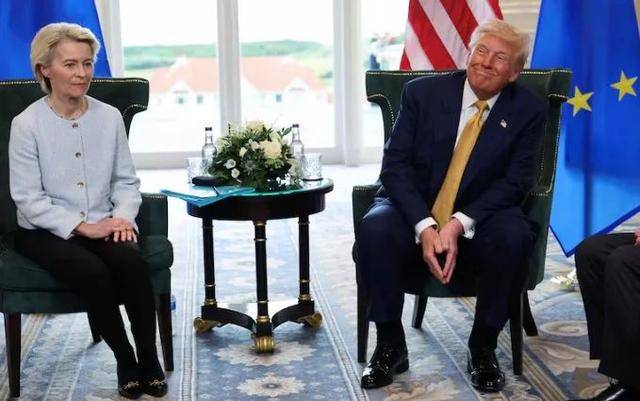
Group 1 - Trump threatens to impose a 35% punitive tariff on EU goods if the EU does not fulfill its $600 billion investment commitment, an increase from the previously threatened 30% [1][3] - The dispute originates from a trade agreement where Trump claims he reduced tariffs from 30% to 15% based on the EU's promise to invest $600 billion, which is criticized as vague and lacking concrete commitments [3][5] - The EU's requirement to purchase $750 billion in energy products from the US by 2028 is deemed unrealistic, as current imports are only $61.9 billion, necessitating an annual purchase of $250 billion, which would constitute 85% of the EU's energy spending [3][5] Group 2 - The EU quickly clarified that the $600 billion investment is dependent on voluntary private sector commitments, lacking guarantees or obligations, effectively rendering it an empty promise [5][7] - Similar situations arise with Japan and South Korea, where their commitments are largely based on loans or minimal direct investments, undermining Trump's claims of trade victories [5][7] - The EU has shifted its focus to China, threatening sanctions based on unsubstantiated claims of Chinese support for Russia, which raises questions about the timing and credibility of these accusations [7][9] Group 3 - The EU's actions may be a strategy to divert attention from domestic trade agreement disputes, align with US pressure on China, and gauge Trump's response to Russia, but this could further damage EU-China relations [9][12] - The current situation highlights the severe challenges facing the global trade order, with Trump's "America First" policy threatening to disrupt established economic ties [12] - Future US-EU trade disputes are likely to escalate, with the potential for the 35% tariff threat to be enacted, raising questions about the EU's response if it fails to meet the $600 billion demand [12]
塞尔维亚专家批美关税冲击多边贸易体系 加剧产业链风险
Sou Hu Cai Jing· 2025-08-07 02:05
Group 1 - The United States plans to impose a 35% tariff on imports from Serbia starting August 7, which will negatively impact the economic relationship between the two countries and increase global supply chain risks [1][3] - The unilateral and unfair tariff policy by the U.S. is expected to affect Serbia's tire production and some small and medium-sized enterprises, despite Serbia's trade volume with the U.S. being smaller compared to its trade with the EU and other countries [1][3] - The U.S. tariff policy undermines trust among trading partners and disrupts the predictability and stability of the global economy and multilateral trade system [3][5] Group 2 - The tariffs significantly impact fair trade, global supply chains, and the stability of consumption and production [5] - Trade is crucial for global economic growth, and the predictability, stability, and trust among partners are currently threatened by these tariff policies [5]

迷信“例外论”只会加剧美国孤立
Sou Hu Cai Jing· 2025-07-31 03:47
Group 1 - The concept of "American exceptionalism" is increasingly scrutinized globally, with recent discussions highlighting its perceived superiority in values, governance, and economic resilience [1][2] - The belief in "American exceptionalism" has been shaken by significant economic challenges, including a projected downturn in GDP growth and rising national debt, which undermine international investor confidence [2][4] - Recent economic indicators, such as a decline in the manufacturing PMI and a negative GDP growth rate, suggest that the optimism surrounding the U.S. economy may be overstated and influenced by short-term geopolitical factors rather than domestic economic strength [3][4] Group 2 - The U.S. bond market, traditionally viewed as a safe haven, is facing challenges with rising national debt and increasing fiscal deficits, which could undermine the credibility of U.S. Treasury securities [4] - The dollar's dominance is being threatened by a growing trend of de-dollarization, as countries explore alternative currencies for trade, leading to a decline in the dollar's share of global reserves [4] - The shift in global capital flows, with significant growth in Asia-Pacific ETF assets compared to the U.S., indicates a diminishing relative attractiveness of the U.S. market for investors [5][6] Group 3 - The erosion of trust in U.S. leadership and the perception of unilateralism in foreign policy are contributing to a global trend of "de-Americanization," as countries seek to diversify their economic partnerships [9][10] - The decline in positive perceptions of the U.S. among global populations, particularly in Europe and the Middle East, reflects a broader skepticism towards American values and policies [8][9] - The ongoing geopolitical tensions and trade disputes are further straining relationships with traditional allies, which could have long-term implications for U.S. influence in global affairs [7][9]
期限临近,特朗普高调发帖:美国不会延长8月1日起加征关税期限
Huan Qiu Wang· 2025-07-30 14:38
Core Viewpoint - The U.S. will not extend the deadline for imposing additional tariffs starting August 1, as stated by President Trump on his social media platform [1][3]. Group 1 - Trump emphasized that the August 1 deadline is firm and will not be changed, marking it as a significant day for the U.S. [3]. - The Trump administration has been sending mixed signals regarding tariff increases, leading to a perception of unpredictability in U.S. trade policy [3]. - Many countries are signaling their commitment to maintaining a multilateral trade system, while the Trump administration appears to be seeking concessions through uncertainty [3]. Group 2 - The approach taken by the U.S. in both military diplomacy and trade, characterized by threats and coercion, has resulted in a collapse of trust among trade partners [3].